 Unearth The Voyage
Tudor architecture, which flourished in England between 1485 and 1603, blends late medieval Gothic traditions with early Renaissance influences. It’s instantly recognizable by features like timber-framed facades, steep roofs, tall chimneys, and decorative brickwork.
Many of these buildings were constructed during a time of political transformation and growing wealth, resulting in grand palaces, manor houses, and civic structures that still stand today. From royal residences to merchant homes, these architectural gems offer a vivid glimpse into one of Britain’s most fascinating eras.
Hampton Court Palace, London
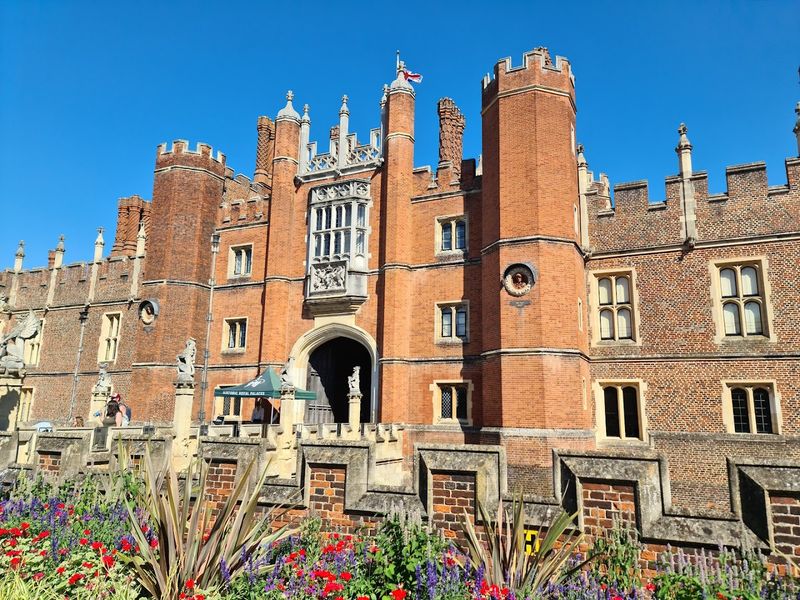
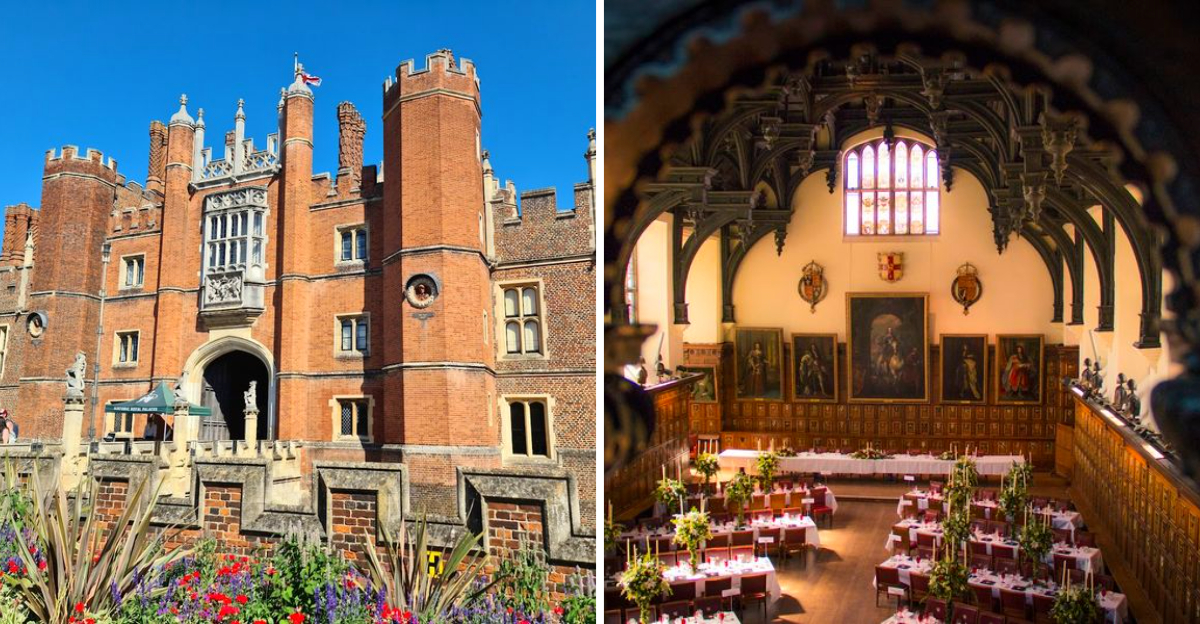
Henry VIII didn’t just eat lavish feasts — he lived in one of the most spectacular buildings ever constructed in England. Hampton Court Palace, originally built by Cardinal Wolsey around 1515, was so impressive that the king essentially took it for himself.
That tells you everything about the kind of power this building represented.
The palace’s red-brick facade, ornate gatehouses, and soaring chimneys are classic Tudor design at its absolute peak. Walking through Anne Boleyn’s Gateway still gives visitors a genuine sense of stepping back five centuries.
Every carved detail feels intentional, like the building itself is trying to impress you.
Inside, the Great Hall features a stunning hammer-beam roof decorated with royal heraldry. The kitchens, capable of feeding 600 people daily, are equally jaw-dropping.
Hampton Court was later expanded by William III, but its Tudor heart remains gloriously intact. It’s one of the few places where history doesn’t just feel preserved — it feels alive, loud, and surprisingly personal.
Layer Marney Tower, Essex
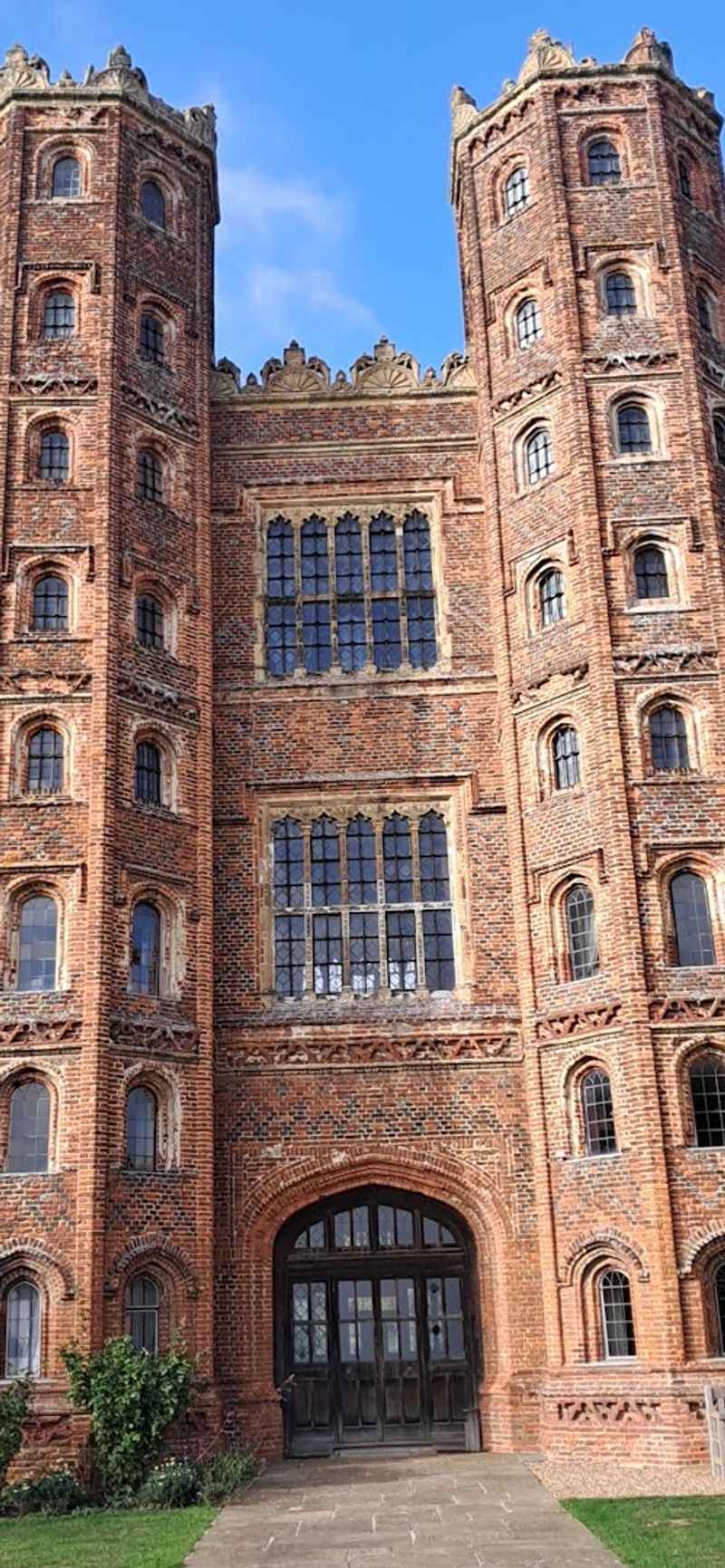
Standing eight stories tall in the quiet Essex countryside, Layer Marney Tower has a boldness that feels almost defiant. Built around 1523 by Henry, 1st Lord Marney, it was intended to be the centrepiece of a grand palace complex.
Henry died in 1523, his son died two years later, and the palace was never finished — but the gatehouse survived, stubbornly magnificent.
What makes Layer Marney genuinely special is the terracotta detailing along the upper windows. Influenced by Italian Renaissance design, these ornamental touches were remarkably fashionable for the time.
It was Tudor England flexing its awareness of European trends, and doing so with real flair.
The tower’s height alone makes it unlike anything else from the period. Most Tudor gatehouses are impressive — this one is theatrical.
Visitors can climb to the top for sweeping views across the Essex farmland, which hasn’t changed dramatically since Lord Marney’s ambitious days. The grounds include a working farm and gardens, making it a full day out.
For a building that was technically abandoned mid-construction, it turned out rather brilliantly.
Little Moreton Hall, Cheshire
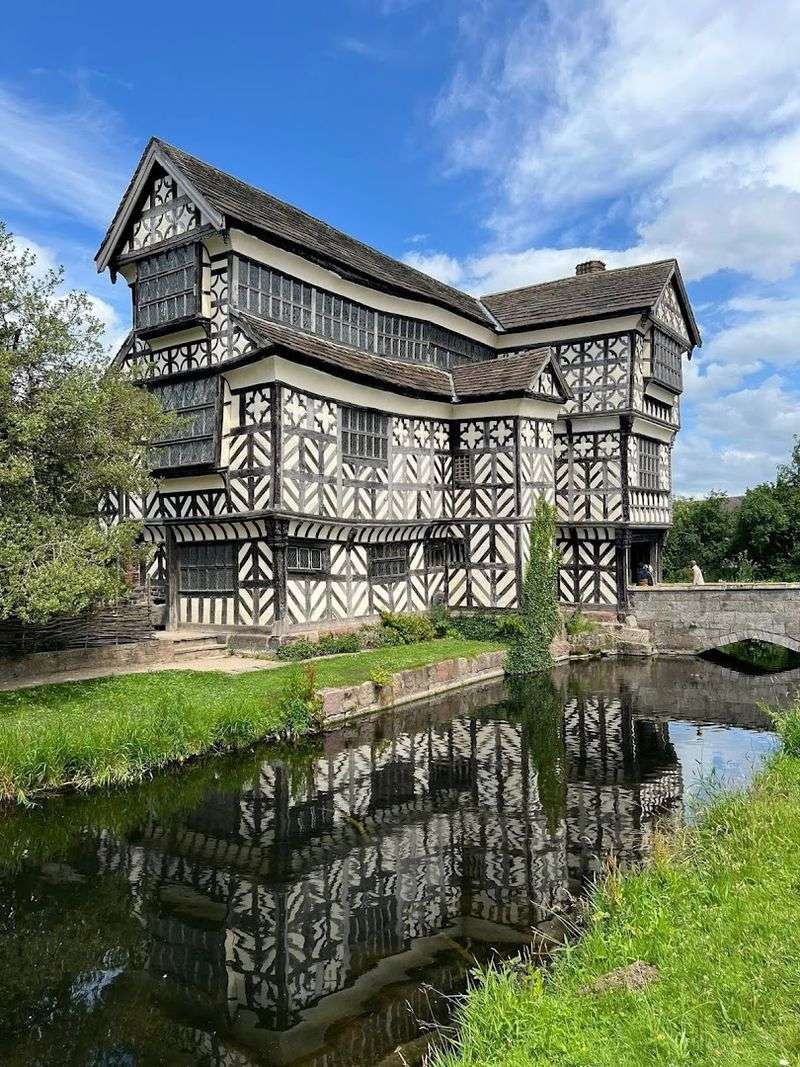
Crooked, quirky, and completely wonderful — Little Moreton Hall looks like someone built it during an earthquake and decided to keep going anyway. The dramatic lean of its upper floors and the wild zigzag of its timber framing make it one of the most visually striking buildings in the entire country.
It’s not a flaw; it’s a feature.
Construction began around 1504 and continued across three generations of the Moreton family. Each builder added their own touches, which explains why the hall feels wonderfully unplanned.
The great hall, chapel, and long gallery are all packed with original features that have survived remarkably well.
Managed by the National Trust, Little Moreton Hall sits surrounded by a water-filled moat that perfectly mirrors its extraordinary silhouette. The knot garden in the grounds was designed to reflect the geometric patterns of the building’s woodwork.
School groups, history enthusiasts, and photographers all flock here regularly — and honestly, it’s easy to understand why. Few buildings in England carry this much personality per square metre.
If Tudor architecture had a sense of humour, Little Moreton Hall would be its punchline.
Compton Wynyates, Warwickshire
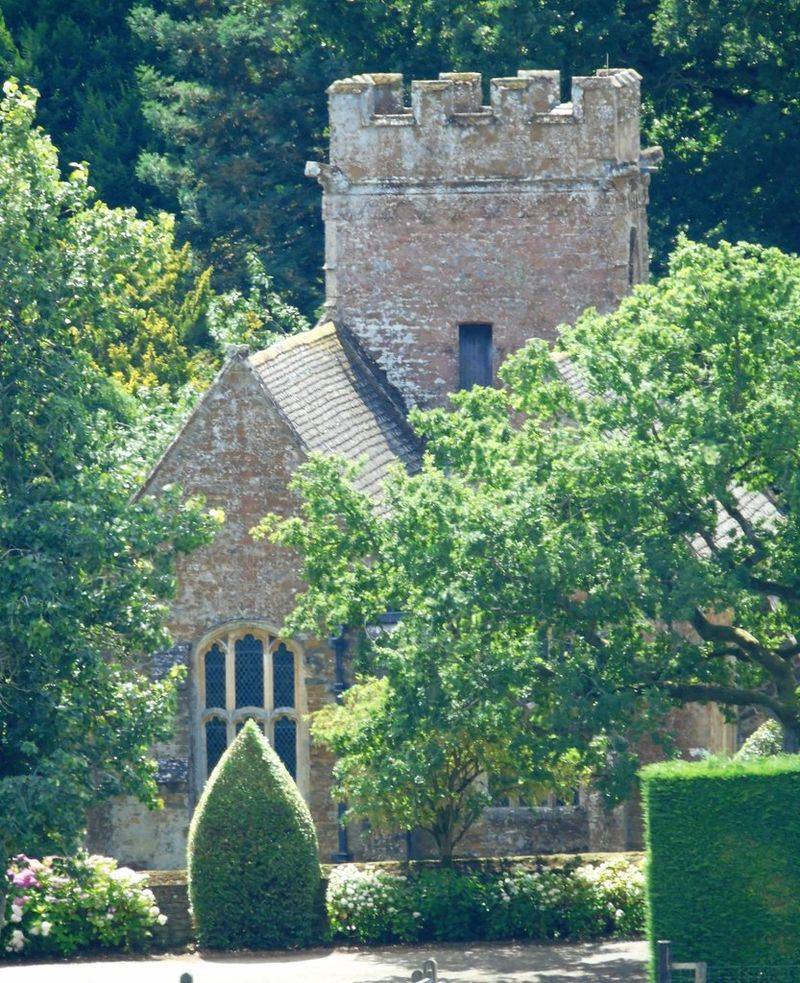
Tucked into a natural hollow in the Warwickshire hills, Compton Wynyates feels like it was placed there deliberately to stay hidden from the rest of the world. This privately owned Tudor manor is rarely open to the public, which only adds to its mystique.
When you do catch a glimpse of it, the effect is quietly breathtaking.
Built primarily between 1480 and 1520 for Sir William Compton, a close friend of Henry VIII, the house combines warm pink-red brick with a cluster of twisted chimneys that have become its most recognisable feature. The irregular roofline and gabled windows create a silhouette that looks almost hand-drawn.
Unlike many grand Tudor houses that were later remodelled, Compton Wynyates has survived largely unchanged. That authenticity is extraordinary.
The moat was filled in during the Civil War, but the house itself escaped serious damage. It remains in the Compton family, making it one of the longest continuously owned historic homes in England.
There’s something deeply satisfying about knowing a building this beautiful has been quietly sitting in this valley for over five hundred years, watched over by the same family line.
Hardwick Hall, Derbyshire
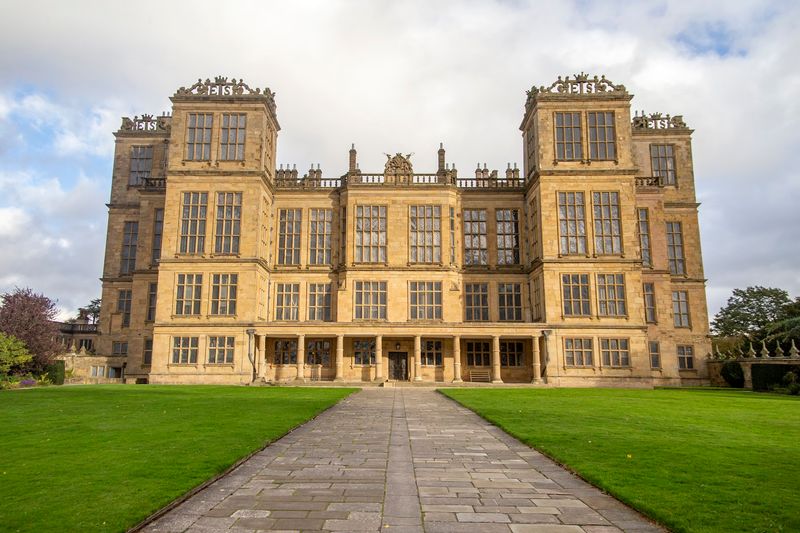
“More glass than wall” — that famous phrase was coined specifically about Hardwick Hall, and one look at this Derbyshire showstopper tells you exactly why. Built in the 1590s for Bess of Hardwick, one of the most powerful women in Elizabethan England, the hall was designed to dazzle.
Glass was expensive. Bess wanted everyone to know she could afford a lot of it.
The building features six symmetrical towers, each topped with stone balustrades bearing the initials ES — Elizabeth Shrewsbury — in enormous letters. Subtlety was clearly not part of the brief.
The interiors are equally lavish, with original tapestries, embroideries, and furniture still in place after more than four centuries.
Hardwick represents the confident, outward-looking energy of late Elizabethan architecture. It was less about defence and more about display — a home built to host, impress, and announce its owner’s status to the world.
The National Trust now manages the property, and the surrounding parkland adds to its grandeur. Standing outside as the light catches those vast windows, it’s hard not to feel exactly the kind of awe Bess of Hardwick was always aiming for.
Paycocke’s House, Essex
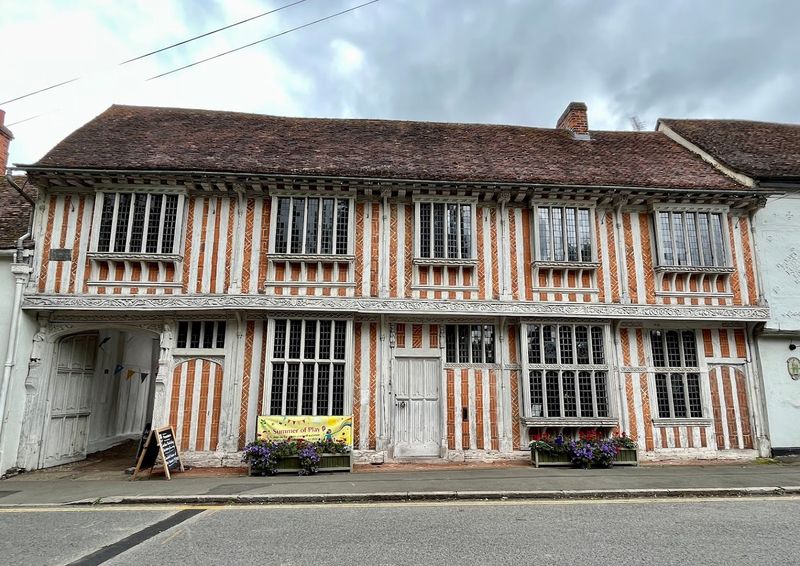
Run your eyes along the front of Paycocke’s House in Coggeshall and you’ll immediately notice something unusual — the level of carved detail on the timber framing is almost obsessive. Every beam, bressumer, and bracket has been decorated with flowers, foliage, and figures.
This wasn’t just a home; it was a statement carved in wood.
Built around 1509 for Thomas Paycocke, a prosperous cloth merchant, the house reflects the enormous wealth generated by the Tudor wool trade. Coggeshall was a major centre for cloth production, and the Paycocke family were among its biggest players.
The house was their way of showing the town exactly how well business was going.
The National Trust has carefully restored the building, and today visitors can explore the richly decorated interior and the tranquil walled garden at the rear. Original features include carved ceiling beams and a rare example of Tudor panelling.
What makes Paycocke’s so compelling isn’t just the craftsmanship — it’s the story behind it. This is merchant Tudor England, not royal Tudor England.
It’s a reminder that the era’s architectural brilliance wasn’t limited to palaces and manor houses. Sometimes it showed up on a quiet high street in Essex.
Stokesay Castle, Shropshire
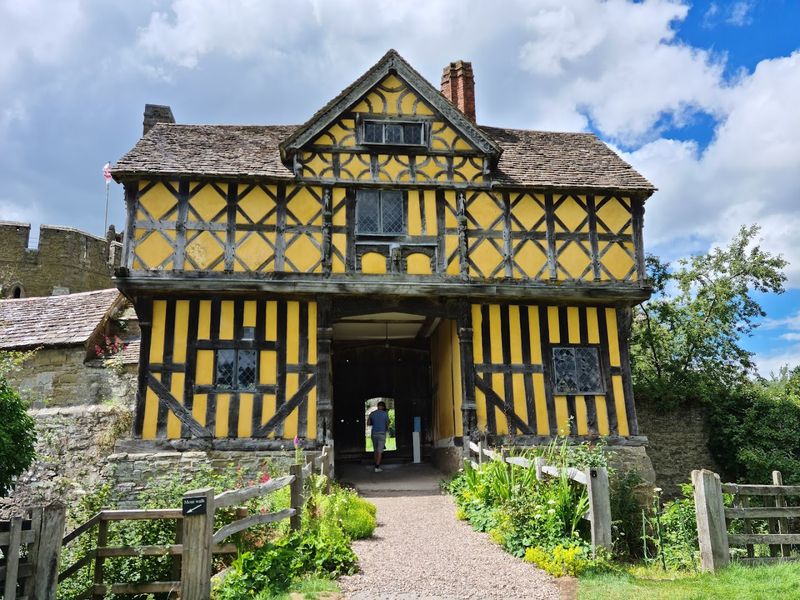
Stokesay Castle is one of those places that quietly rewires your understanding of medieval and Tudor history in a single visit. Technically a fortified manor house rather than a true castle, it dates back to the 13th century — but its charming timber-framed gatehouse, added in the 17th century, gives it a distinctly Tudor flavour that makes it irresistible to photographers.
During the Tudor period, Stokesay was adapted to reflect the changing priorities of its owners. The need for heavy fortification had faded, and comfort was becoming more important.
The great hall, with its original timber roof and large windows, shows this shift beautifully. Light replaced thickness as the dominant architectural value.
Managed by English Heritage, Stokesay sits in a peaceful part of the Welsh Marches, surrounded by farmland and distant hills. Its small scale makes it feel approachable in a way that larger historic houses sometimes don’t.
You can genuinely imagine a Tudor family eating supper in that great hall, arguing about the harvest, and watching the fire die down. That human quality — that ordinariness wrapped in extraordinary architecture — is what makes Stokesay one of England’s most quietly wonderful buildings.
Anne of Cleves House, East Sussex
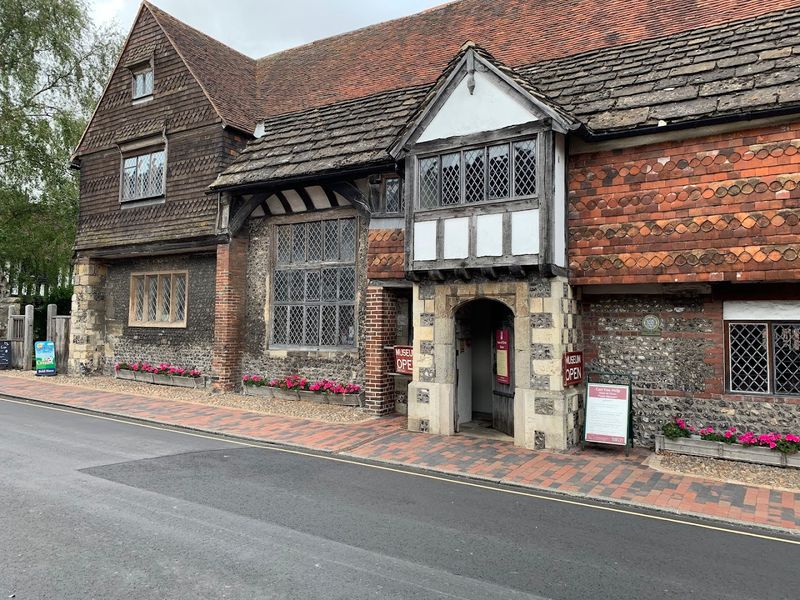
Despite the famous name, Anne of Cleves probably never actually lived here — but that hasn’t stopped this charming Lewes townhouse from becoming one of East Sussex’s most visited historic properties. The house was part of a divorce settlement when Henry VIII ended his brief marriage to Anne in 1540.
She received several properties; this was one of them.
Built in the early 16th century, the house is a classic example of a Wealden hall house — a style common across southeast England during the Tudor period. Its timber framing, overhanging upper floor, and steeply pitched roof are all textbook features of the era.
The building has been remarkably well preserved.
Today it operates as a museum run by the Sussex Archaeological Society, with rooms dressed to reflect different periods of the house’s long history. The Tudor kitchen is particularly evocative, complete with replica cooking equipment and authentic smells.
Visitors consistently note how personal the experience feels — this isn’t a grand palace experience, it’s an intimate one. Anne of Cleves House reminds you that Tudor architecture wasn’t always about showing off.
Sometimes it was just about making a very comfortable, very beautiful home.
Haddon Hall, Derbyshire
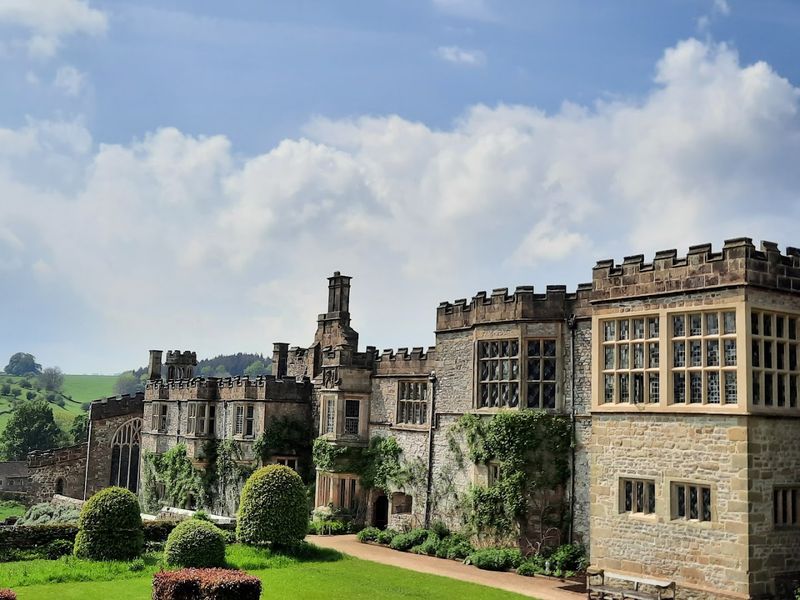
Film directors love Haddon Hall — and it’s not hard to understand why. This Derbyshire treasure has appeared in adaptations of Jane Eyre, Pride and Prejudice, and The Princess Bride, among others.
Its stone walls, timber-beamed rooms, and terraced rose gardens create a setting so perfectly atmospheric that it barely needs a film crew to look cinematic.
The hall dates back to the 12th century, but its most significant Tudor additions came during the 15th and 16th centuries. The long gallery, chapel, and great chamber are particularly impressive, filled with original features that have survived without heavy Victorian restoration.
That lack of over-restoration is genuinely rare and enormously valuable.
Owned by the Duke of Rutland, Haddon Hall has remained in the same family for centuries. It’s open to visitors during summer months, and the experience is consistently rated among the best of any historic house in England.
The walled terraced gardens alone are worth the trip — they cascade down the hillside in layers of colour and scent. Haddon Hall is proof that authenticity, more than any amount of grand refurbishment, is what truly makes a historic building unforgettable.
King’s College Chapel, Cambridge
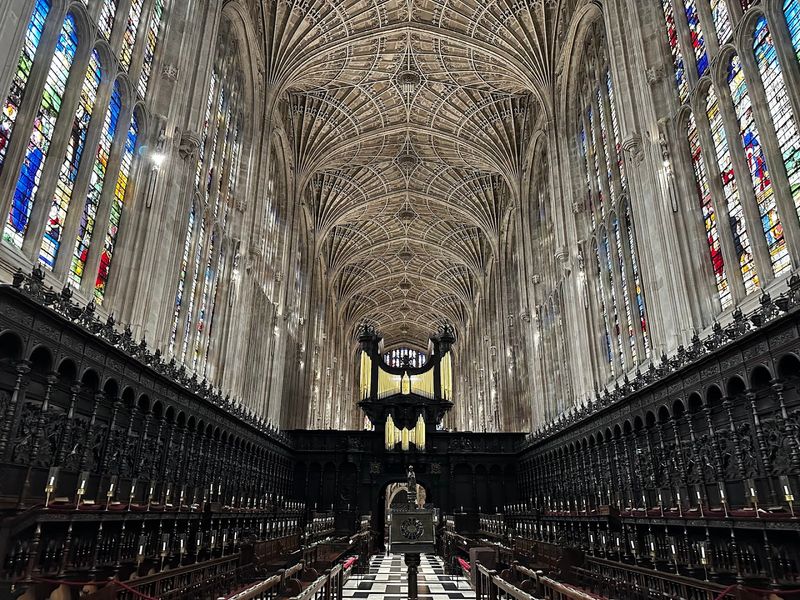
Few ceilings in the world stop visitors dead in their tracks quite like the one inside King’s College Chapel. The fan vaulting — a breathtaking web of carved stone that spreads across the entire roof like frozen fireworks — is widely considered the finest example of its kind anywhere on earth.
And it was completed during the Tudor period, which says everything about the ambition of the age.
Construction began under Henry VI in 1446 but wasn’t finished until 1515, under Henry VIII. The chapel therefore bridges the medieval and Tudor worlds in a single extraordinary building.
Its 26 stained glass windows, installed between 1515 and 1531, tell biblical stories in vivid colour and remain almost entirely original.
Every Christmas Eve, the Festival of Nine Lessons and Carols is broadcast from here to millions of listeners worldwide — making King’s College Chapel one of the most acoustically and emotionally resonant spaces in Britain. The exterior, with its soaring pinnacles and vast windows, is equally stunning.
Standing outside on King’s Parade as the last light fades and the chapel glows from within, you get a sense of why Tudor builders poured so much effort into making beauty feel permanent.
Lavenham Guildhall, Suffolk
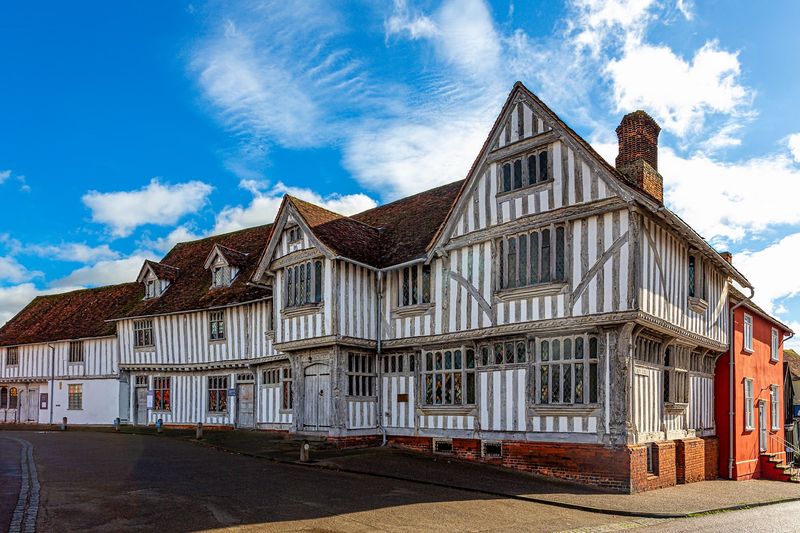
Lavenham is regularly voted one of the most beautiful villages in England, and the Guildhall sitting at its heart is a huge reason why. Built around 1529 by the Guild of Corpus Christi, this timber-framed civic building commands the market square with a quiet authority that five centuries haven’t diminished even slightly.
The wool trade made Lavenham extraordinarily wealthy during the Tudor period — at one point it was among the richest towns in England. The Guildhall was a direct expression of that prosperity, built to host guild meetings, regulate trade, and demonstrate civic pride.
Its carved corner posts and jettied upper floors are masterclasses in Tudor carpentry.
Now managed by the National Trust, the building houses exhibitions on local history, the cloth trade, and village life through the centuries. The surrounding square is lined with equally impressive timber-framed buildings, making the whole area feel like an open-air museum — except people actually live and work here, which makes it feel wonderfully real.
Lavenham Guildhall is a reminder that Tudor architectural excellence wasn’t reserved for kings and nobles. Sometimes it belonged to a community of wool merchants who simply wanted to build something worth being proud of.
Middle Temple Hall, London
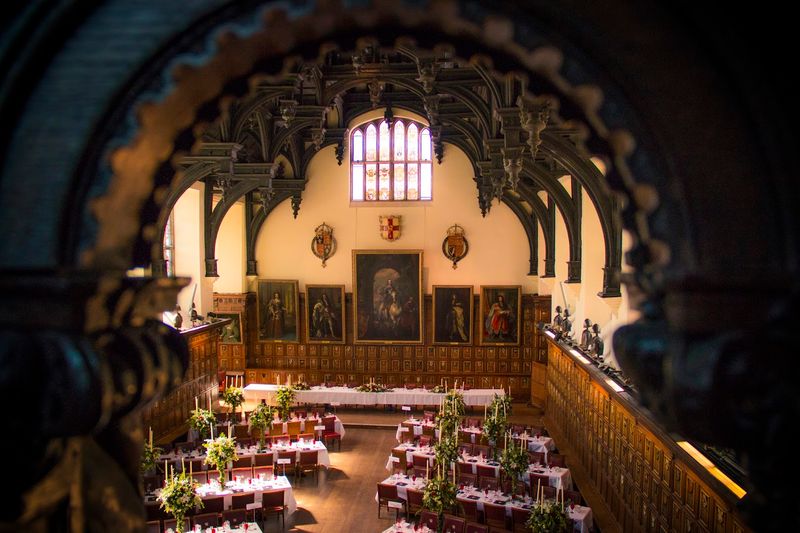
On February 2, 1602, a play called Twelfth Night received what is believed to be its very first public performance — right here, in Middle Temple Hall. Shakespeare himself may well have been in the room.
That single fact transforms this already remarkable building into something genuinely electric.
Completed in 1573 during the reign of Elizabeth I, the hall is one of the finest surviving examples of Elizabethan Tudor architecture in London. Its double hammer-beam roof, crafted from oak timber, is a structural and aesthetic achievement that still draws gasps from first-time visitors.
The carved screen at the entrance end of the hall is equally extraordinary.
Middle Temple is one of the four Inns of Court, the historic institutions that train barristers in England and Wales. The hall remains in active use today — barristers still dine here as part of their qualification process, continuing a tradition stretching back over four centuries.
Portraits of monarchs and legal figures line the panelled walls, and the high table is said to have been made from a single oak tree. Few buildings in London carry this combination of legal history, theatrical legend, and architectural brilliance all under one spectacular roof.



