 Unearth The Voyage
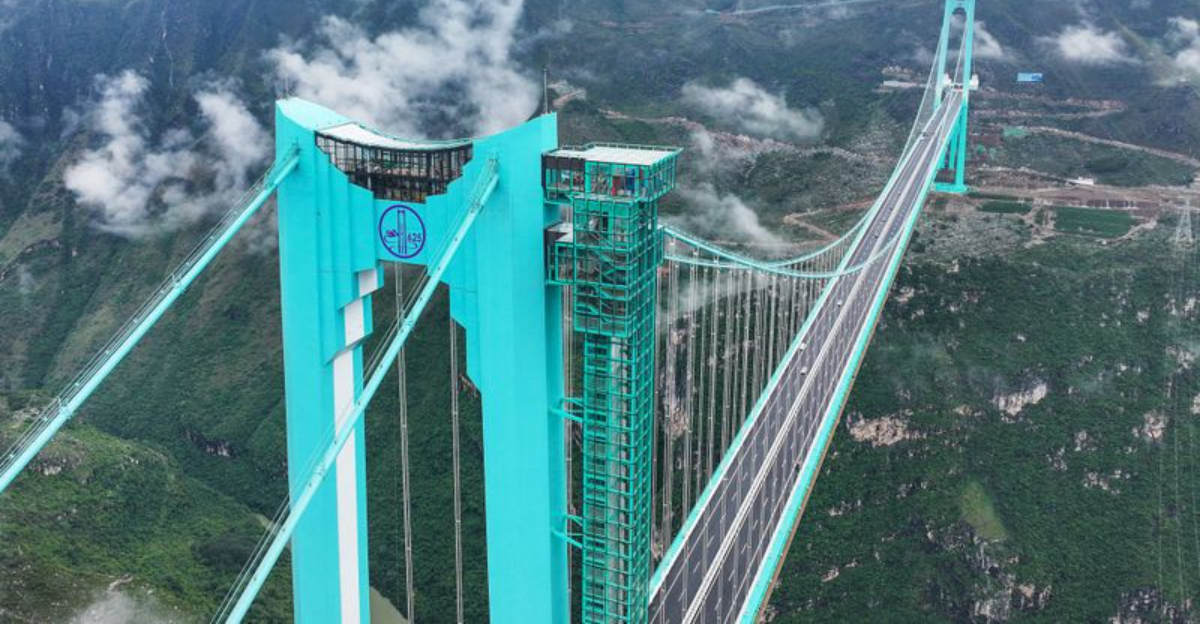
When it comes to bridges, “highest” refers to how far the roadway sits above the ground or water below—not the height of the towers themselves. These engineering marvels often span deep canyons and river gorges, creating dizzying drops that can exceed hundreds of meters.
Today, most of the world’s highest bridges are found in China’s mountainous regions, where terrain demands bold infrastructure solutions. Some rise higher than skyscrapers, offering both vital transport links and breathtaking views.
Here are 13 of the highest bridges on Earth, ranked by their incredible height above the landscape.
Huajiang Grand Canyon Bridge, China
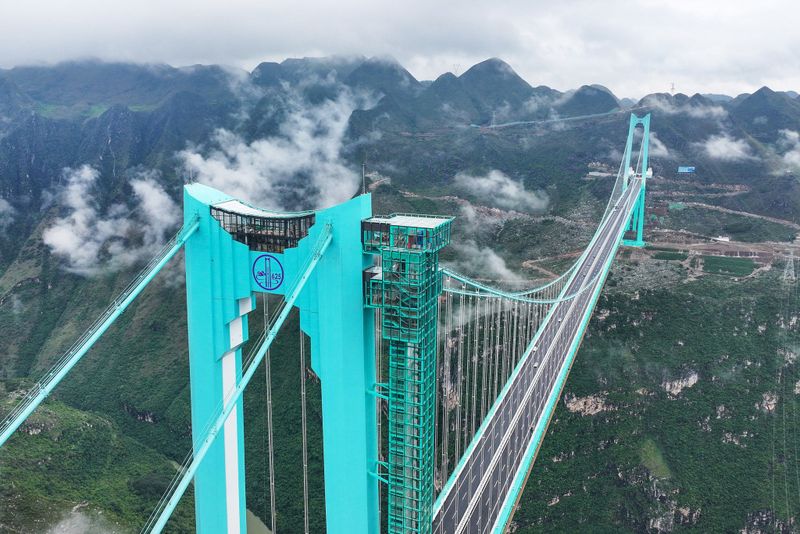
Standing 625 meters above the canyon floor, the Huajiang Grand Canyon Bridge doesn’t just break records—it shatters them. Completed in 2025 in Guizhou province, it claimed the title of the world’s highest bridge almost immediately upon opening.
Before this bridge existed, crossing this canyon meant hours of winding mountain roads.
The bridge deck stretches across one of the most rugged landscapes in southern China, where the terrain is so extreme that even local residents once struggled to travel between nearby towns. Engineers had to develop special construction techniques just to work at such staggering heights.
The project took years of planning before a single beam was placed.
Over 2,000 feet in the air, cars now glide across in minutes what once took most of a day. The surrounding canyon views are jaw-dropping—sheer cliff walls, mist-filled valleys, and rivers that look like thin silver threads far below.
It’s not just infrastructure; it’s a statement about what modern engineering can achieve when a mountain gets in the way.
Duge Bridge (Beipanjiang Bridge), China
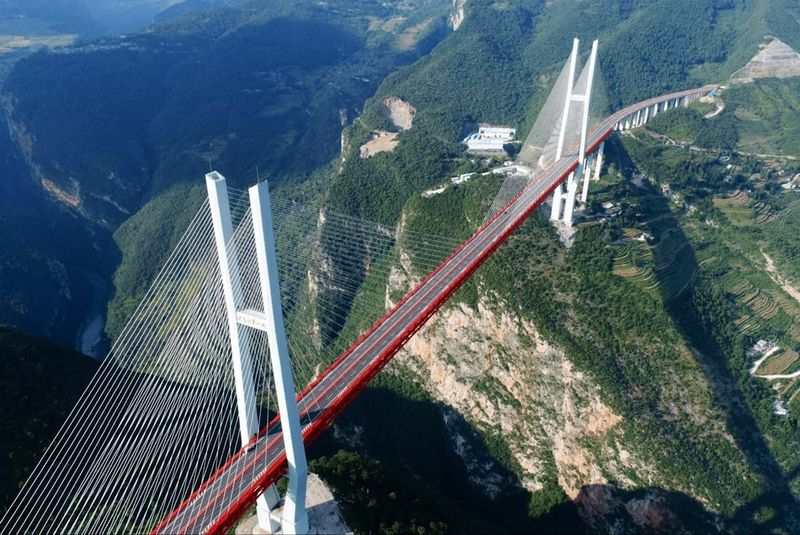
For a few years, the Duge Bridge wore the crown as the world’s highest bridge, and it wore it proudly. Hovering 565 meters above the Beipan River, this cable-stayed giant connects Guizhou and Yunnan provinces across a canyon so deep it regularly disappears into clouds.
Drivers crossing it on foggy days sometimes feel like they’re floating above nothing at all.
Built to link two remote mountainous regions, the Duge Bridge transformed daily life for communities that had long been cut off from major cities. Before it opened in 2016, the journey between the two provinces through this area could take hours.
Now, the crossing takes just a few minutes.
The bridge’s cable-stayed design gives it an elegant, almost architectural quality that sets it apart from other high bridges. Four tall towers anchor the cables that hold the roadway in place, giving the structure a sleek silhouette against the mountain backdrop.
Even though it’s no longer the record holder, the Duge Bridge remains one of the most photographed and celebrated high bridges anywhere on Earth.
Sidu River Bridge, China
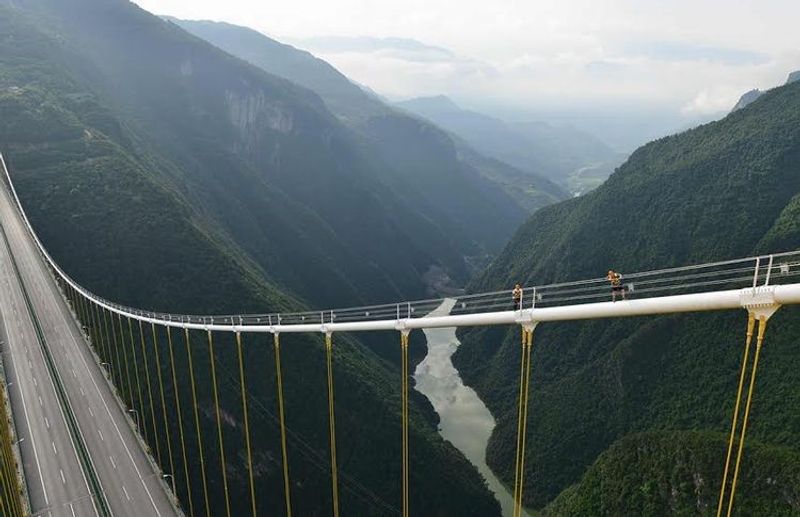
Fog creeps through the valley like a slow ghost, and somewhere above it all, the Sidu River Bridge hangs in the sky. At roughly 496 meters above the gorge floor in Hubei province, this suspension bridge is one of the most dramatic in the world—and one of the most photographed.
When the mist rolls in thick, the bridge appears to float completely disconnected from the earth below.
Opened in 2009, the Sidu River Bridge was once the highest bridge in the world, holding that record before China’s rapid construction wave pushed it down the rankings. Still, it remains a stunning achievement.
Engineers used rockets to shoot the initial guide wires across the canyon—helicopters simply couldn’t handle the job in such a narrow, wind-prone gorge.
The surrounding landscape is just as remarkable as the bridge itself. Dense green forest covers the canyon walls, and the river below winds through rock formations carved over millions of years.
Visitors who make the trip to see it in person often describe the view as genuinely surreal. Few bridges on Earth combine such extreme height with such wild, untouched natural beauty.
Puli Bridge, China
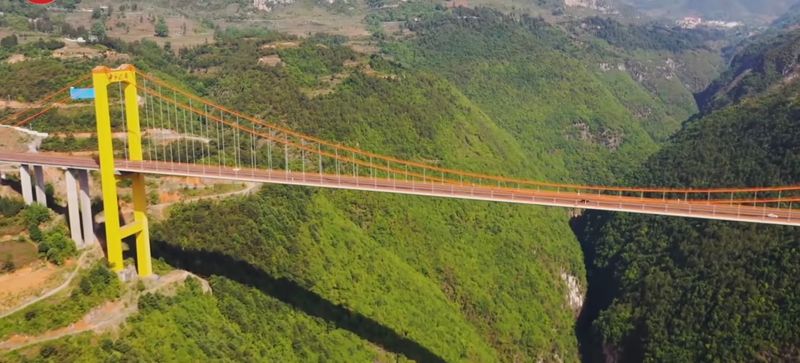
Not every record-breaker gets the fame it deserves, and the Puli Bridge is a perfect example. Rising about 485 meters above the valley floor, this suspension bridge is one of the tallest of its kind anywhere on the planet—yet most people outside of China have never heard of it.
That’s partly because so many world-class high bridges exist in the same country that competition for attention is fierce.
The Puli Bridge forms a critical part of a major expressway network that cuts through some of China’s most challenging mountain terrain. Without bridges like this one, the only option would be long, slow routes around the mountains that add significant time and cost to freight and passenger travel.
Infrastructure like this quietly powers an entire region’s economy.
What makes the Puli Bridge especially impressive is its sheer scale. The suspension cables stretch across a wide, open valley, anchored by towers that rise high above the roadway.
Standing at the edge and looking down reveals just how much empty air lies between the deck and the valley below. It’s the kind of view that makes your palms a little sweaty—even through a photograph.
Jin’an Bridge, China
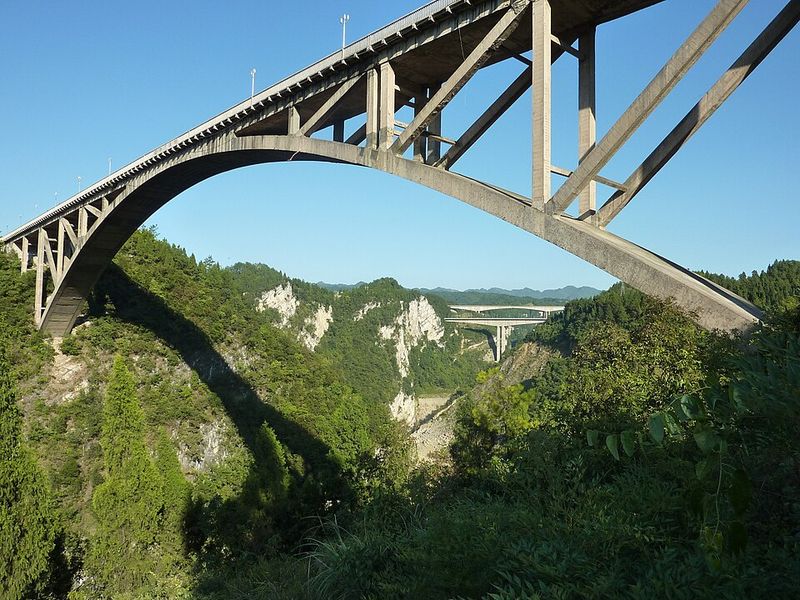
The Jinsha River has carved one of the most spectacular river canyons in all of China, and the Jin’an Bridge crosses it with quiet confidence. At around 461 meters above the water, this bridge doesn’t just solve a transportation problem—it turns a geographical obstacle into a showcase of engineering ambition.
The river below, part of the upper Yangtze system, has been shaping this landscape for millions of years.
Jin’an Bridge sits in a region where mountains crowd together so tightly that flat land is almost nonexistent. Building roads here without high bridges would be nearly impossible, and the ones that do exist often cling to cliff edges in ways that feel more like adventure tourism than daily commuting.
The Jin’an Bridge offers a much more comfortable option.
From a distance, the bridge blends into the mountain scenery with surprising grace. Its long span stretches between steep canyon walls, and the roadway hangs high above a river that looks impossibly narrow from that altitude.
Engineers working on this project had to account for seismic activity, high winds, and extreme temperature swings—all while working in one of China’s most remote mountain corridors. The result is a structure built to last for generations.
Yachi River Bridge, China
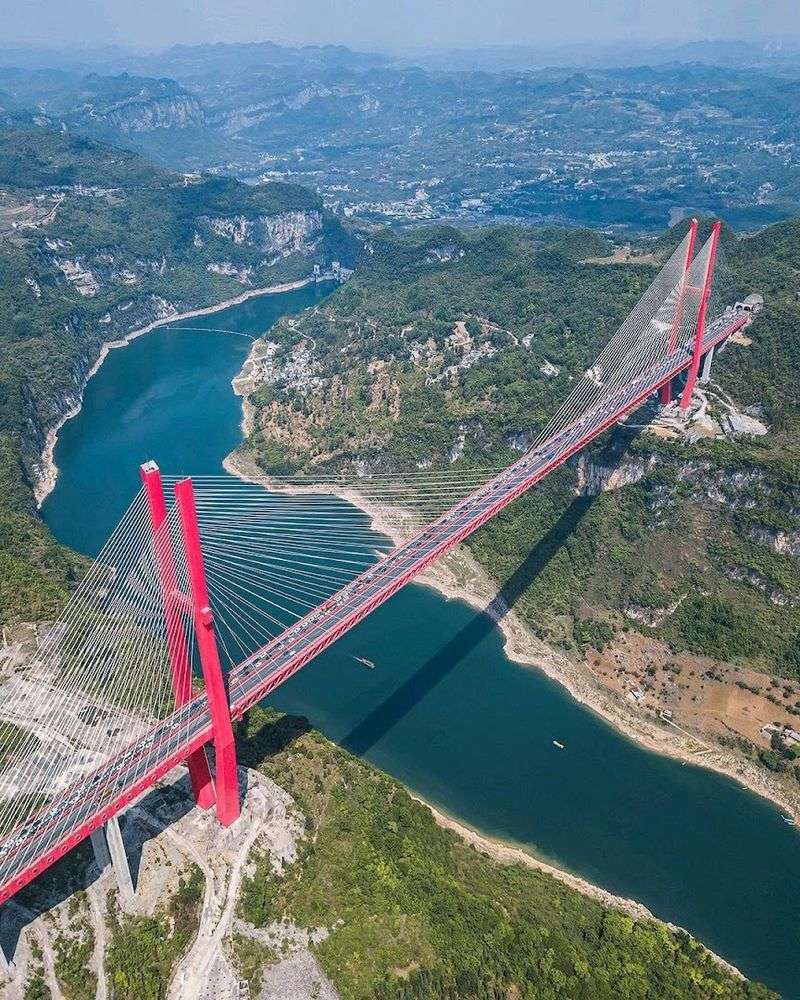
Cable-stayed bridges have a certain visual confidence about them—those taut cables fanning out from tall towers give the whole structure a bold, purposeful look. The Yachi River Bridge carries that aesthetic perfectly, crossing a deep valley in Guizhou province at roughly 434 meters above the river.
It’s one of several record-setting bridges in this part of China, a region that has quietly become the global capital of extreme bridge building.
Guizhou province presents a unique engineering challenge: it’s one of the most mountainous regions in China, with almost no flat land and countless deep river gorges cutting through the landscape. For decades, this made the province one of the poorest and most isolated in the country.
High bridges like the Yachi River Bridge have been central to changing that reality.
The cable-stayed design was chosen specifically because it can span long distances without requiring many support columns in the valley below—a practical necessity when the ground down there is hundreds of meters away and the valley walls are nearly vertical. The result is a bridge that looks as impressive as it performs.
Locals who once spent hours navigating mountain roads now cross this valley in under two minutes.
Zangkejiang Bridge, China
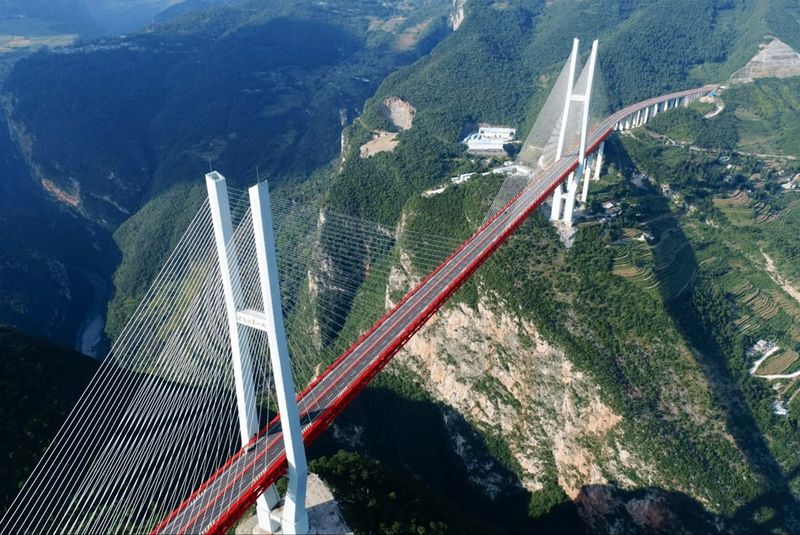
Guizhou province keeps showing up on this list, and there’s a good reason for that. The Zangkejiang Bridge is yet another sky-high suspension crossing in this mountainous region, standing roughly 410 meters above the gorge it spans.
At this point, Guizhou isn’t just building high bridges—it’s practically perfecting the art form.
The bridge is part of the expanding expressway network that has transformed connectivity across southwestern China. Where travelers once had to navigate treacherous mountain passes or take lengthy detours, modern highways now cut straight across canyons that would have been considered impassable just a few decades ago.
The Zangkejiang Bridge is one of the key links in that system.
Suspension bridges at this height require an extraordinary amount of engineering precision. The main cables must support not just the weight of the deck and vehicles, but also account for strong winds that funnel through mountain gorges with surprising force.
Temperature changes throughout the year cause the cables to expand and contract, which engineers must factor into every design decision. Despite all these challenges, the Zangkejiang Bridge stands firm—a quiet giant in a province full of them, doing its job every single day without much fanfare.
Baluarte Bridge, Mexico
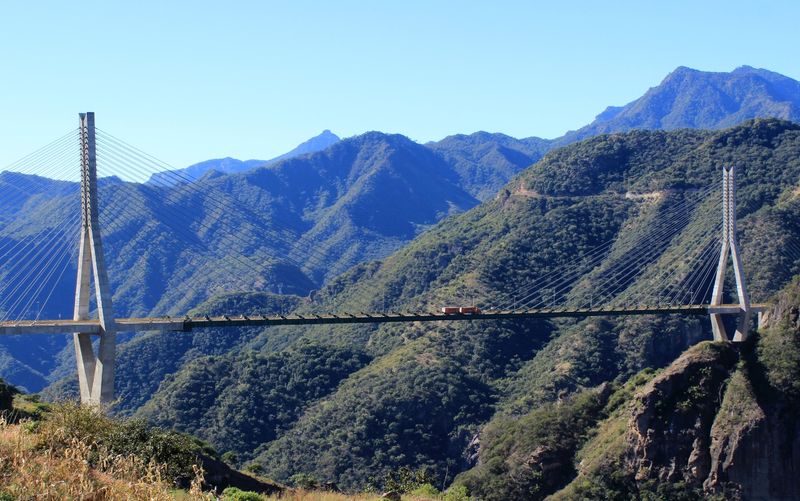
Finally, a bridge that breaks China’s near-total monopoly on this list. The Baluarte Bridge in Mexico is one of the highest bridges outside of Asia, rising about 390 meters above the Baluarte River in the Sierra Madre Occidental mountains.
It opened in 2012 as part of the Mazatlan-Durango Highway, a massive infrastructure project designed to connect the Pacific coast with Mexico’s interior.
Before the highway opened, traveling between Mazatlan and Durango meant navigating a notoriously slow and dangerous mountain road nicknamed “the Devil’s Spine.” The Baluarte Bridge helped change that, cutting travel time dramatically and making the route far safer for drivers and freight trucks alike. It was a genuine quality-of-life upgrade for the entire region.
The cable-stayed design gives the bridge a sleek, modern silhouette against the rugged Mexican mountain backdrop. Four tall towers anchor cables that fan outward to support the roadway, creating a structure that looks both powerful and surprisingly elegant.
The valley below is lush and wild, with the river glinting far beneath the deck. Tourists now make special trips just to see the bridge, turning what was purely a transportation project into an unexpected attraction for the Sierra Madre region.
Chenab Rail Bridge, India
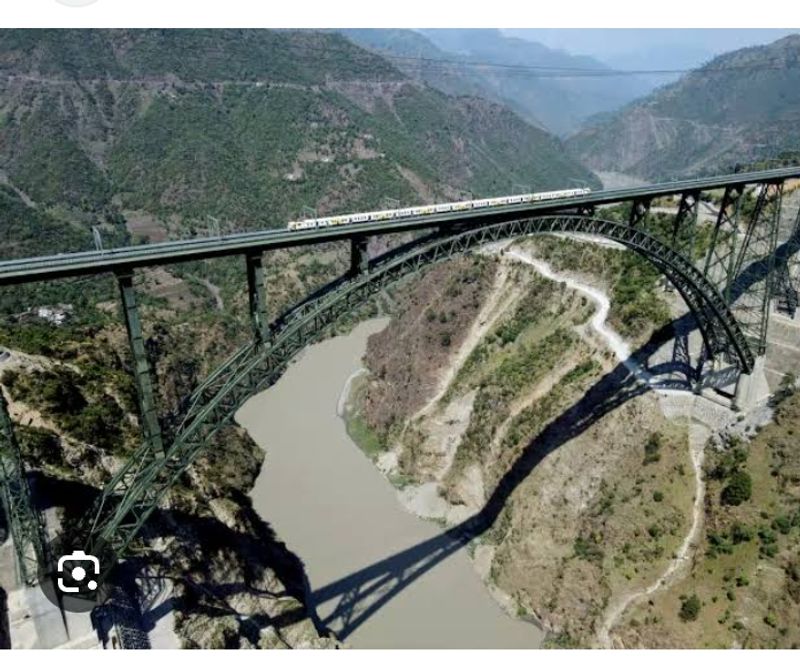
Trains are heavy, slow to stop, and demand incredibly precise engineering—which makes the Chenab Rail Bridge one of the most audacious construction projects in modern history. Standing 359 meters above the Chenab River in Jammu and Kashmir, it holds the title of the world’s highest railway bridge.
That’s higher than the Eiffel Tower, for context.
The bridge is part of the Udhampur-Srinagar-Baramulla Rail Link project, which aims to connect the Kashmir Valley to the rest of India’s rail network for the first time ever. The project has faced enormous challenges, including extreme weather, seismic activity, and some of the most rugged terrain imaginable.
Workers built in conditions that would test even the most experienced construction teams.
The steel arch design was chosen for its strength and ability to handle the dynamic loads that trains place on a structure. Unlike road bridges, railway bridges must handle the rhythmic pounding of heavy locomotives and carriages, often at high speeds.
Engineers also had to design the bridge to withstand potential earthquakes and blast loads, given the region’s security context. When fully operational, it will allow passengers to travel by train through scenery that was once only accessible by road or air.
Aizhai Bridge, China
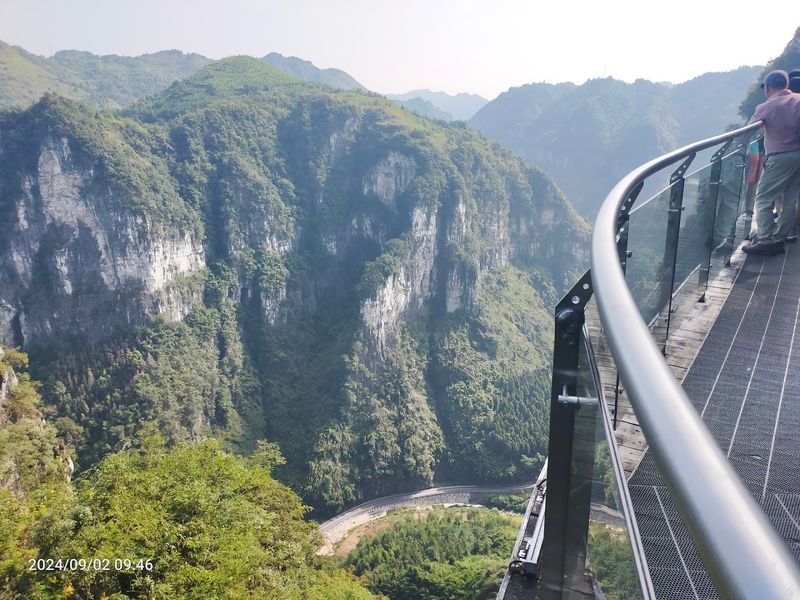
Some bridges exist purely to move people from one place to another. The Aizhai Bridge does that job brilliantly—but it’s also become a destination in its own right.
Sitting about 336 meters above a canyon in Hunan province, this suspension bridge draws visitors who come specifically to experience the thrill of crossing such a dramatic structure. The views from the deck are genuinely spectacular.
Opened in 2012, the Aizhai Bridge was a record holder when it first opened, claiming the title of world’s highest suspension bridge for a brief period. The main span stretches 1,176 meters between the towers, making it one of the longest suspension bridges in China as well as one of the highest.
Length and height together create a combination that’s hard to beat for sheer visual impact.
The bridge connects two tunnels—one on each side of the canyon—which means drivers go from the darkness of a mountain tunnel directly onto the bright, open expanse of the bridge deck, with the canyon dropping away dramatically on either side. That sudden transition from tunnel to open air is reportedly quite the experience for first-time crossers.
Tourism in the area has grown significantly since the bridge opened, boosting the local economy in ways nobody quite anticipated.
Liuguanghe Bridge, China
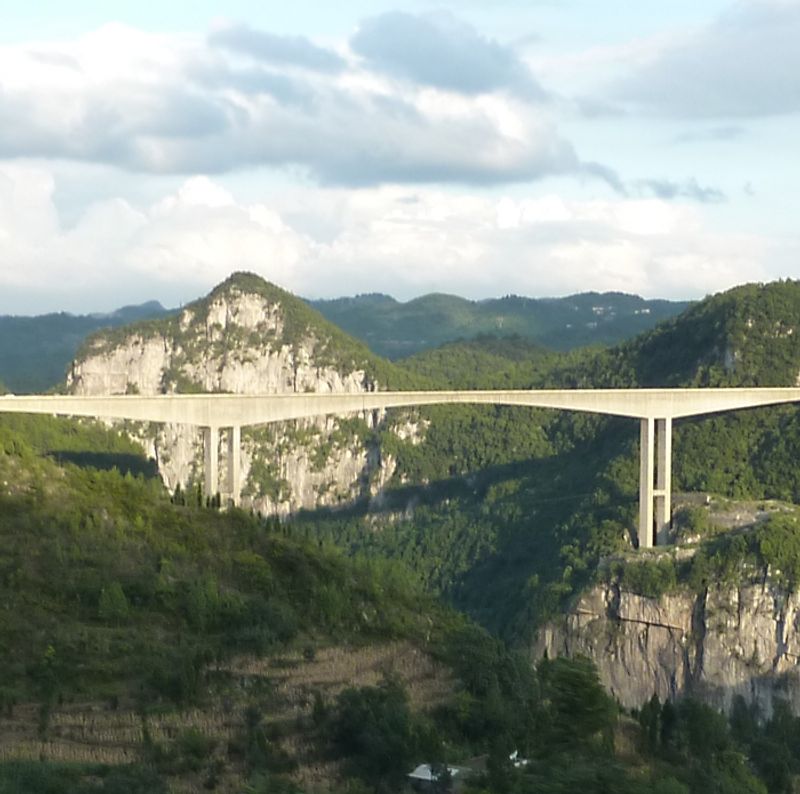
Every record gets broken eventually, and the Liuguanghe Bridge knows that story well. Once counted among the highest bridges in the world, it now sits further down the rankings as newer giants have risen around it—many of them in the same province.
But being outranked doesn’t erase what this bridge represents or the role it continues to play.
Rising roughly 297 meters above the river below, the Liuguanghe Bridge remains an impressive structure by any reasonable standard. It was part of the early wave of high bridge construction in Guizhou, a period when Chinese engineers were learning how to tackle the province’s extreme terrain at scale.
The lessons learned on bridges like this one helped pave the way for the even taller structures that followed.
The bridge still carries significant traffic daily, connecting communities and supporting commerce across a region that depends heavily on road transport. Its design, while not as flashy as some newer cable-stayed or suspension bridges, is solid and functional—built to serve rather than to dazzle.
In a list full of record-breakers and headline-grabbers, the Liuguanghe Bridge is a quiet reminder that good infrastructure doesn’t need to be the tallest in the room to matter.
Royal Gorge Bridge, USA
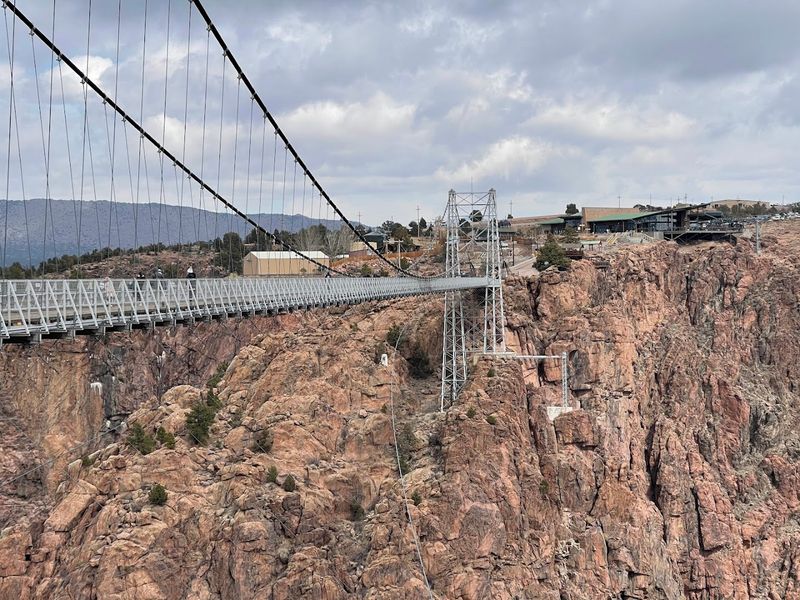
Built in 1929, the Royal Gorge Bridge had one job: to wow people. It was constructed purely as a tourist attraction, which makes it almost unique on this list.
While every other bridge here was built to solve a transportation problem, this one was designed from day one to give visitors the thrill of standing 291 meters above the Arkansas River in Colorado—and it still delivers that thrill nearly a century later.
For 74 years, it held the title of the world’s highest bridge, a record it kept until Chinese construction surged in the early 2000s. That’s an extraordinary run for any structure, let alone one built in the era of horse-drawn vehicles.
The wooden deck planks creak underfoot, the wind picks up in the gorge, and the river looks impossibly far below—it’s a fully immersive experience.
Today, the bridge is part of Royal Gorge Bridge and Amusement Park, a full tourist destination that includes zip lines, gondolas, and other attractions. Pedestrians can walk across the bridge and peer down through the wooden slats at the river below.
It remains the highest bridge in the United States and one of the most visited bridges in North America. Few tourist attractions have this kind of staying power.
Millau Viaduct, France
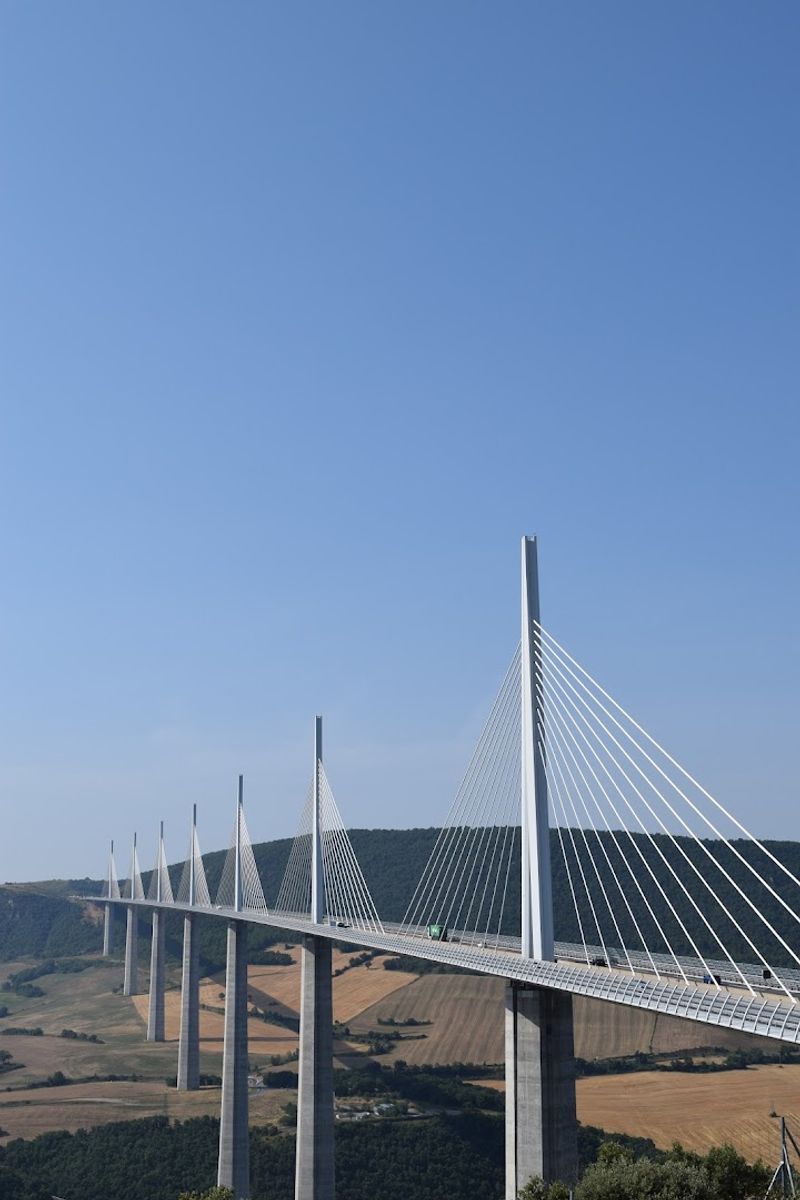
If bridges had a fashion week, the Millau Viaduct would close every show. Designed by architect Norman Foster and engineer Michel Virlogeux, this French masterpiece crosses the Tarn Valley in southern France with a style that no other bridge on this list can match.
At 277 meters above the valley floor, it’s also genuinely high—though it’s better known for the soaring height of its pylons, which push the total structure even higher.
Opened in 2004, the Millau Viaduct was immediately celebrated as one of the greatest engineering achievements of its era. It replaced a notoriously congested route through the valley town of Millau, where summer holiday traffic would back up for hours.
Drivers who once sat in those jams now glide above the clouds at highway speed—a dramatic upgrade by any measure.
The viaduct stretches 2.46 kilometers across the valley, supported by seven slender concrete pylons that give it an almost weightless appearance from a distance. On misty mornings, the deck sits above the cloud layer while the valley below disappears entirely into white fog.
France turned what could have been a purely functional project into something genuinely beautiful—proof that engineering and artistry don’t have to be separate conversations.



