Europe is home to some of the most breathtaking bridges ever built, ranging from ancient Roman aqueducts to sleek modern cable-stayed structures. These bridges are more than just ways to cross water or valleys.
They tell stories of history, culture, and human creativity. Whether you love history, engineering, or simply beautiful views, these 15 bridges are sure to leave you amazed.
1. Charles Bridge, Prague, Czech Republic
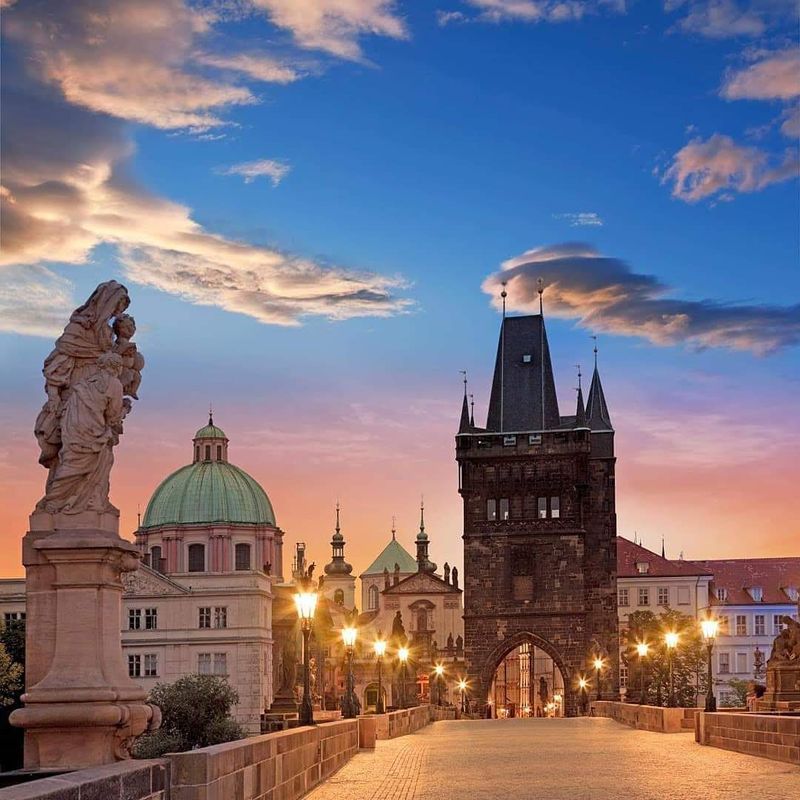
Walking across Charles Bridge at dawn feels like stepping back in time. Built in 1357 under King Charles IV, this stunning Gothic stone bridge stretches nearly 516 meters across the Vltava River.
It took almost 50 years to complete, and the craftsmanship still impresses visitors today.
Lining both sides of the bridge are 30 Baroque statues, most of them depicting saints and religious figures. Each statue tells a story, and locals say touching certain ones brings good luck.
The statue of St. John of Nepomuk is especially popular with tourists.
From the bridge, you get sweeping views of Prague Castle and the Old Town skyline. Street musicians often play nearby, adding to the magical atmosphere.
Charles Bridge is not just a crossing point. It is a living piece of history that connects Prague’s medieval past to its vibrant present.
2. Tower Bridge, London, England
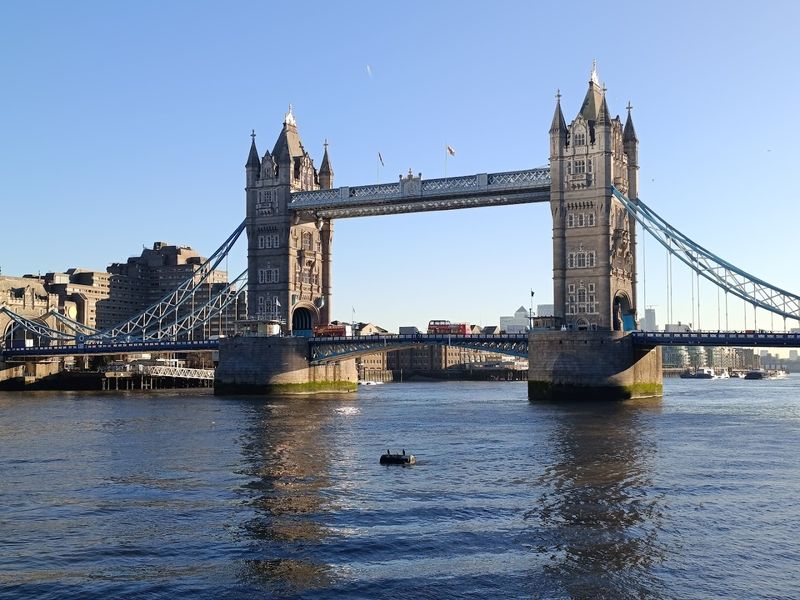
Few bridges in the world are as instantly recognizable as Tower Bridge in London. Completed in 1894, it was designed to blend with the nearby Tower of London, which is why it features a Victorian Gothic style with dramatic stone towers and decorative ironwork.
What makes Tower Bridge truly special is that it can open in the middle. The two bascule sections lift to allow tall ships to pass through the River Thames.
The bridge still opens around 800 times a year, and you can watch the event for free from the riverbank.
Inside the towers, a glass-floored walkway gives visitors a thrilling view straight down to the road below. Many people confuse it with London Bridge, which is a completely different and much plainer structure nearby.
Tower Bridge remains one of England’s most visited landmarks and a proud symbol of Victorian engineering skill.
3. Rialto Bridge, Venice, Italy
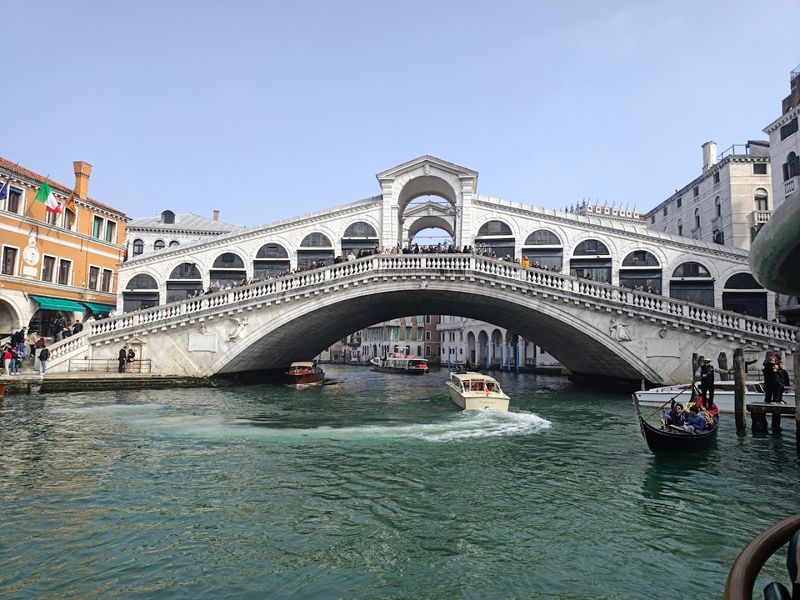
The Rialto Bridge is the oldest of four bridges crossing Venice’s Grand Canal, and it has been a busy hub of city life for centuries. The current stone structure was completed in 1591 after earlier wooden versions kept collapsing or burning down.
It spans about 48 meters and rests on thousands of wooden piles driven into the lagoon floor.
One of its most charming features is the row of small shops built right into the bridge itself. Vendors sell jewelry, scarves, and souvenirs from tiny stalls lining both sides of the central walkway.
Shopping on a bridge while gondolas glide below is a uniquely Venetian experience.
At the time it was built, the single bold arch design was considered daring and even controversial by some architects. Today, the Rialto Bridge is one of the most photographed spots in all of Italy.
Early morning visits offer the best light and far fewer crowds.
4. Ponte Vecchio, Florence, Italy
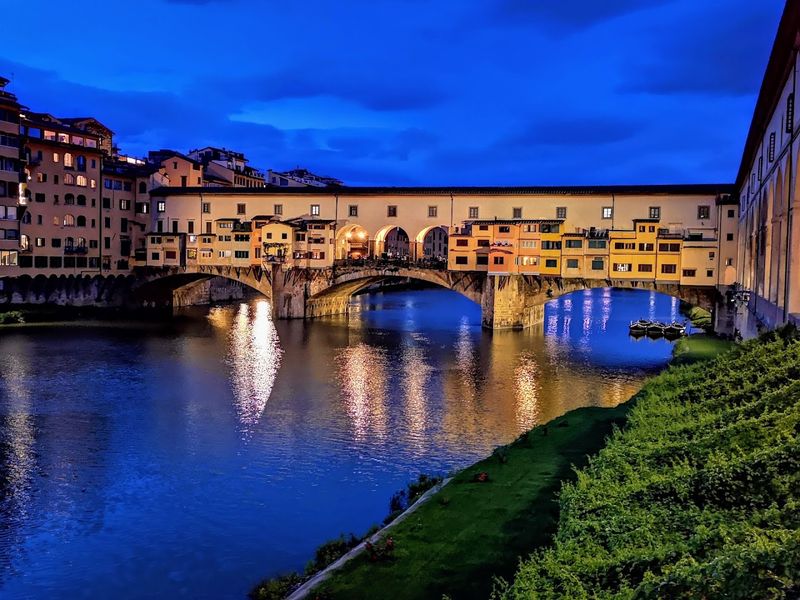
Ponte Vecchio, which means “Old Bridge” in Italian, is the oldest surviving bridge in Florence and one of the most charming in all of Europe. It was built in 1345 and has survived floods, wars, and centuries of change remarkably intact.
During World War II, it was the only bridge in Florence that the retreating German army chose not to destroy.
What sets this bridge apart is the row of small buildings perched directly on top of it. These shops once housed butchers and tanners, but today they are filled with goldsmiths and jewelers.
Browsing glittering rings and necklaces while standing above the Arno River is an unforgettable experience.
Running above the shops is the Vasari Corridor, a private elevated passageway built in 1565 for the Medici family. It allowed them to move between palaces without mixing with the public.
Ponte Vecchio is as much a neighborhood as it is a bridge.
5. Millau Viaduct, France
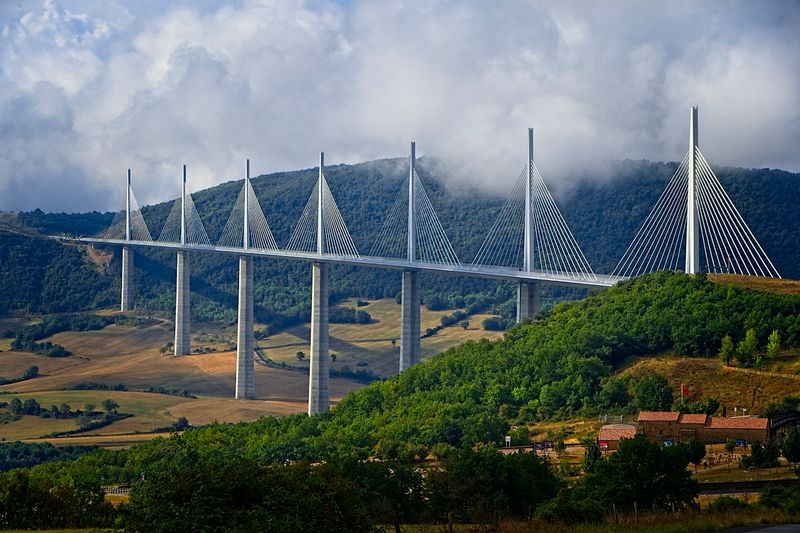
Standing at the edge of a misty valley in southern France, the Millau Viaduct looks almost too graceful to be real. Opened in December 2004, it is the tallest bridge in the world, with its highest mast reaching 343 meters above the ground.
That is actually taller than the Eiffel Tower.
Designed by British architect Norman Foster, the viaduct carries the A75 motorway across the Tarn River valley. Before it was built, the area around Millau became famous for massive traffic jams during summer holidays as cars tried to navigate the town below.
The bridge solved that problem almost instantly.
Driving across it feels surreal, especially when clouds drift below the road level. The structure uses a cable-stayed design, meaning steel cables hold the deck up from tall central masts rather than from below.
Engineers and architects consider it one of the greatest construction achievements of the 21st century.
6. Oresund Bridge, Denmark and Sweden
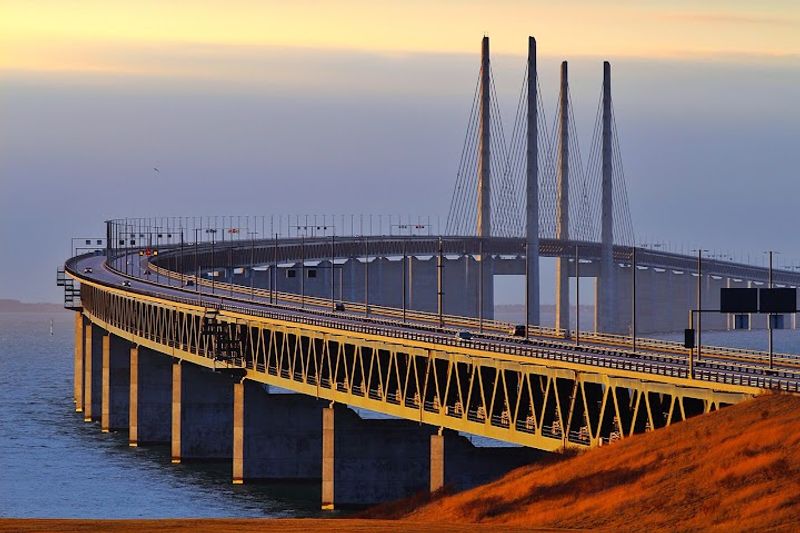
The Oresund Bridge is one of the most ambitious infrastructure projects Europe has ever completed. Opened in July 2000, it connects the Danish capital Copenhagen with the Swedish city of Malmo, crossing about 16 kilometers of open water.
It carries both a motorway and a railway on separate decks, making it a true dual-purpose crossing.
Interestingly, the bridge does not go all the way across. About halfway, it connects to an artificial island called Peberholm, where the route dips underground into a 4-kilometer tunnel.
This design was chosen to avoid interfering with air traffic near Copenhagen’s airport.
The Oresund region is now one of the most integrated cross-border areas in Europe. Thousands of people commute between the two countries every day.
The bridge also became culturally famous after appearing in the Scandinavian crime drama “The Bridge,” which was filmed partly on location and attracted fans from around the world.
7. Stari Most, Mostar, Bosnia and Herzegovina
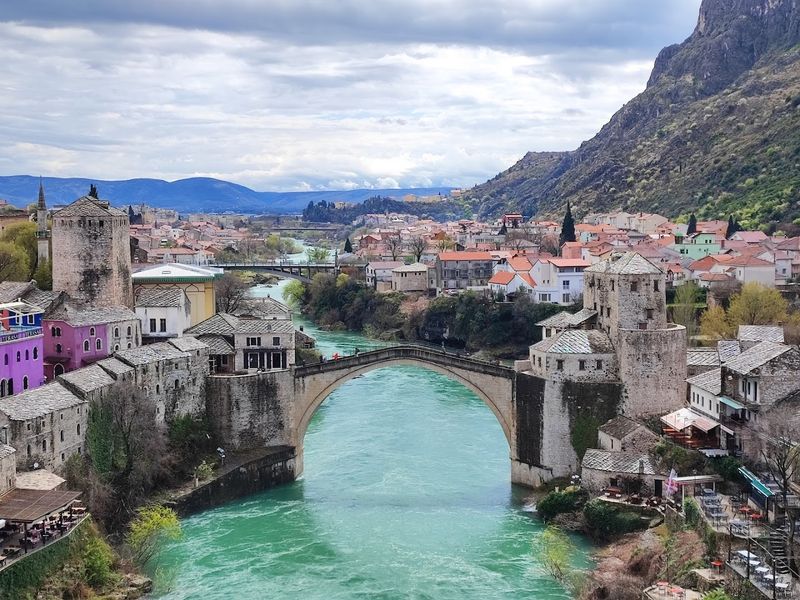
Few bridges carry as much emotional weight as Stari Most in the city of Mostar. The name literally means “Old Bridge,” and the original structure was built in 1566 during the Ottoman Empire.
For over four centuries, its elegant single limestone arch stood as a symbol of the city’s identity and cultural harmony.
Tragically, the bridge was deliberately destroyed during the Bosnian War in 1993. Its reconstruction became an international symbol of hope and reconciliation.
Using the same type of stone and traditional building techniques, the rebuilt bridge was completed in 2004 and is now a UNESCO World Heritage Site.
Every summer, local divers leap from the top of the arch into the Neretva River far below in a tradition that dates back hundreds of years. The surrounding old town, with its cobblestone streets and Ottoman-era bazaars, makes visiting Stari Most feel like a journey through living history.
8. Vasco da Gama Bridge, Lisbon, Portugal
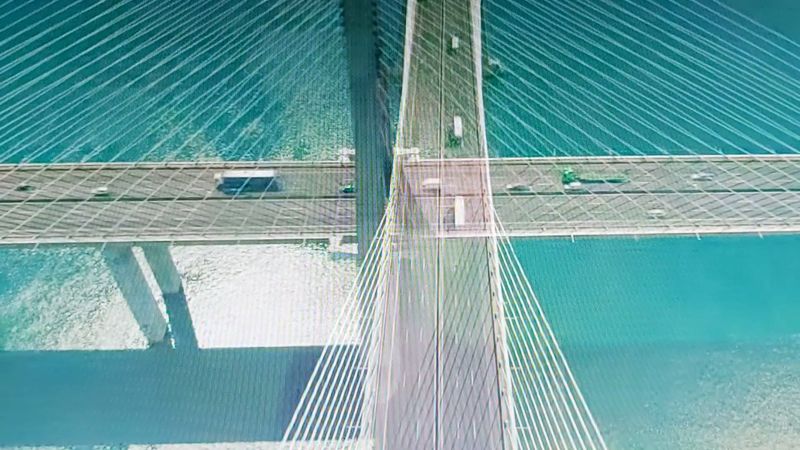
Stretching nearly 17.2 kilometers across the Tagus River estuary, the Vasco da Gama Bridge is one of the longest bridges in all of Europe. It was built in just 18 months and opened in March 1998, just in time to mark the 500th anniversary of explorer Vasco da Gama’s historic sea voyage to India.
The bridge was designed with impressive engineering features to withstand strong winds, earthquakes, and even ship collisions. It can handle winds of up to 250 kilometers per hour, which is important given the exposed location near the Atlantic coast.
The pylons are specially reinforced to resist seismic activity in an earthquake-prone region.
Driving across it on a clear day offers extraordinary views across the wide estuary, with Lisbon’s hills visible in the distance. At night, the bridge is beautifully lit and reflects dramatically on the water below.
It remains a proud symbol of modern Portuguese engineering and ambition.
9. Szechenyi Chain Bridge, Budapest, Hungary
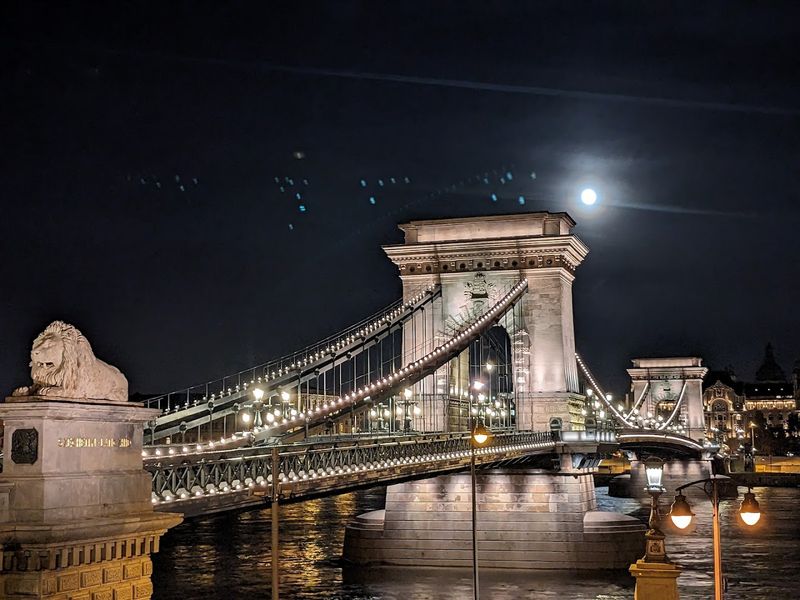
When the Szechenyi Chain Bridge opened in 1849, it was the first permanent bridge to connect the cities of Buda and Pest across the Danube River. Before that, the two halves of the future Hungarian capital could only be connected by seasonal pontoon bridges or ferries.
The completion of the chain bridge was a turning point in Hungary’s history.
Named after Count Istvan Szechenyi, who championed and funded the project, the bridge stretches 375 meters between its two imposing stone towers. Four stone lion statues guard the entrances on both banks.
Legend has it the lions have no tongues, though a closer look reveals they actually do.
The bridge was blown up by retreating German forces in 1945 but was lovingly rebuilt and reopened in 1949, exactly 100 years after its original opening. Today, it remains one of Budapest’s most beloved landmarks, beautifully illuminated every evening against the city skyline.
10. Puente Nuevo, Ronda, Spain
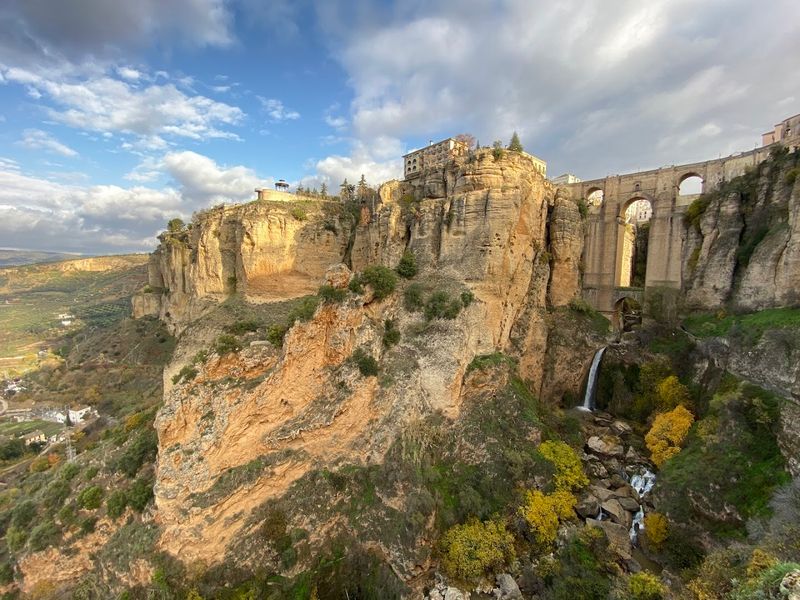
Perched dramatically above a 120-meter-deep gorge carved by the Guadalevin River, Puente Nuevo is one of the most visually striking bridges in all of Spain. Its name means “New Bridge,” even though construction finished back in 1793 after 42 years of work.
The first attempt at building it actually collapsed and killed 50 workers, making the eventual completion a hard-won triumph.
Three arches support the structure, and the central arch is tall enough to fit a six-story building inside. A small chamber built inside the central arch was used at various points in history as a prison and a storage room.
Dark legends about the gorge below have inspired writers, including Ernest Hemingway, who referenced it in “For Whom the Bell Tolls.”
The town of Ronda itself is perched on both sides of the gorge, giving the bridge a spectacular backdrop. Visiting at sunset, when the warm light turns the stone golden, is a memory that stays with you for years.
11. Forth Bridge, Scotland
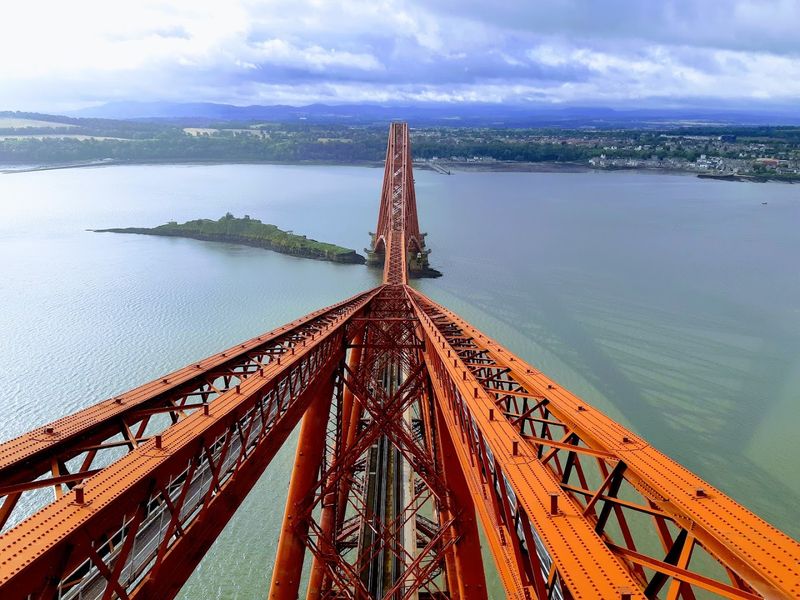
When the Forth Bridge opened in 1890, it was the longest cantilever bridge in the world and a symbol of Britain’s industrial power. Painted in a distinctive deep red color, it crosses the Firth of Forth near Edinburgh and carries the main railway line between the Scottish capital and the north of Scotland.
UNESCO granted it World Heritage status in 2015.
Building the bridge required 55,000 tons of steel, 6.5 million rivets, and the labor of around 4,600 workers. Tragically, 98 workers lost their lives during construction, a sobering reminder of the human cost behind engineering achievements.
The bridge took seven years to complete.
A popular expression in Scotland says that a job that never ends is like “painting the Forth Bridge,” because the structure requires constant maintenance. In reality, a new long-lasting paint system applied in 2011 means it now only needs repainting every 25 years.
The bridge remains fully operational and carries over 200 trains daily.
12. Akashi Kaikyo Bridge, Japan, and Its European Engineering Influence
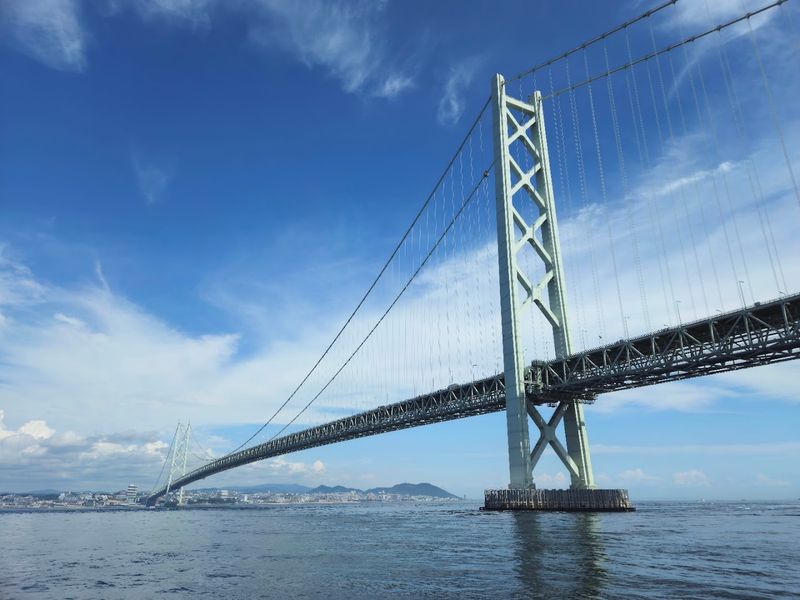
Although the Akashi Kaikyo Bridge stands in Japan, its story is deeply connected to European engineering traditions. Opened in 1998, it holds the world record for the longest central span of any suspension bridge at 1,991 meters.
The engineering knowledge used to design it drew heavily from European bridge-building research, particularly studies done on long-span suspension bridges in Britain and Germany.
The bridge connects the city of Kobe to Awaji Island across the Akashi Strait, one of the world’s busiest shipping channels. It was built to withstand earthquakes, typhoons, and fierce ocean currents.
During construction, a major earthquake actually shifted the positions of the towers slightly, and engineers had to recalculate the entire design.
European structural engineers closely studied this bridge after its completion, using it as a reference point for future large-span designs across the continent. Its influence on modern bridge architecture worldwide, including in Europe, makes it a relevant part of any conversation about architectural masterpieces.
13. Erasmus Bridge, Rotterdam, Netherlands
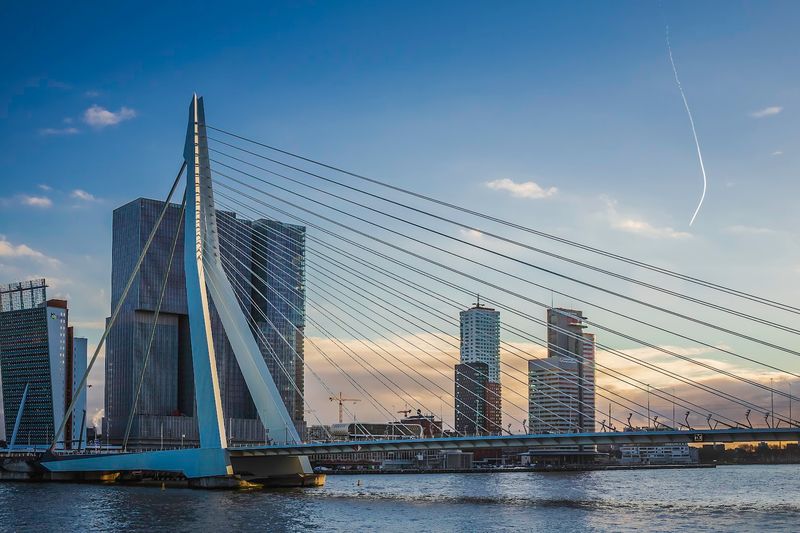
Rotterdam locals gave the Erasmus Bridge a nickname the moment they first saw it: “The Swan.” Opened in 1996 and named after the great philosopher Desiderius Erasmus, the bridge features a single asymmetrical white pylon that curves slightly backward, creating a silhouette that really does look like a swan stretching its neck. It has become the defining image of Rotterdam’s bold, modern skyline.
The bridge spans 802 meters across the Maas River and connects the city center to the Kop van Zuid district, which was once a rundown harbor area. The bridge played a major role in transforming that neighborhood into one of the most desirable areas in the city.
Architecture and urban planning experts worldwide study this as an example of how infrastructure can drive city renewal.
Every year, the bridge serves as a dramatic backdrop for the Rotterdam Marathon finish line. Cyclists, pedestrians, and trams all share the crossing, making it one of the busiest and most lively bridges in the Netherlands.
14. Pont du Gard, France
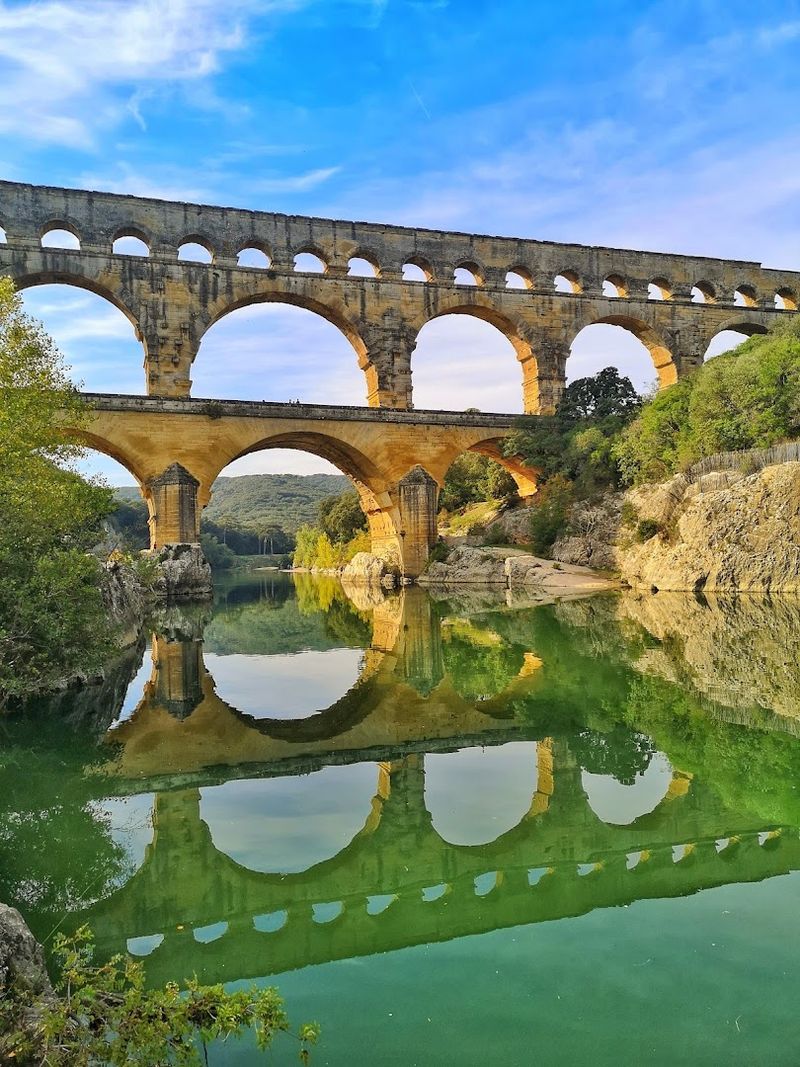
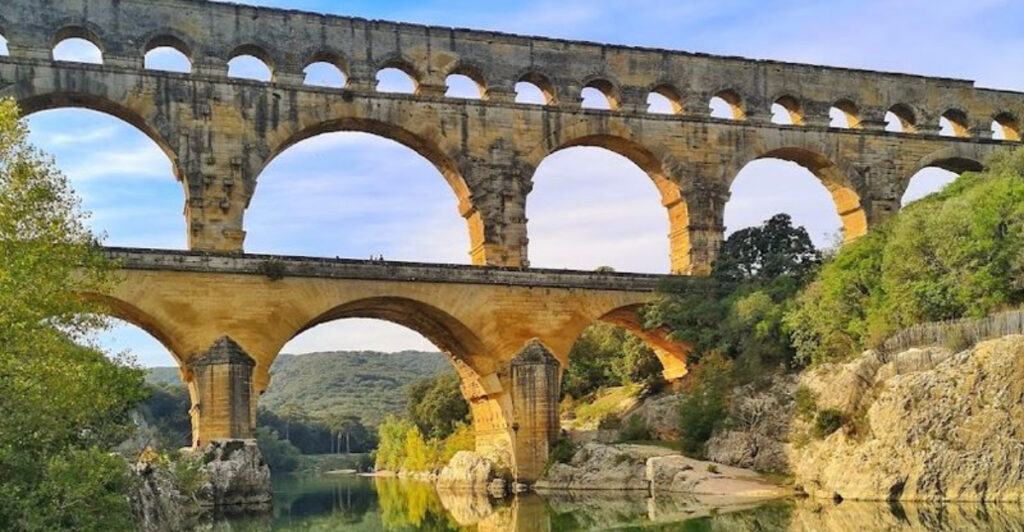
Nearly 2,000 years old and still standing, the Pont du Gard is one of the most astonishing engineering achievements in human history. Built by the Romans around 50 AD, it was part of a 50-kilometer aqueduct system designed to carry fresh water to the city of Nimes in southern France.
The entire structure was built without any mortar, relying purely on precisely cut stone blocks fitting together under their own weight.
Three tiers of arches stack on top of each other, reaching a height of 49 meters above the Gardon River. The top tier, which carried the water channel, is slightly narrower than the lower tiers to reduce wind resistance.
The engineering precision is so remarkable that the aqueduct maintained a gradient of just 34 centimeters per kilometer over its entire length.
Today, the Pont du Gard is a UNESCO World Heritage Site and one of France’s most visited ancient monuments. Swimming in the river beneath its arches on a hot summer day is a favorite activity for families visiting the region.
15. Helix Bridge, Singapore, and Its Connections to European Modernism
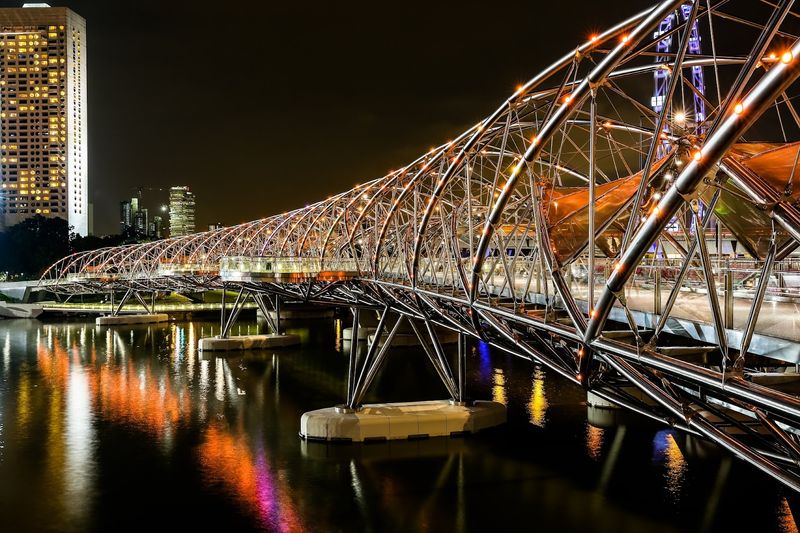
The Helix Bridge in Singapore looks like something from a science fiction film. Opened in 2010, its double helix structure was inspired by the shape of human DNA, making it one of the most visually unique pedestrian bridges anywhere in the world.
The design was developed by an international team that included architects from the European firm Cox Architecture working alongside local engineers.
The collaboration behind the Helix Bridge reflects a growing trend of European architectural ideas crossing into Asian design. Clean geometric thinking, sustainable materials, and a focus on the pedestrian experience are all principles with strong roots in European modernist traditions.
The bridge serves as a working example of how those ideas translate into bold new forms around the world.
At night, the steel helix structure is lit up with colorful LED lights, drawing visitors from across Singapore and beyond. For architecture enthusiasts, it offers a fascinating glimpse at where European design philosophy and global innovation come together in an unexpected and striking way.
Share this story