 Unearth The Voyage
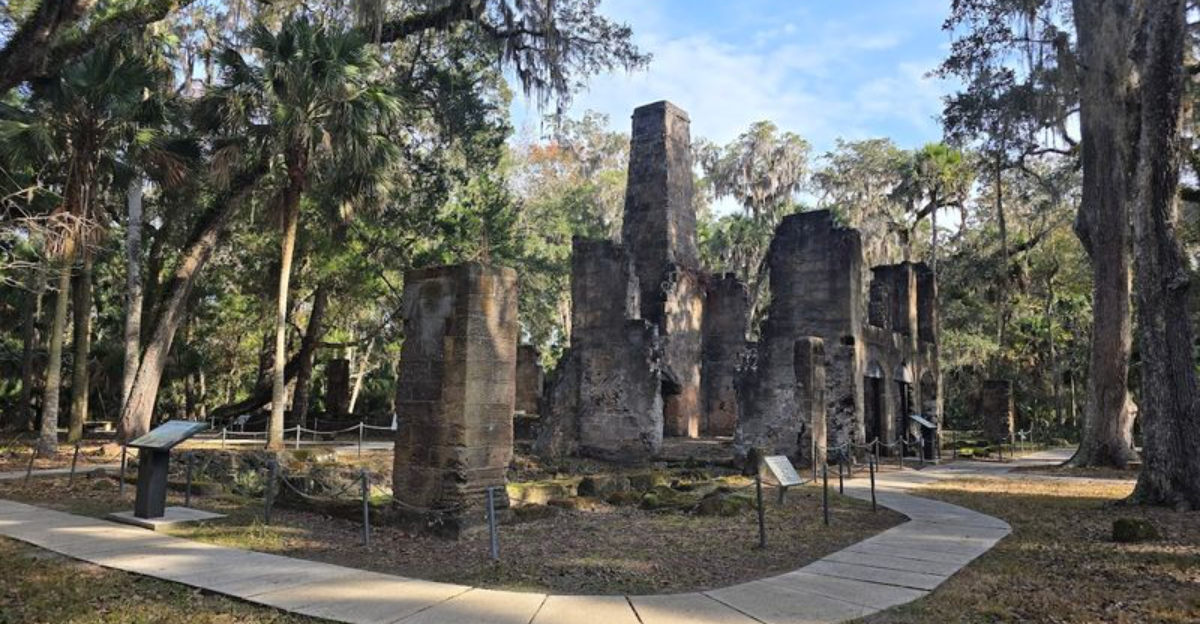
There is a place tucked back in the Florida wilderness, not far from the coast, where crumbling coquina walls rise out of the palmetto scrub like a message from another century. The first time I turned down that shaded dirt road, I had no idea I was about to walk through one of the most thought-provoking outdoor spaces in the entire state.
This park holds the remains of what was once the largest sugar plantation in East Florida, a place built on the labor of enslaved people and ultimately reduced to ashes during the Second Seminole War in 1836. The story carved into these ruins is not a comfortable one, but it is one every Florida visitor deserves to hear.
Keep reading, because what waits at the end of that trail is genuinely unforgettable.
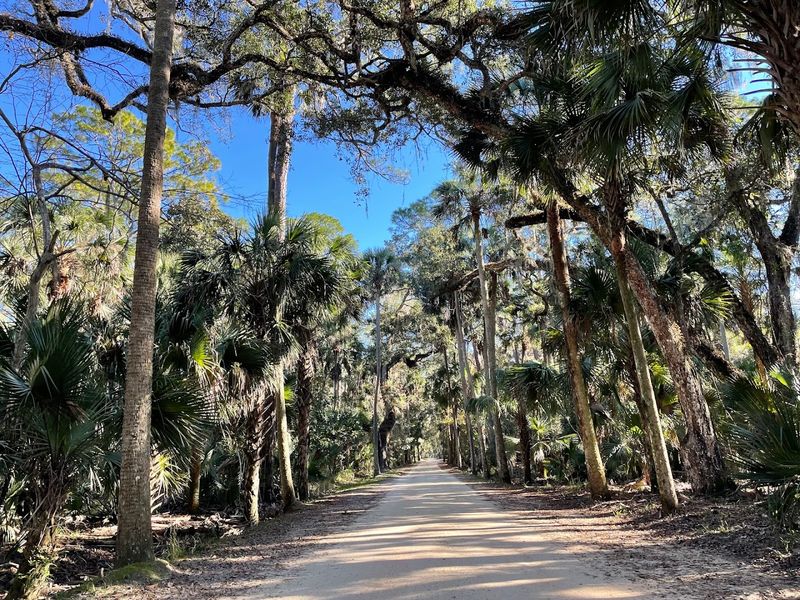
The road itself gives you a hint of what is coming. Bulow Plantation Ruins Historic State Park sits at 3501 Old Kings Rd, Flagler Beach, and the drive in feels like the modern world is slowly peeling away behind you.
The park is open Thursday through Monday from 9 AM to 5 PM and is closed on Tuesdays and Wednesdays, so plan your visit accordingly. Entry is just four dollars per vehicle, paid via an honor box at the entrance, and you can also scan a QR code to pay digitally if you prefer.
Bring exact cash just in case, since credit cards are not always accepted at the box. The entrance road is unpaved in sections and lined with massive live oaks draped in Spanish moss, which sets a mood that no theme park could ever replicate.
Major Charles Wilhelm Bulow established this plantation in the early 1820s, clearing thousands of acres of Florida wilderness to grow sugar cane, cotton, rice, and indigo. At its peak, the operation was the largest sugar plantation in East Florida, and it ran almost entirely on the forced labor of enslaved people.
When the Second Seminole War erupted, Seminole forces burned the plantation to the ground in January 1836, ending its short but brutal chapter in Florida history. Major Bulow’s son, John Joachim Bulow, had actually been sympathetic to the Seminole cause and had even sheltered the famous Seminole leader Osceola at one point, which made his position during the war deeply complicated.
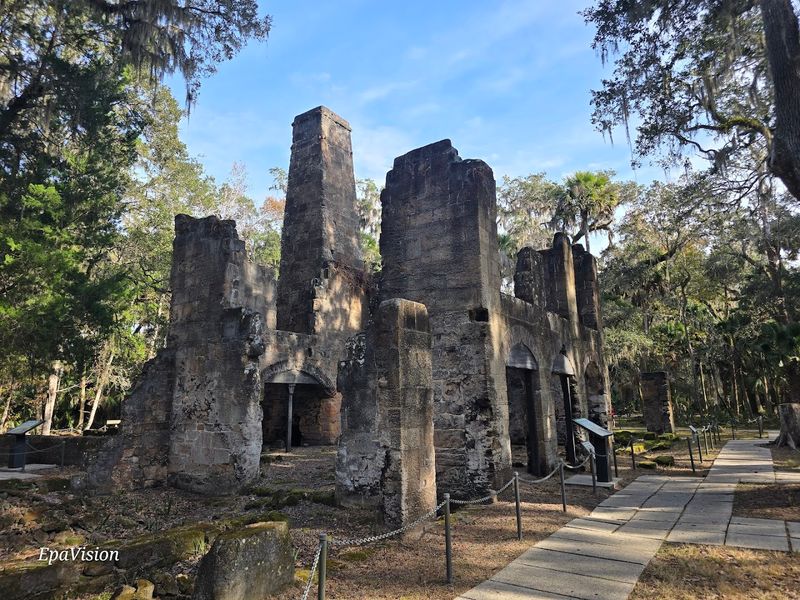
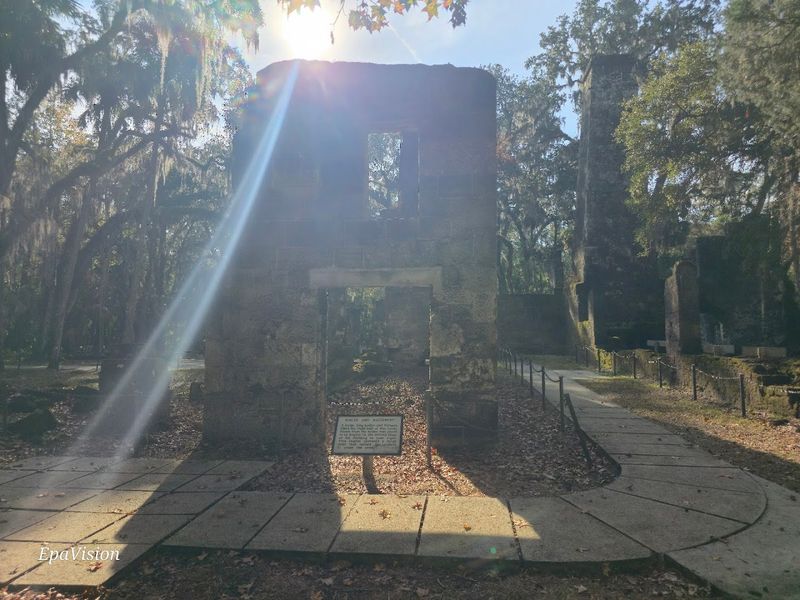
What remains today are the coquina sugar mill walls, the plantation house foundation, and the traces of tabby slave cabins, each one a quiet but powerful witness to everything that happened here.
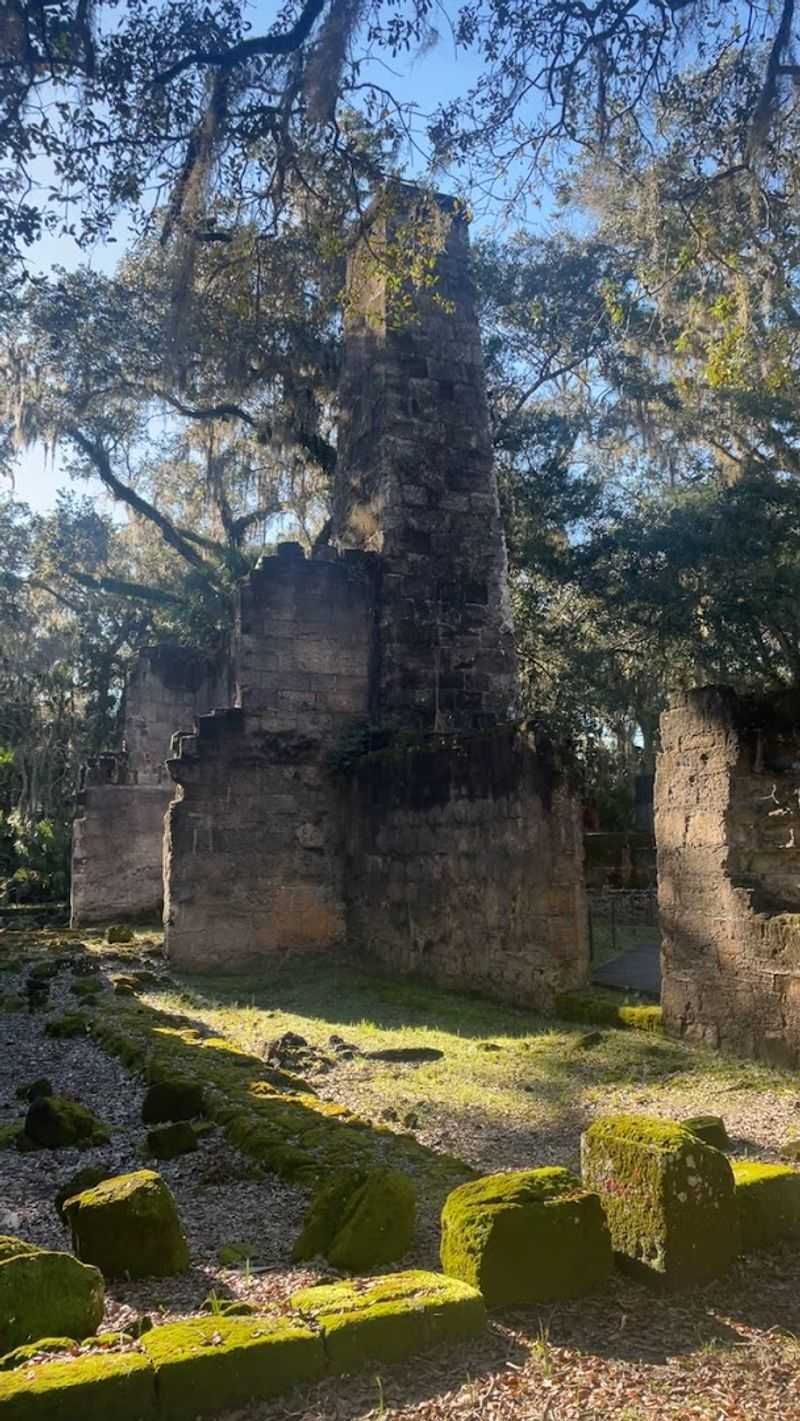
Nothing at this park stops you in your tracks quite like the sugar mill walls. Built from coquina, a naturally occurring shellstone found along Florida’s Atlantic coast, these walls have stood for nearly two centuries through hurricanes, wars, and the relentless pressure of subtropical vegetation.
The structure is surprisingly large, and when you stand next to it, you start to grasp the scale of what was once a fully operating industrial facility in the middle of the Florida wilderness. Interpretive signs posted throughout the area explain each stage of the sugar-making process in clear, accessible language, from harvesting the cane to boiling it down in massive kettles.
The golden light filtering through the tree canopy onto that weathered stone creates a scene that photographers absolutely love, and it is easy to spend a long time here just absorbing the atmosphere and the weight of what these walls once witnessed.
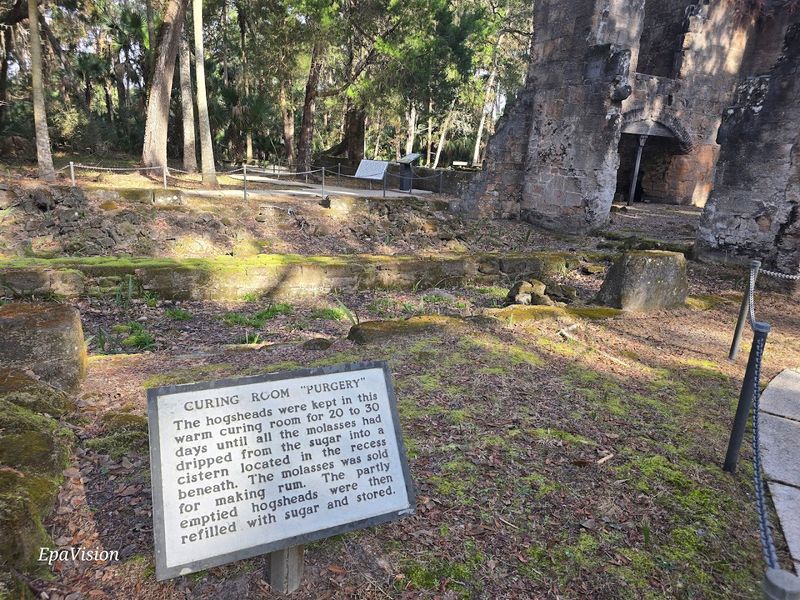
A short trail leads away from the main picnic area toward what remains of the slave cabins, and it is easy to walk right past the trailhead if you are not paying attention. Do not miss it.
These tabby foundations, made from a mixture of oyster shells, sand, and lime, are all that physically remain of the quarters where enslaved people lived and worked under brutal conditions.
The state park does a thoughtful job of providing context through its interpretive panels, which explain the lives of the people who were enslaved here without softening the reality of what that meant. Standing at these foundations feels different from standing at the mill, quieter and more personal, like you are on ground that deserves a moment of stillness.
This corner of the park carries more emotional weight than any other spot on the property, and it is the kind of place that tends to stay with you long after you have driven back to the highway.
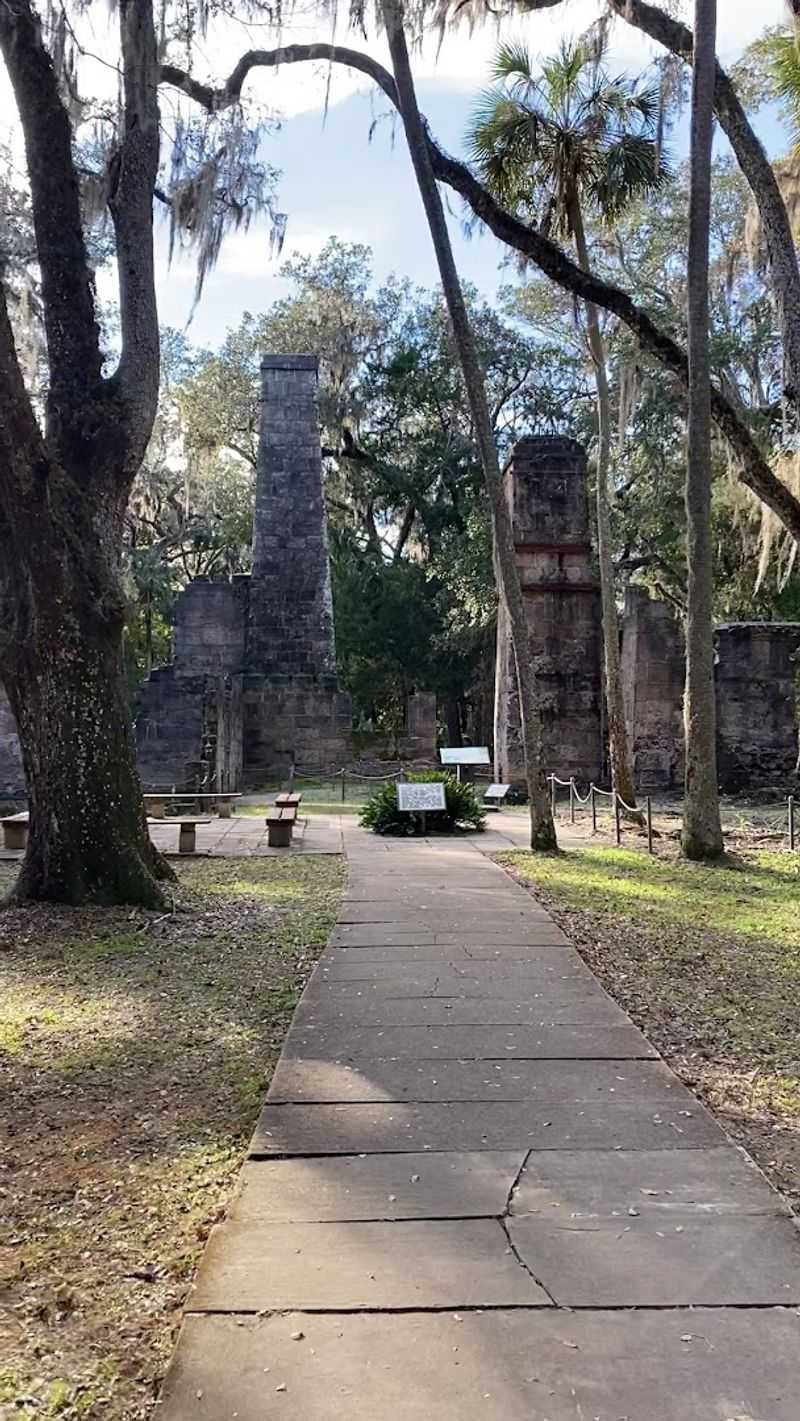
The plantation house itself is completely gone, but the outline of its foundation is still visible at the park, marked clearly so visitors can understand the footprint of the original structure. What strikes me most about this spot is how the jungle has crept in around the edges, with roots and vines slowly reclaiming the stones over the decades.
Informational plaques nearby help visitors visualize what the house would have looked like in its heyday, when it was a center of social life for the wealthiest plantation families in East Florida. The contrast between that former grandeur and the quiet, overgrown outline you see today is genuinely thought-provoking.
It is a good reminder that the things we build, no matter how ambitious or imposing, are always temporary, and that the natural world has a long memory and an even longer patience for reclaiming what was taken from it.
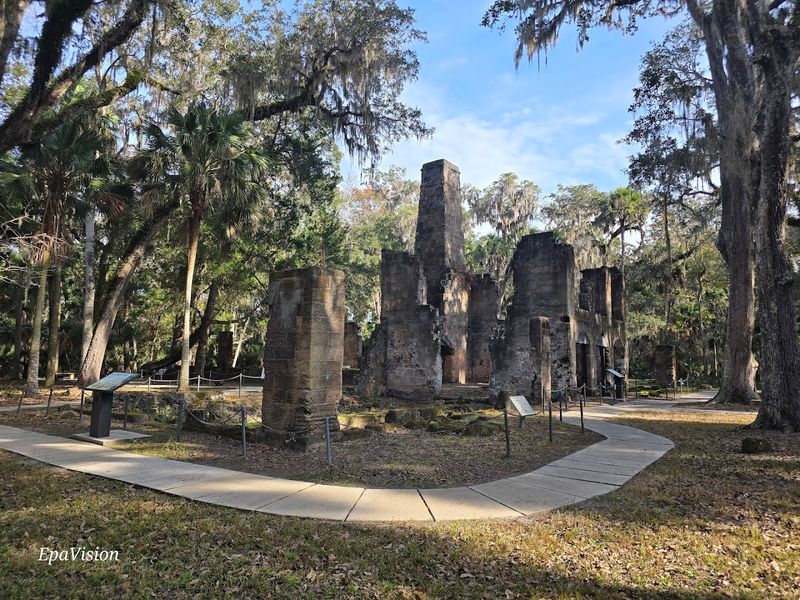
The self-guided tour format here works really well for this kind of site. You move at your own pace, stop as long as you want at each station, and there is no pressure to keep up with a group or follow a rigid schedule.
The numbered signs are well-placed and genuinely informative, covering everything from the agricultural history of the plantation to the specific mechanics of 19th-century sugar production.
A printed brochure is available at the entrance, and it maps out the key stops along the route so you do not miss anything important. The whole loop through the main ruins area takes about 30 to 45 minutes at a relaxed pace, though you could easily stretch that to an hour or more if you stop to read every sign and take photos.
For families with older kids, this is a genuinely engaging outdoor classroom, the kind of place where history lessons actually stick because you are standing right where it all happened.
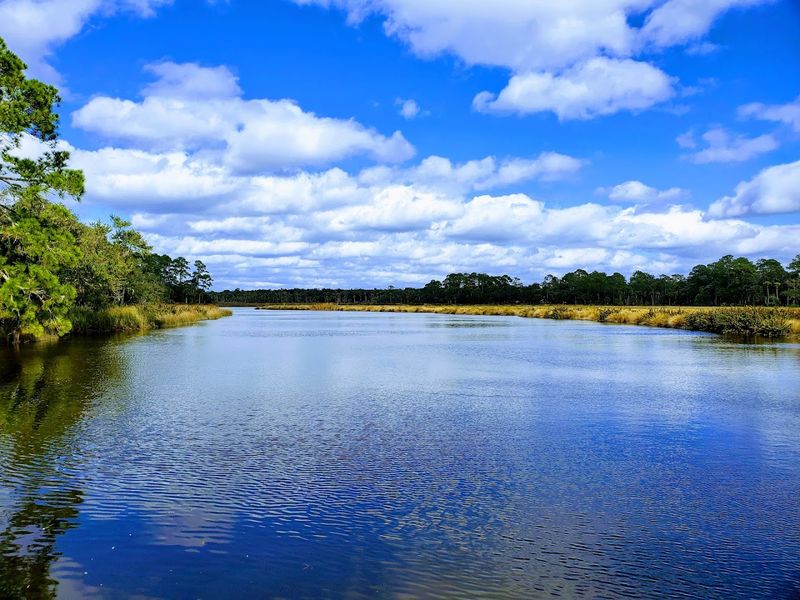
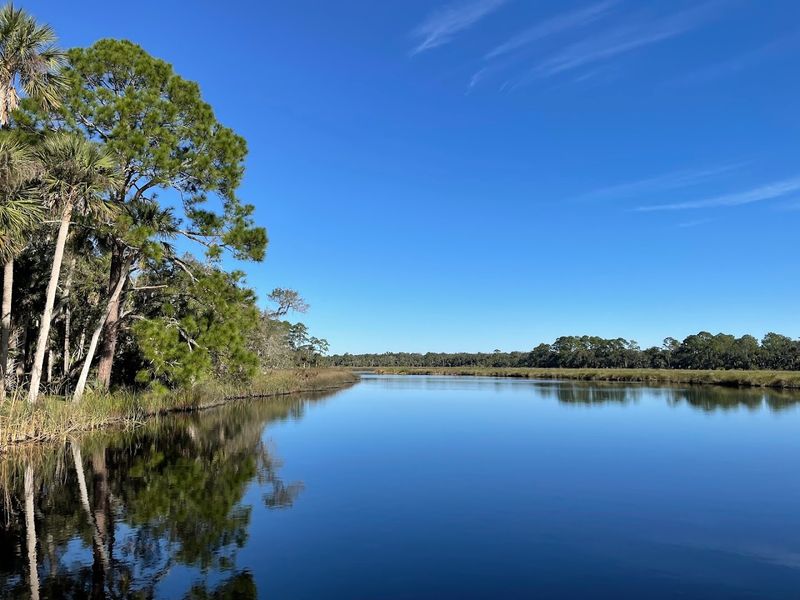
One of the most underrated features of this park is the canoe and kayak trail along Bulow Creek, a dark, tannin-stained waterway that winds through a coastal hammock forest so thick and green it feels genuinely remote. The creek is calm and well-suited for beginners, with no significant current or rapids to worry about.
The boat ramp is easy to access, and there is enough parking for trucks with trailers, which is a practical detail that makes a real difference if you are hauling a kayak or canoe from out of town. The wildlife along the creek is excellent, with wading birds, turtles, and the occasional alligator sunning on the banks, so keep your eyes open and your paddle quiet.
Paddling this stretch early in the morning, when the mist is still sitting on the water and the birds are just getting loud, is one of those Florida experiences that you genuinely cannot get anywhere else.
The park offers trail options that range from a gentle 0.3-mile walk to the ruins all the way up to a 6.8-mile trail that stretches through the surrounding natural area. That longer trail connects to the Bulow Woods trail system, which passes through one of the most intact coastal hammock forests remaining in northeast Florida.
For visitors who are short on time or just want to see the highlights, the short loop from the picnic area to the sugar mill ruins is the perfect introduction. It is shaded almost the entire way, which matters a lot during Florida summers when the humidity hits hard and the sun shows no mercy.
The southern section of the park has its own parking area and two additional trail options, including a route that leads to Cedar Creek, where a small footbridge offers a genuinely beautiful view over the water that makes the extra effort absolutely worth it.
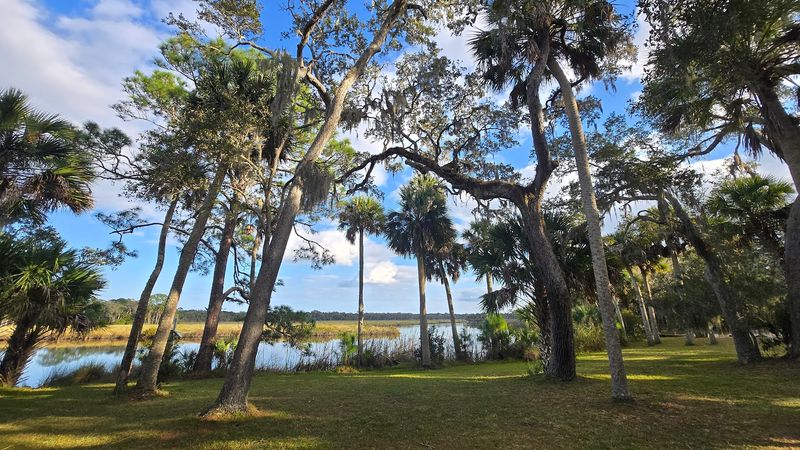
The natural setting of this park is stunning in its own right, completely apart from the historical significance of the ruins. The coastal hammock forest is dominated by enormous live oaks, their thick branches spreading wide and dripping with Spanish moss, creating a cathedral-like canopy over the trails and picnic areas.
Saw palmetto fills the understory, and in the wetter areas near the creek, you find cabbage palms and red maples mixed in among the hardwoods. The whole landscape has a quality that feels both ancient and alive, like the forest has been quietly growing here through all the centuries of human drama that played out within it.
On a cool, breezy day in late fall or winter, this park is about as close to perfect as a Florida outdoor experience gets, and the combination of shade, wildlife, and historical atmosphere makes it unlike almost anywhere else in the region.
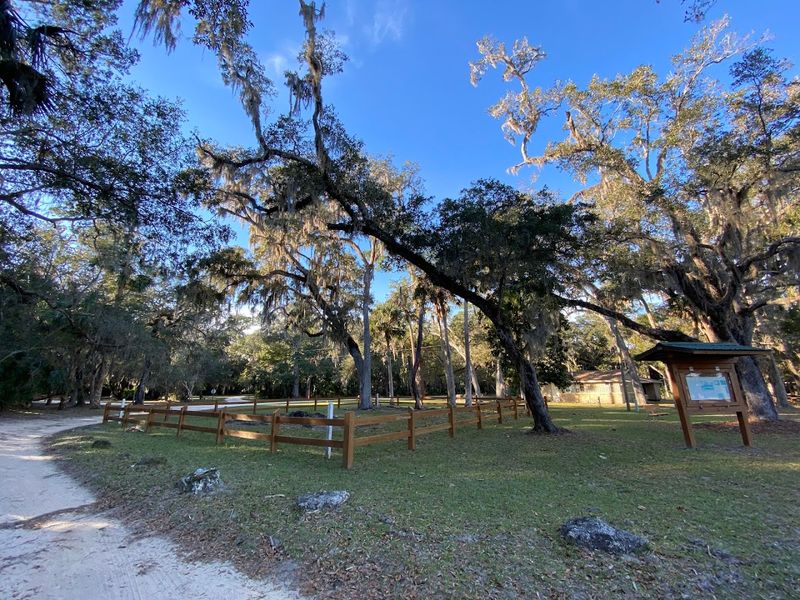
The park has well-maintained picnic areas with shaded tables, clean restrooms, and enough space to spread out and relax after a walk through the ruins. The facilities are simple but genuinely well kept, which reflects the care the Florida State Parks system puts into maintaining these sites.
Families with kids will find the park very manageable, since the main ruins area is compact enough to cover without wearing anyone out, and the picnic area gives younger visitors a chance to run around and decompress between history lessons. Dogs are welcome on leash, which is a detail that a lot of pet owners really appreciate.
The combination of shade, open space, historical interest, and accessible trails makes this park a solid choice for a half-day outing with family, and the low entry fee means you can visit without any financial stress making the decision harder than it needs to be.
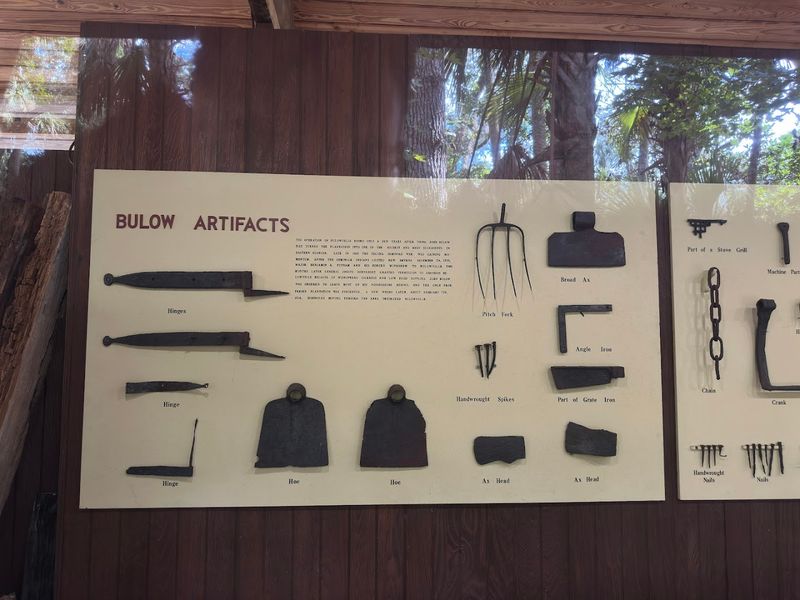
Beyond the ruins themselves, the park maintains a small but genuinely interesting collection of artifacts from the plantation era, including old tools, household items, and agricultural equipment displayed behind protective glass. These objects add a tactile dimension to the history that the ruins alone cannot provide.
Seeing the actual implements used for sugar processing, the kettles, the cutting tools, the measuring devices, helps you understand the physical reality of the work that went on here in a way that written descriptions simply cannot match. The interpretive displays are thorough and clearly written, making them accessible to visitors of all ages.
Some sections of the display could use updating, as a few panels show their age, but the core information is solid and the overall presentation is well above average for a small state park. It is the kind of exhibit that sends you home wanting to read more about Florida’s antebellum history.
The cooler months between October and March are hands-down the best time to visit this park. Florida winters are mild enough to make outdoor exploration genuinely pleasant, and the lower humidity means you can hike the longer trails without feeling like you are moving through warm soup.
The park is open Thursday through Monday, 9 AM to 5 PM, and is closed on Tuesdays and Wednesdays, so double-check the schedule before you make the drive. Arriving early on a weekday gives you the best chance of having the ruins mostly to yourself, which transforms the experience from a pleasant outing into something closer to a private walk through history.
Bring water, wear comfortable shoes, and pack bug spray if you plan to venture onto the longer trails near the creek. A few dollar bills in your pocket for the honor box entrance fee will also save you from scrambling at the gate.



