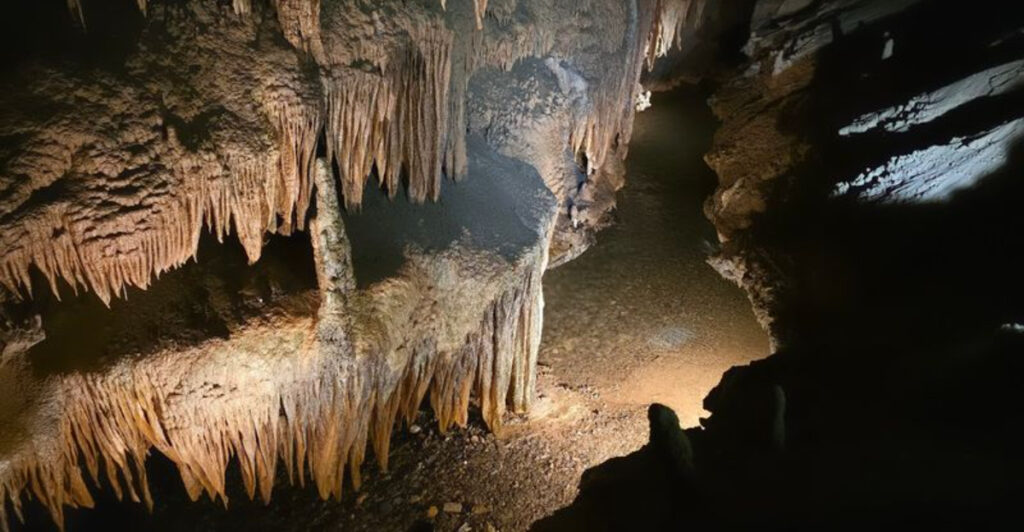
Deep beneath the hills of Townsend, Tennessee, a cave system has been quietly forming for roughly 20 million years. Long before the Smoky Mountains became one of the most visited national park regions in the country, water was carving out massive underground rooms, building towering stalagmites, and shaping formations that look almost too dramatic to be real.
Tuckaleechee Caverns sits just outside the national park boundary, tucked along a quiet road where most people might not expect to find one of the most remarkable geological sites in the eastern United States. What waits underground is far bigger, far older, and far more surprising than the roadside signs let on.
20 Million Years in the Making
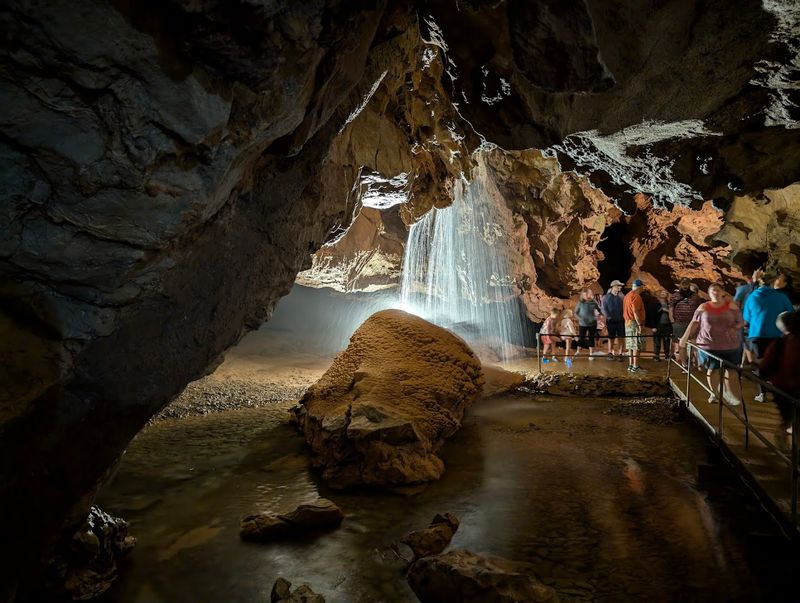
The story of Tuckaleechee Caverns did not begin with a tour group or a gift shop. It began roughly 20 million years ago, when water started moving through limestone bedrock beneath what is now the Tennessee Valley, slowly dissolving rock and carving out a network of chambers and passages.
Limestone is soluble in slightly acidic water, and over millions of years, that chemical process hollowed out rooms large enough to hold thousands of people. The formations inside, the stalactites hanging from the ceiling and the stalagmites rising from the floor, grew at a pace of roughly one cubic inch every 100 years.
That timeline puts the age of some formations well beyond anything a human brain can easily process. The cave is not just old in the way that old buildings are old.
It represents geological time, a scale that makes human history look like a brief footnote on a very long page.
The Size of These Rooms Will Catch You Off Guard
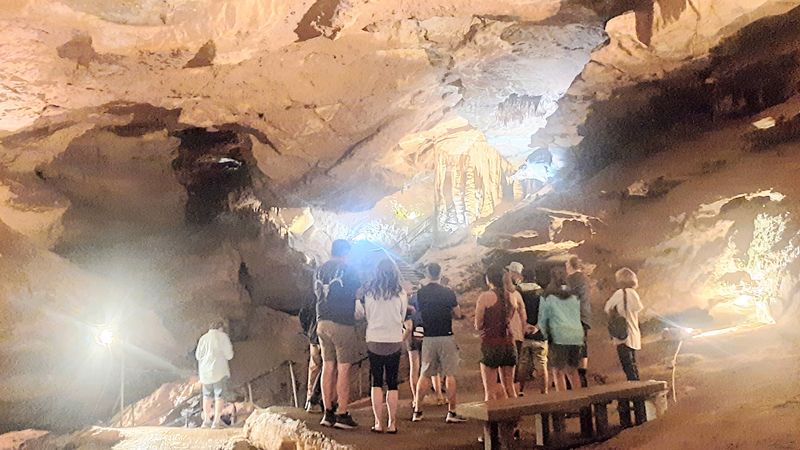
Most people arrive expecting a narrow tunnel with some rocks on the ceiling. What they find instead are rooms so large that the ceiling disappears into shadow above them, and formations that rise several stories from the cave floor.
The largest chamber inside Tuckaleechee is known as the Big Room, and the name is not an exaggeration. At roughly 400 feet long and up to 150 feet wide in places, it ranks among the largest cave rooms open to the public in the eastern United States.
Groups that enter the cave often go quiet for a moment when they first step into that space, not because they are told to, but because the scale simply demands a pause. The cave keeps going beyond what most people expect, with passage after passage leading to new formations, underground streams, and sections that feel completely separate from the world above.
Underground Water That Never Stops Moving
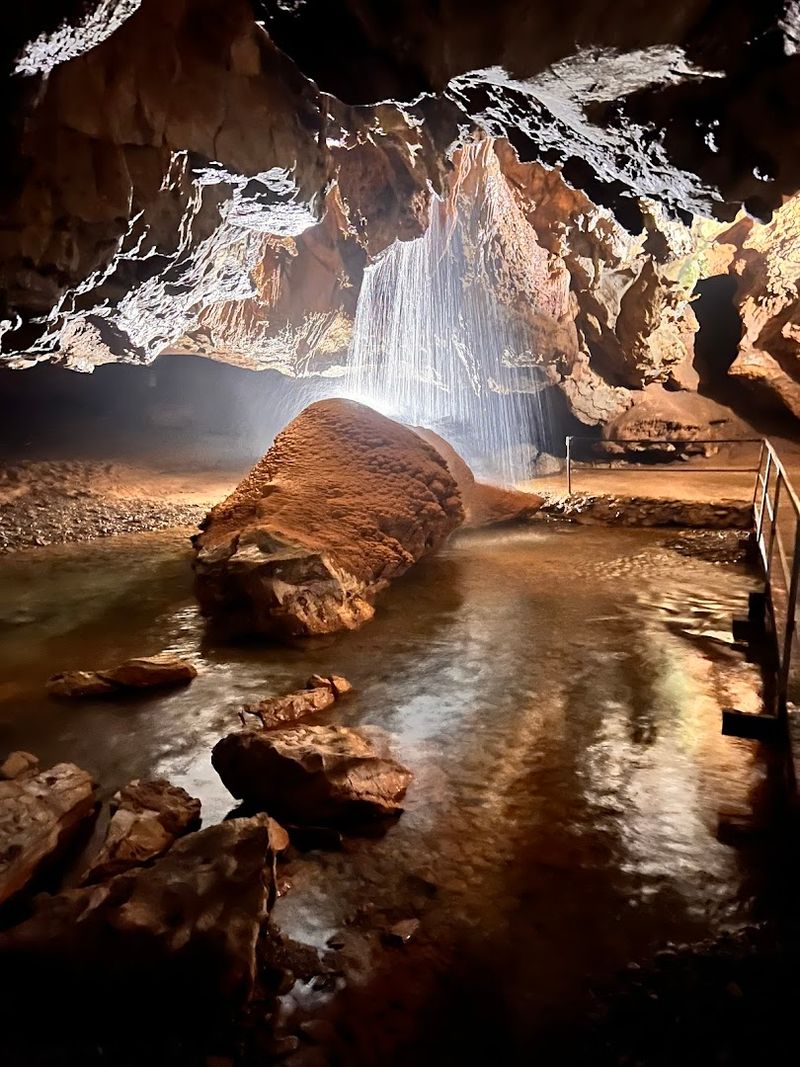
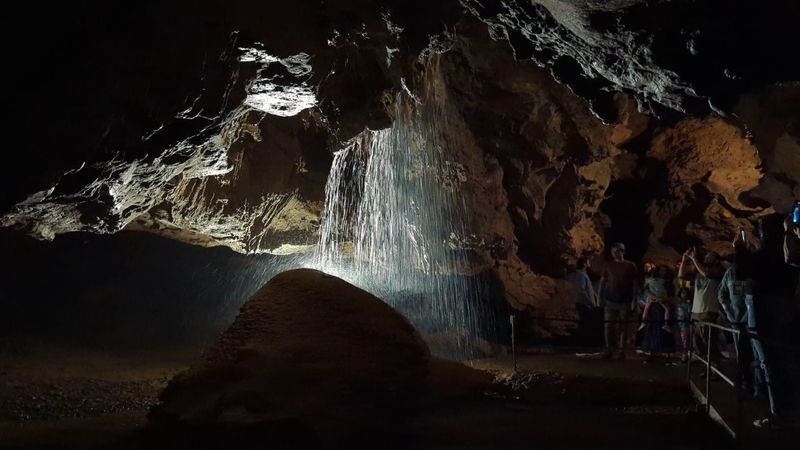
One of the more unexpected features of the cave is the water. An underground stream runs through sections of the tour route, and in at least one spot, that water drops over a ledge to create a small underground waterfall.
The water running through Tuckaleechee is remarkably clean, filtered through layers of limestone over long distances before it ever reaches the cave floor. Some guides note that it tests at around 98 percent pure, which is cleaner than most municipal tap water supplies.
Beyond the waterfall, the presence of flowing water throughout the cave is a reminder that the formation process never actually stopped. Water is still moving through the rock, still depositing minerals, still building formations at that slow pace of one cubic inch per century.
The cave is not a museum piece frozen in time. It is an active geological system that continues to change, just on a schedule that does not match human lifespans.
What the Tour Actually Looks Like
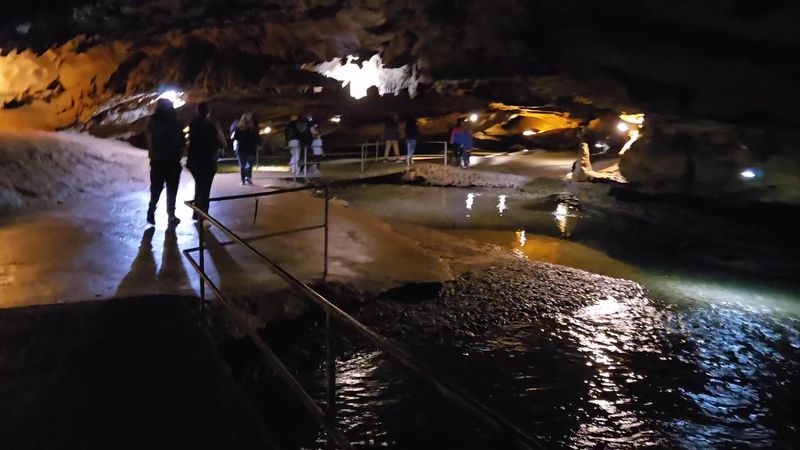
Tours at Tuckaleechee run throughout the day without a fixed schedule, departing when groups are ready rather than at set times. The wait between tours is generally short, often around 20 minutes or less, which means visitors rarely spend much time standing around before heading underground.
Each tour covers approximately 1.7 miles of cave passages and takes roughly 90 minutes to complete. Once the tour begins, there is no way to exit early, so the full route is the commitment from the moment the group steps down into the cave.
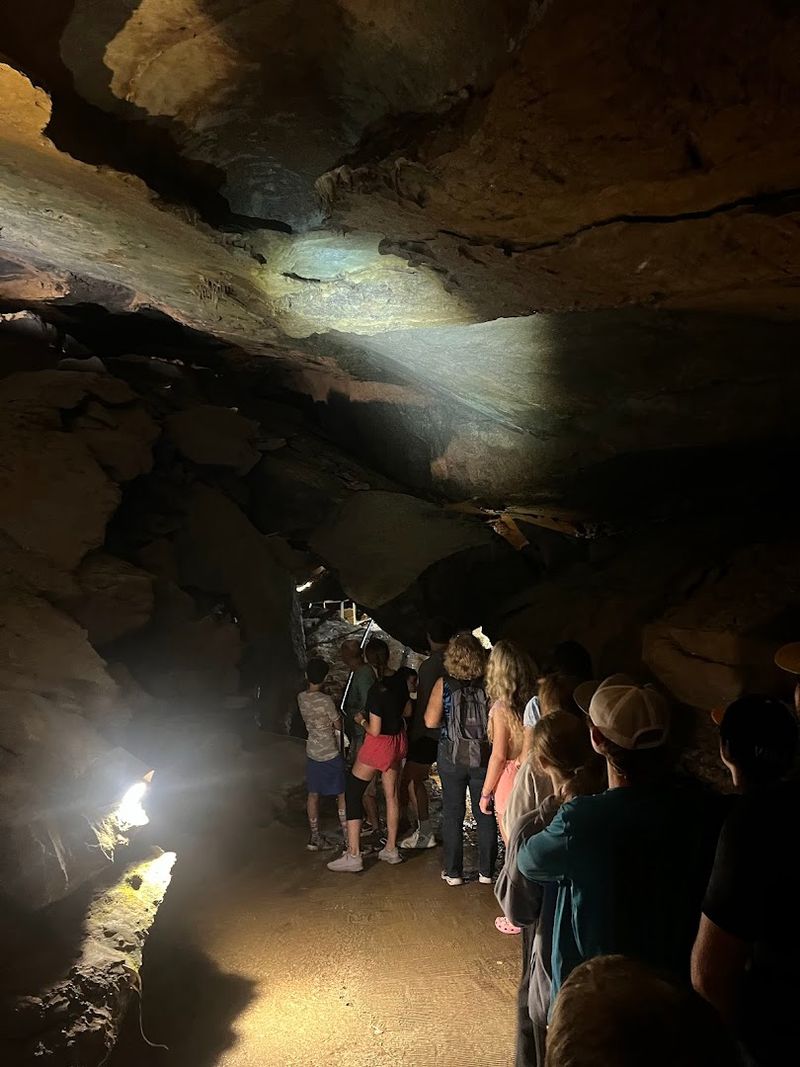
Guides lead groups through the passages, stopping at key formations to explain the geology, share the history of the cave, and point out details that most people would otherwise walk right past. The tour covers a mix of wide-open rooms and tighter passages, with a few spots where the ceiling drops low enough that crouching is necessary.
The variety keeps the experience moving and prevents any single stretch from feeling repetitive.
The Physical Side of the Visit
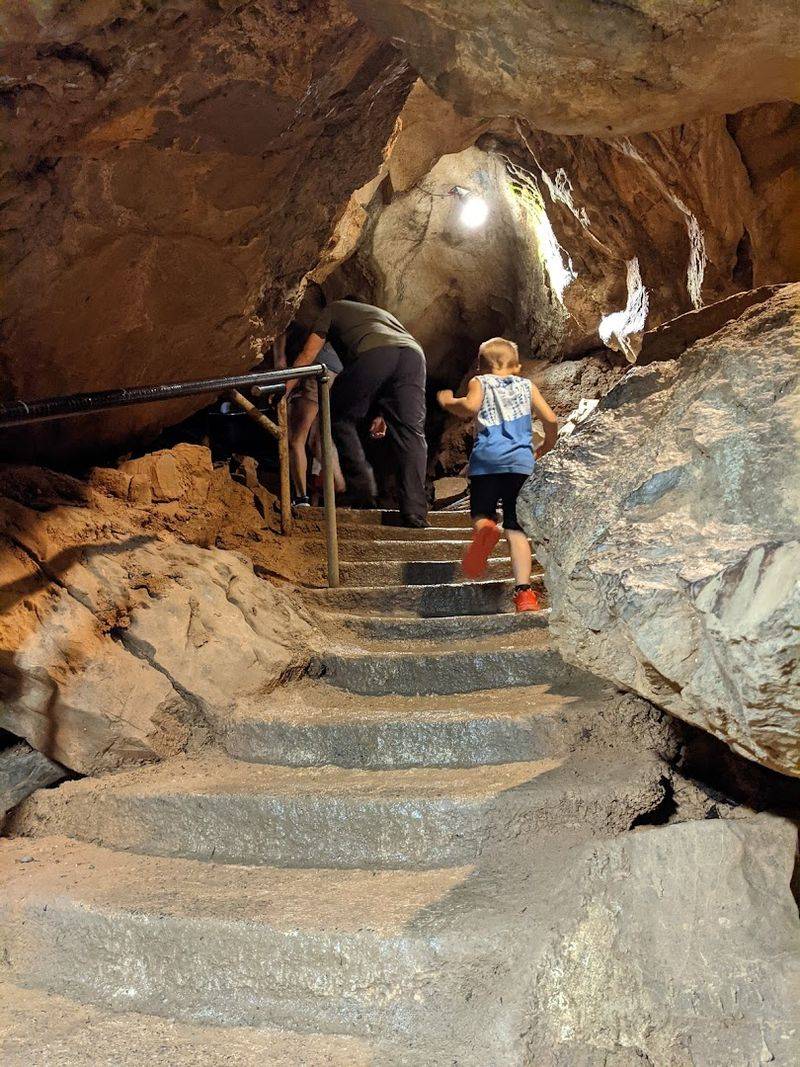
Tuckaleechee is not a flat, paved walkway with handrails every few feet. The cave terrain includes uneven surfaces, low ceilings in certain passages, and a significant number of stairs both heading down into the cave and climbing back out at the end.
The exit stairs in particular get mentioned frequently because they are steep and numerous. After 90 minutes of walking underground, the climb back to the surface is a genuine physical effort, and anyone with knee problems, heart conditions, or limited mobility should think carefully before committing to the full tour.
Children as young as four have completed the tour, but younger kids and elderly adults may find some sections genuinely challenging. Good walking shoes are not just a suggestion.
The cave floor is often damp and uneven, and footwear with solid grip makes a real difference. The cave also stays around 58 degrees Fahrenheit year-round, so a light jacket is worth bringing regardless of the season.
A Family Business With Deep Local Roots
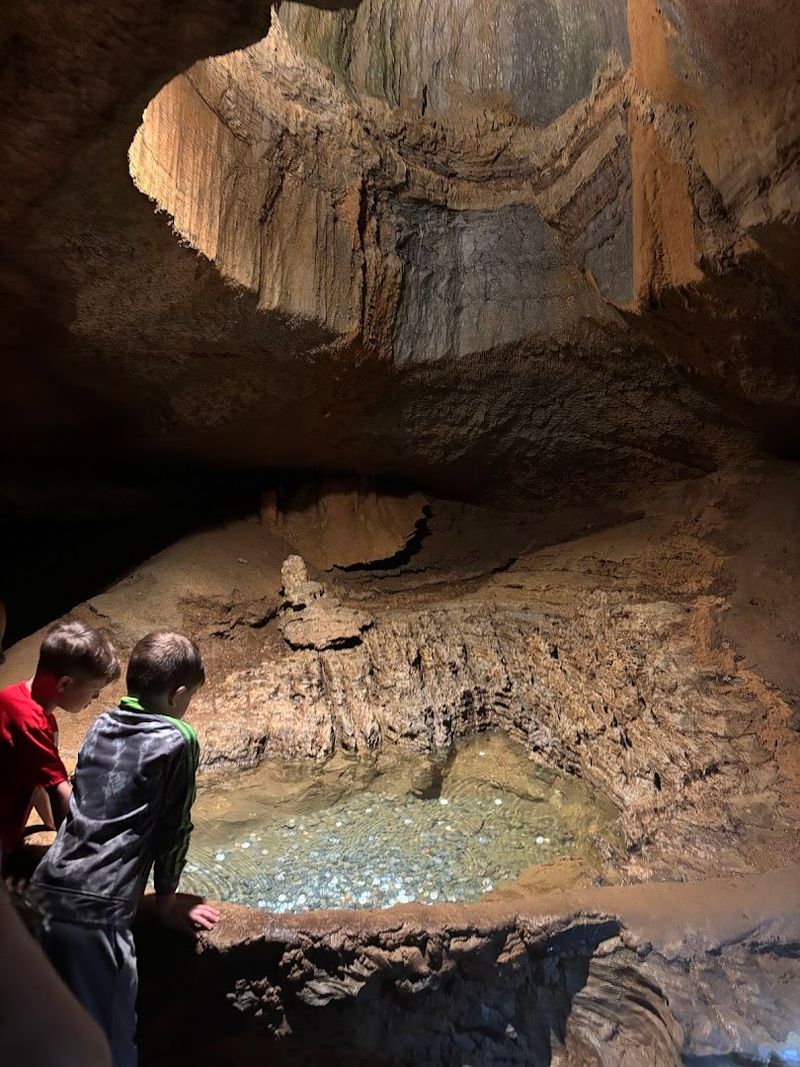
Tuckaleechee Caverns has been operating as a family-run attraction for decades, and that ownership structure shows in the way the place is managed. There is a personal quality to the experience that larger, corporately operated attractions often lose over time.
Some of the guides working the tours are second-generation employees, meaning their parents led tours in the same cave before them. That kind of institutional knowledge runs deeper than anything a training manual can produce, and it comes through in the way guides talk about the cave with genuine familiarity rather than rehearsed enthusiasm.
The gift shop at the entrance carries the usual mix of souvenirs, but it also stocks practical items like cave-branded sweaters for visitors who underestimated how cool 58 degrees actually feels after an hour underground. The family ownership has kept the cave from being overdeveloped, which means the passages still feel more like a natural environment than a theme park attraction.
Cave Life Beyond the Rocks
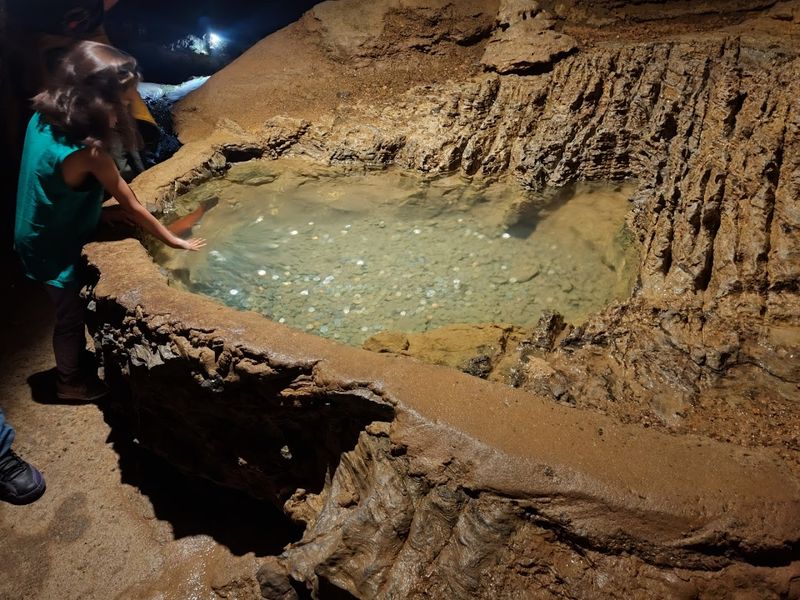
The geology gets most of the attention on the tour, but the cave also supports actual living things. Cave crayfish are among the more interesting residents, adapted over generations to the permanent darkness underground.
These creatures have lost most of their pigmentation because color serves no purpose where no light reaches. They navigate entirely through other senses, and spotting one in the cave water is genuinely unexpected for most visitors who came expecting only rocks and formations.
Guides often highlight the crayfish as a way to connect the geological story of the cave to its biological one, pointing out that the same water system that carved the cave over millions of years now supports a small but distinct ecosystem. Bats also use sections of the cave, and their presence contributes to the cave floor in ways that guides are happy to explain with a fair amount of humor.
The biology of the cave adds a layer to the visit that goes well beyond formation identification.
The Chandelier Formation and the Lights-Out Moment
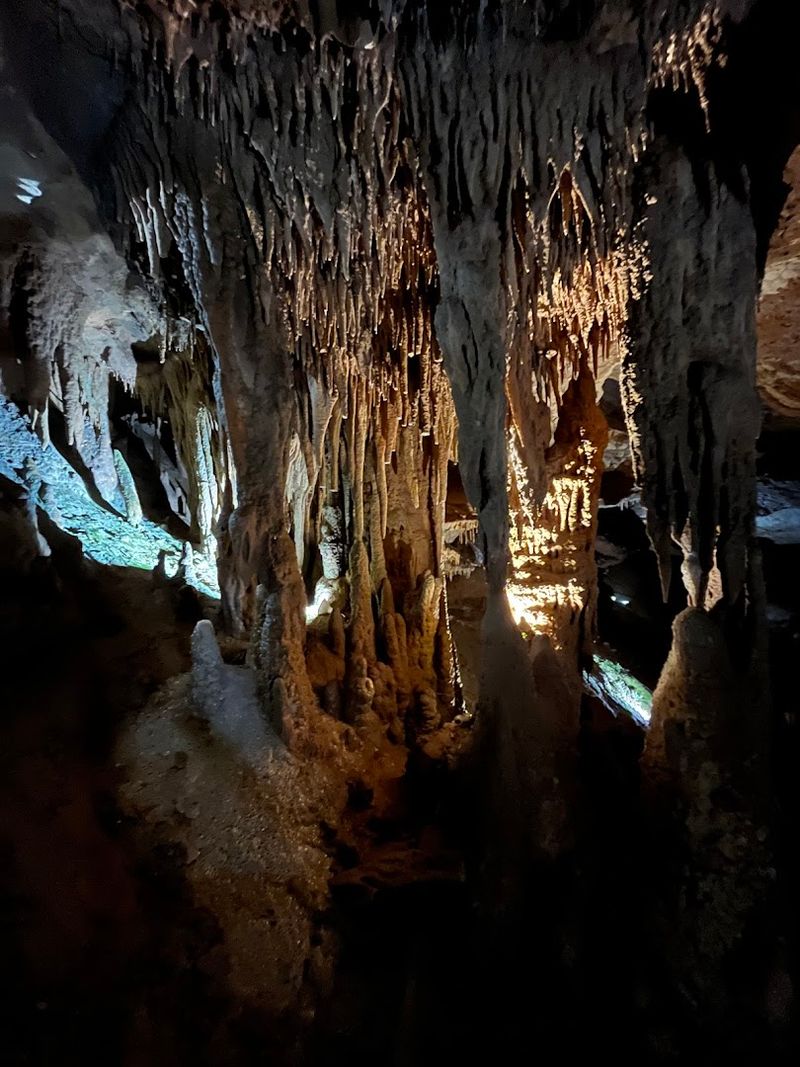
Among the many formations throughout the cave, the chandelier stands out as a highlight that guides build toward during the tour. It is a complex cluster of stalactites that branch and spread in a way that resembles an ornate light fixture, which is where the name comes from.
At a certain point in the tour, the guide turns off the artificial lighting to demonstrate what true darkness actually looks like underground. For most people, genuine darkness is something they have never experienced.
There is no adjustment period, no shapes emerging from the shadows. The absence of light is total and immediate.
It lasts only a few seconds before the lights come back on, but the effect tends to land hard with most groups. The experience makes the artificial lighting in the cave feel less like a convenience and more like a necessity.
Without it, the chandelier and every other formation in the cave would simply not exist as something visible to human eyes.
Best Time to Visit and What to Expect on Arrival
The cave stays at roughly 58 degrees year-round, which makes it a genuinely appealing destination in summer when the Tennessee heat outside can be oppressive. July and August bring the largest crowds to the Smoky Mountains region, so arriving early in the morning during peak season helps avoid longer waits before tours depart.
Spring and fall tend to offer shorter lines and more comfortable conditions for the drive through Townsend. The cave is open Monday through Sunday from 10 AM to 5 PM, giving visitors a full window to plan around other activities in the area.
Tickets are purchased at the entrance, and tours depart throughout the day rather than on a fixed schedule. Bringing a jacket is consistently the most repeated practical tip from people who have done the tour, especially for anyone coming from a warm climate who underestimates how quickly 58 degrees registers after an hour of walking underground.
How This Cave Compares to Others in the Region
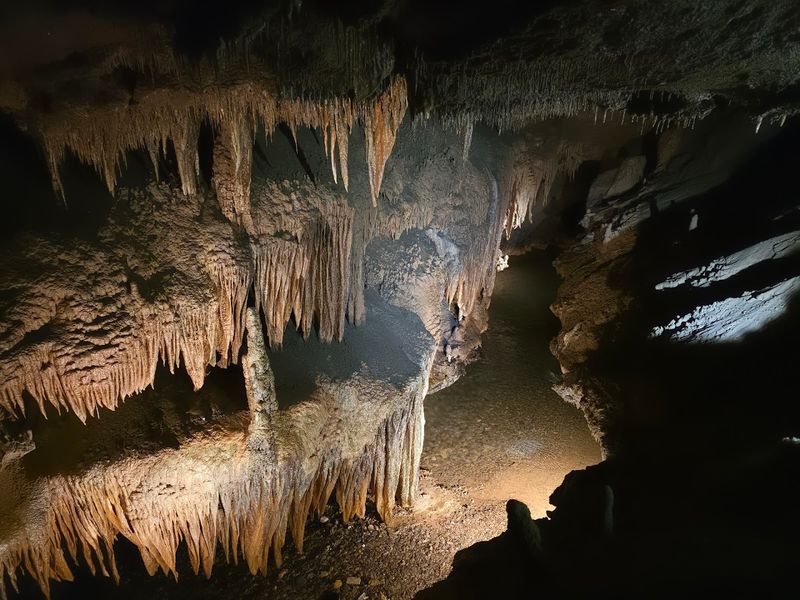
The southeastern United States has no shortage of caves open to the public, but Tuckaleechee holds up well against the competition. The sheer scale of the Big Room sets it apart from smaller, more heavily developed cave attractions that prioritize accessibility over authenticity.
Ruby Falls in Chattanooga and Mammoth Cave in Kentucky are both well-known regional alternatives, but Tuckaleechee offers something closer to a raw cave experience. The passages have not been widened or smoothed to the point where the environment feels manufactured, and the natural features like the underground stream and waterfall add variety that purely geological caves sometimes lack.
People who have toured multiple cave systems across the country consistently rank Tuckaleechee among the better experiences in the eastern half of the United States. The combination of formation quality, room scale, and active water features makes it genuinely competitive with caves that have far larger marketing budgets and national name recognition.
Why This Cave Deserves a Stop on Any Smoky Mountains Trip
Most visitors to the Smoky Mountains follow a predictable circuit: Gatlinburg, Clingmans Dome, maybe a waterfall hike. Tuckaleechee offers something genuinely different from all of that, a perspective on the mountains that goes underground rather than up.
The cave has been forming since long before the mountains above it took their current shape, which puts the entire landscape in a different context. The peaks and ridges visible from the park roads are relatively young by geological standards.
The cave beneath Townsend is older than most of the surface features that draw millions of visitors each year.
For families, the tour works well because it combines education, physical activity, and genuine surprise in a format that holds attention for the full 90 minutes. For solo travelers or couples, it offers a break from the outdoor crowds without sacrificing the sense of being somewhere genuinely remarkable.
The Smoky Mountains have no shortage of things to do, but very few of them happen 20 million years in the making.
Where Exactly You Will Find This Underground World
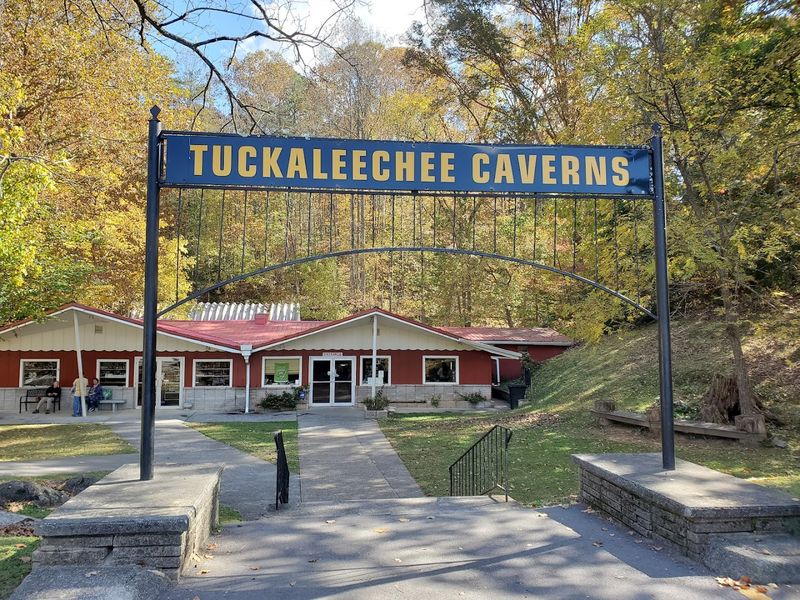
Tuckaleechee Caverns sits at 825 Cavern Rd, Townsend, TN 37882, a small town often called the “Peaceful Side of the Smokies” because it offers a quieter alternative to the more crowded Gatlinburg and Pigeon Forge corridors nearby.
The location puts visitors right at the edge of Great Smoky Mountains National Park, making it an easy add-on for anyone already planning a trip to the region. Townsend itself is a low-key community with a relaxed pace, and the caverns fit that character well.
The entrance sits along a wooded road, and the building that greets visitors is modest compared to what waits underground. Hours run Monday through Sunday from 10 AM to 5 PM, which gives most travelers plenty of flexibility to fit the tour into a full day of exploring the surrounding area.
Share this story