 Unearth The Voyage
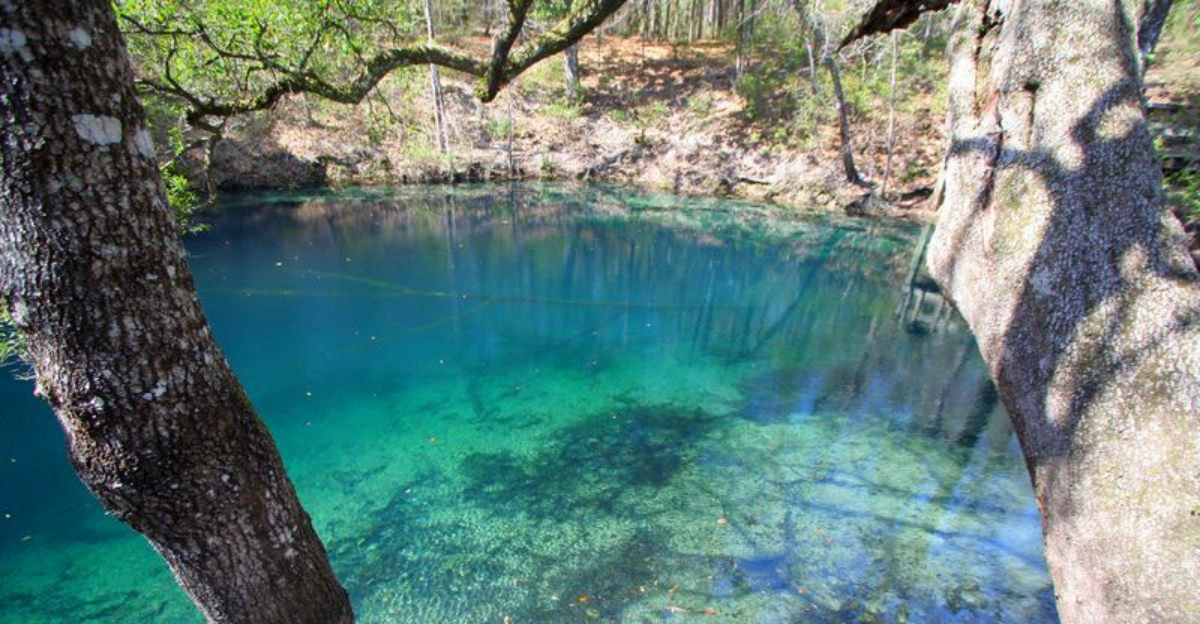
Ready for a Florida hike that trades beaches for blue pools, hidden caves, and whispering pines? The Leon Sinks Geological Area weaves a 3.6-mile adventure through karst country where the ground dips, water vanishes, and secrets surface.
You will pass sinkholes in every mood, from glassy teal basins to shadowy dry bowls that hum with crickets. Lace up, grab five bucks cash, and let this trail surprise you at every turn.
Trailhead and First Pines
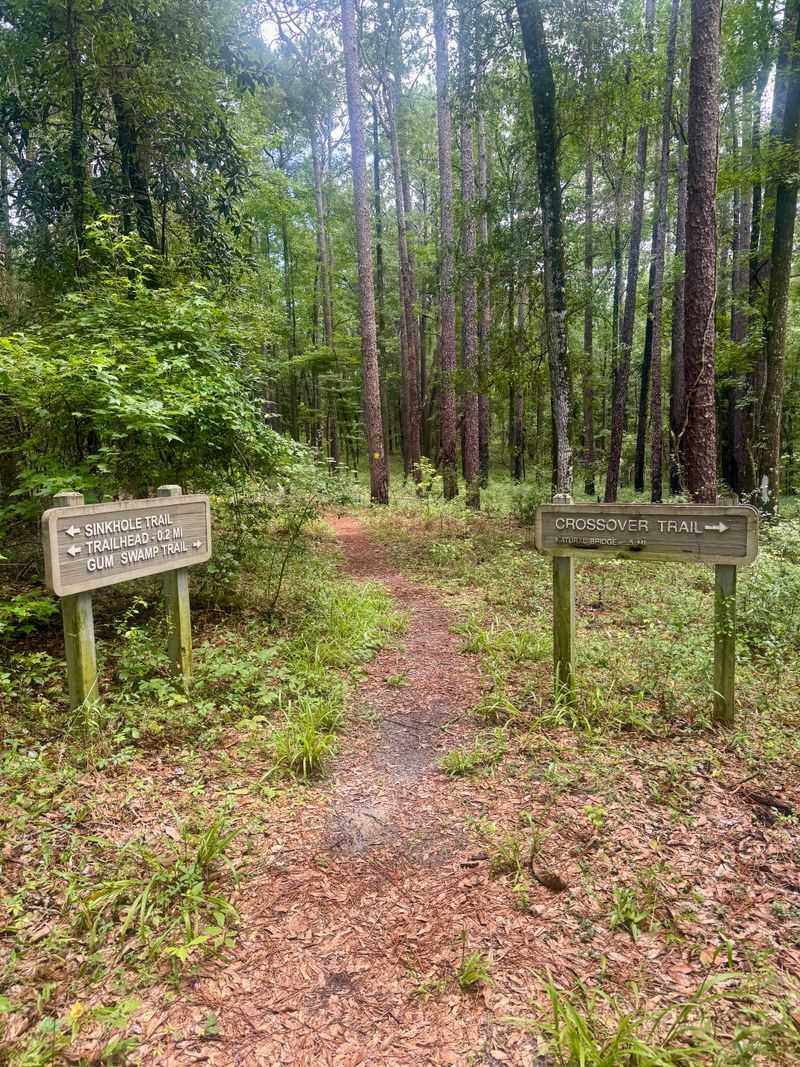
The crunch of sand underfoot sets the tone before the forest speaks. Longleaf pines breathe resin on a warm breeze while signage at the kiosk maps out loops like choose-your-own-adventure.
You drop the five-dollar fee, tighten your laces, and spot the first bench glinting like a promise of paced wonder.
A friendly host waves from the campground area, offering a quick geology tidbit about limestone hidden below. That small human moment makes the landscape feel personal, not just scenic.
I tuck away the reminder to carry water and bug spray because Florida loves lessons.
Step onto the Sinkhole Trail and the path widens, clean and clearly marked, with sandy ribs and knobby roots that keep you light on your feet. The forest hushes road noise into a memory.
Every few yards, an interpretive panel nudges you closer to the story beneath your boots and you start watching the ground for the first sudden dip.
Gopher Hole Cave
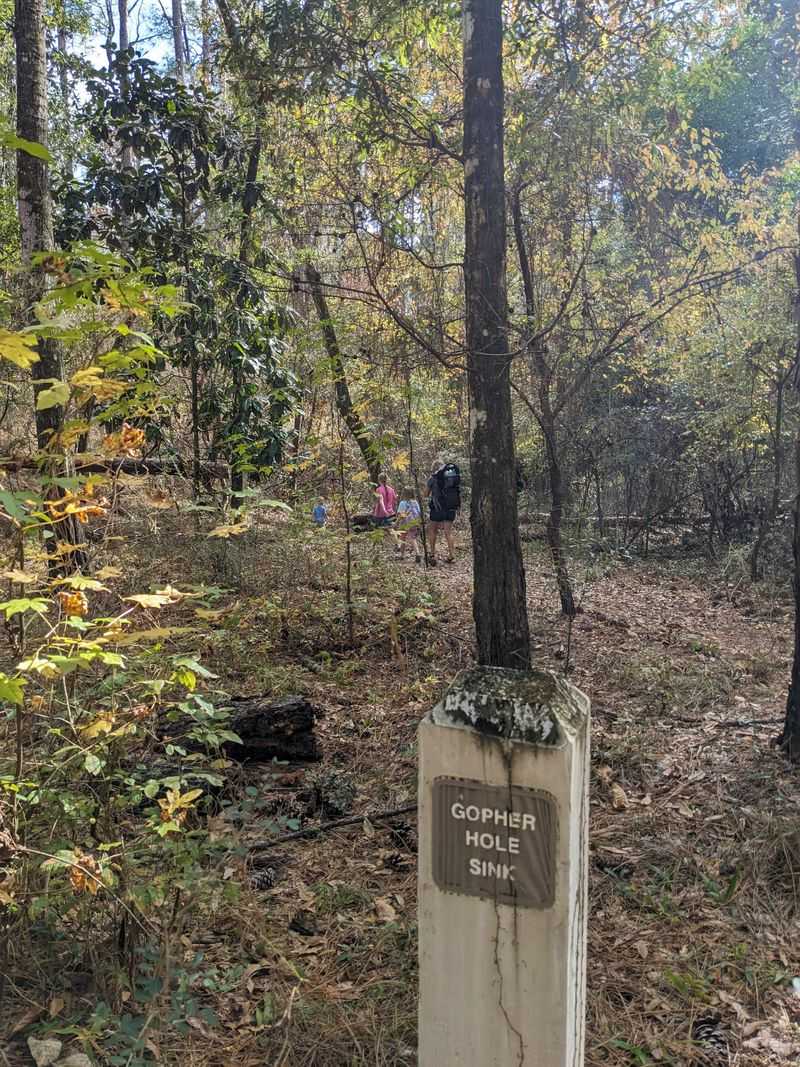
A small shadow in the palmettos turns out to be a cave with a name and a personality. Gopher Hole sits close to the trailhead, a quick detour that rewards curiosity with cool air breathing from limestone.
You peer in from a safe edge, tracing rock ribs that look carved by patient water and time.
There is no squeeze-through heroics here, just mindful viewing and a grin at how secretive Florida can be. A kid nearby whispers that it smells like pennies and rain, and that is not wrong.
I catch myself leaning forward, imagining the underground map that stretches past what eyes allow.
Interpretive signs decode the karst playbook without getting academic-heavy. You learn how water nibbles rock, how voids yawn wider, and why caves and sinks share the same backstage crew.
The moment lands: this is not a theme park, it is a living system, and you are a polite guest at the threshold.
Hammock Sink
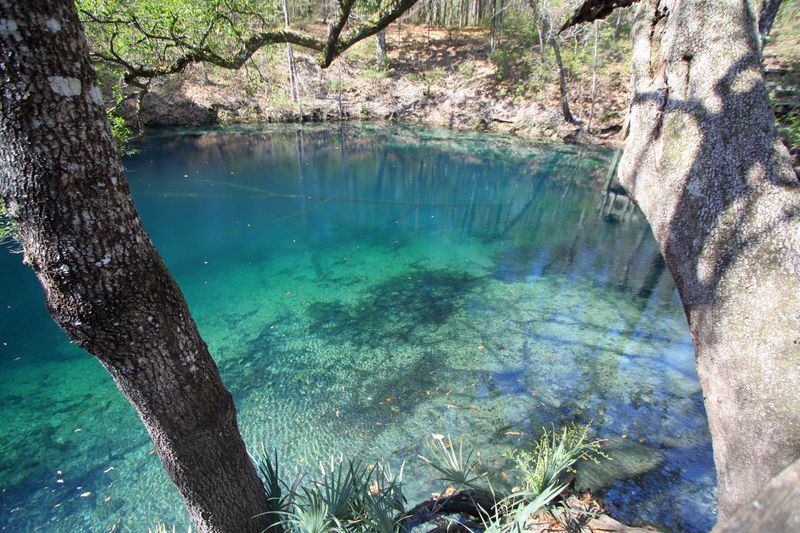
The first pop of blue arrives like a secret handshake. Hammock Sink glows through oaks and palmettos, a round bowl of teal water reflecting clouds like coins.
The overlook lets you linger without trampling the edge, and you feel the temperature drop a notch as if the pool exhaled.
Movement on the surface is minimal, just a ring from a curious insect. No swimming signs keep the magic intact, and honestly you would not disturb this mirror anyway.
I take a photo, then pocket my phone so the color can bruise my memory properly.
Panels explain wet sinks versus dry, and it clicks that water levels change with seasons and storms. After rain, these basins darken and deepen, turning mysterious and cinematic.
On drier days, the clarity sharpens and the forest seems to lean closer, admiring its own reflection.
Big Dismal Sink
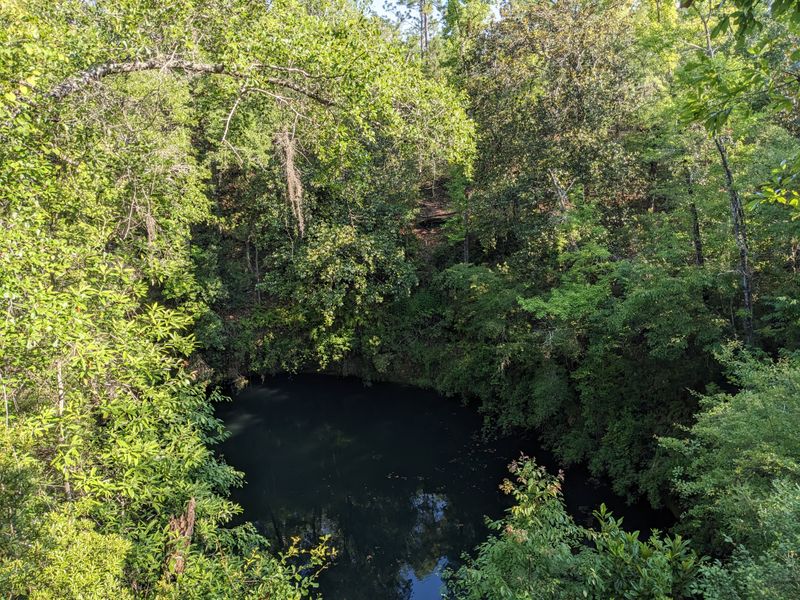
A hush falls before you even see it. Big Dismal opens like a theater, a deep, brooding sink that swallows light and asks you to speak softly.
The railing is your friend here, framing a view that feels both grand and intimate, like standing at the edge of a secret you promised to keep.
Bird calls bounce around the bowl and drift down into shadow. The drop looks dramatic, but the trail keeps you safe and sensible.
I rest my hands on the wood and count the layers of green, each ridge stepping toward black water that barely reveals its surface.
People call this the coolest feature for a reason. Even on crowded days, conversation thins to murmurs and camera clicks.
You leave with a slower heartbeat, some awe in your pockets, and a strange urge to whisper thanks to rock and gravity.
Disappearing Stream
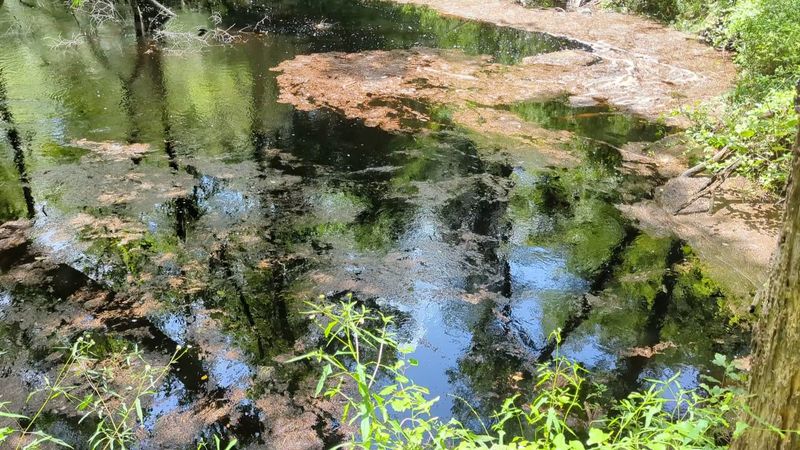
A thin ribbon of water performs a vanishing act in broad daylight. At the Disappearing Stream, leaves swirl, hesitate, then slip into limestone like coins into a slot.
The sound is gentle but witchy, a glug and hush that makes everyone lean in.
Here the landscape explains itself without a lecture. Water scouts the underground path, erasing its own footprints and feeding caves you met earlier.
I crouch and trail a fingertip in the current, surprised by the coolness and how quickly it is gone.
Watch your step because the banks can be soft after rain. The path isn’t hard, but attention is the toll you pay for good stories.
When the stream vanishes, the forest feels bigger, like a stage with trapdoors you cannot see until they open.
Gum Swamp Boardwalk
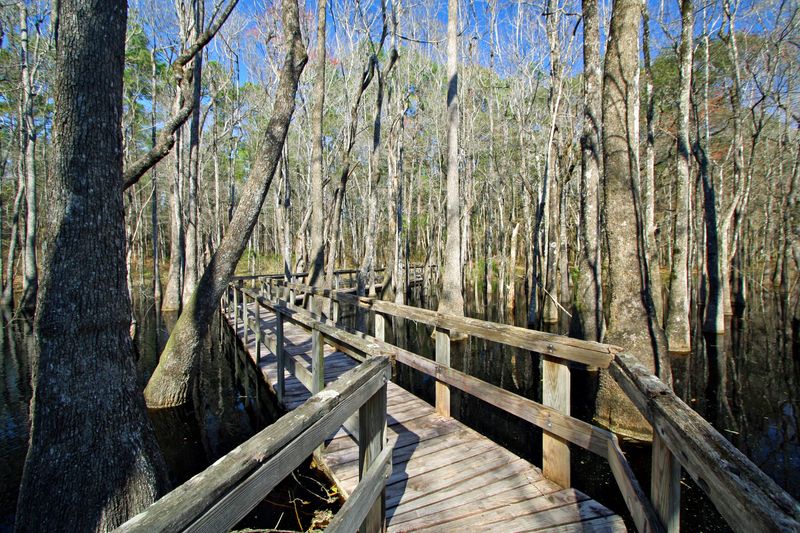
The air thickens with the sweet-earth smell of swamp tea. Gum Swamp stretches under cypress knees like a patient orchestra, and the boardwalk threads the instruments.
Your footsteps soften and the place starts telling jokes in frog, which land better than expected.
After a summer storm, puddles kiss the planks and reflections double the trees. Bugs audition for supporting roles, so repellent earns its spot in the daypack.
I once paused here in a drizzle and watched ripples knit patterns tighter than any souvenir shirt.
The loop can get squishy in rainy season, but that is part of the fun if you are game. Keep an eye on trail blazes and you will glide through without guesswork.
By the time the woods climb out of the swamp, your senses feel rinsed and ready for bright pine light again.
Cypress Overlook
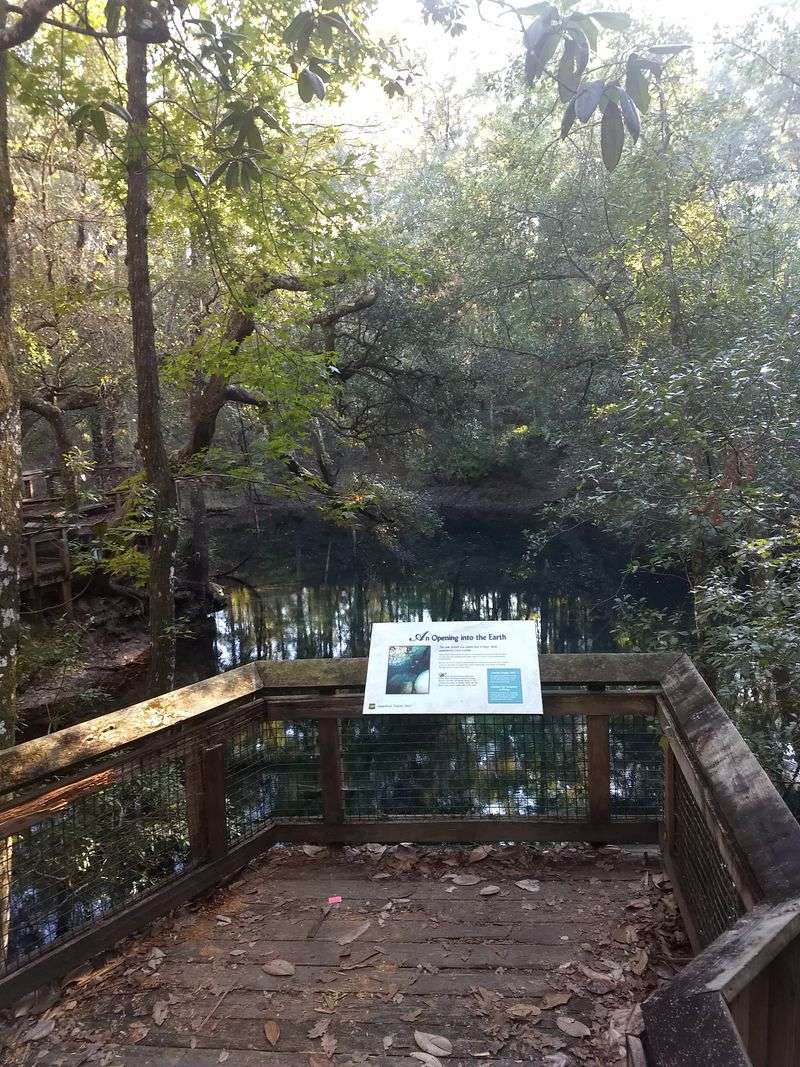
A dragonfly hovers like a tiny helicopter briefing you on the view. The Cypress Overlook serves drama without danger, offering a neatly railed pause above tannic water and moss-draped limbs.
You lean on the wood and watch light play tag across ripples.
Locals know this is a think-spot where time behaves. Minutes expand, phones stay pocketed, and conversations get gentle around the edges.
I sipped from my water bottle here and realized I had not checked the clock since the trailhead.
Read the panel for quick notes on wetland life, then scan for turtles practicing stillness. Even when the sun is hot, a breeze sneaks through like a courteous guest.
When you finally move on, the path feels lighter, as if the overlook did some emotional housekeeping on your behalf.
Karst Classroom Signs
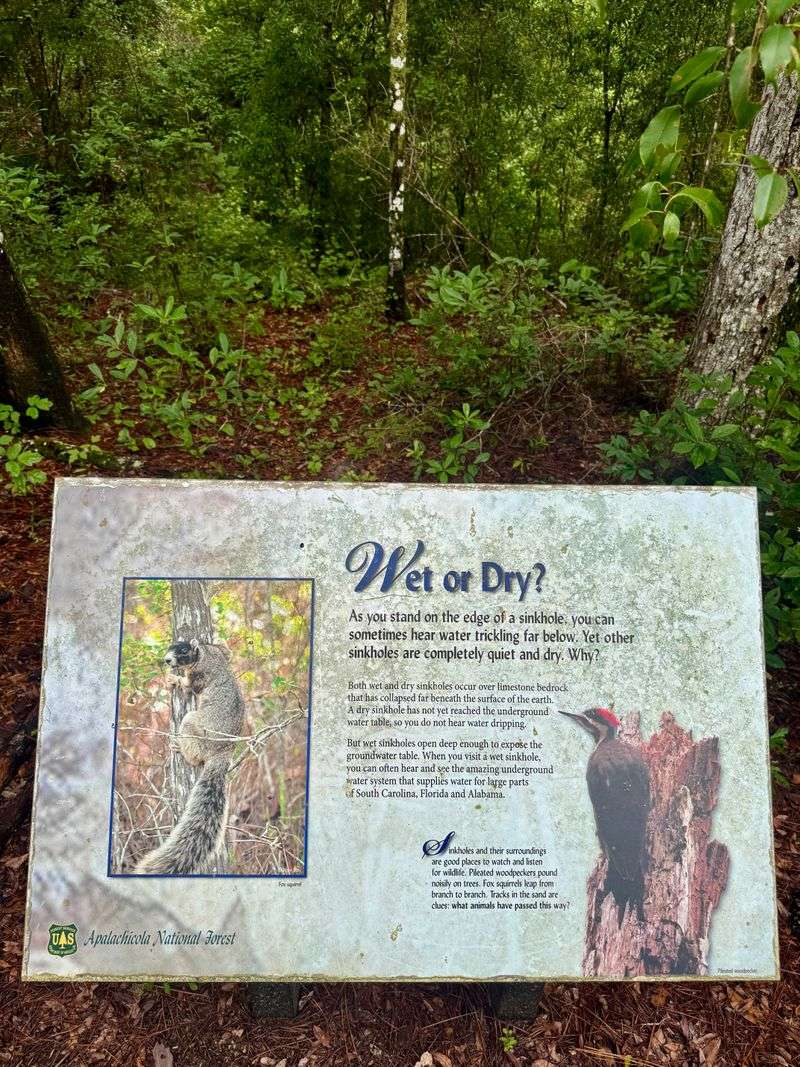
A quirky diagram of underground plumbing catches the eye before the headline does. The interpretive signs here punch above their weight, translating karst into simple, trail-side storytelling.
You learn just enough to feel smart without carrying homework.
Each panel sits where the land makes a point, like a good teacher with excellent timing. Wet sink here, dry bowl there, disappearing water a few steps ahead.
I appreciate the brevity, especially when the heat suggests walking is the better classroom.
Tip you will thank later: snap a photo of your favorite sign, then compare with what you see downstream. The connections click and the terrain turns from pretty to purposeful.
By the loop’s end, you are tossing around words like limestone and conduit with the confidence of someone who listened.
Quiet Benches and Shade Breaks
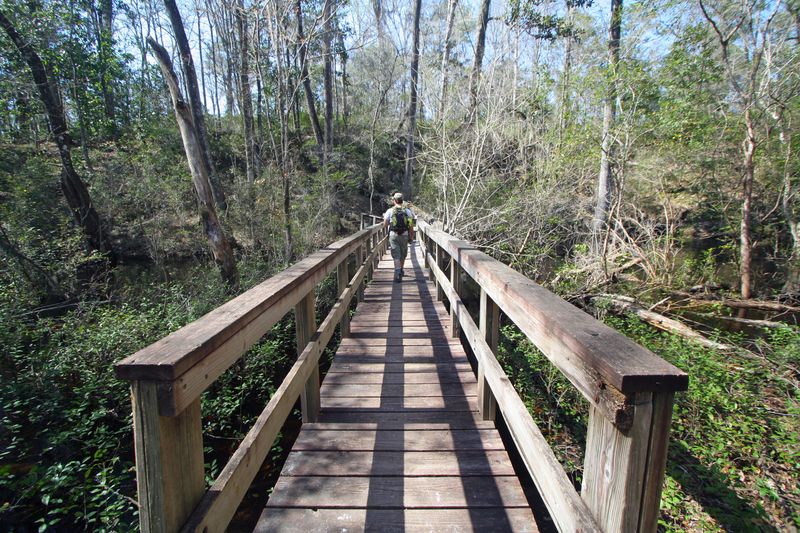
A small scuff mark on a wooden bench tells you others paused here first. Benches are sprinkled along the route like kindness, catching hikers between sinks and swamps.
The shade can feel heroic on bright days, especially when humidity sticks like a friendly gecko.
These rest stops double as wildlife theaters if you sit still. Squirrels rehearse heists, a warbler tests scales, and the breeze mouths encouragement.
I once tightened a boot lace here and watched a white crayfish skitter in a nearby seep, a tiny cameo for the day’s reel.
Hydrate, reset, and scan your map before you spring back up. The trail network is clear, but options branch like a choose-y oak, and it is nice to know where your next wow sits.
Leave the bench cleaner than you found it, then stride on to the next surprise.
Loop Junctions and Wayfinding
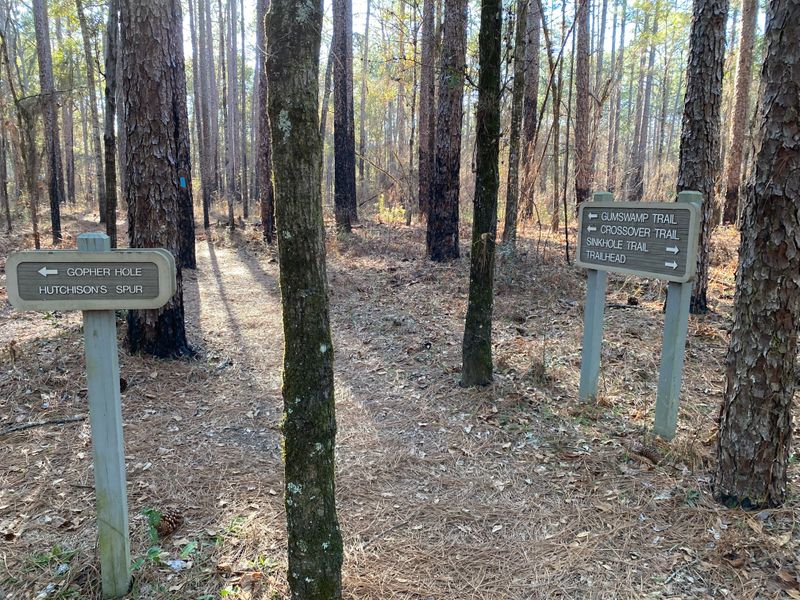
A painted blaze flashes like a friendly wink at the next fork. Junctions come with tidy signs that make wandering feel intentional, whether you commit to the full loop or trim the day.
The sandy path keeps your pace honest, rolling gently so you notice more and hurry less.
Travelers usually learn late that trail choices change with weather. After storms, the swampier sections flirt with your ankles, while pine segments stay prim and quick.
I check boards at the trailhead, then treat junctions like updates, not obstacles.
Bring cash for parking, a screenshot of the map, and a touch of flexibility. If a side spur like the Disappearing Stream calls, go.
The geometry still closes neatly, and you return to the lot feeling like you wrote a better version of the route than any app could suggest.



