 Unearth The Voyage
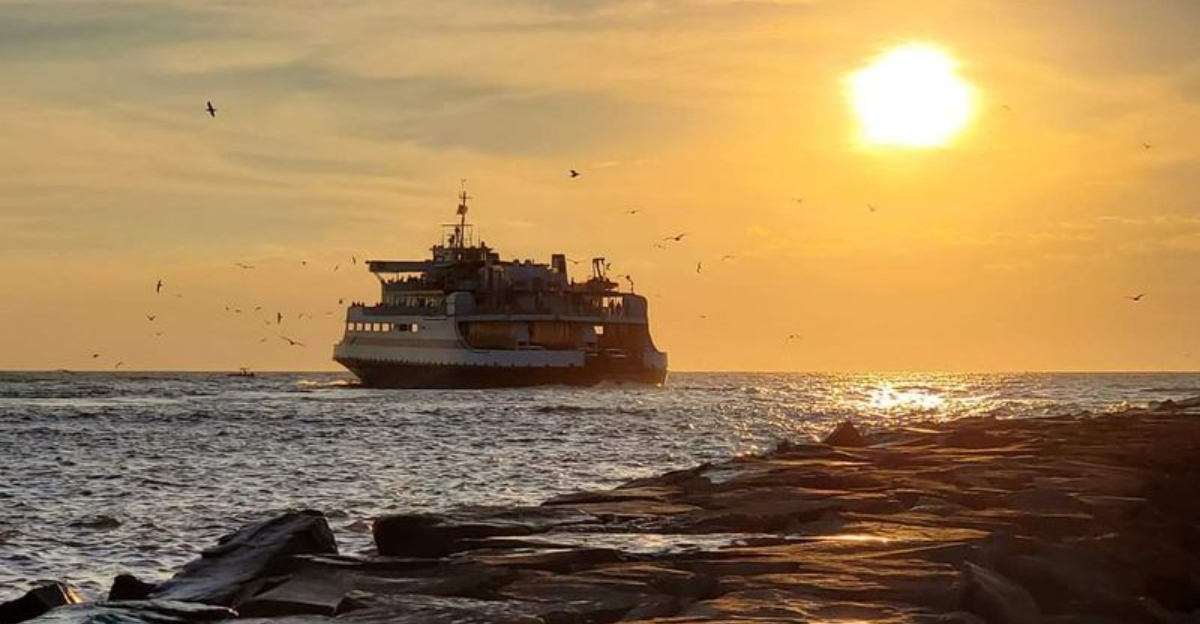
You step onto the deck and the air feels different. Salty.
A little sharp. The Atlantic wind keeps tugging at your hair while the sun eases lower, like it has nowhere else to be.
Here’s the surprise. You’re not far from home.
You’re in the mid-Atlantic, on a working ferry that just happens to deliver one of the best views on the East Coast. For about 85 minutes, Delaware Bay stretches out in every direction, and the in-between becomes the whole point.
Keep your eyes on the water. Something breaks the surface, then disappears.
Dolphins do that sometimes, close enough to make you wonder if you really saw them. Above, seabirds circle and drift like they know a shortcut you don’t.
The ferry links two small coastal towns. But the part you’ll remember is what happens between them.
I’ve taken this crossing more than once, and it never plays out the same way twice.
A Working Ferry with Scenic Soul
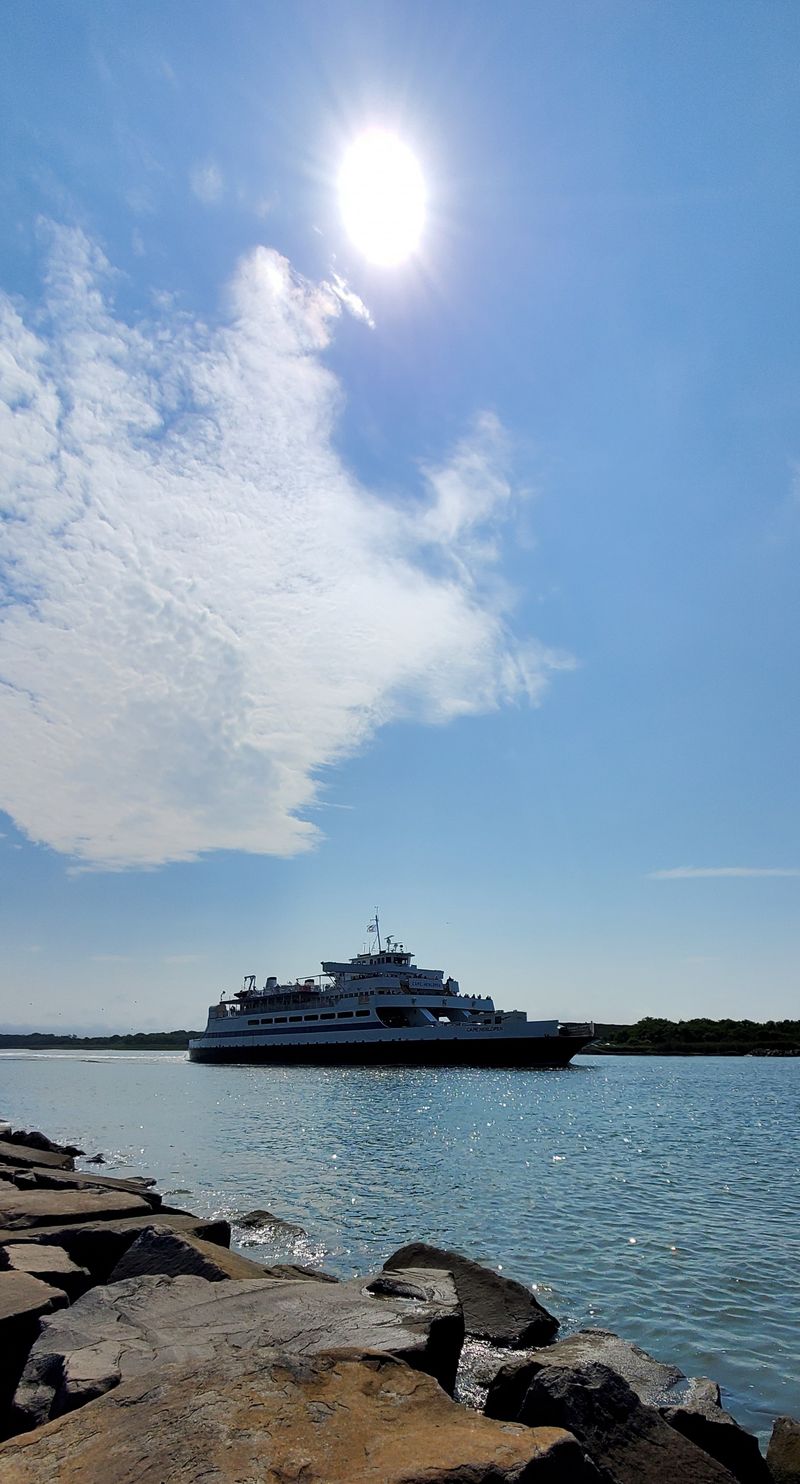
The Cape May – Lewes Ferry operates from 1200 Lincoln Boulevard in North Cape May, New Jersey, and it’s been shuttling vehicles and passengers across the 17-mile stretch of Delaware Bay since 1964. But calling it just a ferry undersells what it actually delivers.
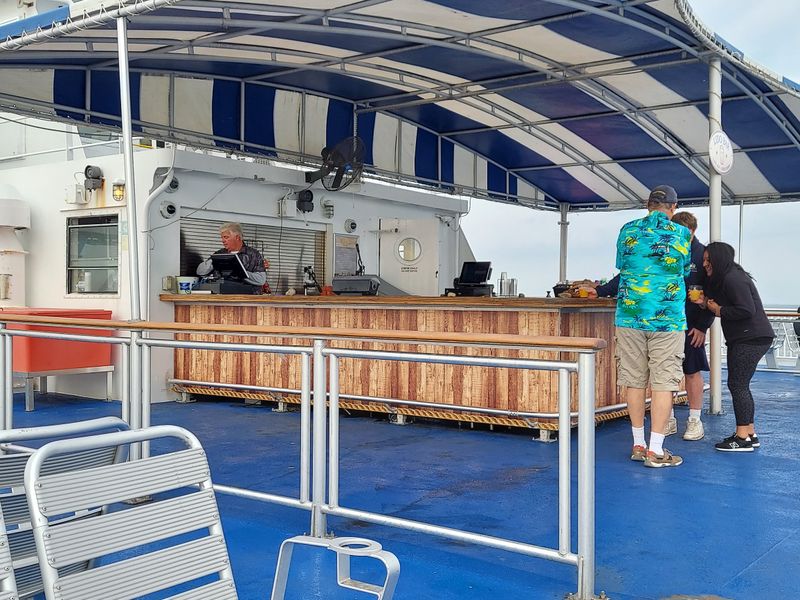
This isn’t some utilitarian boat ride where you’re stuck in your car counting the minutes. The vessels are genuine mini cruise ships with multiple decks, comfortable seating areas, food service, and plenty of room to roam.
I walked the entire perimeter of the ship on my first crossing, and every angle offered something different to look at.
The ferry runs year-round, with crossings taking about 85 minutes depending on weather and tides. During peak season, boats depart roughly every hour and a half, which means you can easily plan a same-day round trip or incorporate it into a longer coastal road trip.
The schedule flexibility makes it work for day-trippers and serious travelers alike.
What sets this experience apart is how the practical purpose blends seamlessly with pure pleasure. You’re getting from Point A to Point B, sure, but you’re also getting a genuine maritime adventure that feels worlds away from highway driving.
Open Water Views That Reset Your Perspective
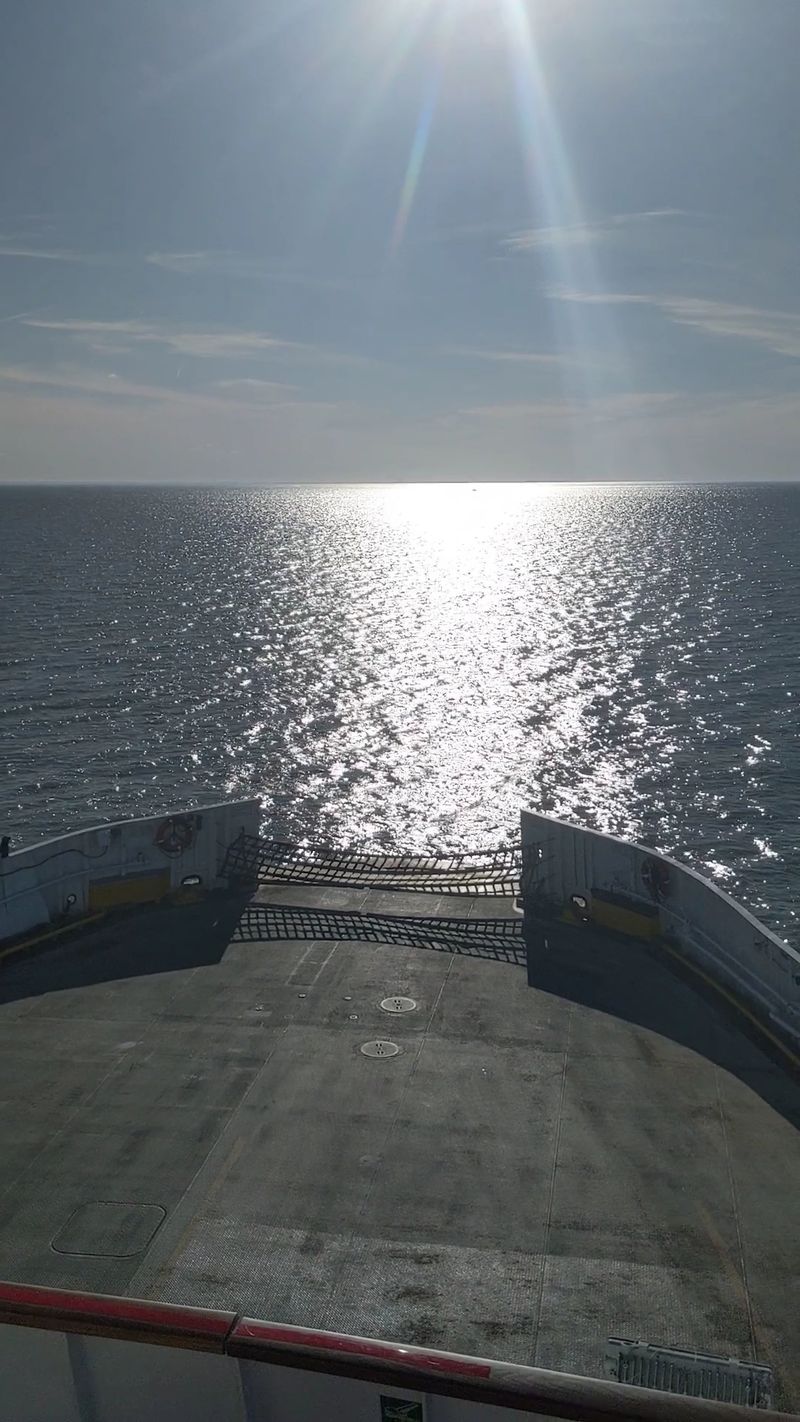
Once the ferry clears the Cape May harbor and enters the open bay, something shifts in your chest. The land falls away on both sides, and suddenly you’re surrounded by water that stretches to the curved edge of the world.
Delaware Bay is the mouth of the Delaware River, and at this crossing point it’s wide enough that you lose sight of both shores for a good portion of the journey. On clear days, the water takes on shades of blue-green that shift with the light.
On overcast days, it turns pewter and moody, with whitecaps dancing across the surface. I’ve crossed in both conditions, and honestly, the dramatic weather days might be even more memorable.
The horizon becomes your constant companion out here. It’s perfectly flat and endless, broken only by the occasional distant ship or the dark smudge of a far-off shoreline.
Standing at the rail and watching that line where water meets sky, I found myself breathing deeper and thinking clearer than I had in weeks.
This kind of open-water perspective is surprisingly rare unless you’re on an ocean voyage. The bay gives you that maritime vastness without requiring days at sea.
Sunset Crossings That Paint the Sky
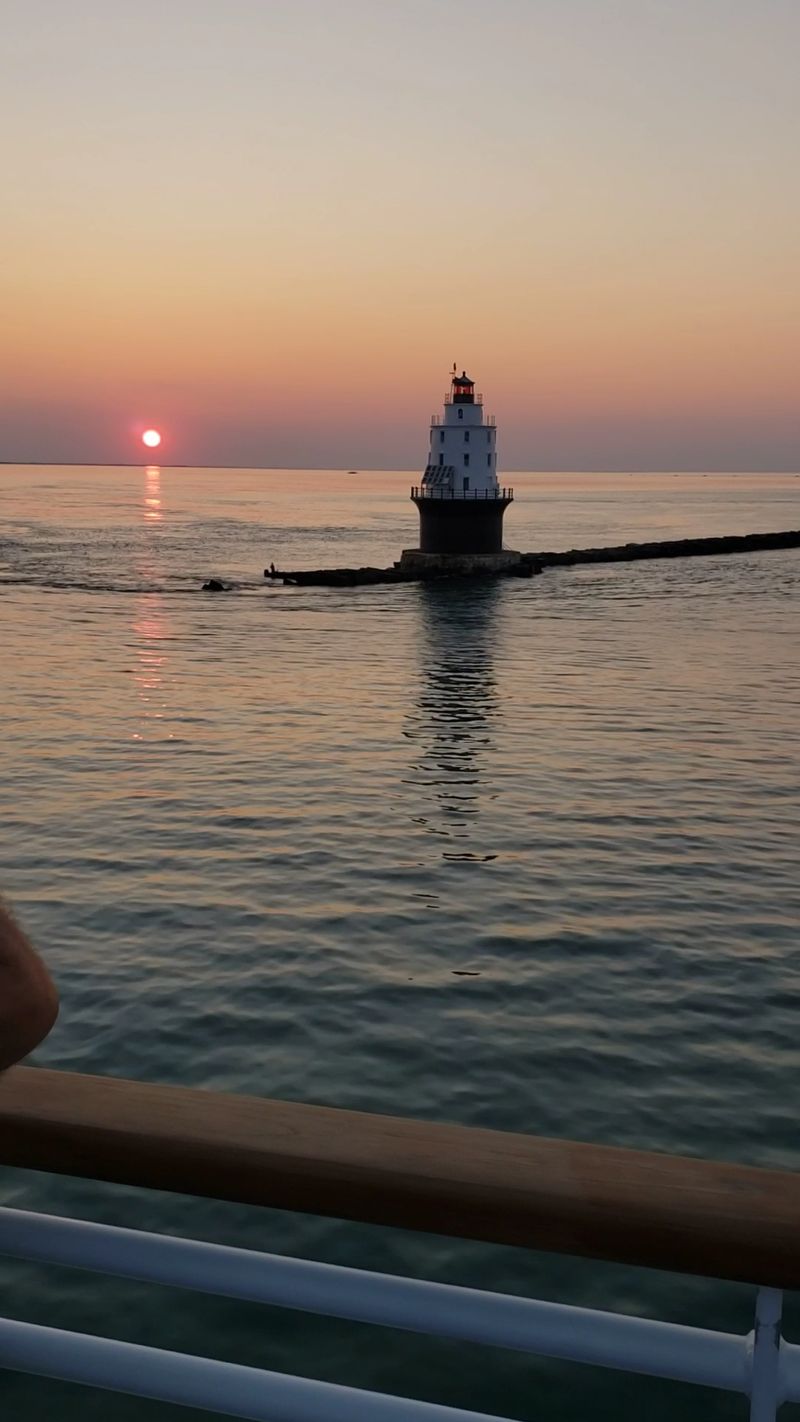
If you time your crossing right, you’ll catch the sun dropping toward the western horizon, and the entire bay becomes a canvas for one of nature’s best shows. I deliberately booked an evening departure on my second trip, and it remains one of my favorite travel memories.
The light changes minute by minute as the sun descends. First, everything takes on a golden glow that makes the water shimmer like hammered brass.
Then the colors deepen into orange, pink, and eventually deep purple as the sun touches the horizon. The clouds catch fire with backlighting, and the whole scene feels almost impossibly beautiful.
What makes sunset crossings special on this ferry is the unobstructed 360-degree view. You’re not watching from a beach where trees or buildings block part of the sky.
You’re floating in the middle of the bay with nothing between you and the spectacle. Other passengers gather at the rails, phones out but mostly just staring, because some moments demand your full attention.
The crew has seen thousands of these sunsets, but I noticed even they pause to watch when conditions are particularly stunning. That tells you something about the quality of light out here.
Dolphin Encounters in the Shipping Channel
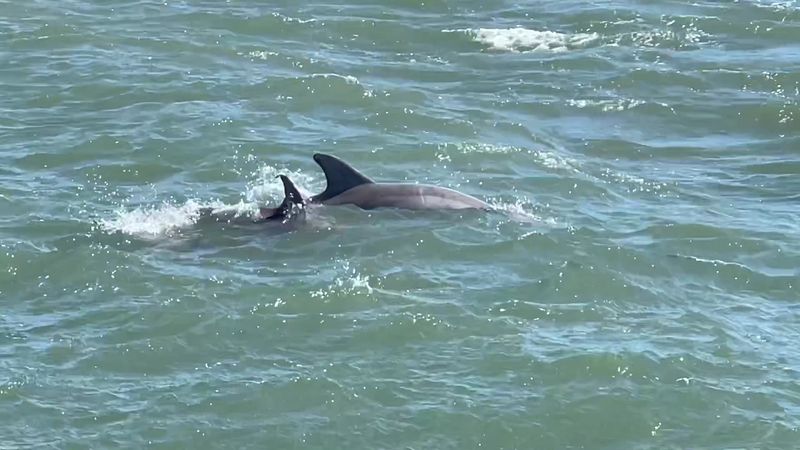
Keep your eyes on the water, because Delaware Bay is home to a resident population of Atlantic bottlenose dolphins, and they often make appearances during the crossing. I spotted my first pod about twenty minutes into the journey, their dorsal fins cutting through the water about fifty yards from the boat.
These dolphins aren’t performing for tourists. They’re hunting, traveling, and going about their dolphin business in their natural habitat.
Sometimes they’ll swim parallel to the ferry for a few minutes, riding the pressure wave created by the hull. Other times you’ll just catch a glimpse as they surface to breathe before disappearing again into the green depths.
The crew mentioned that sightings are most common during warmer months when the dolphins are more active in the bay. But even in cooler seasons, you might get lucky.
There’s something thrilling about the randomness of it, the way wildlife encounters should be. No guarantees, no scheduled appearances, just the possibility that you might share the water with another intelligent species for a few precious moments.
Bring binoculars if you have them, and position yourself where you can scan the water in all directions. The dolphins can pop up anywhere.
Seabirds and Maritime Wildlife
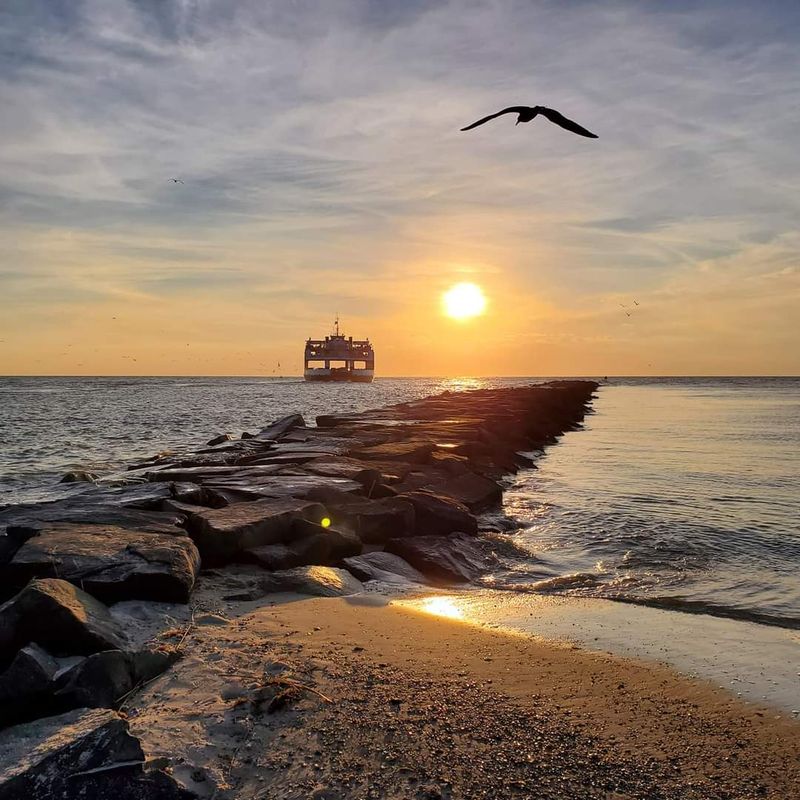
The bay serves as a major flyway for migratory birds, and the ferry cuts right through their territory. Gulls are the most obvious companions, wheeling and diving around the boat, their calls mixing with the engine rumble and wave sounds.
But look more carefully and you’ll spot other species. Cormorants perch on channel markers with their wings spread to dry.
Terns hover and plunge-dive for fish. During migration seasons, you might see everything from ospreys to rare pelagic species that normally stay far offshore.
I’m not a serious birder, but even I found myself fascinated by the variety of wings and behaviors on display.
The ferry crew sometimes points out unusual sightings over the PA system, which adds an educational element to the journey. On one crossing, the captain announced a bald eagle flying past the starboard side, and everyone rushed to that rail for a glimpse.
These spontaneous moments of shared excitement create a sense of community among passengers who started as strangers.
The birds treat the ferry as just another feature of their landscape, which reminds you that humans are visitors here, passing through a world that belongs to fins and feathers.
Comfortable Amenities for the Journey
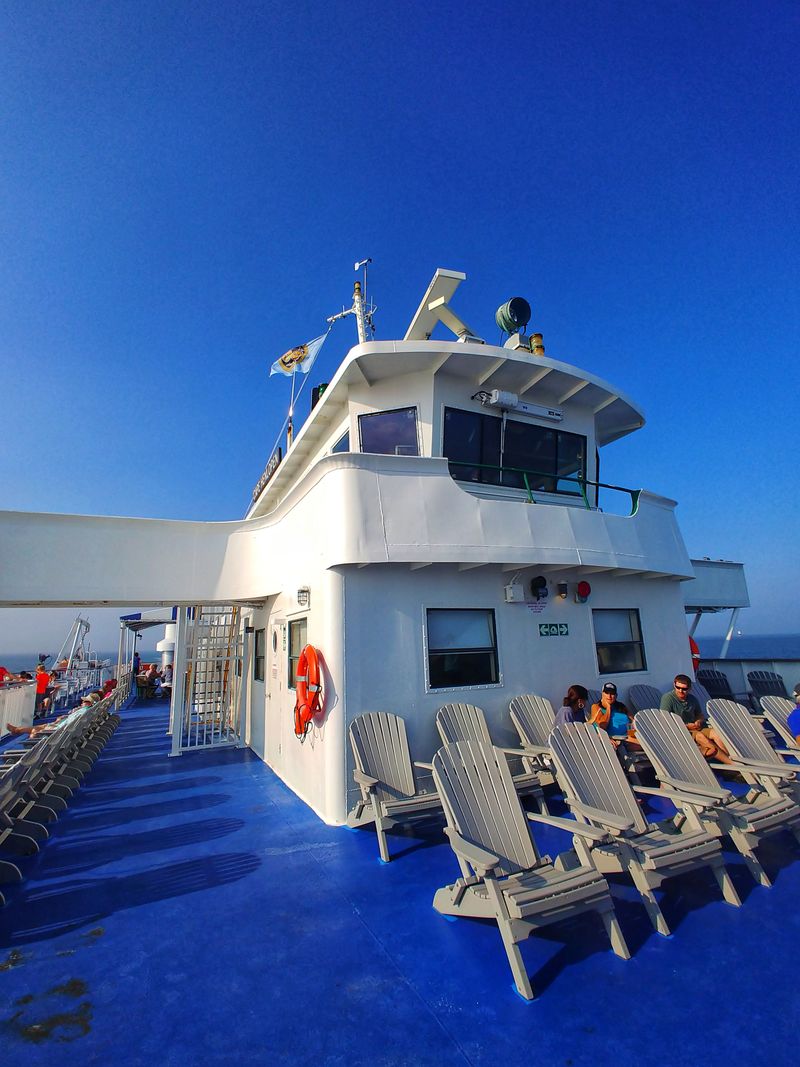
The ferry fleet includes several vessels, all equipped with amenities that make the crossing comfortable regardless of weather. Indoor seating areas feature rows of cushioned seats facing large windows, so you can watch the scenery while staying warm and dry.
There’s a full-service snack bar on each boat selling sandwiches, hot dogs, chips, drinks, and basic comfort food. The coffee is surprisingly decent, and on a chilly morning crossing, a hot cup while standing on the outer deck hits just right.
I grabbed a sandwich on one trip and ate it at an outdoor table while watching the coastline recede.
Clean restrooms are available on multiple decks, which matters more than you might think on an 85-minute journey. There are also designated quiet areas if you want to read or work, plus open deck spaces where kids can move around without disturbing other passengers.
The layout accommodates different travel styles, from families with energetic children to solo travelers seeking contemplative solitude.
The vessels are well-maintained and feel safe even in moderate chop. I crossed during slightly rough conditions once, and while there was definitely some rocking, the ship handled it smoothly and the crew remained completely unfazed.
Vehicle Transport and Road Trip Flexibility
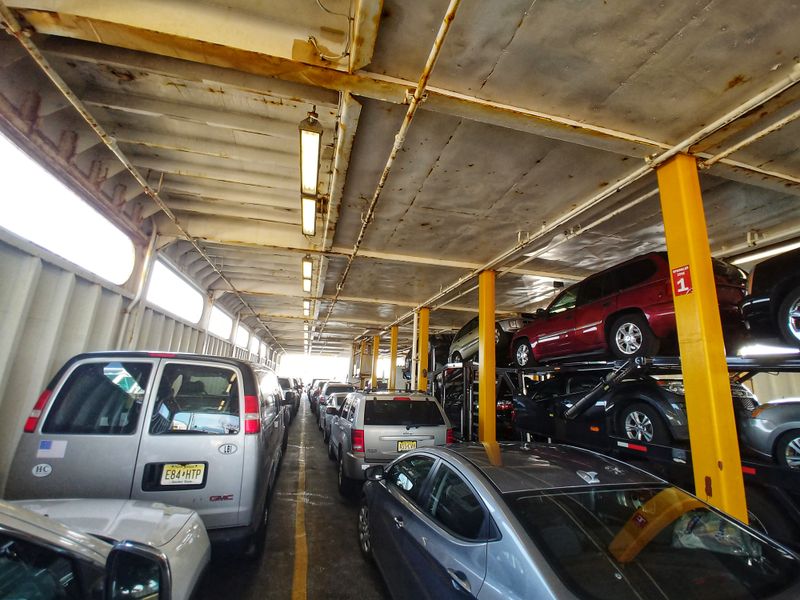
One of the ferry’s biggest practical advantages is that it transports your vehicle along with you, which opens up road trip possibilities that would otherwise require significant backtracking. Instead of driving all the way around Delaware Bay through Wilmington and Philadelphia, you can cut straight across the water.
The vehicle loading process is efficient and well-organized. You drive onto the car deck following crew directions, park where indicated, and then head upstairs to the passenger areas.
At the end of the crossing, you simply return to your vehicle and drive off. The whole operation feels smooth and practiced, which makes sense given how many thousands of vehicles they’ve moved over the decades.
This creates interesting itinerary options. You could explore Cape May in the morning, take the afternoon ferry to Lewes, and be in Rehoboth Beach for dinner.
Or reverse it and use the ferry as your gateway to southern New Jersey’s beaches and Victorian charm. The crossing becomes part of the adventure rather than just dead time between destinations.
Motorcycle riders particularly love this route, and you’ll often see groups of bikes lined up on the vehicle deck, their riders gathering on the upper decks to enjoy the ride.
Historical Significance and Maritime Heritage
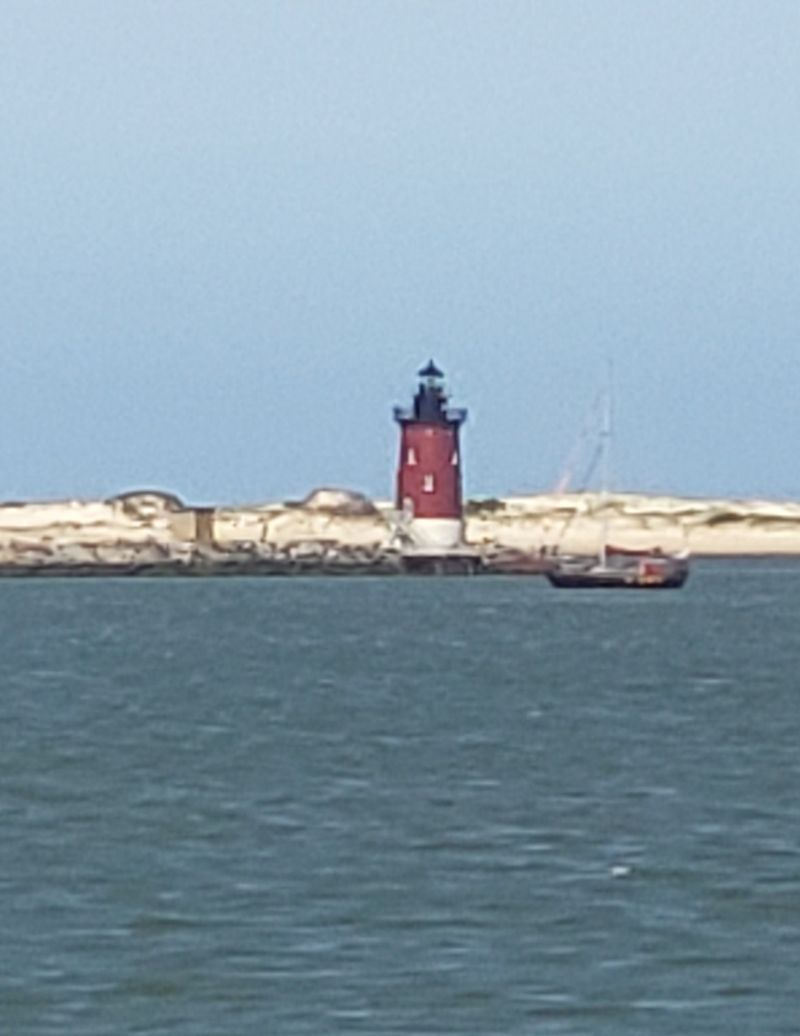
The ferry service has been connecting these two historic coastal towns for six decades, but the maritime connection between Cape May and Lewes goes back much further. These waters have seen everything from colonial-era shipping to World War II submarine patrols.
Delaware Bay served as a crucial shipping route for centuries, funneling commerce to and from Philadelphia. The channel you’re crossing is the same one that sailing ships, steamers, and warships have navigated for generations.
There’s a weight to these waters, a sense of all the journeys that came before yours.
Cape May itself is one of the oldest seaside resorts in America, while Lewes claims to be the first town in the first state. The ferry links not just two geographic points but two communities steeped in maritime tradition and coastal culture.
I found myself thinking about this continuity while standing on deck, imagining the view from a sailing ship’s deck two hundred years earlier. The water would have looked much the same.
Small interpretive displays on some vessels share bits of this history, and the crew members are often happy to answer questions about the bay’s past and the ferry’s evolution over the years.
Weather Watching and Atmospheric Drama
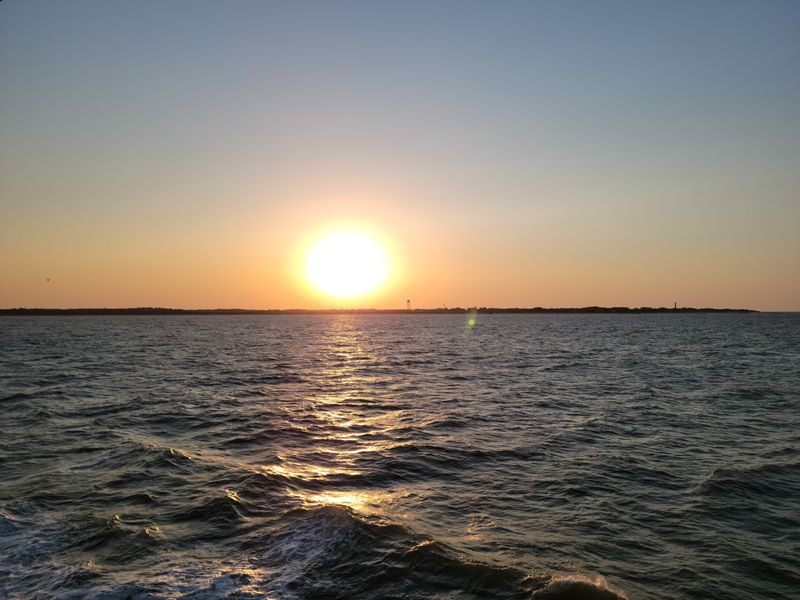
The bay’s weather can shift quickly, and watching those changes from the middle of the water offers a masterclass in atmospheric drama. I’ve crossed under bright blue skies, through light fog, and once through the edges of a passing storm system that created spectacular cloud formations.
When weather fronts move through, you can often see them coming from miles away. Dark curtains of rain march across the water, sometimes with visible lightning flickering in the distance.
The ferry crew monitors conditions carefully and won’t sail in dangerous weather, but they’re comfortable operating in conditions that landlubbers might find intimidating. The result is that you get to experience the bay’s moods safely.
Fog transforms the crossing into something mysterious and primordial. The horn sounds regularly, its deep note echoing across invisible water.
The world shrinks to just the deck beneath your feet and a wall of gray in every direction. Then suddenly the fog lifts and you’re back in sunshine, as if someone flipped a switch.
These weather variations mean no two crossings are identical. The bay shows you a different face each time, which keeps the experience fresh even for repeat travelers.
Photography Opportunities at Every Turn
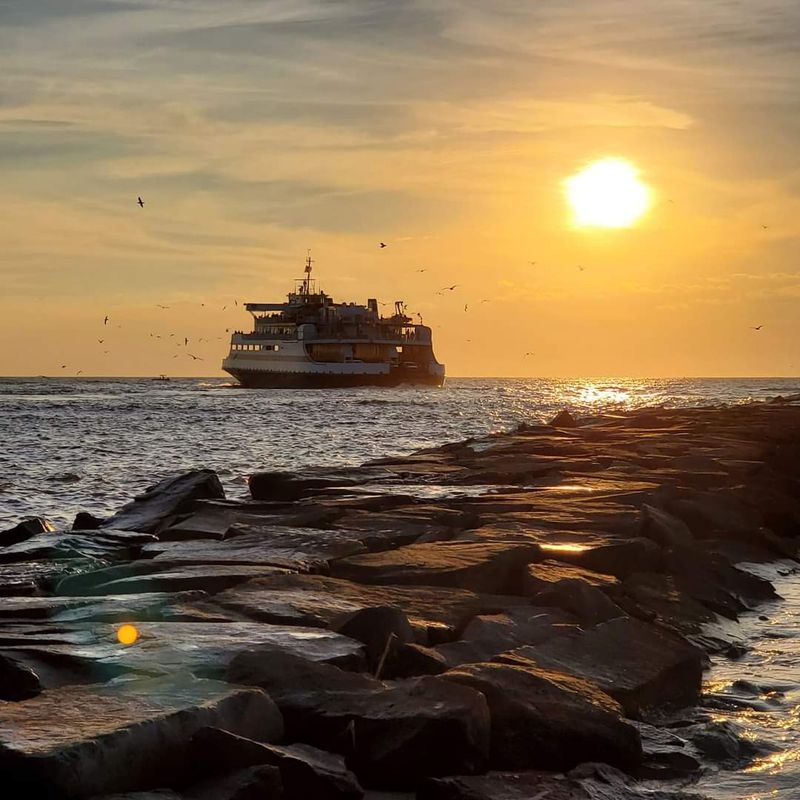
Serious photographers and casual phone-snappers alike will find endless subjects during the crossing. The combination of water, sky, wildlife, and changing light creates conditions that range from subtly beautiful to absolutely spectacular.
The golden hours around sunrise and sunset offer the most dramatic lighting, but midday crossings have their own appeal, especially when the sun catches the water just right and creates millions of sparkling diamonds across the surface. I spent one entire crossing just trying to capture the way the wake fanned out behind the ferry, white foam against dark blue-green water.
The ship’s movement adds an interesting challenge to photography. You’re on a stable platform, but it’s still rocking gently, which means you need decent shutter speeds to avoid blur.
The upside is that this movement helps you compose shots from constantly shifting angles. Walk the decks with your camera ready, because the best moments often happen quickly when a dolphin surfaces or a bird swoops past at eye level.
The other passengers make good subjects too, especially their reactions to sunset light or wildlife sightings. Those candid moments of wonder and joy tell the story of why this crossing matters.
Seasonal Variations and Year-Round Appeal
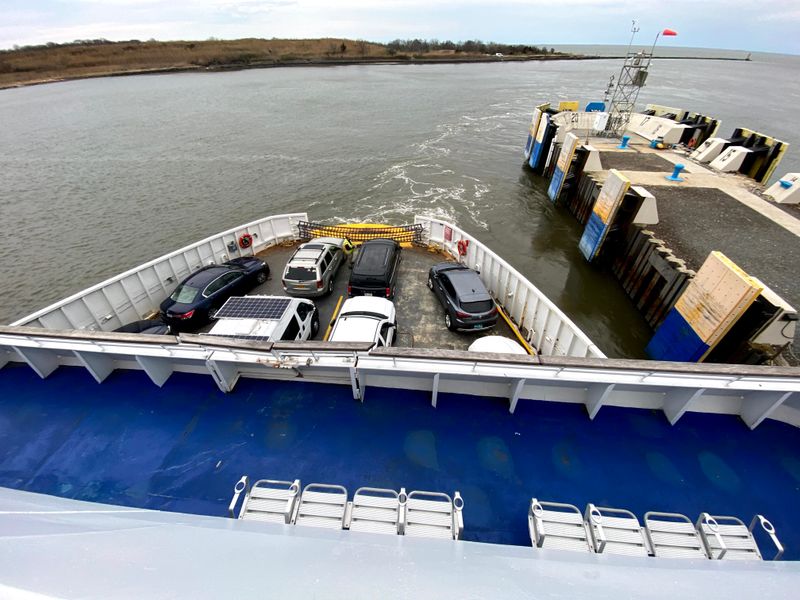
The ferry operates twelve months a year, and each season brings its own character to the crossing. Summer offers warm weather and the best chance for dolphin sightings, but it also brings crowds and higher fares.
I prefer the shoulder seasons when the decks are less packed and the light takes on that special clarity that comes with cooler air.
Fall crossings can be spectacular, especially when migration brings huge numbers of birds through the area. The water temperature stays relatively mild into October, and the autumn light has a quality that photographers dream about.
Winter crossings are bracing and beautiful, with a raw edge that feels adventurous. Bundle up and you’ll have the outer decks mostly to yourself, plus the chance to see the bay in its most elemental state.
Spring brings renewal and the return of marine life after winter’s quiet. The water warms, the birds come back, and the whole bay seems to wake up.
Each season rewards attention, and regular riders develop favorites based on what they value most in the experience.
Check the schedule before planning your trip, as crossing frequency varies by season. Summer sees the most departures, while winter operates on a reduced schedule.
The Return Journey and Circular Possibilities
Many travelers use the ferry as pure transportation, crossing once to reach their destination. But there’s something to be said for the round-trip experience, especially if you time one leg for sunset and the other for a different time of day.
The bay reveals different aspects of itself depending on light and tide.
You could make a full-day adventure of it by taking the morning ferry to Lewes, spending a few hours exploring that charming town, grabbing lunch, and then returning on an afternoon or evening crossing. The total time commitment is manageable, and you get to experience two distinct coastal communities plus the maritime journey between them.
I did exactly this on my most recent visit, and it felt like a mini vacation packed into a single day.
Some people even ride the ferry as a destination in itself, staying on board for the round trip without disembarking. This is perfectly acceptable and gives you the maximum water time.
Bring a book, pack some snacks, and just enjoy being on the bay for three hours or so. It’s a meditation in motion, a chance to disconnect from the usual rush and simply be present with water and sky.



