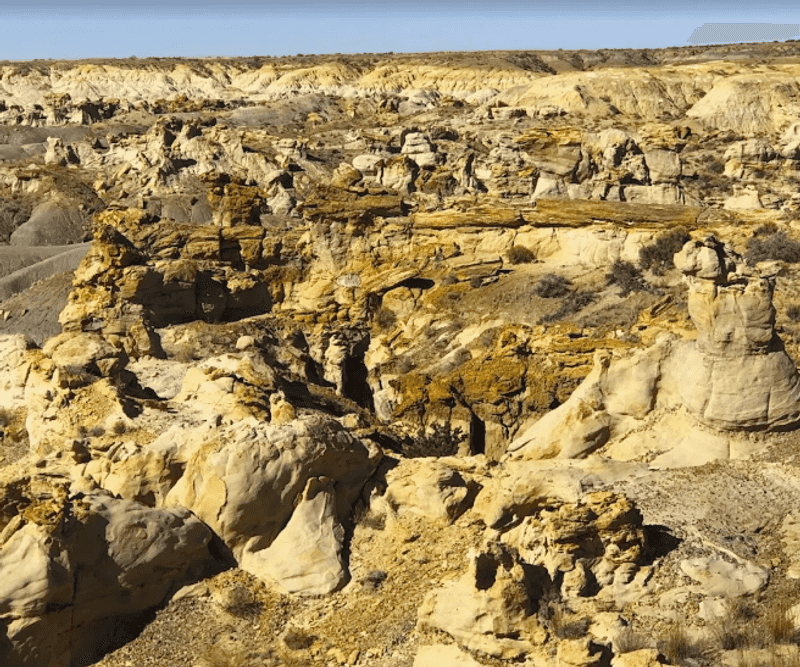
Deep in the high desert of northwestern New Mexico, there is a stretch of land so strange and so raw that it barely feels like it belongs on this planet. Twisted rock towers, cracked fossil eggs, and dark chocolate-colored hoodoos rise from the earth across 45,000 acres of protected wilderness.
No paved trails, no crowds, no guardrails. Just you, the wind, and a landscape that has been quietly reshaping itself for millions of years.
This is the kind of place that makes you stop mid-step and just stare. This is one of the most visually striking and undervisited natural areas in the entire country, and once you understand what makes it so special, you will wonder why it took this long to hear about it.
A Landscape Millions of Years in the Making
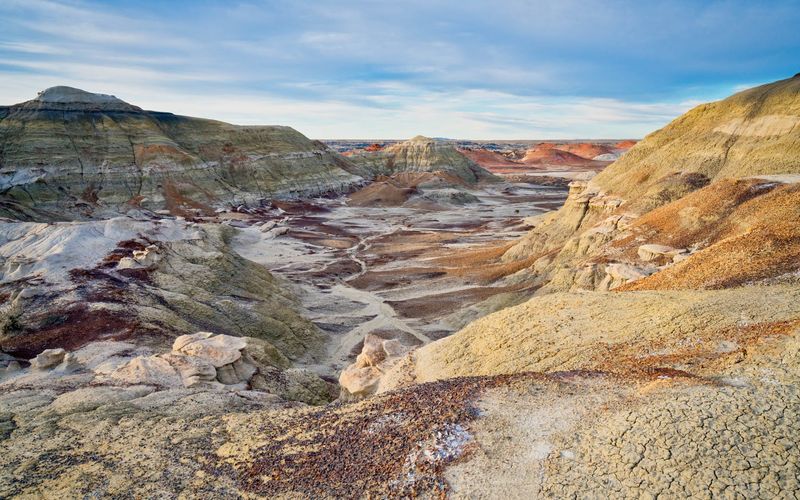
Around 70 million years ago, this part of New Mexico sat at the edge of a vast inland sea. As that sea retreated, it left behind thick layers of shale, sandstone, and mudstone packed with organic material.
Over time, wind and infrequent heavy rains carved those soft layers into the formations visible today.
The result is a badlands landscape unlike anything else in the continental United States. The erosion process is still happening right now, meaning the terrain shifts subtly year after year.
Formations that existed a decade ago may look different today, and new shapes are constantly being revealed as the soft rock breaks down.
What makes Bisti particularly interesting geologically is the variety of materials involved. Iron oxides stain many of the rocks a rich brown, while other formations appear pale cream or dusty gray.
That contrast across the terrain creates a visual range that keeps every corner of the wilderness looking different from the last.
The Hoodoos That Stop You Cold
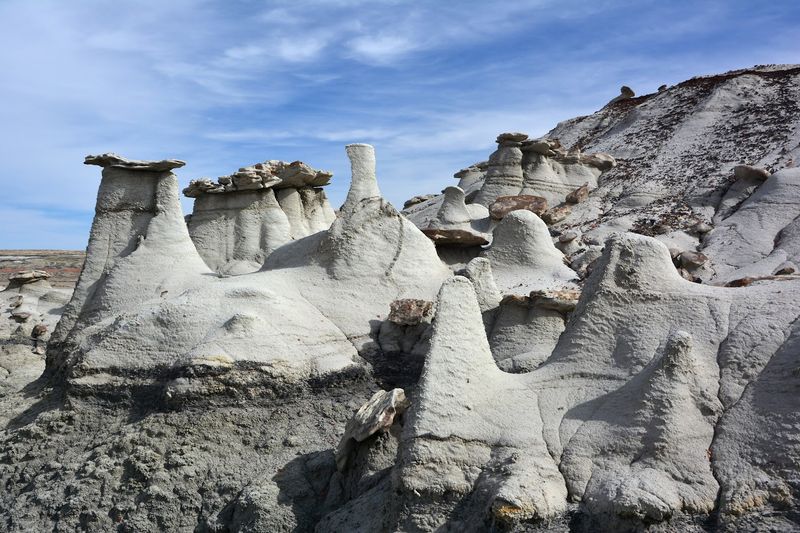
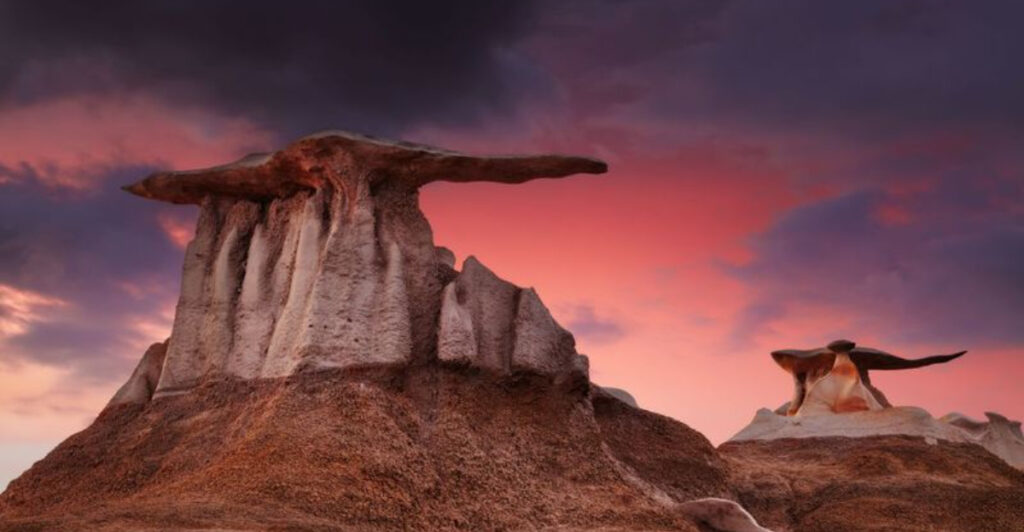
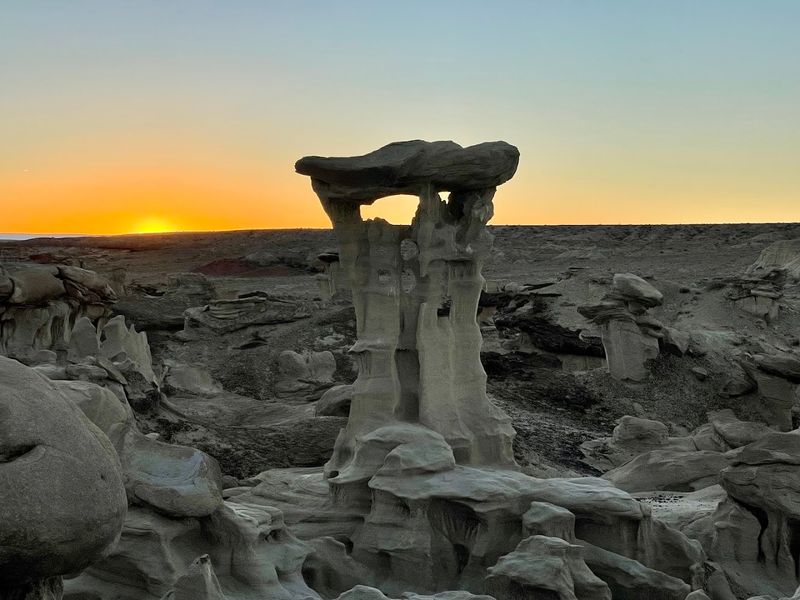
The Chocolate Hoodoos are the signature formation of the Bisti Badlands, and they earn that reputation quickly. These dark, iron-oxide-stained pillars rise from the eroded floor of the wilderness in clusters, their tops wider than their narrow bases, creating the classic mushroom shape that defines a hoodoo.
They form when a harder cap rock sits on top of a softer column of material. The cap protects what is directly beneath it while everything around erodes away.
The result is a column of rock that looks almost too deliberate to be natural, like something constructed rather than carved by weather alone.
Hikers often describe the Hoodoo City area as a highlight of the entire wilderness experience. The concentration of formations there is dense enough that every direction offers a different composition of shapes and heights.
Walking among them feels like moving through a forest made entirely of stone, with no two trees looking remotely alike.
Cracked Eggs and the Alien Hatchery
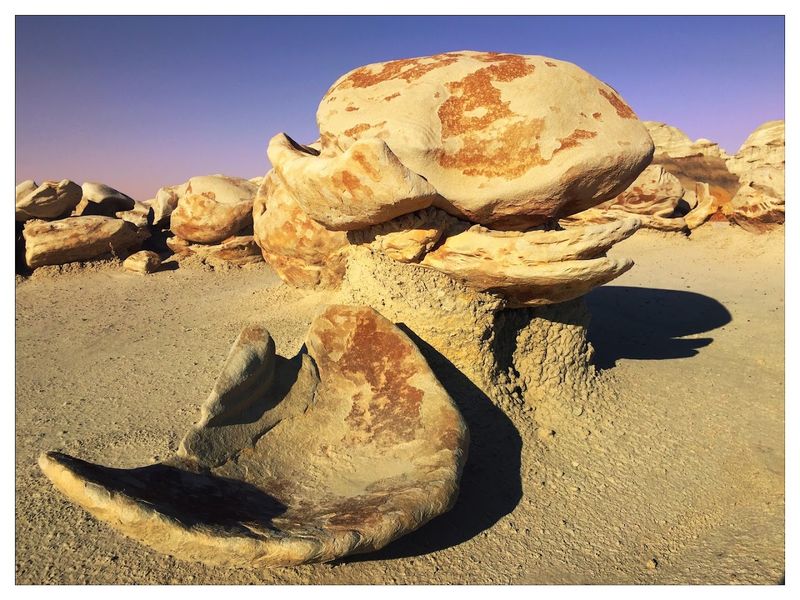
One of the most photographed and talked-about spots in the entire wilderness is the formation known as the Alien Hatchery, sometimes called the Cracked Eggs. These are large, roughly spherical boulders that appear to have cracked open from the inside, their interiors exposed to show layered rings of contrasting material.
The effect is genuinely striking. The formations look like oversized eggs mid-hatch, and the name sticks because nothing else quite explains the visual.
They are not actually eggs, of course, but the result of a geological process where concretions, or hardened mineral masses, form inside softer surrounding rock and then get exposed as erosion strips away the outer material.
Finding the Alien Hatchery without a downloaded map is a real challenge. The formations do not announce themselves from a distance, and the terrain around them looks similar in many directions.
Most hikers rely on GPS apps like Gaia or AllTrails with offline maps downloaded before leaving cell service range.
Wings: The Formation Worth Every Step
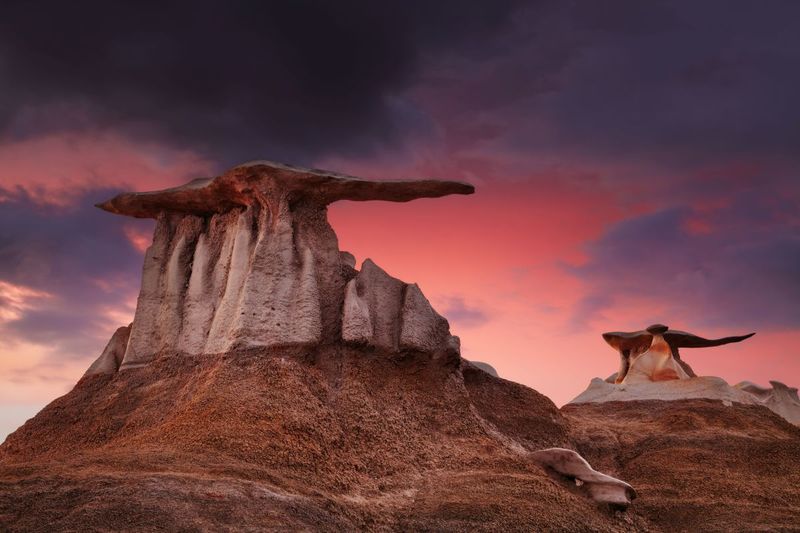
Among all the named formations in the Bisti Wilderness, Wings tends to generate the most excitement from those who find it. The structure consists of large, flat slabs of rock that angle outward from a central point, creating a shape that genuinely resembles a pair of spread wings frozen in stone.
The Wings formation sits toward the outer edge of the popular hiking loop, making it a natural endpoint for many visitors. Arriving there near sunset adds a layer of visual drama that photographs rarely do justice to.
The flat surfaces catch the changing light differently depending on the angle and time of day.
Experienced hikers who have covered the full route from the Eggs to the Wings, passing through the Rock Garden, Hoodoo City, Vanilla Hoodoos, and the Manta Ray formation, report covering roughly nine miles of relatively flat terrain. The distance sounds long but the ground is manageable, and the constant variety of formations keeps the pace moving naturally.
Petrified Wood Scattered Across the Desert Floor
Not everything remarkable in the Bisti Wilderness points upward. Scattered across the desert floor are petrified wood logs, ancient trees that were buried in sediment millions of years ago and slowly replaced by mineral deposits until the organic material transformed entirely into stone.
These logs are easy to miss if you are focused on the dramatic vertical formations overhead, but they are worth slowing down for. The grain of the original wood is still visible in many pieces, preserved in silica and other minerals that have hardened into a record of what this landscape once looked like when trees actually grew here.
Touching or removing petrified wood is prohibited within the wilderness, and that rule exists for good reason. Each piece represents an irreplaceable natural record.
The logs that remain in place today are the same ones future visitors will get to discover, which makes leaving them exactly where they are both a legal and genuinely meaningful choice.
No Trails, No Signs, No Problem (With Preparation)
The Bisti/De-Na-Zin Wilderness has no marked trails. That is not an oversight.
It is an intentional feature of a wilderness designation, which by definition limits development and infrastructure to preserve the wild character of the land. What that means practically is that every hiker is responsible for their own navigation.
Downloading offline maps before leaving cell service is not optional. Inside the wilderness, cell signal is essentially nonexistent, and apps that rely on a live connection will not function.
Tools like Gaia GPS, AllTrails with offline maps downloaded in advance, and even printed topo maps with photos of key landmarks all help prevent the kind of disorientation that turns a day hike into an ordeal.
Power lines and electrical towers visible from high ground serve as useful directional anchors when technology fails. Keeping those reference points in sight is a practical strategy that many experienced hikers use as a backup to their digital navigation tools throughout the day.
What to Bring Before You Step Through the Gate
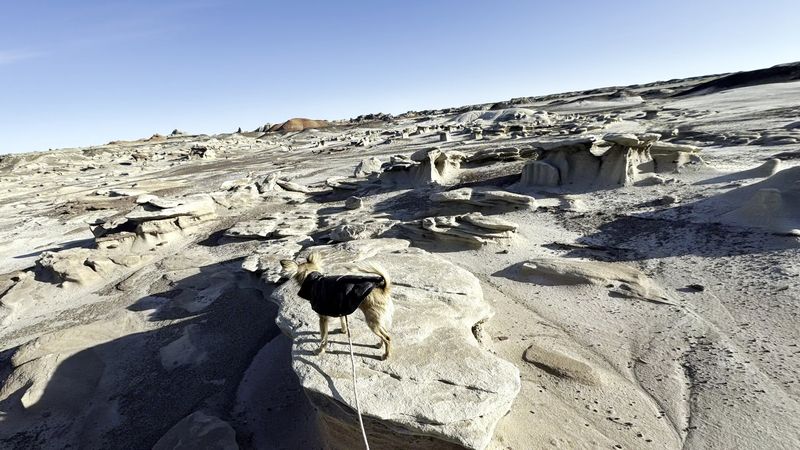
Preparation for a Bisti visit looks different from a typical national park day trip. There are no water fountains, no snack stands, no shaded rest areas, and no ranger assistance inside the wilderness.
Everything needed for the day has to come in with the hiker and go back out the same way.
Water is the most critical item. The desert heat, even in cooler months, pulls moisture quickly, and the terrain requires more physical effort than flat trails.
Most experienced visitors recommend bringing more water than seems necessary and then adding a bit more on top of that estimate.
Sun protection matters year-round here. A wide-brim hat, sunscreen, and a neck gaiter or kerchief to manage dust during windy periods are standard kit.
Sturdy hiking shoes with solid traction handle the uneven, sometimes slippery terrain far better than trail runners or casual sneakers. A fully charged phone with Wi-Fi turned off conserves battery for GPS use throughout the hike.
Visiting in Winter: A Completely Different World
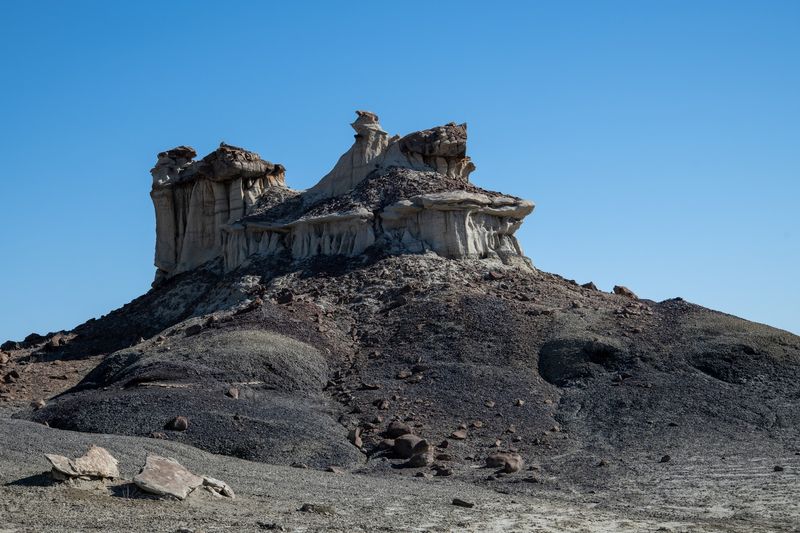
Winter transforms the Bisti Wilderness into something quieter and more stripped down than its warmer-weather version. The crowds thin dramatically, the air carries a sharp chill, and the landscape takes on a different quality when frost settles across the dark rock formations in the early morning hours.
The tradeoff is real, though. Winter moisture makes the clay-heavy ground extremely slippery, and the mud that forms after any precipitation sticks heavily to boots and can make higher terrain nearly impossible to navigate safely.
Hikers who visit in December or January need to account for shorter daylight hours and dress for genuine cold, not just cool temperatures.
Despite those challenges, a winter visit to Bisti has a particular appeal. The quiet is nearly total.
The absence of other hikers makes the already remote landscape feel even more expansive. For those who come prepared for the conditions, it delivers an experience that stands apart from what the wilderness offers in any other season.
The Best Time of Year to Plan Your Trip
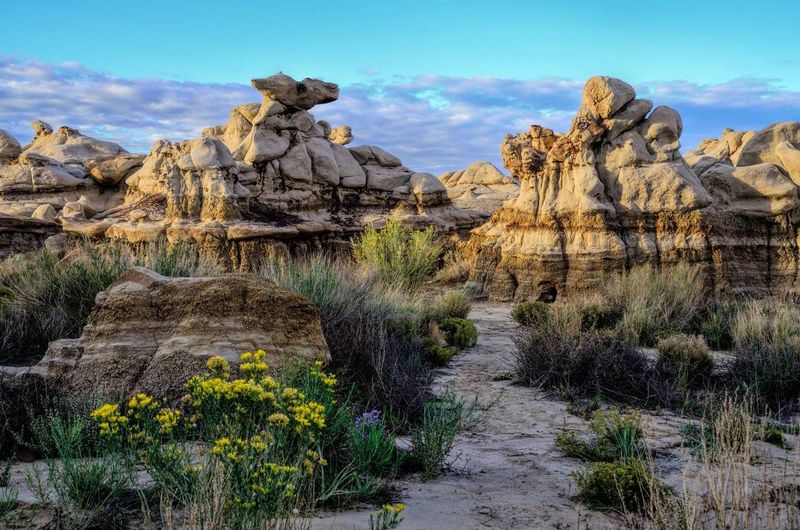
Spring and fall are widely considered the ideal windows for visiting the Bisti/De-Na-Zin Wilderness. Temperatures in those seasons sit in a range that makes extended hiking manageable, and the light in early morning and late afternoon tends to be particularly favorable for experiencing the landscape at its most dramatic.
Summer brings serious heat that can make mid-day hiking genuinely dangerous. Monsoon season, which typically runs from July through September, adds the complication of sudden heavy rainstorms that turn the dirt access roads into difficult mud and create flash flood conditions in the washes.
Visiting in summer is possible but requires significantly more caution and earlier start times.
The wilderness is open 24 hours a day throughout the year, which opens up the possibility of nighttime visits. The location in rural northwestern New Mexico means minimal light pollution, and the Milky Way is visible on clear nights with a clarity that is difficult to find this close to populated areas in most of the country.
Stargazing in One of New Mexico’s Darkest Skies
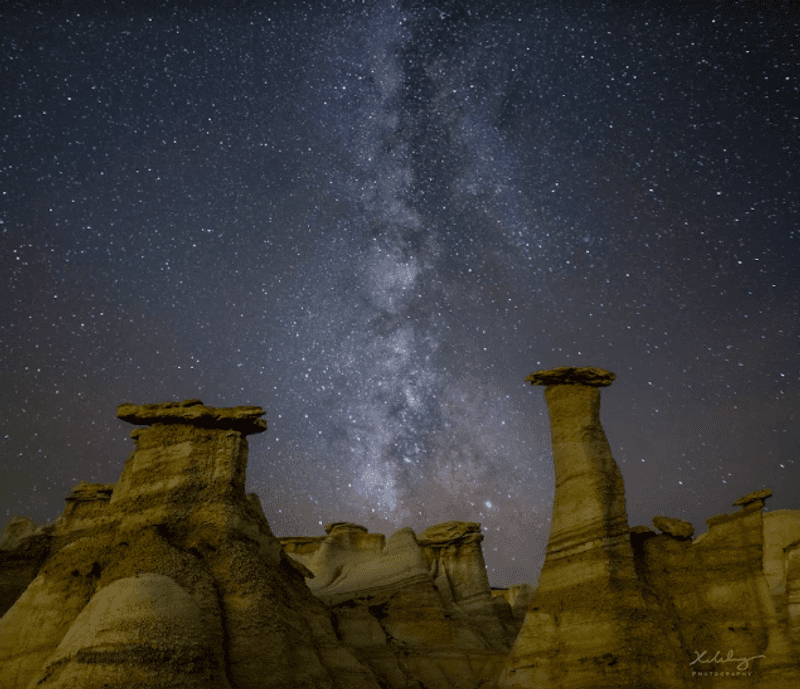
Few public lands in the Southwest offer a nighttime sky as clear and unobstructed as the one above the Bisti Wilderness. The nearest significant light sources are far enough away that the darkness here is genuine, the kind that makes the Milky Way visible as a broad, textured band rather than just a faint suggestion across the sky.
Camping within the wilderness is permitted, which means visitors who plan ahead can spend a full night under that sky without having to rush back to a trailhead before dark. The Bureau of Land Management requires no permit for dispersed camping in the area, though the standard leave-no-trace principles apply completely.
Arriving at the parking area before sunset allows time to get oriented while there is still daylight, then settle in as the sky transitions. The combination of the alien-looking terrain at ground level and the star-filled sky above it creates an experience that is genuinely hard to replicate anywhere else in the continental United States.
A Final Word on What Makes This Place Worth the Drive
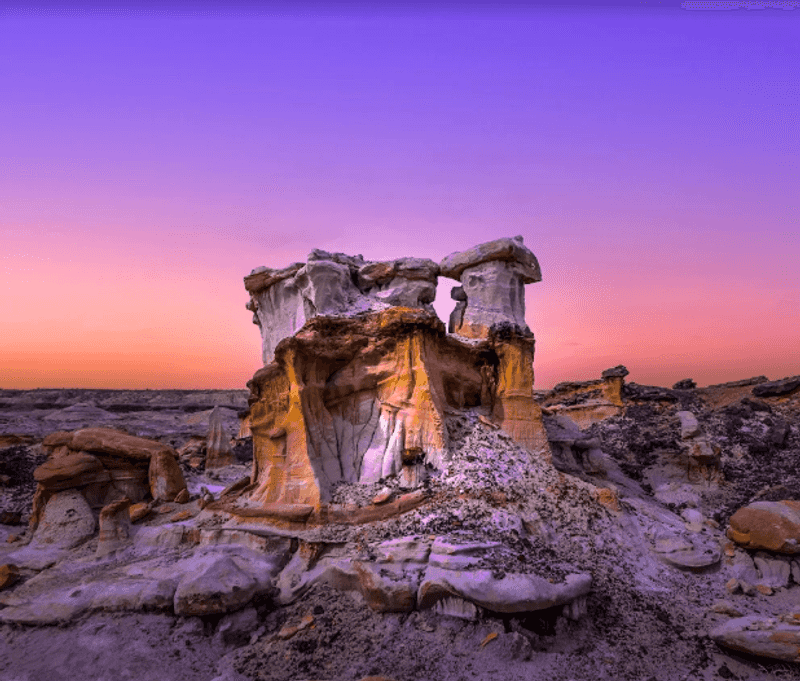
The Bisti/De-Na-Zin Wilderness does not hand itself over easily. The dirt roads are rough, the trails are unmarked, the cell signal is gone, and the heat or cold depending on the season will test anyone who shows up underprepared.
That is precisely why the people who do make the effort tend to remember it for years.
This is Bureau of Land Management land, which means it operates without the entrance fees, shuttle systems, or timed reservations that have become standard at many popular national parks. The trade-off is that visitors take on more personal responsibility for their safety and navigation, but the reward is access to 45,000 acres that rarely feel crowded.
What the wilderness delivers in return for the effort is a landscape that has no real equivalent. The formations, the fossils, the silence, and the scale of the place combine into something that photographs gesture toward but never fully capture.
Some places are worth the inconvenience, and this is one of them.
Where in the World Is This Place?
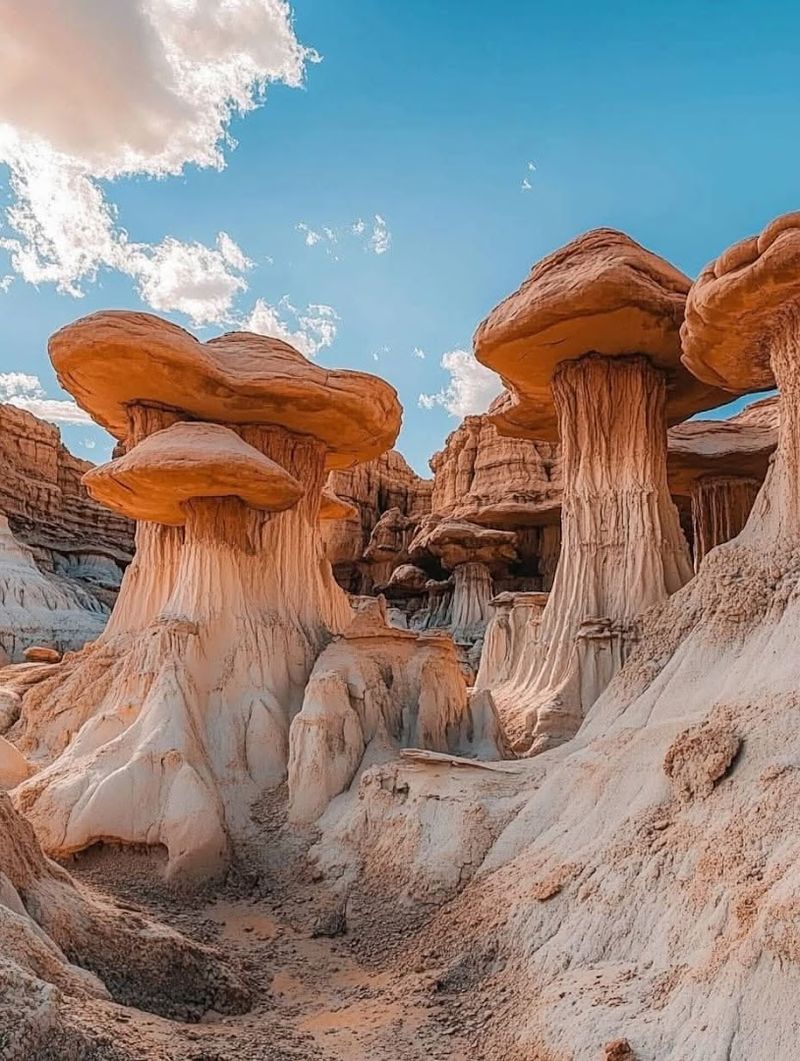
County Road 7297, Bloomfield, NM 87413 is the address that leads to one of the most remote and rewarding wilderness areas in the American Southwest. The Bisti/De-Na-Zin Wilderness sits in San Juan County in northwestern New Mexico, managed by the Bureau of Land Management and open 24 hours a day, every day of the year.
Getting there requires some commitment. Most routes involve driving along unpaved dirt roads, and a high-clearance vehicle is strongly recommended, especially after rain.
The main access point off NM 371 is generally considered the better route, placing hikers near the hoodoos within about 15 minutes of entering through the gate.
There is no entrance fee, no ranger station, and no trail markers once you are inside. That combination of accessibility and total wildness is exactly what draws people from across the country to this corner of New Mexico that most road maps barely acknowledge.
Share this story