 Unearth The Voyage
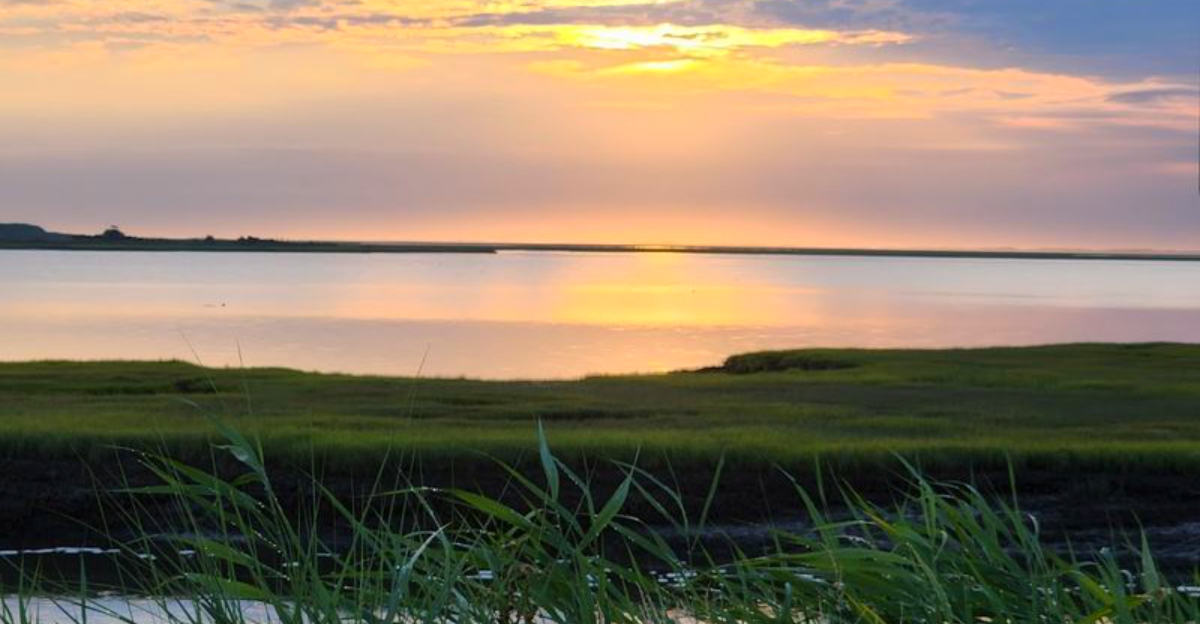
New Jersey has a lot going for it, but most people drive straight past one of its best-kept secrets on their way to Atlantic City. Just a few miles from the casino skyline, a vast stretch of coastal wetlands, marshes, and forests is quietly doing something remarkable: sheltering over 300 species of birds across nearly 50 miles of protected land.
I made the trip out on a cool morning, not entirely sure what to expect, and left genuinely impressed by how much there is to see and do here. This place draws serious birders, casual nature lovers, and photographers alike, and for good reason.
Whether you go by car, bike, or on foot, the experience sticks with you. Keep reading, because what follows is a full breakdown of everything that makes this refuge worth your time.
Where to Find This Wildlife Refuge
The address is 800 Great Creek Rd, Galloway, NJ 08205, and getting there is straightforward whether you are coming from Atlantic City or heading south from the Garden State Parkway.
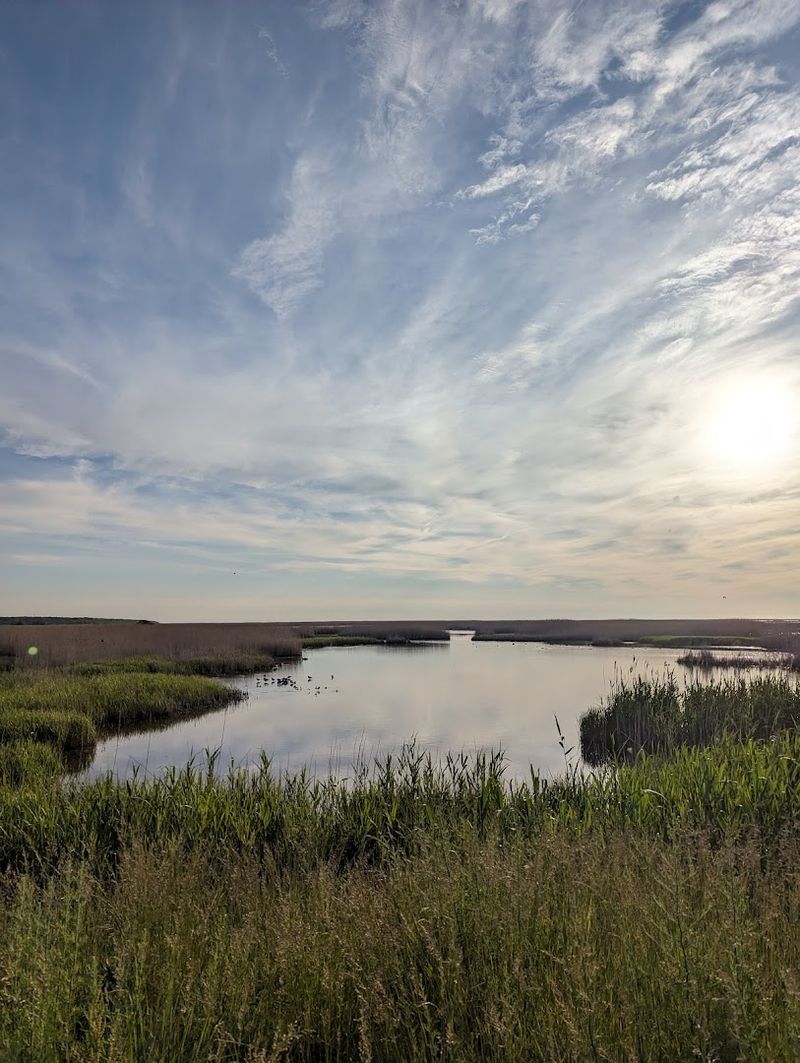
Edwin B. Forsythe National Wildlife Refuge sits in Atlantic County, right in the heart of the New Jersey coastal plain.
The location puts it close enough to civilization that you can combine it with other day trip activities, yet far enough from the noise that it feels like a completely different world.
The refuge is managed by the U.S. Fish and Wildlife Service and covers nearly 50,000 acres of diverse habitat.
The main entrance on Great Creek Road is easy to find, and the visitor center is right there to get you oriented before you head out. Parking is available on-site, and the entry fee is just four dollars, so bring cash to keep things simple.
The Eight-Mile Wildlife Drive
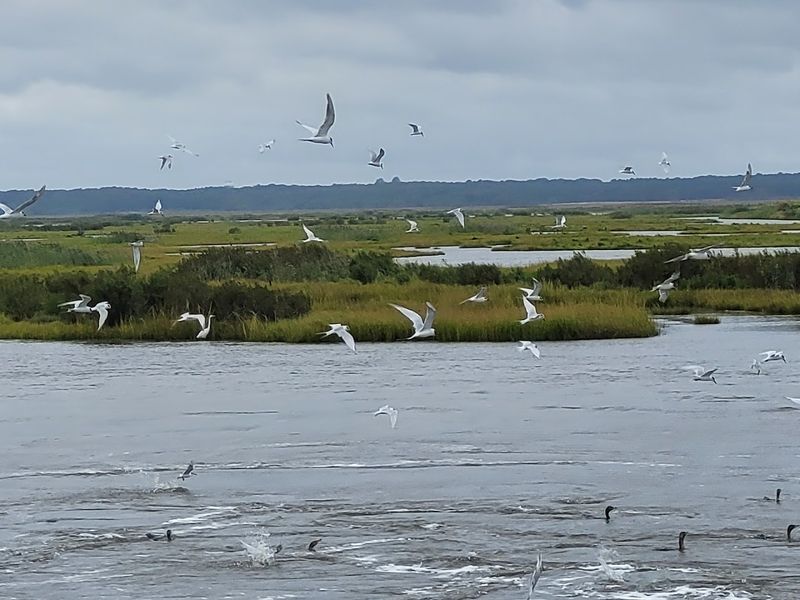
The centerpiece of any visit here is the Wildlife Drive, an eight-mile one-way loop that takes you through some of the most productive bird habitat on the East Coast.
The road sits on raised berms that run between freshwater and saltwater areas, which means you get a clear view of both ecosystems without ever leaving your car. Pull-off spots are spaced throughout the route so you can stop, get out, and take your time without blocking other visitors.
Most people spend at least an hour on the loop, though serious birders and photographers often do it twice. The pace is entirely up to you, and that flexibility is a big part of what makes it so enjoyable.
On a good morning, you can spot herons, egrets, ospreys, terns, and skimmers all within a single stretch of road. It is the kind of drive that earns every minute you give it.
A Birdwatcher’s Best Day Out
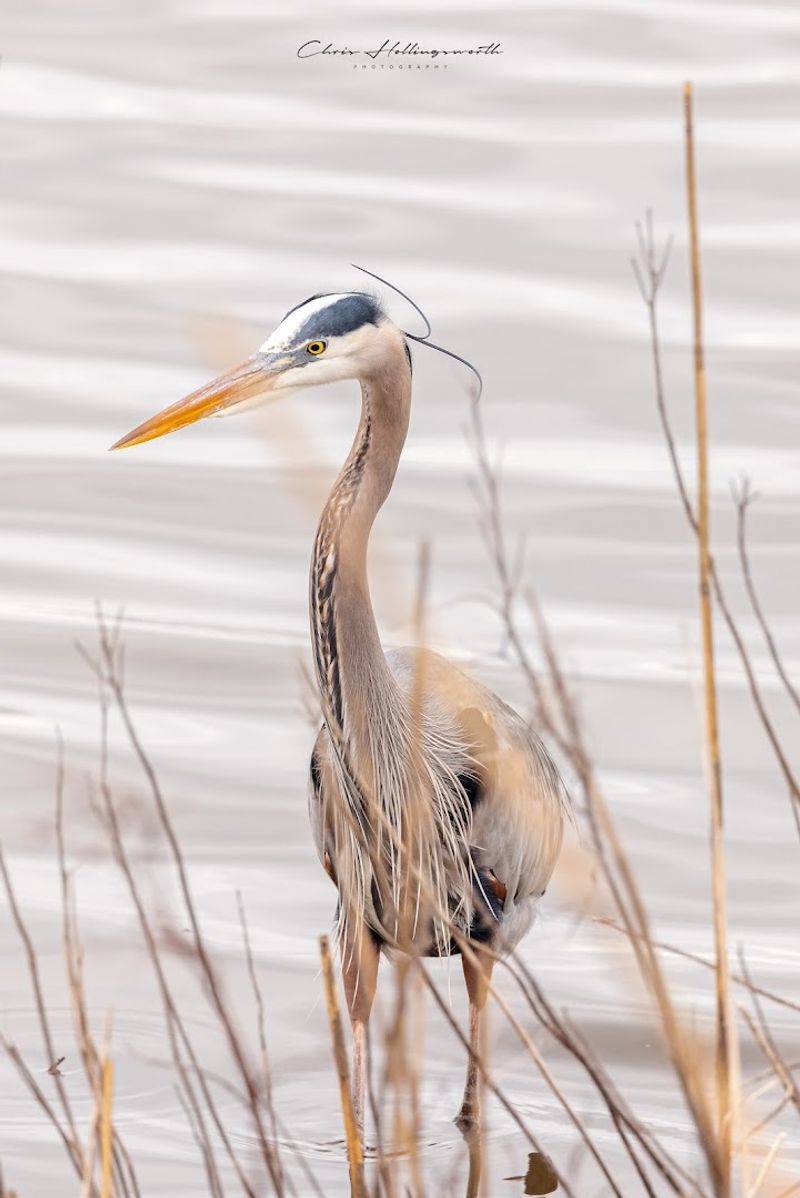
More than 300 bird species have been recorded at this refuge, and the variety is the kind of thing that makes even casual observers stop and take notice.
Shorebirds, wading birds, raptors, and songbirds all use this area during different seasons. Oyster catchers nest here in spring, Forster’s terns patrol the water channels, and black skimmers work the shallow flats in classic low-flight formation.
Green herons appear with enough regularity that returning visitors treat them like old friends.
Early morning and early evening are the most productive windows for bird activity, and they also happen to be when the biting flies are least aggressive. A good pair of binoculars is all you really need to get started, though a telephoto lens will let you capture images you will actually want to keep.
The variety here genuinely rewards multiple visits throughout the year.
Photography at the Refuge
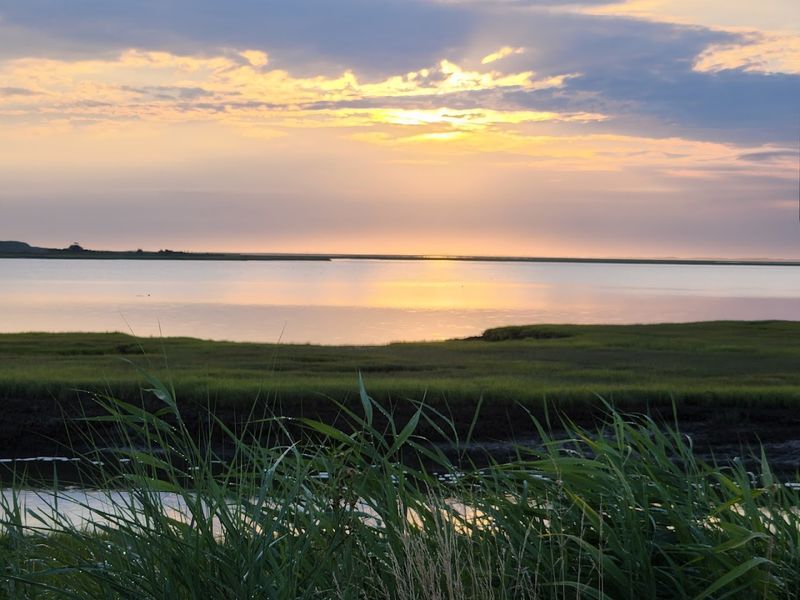
For photographers, this refuge operates at a different level than most public nature areas in the Northeast.
The raised berms put you at eye level with many of the birds, and the open marsh provides natural light without the tree cover that makes forest birding so difficult to shoot. On a single loop, it is entirely realistic to photograph a dozen or more species you have never captured before.
The Atlantic City skyline appearing on the horizon behind a great blue heron is the kind of unexpected composition that stops you mid-drive.
Early morning visits produce the best light and the most active subjects. Evening visits offer a different reward, with sunset colors reflecting off the tidal flats and birds moving to their roost sites.
Many photographers do the loop more than once on the same visit, and given how much changes between passes, that is time well spent. The refuge does not disappoint with a camera in hand.
The Observation Towers
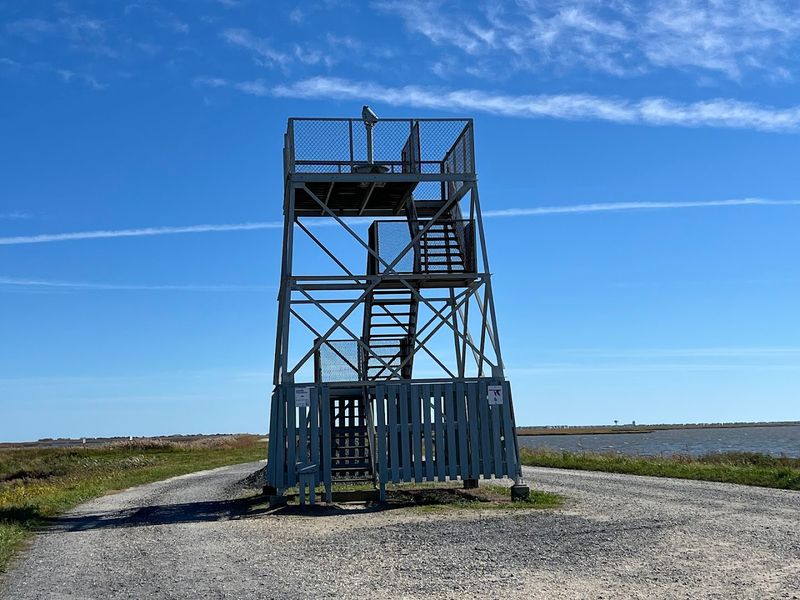
Two observation towers are positioned along the Wildlife Drive, one at Gull Pond and one at Turtle Cove, and both are worth the short walk to reach them.
Getting up above the marsh changes everything. From the tower platforms, you can scan wider stretches of water and spot birds that are too far from the road to see clearly at ground level.
The elevated position also puts you above the worst of the biting insects, which is a practical bonus that visitors appreciate more than they expect to.
The towers are built for durability and offer solid footing for setting up a spotting scope or steadying a camera. On clear days, the view extends far enough to take in the full sweep of the marsh, with the Atlantic City skyline visible in the distance.
Standing up there with binoculars in hand, watching the tide move through the channels below, is a genuinely satisfying experience that rounds out the drive perfectly.
Hiking Trails for Those Who Want to Walk
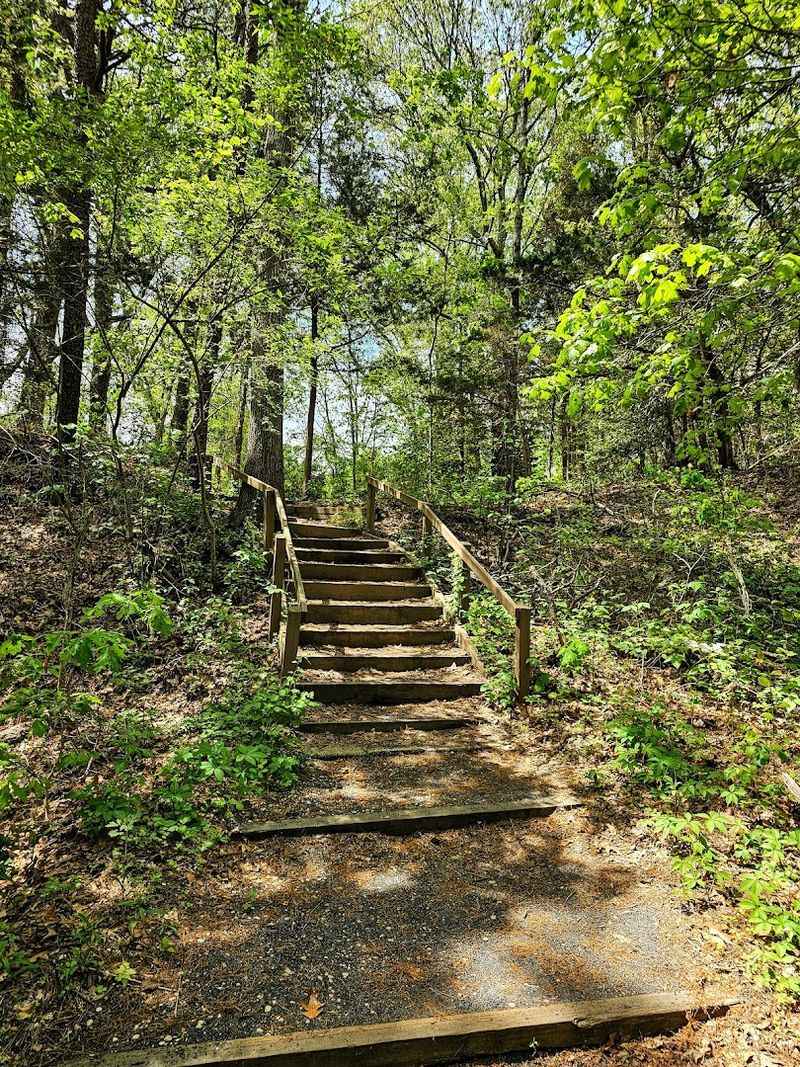
Not everyone wants to experience the refuge from behind a windshield, and the trail system here gives walkers a solid set of options.
Most of the walking trails are short, with the majority running around a quarter mile, though the Leeds Eco-Trail extends to about two and a half miles and takes you through a mix of upland forest and wetland edge habitat. The shorter trails are good for visitors with limited time or mobility, while the longer route rewards those who want to get deeper into the landscape.
One of the more historically interesting walks follows the old railway bed out into the marshes, where original wooden trestles still stand. That stretch of trail carries real character, and the combination of industrial history and natural habitat makes it unlike anything else in the area.
Wear long sleeves and pants if you plan to walk, because the mosquitoes and greenhead flies are not shy about making their presence known.
The Old Railway and Marsh Trestles
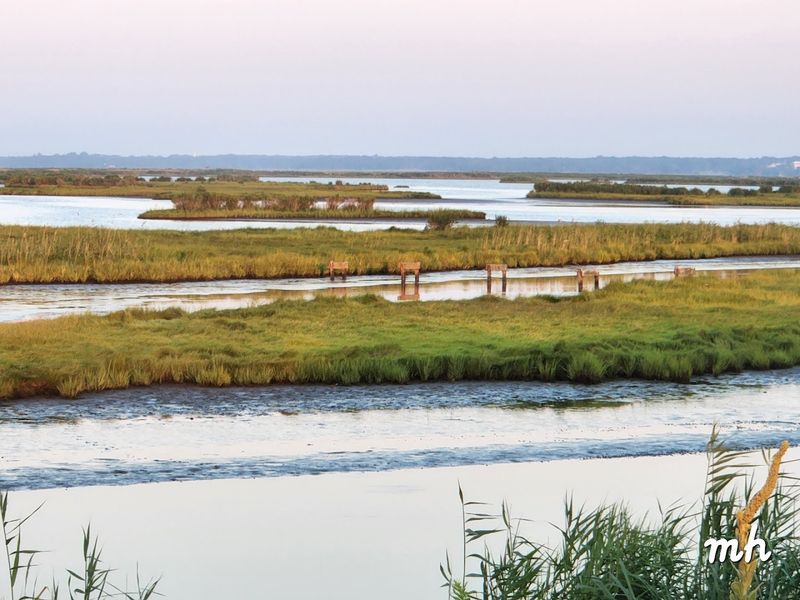
One of the most unexpected features of this refuge is the remnant infrastructure left over from an earlier era of the New Jersey coastline.
An old railway bed cuts through the marsh, and the original wooden trestles are still standing out in the wetlands. Walking or biking along this route gives you a completely different relationship with the landscape than the Wildlife Drive does.
You are out in the middle of the marsh, with water on both sides and birds working the channels just a few feet away.
The trestles have a weathered, functional character that fits the setting rather than clashing with it. They serve as perches for cormorants and herons, which adds to the whole scene in a way that feels almost staged but is entirely real.
The history layered into this place goes well beyond the birds, and the old rail infrastructure is one of the details that makes the refuge worth exploring on foot rather than just by car.
Migratory Birds and Seasonal Highlights
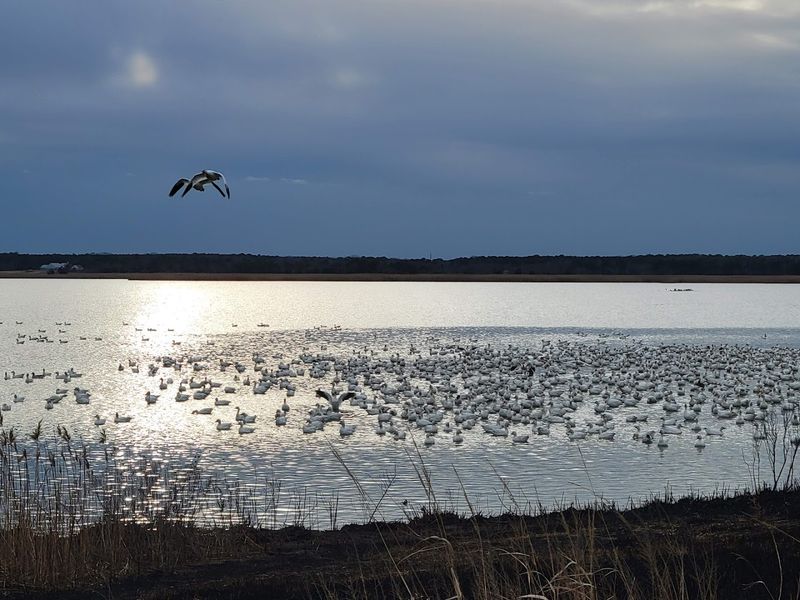
The Atlantic Flyway runs directly over this refuge, and that geographic fact turns the place into a spectacle during spring and fall migration.
Tens of thousands of ducks, geese, shorebirds, and raptors move through the area each year, and the refuge provides critical resting and feeding habitat along the way. Snow geese arrive in massive numbers during late fall, and the sight of a large flock working the marsh flats is genuinely hard to describe without resorting to superlatives.
Spring migration brings a different cast, including warblers, terns, and breeding shorebirds setting up territories. The nesting season in late spring and early summer is particularly rewarding for those who want to observe bird behavior rather than just count species.
Even in winter, the refuge holds short-eared owls, northern harriers, and a reliable selection of waterfowl that keep regular visitors coming back through the colder months. Every season here has something worth showing up for.
Native Plants and Coastal Habitat
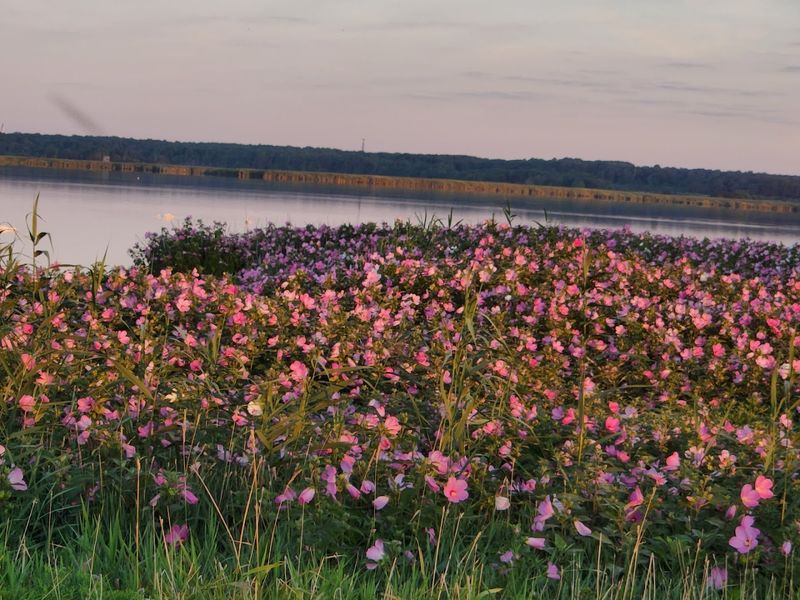
The plant life at this refuge is as much a part of the experience as the birds, and a few species in particular tend to catch visitors off guard.
Native marsh hibiscus blooms in late summer along the wetland edges, producing large pink flowers that stand out against the green marsh grass in a way that is hard to miss even from a moving car. Cordgrass, salt meadow hay, and phragmites define the saltwater sections, while cattails and buttonbush fill in the freshwater areas.
Together, these plant communities support the entire food web that makes the bird diversity possible.
The upland sections of the refuge add another layer, with coastal forest providing habitat for woodland birds and pollinators. The botanical variety across the different habitat types means there is always something changing visually throughout the seasons.
Spring brings new growth, summer delivers the hibiscus bloom, fall turns the marsh gold, and winter strips everything back to structure and sky.
Practical Tips for Your Visit
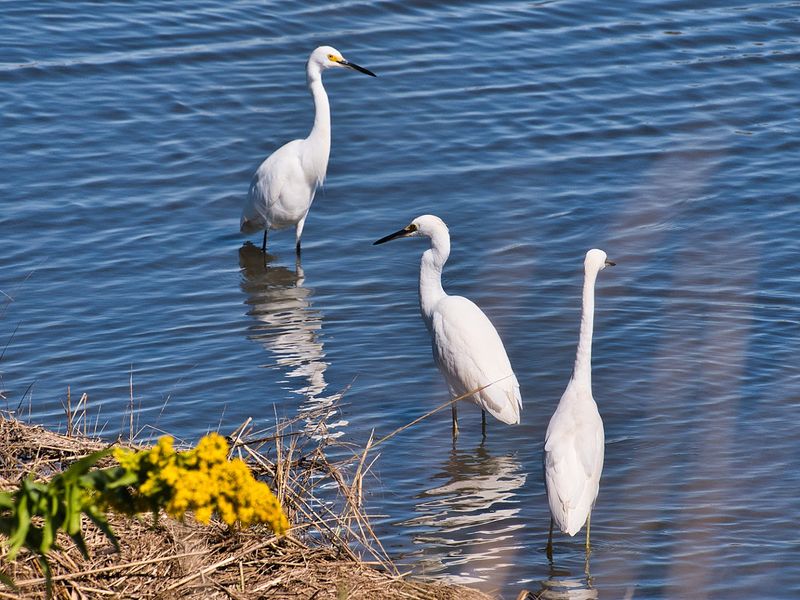
A few practical details can make the difference between a good visit and a great one, and most of them are easy to plan around.
The entry fee is four dollars and cash is preferred, so have some on hand before you arrive. The visitor center at the entrance is worth a stop before you head out, as it provides maps, species checklists, and educational displays that help you understand what you are looking at once you are on the loop.
The center is welcoming and set up well for both first-time visitors and returning regulars.
Greenhead flies are aggressive in July and August, particularly during midday, so early morning or evening visits during those months are strongly recommended. Bug spray and long clothing help on the walking trails.
The bathrooms on-site have received mixed feedback from visitors, so plan accordingly. The Wildlife Drive takes about an hour at a relaxed pace, but blocking out two hours gives you room to stop and really look around.
What to Do After Your Visit
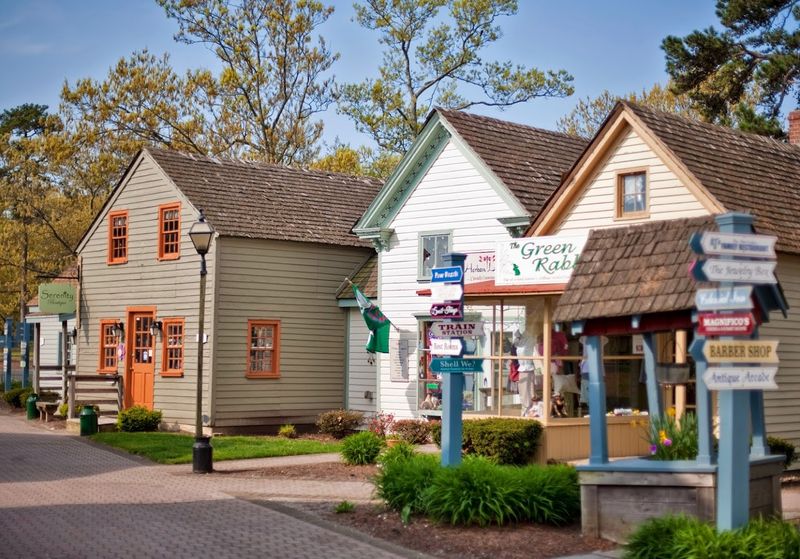
The refuge pairs well with several nearby attractions, and building a full day around the area is easy to do without much extra planning.
Historic Smithville is just a short drive away and offers a cluster of small shops, cafes, and eateries in a walkable village setting. It is a good place to decompress after a few hours of birding and grab something to eat before heading home.
The contrast between the quiet marsh and the busy little village is a nice way to close out the day.
Atlantic City is also close enough to factor into a combined trip, and seeing the casino skyline from inside the refuge earlier in the day gives that familiar landmark a completely new context. For visitors coming from further north or south along the Jersey Shore, the refuge makes a logical and rewarding detour that does not require much extra time.
A single day is enough to cover both the refuge and a stop in Smithville comfortably.



