 Unearth The Voyage
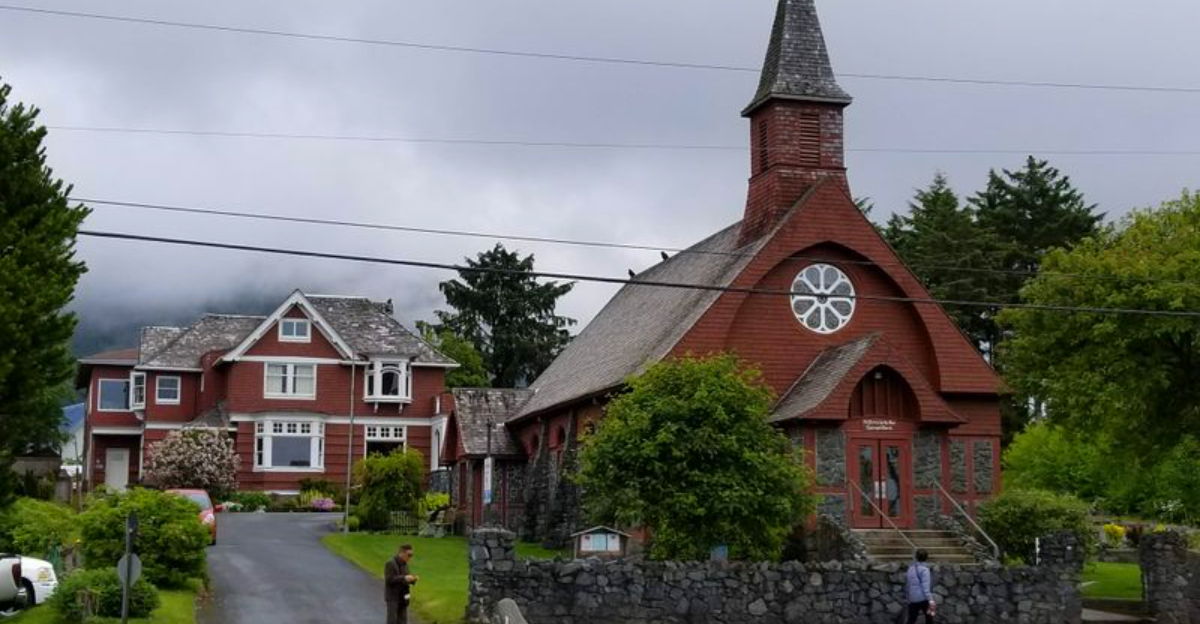
Sitka sits on the edge of Alaska’s Inside Passage, where snow-capped mountains meet the Pacific Ocean and history comes alive in every corner. This coastal town isn’t like anywhere else in America—it’s a place where Russian church domes rise above the trees, Tlingit totem poles stand guard over ancient forests, and sea otters play in the harbor just steps from downtown.
Whether you’re drawn to its fascinating blend of cultures, its stunning natural beauty, or its rich stories of the past, Sitka offers an unforgettable Alaskan adventure.
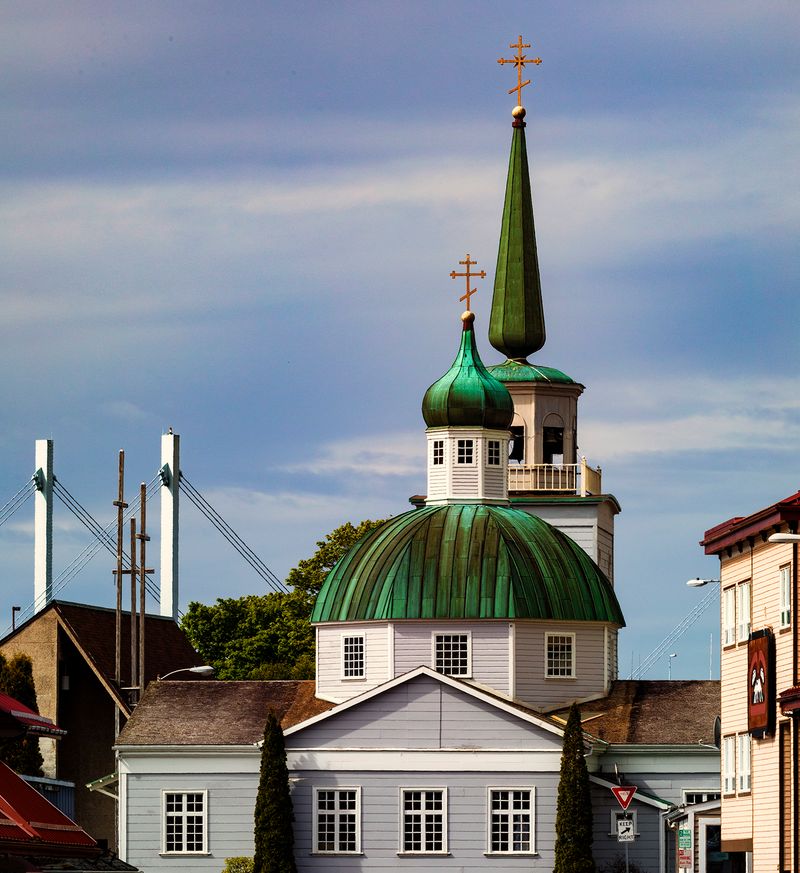
The unmistakable onion dome of St. Michael’s Cathedral rises above Sitka’s downtown like a piece of old Russia transplanted to Alaska’s shores. Built in the 1840s, this stunning church served as the spiritual heart of Russian America and remains an active parish today.
The original building burned down in 1966, but the community rallied to rebuild it exactly as it was, complete with priceless icons and religious artifacts saved from the flames.
Walking inside feels like stepping into another world. The scent of incense lingers in the air, and candlelight flickers across walls adorned with beautiful religious paintings brought from Russia centuries ago.
The cathedral’s blue exterior and gold-topped dome make it one of Alaska’s most photographed landmarks.
Visitors can tour the church during the summer months and learn about the Russian Orthodox faith that shaped much of Alaska’s early history. The cathedral still holds regular services, and hearing the traditional chants echo through the space connects you to generations of worshippers.
It’s a living monument to Sitka’s unique heritage.
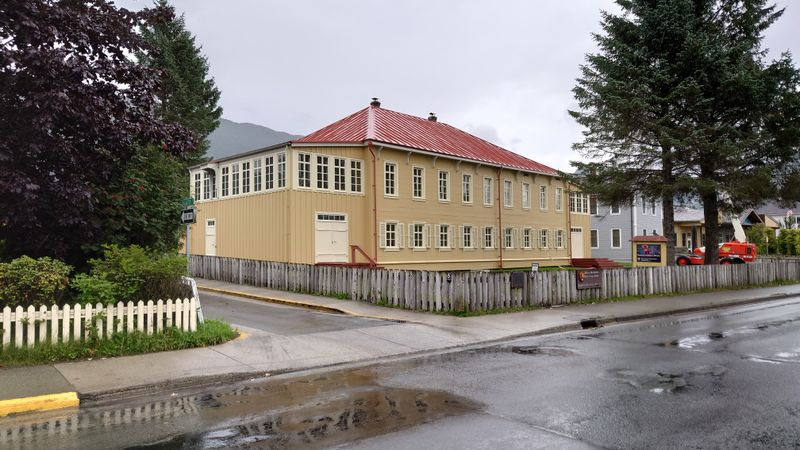
One of the oldest Russian structures still standing in North America sits quietly along Sitka’s waterfront, looking much as it did in 1842. The Russian Bishop’s House is a two-story log building that once served as home, school, and church headquarters for the Russian Orthodox bishop overseeing Alaska.
Its weathered yellow walls and simple design hide the remarkable stories contained within.
The National Park Service now manages this historic treasure, and guided tours reveal how Russian clergy lived and worked in this remote corner of their empire. Original furnishings fill some rooms, while exhibits explain the complex relationship between Russian colonizers and Alaska’s Native peoples.
The chapel on the second floor remains consecrated and occasionally hosts Orthodox services.
What makes this building special is how well-preserved it is. You can still see the original construction techniques, including the notched logs and wooden pegs that hold everything together.
The bishop’s personal quarters give insight into daily life during Russian America’s final decades. Standing in these rooms, you’re literally touching a piece of Alaska’s multicultural past.
Dense rainforest trails wind through the site where Russian colonizers clashed with Tlingit warriors in 1804, forever changing Alaska’s history. Sitka National Historical Park preserves this battleground and much more, offering visitors a chance to walk where cultures collided and eventually learned to coexist.
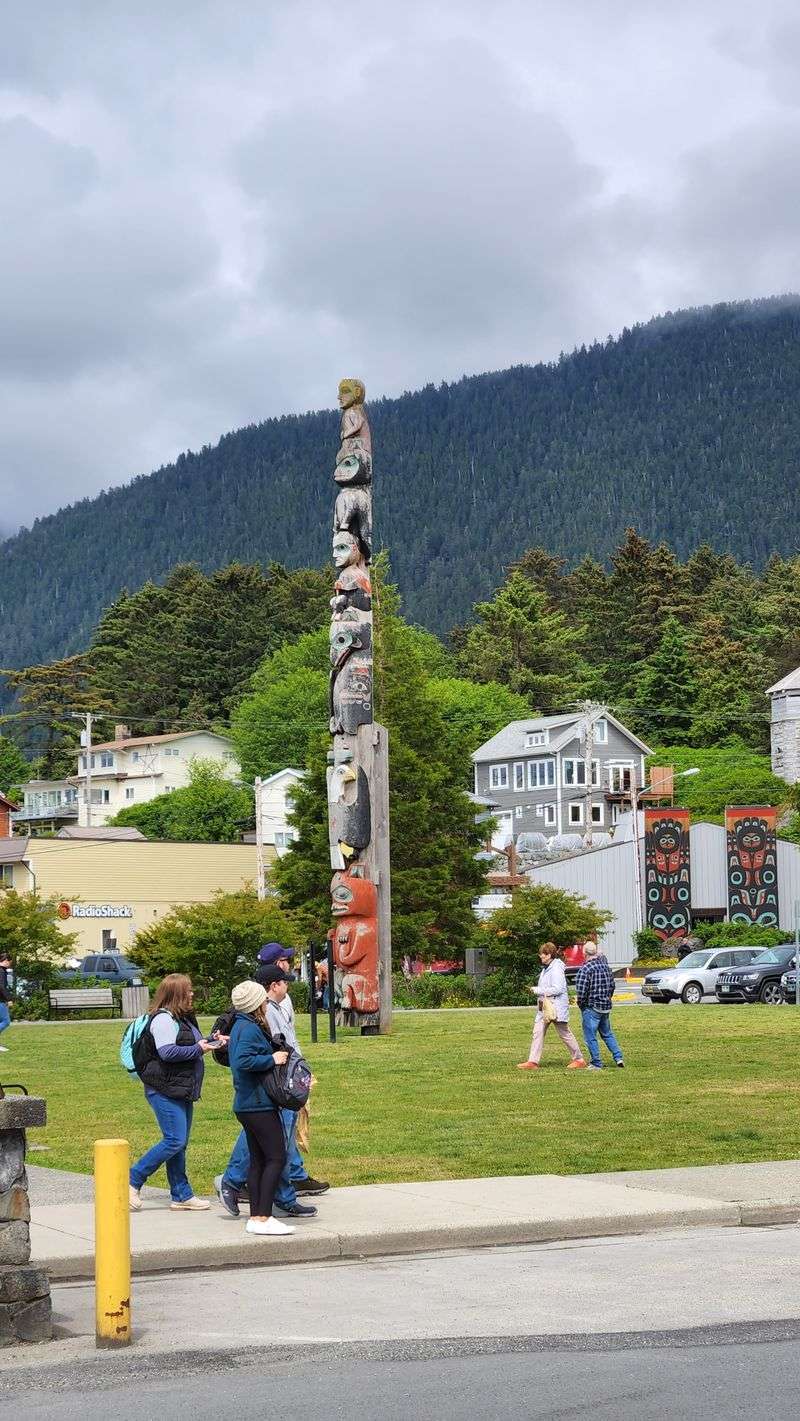
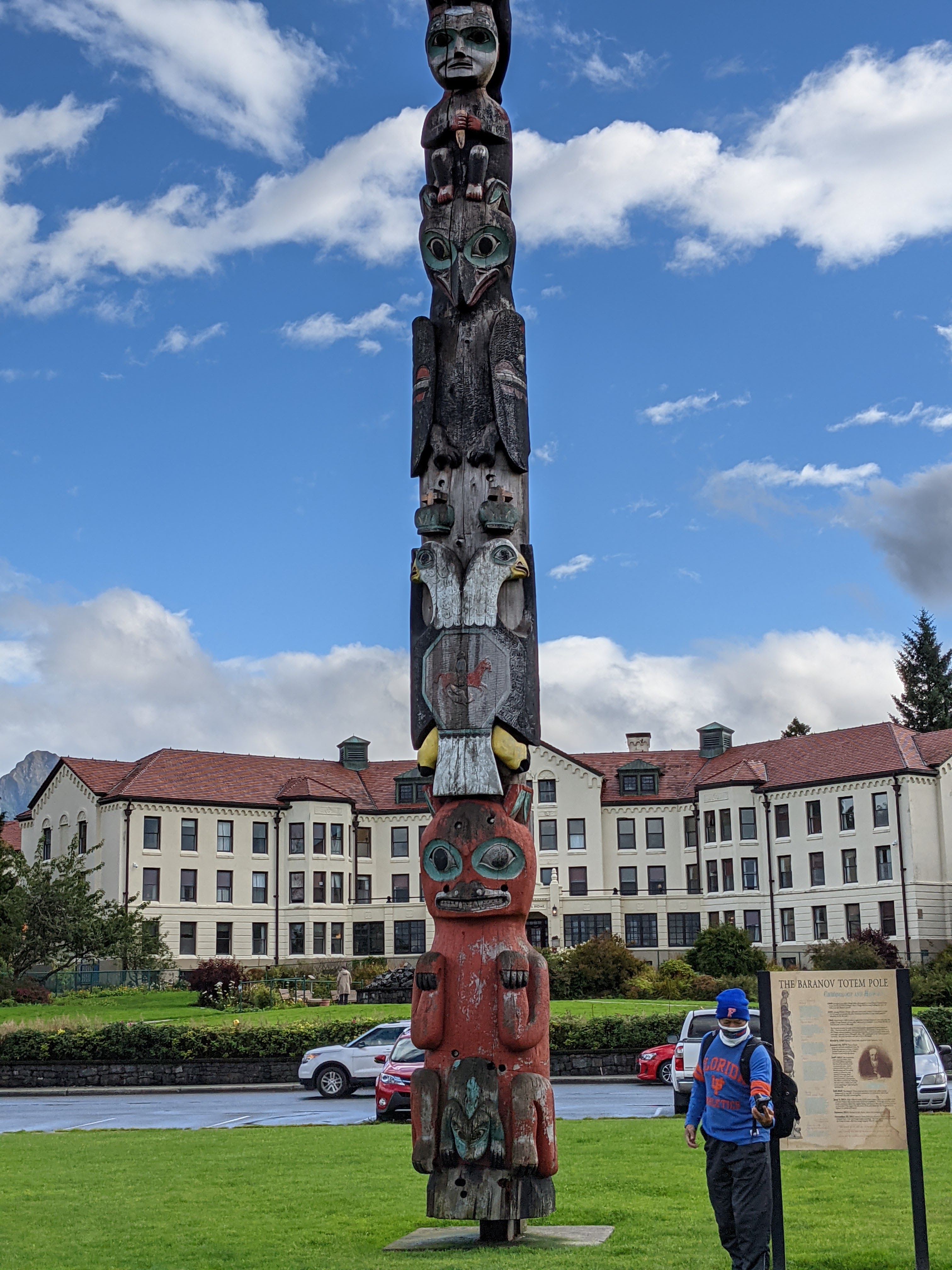
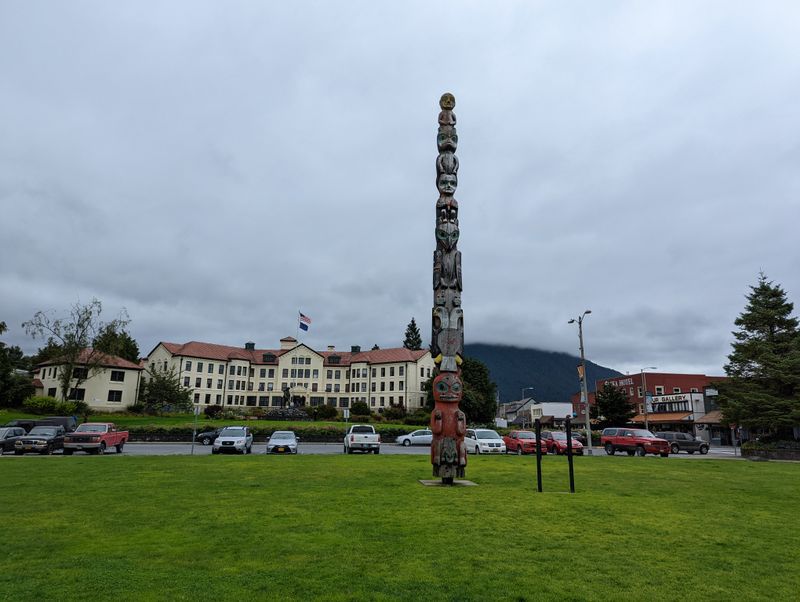
Towering totem poles line the forest paths, creating an outdoor gallery unlike any other.
The park’s collection of totem poles is absolutely stunning. These carved and painted monuments tell stories of Tlingit clans, legends, and important events through symbolic figures stacked high into the sky.
Some were brought here from other Southeast Alaska villages in the early 1900s, while others are recent creations by contemporary Native carvers. Each one deserves a long look.
Inside the visitor center, you can watch Native artists at work in the Southeast Alaska Indian Cultural Center. Carvers, weavers, and silversmiths practice traditional crafts and happily answer questions about their techniques and cultural significance.
The center also houses exhibits about the Battle of 1804 and its lasting impact on both Russian and Tlingit communities.
Long before Russian ships appeared on the horizon, the Tlingit people thrived along this coast, building a sophisticated society based on salmon, cedar, and complex clan systems. Their descendants remain deeply connected to Sitka today, keeping ancient traditions alive while adapting to modern times.
You’ll see Tlingit influence everywhere—in art galleries, cultural centers, and even in the town’s official name, which comes from the Tlingit word “Sheet’ká.”
Tlingit art is instantly recognizable with its bold formline designs in black, red, and blue-green. These stylized representations of ravens, eagles, bears, and killer whales aren’t just decorative—they’re visual records of family histories and spiritual beliefs.
Many Sitka shops sell authentic Tlingit artwork, from small silver jewelry pieces to magnificent carved masks.
The Tlingit relationship with the natural world runs deep. Traditional ecological knowledge passed down through generations taught sustainable harvesting practices centuries before modern conservation movements.
Today, many Tlingit families still gather traditional foods like berries, seaweed, and salmon, maintaining connections to ancestral lands and waters that have sustained them for thousands of years.
October 18, 1867, marked one of history’s most unusual real estate transactions when Russia officially handed Alaska over to the United States right here in Sitka. Castle Hill, a rocky bluff overlooking the harbor, witnessed this momentous ceremony as the Russian flag came down and the American flag rose for the first time over Alaska.
Many Americans called it “Seward’s Folly” at the time, mocking Secretary of State William Seward for spending $7.2 million on frozen wasteland.
Today, you can climb the wooden stairs to the top of Castle Hill and stand where history changed course. Interpretive signs explain the transfer ceremony and the complicated emotions it stirred.
For Russians leaving their American colony, it was a sad farewell. For Tlingit people watching, it meant exchanging one colonial power for another.
For American officials, it represented continental expansion and strategic positioning.
The view from Castle Hill is spectacular—mountains, islands, and ocean spreading in every direction. It’s easy to understand why Tlingit leaders and Russian governors both chose this spot for their headquarters.
The hilltop remains a powerful symbol of Sitka’s layered history.
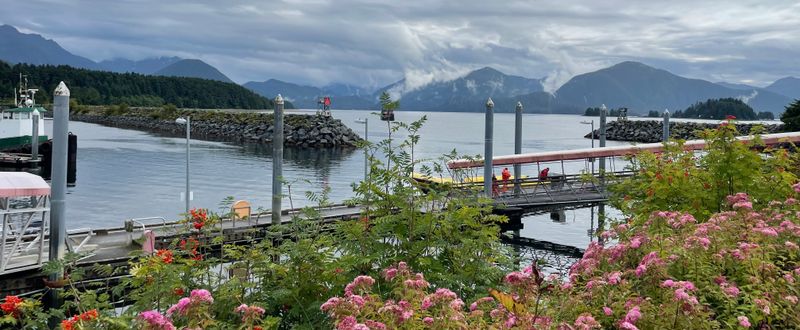
Sitka sprawls across Baranof Island and parts of Chichagof Island, surrounded by the island-dotted waters of Sitka Sound. Unlike most Alaska towns that huddle along protected inlets, Sitka faces the open Pacific, giving it a wild, exposed feeling that’s thrilling and beautiful.
The ocean here is alive with wildlife—sea otters, seals, whales, and countless seabirds make their home in these productive waters.
The town’s island location shapes everything about daily life. There are no roads connecting Sitka to the rest of Alaska, so everything arrives by boat or plane.
This isolation has helped preserve the community’s unique character and slowed the kind of development that has changed other Alaskan towns. Ferry trips to Sitka offer incredible scenery as you navigate through narrow channels between forested islands.
Mountains rise directly from the sea, creating dramatic backdrops for every view. Mount Edgecumbe, a dormant volcano on nearby Kruzof Island, dominates the western horizon with its perfect cone shape.
On clear days, the snow-covered peak reflects in the harbor waters, creating postcard-perfect scenes. The landscape here feels primeval and powerful.
Sea otters bob in the harbor like furry corks, floating on their backs and munching sea urchins while tourists snap photos from the shore. These charismatic marine mammals nearly disappeared from Alaska waters due to the Russian fur trade, but conservation efforts brought them back in impressive numbers.
Sitka offers some of Alaska’s best sea otter viewing, often from downtown streets and docks.
Watch closely and you’ll see otters using rocks to crack open shellfish, demonstrating tool use that scientists find fascinating. Mother otters wrap kelp around their pups to keep them from drifting away while they dive for food.
Their thick fur—the densest of any mammal—keeps them warm in frigid waters without the blubber that insulates seals and whales.
Beyond otters, Sitka Sound teems with marine life. Humpback whales bubble-net feed in nearby waters during summer months, working together to herd fish into tight balls before lunging upward with mouths wide open.
Bald eagles perch in shoreline trees, so common here that locals barely notice them. Harbor seals haul out on rocks near the shore, and if you’re lucky, you might spot a brown bear fishing along a nearby stream.
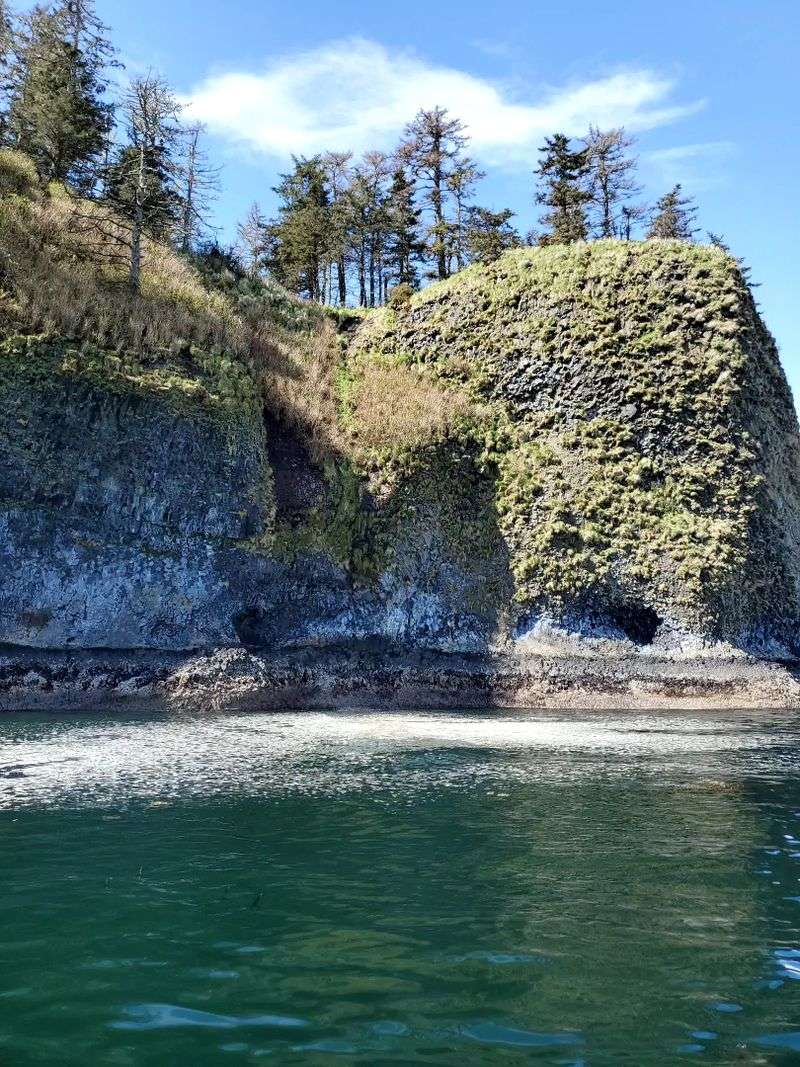
Orphaned brown bear cubs get a second chance at life at this unique rescue facility just outside Sitka’s center. Fortress of the Bear provides a permanent home for bears that would die in the wild without their mothers, creating spacious habitats where these magnificent animals can live with dignity.
The facility doesn’t breed bears or take animals from the wild—it only accepts orphans that would otherwise be euthanized.
Viewing platforms let you watch the bears play, swim, and interact in environments designed to mimic their natural habitats. These aren’t circus bears doing tricks—they’re wild animals living as naturally as possible in captivity.
The bears wrestle, fish in their pools, and hibernate during winter months. Educational programs teach visitors about bear behavior, biology, and the importance of coexisting with these powerful predators.
The bears here each have their own stories of how they came to the facility, usually involving situations where humans and bears came into conflict. Their presence reminds visitors why proper food storage and bear awareness matter in Alaska.
Watching a 900-pound brown bear lumber past just feet away is thrilling and humbling.
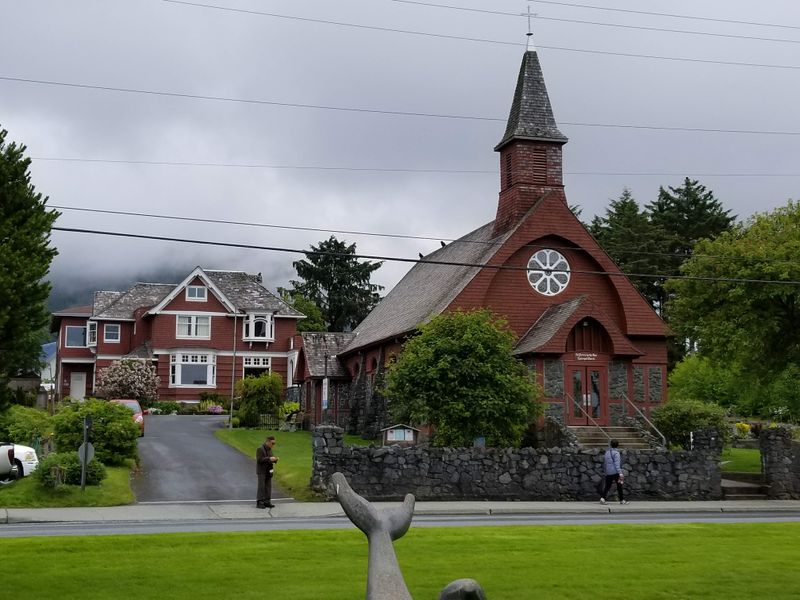
Weathered Orthodox crosses and faded Russian inscriptions mark graves in Sitka’s historic Russian Cemetery, where Alaska’s colonial past rests beneath towering spruce trees. The cemetery sits on a hillside with ocean views, a peaceful spot where Russian settlers, their Alaska Native converts, and early American residents found their final resting places.
Walking these grounds is like reading Sitka’s history in names and dates.
The Orthodox crosses have three horizontal bars instead of the typical two, with the lowest bar slanted to represent the footrest on Christ’s cross. Many graves belong to people who lived through the 1867 transfer from Russian to American control, their lives spanning two nations.
Some inscriptions are still readable in Cyrillic letters, while others have faded into illegibility after more than a century of Southeast Alaska rain.
The nearby Lutheran Cemetery tells different stories—of Scandinavian fishermen, American entrepreneurs, and Tlingit families who adopted Christianity. Together, these burial grounds illustrate the complex cultural mixing that defines Sitka.
They’re quiet places for reflection, offering perspective on the generations who built this remarkable community against considerable odds.
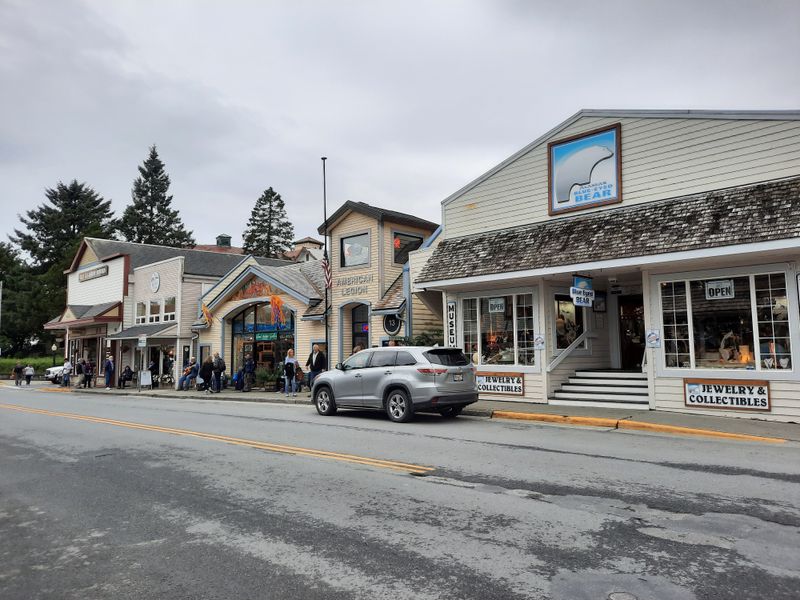
Colorful storefronts line Lincoln Street, Sitka’s main downtown corridor, where you can grab coffee, browse Native art galleries, and shop for commercial fishing gear all within a few blocks. The downtown area maintains a working-town atmosphere despite the cruise ships that visit during summer.
Fishermen in rubber boots walk past tourists in rain jackets, and locals greet each other by name on the sidewalks.
The Crescent Harbor boardwalk curves along the waterfront, offering front-row seats to Sitka’s maritime life. Fishing boats unload their catches at the harbor, seaplanes taxi in and out, and sea otters play in the kelp beds just offshore.
Benches along the walk provide perfect spots to watch the action while enjoying fish and chips from a nearby restaurant.
Sitka’s downtown is compact and walkable, with most attractions within easy reach. The mix of Russian, Native, and American influences creates an architectural variety you won’t find elsewhere in Alaska.
A Russian Orthodox church stands near a Native art gallery, which sits across from a building that could have been transported from any small American town. This cultural blend defines Sitka’s special character.
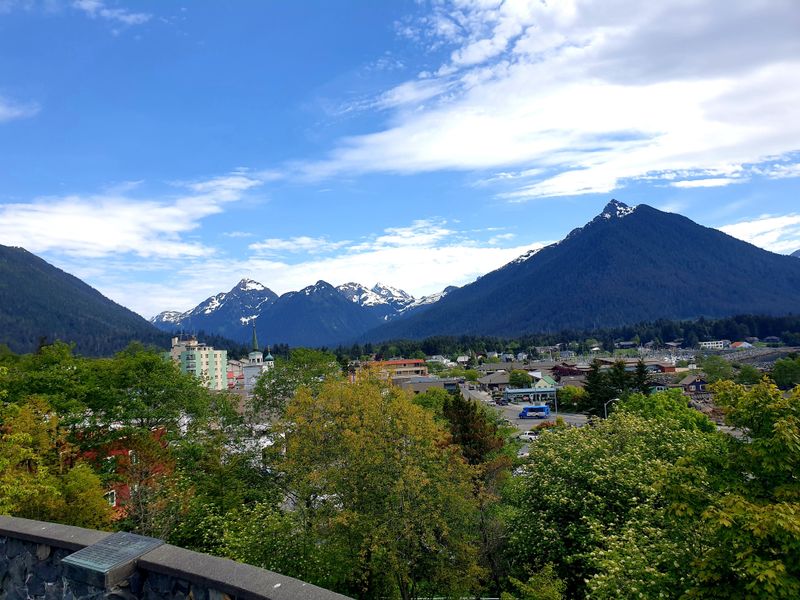
Injured eagles, owls, and other birds of prey receive expert medical care at the Alaska Raptor Center, a wildlife hospital dedicated to healing and releasing raptors back into the wild. The center treats around 200 birds annually, many injured by collisions with vehicles or power lines, or sickened by eating contaminated prey.
Those birds that can’t survive in the wild become permanent residents and animal ambassadors.
Guided tours take visitors through flight training areas where recovering eagles practice flying before their release. You’ll meet individual birds and learn their rescue stories—like the eagle that survived a gunshot wound or the owl hit by a car.
The center’s veterinary hospital has viewing windows where you can watch staff examine and treat newly arrived patients.
Bald eagles are incredibly common around Sitka, but seeing them up close at the raptor center gives new appreciation for their size and power. Their talons are massive, their beaks razor-sharp, and their eyes intensely focused.
The center’s educational programs explain raptor biology, hunting strategies, and the environmental threats these birds face. It’s conservation work that makes a real difference for Alaska’s wild populations.
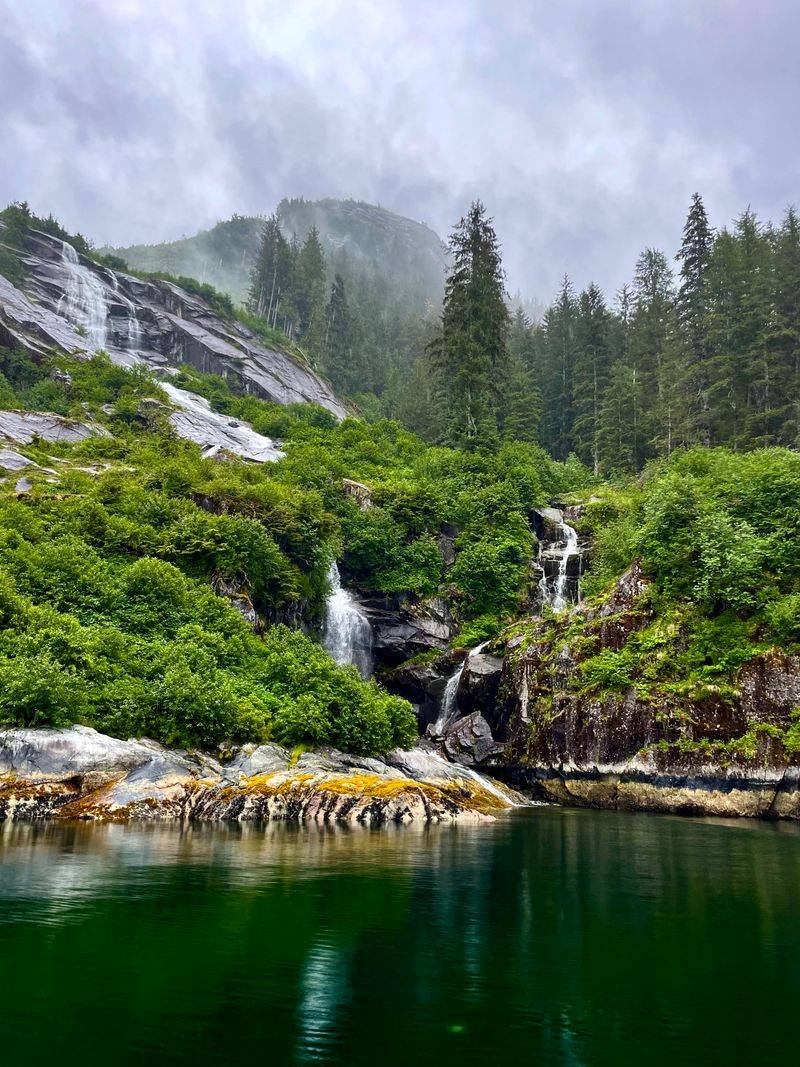
America’s largest national forest surrounds Sitka on all sides, a vast wilderness of temperate rainforest stretching across 17 million acres of Southeast Alaska. Ancient Sitka spruce and western hemlock tower hundreds of feet high, their trunks wrapped in moss and their branches draped with lichen.
The forest floor is a spongy carpet of moss, ferns, and fallen logs slowly returning to soil.
Hiking trails near Sitka lead into this primeval landscape, where salmon streams tumble through the woods and deer browse on forest plants. The Indian River Trail is a local favorite, following a clear stream upstream through old-growth forest to a mountain meadow with stunning views.
Rain is frequent here—this is a rainforest, after all—but that’s what keeps everything so impossibly green.
The Tongass is more than just beautiful—it’s ecologically crucial. These forests store massive amounts of carbon, protect salmon streams, and provide habitat for bears, wolves, deer, and countless other species.
Logging has impacted parts of the Tongass, but large wilderness areas remain untouched, offering glimpses of what North America’s coastal forests looked like before European contact. It’s wilderness on a scale that’s increasingly rare.
World-class chamber music fills a small-town Alaska concert hall each June when the Sitka Summer Music Festival brings renowned musicians to this remote island community. Founded in 1972, the festival has grown into one of America’s premier classical music events, attracting performers and audiences from around the globe.
The intimate Harrigan Centennial Hall becomes a magical space where Beethoven and Brahms meet the Alaska wilderness.
What started as a few concerts has expanded to a month-long celebration of chamber music, with performances nearly every night. The musicians aren’t just here to perform—many teach master classes and interact with the community, creating a festival atmosphere that feels accessible rather than elitist.
Local kids take violin lessons from visiting virtuosos, and informal concerts happen in unexpected venues around town.
The combination of exceptional music and spectacular setting makes this festival unique. Concert-goers might spot whales from the hall’s windows or encounter a bear on the walk home.
The long Alaska summer days mean evening concerts happen in lingering twilight. It’s a reminder that great art and wild nature aren’t opposites—they enhance each other in powerful ways.
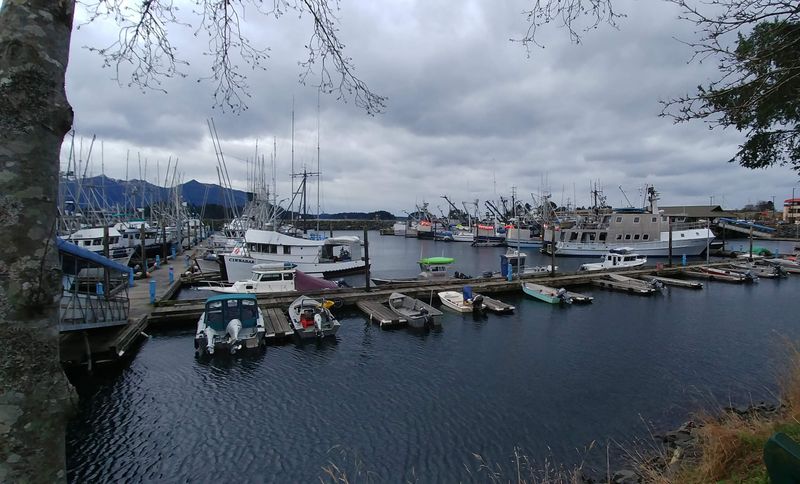
Fishing boats crowd Sitka’s harbors, their nets and gear ready for the next opening when Alaska’s carefully managed fisheries allow commercial harvest. Sitka has been a fishing town since long before Russians arrived—Tlingit people built seasonal fish camps here for thousands of years.
Today’s commercial fleet continues that tradition, pursuing salmon, halibut, black cod, and other species in some of the world’s most productive fishing grounds.
The fishing industry shapes Sitka’s economy and culture in fundamental ways. When salmon season opens, the town buzzes with activity as boats head out and processing plants gear up for round-the-clock operations.
Many Sitka families have fished these waters for generations, passing down knowledge of productive fishing spots and weather patterns. It’s hard, dangerous work that demands skill, determination, and respect for the ocean.
Alaska’s fisheries management is considered among the world’s best, with strict quotas and careful monitoring to prevent overfishing. The result is sustainable harvests that support fishing communities while maintaining healthy fish populations.
Eating salmon in Sitka means it might have been caught just hours earlier and processed by someone you could meet on the street. That connection between food and source is increasingly rare.
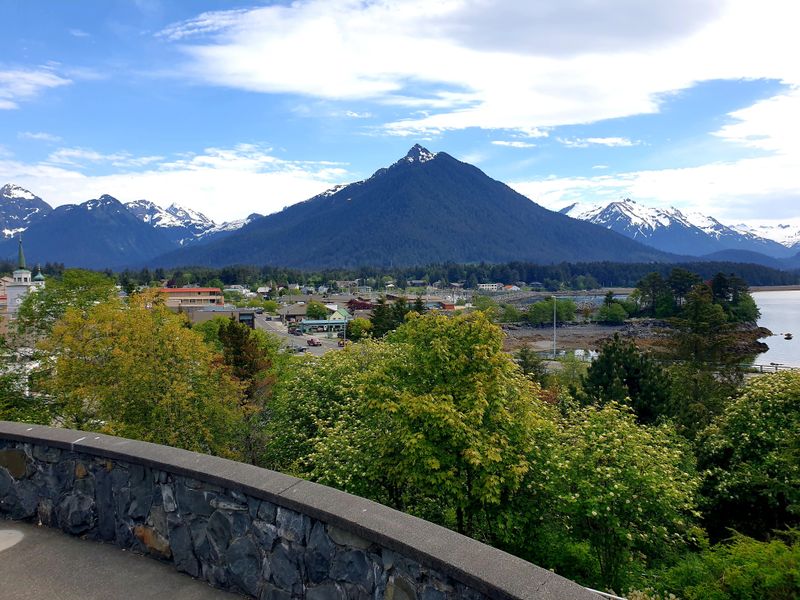
Steep switchbacks climb through rainforest toward Mount Verstovia’s summit, rewarding determined hikers with panoramic views that justify every difficult step. This challenging trail gains about 2,550 feet in roughly 2.5 miles, making it a serious workout that’s not for beginners.
The name comes from the Russian word for “high place,” which proves accurate as you gasp for breath on the relentless ascent.
The trail starts in thick forest where enormous trees block most sunlight, creating a dim, green world of moss and ferns. As you climb higher, the trees shrink and eventually give way to alpine meadows filled with wildflowers during summer months.
Views begin to open up, with glimpses of Sitka Sound and surrounding islands appearing between the peaks.
The shoulder of Mount Verstovia—most hikers’ turnaround point—offers incredible 360-degree views. Sitka spreads below you, looking tiny against the vast wilderness.
Islands dot the ocean like puzzle pieces, and on clear days, you can see Mount Edgecumbe’s volcanic cone across the water. The summit itself requires technical climbing skills, but the shoulder provides more than enough reward for the effort.
Bring layers—weather changes quickly at elevation.



