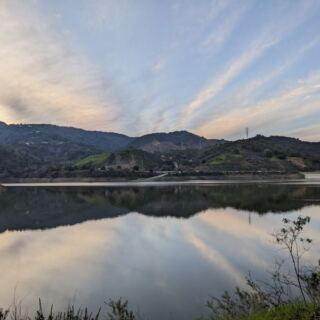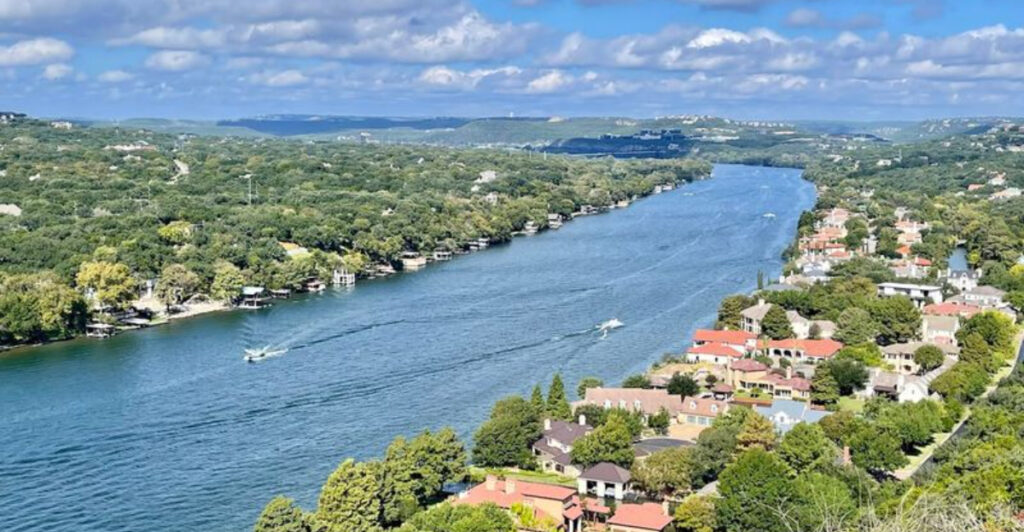
There is a spot in Austin, Texas, where you climb roughly 100 stone steps and suddenly the entire city opens up in front of you. Lake Austin stretches below, grand hilltop homes peek through the tree canopy, and the downtown skyline sits quietly on the horizon.
It is the kind of view that makes you stop mid-sentence and just stare. Mount Bonnell has been drawing curious visitors, romantic couples, and early-rising sunrise chasers for generations, and once you make that short climb to the top, it is pretty clear why this 775-foot peak holds such a firm place in Austin’s heart.
Whether you are a first-time visitor or a longtime local, this lookout delivers something genuinely hard to find in a busy city: a moment of real, unhurried perspective.
Where Exactly You Will Find This Iconic Lookout
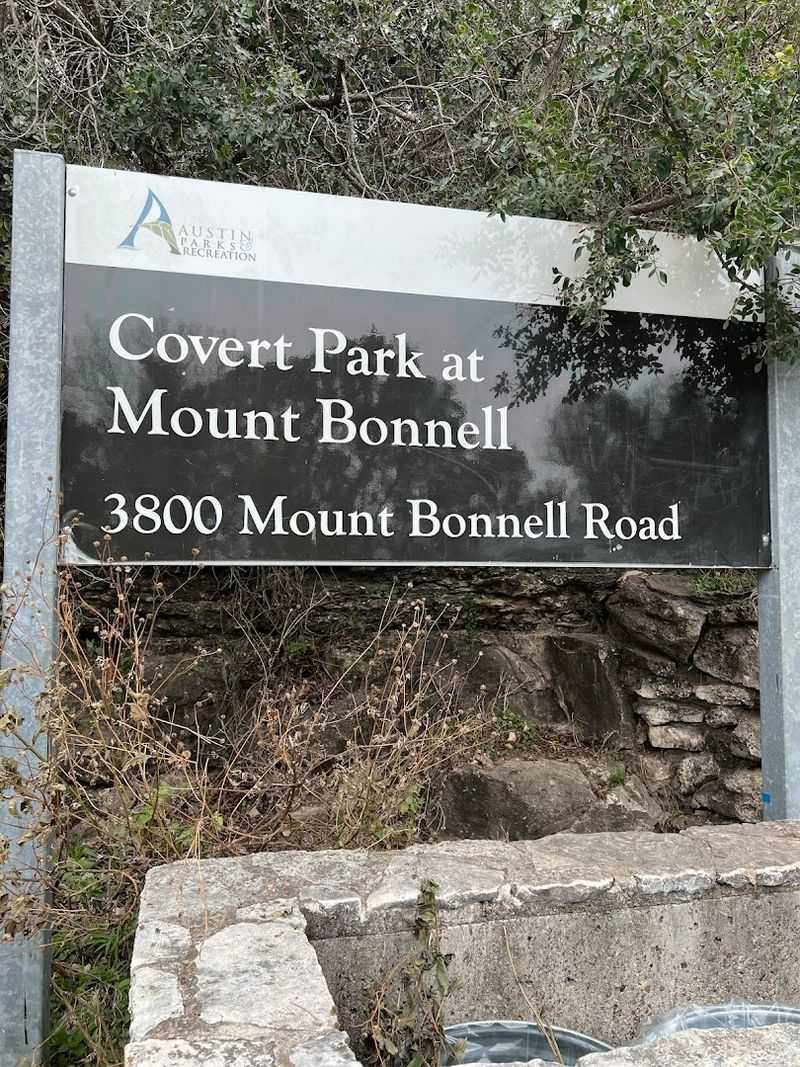
Mount Bonnell sits at 3800 Mopac Espressway North, Austin, tucked inside the Covert Park area on the western edge of the city. It is part of a 5.1-acre park managed by the City of Austin, perched above Lake Austin in Travis County.
Getting there is surprisingly straightforward. From downtown Austin, the drive takes about 15 minutes, and you will wind through the upscale Tarrytown neighborhood before reaching the small roadside parking area.
Free parking spots line the road along the approach, though on weekends the spaces fill up fast. Arriving early on a Saturday morning almost guarantees you a spot without any stress.
The park has no entry fee, which makes it one of the most accessible scenic destinations in all of Central Texas, truly a rare find in a city that keeps growing.
A Quick History That Goes Back Centuries
Mount Bonnell carries a history that stretches well beyond Austin’s modern skyline. The peak has been a recognized landmark since at least the 1830s, when early settlers and travelers noted its commanding position above the Colorado River.
The name is most commonly linked to George W. Bonnell, a Texas Republic commissioner and newspaper editor who explored the region in the late 1830s.
Some local historians also connect the name to a surveyor active in the same era, so the exact origin remains a small, charming mystery.
Over the decades, the summit became a popular gathering point for picnics, romantic outings, and civic celebrations. By the mid-20th century, it was already considered one of Austin’s most beloved public spaces.
That long tradition of community use gives the place a lived-in warmth that newer attractions simply cannot replicate, and you can feel it the moment you reach the top.
The Climb Up: 100 Steps That Are Worth Every One
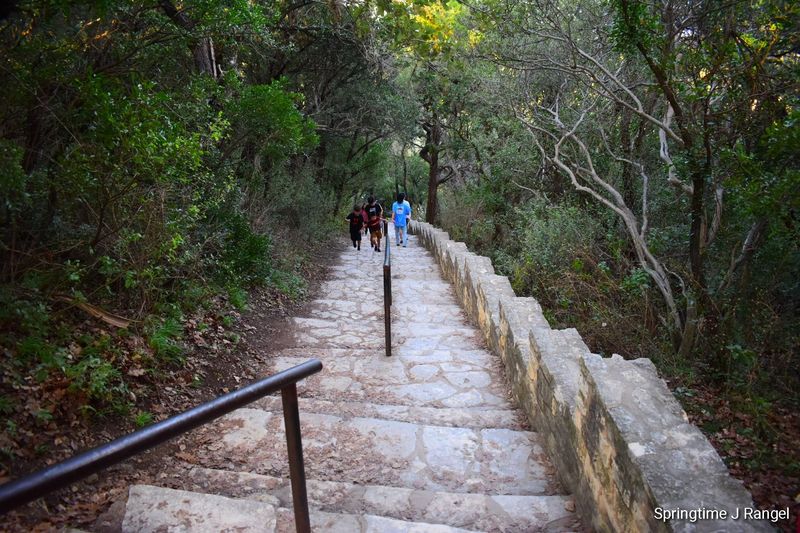
The most talked-about part of any first visit is the staircase. A set of roughly 100 stone steps winds upward through cedar elms, live oaks, and juniper trees, and the whole climb takes most people under five minutes.
The steps are well-maintained and wide enough to pass other hikers comfortably. Families with young children, older adults, and even visitors with toddlers in tow manage the ascent without much difficulty, as long as the pace stays relaxed.
On busy days, a steady stream of people moves up and down, creating a surprisingly social atmosphere on the staircase itself. Strangers exchange quick smiles, dogs trot alongside their owners, and the sound of the city fades with each step upward.
By the time you reach the top landing, there is a noticeable shift in both elevation and mood. The effort is minimal, but the payoff waiting at the summit feels genuinely earned and satisfying.
The View From the Top: Lake Austin and Beyond
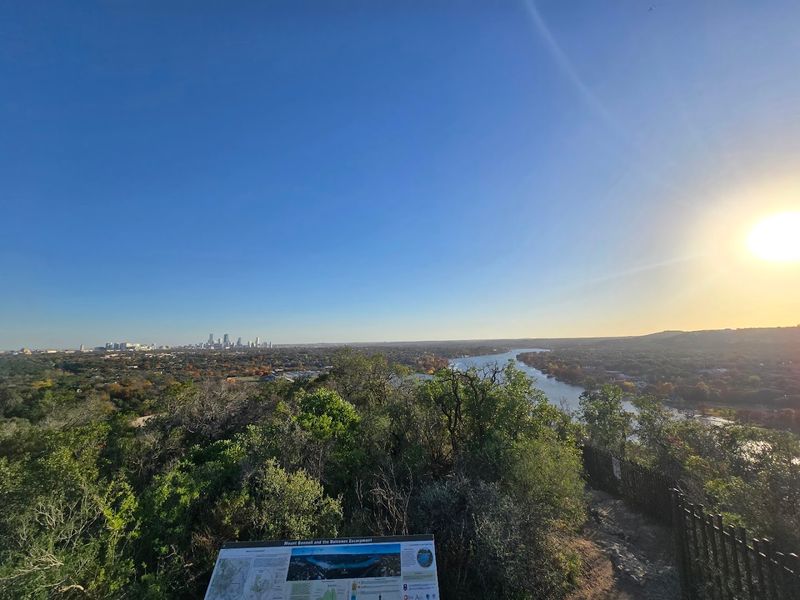
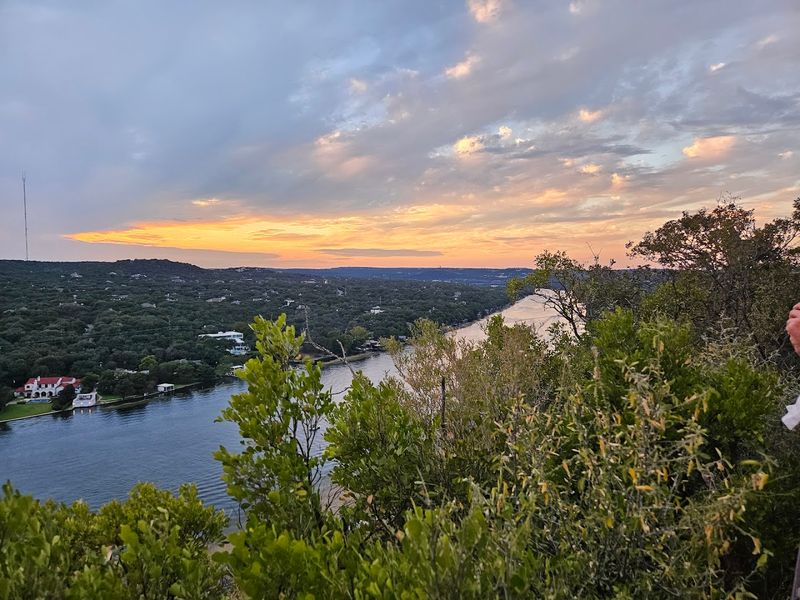
Nothing quite prepares you for the first look over the railing at the summit. Lake Austin spreads out below in a long, winding ribbon of blue-green water, framed by densely wooded hillsides on both banks.
Toward the east, the Austin downtown skyline appears on the horizon, a cluster of glass towers that looks almost toylike from this height. The contrast between the natural landscape in the foreground and the urban skyline in the distance is genuinely striking.
On clear days, the view extends far enough that you can spot the Pennybacker Bridge arching gracefully over Lake Austin to the northwest. Luxurious lakeside homes nestle among the trees along the shoreline, their rooftops just visible through the canopy below.
The summit offers multiple vantage points along a short ridge, so moving around rewards you with slightly different compositions. Every angle seems to offer its own version of the same breathtaking scene.
Sunrise at the Summit: A Morning Worth the Early Alarm
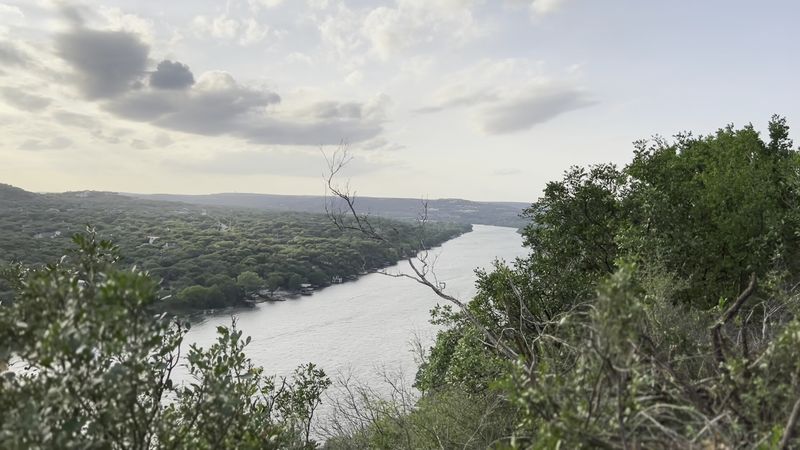
Most people talk about sunset at Mount Bonnell, but the sunrise experience deserves its own spotlight. Arriving around 6:30 AM places you at the summit while the sky is still dark, and the transformation that follows over the next hour is slow, quiet, and completely absorbing.
As the light builds, the Austin skyline to the east catches the first warm tones of morning, turning the glass buildings a soft gold. The Colorado River, visible in the distance, picks up the color and holds it for a few beautiful minutes.
On New Year’s morning in 2025, a crowd of more than 100 people gathered at the summit before dawn to watch the first sunrise of the year together. That kind of shared, spontaneous community moment is something you rarely plan for but never forget.
Morning visits also come with a bonus: cooler temperatures, quieter trails, and the best chance of securing a prime spot along the summit railing without waiting.
Sunset Hours: When the Sky Puts on a Real Show
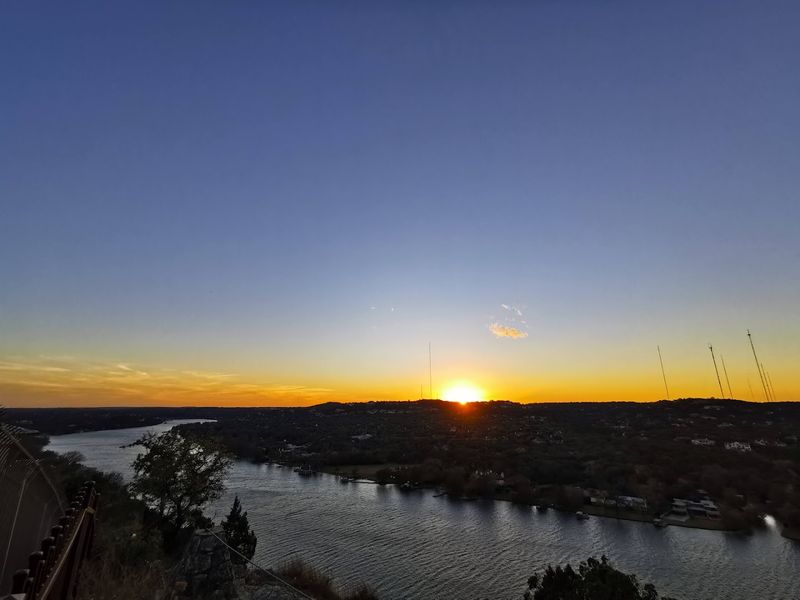
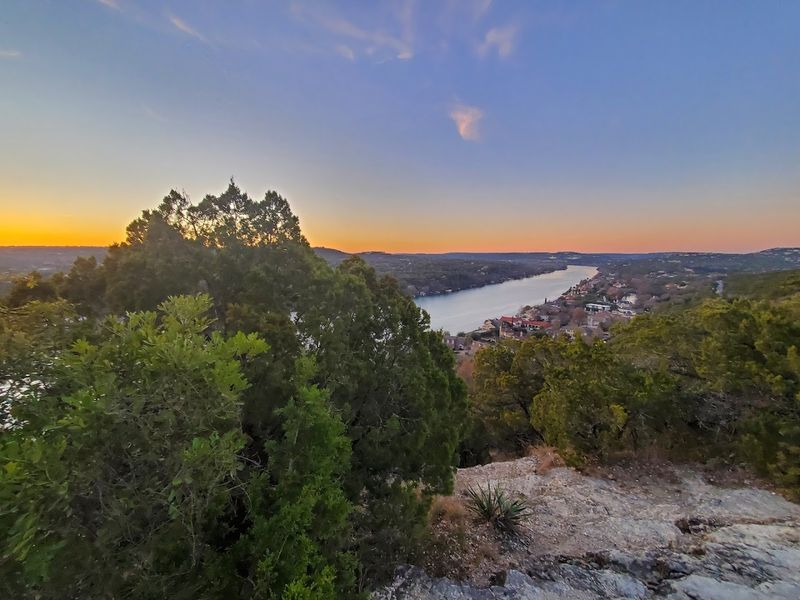
Sunset is undeniably the most popular time to visit, and the reputation is completely justified. As the sun drops toward the hills west of Lake Austin, the water below shifts through shades of copper, rose, and deep orange in a matter of minutes.
The western-facing view from the summit aligns almost perfectly with the setting sun during much of the year, which means the light hits the lake at a low, dramatic angle that photographers love. Groups of friends spread out along the overlook benches, phones raised, quietly watching the show unfold.
On particularly clear evenings, the colors linger well after the sun disappears, painting the sky in soft purples and blues before full darkness settles in. The city lights of Austin begin to glow on the eastern horizon just as the last light fades over the hills.
That transition from golden hour to city-lit dusk, all visible from one spot, is the kind of dual experience that keeps people coming back season after season.
The Picnic Scene: Relaxed, Casual, and Surprisingly Charming
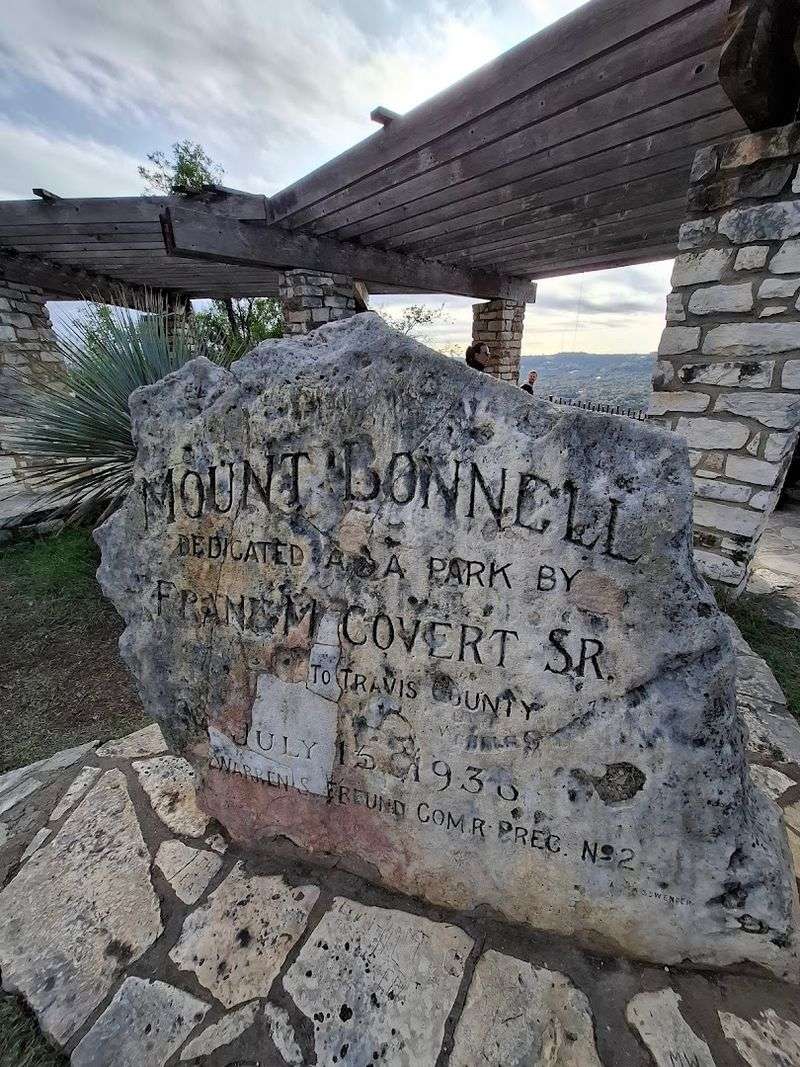
The summit of Mount Bonnell is not just a quick photo stop. Several flat rocky areas and wooden benches at the top invite visitors to slow down, unpack a lunch, and simply sit with the view for a while.
A large flat table near the summit edge has become a favorite perch for groups who want to sit elevated above the overlook railing for an even wider sightline. It doubles as a social hub where strangers often end up chatting about the view, the city, or where to eat afterward.
Bringing a simple picnic here is one of Austin’s most underrated afternoon activities. A bag of snacks, a comfortable blanket spread on the rocky ground, and an unobstructed view of Lake Austin below make for a genuinely relaxed outing that costs nothing.
The atmosphere at the top is unhurried and friendly, the kind of place where nobody seems to be in a rush and everyone leaves in a slightly better mood than when they arrived.
Wildlife and Nature Along the Trail
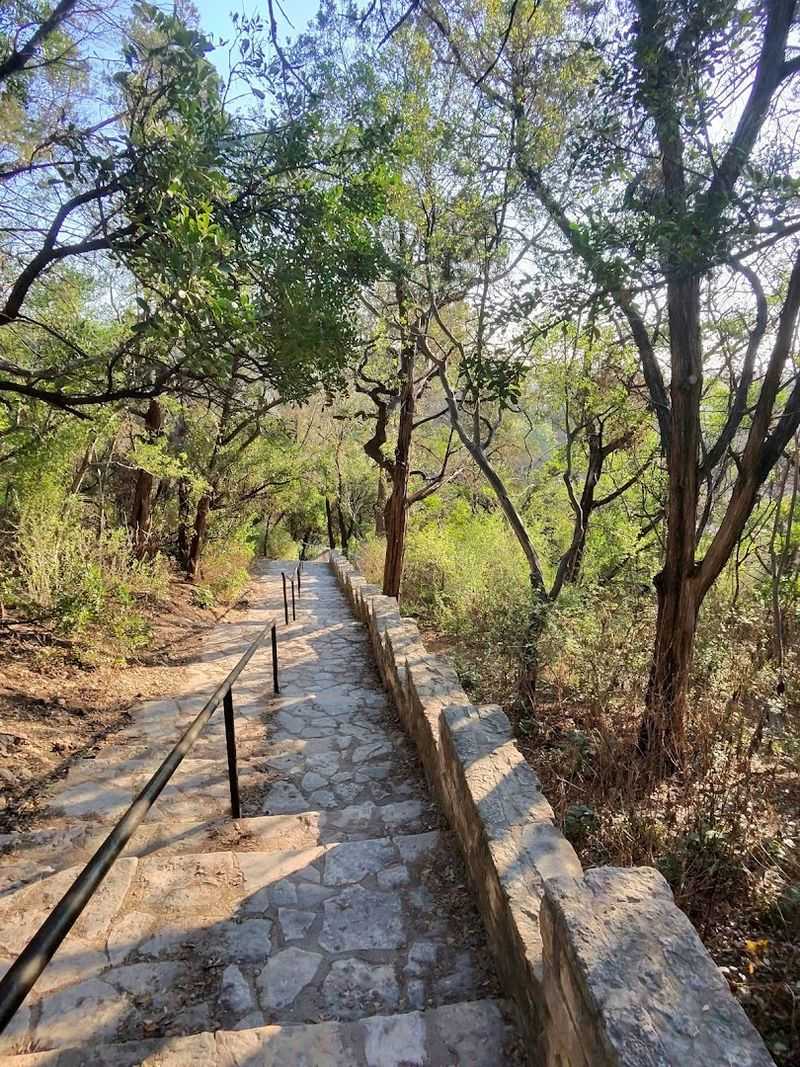
The short trail and staircase up Mount Bonnell pass through a surprisingly rich slice of Central Texas Hill Country vegetation. Live oaks, cedar elms, and Texas mountain laurels line the path, and in spring the mountain laurels bloom with clusters of purple flowers that carry a faint grape-like scent.
Birds are active along the trail throughout the year. White-winged doves, Carolina wrens, and the occasional red-tailed hawk are common sightings, and the dense canopy above the steps creates a cool, shaded corridor that feels removed from the city even though downtown is just minutes away.
Squirrels are plentiful and notoriously unbothered by foot traffic, often foraging just off the path while hikers pass within a few feet. The nearby Mayfield Park and Preserve, a short drive away, adds to the experience with resident peacocks and peafowl roaming freely among the gardens.
Together, the two spots make for a nature-rich half-day outing that feels more like a country escape than a city park visit.
Special Occasions and Proposals: A Spot With Real Sentimental Weight
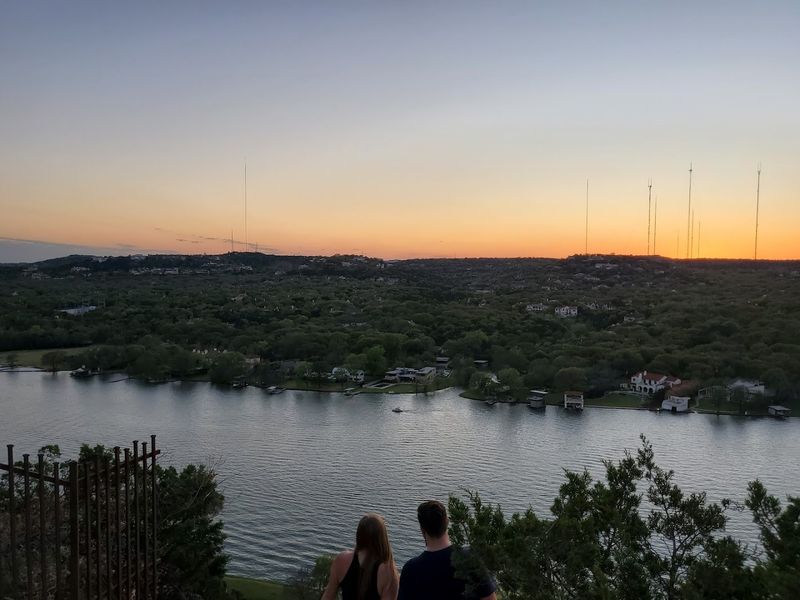
Mount Bonnell has quietly earned a reputation as one of Austin’s most romantic destinations, and a visit on any given weekend confirms it. Couples arrive hand in hand, photographers set up for engagement shoots along the overlook, and the occasional marriage proposal unfolds right there on the summit rocks.
The combination of natural beauty, open sky, and a view that stretches for miles creates an atmosphere that feels genuinely special without requiring any extra decoration or planning. The place does the work on its own.
Anniversaries, first dates, and milestone birthday visits are all common reasons people make the climb. The short, easy hike makes it accessible for guests of all fitness levels, which matters when you are planning something meaningful and want everyone present to be comfortable.
There is something about standing that high above the city, with the lake below and the sky wide open above, that tends to make moments feel larger and more memorable than they might elsewhere.
Practical Tips for Parking and Timing Your Visit
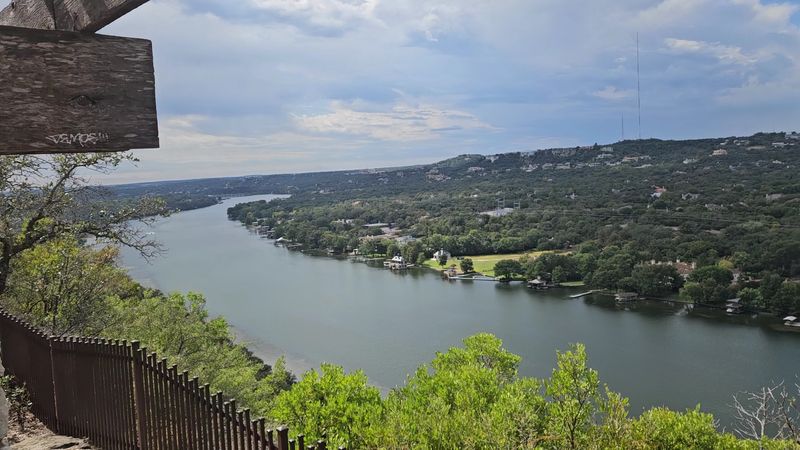
Parking at Mount Bonnell is free, which is a genuine perk in a city where parking fees add up quickly. Spaces line Mopac Espressway North and the surrounding residential streets, and on a quiet weekday morning you can pull right up without any stress.
Weekends are a different story. By mid-morning on a Saturday or Sunday, the roadside spots fill up and the surrounding neighborhood gets congested.
The best strategy is arriving before 9 AM or waiting until late afternoon when the midday crowd thins out before sunset visitors arrive.
The park has no formal restroom facilities at the summit itself, so planning accordingly before you leave home is a smart move. Porta-potties are sometimes available at the nearby Mayfield Park, which is just a short drive away and worth combining into the same outing.
There is no official closing time listed, but visiting during daylight hours is both safer and far more rewarding given the visual nature of the experience.
Accessibility: Who Can Make the Climb
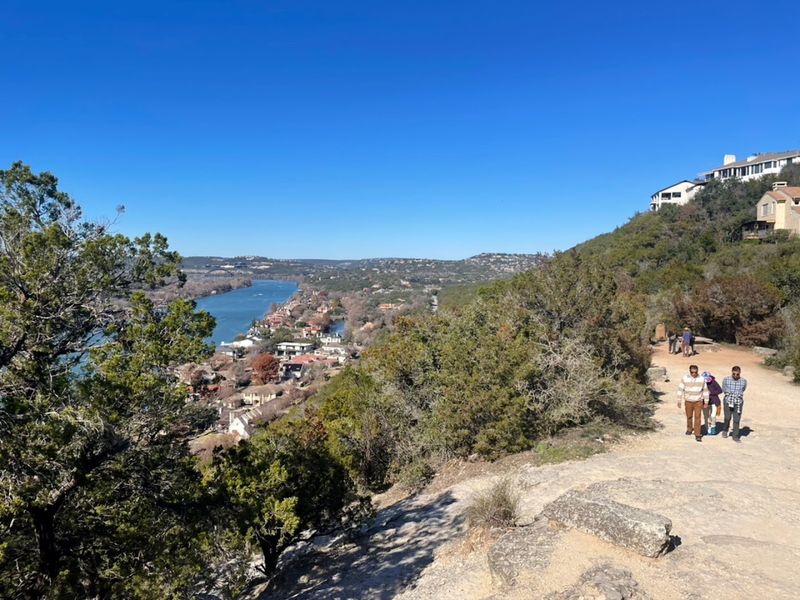
One of the most appealing things about Mount Bonnell is how genuinely accessible it is for a wide range of visitors. The 100-step stone staircase is the main route to the top, and while it does require some physical effort, the climb is short enough that most people complete it comfortably in under five minutes.
Families with toddlers, older adults, and visitors who do not typically hike regularly all make it to the summit without major difficulty. The steps are wide, reasonably even underfoot, and shaded by tree cover for much of the ascent.
That said, the staircase is not wheelchair accessible, and the rocky terrain at the summit requires careful footing near the overlook edges. Wearing sturdy, closed-toe shoes makes the experience more comfortable, especially after rain when the stone surfaces can become slick.
The overall accessibility profile is strong for an outdoor natural landmark, and the minimal physical demand means the stunning view is available to almost anyone willing to make the short trip up.
What to Bring for the Best Experience
Packing smart for a Mount Bonnell visit is simple, but a few items genuinely improve the outing. Water is the most important thing, especially during Austin’s long, hot summers when the temperature at the exposed summit can feel significantly warmer than at ground level.
Sunscreen and a hat make a real difference on clear days when the sun hits the open rocky summit directly. The tree cover on the staircase provides shade during the climb, but the top itself is largely exposed, so sun protection is worth the small effort of packing it.
A camera or a phone with a good lens is practically mandatory. The panoramic views reward wide-angle shots, and the shifting light during golden hour gives photographers of every skill level something genuinely beautiful to work with.
A light snack or small picnic adds to the experience considerably, turning a 10-minute photo stop into a relaxed hour spent simply enjoying one of Austin’s finest natural vantage points.
The Neighborhood Around the Summit: Worth a Slow Drive
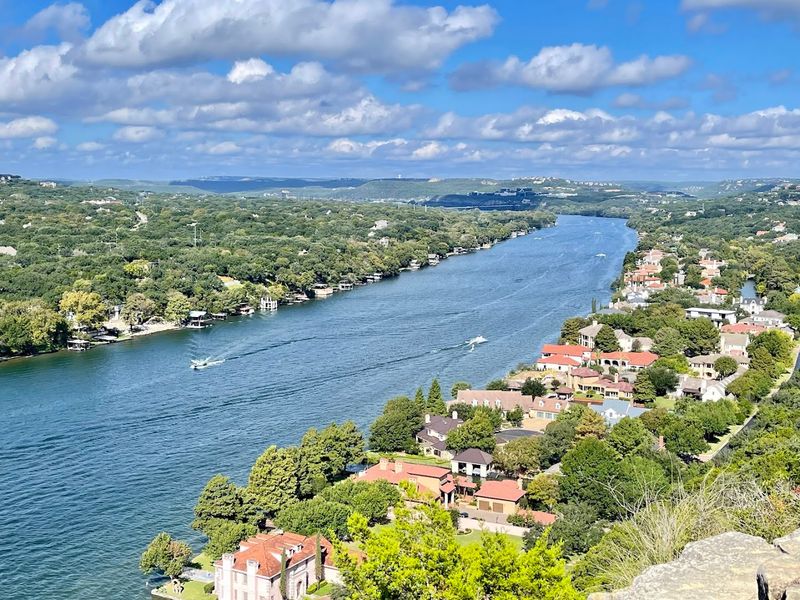
The drive to Mount Bonnell passes through Tarrytown, one of Austin’s most established and visually striking residential neighborhoods. Large craftsman bungalows, mid-century modern homes, and sprawling estates line the winding streets under a dense canopy of mature live oaks.
Driving slowly through the neighborhood before or after the summit visit gives a completely different perspective on Austin than the downtown experience. The streets are quiet, the landscaping is lush, and the overall character feels rooted and unhurried in a way that stands apart from the city’s faster-paced newer developments.
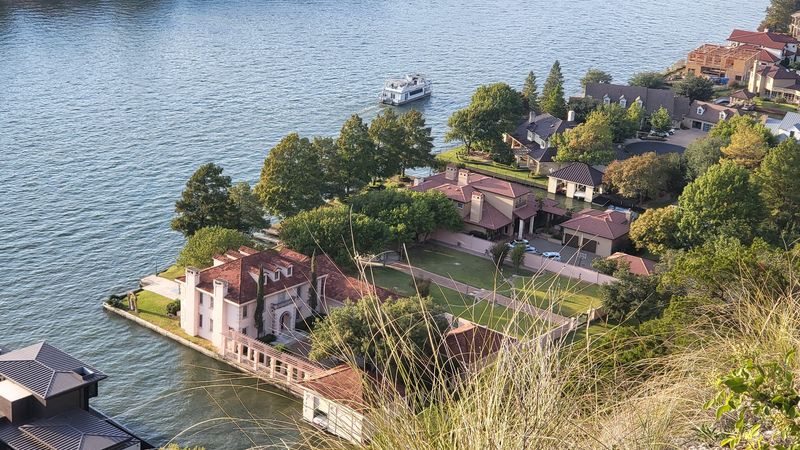
From the summit itself, some of those same luxury lakefront homes are visible below, their rooftops nestled among the trees along the Lake Austin shoreline. There is something satisfying about seeing the neighborhood from both street level and from high above.
Combining the drive, the climb, and a stop at nearby Mayfield Park turns the outing into a genuine half-day exploration of one of Austin’s most quietly beautiful corners.
Photography at Mount Bonnell: Angles, Light, and Hidden Spots
Mount Bonnell rewards photographers who take a few extra minutes to explore beyond the main overlook railing. The summit ridge extends in both directions from the central viewing area, and each section offers a slightly different framing of the lake, the bridge, or the skyline.
The best light for photography arrives twice a day. Early morning gives soft, cool tones with long shadows stretching across the water, while the hour before sunset produces warm golden light that turns the lake surface into something almost metallic in appearance.
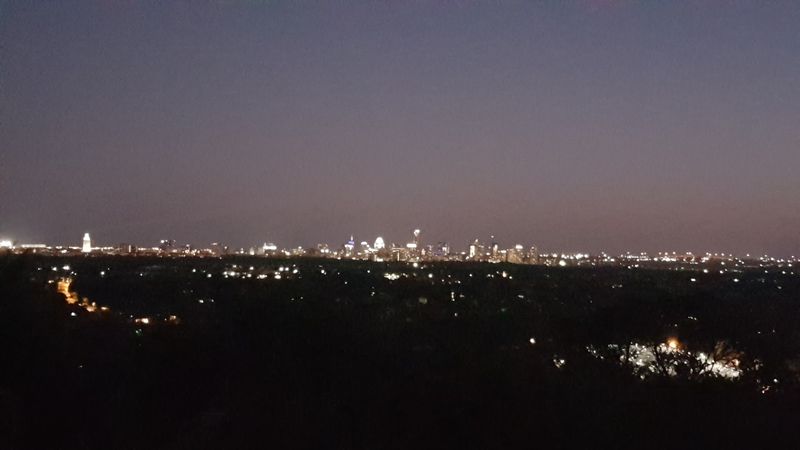
Shooting toward the west captures the lake and the hills. Rotating 180 degrees gives you the Austin skyline with the river in the foreground, a composition that works especially well at dusk when the city lights begin to emerge.
Even smartphone cameras produce genuinely impressive results from this elevation. The natural drama of the landscape does most of the creative work, which is part of what makes this spot a consistent favorite for both casual visitors and serious photographers alike.
Why This Lookout Belongs on Every Austin Itinerary
Austin has no shortage of things to do, but most of them cost money, require reservations, or demand a fair amount of planning. Mount Bonnell asks for none of that.
The park is free, open to the public, and ready to deliver one of the most memorable views in Texas with nothing more than a short climb up a stone staircase.
The experience works for nearly every type of visitor. Solo travelers find a quiet spot to think.
Couples find a backdrop that feels naturally cinematic. Families find an outdoor adventure that is short enough to hold a child’s attention and rewarding enough to satisfy the adults.
First-time visitors to Austin consistently list it among their top experiences in the city, and longtime locals return regularly because the view never gets old. Seasons shift the color palette, weather changes the mood, and the skyline keeps evolving as Austin grows.
Some places earn their reputation through marketing. Mount Bonnell earns its entirely through the view, and that kind of honest, straightforward appeal is something worth showing up for.
Share this story