 Unearth The Voyage
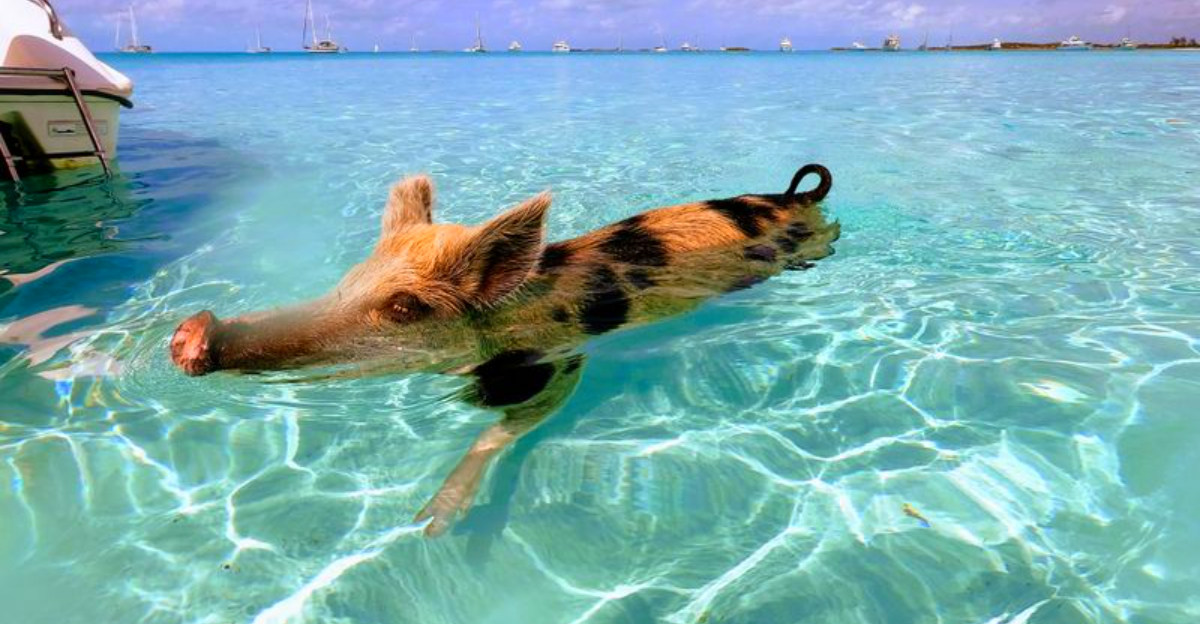
Here’s an island where the only residents have four legs, curly tails, and a serious love for swimming in turquoise water. Big Major Cay in the Bahamas is home to a colony of feral pigs that have become internet celebrities for their adorable ocean-paddling antics.
These unlikely beach bums have turned a tiny, uninhabited island into one of the most talked-about destinations in the Caribbean, drawing curious travelers from around the world who want to witness pigs doing what pigs were never meant to do.
1. Pig Beach is on Big Major Cay (aka Pig Island) in the Exumas
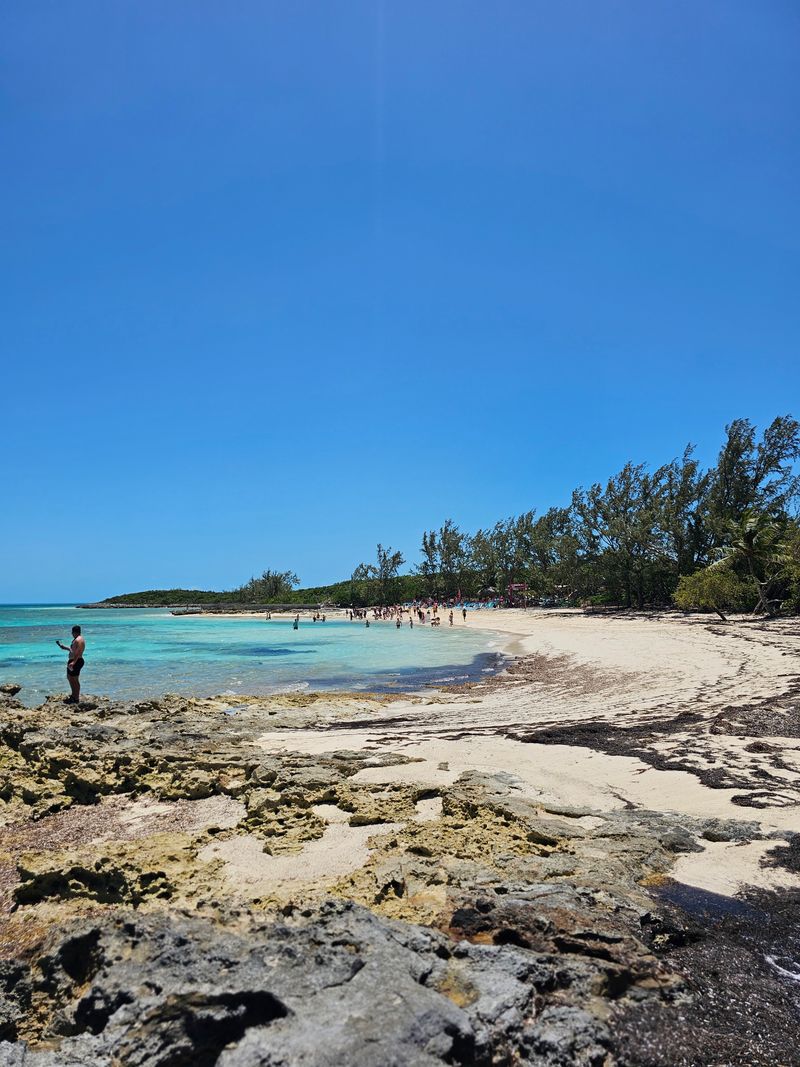
Big Major Cay might not ring a bell at first, but mention swimming pigs and suddenly everyone knows exactly where you’re talking about. This tiny, uninhabited island sits in the Exuma Cays district of the Bahamas, part of a stunning chain of islands known for impossibly clear water and postcard-perfect beaches.
The official name is Big Major Cay, but locals and tourists alike have lovingly dubbed it Pig Island because of its famous four-legged inhabitants.
What makes this spot so unique is that it’s completely uninhabited by humans. No hotels, no restaurants, no gift shops cluttering the shoreline.
Just pure, untouched Bahamian beauty and a bunch of pigs who’ve claimed the beach as their own personal paradise.
The pigs have turned this quiet cay into a world-famous attraction, with thousands of visitors making the trek each year. They lounge on the white sand, wander through the shallows, and greet incoming boats like furry little welcoming committees.
It’s a bizarre, wonderful scene that feels like something out of a storybook, and it’s all happening on one small island in the middle of the Atlantic Ocean.
2. Yes, the pigs really swim (and it’s not just shallow waddling)
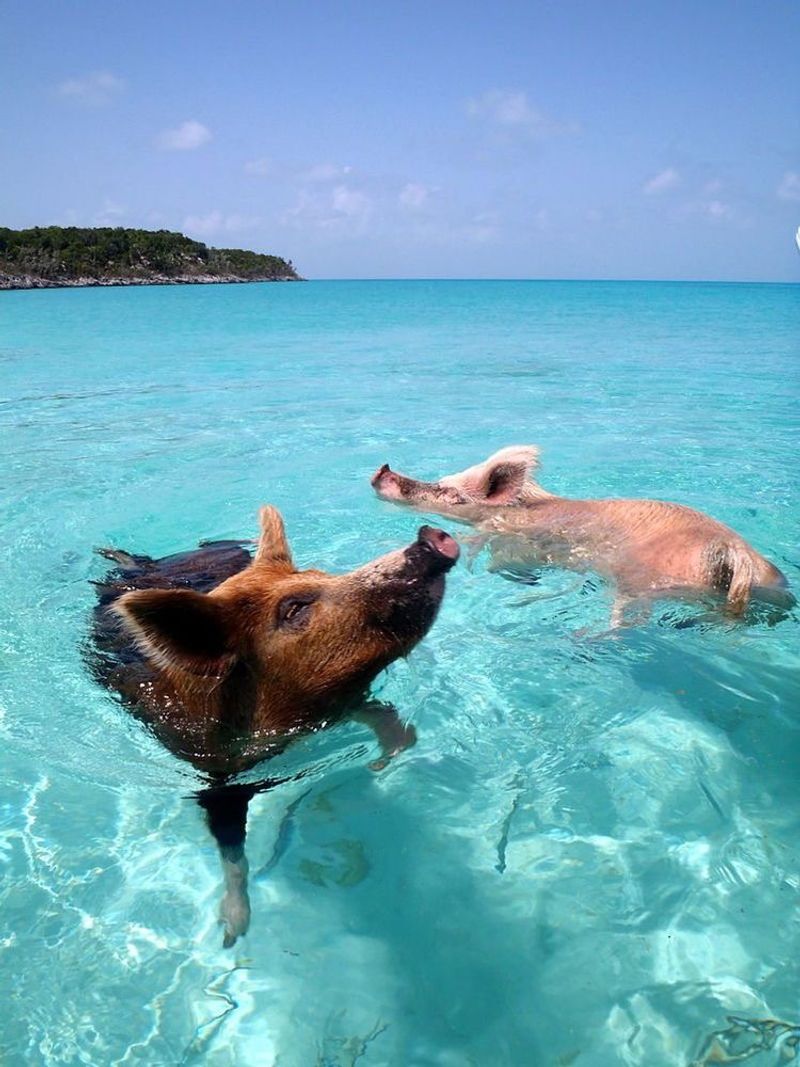
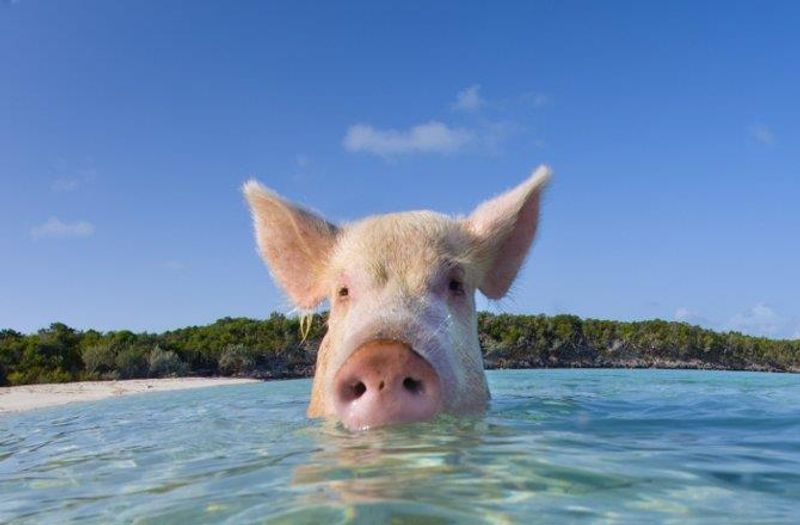
If you think the swimming part is exaggerated for Instagram, think again. These pigs genuinely swim, and they’re surprisingly good at it.
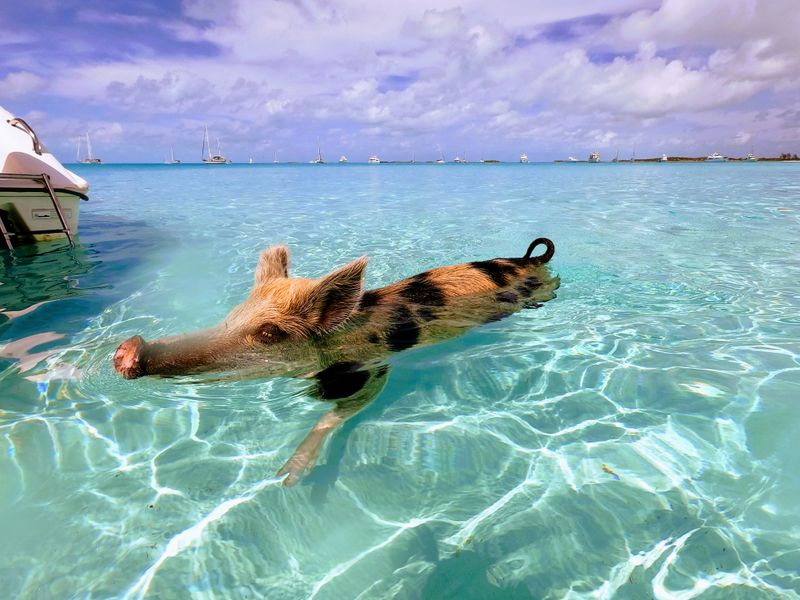
When they hear the hum of boat engines approaching, many of them will trot down to the water’s edge, wade in, and start paddling out toward the vessels with confident strokes.
It’s not just a quick dip in ankle-deep water either. Some pigs will venture several feet out, doggy-paddling (or should we say piggy-paddling?) with their snouts above the surface, propelled by their surprisingly capable legs.
They’ve learned to associate boats with food, so their motivation is partly snack-driven, but the swimming itself is real and impressive.
Watching a pig swim toward you through crystal-clear Caribbean water is one of those experiences that feels unreal even as it’s happening. Their little legs churn beneath the surface, ears flopping, eyes laser-focused on whatever treats might be coming their way.
It’s equal parts hilarious and heartwarming, and it never gets old no matter how many videos you’ve seen online.
3. The pigs aren’t native and nobody knows the exact origin story
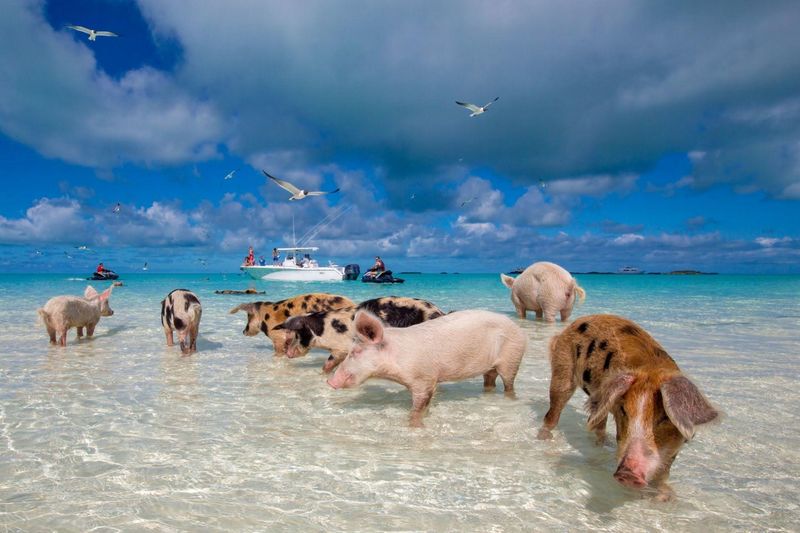
Here’s where the story gets murky. Nobody can say for certain how pigs ended up living wild and free on a remote Bahamian island.
The most popular theory involves sailors who supposedly left the pigs there, planning to return and use them as a future food source, but never came back. Another version suggests the pigs survived a shipwreck and swam to shore, establishing their colony by accident.
Some locals tell different tales altogether, involving intentional releases or escapes from nearby islands. The truth is, there’s no documented proof for any single explanation.
What we do know is that at some point, pigs ended up on Big Major Cay, adapted to island life, and thrived in ways no one expected.
The mystery actually adds to the charm. It’s like a real-life legend unfolding in the present day, with the pigs themselves as the only witnesses who can’t tell the tale.
Whatever their origin, they’ve become permanent residents and unlikely ambassadors for Bahamian tourism, living proof that sometimes the best stories are the ones we can’t fully explain.
4. The Bahamas is huge in island terms – Pig Beach is one quirky stop in a massive archipelago
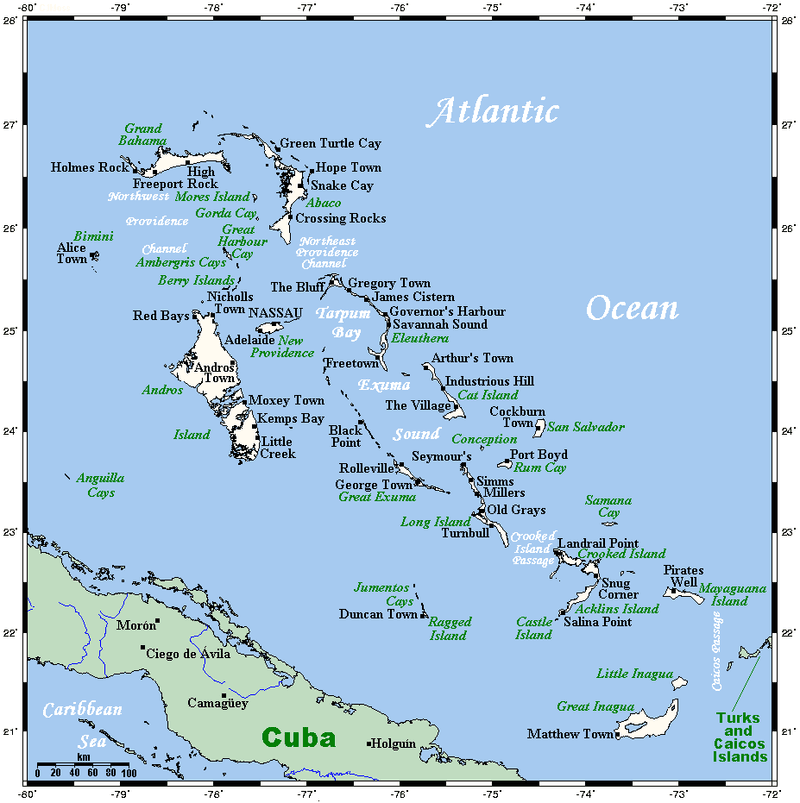
When people say they’re going to the Bahamas, they’re often referring to Nassau or Paradise Island, but that’s just scratching the surface. The Bahamas is actually an enormous archipelago stretching across the Atlantic Ocean, officially comprising around 700 islands and over 2,400 smaller cays.
Only about 30 of these islands are inhabited, leaving vast stretches of untouched tropical beauty.
Big Major Cay and its swimming pigs represent just one tiny, quirky corner of this massive island nation. The Exuma Cays alone form a stunning chain of islands and sandbars, each with its own character and natural wonders.
Some have hidden blue holes, others boast pristine snorkeling reefs, and a few are home to exclusive resorts.
Understanding the scale helps put Pig Beach in perspective. It’s not the Bahamas in a nutshell; it’s one unusual attraction among hundreds of islands worth exploring.
The archipelago offers everything from bustling markets in Nassau to deserted sandbars where your footprints might be the only ones for days, and yes, one special island where pigs have claimed beachfront property.
5. You don’t just drive there – you visit by boat tour (or by flying then boating)
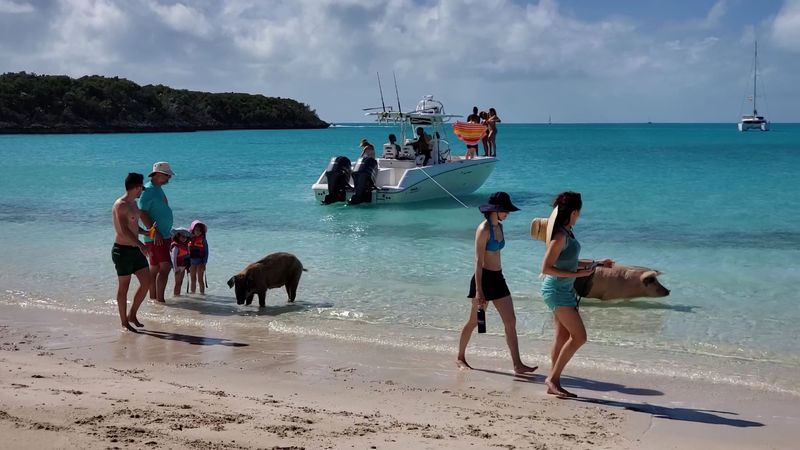
Forget about hopping in a rental car and following GPS directions. Big Major Cay is an uninhabited island with no roads, no dock for public ferries, and definitely no parking lot.
The only way to reach Pig Beach is by boat, which means you’ll need to book a tour or charter a private vessel.
Most visitors approach it as a day trip from Nassau, the Bahamian capital. Some tours fly you from Nassau to Staniel Cay or another Exuma airport, then transfer you to a boat for the final leg.
Others operate entirely by boat, which takes longer but offers stunning views of the island chain along the way.
If you’re already staying somewhere in the Exumas, you’ll have easier access and more tour options. Either way, plan ahead and book with a reputable operator.
The journey itself becomes part of the adventure, cruising through impossibly blue water, passing deserted beaches and rocky outcrops, building anticipation for that first glimpse of pigs trotting along the shoreline waiting to greet the next boatload of curious humans bearing snacks.
6. The pigs are used to humans, but they’re still animals (and can be pushy)
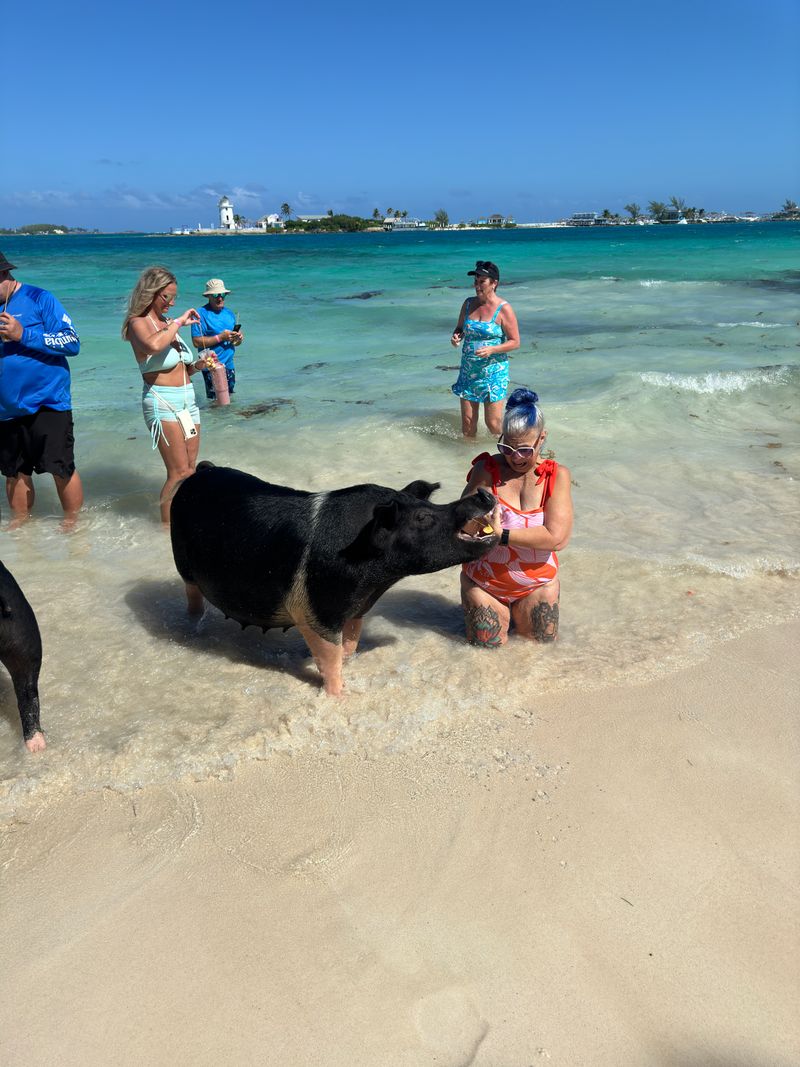
Don’t let their adorable reputation fool you into thinking these pigs are basically outdoor pets. Yes, they’re accustomed to human visitors and generally friendly, but they’re still wild animals living by instinct and appetite.
They’ve learned that humans often mean food, which makes them bold, curious, and sometimes a little too enthusiastic.
When a boatload of tourists arrives, the pigs can swarm. They’ll nudge, bump, and crowd around anyone who looks like they might have treats.
If you’re not prepared for it, the experience can feel overwhelming rather than magical. A full-grown pig is strong and surprisingly fast, especially when motivated by the possibility of snacks.
Approach every interaction with respect and awareness. Don’t assume they’ll be gentle just because they’re cute in photos.
Keep your movements calm, give them space when they need it, and never corner or chase them for a better picture. Remember, you’re entering their home, not a petting zoo.
Treat them like the wild creatures they are, and you’ll have a much safer, more enjoyable experience.
7. The number one safety rule: don’t be the human snack dispenser with your face
This might sound obvious, but every year someone learns this lesson the hard way. Pigs have poor eyesight and excellent appetites, which means they’re not great at distinguishing between a carrot in your hand and a finger near your mouth.
If you’re holding food close to your face for a selfie, you’re basically inviting disaster.
Pigs can lunge quickly when they see or smell food. Their bites aren’t malicious, but they’re powerful enough to cause real injury.
Holding a treat near your lips, dangling it from your teeth, or doing any cute pose that puts food and your face in the same zone is asking for trouble.
If your tour guide permits feeding (some responsible operators don’t), keep the food low and away from your body. Extend your arm, drop treats into the sand, or hand them off at a safe distance.
Never let kids hold food unsupervised, and absolutely never try to hand-feed a pig while it’s swimming toward you. The best photos come from calm, safe interactions, not from risky stunts that could end your vacation early with a trip to the emergency room.
8. Go early for calmer water and a better experience
Timing makes a huge difference when visiting Pig Beach. Early morning tours offer several advantages that can transform your experience from chaotic to magical.
The water tends to be calmer before the afternoon winds pick up, making boat rides smoother and swimming more pleasant. The lighting is softer and more flattering for photos, too.
More importantly, early visits mean fewer crowds. As the day progresses, multiple tour boats arrive, turning the beach into a busy scene with pigs being fed constantly, tourists jostling for photos, and a general sense of overstimulation for both humans and animals.
Morning visits feel more intimate and peaceful.
The pigs themselves behave differently when they’re not overwhelmed. They’re more relaxed, less frantic, and more likely to wander calmly rather than mob every new arrival.
You’ll have better opportunities to observe their natural behavior, get clearer photos without a dozen other tourists in the frame, and generally enjoy a more authentic experience. If you have any flexibility in your schedule, book the earliest tour available and thank yourself later.
9. Choose operators who put animal welfare first
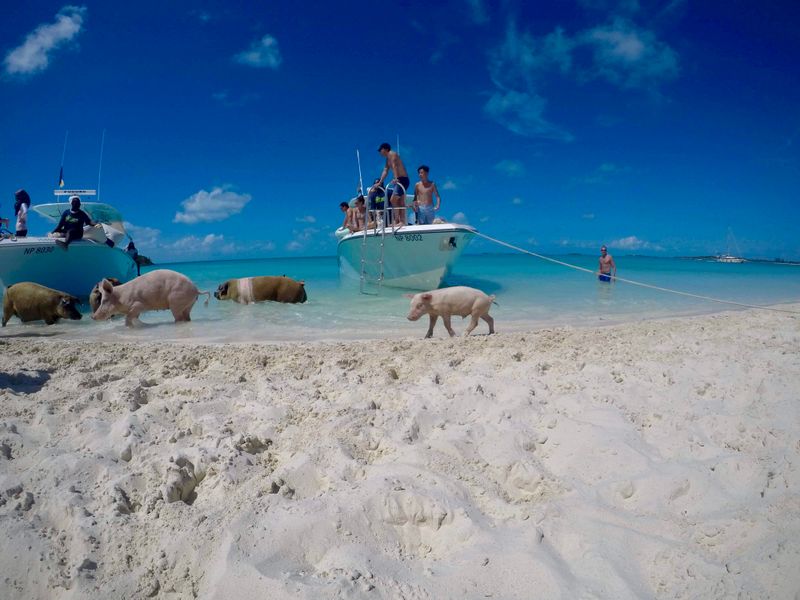
Not all tour operators are created equal, and your choice directly impacts the wellbeing of the pigs. The popularity of this attraction has led to some questionable practices, with certain operators prioritizing entertainment and photo ops over animal welfare.
Look for companies that demonstrate genuine care for the pigs and the environment.
Good operators will control or eliminate feeding, recognizing that overfeeding and inappropriate foods can harm the pigs. They’ll actively discourage tourists from chasing, grabbing, or stressing the animals.
They’ll keep groups organized instead of allowing a chaotic feeding frenzy where pigs get overstimulated and visitors get hurt.
Do your research before booking. Read reviews carefully, looking specifically for mentions of how the company treats the animals.
Ask direct questions about their feeding policies and group size limits. Companies that truly care will be transparent about their practices and happy to discuss their animal welfare standards.
Remember, your tourism dollars vote for the kind of experience you want to support, so choose wisely and help ensure these pigs continue to thrive in their island home.
10. What to bring: water shoes, a dry bag, and low-drama swim gear
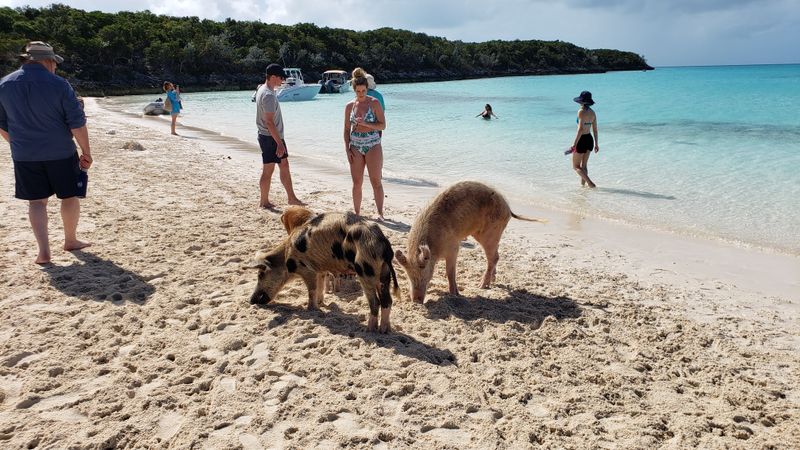
Packing smart makes this adventure ten times more enjoyable. Water shoes are essential because the beach and shallow areas can have rough textures, sharp shells, or unexpected rocky patches.
You’ll be wading in and out of the boat, walking on the beach, and possibly stepping on surfaces you can’t see clearly through the water.
A dry bag is your best friend for protecting phones, cameras, keys, and anything else that shouldn’t get soaked. Even if you don’t plan to swim, boats can splash, pigs can shake water everywhere, and accidents happen.
Keep your valuables sealed up and stress-free.
Choose simple, secure swimwear without dangly bits. Avoid excessive jewelry, loose cover-ups, or anything with shiny decorations that might attract curious pig noses.
A basic swimsuit or board shorts work perfectly. If your tour includes snorkeling stops at nearby sites like Thunderball Grotto, bring a mask and snorkel.
Sunscreen is non-negotiable, but make sure it’s reef-safe since you’ll be in pristine marine environments. Pack light, pack smart, and you’ll spend less time worrying about your stuff and more time enjoying the surreal experience.
11. How to get the best photos without being that tourist
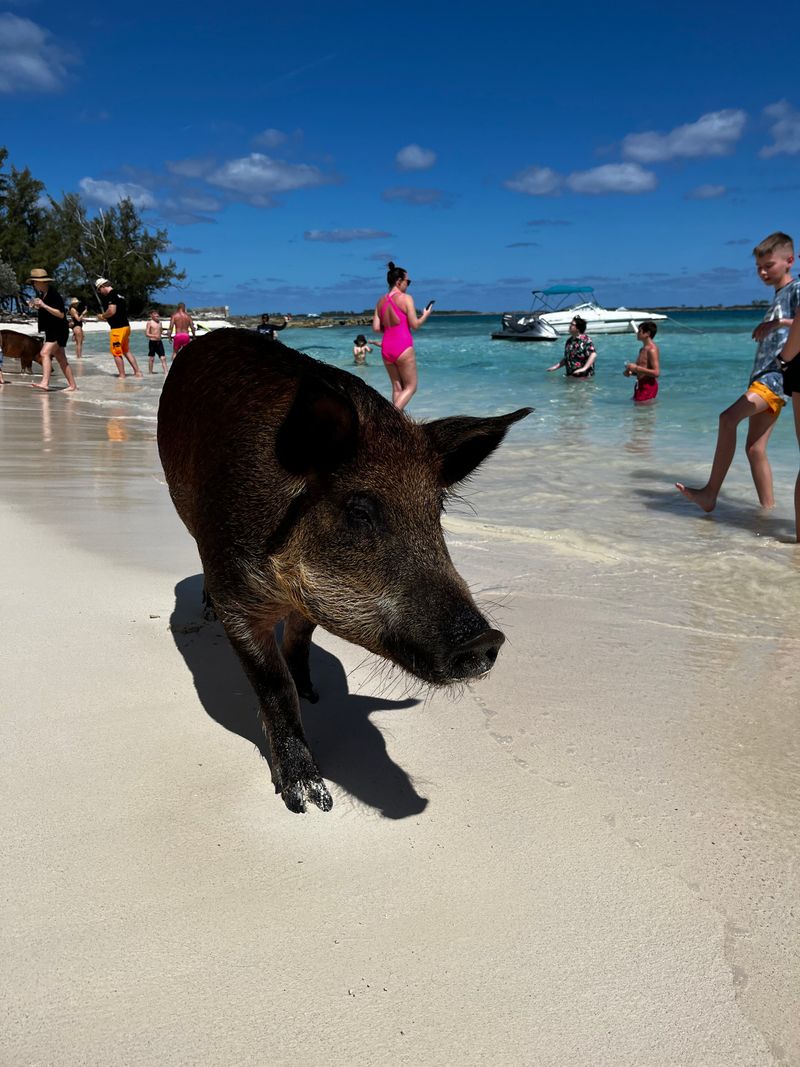
Everyone wants that perfect pig photo, but there’s a right way and a wrong way to get it. The key is patience and respect.
Instead of chasing pigs around the beach or cornering them for a shot, let them come to you. Stand or sit calmly, and wait for a pig to wander into your frame naturally.
The results look more authentic and feel less staged.
Keep your hands visible and empty when you’re close to the pigs. This prevents confusion about whether you’re holding food and makes for cleaner, less chaotic photos.
Shoot from slightly wider angles to capture the stunning surroundings, not just a close-up of a pig’s snout. The turquoise water and white sand are half the magic of this location.
Never, ever pick up piglets for photos. It stresses them out, can provoke protective behavior from adult pigs, and is unsafe for everyone involved.
The best shots come from genuine moments: a pig paddling past, lounging in the shade, or trotting along the waterline. Be patient, be respectful, and you’ll capture images that tell the real story without crossing ethical lines.
12. Pig Beach is often bundled with other legendary Exuma stops
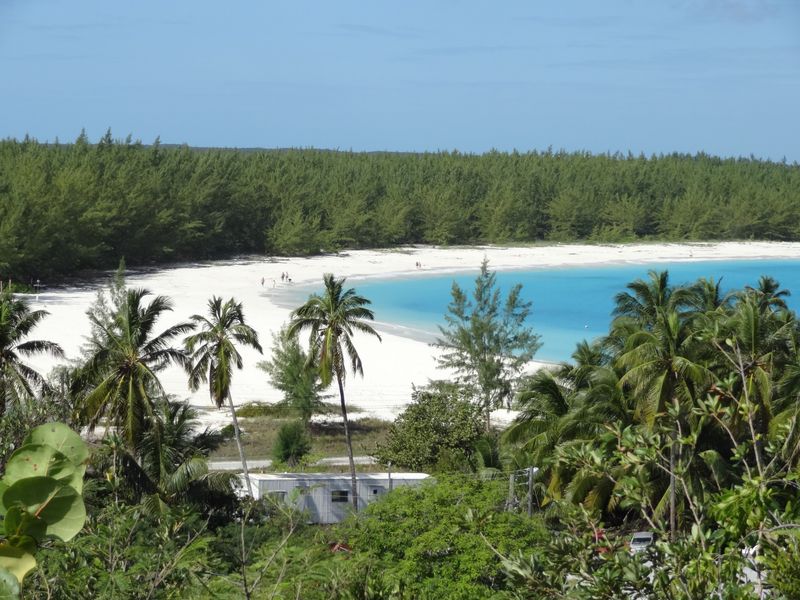
Most tour operators don’t just drop you at Pig Beach and call it a day. The Exumas are packed with natural wonders, and a full-day tour typically combines several stops into one unforgettable adventure.
You’ll maximize your time and money while experiencing the diverse beauty of this island chain.
Thunderball Grotto is a common pairing with Pig Beach. This stunning underwater cave system was featured in James Bond films and offers incredible snorkeling through crystal-clear water filled with colorful fish.
Swimming through the grotto’s openings feels like entering another world. Other tours might include stops at sandbars where you can wade in knee-deep water surrounded by nothing but ocean, or visits to nurse shark and stingray encounters.
Some itineraries include beach time on deserted islands, opportunities to see iguanas on Allen’s Cay, or stops at local spots for conch salad and Bahamian hospitality. Bundling attractions makes logistical sense since you’re already out on the water.
It also gives you a fuller picture of what makes the Exumas special beyond just the famous swimming pigs.
13. The vibe is equal parts magical and ridiculous and that’s exactly why it works
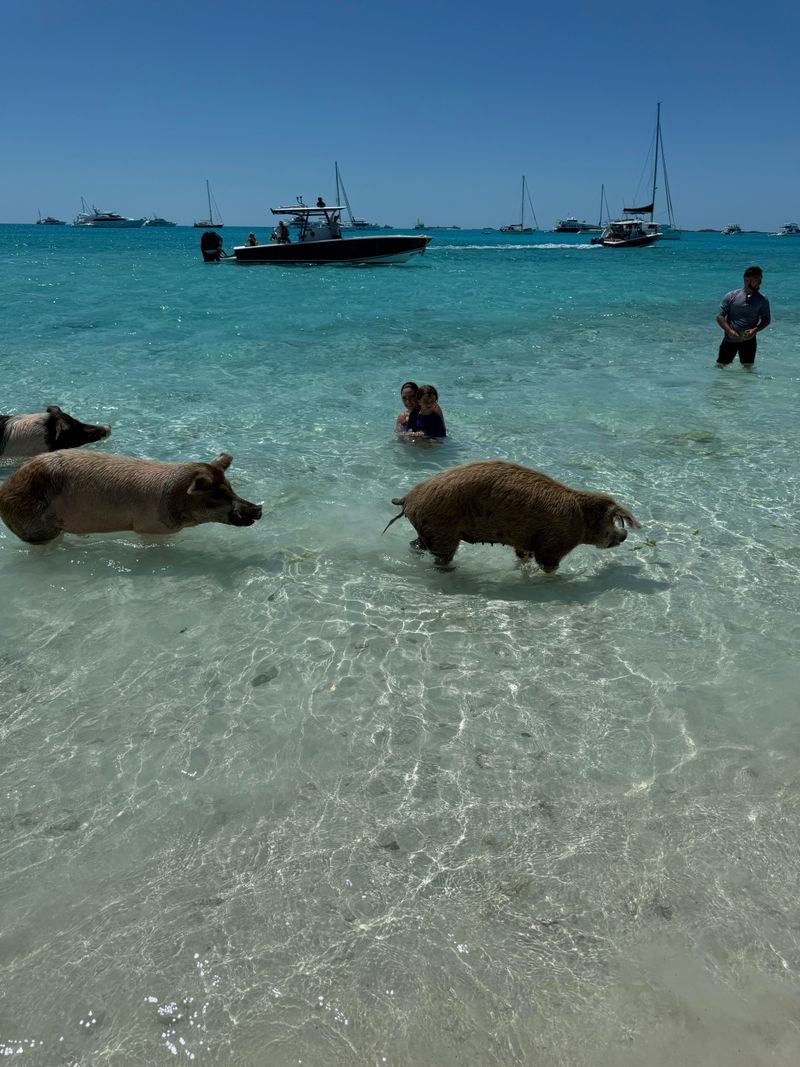
There’s no way to experience Pig Beach without laughing. It’s inherently absurd: pigs lounging on a tropical beach like they’re on vacation, paddling through pristine Caribbean water like they’ve been doing it their whole lives, and generally acting like they own the place (which, technically, they do).
The whole scene feels like someone’s fever dream turned into reality.
But underneath the silliness is genuine magic. The water really is that impossibly blue.
The beach really is that perfect. And watching these animals thrive in such an unexpected environment genuinely touches something in people.
It’s a reminder that nature is full of surprises and that joy can come from the most unlikely sources.
The experience works precisely because it doesn’t take itself too seriously. It’s not trying to be profound or life-changing; it’s just wonderfully, delightfully weird.
If you approach it with the right attitude, respecting the animals, choosing a responsible tour, and keeping your expectations realistic, you’ll walk away with stories you’ll tell for years and photos that make people do a double-take every single time.



