Printer’s Alley in Nashville has always had a reputation for being a little different from the rest of downtown. The narrow cobblestone passage has hosted jazz musicians, late-night performers, and more than a few colorful characters over the decades.
Tucked below street level, one particular basement lounge has been quietly holding onto a history that most people walking past never think to ask about. This spot has been part of this alley since 1948, and the story behind its name, its nightly performances, and its underground setting is far more layered than its dimly lit entrance suggests.
This is not just a place to grab a well-cooked steak or watch a burlesque show. It is a living piece of Nashville’s past, wrapped in velvet curtains and served with a side of live jazz.
Keep reading, because this place earns every bit of attention it gets.
How Printer’s Alley Got Its Dark Reputation
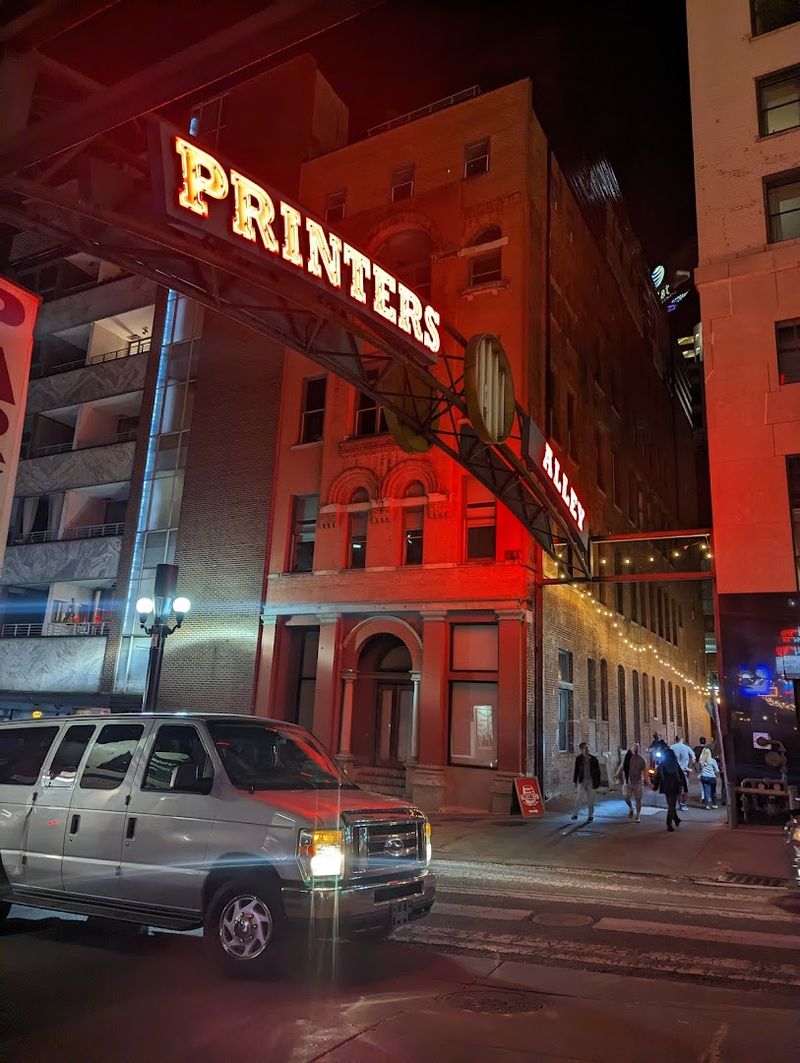
Before it became a nightlife destination, Printer’s Alley earned its name from the printing and publishing businesses that lined it in the early 1900s. Newspapers and trade publications operated out of the buildings on either side, and the alley served as a working passage between them.
When Prohibition ended and Nashville’s entertainment culture started shifting, the alley transformed. The printing businesses gave way to clubs, lounges, and venues that attracted a very different crowd after dark.
By the mid-20th century, Printer’s Alley had developed a reputation as a place where the rules felt a little looser, where performers could take risks, and where the city’s underground culture had room to breathe.
That reputation did not fade quietly. It simply went underground, literally, when establishments like Skull’s Rainbow Room carved out basement spaces that kept the energy alive long after other parts of Nashville had quieted down for the night.
The Origin of the Name Skull
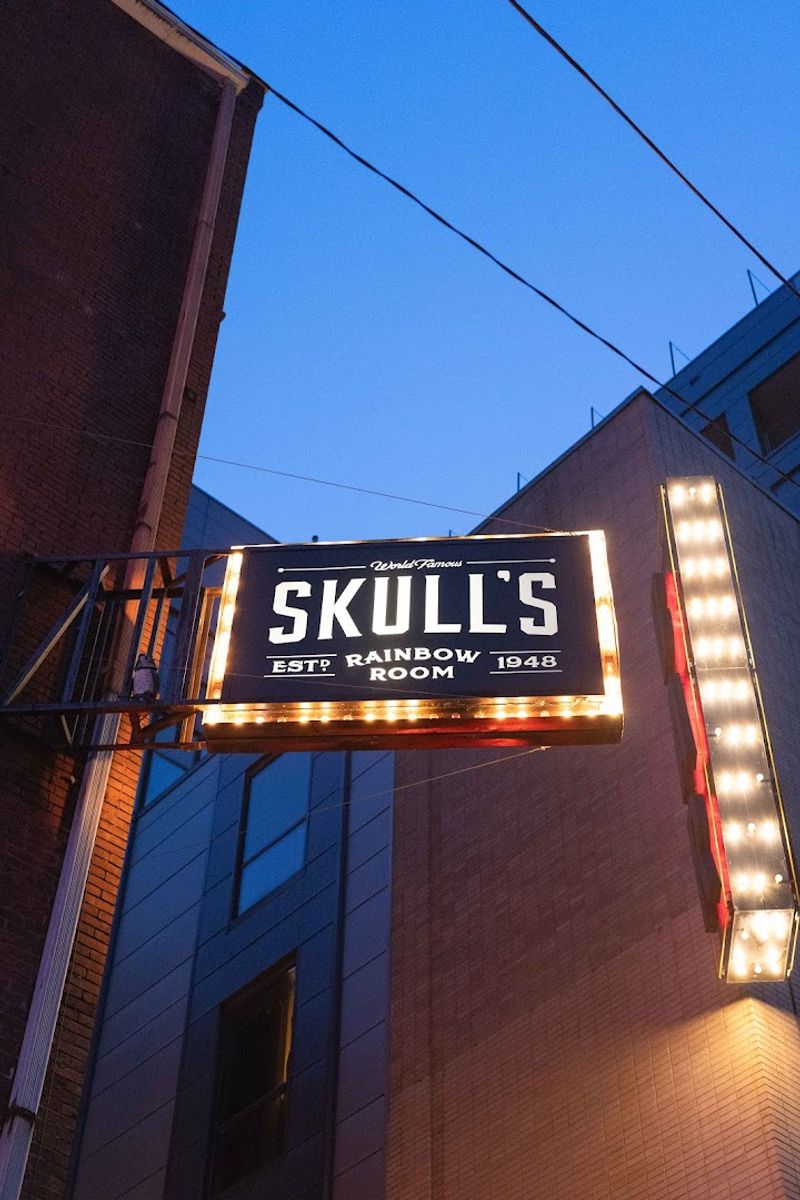
The name Skull’s Rainbow Room comes from David “Skull” Schulman, the original owner who opened the venue in 1948. Schulman was a well-known figure in Nashville’s entertainment world, and his nickname followed him everywhere he went.
The “Rainbow Room” portion of the name was a nod to the colorful performers and variety acts that filled the stage during the venue’s early years. Combining a nickname with a theatrical title gave the place an identity that stuck for decades.
Schulman’s venue became a gathering spot for musicians, performers, and Nashville insiders who wanted something different from the mainstream entertainment options available at the time. The basement setting added an element of exclusivity that drew people in.
The fact that the name has never changed through multiple ownership transitions says something about how strongly it is tied to the alley’s identity. Skull’s Rainbow Room is not just a brand name.
It is a piece of Nashville’s documented entertainment history.
What a Speakeasy-Style Lounge Actually Means Here
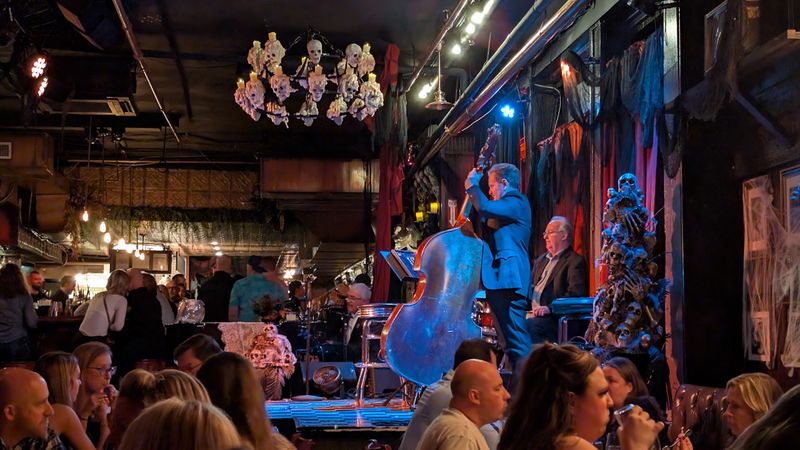
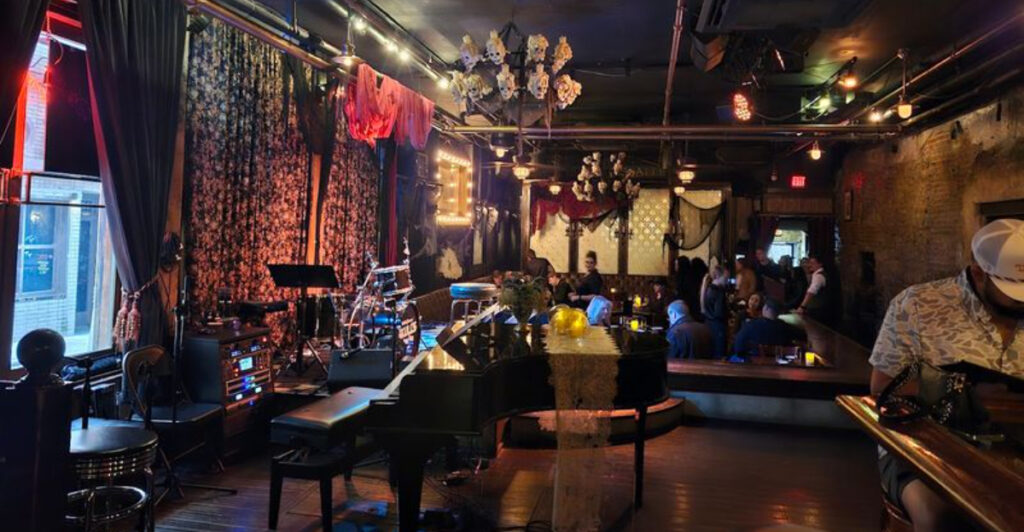
The phrase “speakeasy-style” gets used loosely in Nashville’s bar scene, but at Skull’s Rainbow Room, it carries some actual weight. The basement location, the low ceilings, the intimate seating arrangements, and the general atmosphere all point to a design that was clearly influenced by the underground club culture of earlier decades.
The layout keeps tables close to the stage, which means every seat in the house has a reasonable view of the performers. That kind of setup was common in the club venues of the 1940s and 1950s, where the entertainment was the main event rather than a background feature.
The decor leans into the vintage theme without becoming a costume party. Dark tones, layered lighting, and period-appropriate details create a setting that feels consistent rather than forced.
Arriving right when the doors open at 5 PM on a weekday gives the best chance of taking in the full atmosphere before the room fills up, which it does, reliably, as the evening progresses.
The Burlesque Show That Keeps People Talking
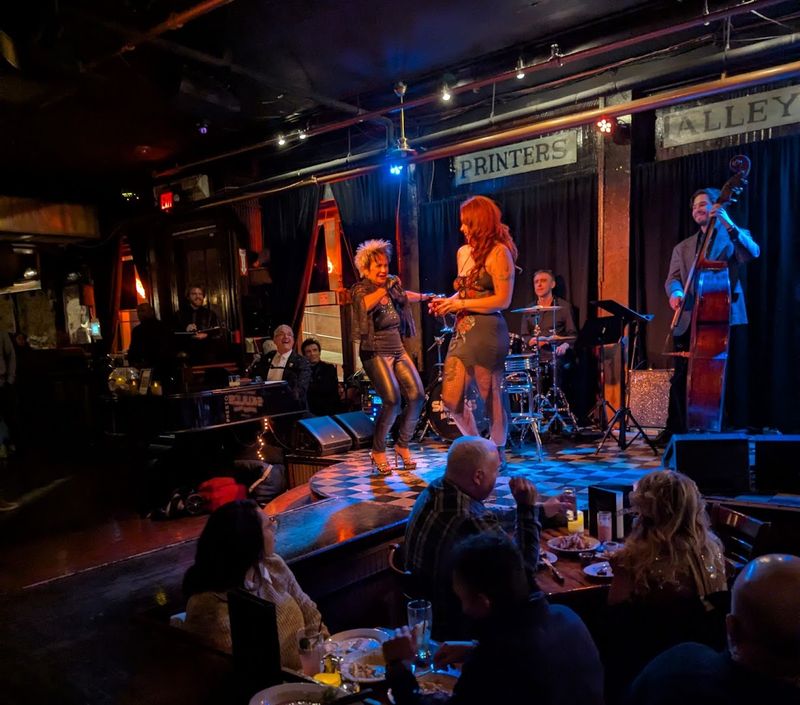
Nightly burlesque performances are one of the defining features of Skull’s Rainbow Room, and they are the reason many people plan their visit specifically around the evening hours. The shows take place in the same room where guests are seated for dinner, which means the entertainment is never far away.
Burlesque as a performance art form has a long history in American entertainment, and venues like Skull’s Rainbow Room have played a real role in keeping it part of the live performance conversation. The shows here are theatrical, choreographed, and designed for a room this size.
Seating near the stage tends to go quickly on show nights, which is one more reason that reservations matter. Groups celebrating special occasions often specifically request front-row placement, and the staff does their best to accommodate those requests when bookings are made in advance.
The combination of a full dinner service running alongside live burlesque creates a pacing that feels deliberate, more like attending a cabaret than a typical dinner show.
Jazz, Live Music, and the Performers Who Fill the Room
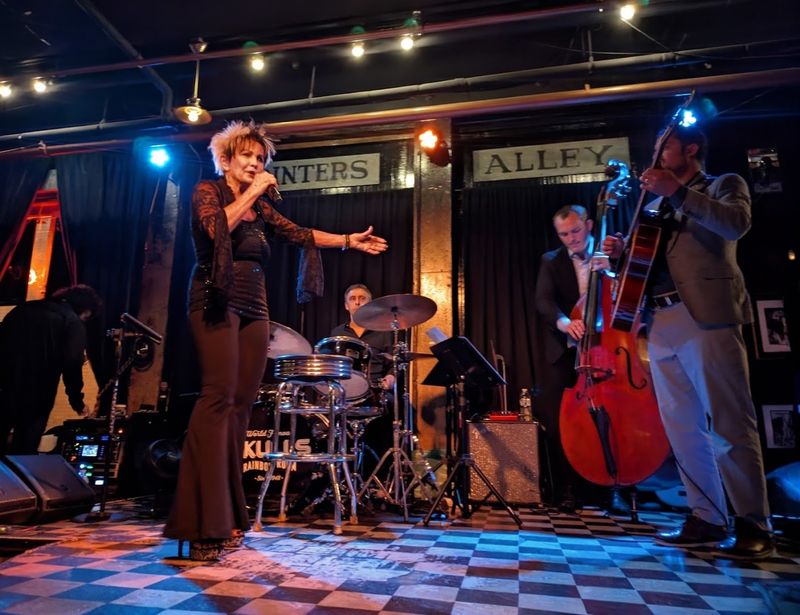
Beyond the burlesque performances, Skull’s Rainbow Room maintains a consistent live music program that leans heavily into jazz. A jazz band or pianist performing in the background is a regular feature, particularly during the earlier hours of the evening before the main show begins.
The acoustics in a basement room this size work in the music’s favor. The sound stays contained and present without becoming so loud that conversation becomes impossible.
That balance is harder to achieve than it sounds, and it makes a noticeable difference in how guests experience the evening.
The venue has also hosted notable performers over the years. Sarah Potenza, a Nashville-based musician with a strong following, has been connected to performances at the venue, giving it a link to the city’s broader live music community beyond just the burlesque circuit.
Music requests have been accepted on certain nights, which adds an interactive quality to the entertainment that keeps the experience from feeling too scripted or rehearsed, even when the main show is clearly well-prepared.
The Menu That Surprised More Than a Few People
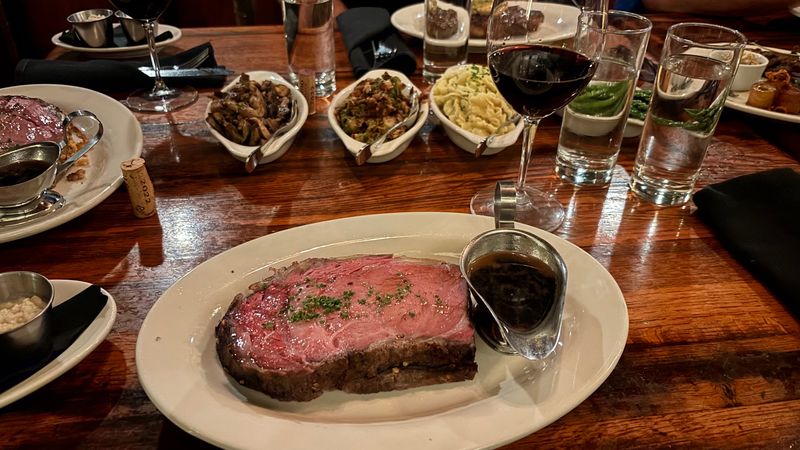
Skull’s Rainbow Room describes its food as elevated American fare, and the menu reflects that positioning. The offerings are not extensive, but what appears on the menu has been put together with clear attention to quality and preparation.
Prime rib and rack of lamb are among the dishes that come up most consistently when the food is discussed. The portions tend to be generous, and the cooking is taken seriously in a way that goes beyond what most entertainment-focused venues bother with.
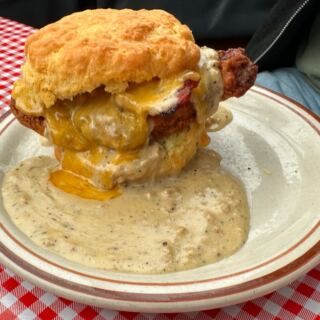
Empanadas filled with prime rib have become something of a signature starter, and they arrive with enough substance to set the tone for the rest of the meal. The kitchen also handles specials with confidence, including preparations like shrimp scampi over squid ink pasta that suggest a willingness to go beyond the standard steakhouse template.
Sunday brunch runs from 10 AM to 2 PM and offers a different side of the venue, one that is notably quieter and more relaxed than the evening experience.
Why Reservations Are Not Optional
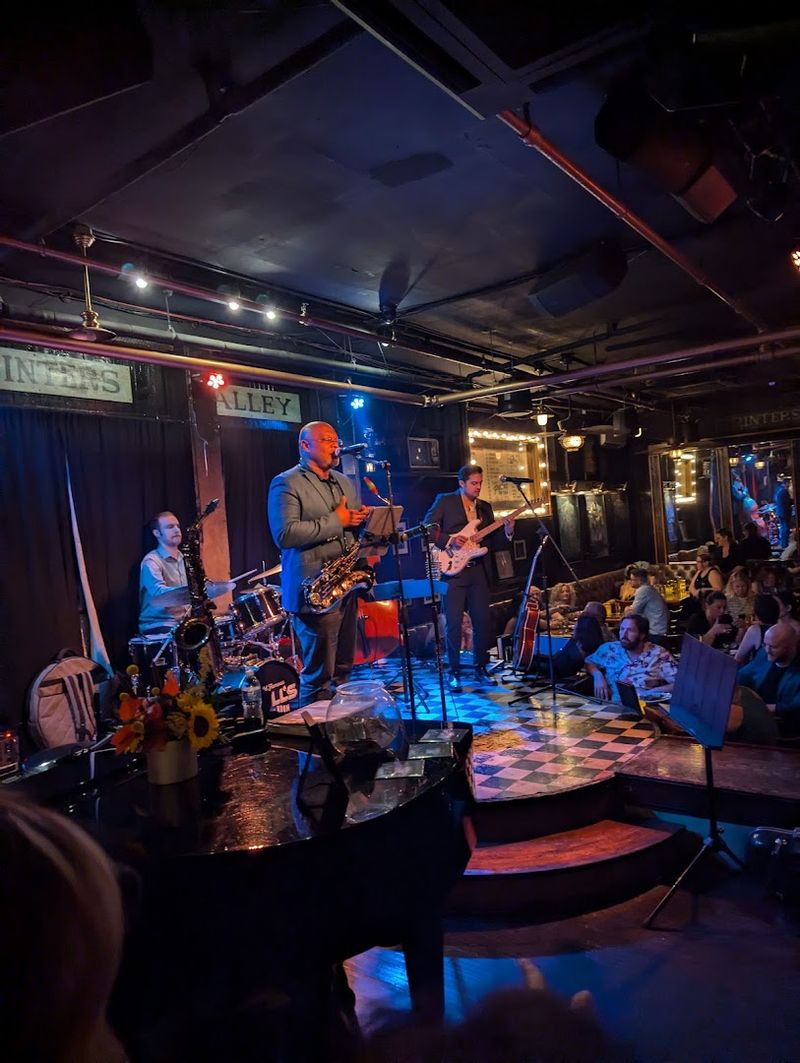
Skull’s Rainbow Room is not a large venue. The basement footprint limits capacity in a way that makes walk-in visits a genuine gamble, particularly on Friday and Saturday nights when the burlesque shows draw the biggest crowds.
Groups of ten or more have successfully booked tables with as little as one day’s notice, which suggests the reservation system is manageable, but that flexibility should not be taken for granted on peak nights. The room reaches standing-room capacity faster than most guests anticipate.
Arriving early, right at the 5 PM opening, gives the best chance of settling in before the energy shifts. Those who arrive after 7 PM on a weekend without a reservation are likely to find the room already full and the wait time unpredictable.
The venue’s website at skullsrainbowroom.com handles reservations, and the process is straightforward. Booking a table is the single most practical step anyone can take before planning a visit to this particular corner of Printer’s Alley.
The Atmosphere That Sets It Apart From Broadway
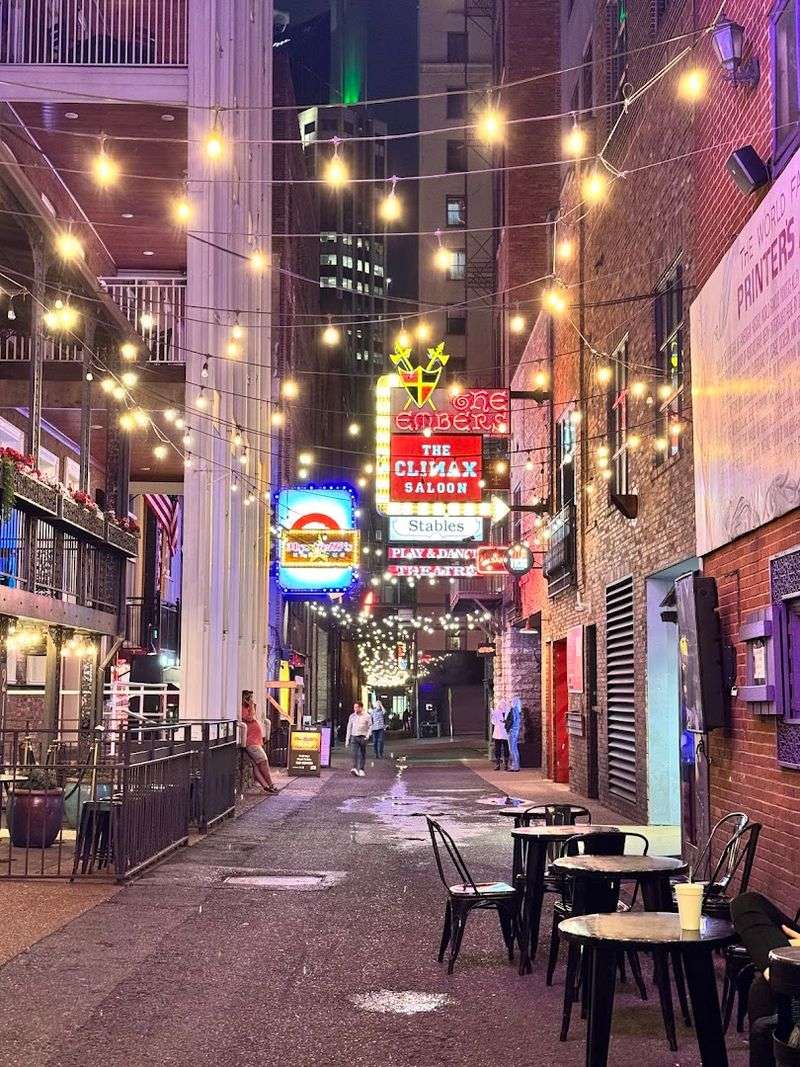
Broadway in Nashville is loud, bright, and built for maximum visibility. Skull’s Rainbow Room operates on an entirely different frequency, and that contrast is a significant part of its appeal.
The venue sits less than a ten-minute walk from Broadway’s busiest blocks, but the difference in atmosphere between the two is substantial. Where Broadway leans into volume and spectacle, Printer’s Alley and the basement lounge below it operate with a quieter kind of confidence.
Guests who have been to both ends of Nashville’s nightlife spectrum often describe Skull’s Rainbow Room as the version of the city they did not know they were looking for. It rewards those who take the time to find it rather than advertising itself aggressively to every passing tourist.
The cobblestone alley, the descent below street level, and the transition from the noise of downtown to the contained world of the lounge create a shift that feels deliberate. That shift is the point, and the venue has been making it work since 1948.
Special Occasions and What to Expect
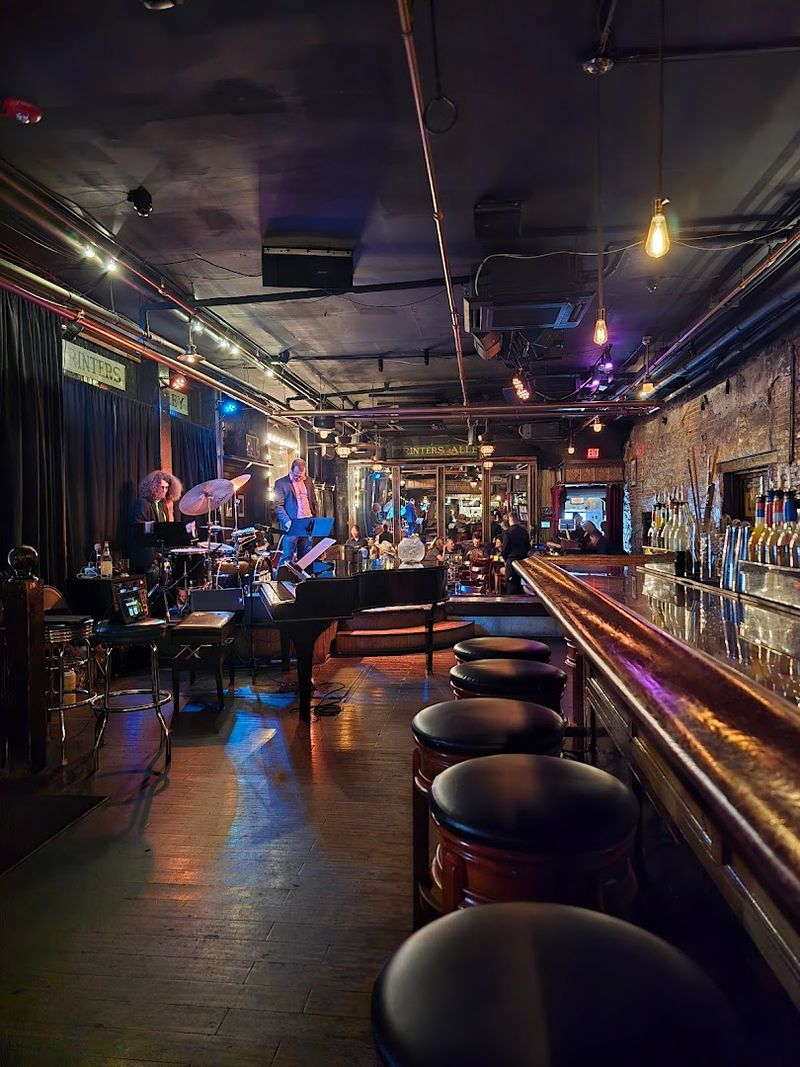
Skull’s Rainbow Room has developed a strong reputation as a destination for milestone celebrations. Anniversaries, birthdays, and bachelor and bachelorette weekends all show up regularly among the groups that book tables here.
The staff has a track record of going beyond standard service for guests marking a special occasion. Complimentary additions have been extended to guests celebrating birthdays and anniversaries, a gesture that tends to leave a lasting impression and keeps people returning for the next milestone.
The seating near the stage is particularly sought after for celebrations, since it combines the best view of the entertainment with a sense of being at the center of the evening rather than observing from the edges.
The overall pricing reflects the upscale positioning of the venue. Skull’s Rainbow Room sits in the higher tier of Nashville’s dining options, and the experience is priced accordingly.
That investment tends to pay off for guests who arrive with the right expectations and a table already reserved.
The Venue’s Ties to Nashville’s Broader Cultural History
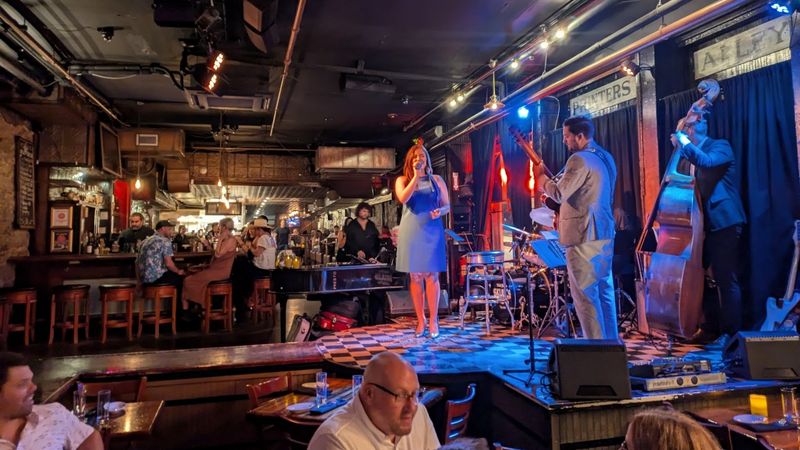
Nashville’s identity as a music city is well-documented, but the specific history of its underground entertainment venues is less frequently discussed. Skull’s Rainbow Room occupies an interesting position in that history, having operated continuously in some form since 1948.
Printer’s Alley itself has been recognized as a historically significant corridor in Nashville’s cultural development. The combination of printing industry roots and mid-century entertainment culture gives the alley a layered identity that most cities would be glad to claim.
The fact that Skull’s Rainbow Room has maintained its original name through decades of ownership changes and shifting entertainment trends speaks to how deeply the venue is connected to the alley’s story. Renaming it would have meant erasing a piece of documented Nashville history.
Country music gets most of the attention when Nashville’s cultural contributions are discussed, but the jazz and variety performance tradition that Skull’s Rainbow Room represents has been running quietly alongside that narrative for the better part of eight decades.
What First-Time Visitors Should Know Before Going
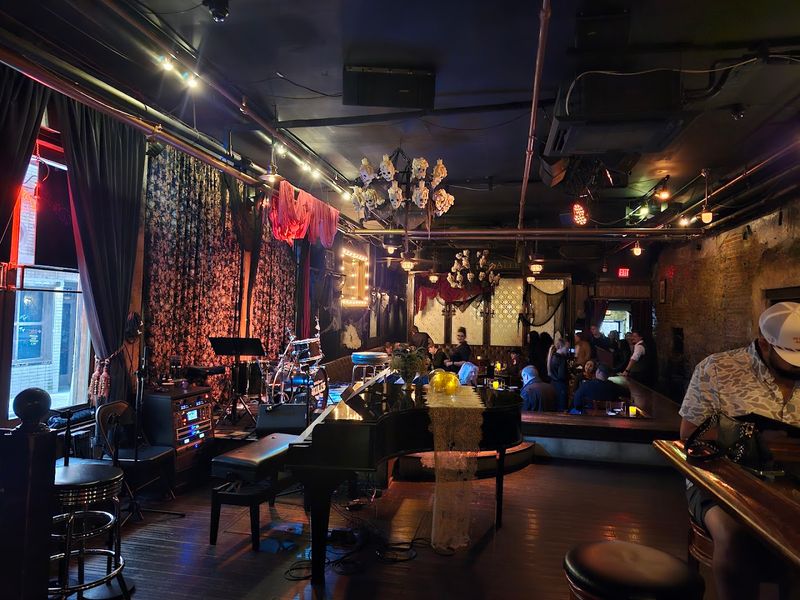
A few practical details make a first visit to Skull’s Rainbow Room go more smoothly. The venue opens at 5 PM most evenings, and showing up close to opening time is the best strategy for those without a reservation who want to secure a table.
The dress code is not strict, but the atmosphere skews toward smart casual rather than the flip-flops-and-tank-top end of the spectrum. Guests have noted that there is no pressure to dress formally, but the setting naturally encourages a slightly more put-together look than a typical Nashville bar night.
Parking near Printer’s Alley can be tight, and the area is best approached on foot from nearby garages or hotels. The walk from Broadway takes under ten minutes and passes through some of the more interesting blocks of downtown Nashville.
The Sunday brunch service offers a quieter entry point for those who want to experience the space without the full intensity of a Friday or Saturday night show.
Why This Basement Lounge Has Lasted 75 Years
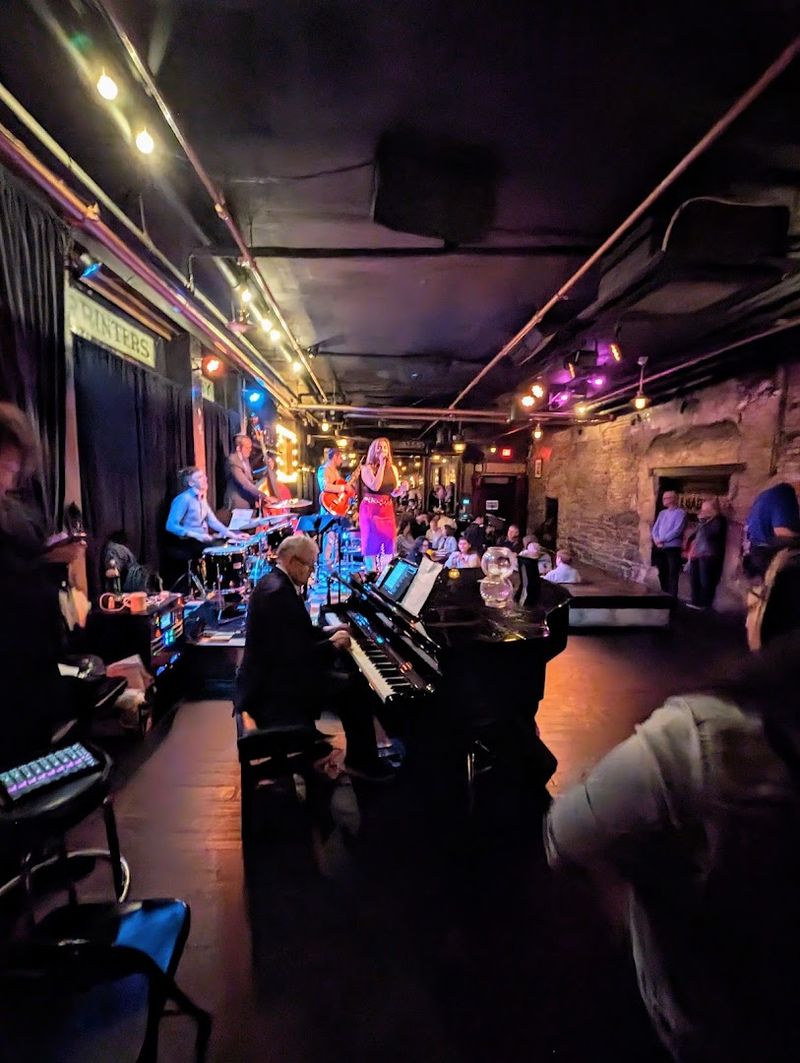
Longevity in the restaurant and entertainment business is genuinely rare. Most venues in high-traffic tourist areas either chase trends until they burn out or get replaced by something newer and louder.
Skull’s Rainbow Room has done neither.
The venue’s staying power comes from a combination of factors that reinforce each other. The historic setting in Printer’s Alley gives it a context that cannot be replicated.
The commitment to live entertainment gives it a reason to visit beyond the food alone. The food quality gives it a reason to stay beyond the show.
That three-part structure, location, entertainment, and kitchen quality working together, is what separates a venue that lasts from one that becomes a footnote. Skull’s Rainbow Room has managed all three consistently enough to still be drawing full rooms more than seven decades after David Schulman opened the doors.
Nashville keeps growing and changing around it, but the basement on Printer’s Alley keeps running the same formula, and the formula keeps working.
The Address That Starts the Story
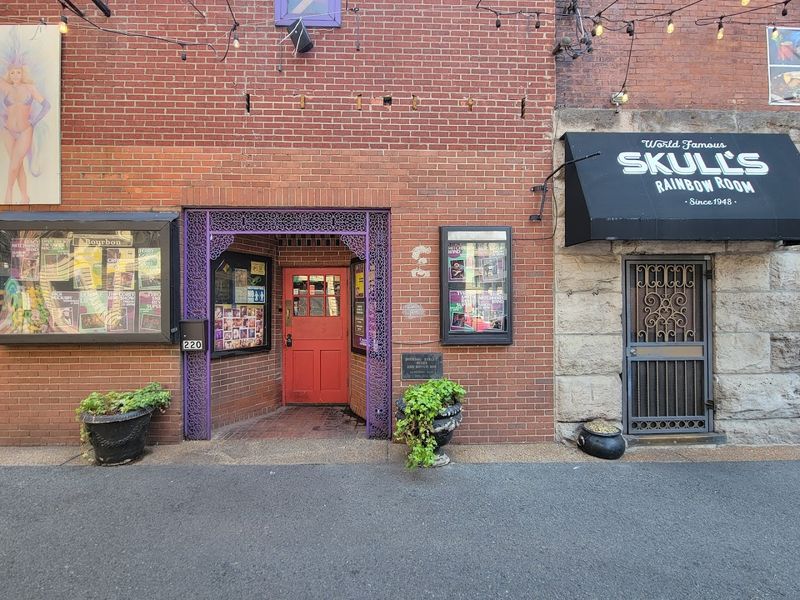
Finding Skull’s Rainbow Room is part of the experience. The address is 222 Printers Alley, Nashville, TN 37219, and the location sits below street level in one of downtown Nashville’s most historically layered corridors.
Printer’s Alley is a short stretch that runs between Third and Fourth Avenues, just a short walk from the louder stretch of Broadway. Most tourists rush past the alley without realizing what it contains.
The entrance to Skull’s Rainbow Room is easy to miss if someone is not looking for it. A staircase leads down from the alley level into the basement space, and that descent alone signals that this is not a typical Nashville honky-tonk.
The venue operates Thursday through Wednesday from 5 PM to 2 AM, with Sunday brunch running from 10 AM to 2 PM. Reservations are strongly recommended, especially on weekends, when the space fills up quickly and standing room becomes the only option.
Share this story