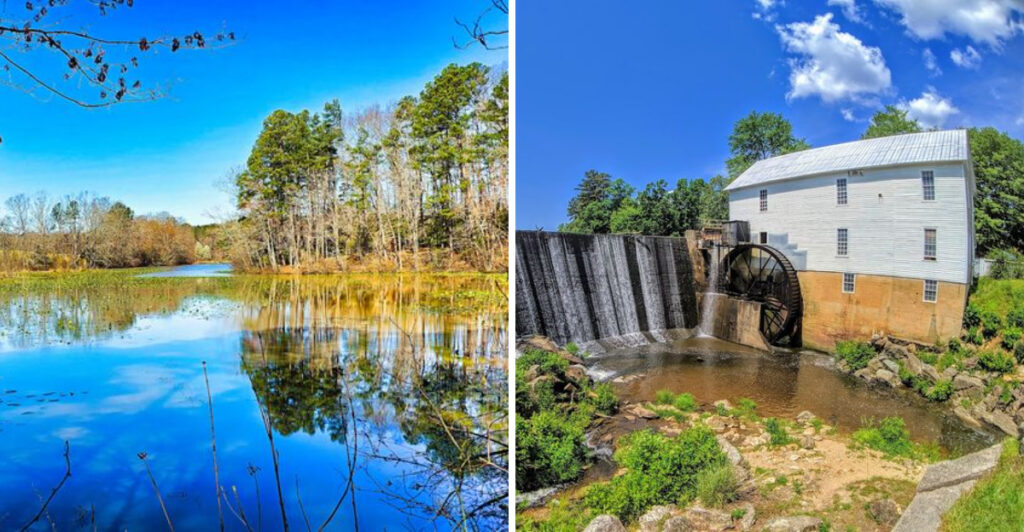
There is a place in North Carolina where time seems to have politely refused to move on. The wooden buildings, the old waterwheel, and the quiet pond look so perfectly preserved that you half expect a farmer from a century ago to walk around the corner with a sack of corn.
This is the kind of spot that makes you put your phone down and just look around for a while. Murray’s Mill Historic Site in Catawba County is one of those rare places where history feels less like a lesson and more like an experience you can actually touch, smell, and hear.
Where Exactly You Will Find This Timeless Place
Murray’s Mill Historic Site sits at 1489 Murrays Mill Rd, Catawba, NC 28609, tucked into eastern Catawba County near Balls Creek in the North Carolina Piedmont region. From Interstate 40, the drive to the mill takes only about ten minutes, making it a surprisingly easy stop whether you are passing through or planning a full day out.
The site is managed by the Catawba County Historical Association, and it has been carefully preserved since restoration work began in 1980. Governor James G.
Martin attended the official opening ceremony in 1988, which gives you a sense of just how seriously this community takes its history.
The grounds are open during daylight hours throughout the week, and the General Store is open Tuesday through Saturday from 10 AM to 5 PM, with Sunday hours from 1 to 5 PM. You can reach the site by phone at 828-241-4299.
Unlike some historic sites that feel remote or hard to find, this one is genuinely easy to get to, and the payoff once you arrive is absolutely worth the short detour off the highway.
A Mill That Has Been Standing Since 1913
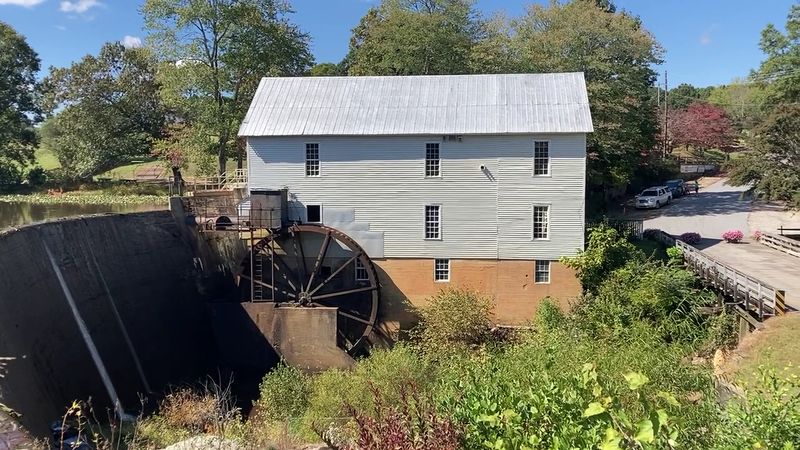
The main mill building at this site was constructed in 1913, and the fact that it is still standing in such fine shape more than a century later is a real testament to the craftsmanship of that era. Three generations of the Murray family ran the operation before closing it down in 1967, and the equipment inside remains largely intact, as if the workers simply locked the door one afternoon and never came back.
What makes this place genuinely special is that the original machinery is still in place. Gears, belts, chutes, and grinding stones all sit right where they were used for decades, and the whole setup gives you an immediate sense of how much work went into producing something as simple as a bag of cornmeal.
The mill is the last surviving milling complex in Catawba County, which makes it historically significant beyond just its good looks. Visitors often comment on how complete the interior feels, as though the mill is just resting between batches rather than retired from service.
The Catawba County Historical Association has done a careful and respectful job of keeping everything as authentic as possible, and that effort shows in every corner of the building.
The 28-Foot Waterwheel That Stops People in Their Tracks
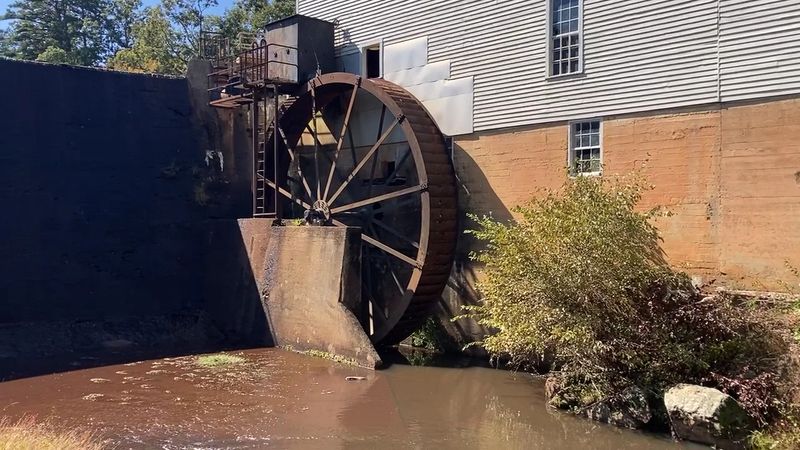
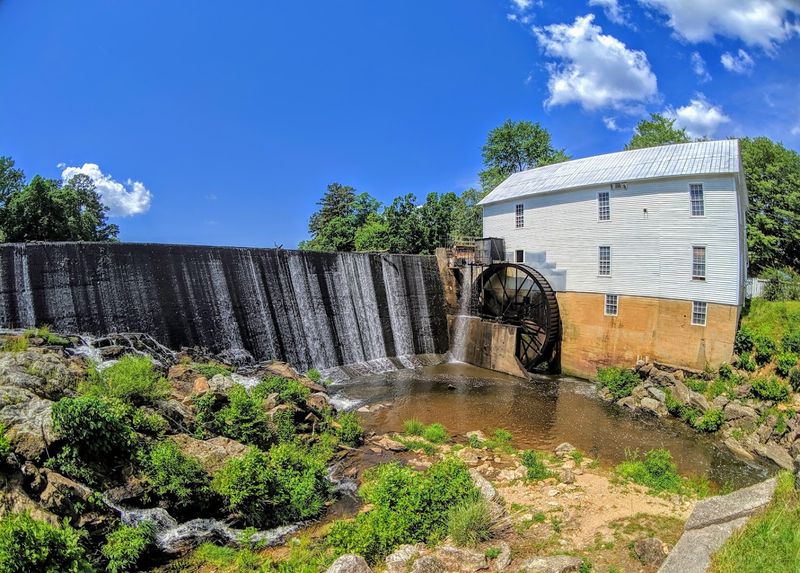
Few things at Murray’s Mill get as many second glances as the 28-foot waterwheel that sits along the side of the mill building. It is genuinely large, and when you see it up close for the first time, the scale of it surprises you even if you were expecting it.
The wheel was the engine that powered the entire milling operation, converting the flow of water from the mill pond into the mechanical energy needed to grind corn and wheat. Understanding that this simple structure once fed an entire rural community adds a layer of meaning to what might otherwise just look like a pretty piece of old woodwork.
Photographers tend to linger here longer than anywhere else on the property, and it is easy to understand why. The combination of the weathered wood, the flowing water, and the reflection of the wheel in the pond below creates a composition that practically frames itself.
Even on cloudy days, the scene has a moody, painterly quality that is hard to replicate anywhere else. Whether the wheel is turning or stationary during your visit, it remains one of the most visually striking features of the entire site and a clear highlight of any tour.
The Murray and Minges General Store from the 1890s
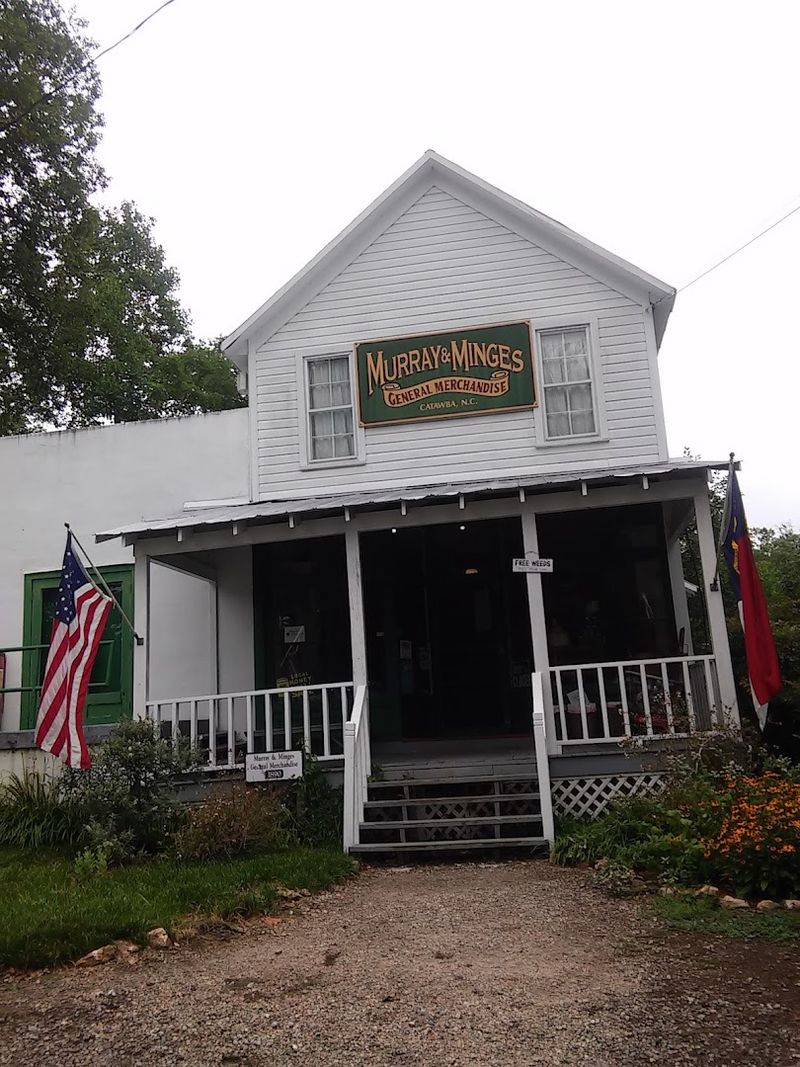
Right across from the mill stands the Murray and Minges General Store, a building that dates back to the 1890s and still functions as a working store today. The shelves are stocked with homemade jellies, jams, apple butter, locally ground cornmeal, nostalgic candies, and various other items that feel perfectly suited to the surroundings.
The staff member working the store is consistently described as one of the highlights of a visit here. She brings a genuine enthusiasm to explaining the history of the site and the operation of the mill, and her knowledge goes well beyond what you would expect from a gift shop attendant.
Talking with her for even a few minutes adds real depth to the experience.
An old coffee can nailed to a door frame catches bottle caps, and a porch swing out front invites you to sit down before or after your tour. These small, specific details are what separate Murray’s Mill from a generic museum experience.
The store also serves as the place to pick up your self-guided tour folder, which includes detailed photographs and explanations of every building on the property. Buying a bag of stone-ground cornmeal here feels like bringing a small piece of the mill’s story home with you.
Tour Options That Fit Every Kind of Visitor
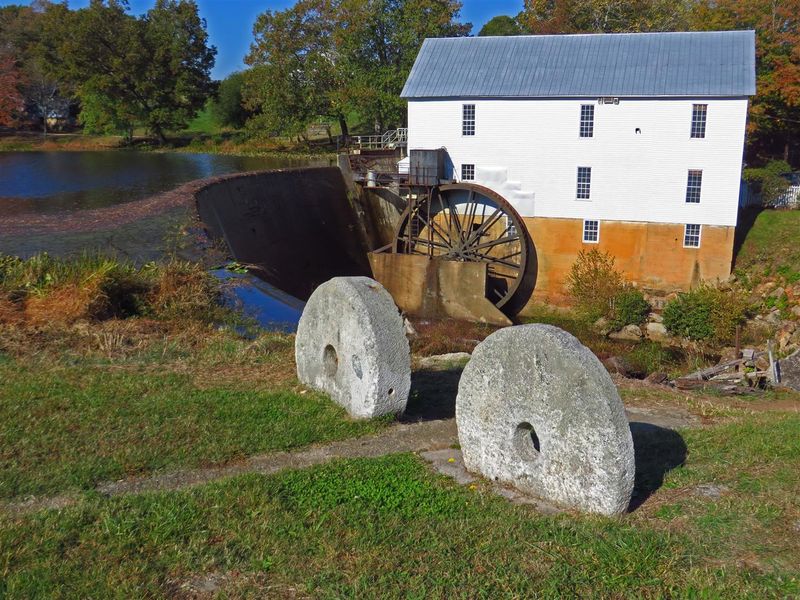
Murray’s Mill offers two ways to explore the property, and both are priced in a way that feels genuinely fair. A self-guided tour costs seven dollars per person, while a guided tour runs ten dollars per person.
Active duty military and veterans get in free, which is a thoughtful policy that reflects the community values this place has always stood for.
The self-guided option comes with a folder full of detailed pictures and written explanations that you can take at your own pace. The guided tour, when staff availability allows, adds a personal layer to the visit that brings the buildings and machinery to life in ways the printed materials cannot fully replicate.
For families with young children, the self-guided format works particularly well because you can slow down or speed up depending on attention spans. Groups visiting for educational purposes tend to prefer the guided experience, and school trips to this site are not uncommon in the surrounding region.
One practical tip worth noting: restrooms are available inside the General Store during business hours, and there is a portable facility near the store as well, so plan accordingly before heading out to the far end of the trails. The tour is a bargain at either price point.
Historic Buildings That Tell the Story of a Rural Village
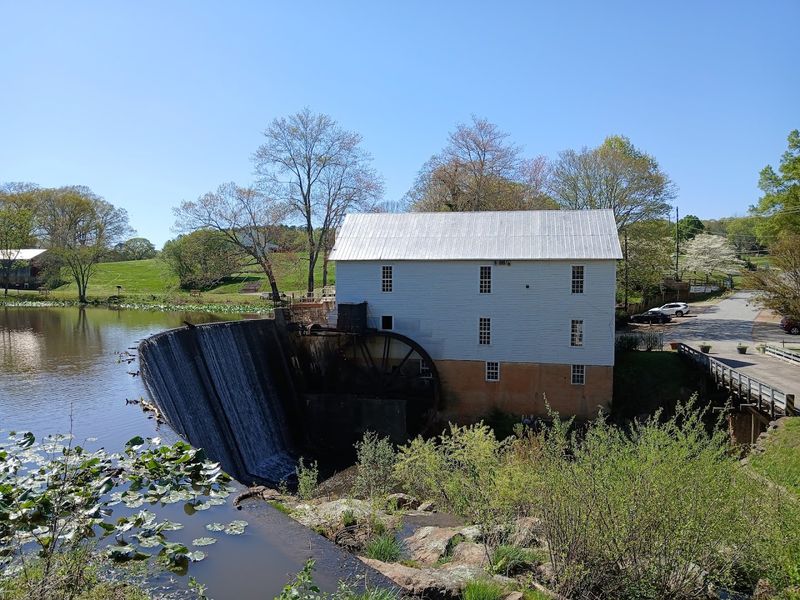
The mill itself is just one piece of a much larger historic district that includes several original structures from the Murray family era. The 1880s Wheat House now serves as an exhibit gallery, and the 1913 John Murray House has been furnished to reflect the period when the family was actively running the operation.
Numerous outbuildings round out the complex and give the whole site the feel of a small rural village rather than a single landmark.
In the early 1900s, the mill complex functioned as a genuine community hub. Farmers traveled from miles around to grind their corn, trade goods, catch up on local news, and simply spend time with neighbors.
A blacksmith shop, sawmill, and other facilities once supported the daily life of the surrounding area, and understanding that context makes every building you walk past feel more significant.
Some of the Murray family homes on the property are still in the process of being renovated, which means the site is an ongoing labor of preservation rather than a finished product. That ongoing work gives the place a living quality that fully restored sites sometimes lack.
Each visit has the potential to reveal something slightly different than the last, which is a quiet invitation to come back more than once and watch the restoration unfold over time.
The Mill Pond and Walking Trails Around the Property

One of the quieter pleasures of a visit to Murray’s Mill is the network of easy walking trails that wind through the property. The full loop around the water comes to roughly one mile and takes you past the pond, along Balls Creek, across a bridge, and through open fields before returning you to the main cluster of buildings.
Benches are placed at thoughtful intervals along the trails, giving you places to sit, rest, and watch the water or the wildlife without any pressure to keep moving. The trails are well-maintained and accessible for most fitness levels, including families with young children and older visitors who want a gentle stroll rather than a workout.
A literacy trail designed for children adds an educational layer to the walk, with story-based markers that make the experience engaging for younger visitors who might not yet be captivated by the history of grain milling. The pond itself is genuinely beautiful, particularly in the morning light when the surface is calm and the surrounding trees are reflected clearly in the water.
Bringing a picnic lunch and eating near the historic house in the shade is one of the most relaxed and enjoyable ways to spend an afternoon at this site, and it costs nothing extra beyond your tour admission.
A Community Hub That Hosts Events Throughout the Year
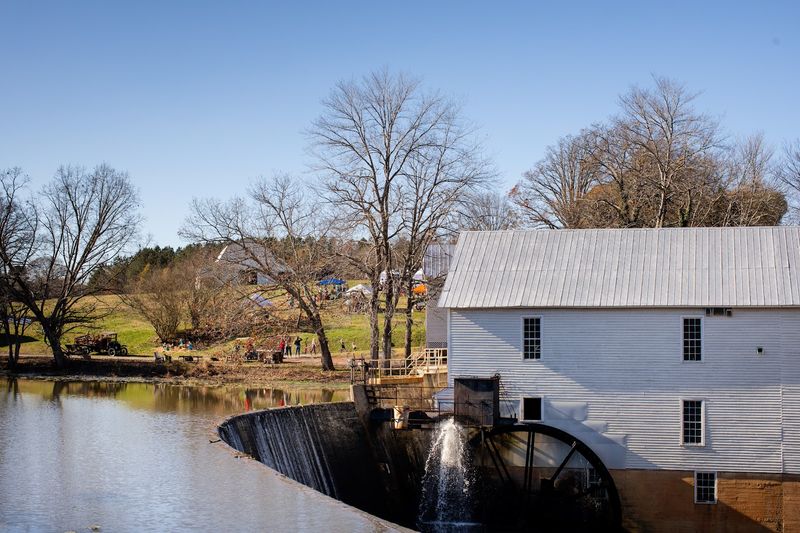
Murray’s Mill is not simply a place you visit once and check off a list. The site hosts a rotating calendar of events that gives people reasons to return across different seasons.
A Saturday farmers market runs during the growing season, bringing local vendors and fresh produce to the grounds in a setting that feels perfectly matched to the history of the place.
Every June, the site hosts a well-organized cycling event that draws between 300 and 350 participants and raises support for the mill and the Catawba County Historical Association. The event has built a loyal following among cyclists in the region, and it doubles as a way to introduce new visitors to the property who might not have discovered it otherwise.
Concerts, school group visits, and church outings are also part of the regular rhythm of the site. One visitor attended a student concert organized by a music teacher and described the setting as transformative, the kind of place where even a simple performance feels elevated by the surroundings.
The Harvest Host program allows RV travelers to stay overnight on the grounds, waking up to a quiet morning walk through the mill property before the day officially begins. Few historic sites in North Carolina offer this combination of education, community, and genuine hospitality.
Photography Opportunities That Practically Frame Themselves

Murray’s Mill has quietly become one of the most photographed historic sites in western North Carolina, and the reasons are obvious the moment you arrive. The combination of weathered wood, still water, an oversize waterwheel, and carefully maintained historic buildings gives photographers an almost unfair number of compelling subjects to work with.
Family portrait sessions happen here regularly, and the site provides a backdrop that is both distinctive and timeless. The warm tones of the wooden structures against the green of the surrounding trees and the blue-gray of the mill pond create a palette that works beautifully in natural light at nearly any time of day.
The bridge over Balls Creek offers a slightly elevated vantage point that frames the mill building and waterwheel in a single shot. The pond dam, the mill’s exterior staircase, and the porch of the general store all provide additional compositions worth exploring.
Early morning visits during the Harvest Host stays come with the bonus of soft golden light and near-total quiet, which makes for some of the most atmospheric shots possible on the property. Whether you are using a professional camera or just your phone, this site consistently rewards the effort of slowing down and looking carefully at what is right in front of you.
The Story of Three Generations of the Murray Family
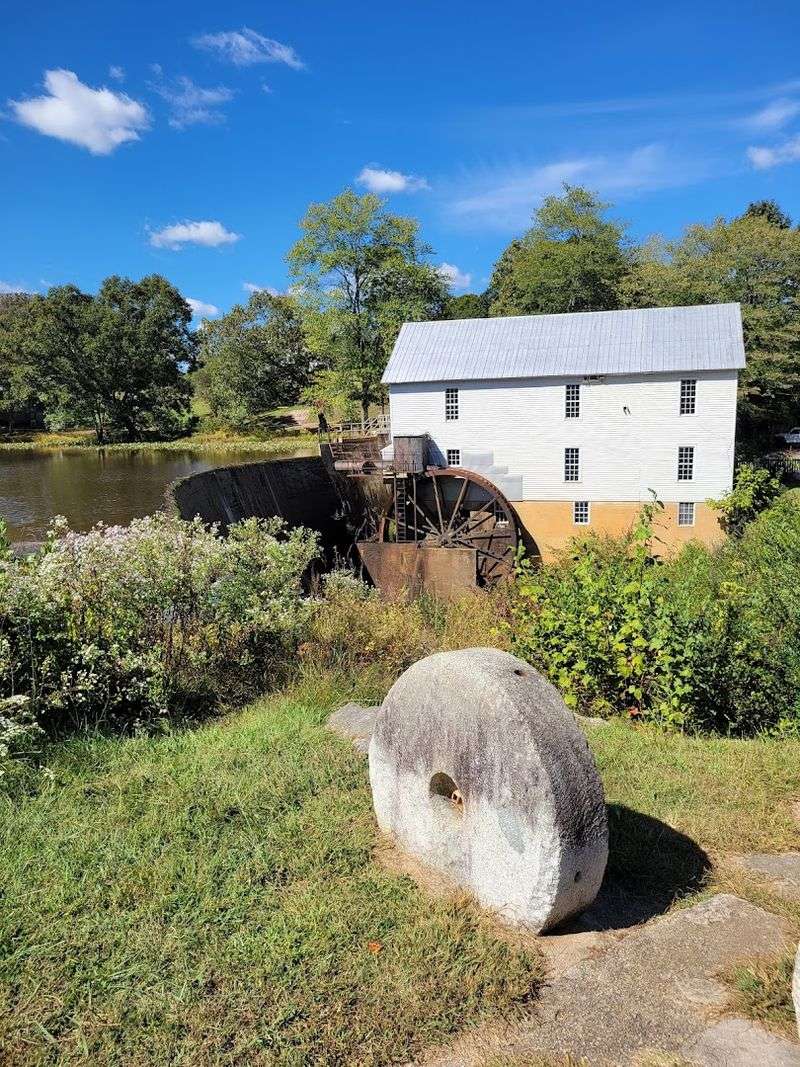
The story of Murray’s Mill is really the story of one family’s commitment to serving their community across three generations. The Murray family operated the mill from its construction in 1913 until they closed the doors in 1967, a span of more than five decades during which the mill served as the economic and social backbone of the surrounding rural area.
What is remarkable about this legacy is not just the longevity of the operation but the way the family maintained the equipment and the surrounding buildings with enough care that the Catawba County Historical Association was able to step in and preserve the complex when operations ended. Restoration work began in 1980, and the site officially opened to the public in 1988 with a ceremony attended by Governor James G.
Martin.
The exhibit gallery in the 1880s Wheat House provides context for the family’s history and the broader story of rural milling in the North Carolina Piedmont. Reading through the timeline of the Murray family’s work gives you a genuine appreciation for the kind of sustained community effort that keeps a local economy running across generations.
The site also has wonderful neighbors and supporters who continue to protect the surrounding land from the kind of development that has changed so much of the state in recent decades.
What to Know Before You Make the Trip
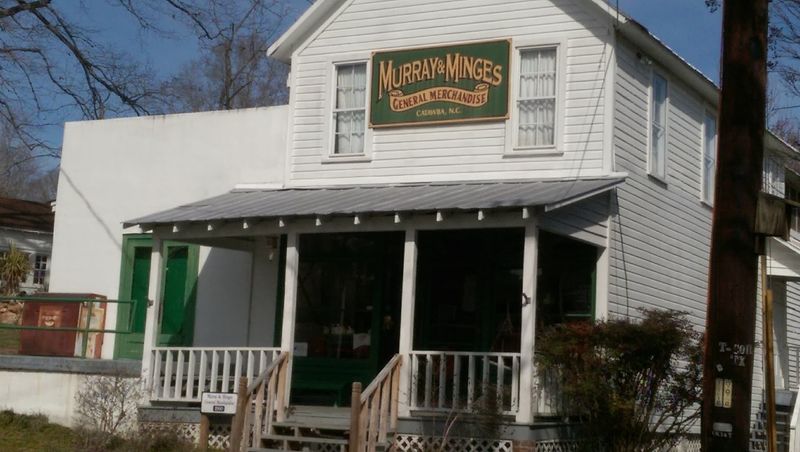
A few practical details can make the difference between a smooth visit and a frustrating one at Murray’s Mill. The General Store is open Tuesday through Friday from 10 AM to 5 PM, Saturday from 9 AM to 5 PM, and Sunday from 1 to 5 PM.
The grounds themselves are accessible during daylight hours, so an early morning walk around the pond is possible even outside of store hours.
Restrooms are available inside the General Store during business hours, and there is a portable facility near the store for times when the building is closed. If restroom access is a concern for anyone in your group, it is worth timing your visit to coincide with store hours.
Parking is available on site, though visitors with larger vehicles should be aware that turning around in certain areas of the property can be a tight maneuver.
The self-guided tour folder is available at the General Store and is well worth picking up before you start walking. Cell service in the area is generally adequate but not always strong, so downloading a map or directions before you leave is a smart move.
The site also welcomes RV visitors through the Harvest Host program, which requires a membership but offers a genuinely memorable overnight experience on historic grounds.
Why This Mill Deserves a Spot on Your North Carolina Bucket List
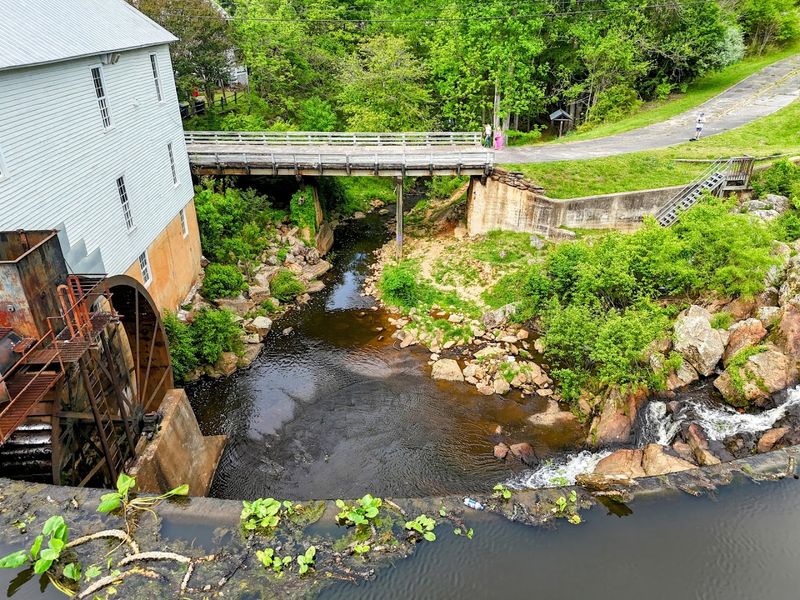
Murray’s Mill holds a 4.8-star rating across nearly a thousand reviews, and that kind of consistent praise from a broad range of visitors tells you something meaningful about the quality of the experience. Families, history enthusiasts, photographers, cyclists, RV travelers, and school groups all find something worth their time here, which is not something you can say about every historic site.
The combination of genuine historical significance, beautiful natural surroundings, affordable admission, and warm community hospitality makes this place stand out even in a state as rich in heritage destinations as North Carolina. There is no equivalent to the Murray’s Mill complex anywhere else in Catawba County, and the effort that has gone into preserving it reflects a community that genuinely values its past.
For travelers who are accustomed to destinations like the grand heritage parks of Oklahoma or the polished historic districts of larger cities, Murray’s Mill offers something refreshingly different. It is modest in scale, honest in presentation, and deeply rooted in the specific story of one place and one family.
That authenticity is increasingly rare, and it is exactly what makes a visit here feel less like a tourist activity and more like a genuine connection to a way of life that deserves to be remembered and celebrated.
Share this story