There is a small restaurant in the western suburbs of Chicago where the food tastes like it was made by someone who genuinely loves to cook. The buffet trays stay full, the staff knows your water glass should never be empty, and the whole place feels like it has been frozen in a very good moment in time.
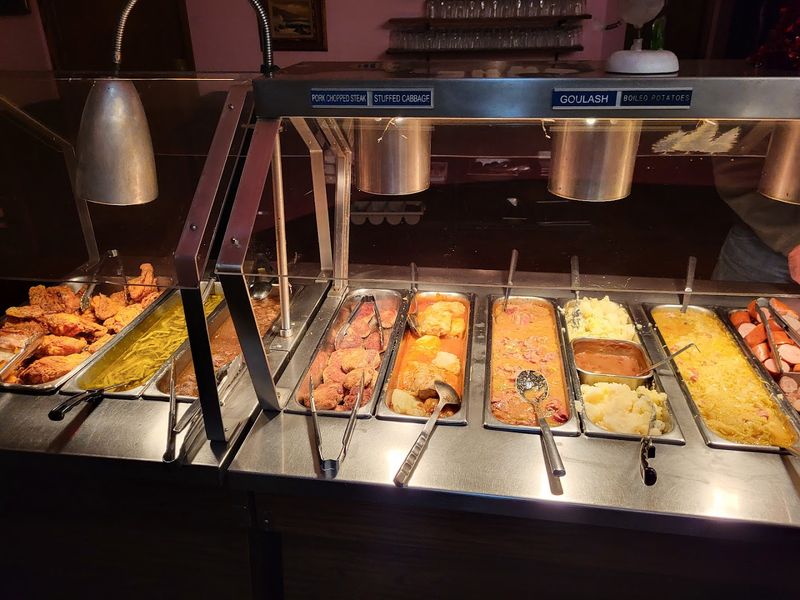
Cabbage rolls, potato pancakes, and pierogis sit under warming lights, and the smell alone is enough to pull you straight through the door. Once you eat here, you will understand why people drive from Wisconsin, from the far northwest suburbs, and even from out of state just to sit down at one of these tables.
A Broadview Landmark With Deep Chicago Roots
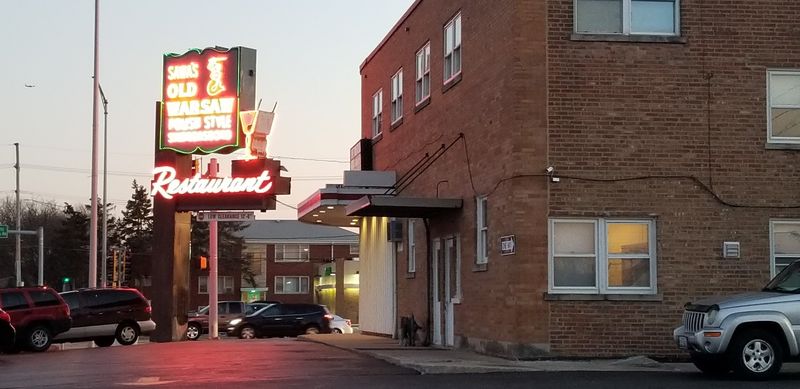
Few restaurants in the Chicago area carry as much history on their shoulders as this one. Sawa’s Old Warsaw Restaurant sits at 9200 W Cermak Rd in Broadview, Illinois 60155, just a short drive west of the city, and it has been feeding loyal customers since 1973.
The original location stood at Harlem and Lawrence, and when the move to Broadview happened, the owners brought everything with them, including the sign, the decor, and the unmistakable atmosphere that made the first spot so beloved.
That kind of commitment to continuity is rare. Most restaurants that relocate lose something in the process, whether it is the feel of the room or the trust of the regulars.
Sawa’s managed to hold onto both.
The phone number is +1 708-343-9040, and you can find more details at sawasoldwarsaw.com. The restaurant earns a strong 4.5 stars across more than 2,000 reviews, which tells you everything about how consistently it delivers on its promise of honest, homemade Polish food.
The Buffet That Keeps on Giving
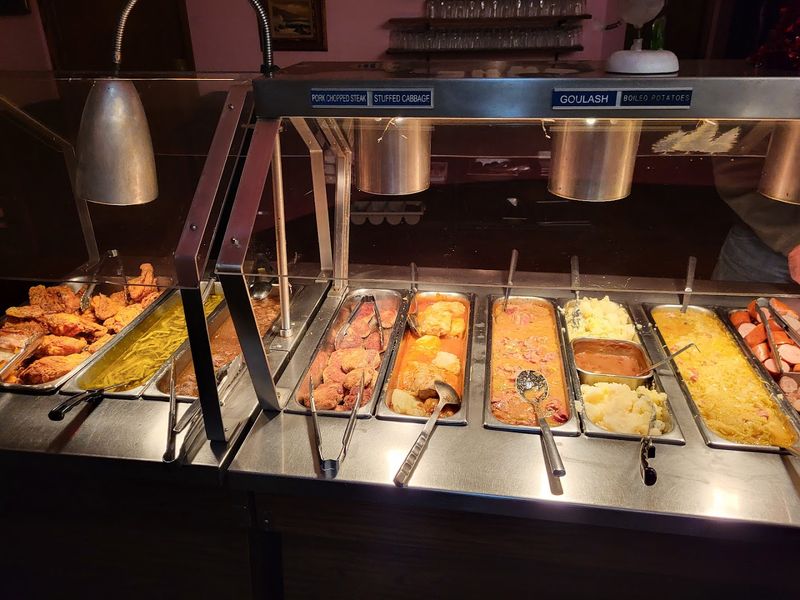
The buffet at Sawa’s is the main event, and it earns that title every single visit. The trays are kept stocked with fresh food throughout service, and the staff takes restocking seriously enough that you rarely see an empty pan sitting there for long.
Classic Polish staples anchor the spread. Pierogis, stuffed cabbage rolls, potato pancakes, smoked kielbasa, sauerkraut, and blintzes rotate through the lineup alongside mashed potatoes, fried chicken, and a solid salad bar.
What makes this buffet stand out from a standard all-you-can-eat setup is the care behind the cooking. The sauerkraut soup has won over people who claimed they did not even like sauerkraut.
The meatballs in dill sauce on Tuesday are worth planning your week around.
Desserts round things out nicely, with options like apple blintzes and jello slices that feel like a genuine finishing touch rather than an afterthought. The variety changes enough between visits that regulars always find something new to try alongside their old favorites.
The Atmosphere That Turns Back the Clock
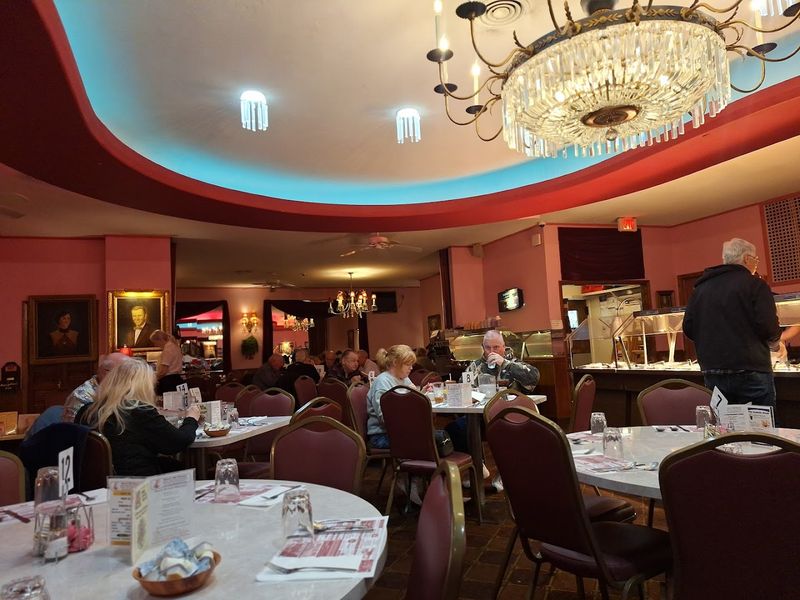
The inside of Sawa’s is dark, windowless, and decorated in a style that has not changed much since the 1980s. That sounds like it could be a criticism, but in practice it feels more like a feature than a flaw.
The dim lighting and vintage decor create a mood that is genuinely hard to manufacture. Newer restaurants spend enormous amounts of money trying to recreate this kind of warmth, and most of them fall short.
Here, it simply exists because it was never replaced.
Some visitors describe the vibe as resembling a time capsule. Others say it gives off faint casino energy with the low lighting and close quarters.
Both descriptions capture something real about the room.
What everyone agrees on is that the atmosphere wraps around you in a way that makes you want to slow down and stay awhile. The crowd is diverse and cheerful, the noise level is comfortable, and the whole experience carries a distinctly old-school European family feel that you do not find at chain restaurants.
It is the kind of room where conversations last longer than expected.
Potato Pancakes That Deserve Their Own Fan Club
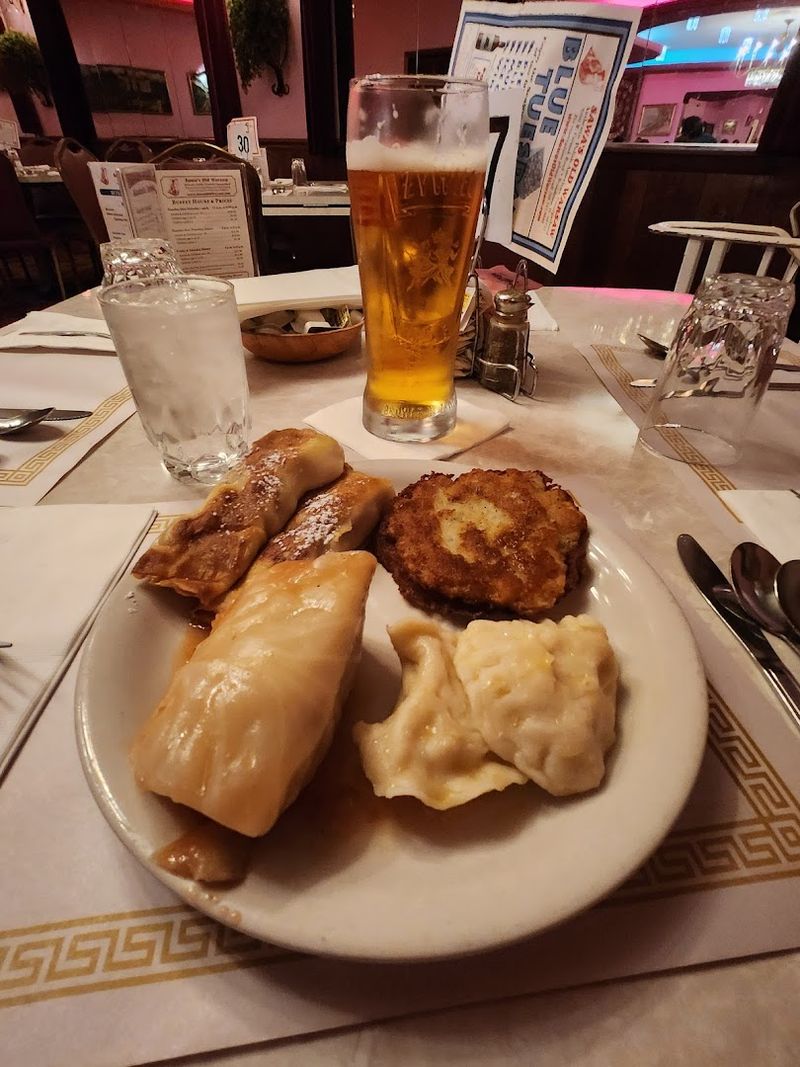
Ask almost anyone who has eaten at Sawa’s what they loved most, and potato pancakes come up almost immediately. These are not the pale, soft versions you might find at a diner.
These arrive golden, crispy at the edges, and satisfying in a way that is hard to describe without sounding dramatic.
The recipe tastes like it has not changed in decades, which is exactly the point. Long-time customers who ate here forty years ago at the original Harlem and Lawrence location say the potato pancakes taste identical to what they remember from childhood.
That kind of consistency is not accidental. It takes discipline to maintain a recipe across decades and locations without letting shortcuts creep in.
Sawa’s has clearly held the line on that front.
First-timers often find themselves going back to the buffet for a second or third helping of these before they even finish their first plate of everything else. They are the kind of food that makes you reconsider your plans for the rest of the afternoon, because a nap after lunch suddenly sounds very reasonable.
Pierogis, Cabbage Rolls, and the Comfort of Familiar Flavors
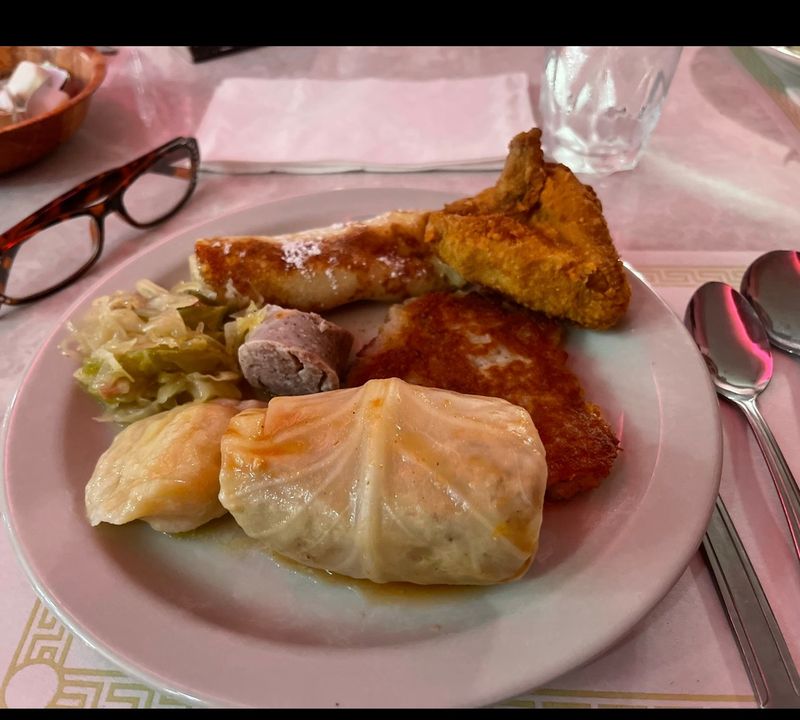
Pierogis and stuffed cabbage rolls are the twin pillars of Polish comfort food, and Sawa’s treats both with the respect they deserve. The pierogis are soft and filled generously, best enjoyed with a spoonful of sour cream and a few sauteed onions on top.
The stuffed cabbage rolls, known in Polish as golabki, are the kind that remind people of their grandmothers. The filling is hearty, the cabbage is tender without falling apart, and the sauce ties everything together in a way that feels genuinely homemade rather than mass-produced.
Not every version of these dishes at every Polish restaurant hits the mark. At Sawa’s, the cabbage rolls in particular draw consistent praise from visitors who grew up eating Polish food and know exactly what they are looking for.
There is something quietly powerful about food that connects people to their past. A few bites of a well-made cabbage roll can bring back a grandmother’s kitchen, a holiday table, or a neighborhood that no longer exists in quite the same way.
Sawa’s understands that, and it shows in every tray on that buffet line.
Service With an Old-World Sensibility
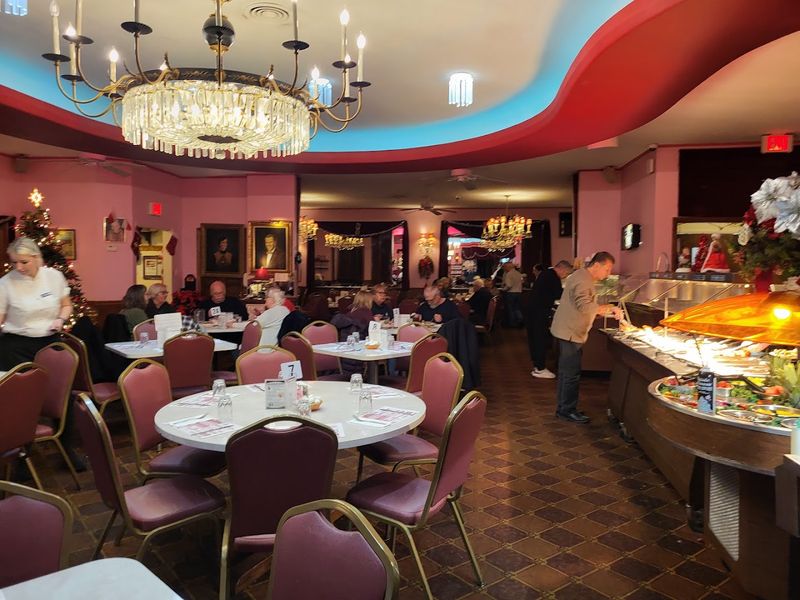
The service at Sawa’s carries a personality that matches the decor. It is attentive in the way that old-school European family restaurants tend to be, where your water glass does not sit empty for long and the staff actually talks to you like a person rather than a table number.
Several visitors have mentioned specific servers by name in their reviews, which is always a sign that the front-of-house team is doing something right. That level of personal connection is increasingly rare in casual dining.
The staff is known for giving new customers a thorough rundown of how the buffet works, what is available, and what they personally recommend. It is a small touch, but it makes first-timers feel oriented rather than overwhelmed.
Like any restaurant, Sawa’s has had the occasional off night. A few reviews mention servers who seemed stretched thin or less engaged.
But the overall picture painted by more than 2,000 ratings is one of genuine hospitality, the kind that makes you feel like a welcome guest rather than just another customer moving through the line. That warmth is part of what keeps people coming back year after year.
Smoked Sausage and the Simple Joy of Kielbasa Done Right
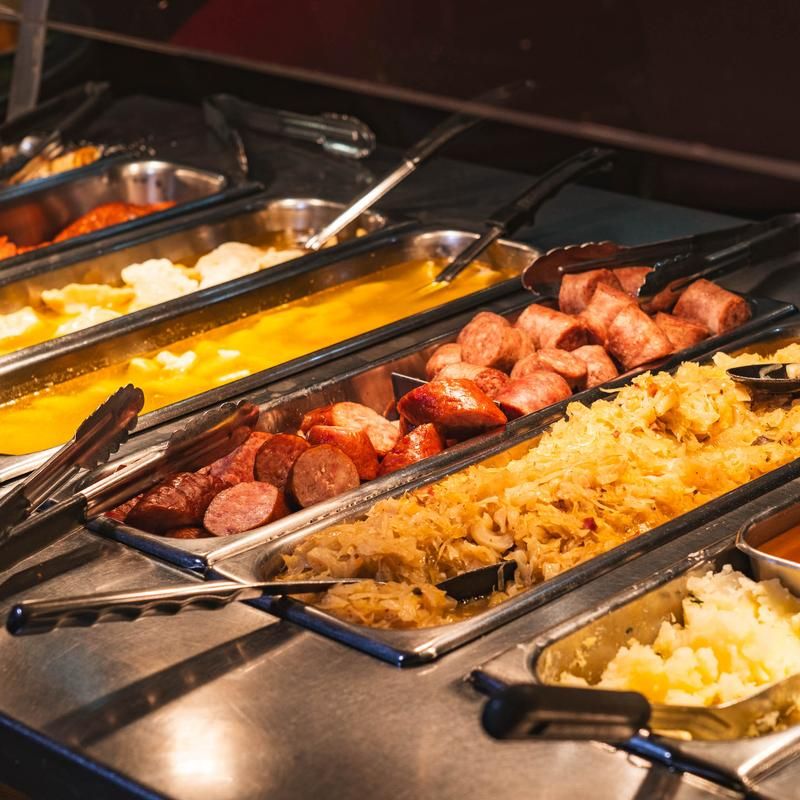
Kielbasa is one of those foods that sounds simple on paper but varies enormously depending on who is making it and how. At Sawa’s, the smoked Polish sausage is consistently called out as a highlight by visitors who know their way around a Polish kitchen.
The sausage arrives with that characteristic snap when you bite into it, and the smokiness is present without being overpowering. Paired with a side of sauerkraut, it is one of the most satisfying combinations on the entire buffet.
Polish sausage has been a staple of Chicago-area cuisine for generations, given the city’s deep ties to Polish immigrant communities. Eating it at a restaurant that has been serving it since 1973 adds a layer of context that makes the meal feel like more than just lunch.
The kielbasa at Sawa’s is best enjoyed hot, right after the tray has been refreshed. The staff turns over the buffet regularly enough that catching a fresh batch is not difficult.
When you do, the difference between warm and just-out-of-the-pan sausage is immediately obvious and absolutely worth the timing.
Hours, Pricing, and Everything You Need to Plan Your Visit
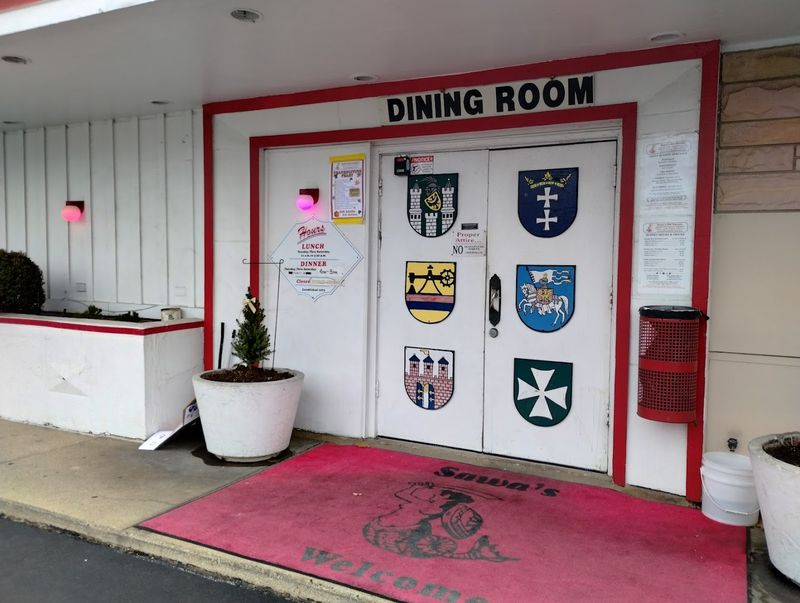
Sawa’s Old Warsaw Restaurant is open Tuesday through Saturday from 11 AM to 8 PM. The restaurant is closed on Sundays and Mondays, so planning ahead is worth the two minutes it takes to check the schedule before you make the drive.
The pricing lands in the moderate range, marked as $$ on most review platforms. For a full buffet that includes soup, salad, main dishes, and dessert, most visitors find the value genuinely strong.
Paying in cash gets you a small discount, which is a nice perk if you plan ahead.
The restaurant is not enormous, so arriving during peak lunch hours on a Saturday means you might wait briefly for a table. That said, the turnover moves at a comfortable pace and the wait is rarely discouraging.
Dress code is casual but not completely open-ended. A sign at the entrance requests that guests avoid overalls and sleeveless shirts, which is a charmingly old-fashioned touch that fits the overall personality of the place perfectly.
Come hungry, bring some cash, and arrive knowing that you will probably want to sit longer than you originally planned.
A Place That People Drive Hours to Reach
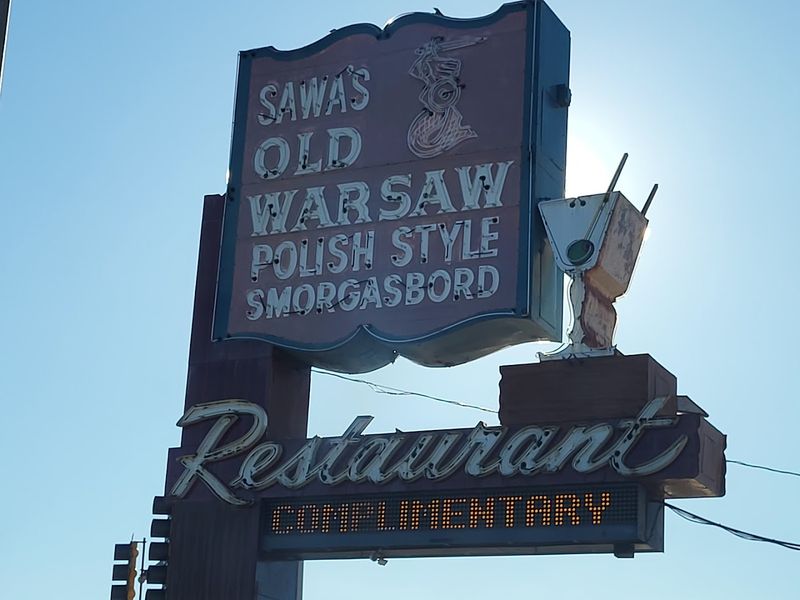
One of the most telling things about Sawa’s is where its customers come from. Reviews mention visitors driving in from Wisconsin, from the northwest suburbs, and from across the greater Chicago region.
People who have moved out of Illinois entirely say they make a point of stopping by whenever they are back in town.
That kind of loyalty does not happen by accident. It builds over decades of consistent food, consistent service, and a consistent atmosphere that people associate with specific memories and specific feelings.
The restaurant draws a genuinely diverse crowd, which is something regulars seem to take quiet pride in. On any given afternoon, you might be seated near a table of elderly Polish-American regulars, a group of twenty-somethings who found the place on social media, and a family celebrating something low-key and meaningful.
All of them are there for essentially the same reason: food that tastes like it was made for someone rather than for a crowd. That is a harder thing to achieve than it sounds, and Sawa’s has been achieving it for more than fifty years.
The drive, however long it takes, tends to feel worth it before the first plate is even finished.
Why Sawa’s Has Outlasted Every Trend
Restaurants come and go at a pace that can feel disorienting. The average lifespan of a new restaurant is often cited as shockingly short, which makes Sawa’s fifty-plus-year run genuinely remarkable by any measure.
The secret, if there is one, is not complicated. The menu has not chased trends.
The decor has not been updated to match whatever aesthetic is popular on social media this season. The food has not been adjusted to appeal to a broader audience at the expense of its identity.
Sawa’s is a Polish buffet, and it has always been a Polish buffet. That clarity of purpose is increasingly unusual in an industry that often rewards novelty over consistency.
Regulars who have been coming for thirty or forty years say the food tastes the same as it always did. That is the highest possible compliment you can give a restaurant of this type.
It means the kitchen has resisted every temptation to cut corners, substitute ingredients, or drift away from what made the place worth visiting in the first place. In a world full of restaurants trying to be everything to everyone, Sawa’s has always known exactly what it is, and that has made all the difference.
Share this story