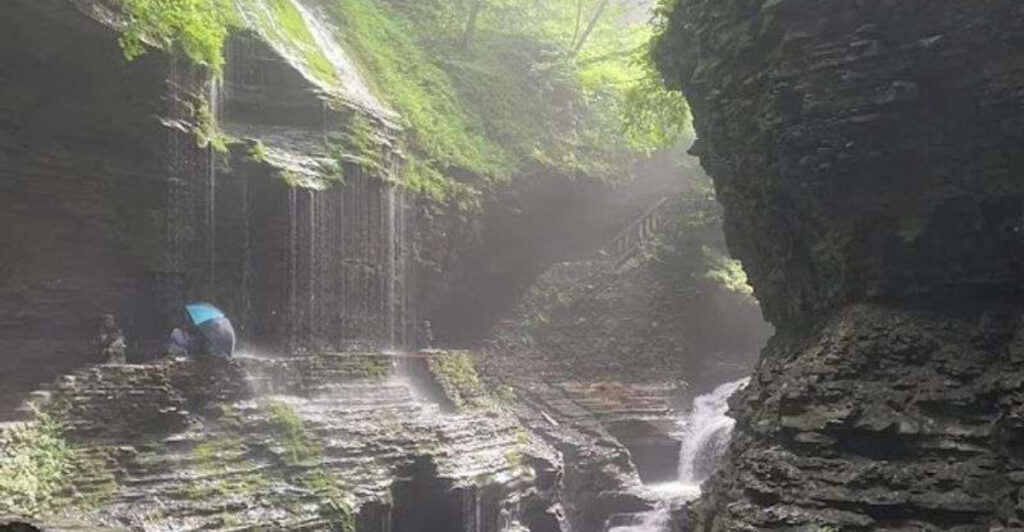
There is a place in the Finger Lakes region of New York where a gorge carved over thousands of years holds more than a dozen waterfalls packed into less than two miles of trail. The geology looks almost too dramatic to be real, with layered rock walls rising on both sides and water cutting through every curve.
Rainbow Falls is the crown jewel of that trail, a tall, curved cascade that draws hikers from across the country year after year. This article covers everything worth knowing before making the trip, from the best entry points and trail conditions to what makes this particular waterfall stand out from every other natural attraction in the state.
The Story Behind the Gorge
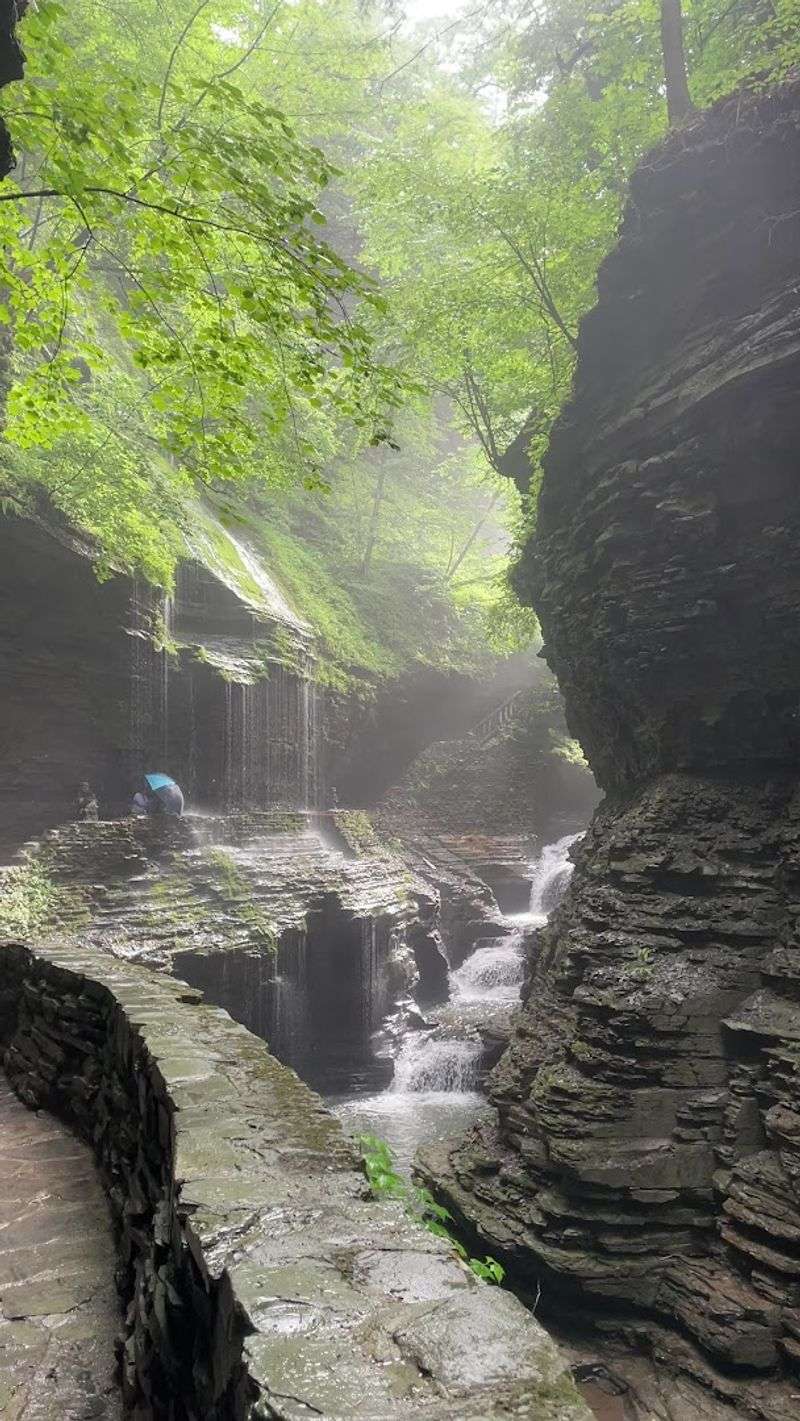
Watkins Glen Gorge was carved primarily by Glen Creek over thousands of years following the last glacial period. As glaciers retreated from the region, meltwater carved rapidly through the soft shale and sandstone bedrock, cutting the deep, narrow channel that hikers walk through today.
The result is a gorge that drops roughly 400 feet in elevation over about 1.5 miles, with 19 waterfalls lining the route. The layered rock walls, some rising more than 200 feet, are a direct record of ancient lake and sea deposits that accumulated hundreds of millions of years ago.
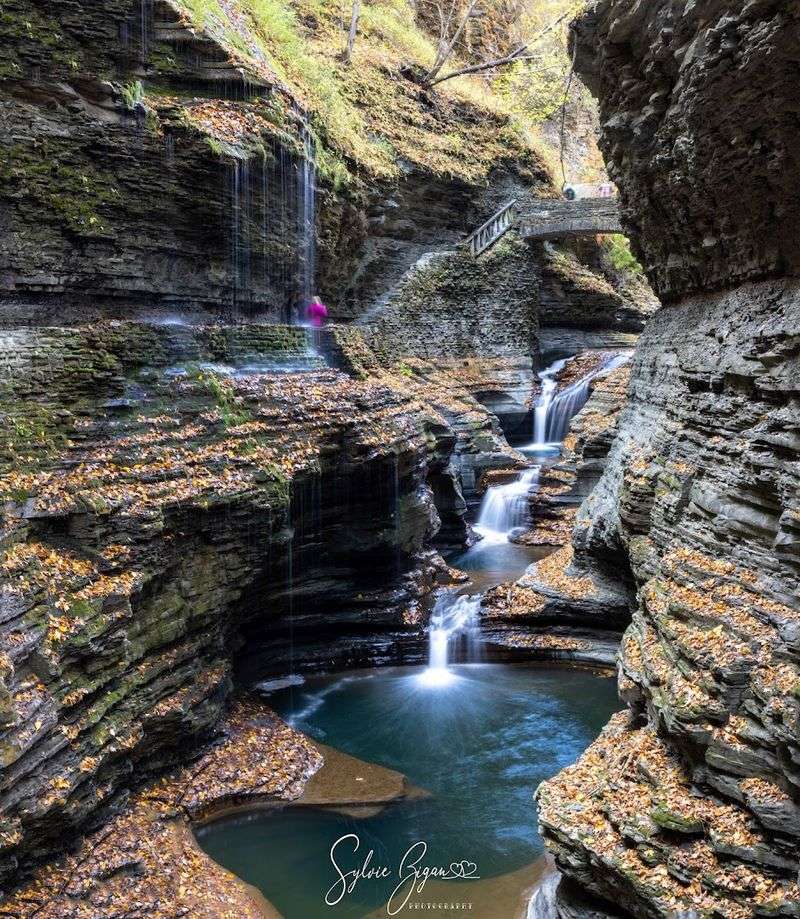
Rainbow Falls is one of the most photographed points along that route, positioned about halfway through the Gorge Trail. The waterfall gets its name from the way light interacts with the mist rising off the cascade, though the full effect depends on time of day and season.
The history carved into those walls is genuinely hard to overstate.
What the Gorge Trail Looks Like
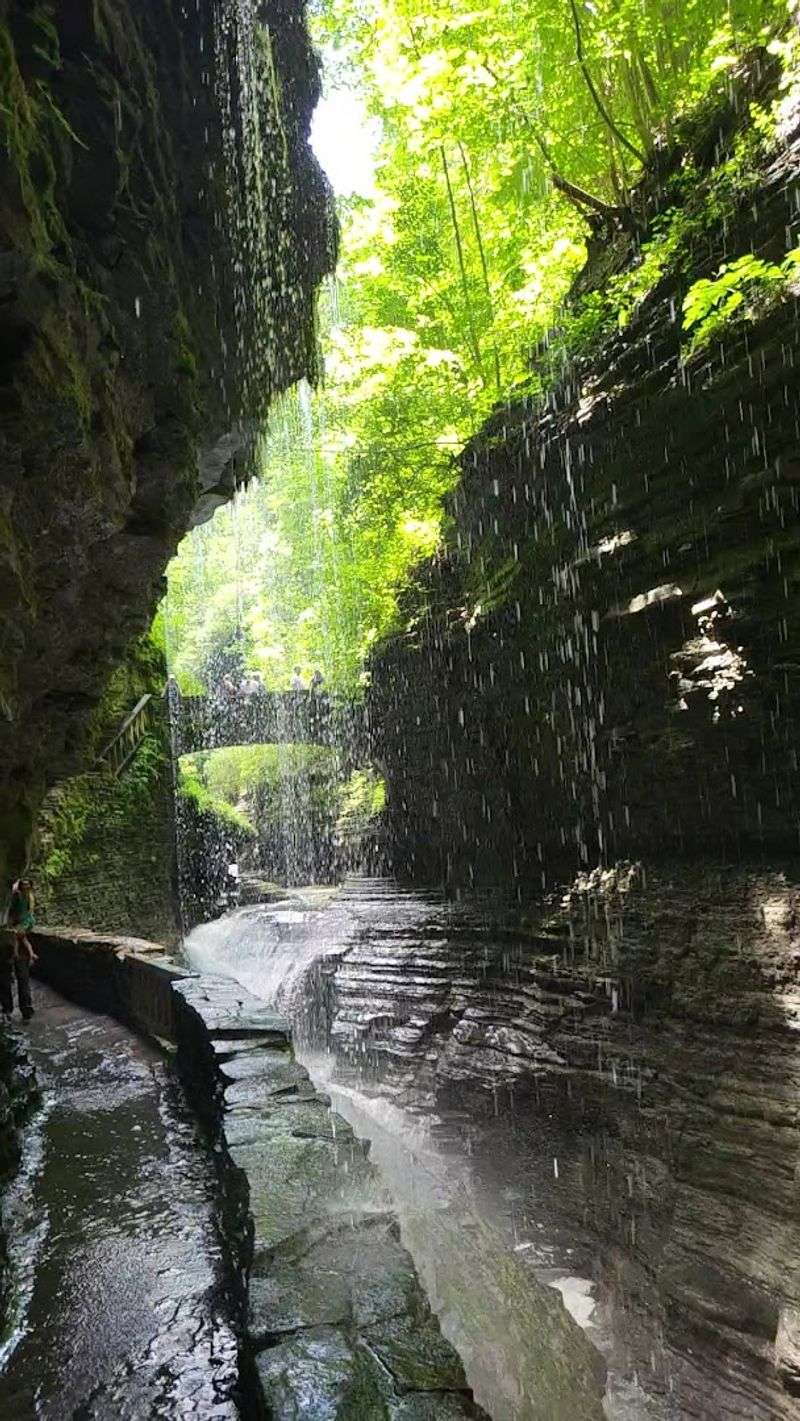
The Gorge Trail at Watkins Glen is one of the most well-maintained natural paths in the northeastern United States. Stone steps, carved directly into the rock or built from masonry, guide hikers through the canyon floor, past tunnels cut through solid rock, and over footbridges that span the creek below.
The trail runs approximately 1.5 miles one way, with the option to loop back using the South Rim or North Rim trails above the gorge. Many hikers choose to enter from the south entrance and walk the gorge floor on the way in, then return along a rim trail for a different perspective.
Trail conditions vary with rainfall. After heavy rain, sections near the waterfalls become wet and slippery, which is worth factoring into footwear decisions.
Waterproof hiking shoes are consistently the most recommended gear for this route, regardless of the weather forecast on the day of the visit.
Rainbow Falls Up Close
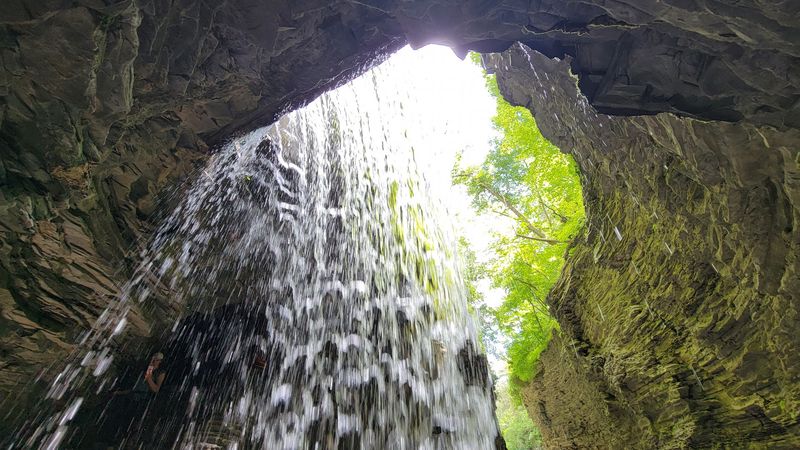
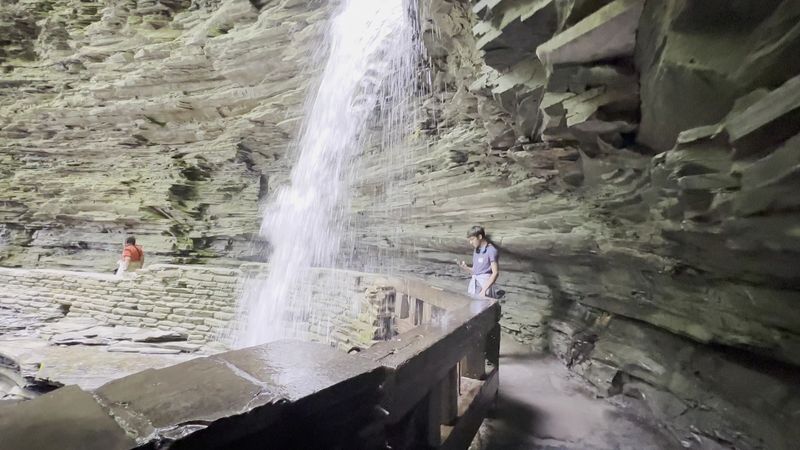
Rainbow Falls is a tall, fan-shaped cascade that drops over a curved rock face and spreads as it falls, creating a wide sheet of water that catches light at certain angles during the day. The surrounding rock walls frame it tightly, making the space feel enclosed and dramatic in a way that photographs rarely fully capture.
The falls are located roughly 20 minutes from the main entrance at a moderate walking pace, depending on how often a person stops along the way. Most of the trail leading up to this point already includes several smaller waterfalls, so by the time Rainbow Falls comes into view, the gorge has already delivered quite a bit.
The steps near the base of Rainbow Falls are almost always wet, and the rock surface around them is consistently slippery. Gripping the handrails and taking deliberate steps is the standard approach, and it works well for most people who come prepared.
All 19 Waterfalls on the Route
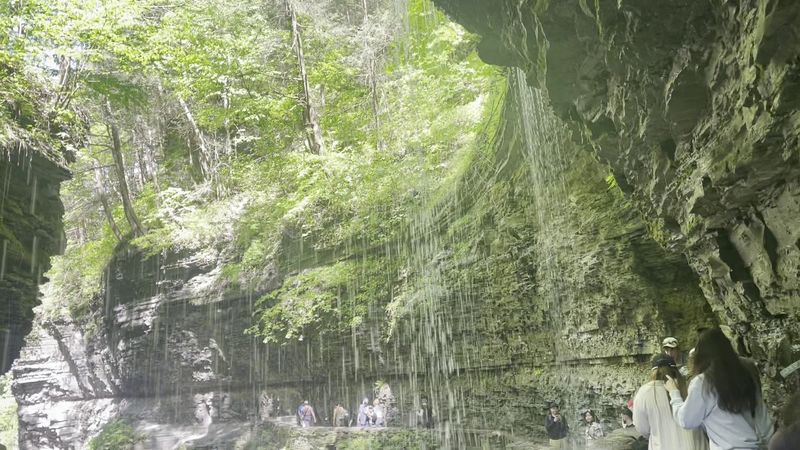
One of the things that makes Watkins Glen Gorge genuinely unusual is the sheer number of waterfalls packed into such a short distance. The Gorge Trail passes by 19 named and unnamed falls, ranging from thin ribbons of water trickling over mossy ledges to full curtain-style cascades that span the width of the canyon.
Among the notable ones are Cavern Cascade, which passes through a tunnel cut into the rock, and Central Cascade, a tall vertical drop near the beginning of the trail that sets the tone for what follows. Rainbow Falls comes later and tends to draw the largest crowds, partly because of its size and partly because of its name.
Having 19 waterfalls in 1.5 miles means there is essentially never a dull stretch on this trail. Every bend in the gorge reveals something new, which is a large part of why the trail has earned such a strong reputation among hikers across the region and beyond.
How Difficult the Hike Really Is
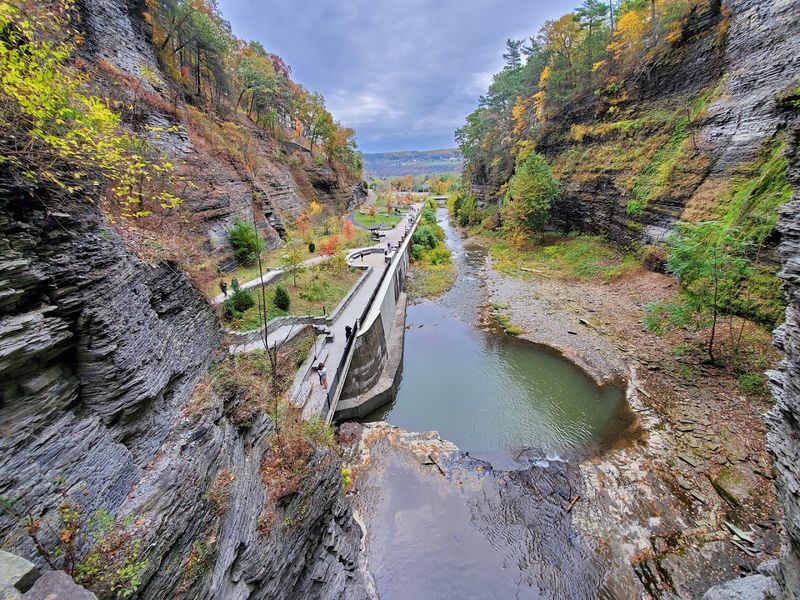
The Gorge Trail at Watkins Glen is generally described as moderate, though that classification can be misleading depending on a person’s physical condition and what they expect. The trail involves a significant number of stone steps, some steep sections, and stretches that require careful footing on wet surfaces.
The total elevation change from the south entrance to the north entrance is roughly 400 feet, spread across 1.5 miles. That is not extreme by hiking standards, but the combination of steps, uneven surfaces, and occasional wet patches makes it more demanding than a typical flat nature walk.
Older hikers and those with knee or joint concerns should factor in the descent, which can be harder on the body than the climb. Several people complete the most scenic lower sections without finishing the full loop, which is a perfectly reasonable approach.
The trail does not require a full commitment to be worth the trip.
Best Times to Visit the Falls
Early morning visits are consistently the best approach at Watkins Glen. The park opens early, and hikers who arrive by 7 or 7:30 a.m. often find the trail nearly empty, which makes the experience significantly more enjoyable.
By mid-morning on warm weekends, the gorge can become crowded enough to slow progress on the narrow path.
Spring tends to bring the highest water volume to the falls, making the cascades more dramatic. Summer is the most popular season overall, with warm temperatures and longer daylight hours drawing the largest number of visitors.
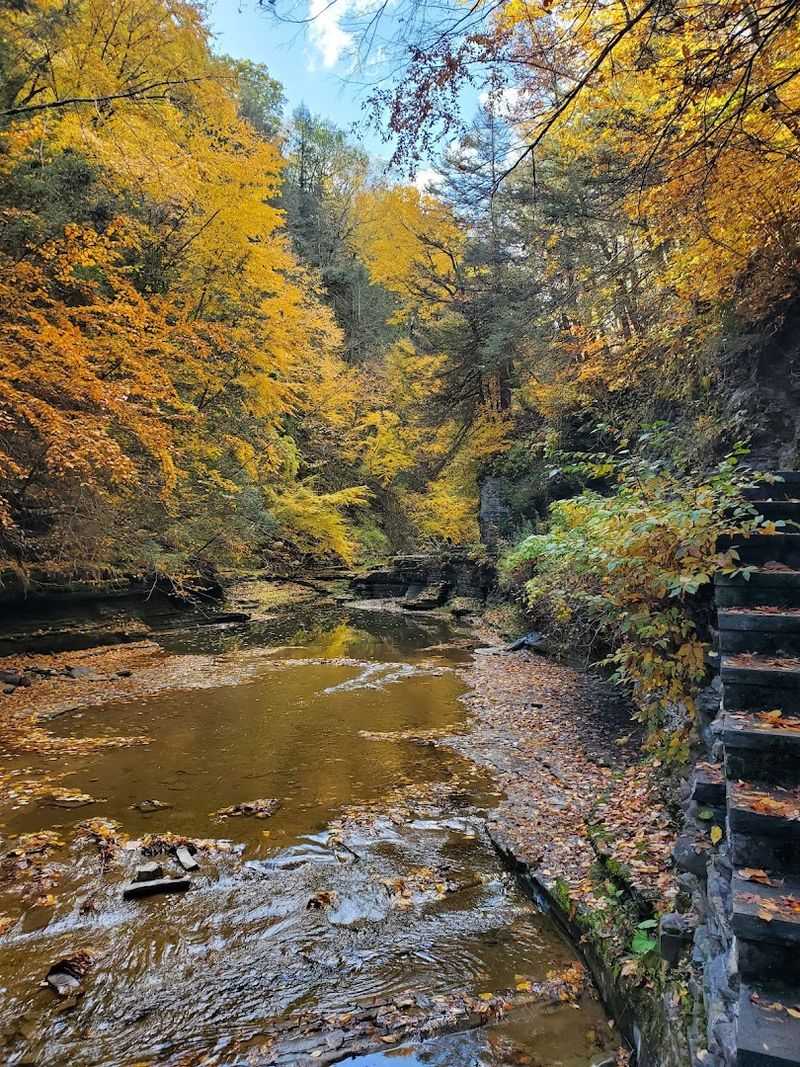
Fall offers a different kind of appeal, with foliage color adding contrast to the gray rock walls.
Winter visits are possible but require extra caution, as ice forms on the steps and rock surfaces. Late December visits have been reported as atmospheric and quiet, particularly in warmer-than-average years when the trail remains accessible.
Each season genuinely offers a different version of the same trail.
The Rock Formations Along the Way
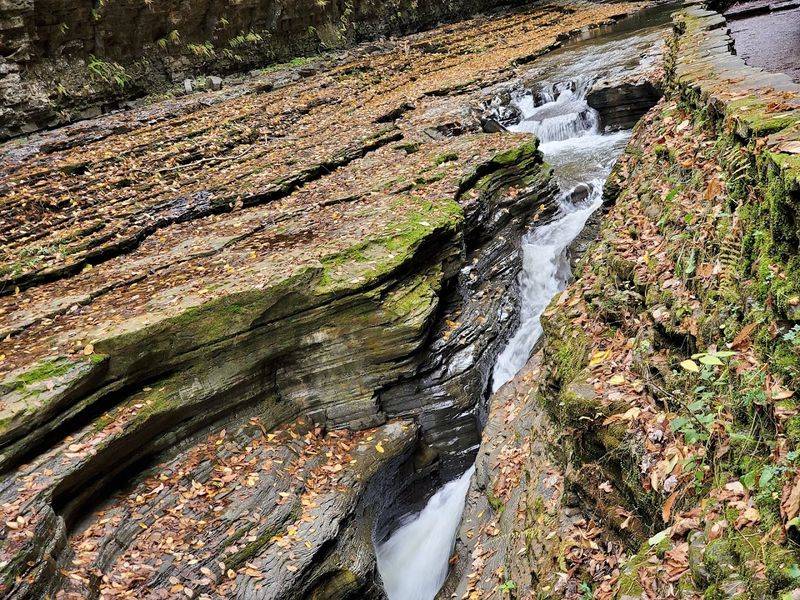
The geology of Watkins Glen Gorge is one of the most discussed aspects of the trail among people who have spent time there. The exposed rock walls reveal distinct horizontal layers of shale and sandstone, each representing a different period of sediment deposition from ancient inland seas that covered the region hundreds of millions of years ago.
Potholes, carved by swirling water and sediment over long periods, appear at various points along the creek bed and walls. These circular depressions show how water works as a slow but effective cutting tool over geological time.
Some potholes are large enough to be clearly visible from the trail without any close inspection.
The shapes carved into the rock by Glen Creek are part of what gives the gorge its almost constructed appearance. More than one person walking the trail has noted that the formations look almost too precise to be natural, though every detail is the product of water, time, and geology working together.
Trail Routes and Loop Options
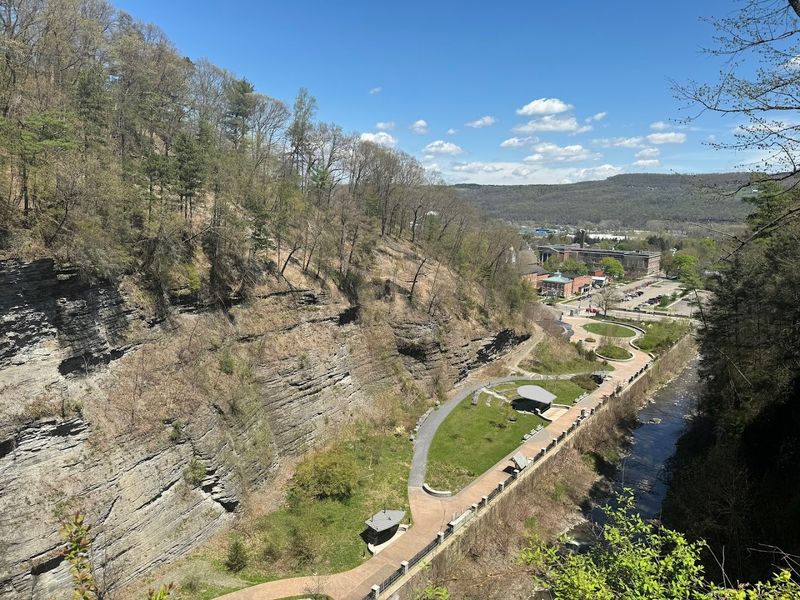
Watkins Glen State Park offers more than just the Gorge Trail. The South Rim Trail and North Rim Trail run along the top edges of the gorge, providing elevated views down into the canyon and a way to complete a loop without retracing the same path twice.
A common approach is to hike the Gorge Trail from the south entrance to the north entrance, then return via one of the rim trails. This covers the most scenic ground while avoiding the repetition of an out-and-back route.
The full loop, including the gorge floor and a rim return, takes most people between 90 minutes and two and a half hours depending on pace and stops.
Hikers who enter from the south entrance bypass the large staircase near the main north entrance, which some find easier on the legs. Both entrances connect to the same gorge floor trail, so the experience of the falls themselves is the same regardless of which end a person starts from.
What to Wear and Bring
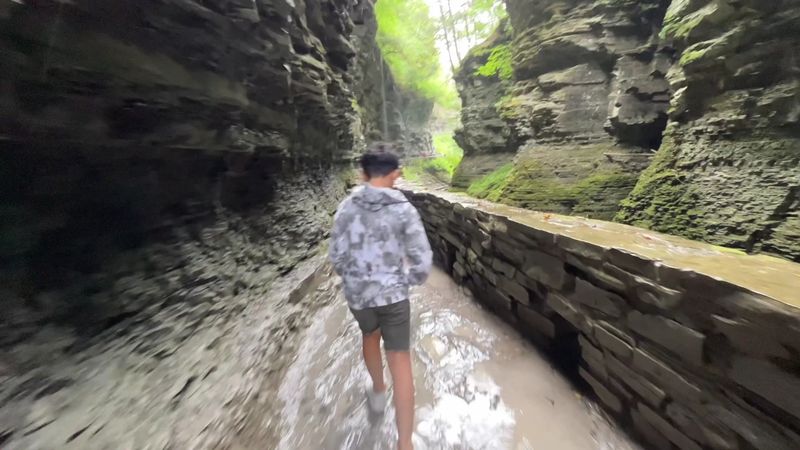
Footwear is the single most important gear decision for a visit to Watkins Glen Gorge. Waterproof hiking shoes or trail runners with solid grip are the standard recommendation, and they make a genuine difference on the wet stone steps near the waterfalls.
Flip flops and smooth-soled sneakers create real footing problems on the slick surfaces.
Clothing should account for the fact that mist from the falls can dampen anything within a few feet of the cascades. A light waterproof layer over regular clothes handles this without adding much weight to carry.
In cooler months, an extra layer is worth packing since the gorge stays noticeably cooler than the surrounding area.
Water and snacks are worth bringing for longer visits, particularly if the plan includes both the gorge floor and a rim trail return. There are no food vendors inside the gorge itself.
A fully charged phone or a dedicated camera is also worth having, since the trail offers a high number of genuinely good photography spots.
Why Rainbow Falls Keeps Drawing People Back
Rainbow Falls has a 4.8-star rating from over 1,100 reviews, which puts it among the most consistently praised natural attractions in New York state. The numbers reflect something real: this is a place that delivers on its reputation across seasons, weather conditions, and visitor experience levels.
Part of the appeal is how accessible it is relative to what it offers. A moderate two-hour hike through a gorge lined with waterfalls and ancient rock formations is not a small thing, and yet the trail is manageable for a wide range of fitness levels.
Families with older children, solo hikers, and groups all navigate it regularly.
The combination of geology, water, and trail quality creates an experience that is genuinely hard to replicate elsewhere in the region. People who visit once tend to come back, often bringing someone new who has not seen it yet.
That pattern of return visits says more about the place than any single description could.
Where Rainbow Falls Actually Is
Rainbow Falls sits along the Gorge Trail inside Watkins Glen State Park, located at Gorge Trail, Watkins Glen, NY 14891, in the Schuyler County region of the Finger Lakes in New York state. The park is managed by the New York State Office of Parks, Recreation and Historic Preservation, and more information can be found at parks.ny.gov.
The town of Watkins Glen itself is a small community at the southern tip of Seneca Lake, roughly 90 miles southwest of Syracuse and about 55 miles south of Ithaca. Getting there is straightforward whether you are coming from the north or south on Route 14.
Parking is available near the main entrance and the south entrance, though weekend mornings fill up fast. Arriving before 8 a.m. is the most reliable way to secure a spot and start the trail before the afternoon crowds arrive.
Share this story