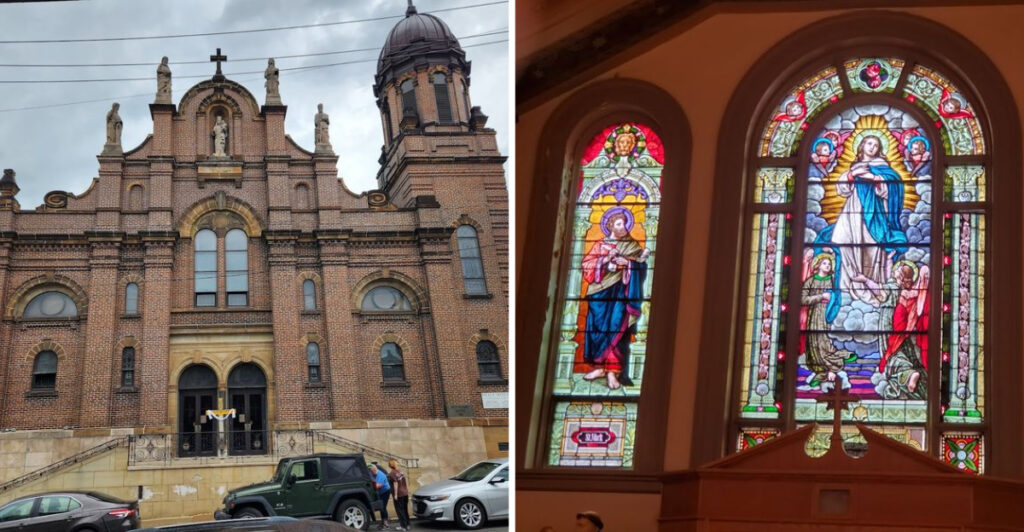
There are places that hold a city’s memory in their walls, and this one is undoubtedly among Cleveland’s most meaningful. Built in 1908 by Italian immigrants who poured their faith and hard work into every stone, it became the first Italian Catholic parish established by and for the city’s Italian community.
Tucked into the heart of the historic Little Italy neighborhood, it has outlasted generations, weathered enormous cultural change, and continues to fill its pews every Sunday. Whether you are drawn by remarkable architecture, a rich immigrant legacy, or the famous Feast of the Assumption that transforms the surrounding streets each August, this landmark offers far more than a typical sightseeing stop.
Keep reading to discover why it remains one of Cleveland’s most treasured historic places.
The Address That Anchors Little Italy
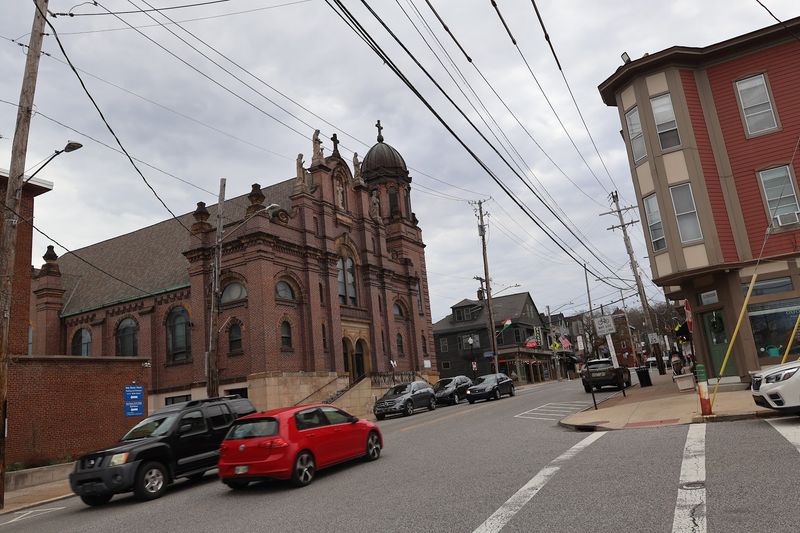
Holy Rosary Church stands at 12021 Mayfield Rd, Cleveland, OH 44106, right in the heart of the Murray Hill neighborhood that Clevelanders have called Little Italy for well over a century. The address itself tells part of the story.
Mayfield Road is the main artery of this tight-knit community, lined with bakeries, galleries, and restaurants that have served the neighborhood for generations.
The church does not hide behind trees or sit on a quiet side street. It rises confidently along the road, announcing itself with a presence that feels both rooted and proud.
Anyone passing through Little Italy naturally notices it.
Reaching the church is straightforward whether you are driving or taking public transit. Free parking is available behind the building, which is a welcome convenience in an area that can get busy, especially on weekends and during festival season.
How Cleveland’s First Italian Parish Came to Be
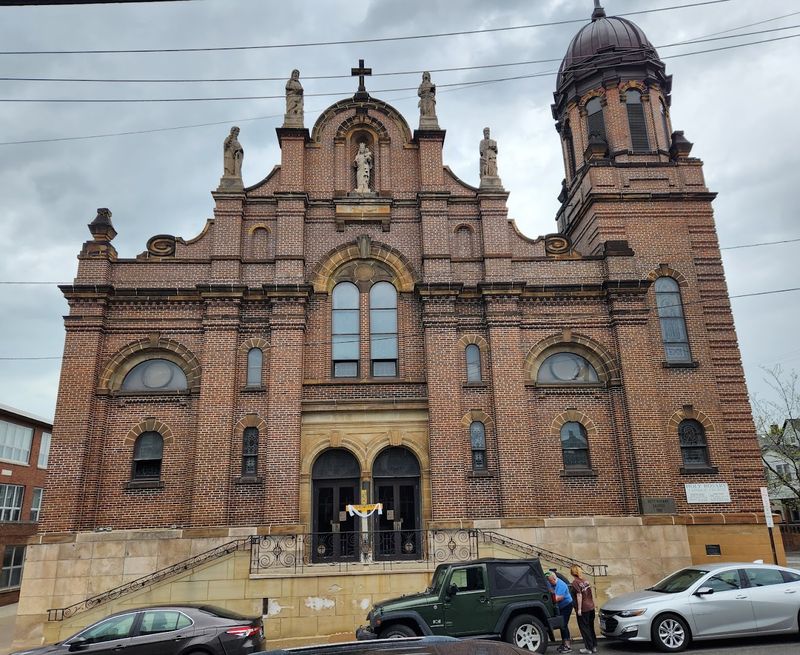
When Italian immigrants began settling in Cleveland’s Murray Hill area during the late 1800s, they brought their Catholic faith with them as one of the most important anchors of daily life. As the community grew, the need for a parish that reflected their language, traditions, and heritage became impossible to ignore.
Holy Rosary Church was formally established to serve that need, becoming Cleveland’s first Italian Catholic parish. Its founding was not just a religious milestone.
It was a declaration that this immigrant community had planted roots and intended to stay.
The church building that still stands today was constructed in 1908, with parishioners investing deeply in its creation. That sense of collective pride never faded.
Decades later, the building still carries the spirit of the people who built it, which is something you can almost feel the moment you walk through the front door.
A Building That Was Literally Built with Love
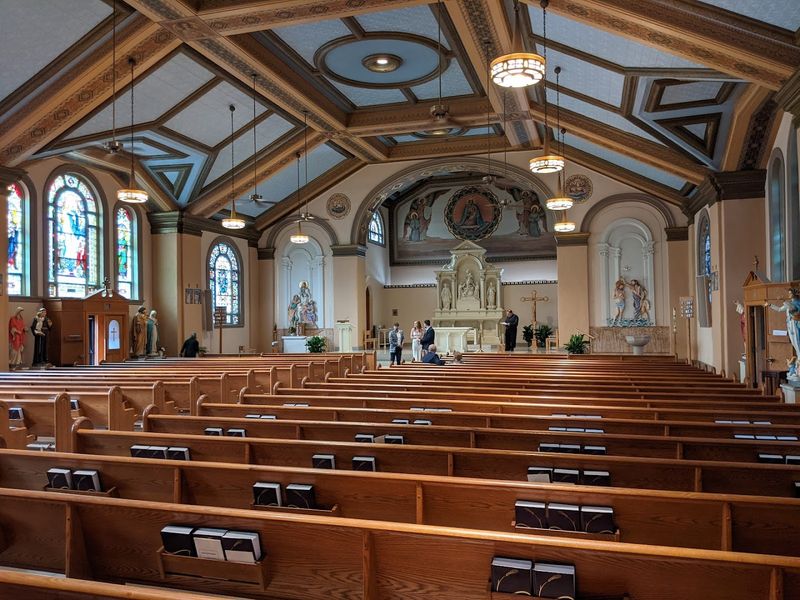
One reviewer captured it simply and perfectly: this church was built with love by its parishioners in 1908. That phrase sticks with you when you actually see the interior.
The craftsmanship on display is not the result of a generic construction project. It reflects a community that wanted their place of worship to be extraordinary.
The altar is shaped with careful detail, and the overall layout follows a traditional Catholic design that feels both dignified and welcoming. High ceilings draw your eyes upward, and the proportions of the space create a sense of reverence without feeling cold or intimidating.
Every element seems intentional. From the arrangement of the pews to the way light filters through the windows, the space rewards careful attention.
Visiting Holy Rosary is a reminder that architecture can carry emotional weight, and that a building constructed with genuine devotion communicates something words alone cannot fully express.
The Stained Glass That Stops People in Their Tracks
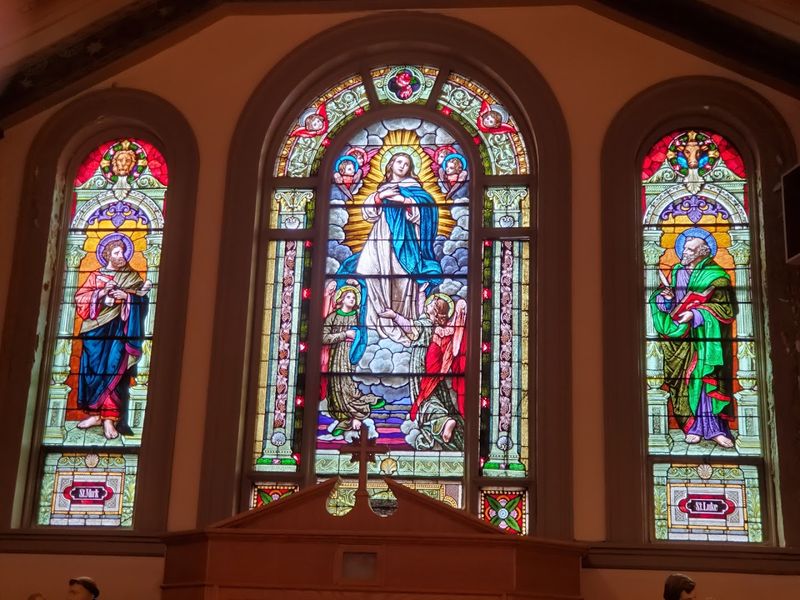
Among the many artistic details inside Holy Rosary, one stained glass window consistently catches people off guard: a depiction of St. John Bosco alongside his dog named Griggio. It is considered a rare piece of religious art, and for good reason.
Representations of St. John Bosco with Griggio are not commonly found in church windows across the country.
The window sits in the back of the church, and if you are not specifically looking for it, you might almost miss it. That would be a genuine loss.
The craftsmanship is impressive, and the subject matter gives the window a warmth that sets it apart from more conventional religious imagery.
Art lovers and history enthusiasts who visit Holy Rosary often mention this window as one of the most memorable details of the interior. It is a small discovery that rewards anyone who takes the time to look carefully at the full space.
The Feast of the Assumption Festival That Defines August in Little Italy
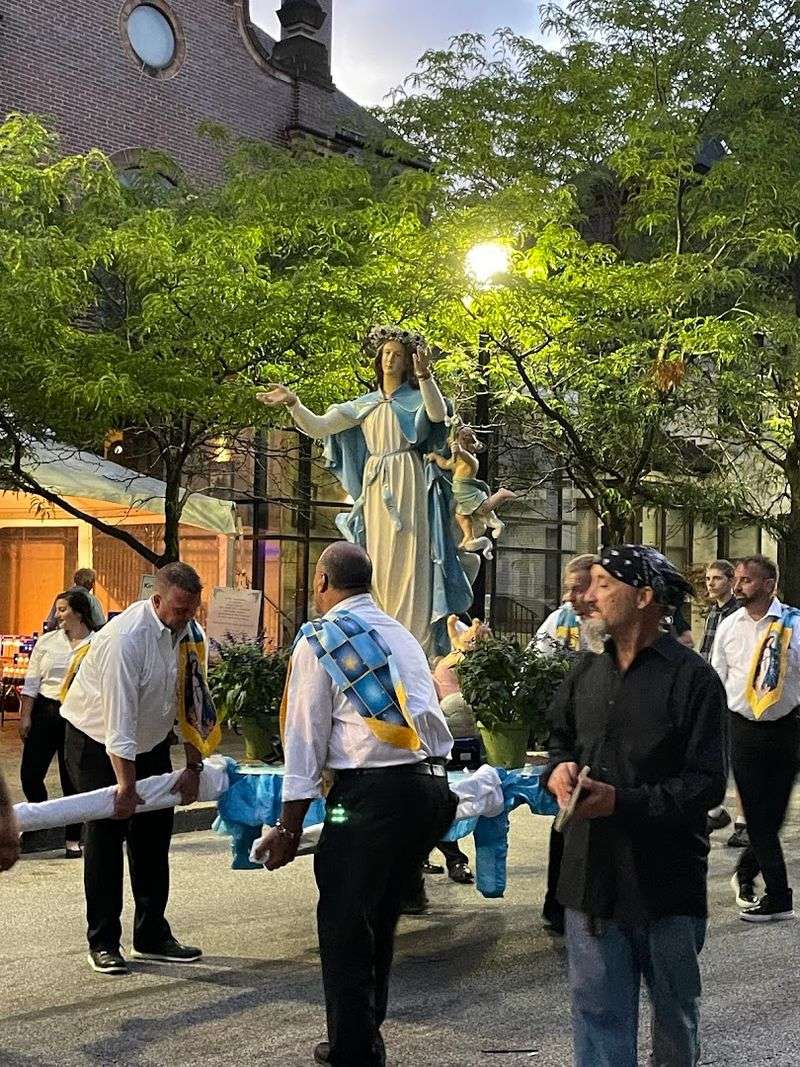
Every August, Holy Rosary Church anchors one of Cleveland’s most anticipated annual events: the Feast of the Assumption. The festival celebrates the Solemnity of the Assumption of Mary and transforms the streets surrounding the church into a lively gathering of food, music, and community tradition.
Italian food is the undeniable centerpiece. The aromas drifting through the neighborhood during the festival are enough to pull anyone in from blocks away.
Activities span all age groups, making it a genuinely inclusive event rather than one aimed at a single audience.
The festival’s signature moment is the procession, during which a statue of the Virgin Mary is carried through the streets of Little Italy on August 15th. The procession ties the religious meaning of the feast directly to the neighborhood itself, creating a moving public expression of faith that has defined this community for generations.
It is something worth planning a trip around.
Sunday Mass and What to Expect as a First-Time Visitor
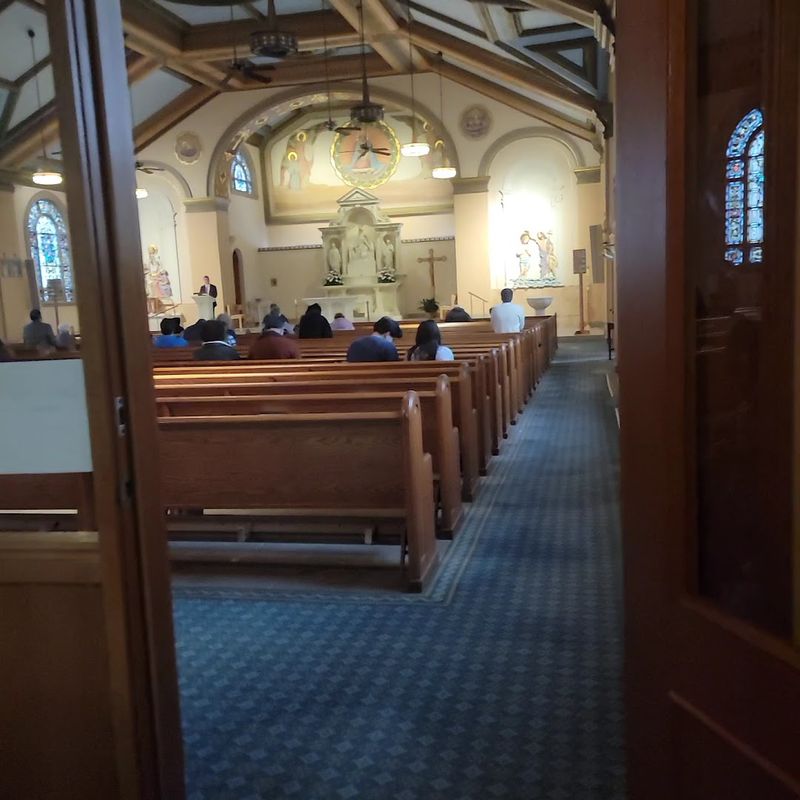
Holy Rosary offers multiple Sunday Masses, giving visitors flexibility depending on their schedules. Weekend services have included morning options around 9 AM and 11 AM, as well as an evening Mass at 8 PM on Sunday nights.
The evening Mass has developed its own loyal following, partly because of the classical music that accompanies the service.
First-time visitors consistently describe feeling welcomed rather than out of place. The parish community has a reputation for genuine friendliness toward newcomers, which makes attending Mass here a comfortable experience even if you have never visited before.
On some Sundays following the 11 AM Mass, the church has offered a free breakfast in the basement for those who attend. It is the kind of unexpected hospitality that leaves a lasting impression.
Anyone considering attending a service should confirm current Mass times directly with the parish, as schedules can vary throughout the liturgical year.
Biblical Art That Deserves More Than a Passing Glance
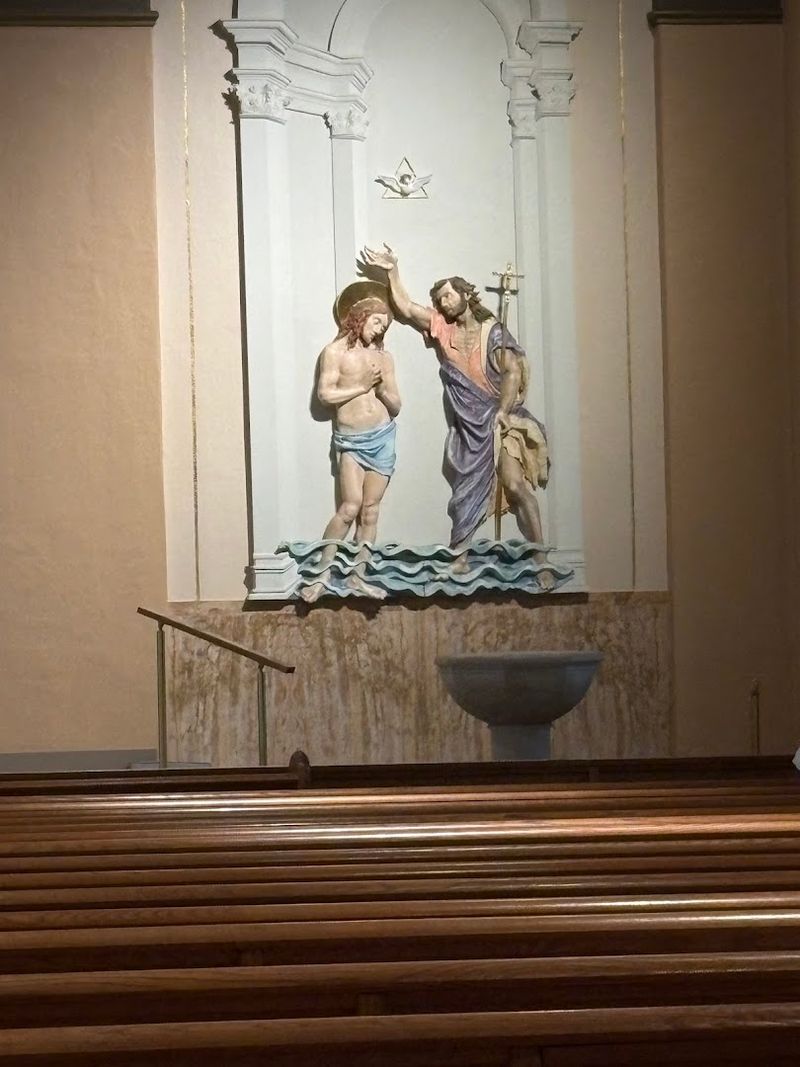
The interior of Holy Rosary holds an impressive collection of religious art that rewards slow, deliberate attention. Biblical imagery appears throughout the space in various forms, from painted details to sculptural elements, all working together to create a cohesive visual environment rooted in Catholic tradition.
Even visitors who do not regularly attend religious services have noted that the interior is worth experiencing purely from an artistic standpoint. The care taken in designing and decorating the space reflects the ambitions of the original builders, who clearly wanted every surface to contribute to the overall sense of sacredness.
The scale of the artwork relative to the space feels balanced rather than overwhelming. Nothing competes aggressively for attention, and yet there is always something new to notice.
Spending even fifteen minutes simply observing the interior details offers a richer understanding of both the artistry and the faith community that has sustained this building for over a century.
Little Italy as the Backdrop You Cannot Ignore
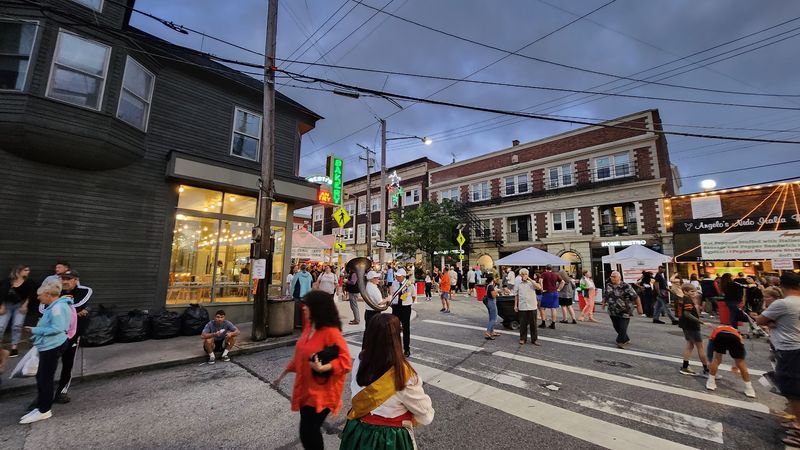
Holy Rosary does not exist in isolation. The Murray Hill neighborhood that surrounds it is one of Cleveland’s most distinct and historically layered communities.
Known widely as Little Italy, the area has maintained its Italian-American cultural identity across generations in a way that few urban neighborhoods have managed.
Galleries, bakeries, and restaurants line the streets nearby, offering visitors a reason to extend their time in the area well beyond a single stop at the church. The neighborhood itself functions as a kind of living history, where the original immigrant character of the community remains visible in the architecture, the businesses, and the people who have stayed connected to it.
Cleveland’s Case Western Reserve University sits close by, which brings a younger energy into the mix without erasing the neighborhood’s older character. The result is a community that feels genuinely layered rather than artificially preserved, and Holy Rosary sits at its spiritual and cultural center.
The Choir and Music That Elevate Every Service
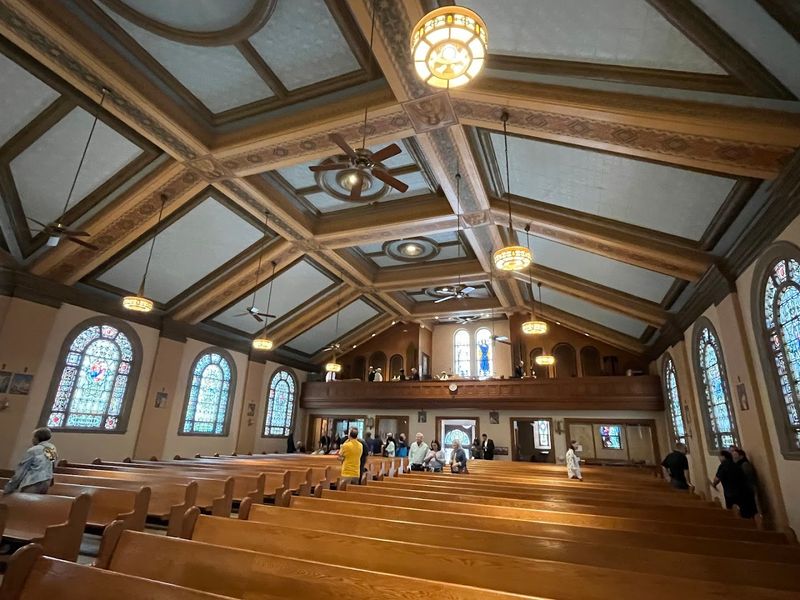
Music has always played a meaningful role at Holy Rosary. The choir has earned genuine praise from those who have attended services, with the vocal quality described as impressive by people who were not necessarily expecting to be moved by the musical component of the Mass.
The Sunday evening service in particular has been noted for its classical music accompaniment, which gives that specific Mass a distinctive atmosphere compared to morning services. For anyone who appreciates sacred music as an art form, attending an evening Mass at Holy Rosary offers an experience that goes beyond routine religious attendance.
The combination of the church’s acoustic interior and a committed choir creates a listening environment that suits the space well. Sound moves through the high-ceilinged building in a way that amplifies the emotional impact of the music without distorting it.
It is one of those details that separates Holy Rosary from a more ordinary parish experience.
A Church That Has Welcomed Weddings, Funerals, and Everything Between
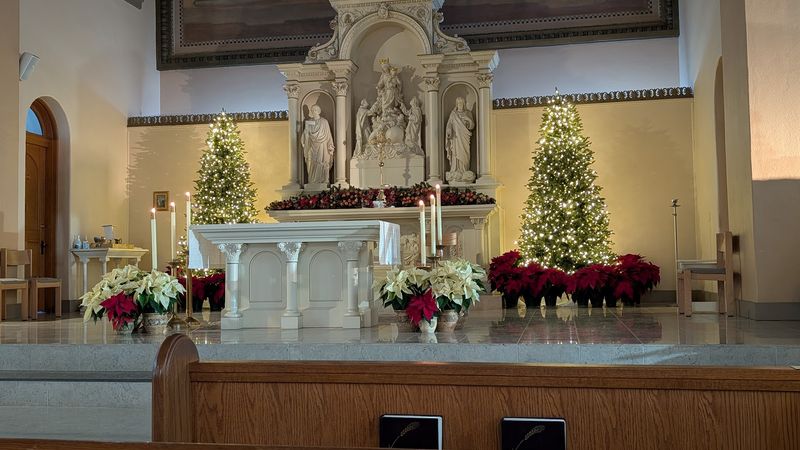
Over more than a century of continuous operation, Holy Rosary has marked virtually every major life event for the families connected to it. Weddings held here have been described as genuinely moving, with the traditional Mass format and the impressive interior combining to create a ceremony setting that photographs and memories do not fully capture.
The church has also served as a place of comfort during funerals, with the interior’s artistry providing a backdrop that feels appropriate for moments of reflection and remembrance. People who attend services here for the first time, regardless of the occasion, consistently remark on how the space itself contributes to the emotional weight of the moment.
Generations of Cleveland families have returned to Holy Rosary across decades, sometimes driving considerable distances to attend services at a church where they grew up. That kind of lasting loyalty is not something any institution can manufacture.
It has to be earned over time, one meaningful moment at a time.
Practical Tips for Planning Your Visit
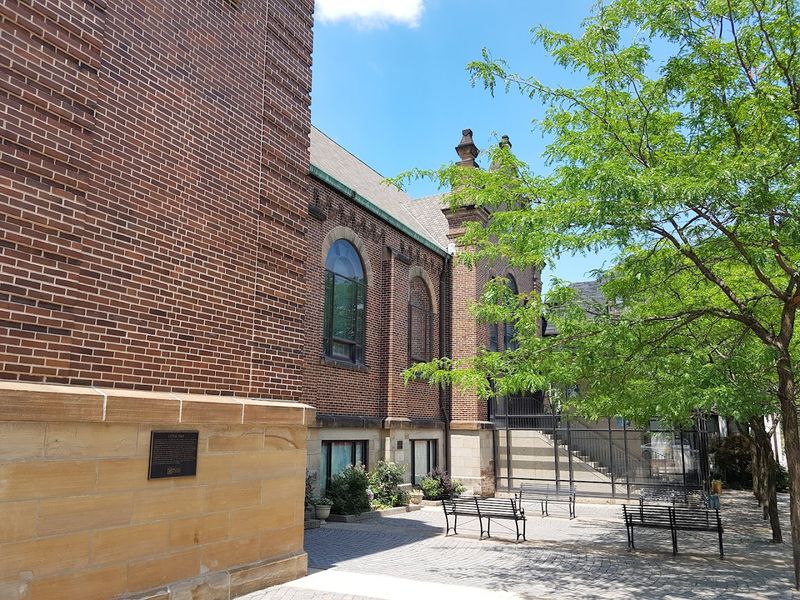
A few practical details make visiting Holy Rosary easier and more enjoyable. Free parking is available behind the church, which eliminates one of the more common frustrations of visiting busy urban neighborhoods.
The lot is a straightforward option for anyone driving in from outside the area.
The church can be reached by phone at +1 216-421-2995, and their website at holy-rosary.org provides current Mass times, event information, and parish news. Checking ahead is always worthwhile, particularly around festival season when schedules and street access in Little Italy can shift.
Visitors who are not attending a service but are interested in the interior artwork should contact the parish in advance to confirm whether self-guided visits are available. The neighborhood itself is worth exploring on foot after your visit, with plenty of nearby options for food and coffee along Mayfield Road to round out the experience.
Why Holy Rosary Still Draws People More Than a Century Later
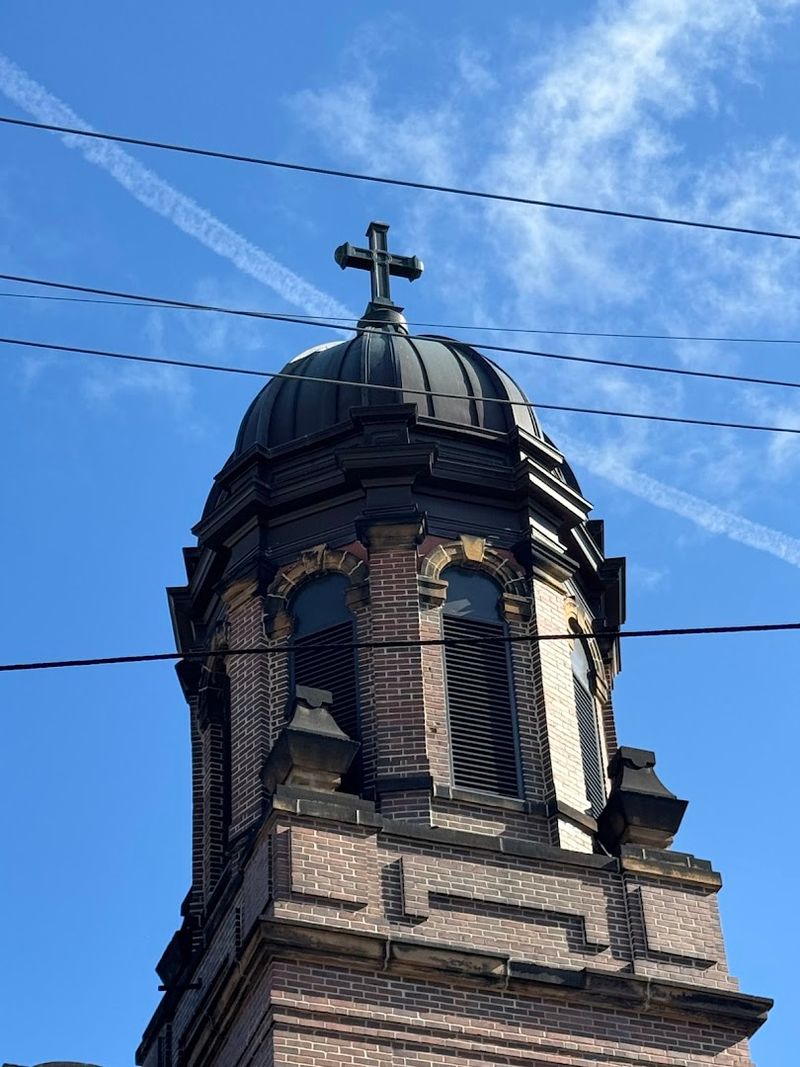
A church that opened in 1908 could easily have faded into irrelevance as neighborhoods changed and communities shifted. Holy Rosary has done the opposite.
Its active parish community, its role as the anchor of the Feast of the Assumption, and its genuine artistic and architectural merit have kept it relevant across generations.
The parish draws a wide range of visitors: longtime parishioners who grew up in the pews, university students from nearby Case Western Reserve who found a spiritual home here, travelers exploring Cleveland’s neighborhoods, and people simply curious about the building they spotted from Mayfield Road.
What keeps people coming back is harder to define than a festival date or a Mass schedule. There is something about a place that was built with genuine devotion and has been maintained with the same spirit that communicates itself without explanation.
Holy Rosary has that quality, and more than a century in, it shows no signs of losing it.
Share this story