 Unearth The Voyage
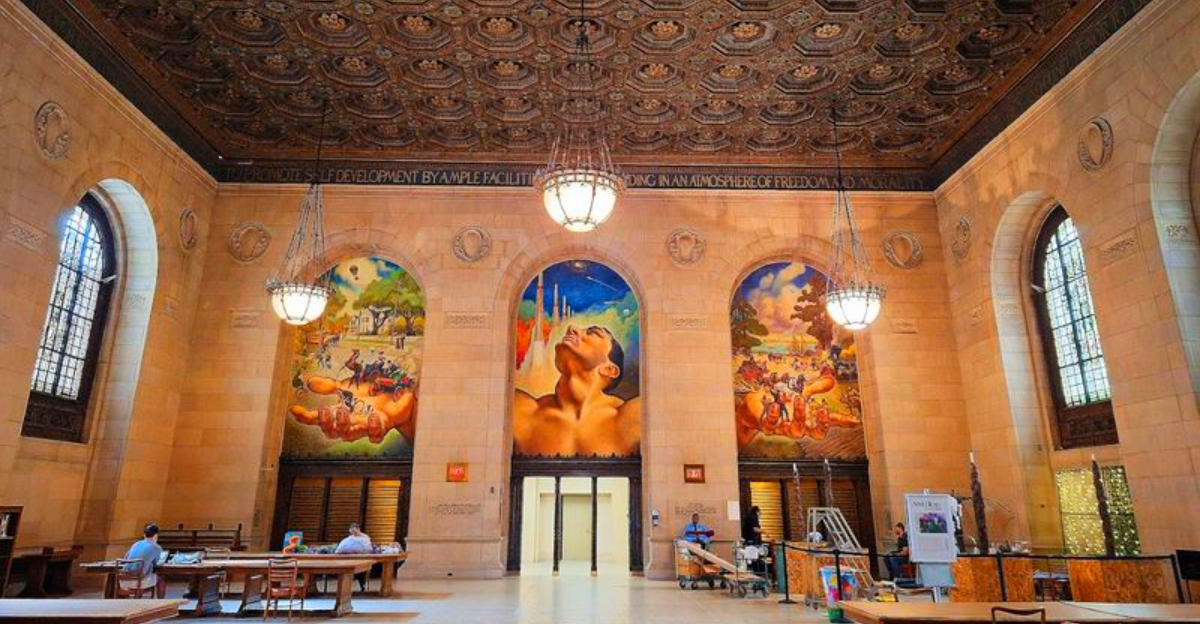
Most people pass the Detroit Public Library’s main branch on Woodward Avenue without realizing it houses one of the city’s most impressive interiors. Open since 1921, this Beaux-Arts landmark stands out for its marble construction, vaulted ceilings, and extensive murals by noted artists.
Inside, the building goes far beyond books. Visitors can explore historic reading rooms, a lesser-known third floor, and a rotating lineup of public events that keep the space active year-round.
This is not just a library stop. It is one of Detroit’s most overlooked cultural sites, with details and spaces that reward anyone who takes the time to walk in.
A Grand Address Worth Finding
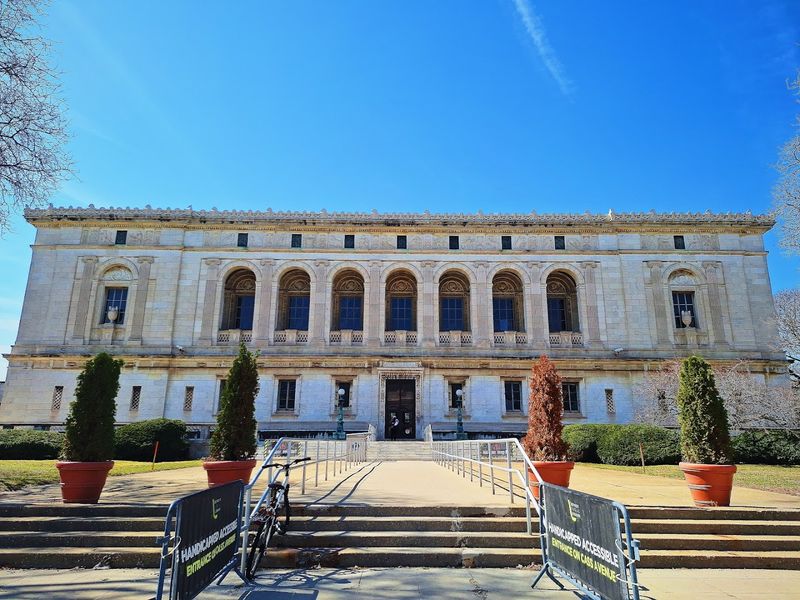
The main branch of the Detroit Public Library sits at 5201 Woodward Ave, Detroit, MI 48202, right in the heart of one of the city’s most culturally rich corridors. It stands between the Detroit Institute of Arts and Wayne State University, making this block one of the most intellectually charged stretches in all of Michigan.
The building was designed by architect Cass Gilbert and completed in 1921. It was built using Vermont marble and features serpentine Italian marble trim that gives the facade an almost luminous quality on sunny days.
Parking is available in a nearby loop lot for short visits, which makes the trip more manageable than you might expect for a busy urban location. The library is open Monday through Saturday with varying hours, and Sunday hours run from 1 to 5 PM.
Call ahead at 313-481-1300 to confirm your visit timing, because this is one address you will not want to miss on a closed day.
The Italian Renaissance Shell That Hides a World Inside
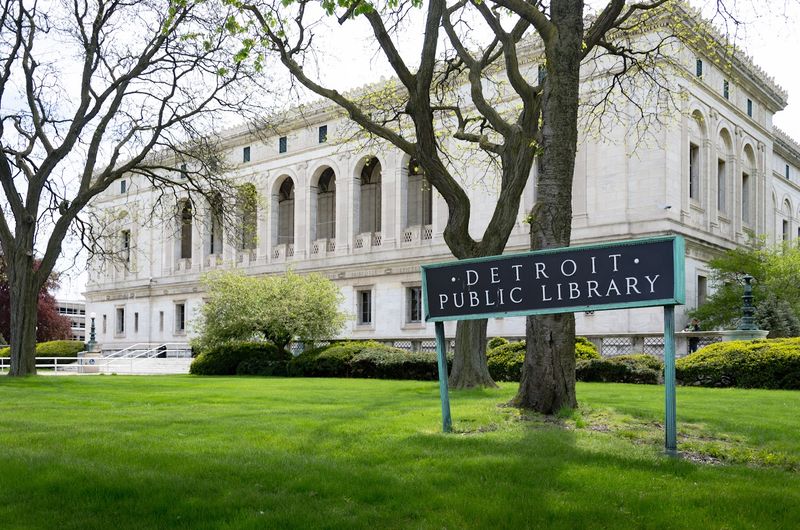
From the street, the building reads like something transplanted from a European capital. The Italian Renaissance style is not just decorative window dressing here.
It was a deliberate architectural statement that public knowledge deserves a magnificent home.
The white Vermont marble exterior is polished and precise, with carved stonework framing every window and doorway. The serpentine Italian marble trim adds a subtle green tone that catches the light differently depending on the time of day, giving the building a living quality that photographs rarely capture fully.
Cass Gilbert, who also designed the U.S. Supreme Court building in Washington D.C., brought that same sense of civic grandeur to Detroit.
The result is a structure that communicates importance before you even reach the front door.
Bronze Columns and Ceilings That Demand Your Attention
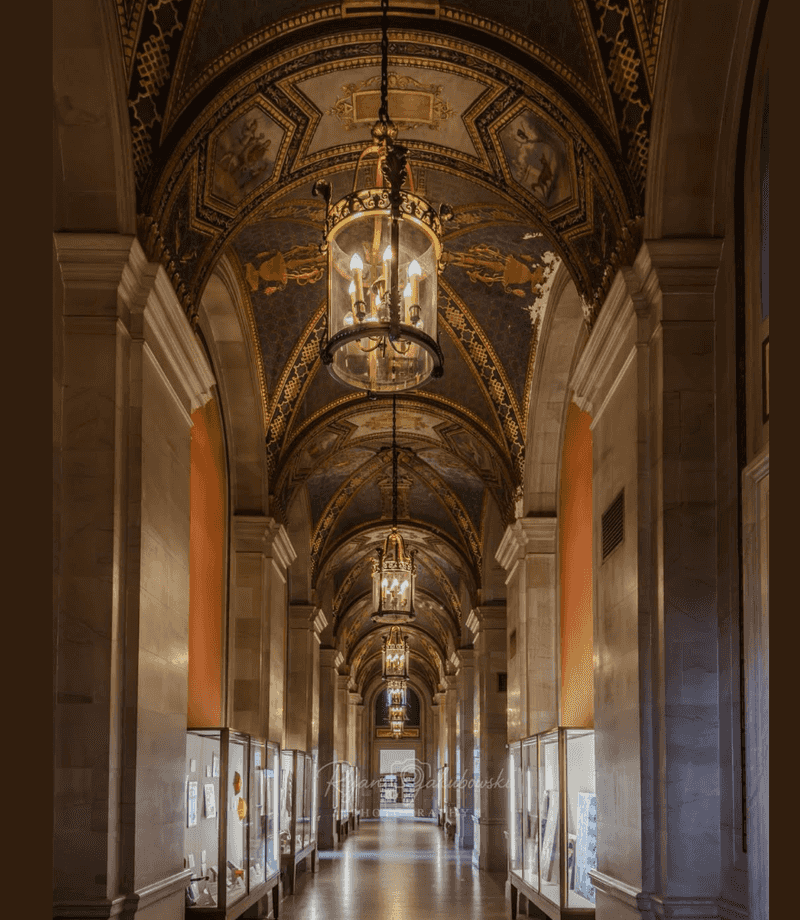
The second floor is where the building’s interior ambition becomes impossible to ignore. Bronze-adorned columns line the main reading rooms with a craftsmanship that feels more like fine art than structural support.
The ceilings are covered in Pewabic tile work, a detail that connects this library directly to Detroit’s own artistic legacy. Pewabic Pottery, founded in Detroit in 1903, created ceramic tiles that appear throughout the city’s most celebrated buildings, and seeing them overhead here feels like a quiet tribute to local artistry.
Intricate painted designs fill the spaces between the tile work, and the combination of bronze, ceramic, and oil paint creates a layered visual experience that rewards slow looking. Stained glass windows filter light into the reading rooms in ways that shift throughout the day, making the same space feel different at noon versus late afternoon.
The coffered ceilings alone have inspired enthusiastic comments from visitors for decades, and once you see them in person, that enthusiasm makes total sense. The third floor, however, holds its own surprises worth discovering as you continue up.
Murals That Tell Detroit’s Story Without a Single Word
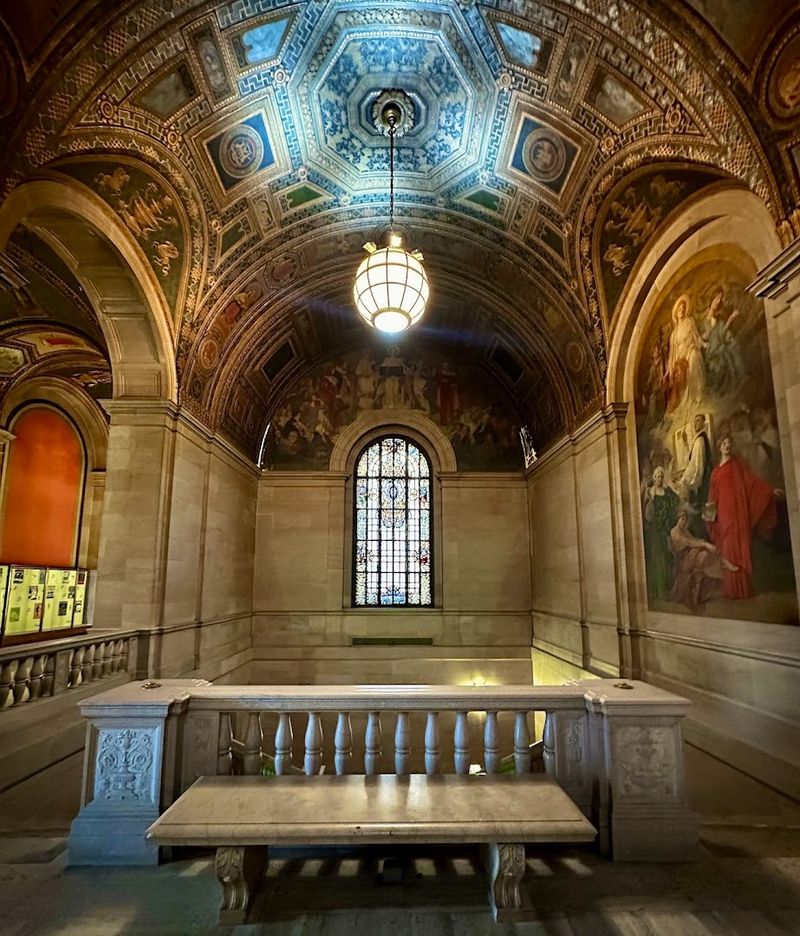
The walls of this library are not blank. Across the reading rooms and hallways, oil paintings and murals depict scenes from Detroit’s history, its industries, its people, and its aspirations.
These are not decorative afterthoughts. They were commissioned as part of the original design intention to make the library a visual record of the city itself.
The murals were created by prominent artists of the early twentieth century, and their scale and detail reward close inspection. Figures from Detroit’s past appear alongside allegorical representations of knowledge, labor, and civic life that feel surprisingly relevant today.
Some of the painted surfaces have experienced the natural effects of time, with areas showing wear that reflects decades of use and the financial challenges facing many public institutions. That visible history, rather than diminishing the experience, adds a layer of emotional weight that a perfectly restored gallery might not carry.
There is something genuinely moving about standing in a public building where art was created specifically for everyone, not for collectors or private galleries. The stained glass windows nearby work in conversation with these murals in a way that makes the next section especially worth reading.
Stained Glass That Turns Sunlight Into Something Else Entirely
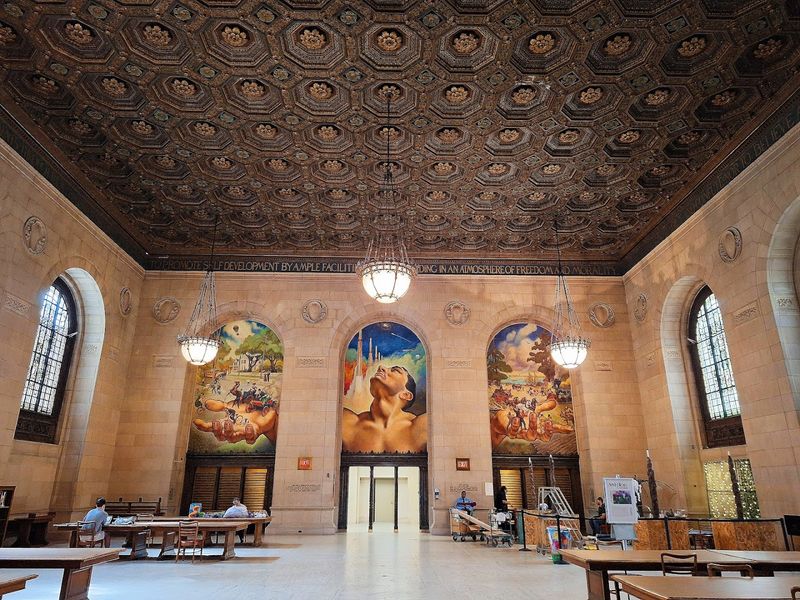
Natural light inside the Detroit Public Library does not simply illuminate. It transforms.
The stained glass windows installed throughout the building cast colored patterns across marble floors and wooden surfaces in ways that change with every passing cloud.
The windows were designed as part of the building’s original artistic program, meaning they were never an add-on. Each window carries its own palette and imagery that complements the murals and tile work nearby, creating a cohesive visual environment rather than a collection of unrelated decorative elements.
On a bright afternoon, the reading rooms on the upper floors glow with filtered color that makes the act of reading feel genuinely special. The quality of light in these spaces is something that visitors consistently mention as one of the most memorable sensory details of the whole experience.
It is the kind of atmospheric detail that photographs struggle to capture honestly, which is one very good reason to experience it in person rather than through a screen. And speaking of things best experienced in person, the third floor has a reputation of its own that keeps coming up in visitor conversations.
The Third Floor Secret That Regulars Keep Mentioning
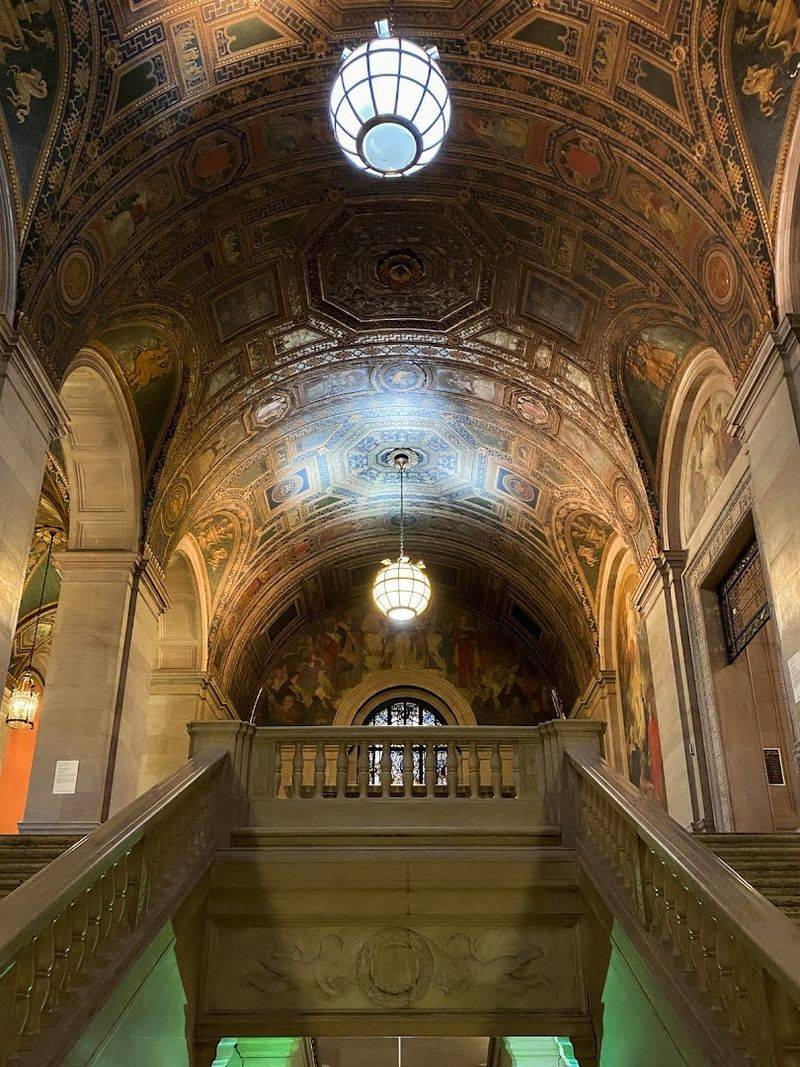
Ask almost anyone who has spent real time in this library and the third floor comes up quickly. Security staff and librarians alike tend to point visitors upward with a knowing enthusiasm that suggests the upper level delivers something the ground floor cannot fully prepare you for.
The third floor offers a different perspective on the building’s architecture, with views back down into the main reading areas that reveal the full vertical scale of the interior. From up here, the proportions of the space become clear in a way that standing at ground level simply does not allow.
Study spaces on the upper level are quieter and feel slightly more removed from the activity below, making them popular with students and researchers who need sustained concentration. The architectural details at this height include carved elements and painted surfaces that many visitors never see because they do not make the climb.
The tip from the security desk is genuinely worth taking. Going up takes maybe three minutes, but what you find there tends to linger in your memory considerably longer than that, which is the best kind of surprise a public building can offer.
The Burton Historical Collection and Research Treasures
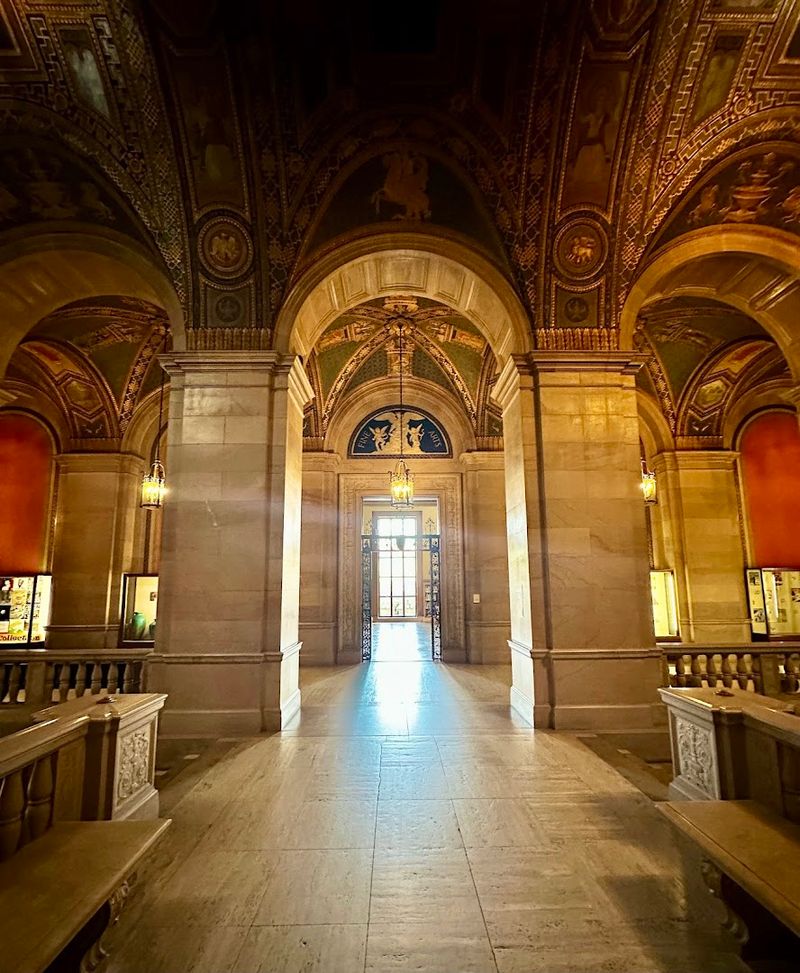
The Detroit Public Library’s main branch houses one of the most significant historical research collections in the Midwest. The Burton Historical Collection is a repository of manuscripts, photographs, maps, and documents related to Detroit and the Great Lakes region that draws serious researchers from across the country.
Genealogists find this collection particularly valuable, as it contains records stretching back through Wayne County’s history that are difficult or impossible to find elsewhere. The automotive history holdings are equally impressive, covering the technical, industrial, and cultural development of the industry that defined Detroit’s twentieth century identity.
Beyond the Burton Collection, the library also holds the E. Azalia Hackley Collection, which focuses on African American arts and culture and represents one of the most specialized archives of its kind in the United States.
For anyone conducting serious historical or genealogical research, this building is not just beautiful. It is functionally irreplaceable.
The depth of what lives on these shelves and in these archives is the kind of resource that takes years to fully appreciate, which is a compelling reason to return more than once.
A Children’s Section That Makes Young Readers Feel Welcome
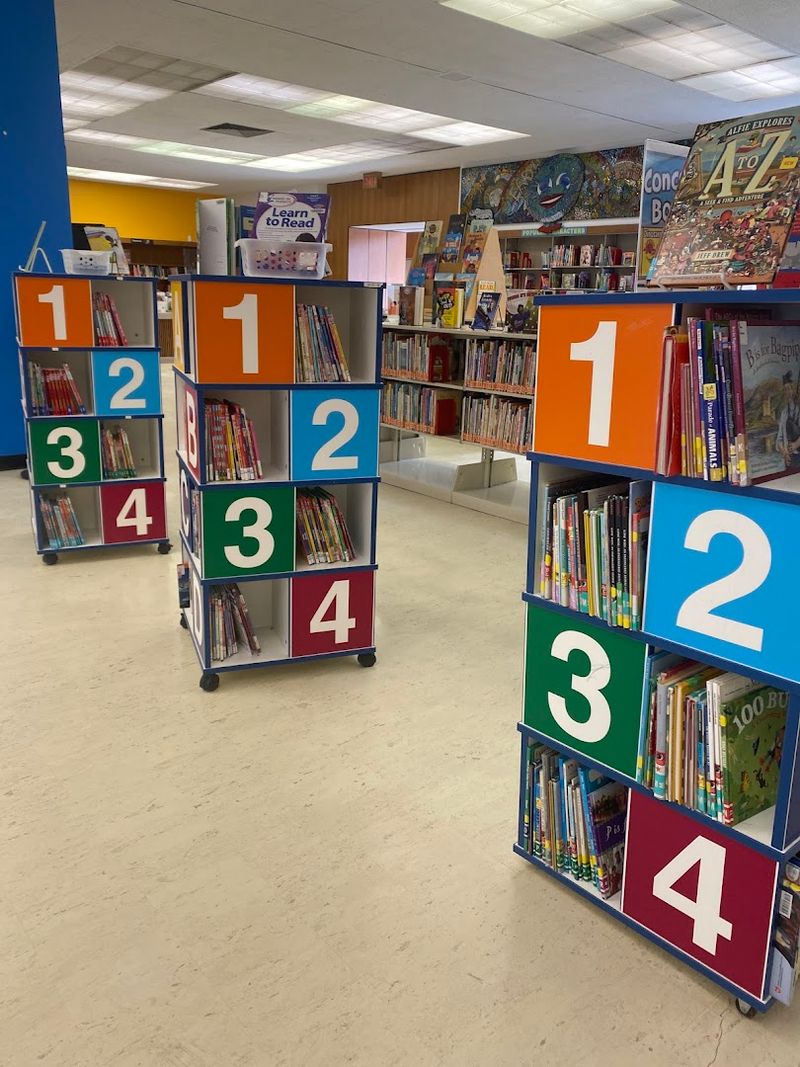
Families with young readers have their own dedicated territory inside the Detroit Public Library, and it is thoughtfully designed to feel like a space made specifically for children rather than a smaller version of the adult areas.
The children’s section has its own distinct personality within the building, with accessible shelving, curated displays, and seating scaled for younger visitors. It is a place where a child’s first experience of a real library can be genuinely positive rather than overwhelming.
The library accepts donations of children’s books, which is a practical way for visitors to contribute to the collection and support young readers in the community. Staff in the children’s area tend to be approachable and helpful, ready to guide both kids and parents toward the right materials.
For parents who grew up visiting this library themselves, bringing their own children here carries a particular kind of emotional resonance. The building has served multiple generations of Detroit families, and that continuity is something you can feel when you watch a child discover it for the first time.
The community programs extend well beyond books, as the next section shows.
Live Jazz, Events, and a Library That Hums With Life
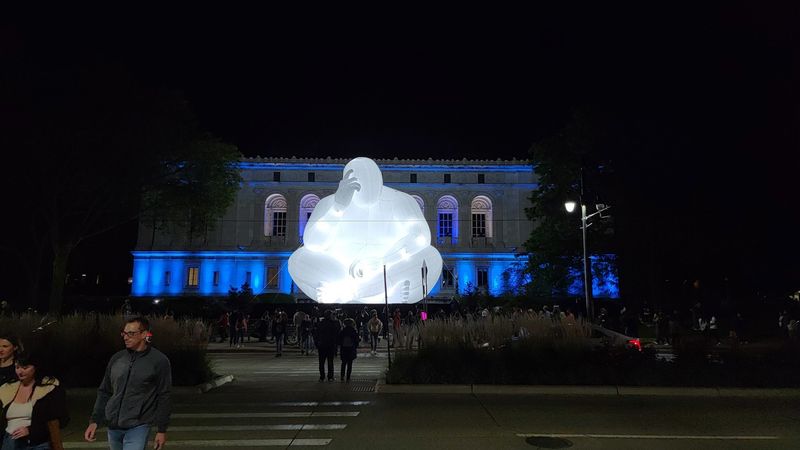
A library that occasionally hosts jazz performances in its basement is a library that understands its role in the community extends beyond book lending. The Detroit Public Library’s main branch runs a calendar of events that reflects the cultural energy of the city it serves.
Live music, educational workshops, tax assistance programs, and community gatherings take place throughout the year in various spaces within the building. The basement performance area provides an intimate venue that gives these events a character very different from a conventional auditorium setting.
Adult literacy tutoring, English as a Second Language classes, and math instruction are offered on an ongoing basis, making the library a genuine educational hub for people at every stage of life. A registered testing center within the building handles professional certification exams, covering fields as varied as commercial trucking and network administration.
Computer classes taught by trained staff round out a programming lineup that is more comprehensive than most visitors expect. The record player available for use is one of those quiet, slightly unexpected amenities that perfectly captures the library’s personality, and it is worth asking staff about before you leave.
The Neighborhood Context That Makes the Visit Richer
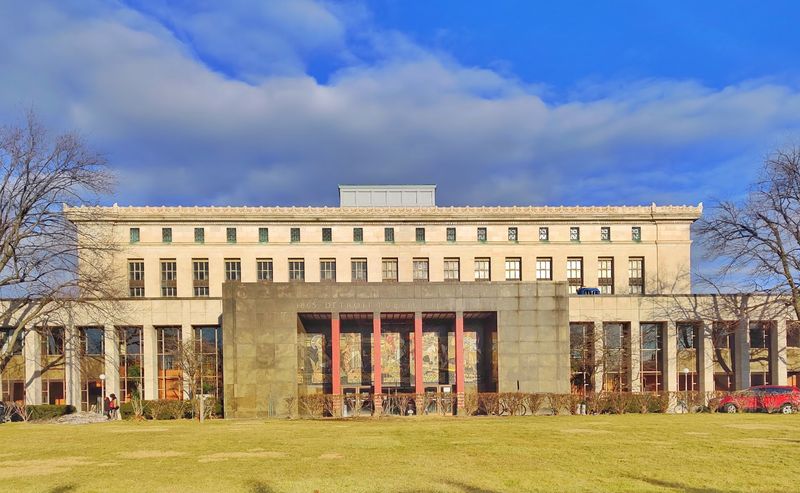
The location of this library is not incidental. Sitting on Woodward Avenue between the Detroit Institute of Arts and Wayne State University, the main branch occupies a block that functions as one of the most concentrated cultural destinations in the entire state of Michigan.
Three additional university libraries sit within walking distance, meaning that a single afternoon in this neighborhood can cover an extraordinary range of research and cultural resources. The Detroit Institute of Arts, one of the finest art museums in the country, is literally across the street.
This stretch of Woodward Avenue has been called the cultural center of Detroit for good reason, and the library is both a product of that tradition and an active contributor to it. The architectural conversation between these buildings, each one built with civic ambition and artistic care, is something that rewards a slow walk along the block.
Coming here on a weekday afternoon when the neighborhood is active gives you the full picture of how this library functions as a community anchor rather than just a beautiful building. The staff you encounter inside are a significant part of that experience.
Why This Library Deserves More Than a Quick Look
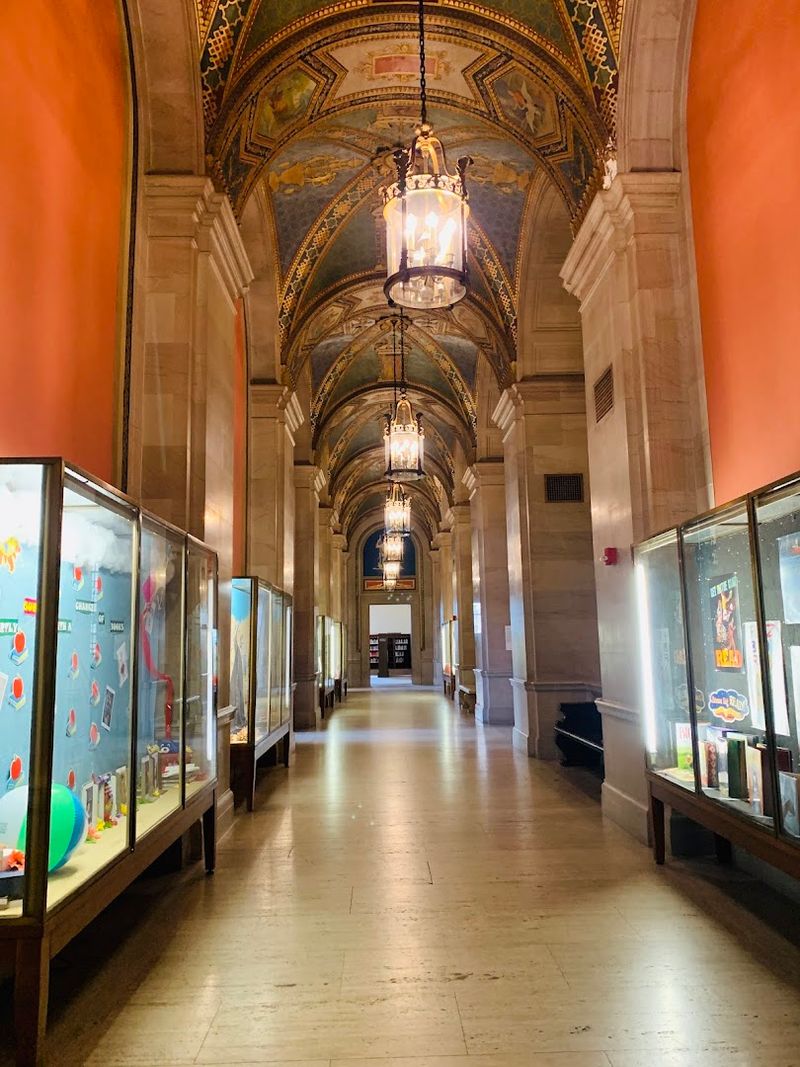
Some buildings exist to be photographed and moved on from. This is not one of them.
The Detroit Public Library’s main branch rewards time, attention, and a willingness to slow down and look carefully at what surrounds you.
The combination of architectural beauty, deep research collections, active community programming, and a location embedded in one of Michigan’s richest cultural neighborhoods makes this a destination rather than a stop. A single visit rarely feels sufficient once you realize how much the building contains across its multiple floors and collections.
The library is free and open to the public, which means the bar to entry is as low as it gets for an experience this substantial. Bringing a book to read in one of the upstairs study spaces while the afternoon light shifts through the stained glass is the kind of simple pleasure that costs nothing and lingers for a long time afterward.
Detroit has produced extraordinary things over its history, and this library is one of them. It was built for everyone, it still serves everyone, and it remains one of the most quietly magnificent public spaces in the entire Midwest.



