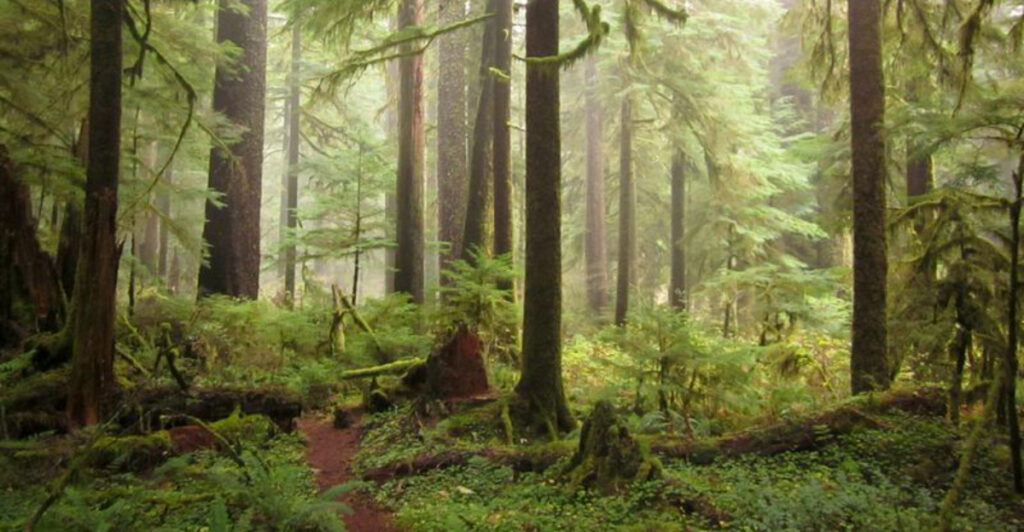
There is a place tucked deep in the Oregon Coast Range where trees have been standing since before the United States was even a country. The forest there is so dense and moss-covered that sunlight barely makes it through the canopy, giving the whole valley an otherworldly, almost magical glow.
The hike is short but unforgettable, and the journey to reach it feels like its own adventure through winding logging roads and rushing rivers. If you have ever wanted to walk through a forest that looks like it belongs in a fantasy novel, this is the place that will leave you completely speechless.
Where Exactly You Are Going and How to Get There
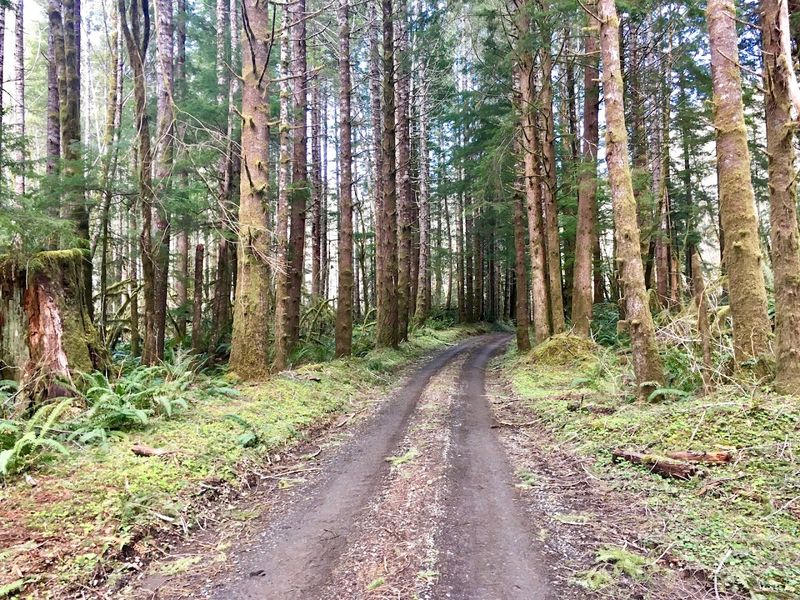
The Valley of the Giants Outstanding Natural Area sits at the end of a long, winding drive through active logging country near Falls City, Oregon. The official address is Valley Of The Giants, Falls City, OR 97344, and it is managed by the Bureau of Land Management.
The trailhead is roughly 30 miles from Falls City along gravel logging roads, and the drive alone takes about 90 minutes each way.
Here is the most important thing to know before you go: do not follow Google Maps. Seriously, do not do it.
Google will send you down a road that has a sign explicitly saying there is no access to the Valley of the Giants. The correct route starts in Falls City, where you cross the bridge and continue straight, following the main gravel road through the old Valsetz lake bed area.
Watch for small orange road delineator signs marked “VOG” along the way. These little signs are your best friends on this drive.
Download the BLM brochure from their website before you leave, and consider picking up a printed map from the BLM Salem office to avoid any wrong turns on the maze of logging roads.
The Trees That Make This Place Absolutely Extraordinary
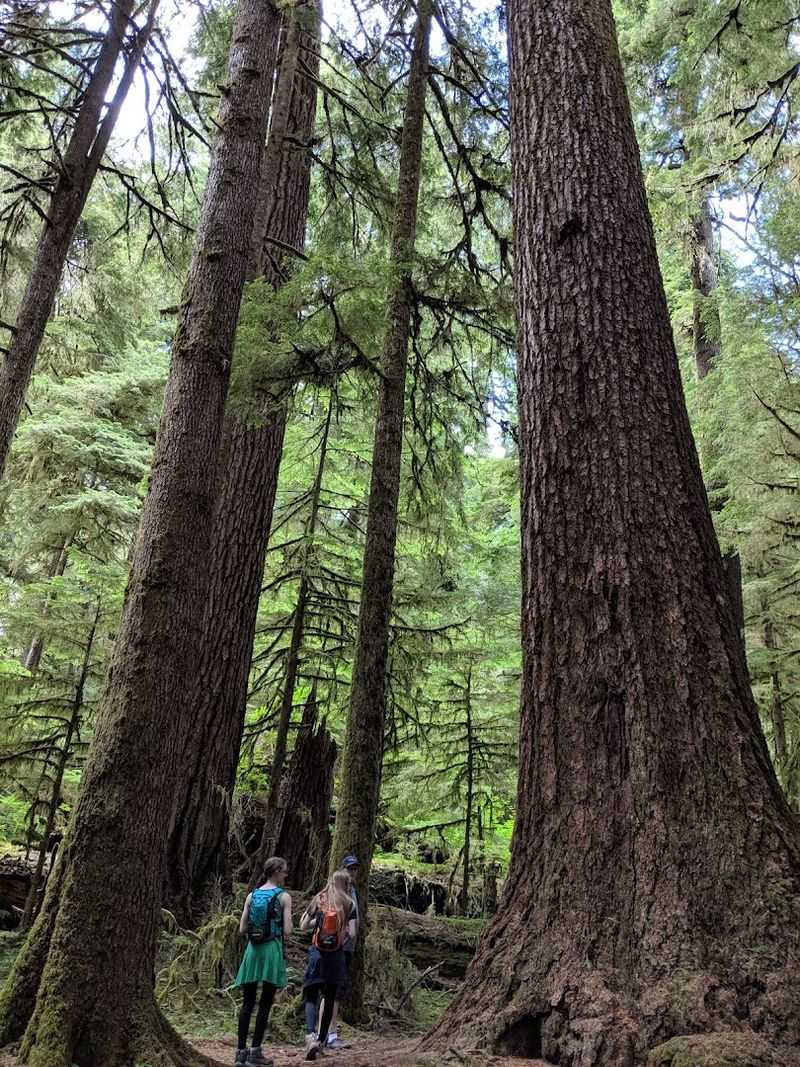
The whole reason people drive 90 minutes down bumpy gravel roads to reach this place is the trees. The Valley of the Giants is home to some of the most enormous Douglas firs and Western hemlocks in the entire state of Oregon.
Some of these trees are over 400 years old, meaning they were already mature giants long before the first European settlers arrived on the continent.
The sheer scale of these trees is something no photograph can fully capture. Standing at the base of one and tilting your head back, you genuinely cannot see where the trunk ends and the canopy begins.
One visitor with 35 years of experience in the timber industry described being completely awestruck by the size of these firs, and that reaction is pretty much universal among everyone who makes the trip.
At one point, the valley held the second-largest Douglas fir in all of Oregon, until it fell in 1981. Even without that record-holder, the remaining trees are staggering.
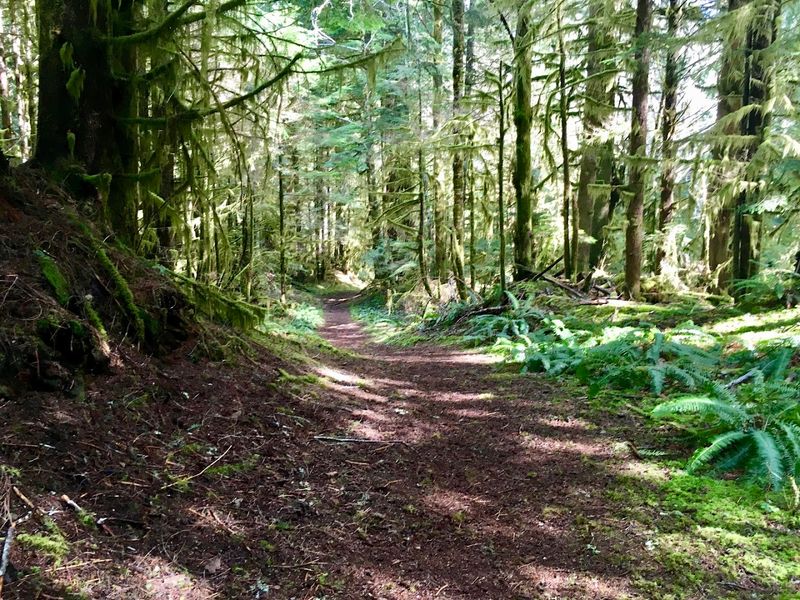
The forest floor beneath them is blanketed in thick green moss, sword ferns, and decades of fallen needles, creating a cushioned, cathedral-like atmosphere that feels genuinely rare.
What the Hike Itself Actually Feels Like
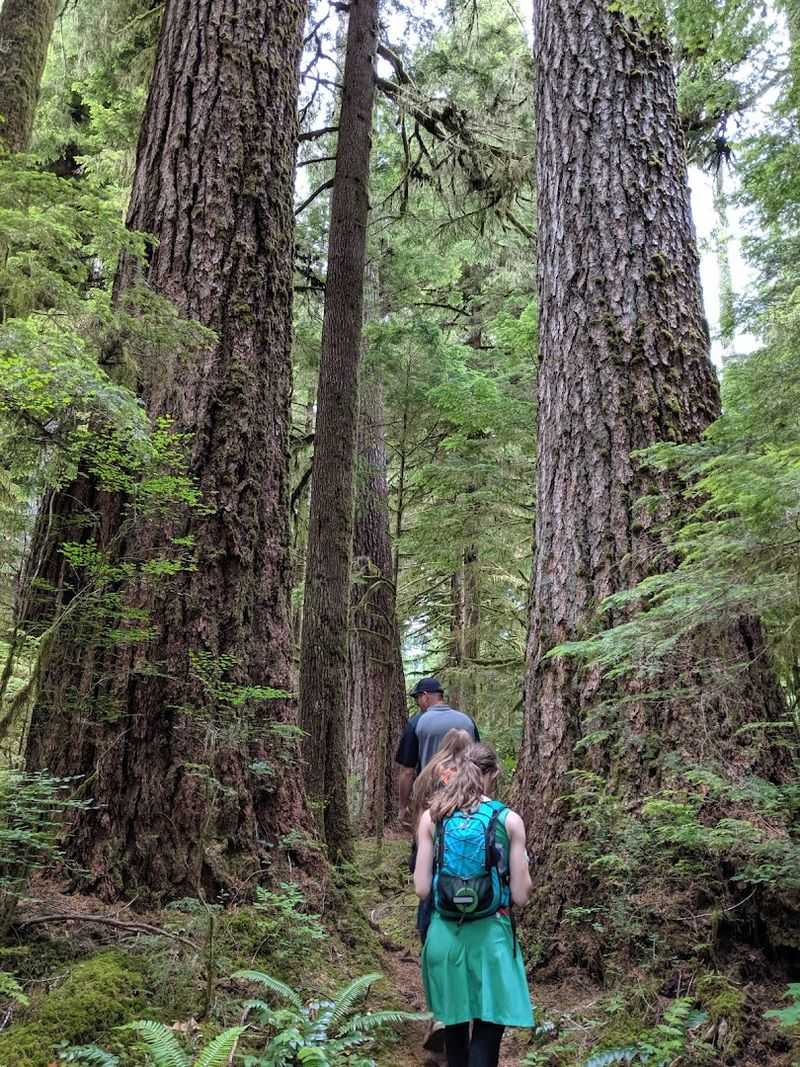
The trail at the Valley of the Giants is a loop of about 1.3 to 2.2 miles, depending on which source you consult, with an elevation change of roughly 1,200 feet. That elevation gain is no joke.
Certain sections are steep enough that a rainy day turns them into a genuine slip-and-slide situation, so footwear with solid grip is a smart call.
You hike down into the valley first, which feels like descending into a green dream. At the bottom, a steel footbridge carries you over the Siletz River, which is one of the more beautiful river crossings you will find on any Oregon trail.
The water runs clear and cold, and the sound of it rushing beneath you is the kind of thing that makes you stop walking just to listen.
Once across the bridge, the trail winds upward through the old-growth loop, weaving past massive root systems and fallen nurse logs covered in ferns. There are five small bridges along the route, and elk are occasionally spotted moving quietly through the trees.
The trail is well-maintained overall, though some informal side paths can make navigation a little tricky for first-time visitors.
The Atmosphere That Sets This Forest Apart
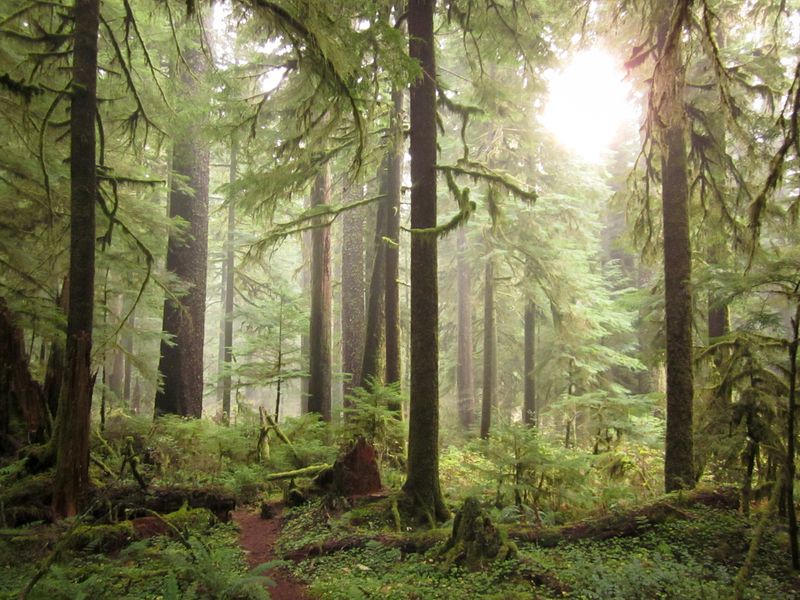
There is a quality to the air inside the Valley of the Giants that is hard to put into words without sounding overly dramatic. The forest is so thick and the canopy so complete that sunlight rarely reaches the ground in any meaningful way.
Everything glows a deep, saturated green, from the hanging mosses to the fern-covered floor to the bark of the ancient trees themselves.
The smell is part of it too. Fresh, cool, and earthy in a way that feels almost medicinal, the air inside the valley carries the scent of old wood, damp soil, and living moss.
It is the kind of smell that makes your shoulders drop and your breathing slow down without you even noticing it is happening.
Multiple visitors have described the atmosphere as spiritual or cleansing, and while that might sound like travel-blog exaggeration, it genuinely reflects how the place feels. The scale of the trees combined with the near-total silence, broken only by birdsong and the distant rush of the Siletz River, creates an environment unlike anything most people experience in daily life.
Unlike the popular trails closer to Portland or Salem, this forest feels entirely untouched and fully alive.
Planning Your Visit Around the Drive
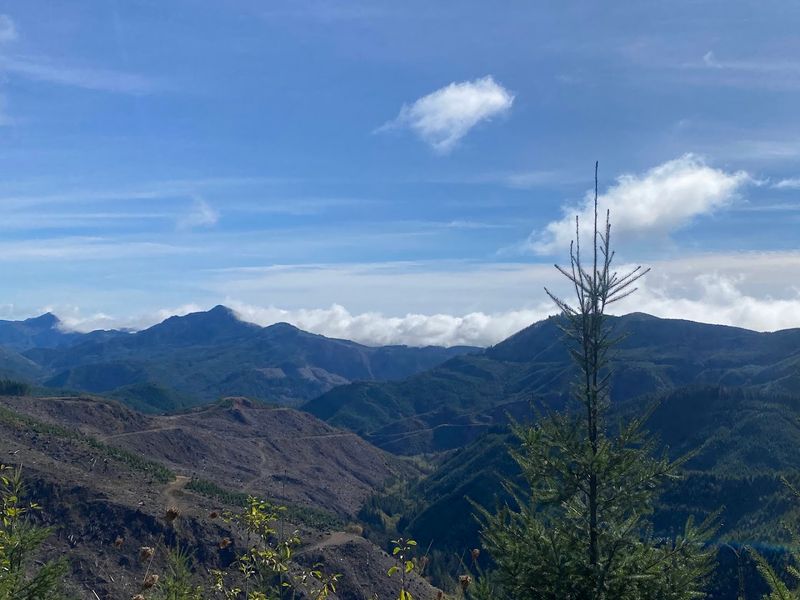
Getting to the Valley of the Giants is genuinely an adventure in itself, and treating it that way rather than as an annoyance makes the whole experience far more enjoyable. The drive takes you along the South Fork of the Siletz River, through the former site of the company town of Valsetz, and past dramatic mountain views and fjord-like river channels that are worth stopping for on their own.
A vehicle with at least six to eight inches of ground clearance is the practical recommendation from experienced visitors. One traveler made it in a standard sedan, but reported bottoming out several times on the rougher sections.
A truck or SUV will handle the road more comfortably, especially after rain when the surface gets soft and rutted.
Plan for a full day trip. Between the 90-minute drive each way and the time on the trail, you are looking at a solid five to six hours minimum.
There are no restrooms at the trailhead, no cell service in the area, and no services of any kind once you leave Falls City. Pack water, food, and a fully charged phone with offline maps downloaded before you leave home.
The gate on the access road closes one hour after sunset, so time your departure accordingly.
The Siletz River and the Natural Setting Below the Canopy
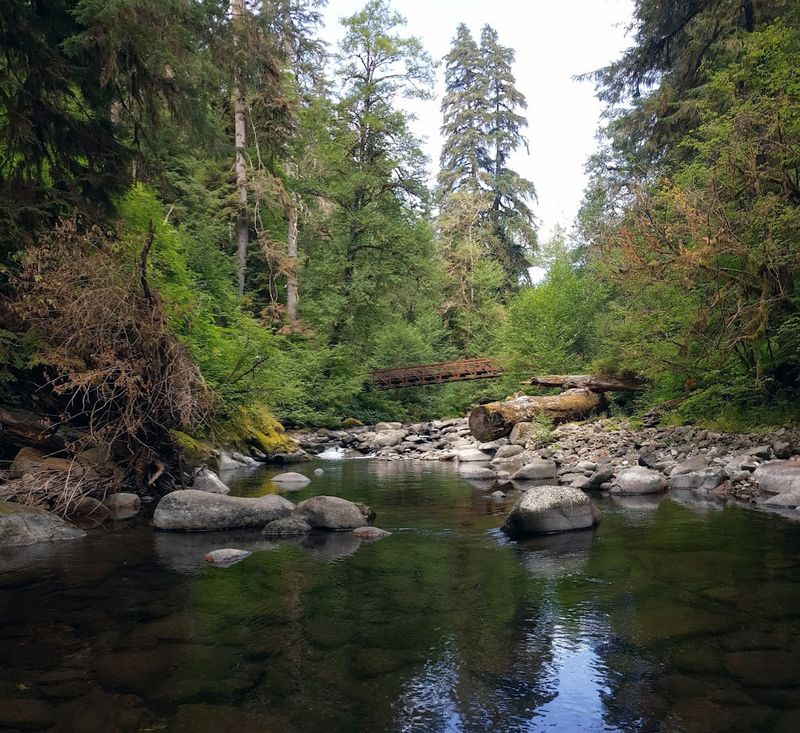
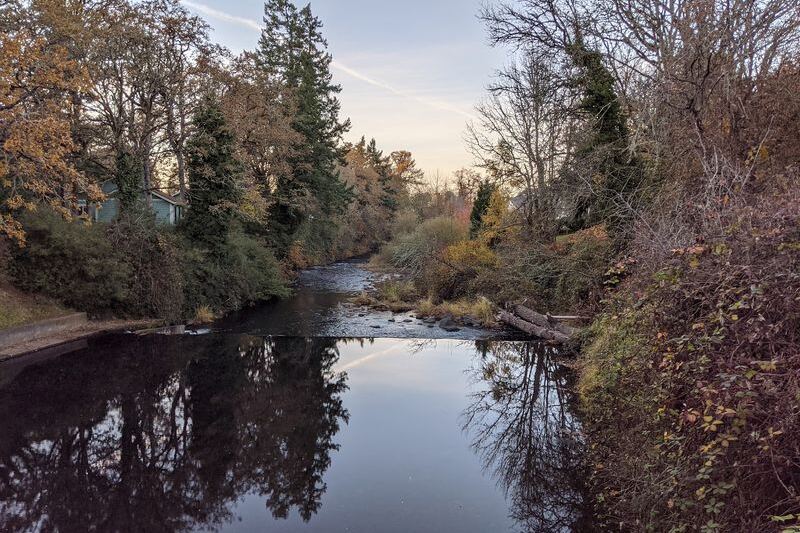
The Siletz River runs through the heart of the valley, and it is one of the most visually striking rivers in the entire Oregon Coast Range. The water is remarkably clear, running cold and fast over smooth rocks and past banks thick with ferns and mosses.
Crossing it on the steel footbridge gives you a front-row view of the river in both directions, and it is genuinely one of the highlights of the hike.
In warmer months, some visitors choose to wade into the shallower sections of the Siletz near the trailhead area. The river is cold even in summer, fed by snowmelt and shaded by the enormous canopy above, but the scenery makes it hard to resist at least dipping your feet in.
Wildlife is active along the riverbanks, with birds, small mammals, and the occasional elk track visible in the soft mud near the water.
The combination of the old-growth canopy above and the living river below creates a layered ecosystem that feels remarkably complete. Standing on that footbridge with the trees towering on both sides and the river rushing beneath you, it becomes very clear why the Bureau of Land Management designated this area as an Outstanding Natural Area worth protecting for future generations.
The History and Conservation Story Behind This Preserved Forest
The 51-acre Valley of the Giants Outstanding Natural Area exists in a landscape that has been almost entirely logged over the past century. Driving the 30 miles of logging roads to reach it means passing through miles of privately owned timber land where clear-cutting has stripped entire hillsides bare.
The contrast when you arrive at the protected grove is stark and genuinely moving.
The Bureau of Land Management has managed and protected this particular patch of old-growth forest, preserving it as a rare surviving example of what the entire Oregon Coast Range once looked like before industrial logging transformed the region. The designation as an Outstanding Natural Area reflects the ecological and historical significance of the trees within it.
The area is open 24 hours a day, every day of the year, with no entrance fee required. The BLM maintains the trail to a reasonable standard, and the five small bridges along the route are regularly inspected.
For more information or to download the official directions and map, the BLM website at blm.gov is the most reliable resource. You can also call the Salem BLM office at 503-375-5646 with questions about road conditions before making the drive.
What to Pack and Wear for This Particular Hike
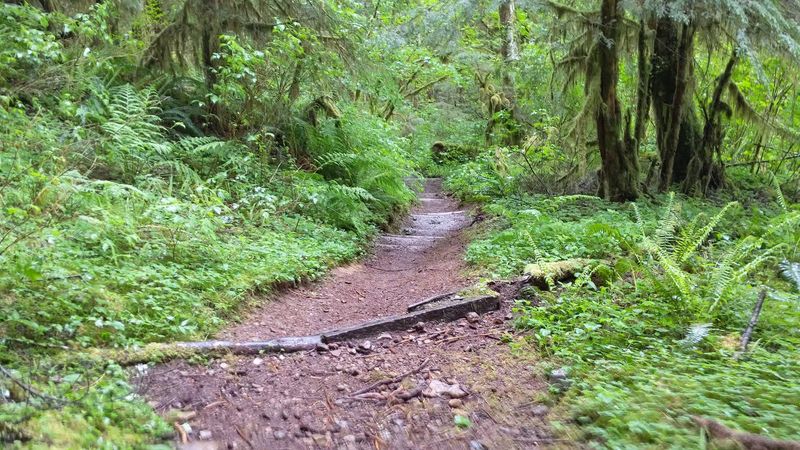
Oregon’s Coast Range is wet. That is not a complaint, just a fact of life in one of the most consistently rainy regions of the Pacific Northwest.
The Valley of the Giants sits in a temperate rainforest environment, which means the trail can be muddy, slick, and root-covered even on days when it has not rained recently. Waterproof boots with ankle support are the single most important gear choice you can make for this hike.
Layering is smart here regardless of the season. The dense canopy keeps the valley floor noticeably cooler than the surrounding area, and a light jacket or fleece is useful even on summer days.
At the top of the loop, where the canopy opens slightly, a warm hat can come in handy when the wind picks up along the ridgeline.
Beyond footwear and layers, the essentials list includes at least two liters of water per person, enough food for a full day out, a fully charged phone with offline maps downloaded, a paper backup map from the BLM, and a flashlight or headlamp in case your timing runs long. There are no trash cans at the trailhead, so pack out everything you bring in and leave the forest exactly as you found it.
Wildlife and Natural Wonders Along the Trail
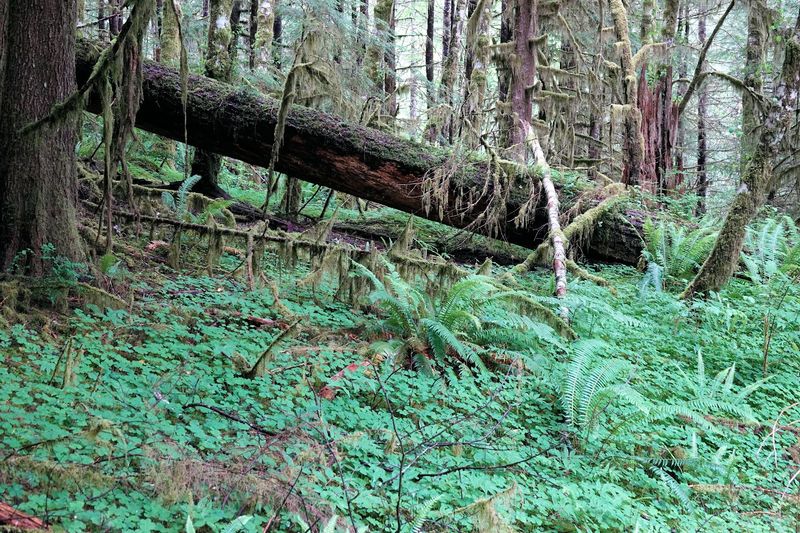
The Valley of the Giants is not just about the trees, though the trees are reason enough to make the journey. The old-growth ecosystem supports a rich variety of wildlife that you are likely to encounter if you move quietly and pay attention.
Roosevelt elk are the most dramatic sighting, and multiple visitors have spotted small herds moving through the understory during morning hours.
Birdlife in the valley is active and varied. The dense canopy and complex forest structure provide ideal habitat for species like the Pileated Woodpecker, Varied Thrush, and Winter Wren, whose song carries remarkably well through the quiet forest.
Listening for bird calls while walking the loop adds an entirely different layer of engagement to the hike.
On the forest floor, nurse logs are everywhere, each one hosting its own miniature ecosystem of mosses, fungi, and young saplings rooting into the decomposing wood. Banana slugs are common and are best observed without touching.
The overall biodiversity of the area is a direct result of the old-growth structure, where centuries of fallen trees and standing snags create habitat complexity that younger managed forests simply cannot replicate. Every visit to this forest reveals something new if you slow down enough to notice it.
Why This Hike Stays With You Long After You Leave
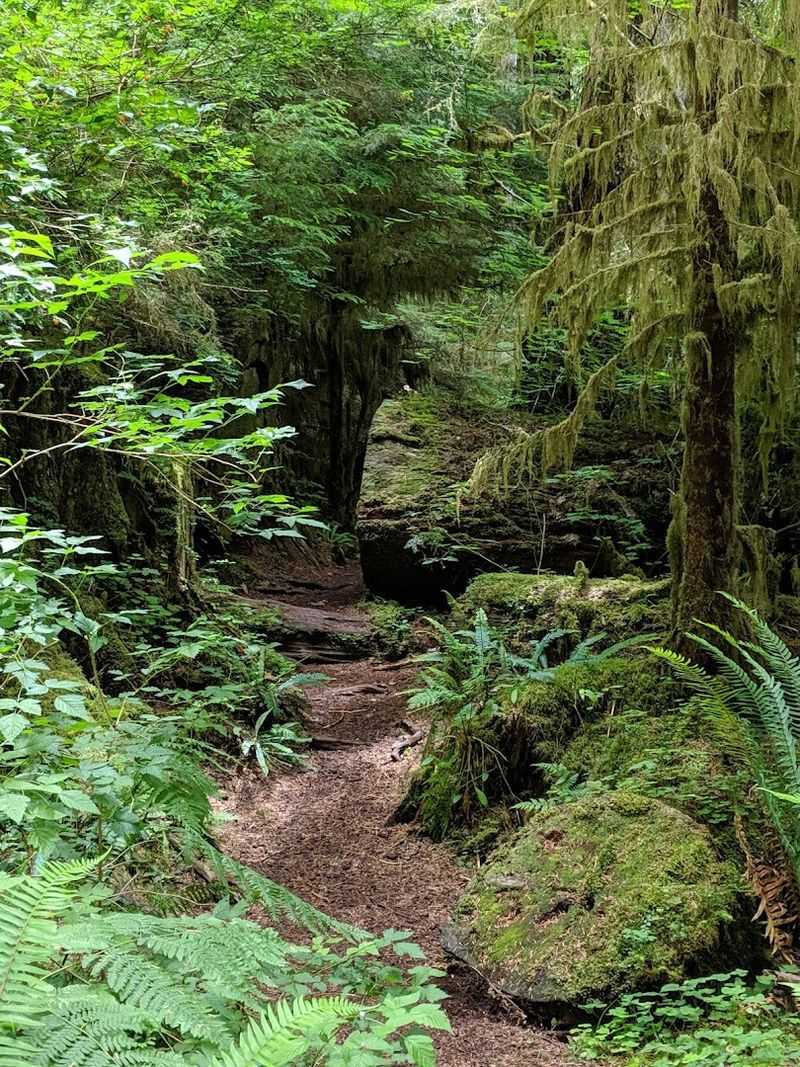
Some hikes are memorable because of a view at the top or a waterfall at the end. The Valley of the Giants works differently.
The experience accumulates slowly, building from the moment you step off the logging road and onto the forest trail, and it does not fully settle until you are back in your car driving home through those long, winding roads with the trees still vivid in your memory.
The scale of the trees does something to your sense of time. Standing next to a Douglas fir that was already 200 years old when Oregon became a state has a way of reshuffling your priorities in a quiet but lasting way.
Visitors consistently describe leaving the valley feeling calmer, more grounded, and oddly grateful, which is a rare outcome for a 1.3-mile loop hike.
Unlike destinations that require crossing state lines or booking months in advance, this experience is tucked into the Oregon Coast Range and accessible to anyone willing to put in the drive. Whether you are coming from Salem, Portland, or even further afield, the Valley of the Giants rewards the effort with something genuinely hard to find anywhere else in the Pacific Northwest.
It is the kind of place that makes you want to come back every single year.
Share this story