 Unearth The Voyage
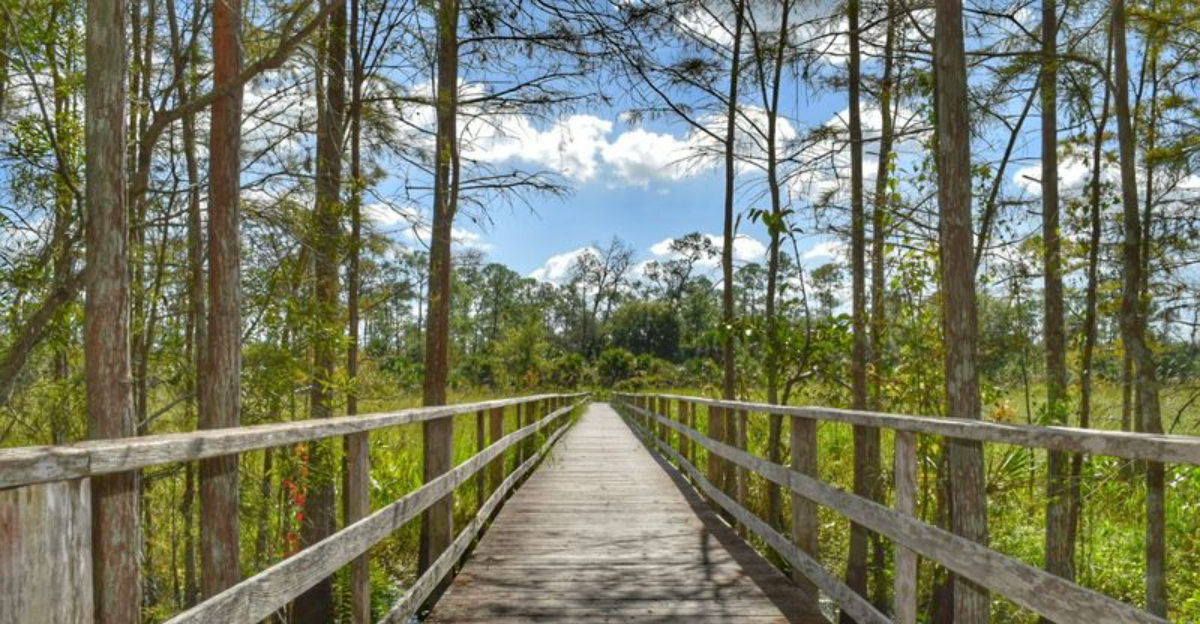
There is a place in Southwest Florida where ancient cypress trees rise so tall they block out the sky, and the air smells like cool, dark water mixed with earth and moss. The wooden boardwalk beneath your feet stretches ahead through a forest that has been growing for hundreds of years, and every turn brings something new to see.
I visited on a quiet Tuesday morning, and I have to say, nothing quite prepares you for the moment you step into that cathedral of trees. This is not your average nature walk.
The birds are loud, the light filters down in golden streaks, and the whole place feels like it belongs in a storybook. Keep reading, because every section of this trail has something worth knowing before you go.
Where the Trail Begins: Address, Location, and First Impressions
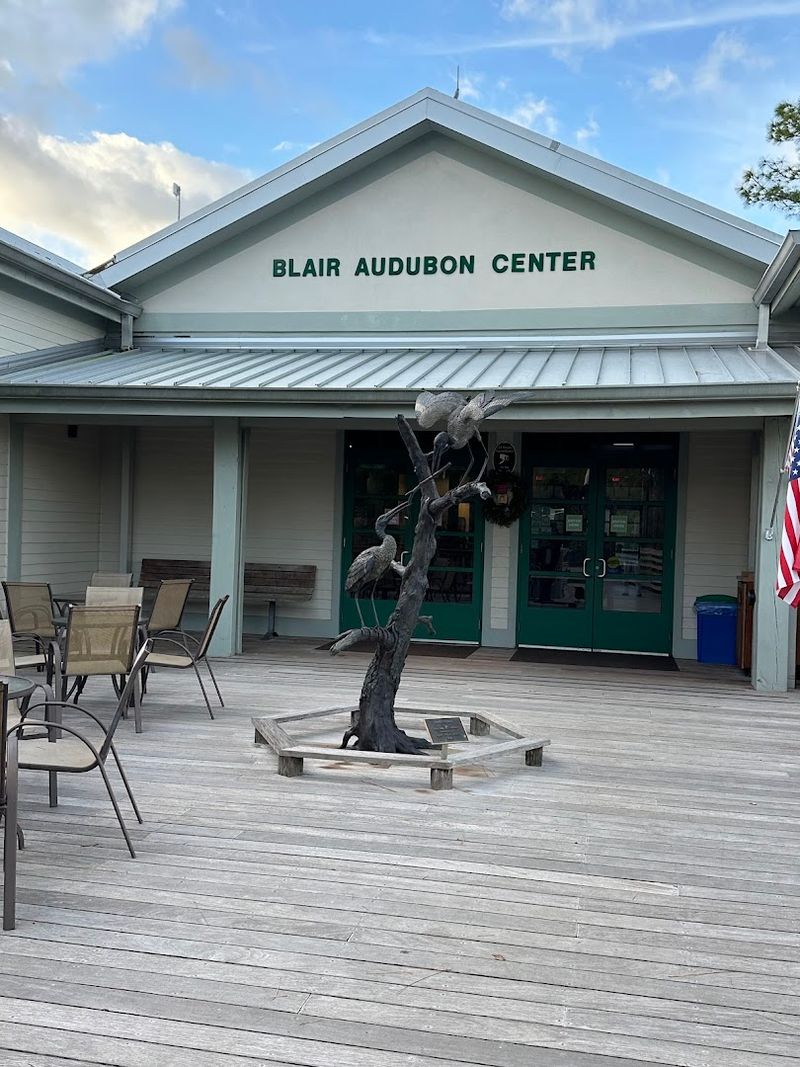
The drive out to 375 Sanctuary Rd W, Naples, already sets the mood. The road narrows, the trees crowd in on both sides, and by the time you park and walk toward the visitor center, you know you are somewhere special.
Audubon Corkscrew Swamp Sanctuary sits in Collier County in Southwest Florida, and it is managed by the National Audubon Society. The sanctuary covers roughly 13,000 acres of protected wetlands, making it one of the largest old-growth cypress forests remaining in North America.
The visitor center is clean, well-organized, and staffed by genuinely friendly people who will happily explain the trail layout before you head out. Admission is $17 per adult, and the sanctuary is open every day from 8 AM to 3 PM.
Arriving right at opening gives you the best chance of a quieter, more personal experience on the boardwalk.
The Boardwalk Itself: A Wooden Path Through Another World
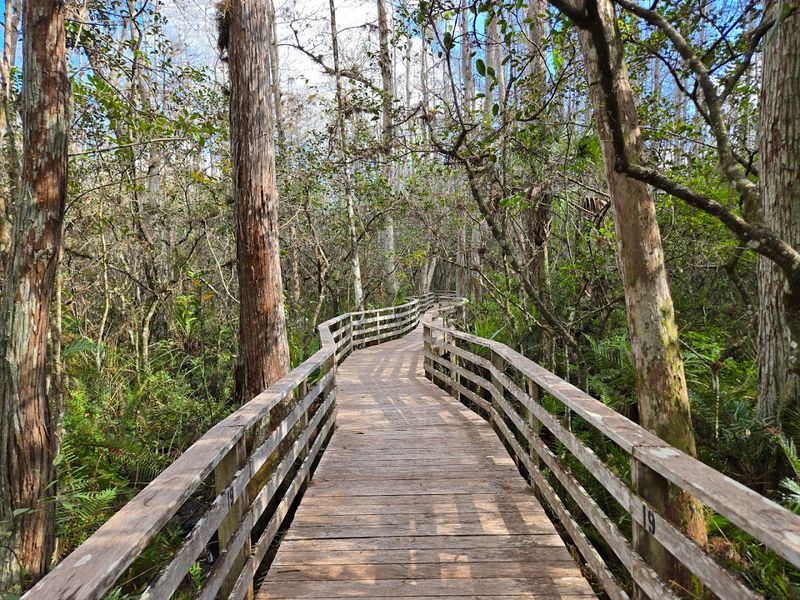
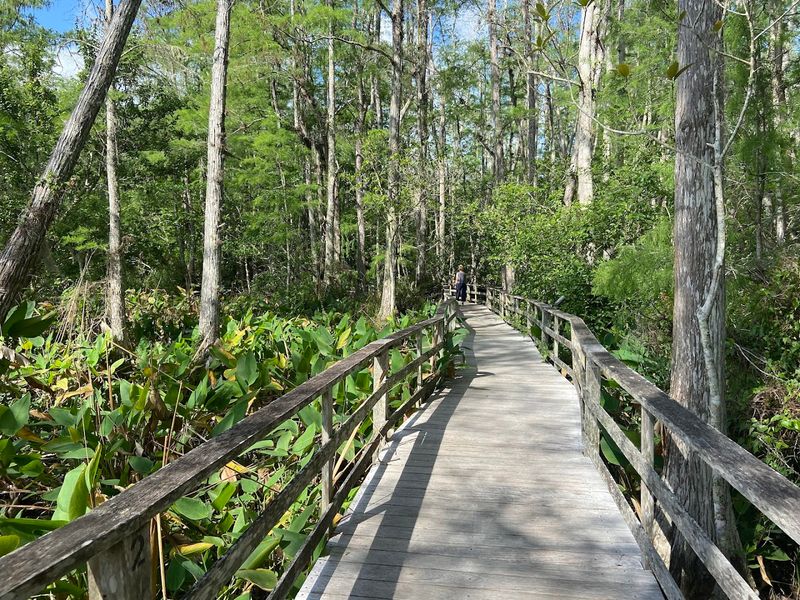
The boardwalk at Corkscrew Swamp Sanctuary is the heart of the whole experience, and it earns every bit of praise it gets. The main loop stretches about 2.25 miles, and the planks are solid, well-maintained, and wide enough for wheelchairs and strollers without any trouble.
What makes this path so striking is how it lifts you just above the swamp floor, giving you the feeling of floating through the forest. The wood is weathered but sturdy, and the railing height is just right for leaning over to watch the water below.
The trail is not a loop in the traditional sense. There are different sections that pass through distinct habitats, so the scenery keeps shifting as you move along.
Most visitors take about two hours at a relaxed pace, though spending three hours is easy if you stop often to look and listen.
Ancient Cypress Giants: Trees That Have Outlived Empires
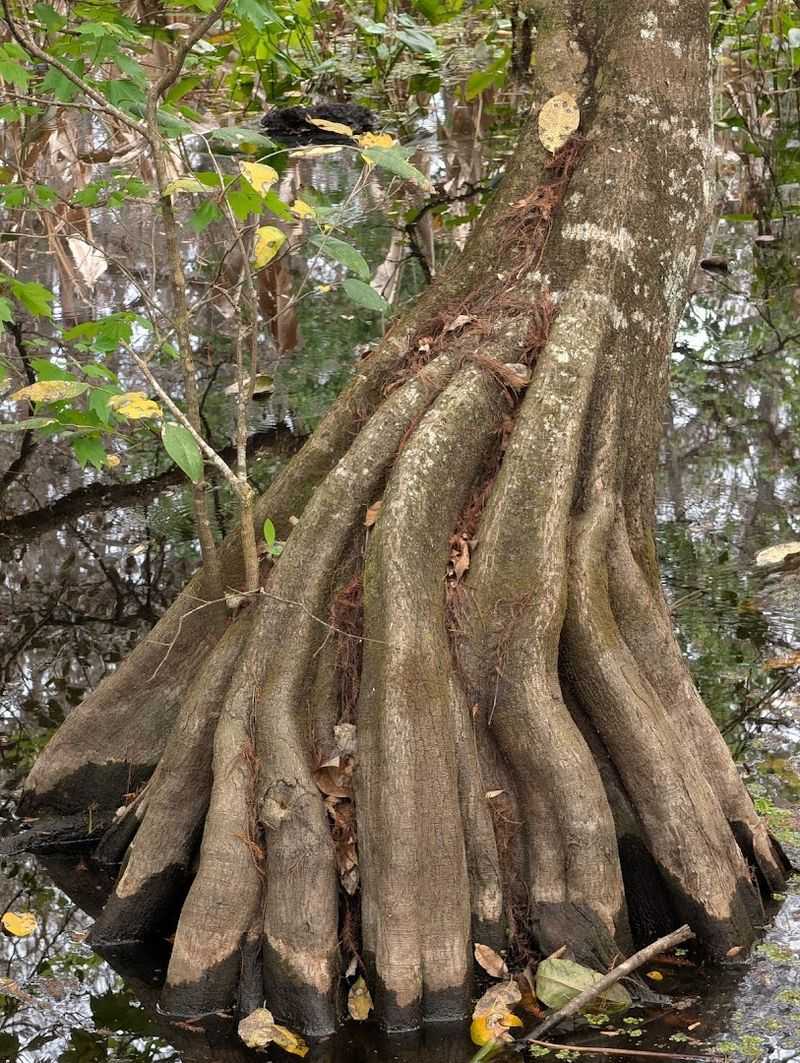
Some of the bald cypress trees here are over 500 years old, and standing next to one is a genuinely humbling experience. Their trunks flare out at the base into wide, buttressed roots that grip the swamp floor, and their bark is deeply furrowed and gray like old stone.
These are not just big trees. They are living history, having survived centuries of Florida weather, and they are the reason this sanctuary exists at all.
Conservation efforts in the 1950s helped protect this forest from logging, which would have wiped it out entirely.
Looking up from the boardwalk, the canopy closes overhead in a way that muffles sound and drops the temperature noticeably. Spanish moss drapes from the branches in long curtains, and the combination of height, shadow, and silence makes the cypress strand feel completely removed from the modern world outside the sanctuary gates.
Bird Life on the Trail: A Birder’s Best Day Out
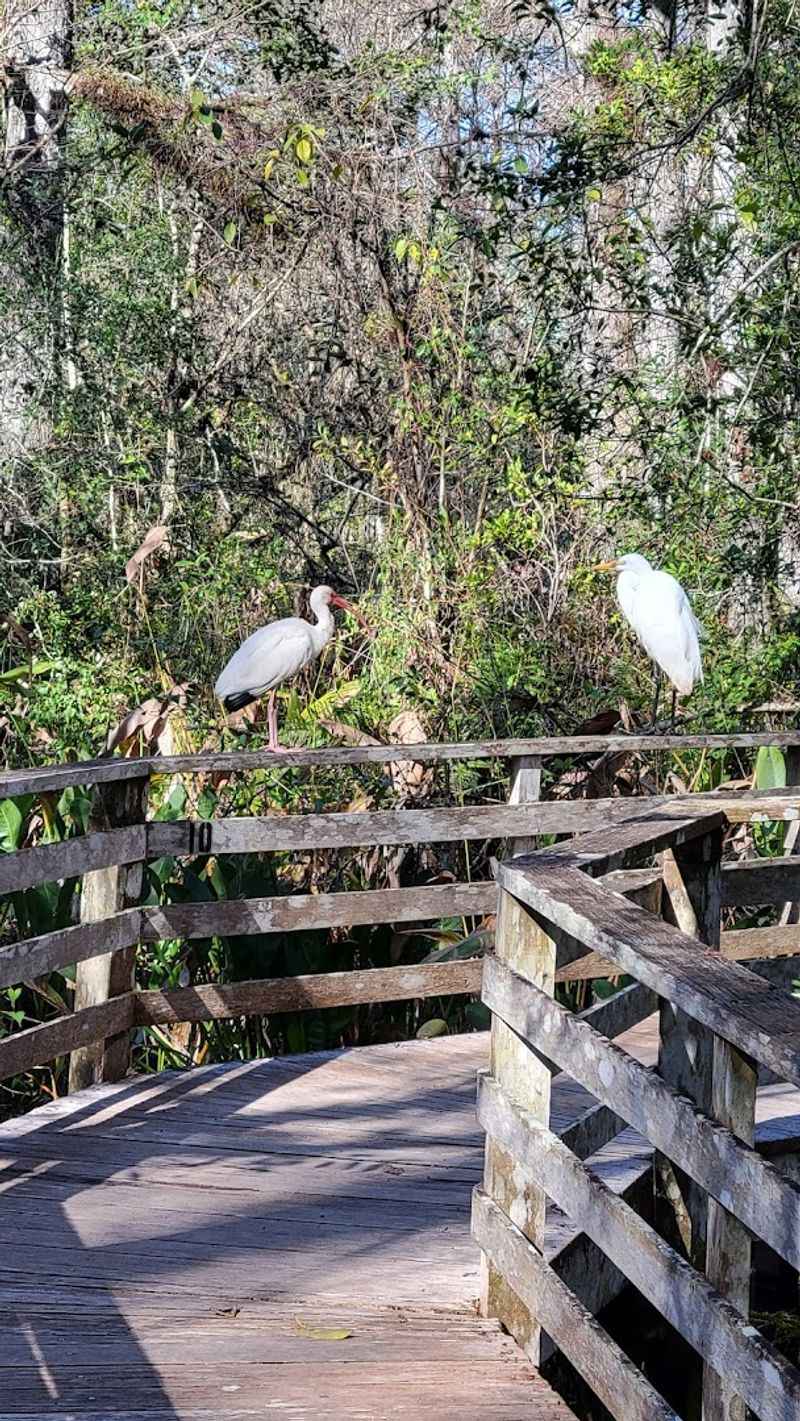
Birding at Corkscrew Swamp Sanctuary is seriously rewarding, and even casual visitors who have never held a pair of binoculars will find themselves stopping to stare. The sanctuary is home to one of the largest nesting colonies of wood storks in the United States, and sightings of great blue herons, great egrets, anhingas, ibises, and roseate spoonbills are all common.
Near the entrance, a chalkboard lists every species spotted that day, which is a clever and practical touch that gets you excited before you even step onto the boardwalk. On my visit, the list was impressively long, and I spotted an anhinga drying its wings on a low branch just minutes in.
Bringing binoculars is strongly recommended. The birds are not shy, but many perch high in the canopy or wade far out in the open water, and a good pair of binoculars turns a distant silhouette into a clear, detailed view worth photographing.
Alligators and Other Wildlife: The Swamp Has Teeth
Not everyone sees an alligator on every visit, but plenty of people do, and the ones spotted here tend to be impressively large. On the perimeter section of the boardwalk near the open marsh areas, alligators often rest in the shallow water just a few feet below the railing.
Beyond alligators, the sanctuary hosts raccoons, various snake species, river otters, and a wide range of turtles. The raccoons in particular seem completely unbothered by people and will sometimes trot along the boardwalk edge in full daylight.
Wildlife sightings are never guaranteed, of course, and the variety you encounter depends a lot on the season and the time of day. Early morning visits tend to produce more activity overall.
Moving slowly and quietly along the boardwalk, rather than rushing through, makes a noticeable difference in how much you actually get to see during your time here.
The Different Habitats Along the Route: More Than Just a Swamp
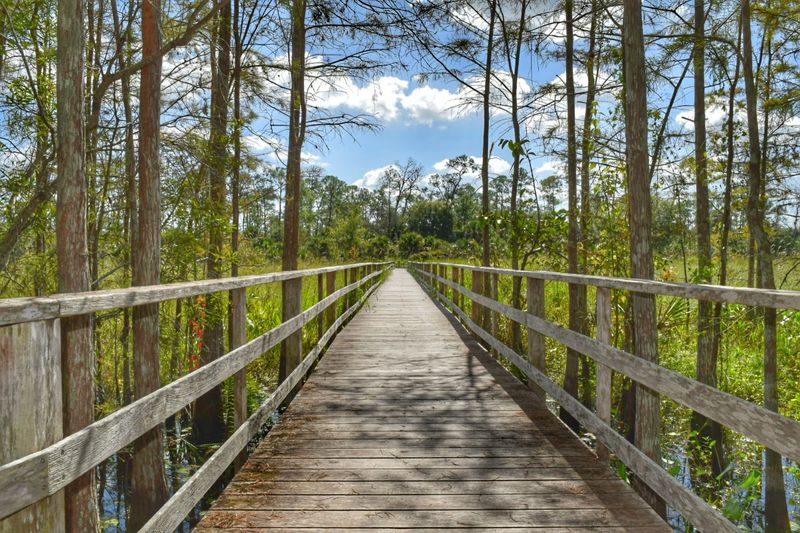
One of the most interesting things about this trail is that it does not stay the same from start to finish. The boardwalk passes through several distinct ecological zones, each with its own character, light quality, and set of plants and animals.
You move from pine flatwoods near the beginning into wet prairie, then into a lettuce lake section covered in floating aquatic plants, and finally into the deep cypress strand at the heart of the sanctuary. Each transition feels like walking through a door into a different room.
The variety keeps the walk from ever feeling repetitive. The open prairie sections flood the boardwalk with sunlight and wide sky, while the cypress strand closes everything down into cool, green shadow.
By the time you complete the full route, you have experienced a genuine cross-section of what makes Southwest Florida’s wetland ecosystems so biologically rich and ecologically important.
Accessibility and Family Friendliness: Everyone Gets to Come Along
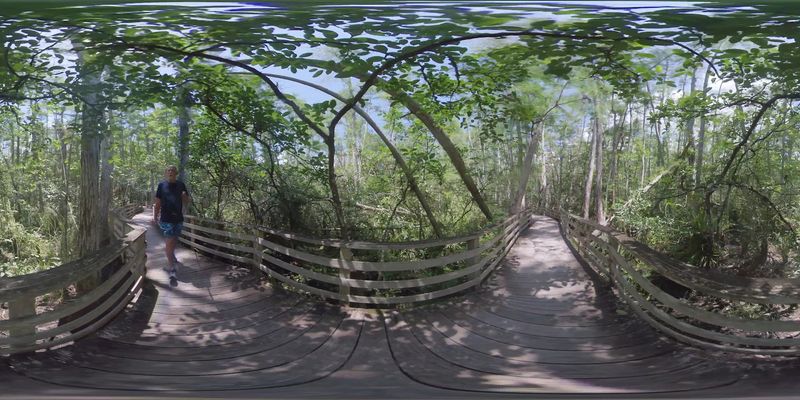
The fully paved and planked boardwalk makes Corkscrew Swamp Sanctuary one of the more accessible natural areas in Florida. Visitors have pushed wheelchairs and strollers the full 2.25-mile route without difficulty, and the surface is smooth and stable throughout.
For families with young children, the trail is a genuine highlight. Kids are close enough to the water to feel the excitement of spotting wildlife, but the railing keeps everything safe and manageable.
The signage along the route is written clearly enough for older children to read and understand on their own.
Seating areas are placed at regular intervals, which is thoughtful for visitors who need to rest or simply want to sit and absorb the atmosphere. The restrooms are all located at the visitor center, so the practical advice here is to take care of that before heading out, since there are no facilities once you are on the trail.
The Visitor Center, Gift Shop, and Cafe: Small but Genuinely Good
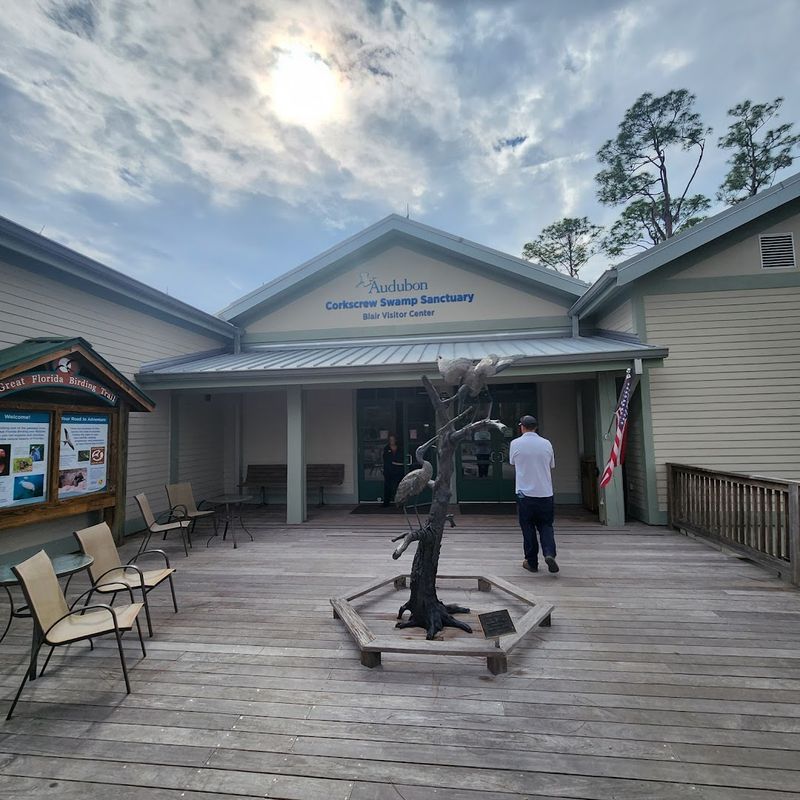
The visitor center at Corkscrew is compact but well done. The discovery center inside has educational displays about the sanctuary’s history and the various species that live here, and it is worth spending ten minutes browsing before you head out.
The gift shop carries a solid selection of nature-themed items, field guides, and locally made souvenirs. Nothing feels overpriced or gimmicky, and a few of the items are genuinely unique to this place rather than generic Florida tourist goods.
The small cafe on site serves sandwiches, snacks, and drinks, which is a welcome option after a two-hour walk in Florida humidity. The menu is limited but satisfying, and having a place to sit and refuel without driving anywhere is a convenience that adds real value to the overall visit.
Grab water before you head out, since the trail itself has no refreshment stops along the way.
Best Time to Visit: Seasons, Crowds, and Florida Heat
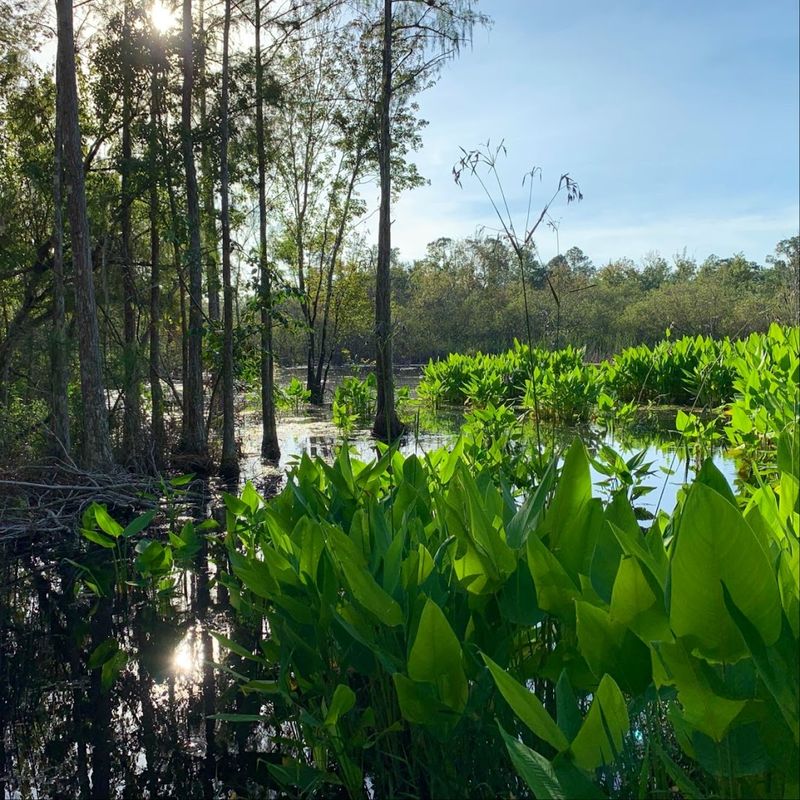
The dry season, running roughly from November through April, is widely considered the best time to visit. Water levels drop during these months, which concentrates wildlife around the remaining pools and makes animal sightings far more frequent and dramatic.
Winter is also when the wood stork nesting colony is most active, and seeing dozens of these large birds tending nests high in the cypress canopy is one of the more spectacular things you can witness in Florida nature. The cooler temperatures during this period also make the walk significantly more comfortable.
Summer visits are absolutely possible, but the heat and humidity are intense, and the insect population increases considerably. Going early in the morning, right at the 8 AM opening, is the best strategy for beating both the heat and the crowds.
Weekday afternoons tend to be noticeably less busy than weekend mornings, which is useful to keep in mind when planning.
The Observation Tower and Lookout Points: Seeing the Big Picture
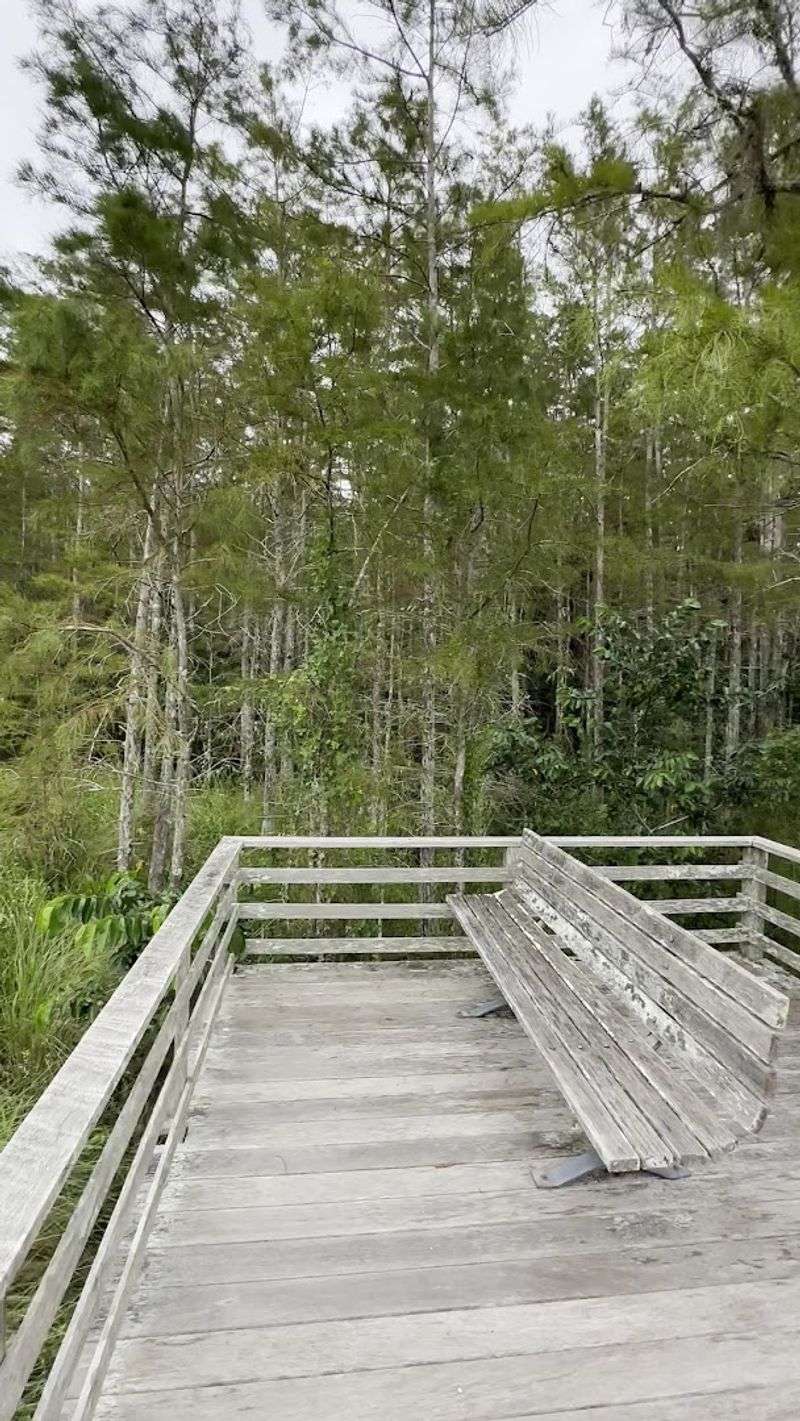
Scattered along the boardwalk route are several designated lookout points where the view opens up dramatically. These spots are marked with signage and often have benches or railings positioned specifically to frame the best views across the open water and into the tree line.
The observation tower gives you a rare elevated perspective on the sanctuary landscape, letting you see across the wet prairie and into the cypress canopy from above. A few of the lookout points are also equipped with mounted viewing scopes, which are great for getting a closer look at birds resting far out in the open marsh.
These spots are genuinely worth pausing at rather than walking past. The boardwalk experience is excellent at eye level, but the elevated views reveal just how vast and unbroken this protected landscape actually is, stretching out in every direction without a road or building in sight.
Conservation History: Why This Place Exists at All
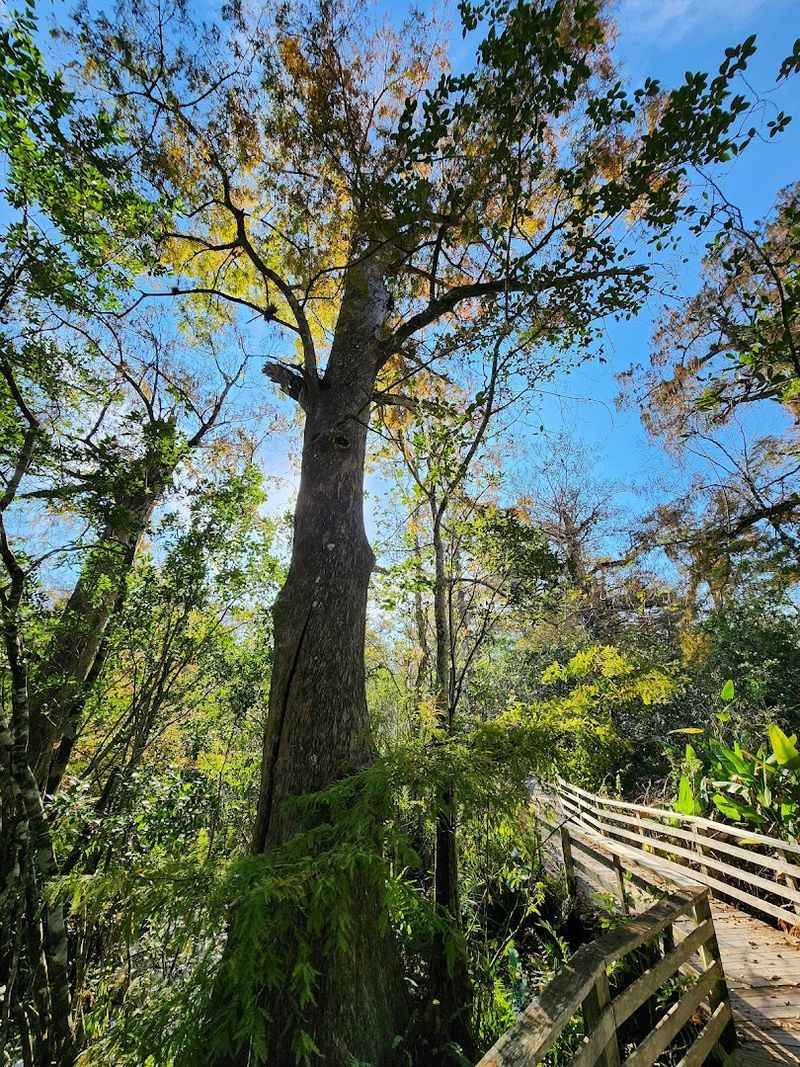
The story of how Corkscrew Swamp Sanctuary came to exist is worth knowing before you walk a single plank. By the early 1950s, logging operations had already cleared most of Florida’s old-growth cypress forests, and this area was next on the list.
The National Audubon Society stepped in and, working with conservation partners, purchased and protected the land starting in 1954. The decision came largely because this site held the largest known nesting colony of wood storks in the country, and losing it would have been a serious blow to the species.
Today the sanctuary stands as proof that conservation efforts, when organized and determined, can succeed in preserving something irreplaceable. The trees you walk among are the same ones that would have been cut down seven decades ago.
That context gives the whole visit a weight and meaning that goes well beyond a pleasant afternoon stroll through the woods.
Tips for Getting the Most Out of Your Visit
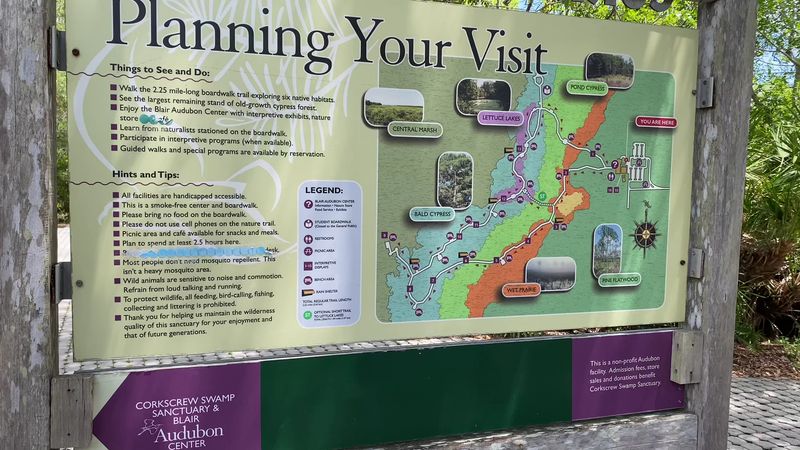
A few practical notes can make the difference between a good visit and a great one. Bring binoculars, wear lightweight and breathable clothing, and apply insect repellent before you leave the parking lot, especially in the warmer months when mosquitoes are active near the water.
Comfortable walking shoes are fine since the entire route is on boardwalk, but closed-toe shoes are a better choice than sandals for comfort over the full 2.25-mile distance. The sanctuary does not allow pets on the boardwalk, so leave your dog at home for this one.
An annual membership to the National Audubon Society covers admission here and is worth considering if you plan to return, which most people do after their first visit. The phone number for the sanctuary is 239-348-9151, and the official website at audubon.org/corkscrew has current trail conditions and event listings before you make the drive out.



