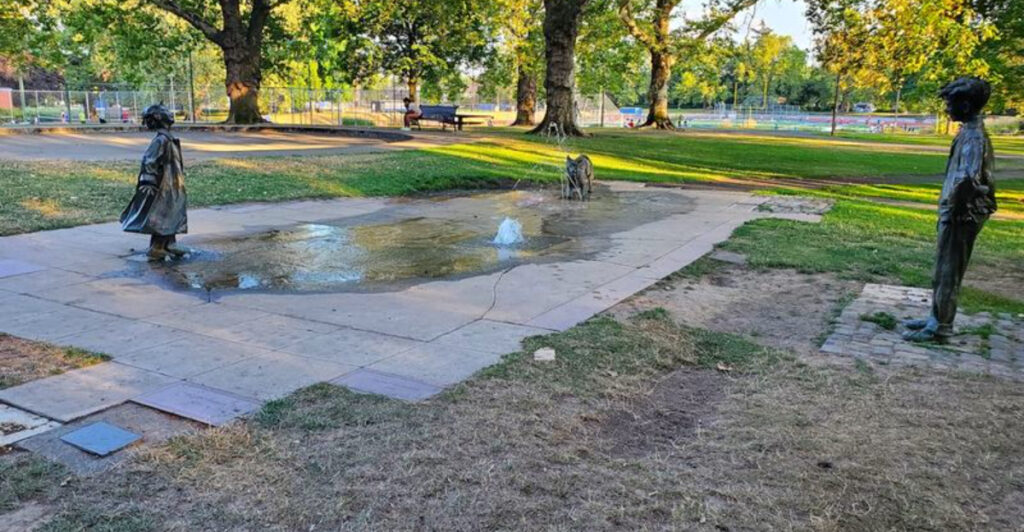
There is a corner of Portland, Oregon, where beloved storybook characters stand frozen in bronze, waiting patiently for the next generation of readers to find them. Tucked inside a lush neighborhood park, this spot quietly honors one of America’s most cherished children’s authors in a way that feels personal and unhurried.
Kids who grew up racing through Ramona Quimby books will feel a jolt of pure recognition the moment they see the sculptures up close. The plaques, the splash fountain, the surrounding park full of trees and playgrounds, it all adds up to something genuinely worth the detour.
Read on to find out what makes this Portland treasure so special and why families keep coming back year after year.
Where the Magic Starts: Address and Setting
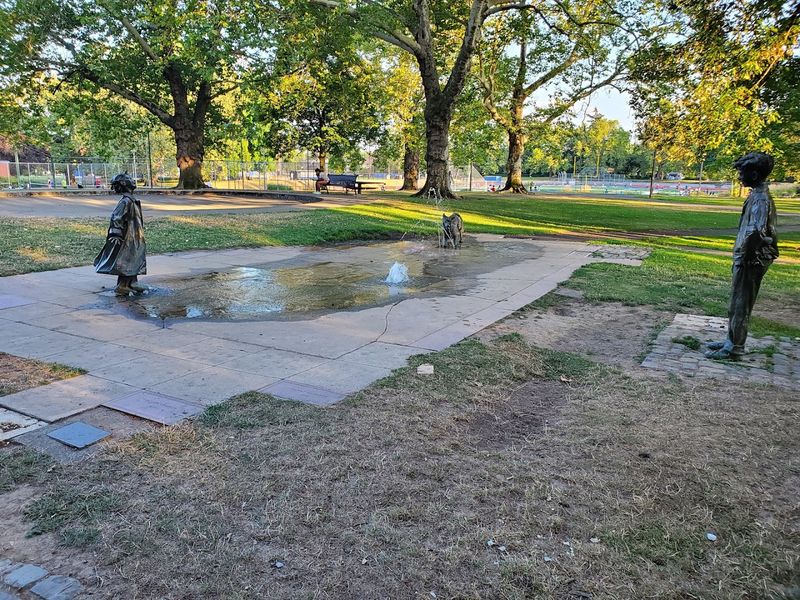
Grant Park in Portland, Oregon is the kind of neighborhood park that feels like it belongs in a storybook itself. The Beverly Cleary Sculpture Garden sits along Grant Park Path, Portland, OR 97212, nestled between mature trees and wide open lawns that give the whole area a calm, unhurried feel.
The park is easy to reach by car, though street parking on busy weekend days can take a little patience. Weekday mornings tend to be quieter, which means more space to wander and actually read the plaques without anyone bumping into you.
The garden is open daily from 5 AM to midnight, so there is plenty of flexibility for families with different schedules. Early morning visits have a peaceful quality that afternoon crowds simply cannot match.
The surrounding neighborhood is full of beautifully maintained homes with interesting architecture, which makes the drive in feel like its own small adventure. The park itself is large enough that the sculpture area feels like a discovery rather than the first thing you see at the entrance.
The Woman Behind the Characters: Beverly Cleary’s Story
Beverly Cleary was born in McMinnville, Oregon, in 1916, and she spent part of her childhood in Portland, which is exactly why the city chose to honor her in such a lasting way. She went on to become one of the most widely read children’s authors in American history, with her books translated into more than 20 languages.
Her characters were different from the polished heroes found in many children’s books of her era. Ramona Quimby was stubborn, curious, and wonderfully imperfect, which made young readers feel seen in a way that felt genuinely new at the time.
Cleary received the Newbery Medal in 1984 for “Dear Mr. Henshaw” and was awarded the National Medal of Arts in 2003. She passed away in 2021 at the remarkable age of 104, leaving behind a literary legacy that continues to shape how children experience reading.
Her connection to Portland runs deep, and the sculpture garden is the city’s way of saying thank you to a writer who gave so much to so many young readers across generations.
Meeting Ramona: The Star of the Show
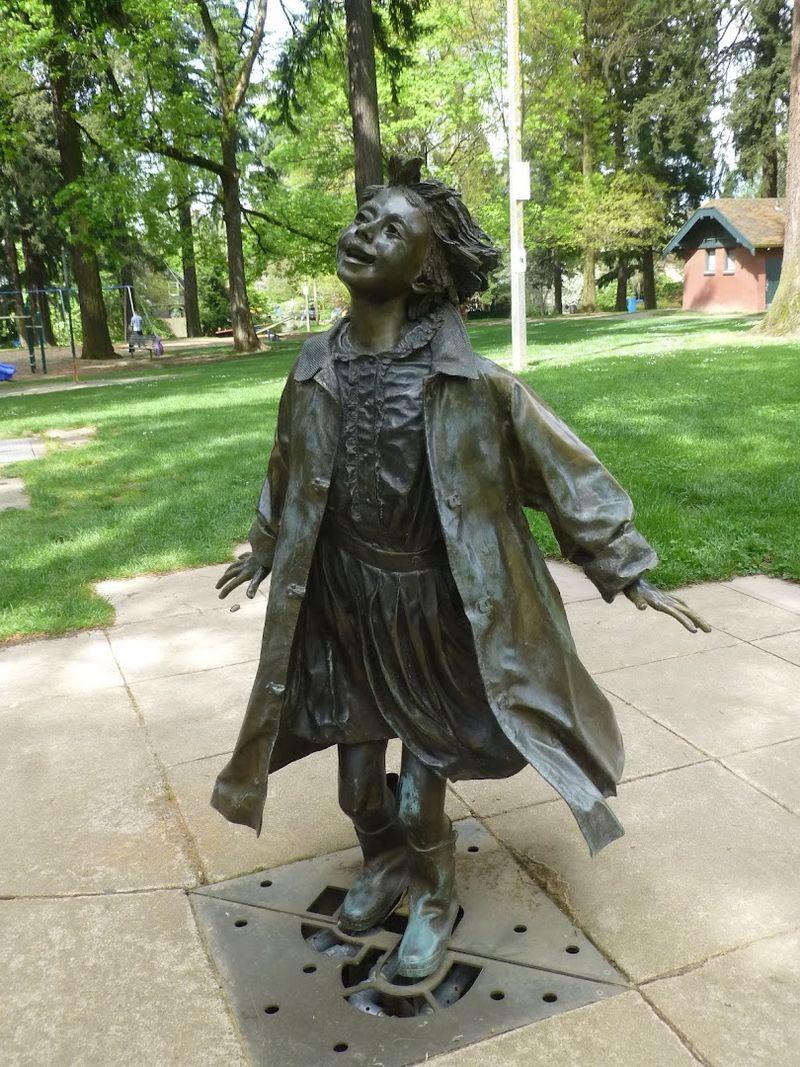
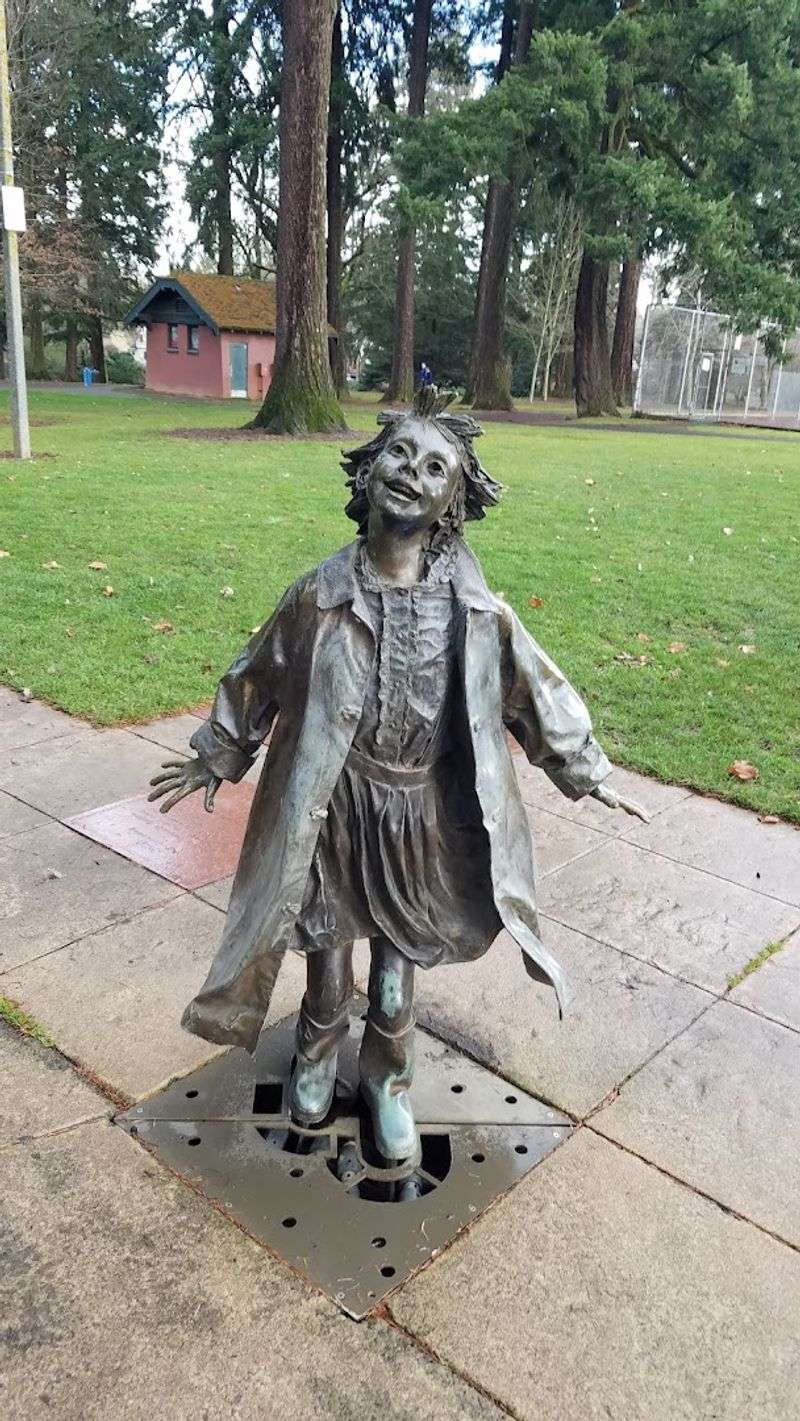
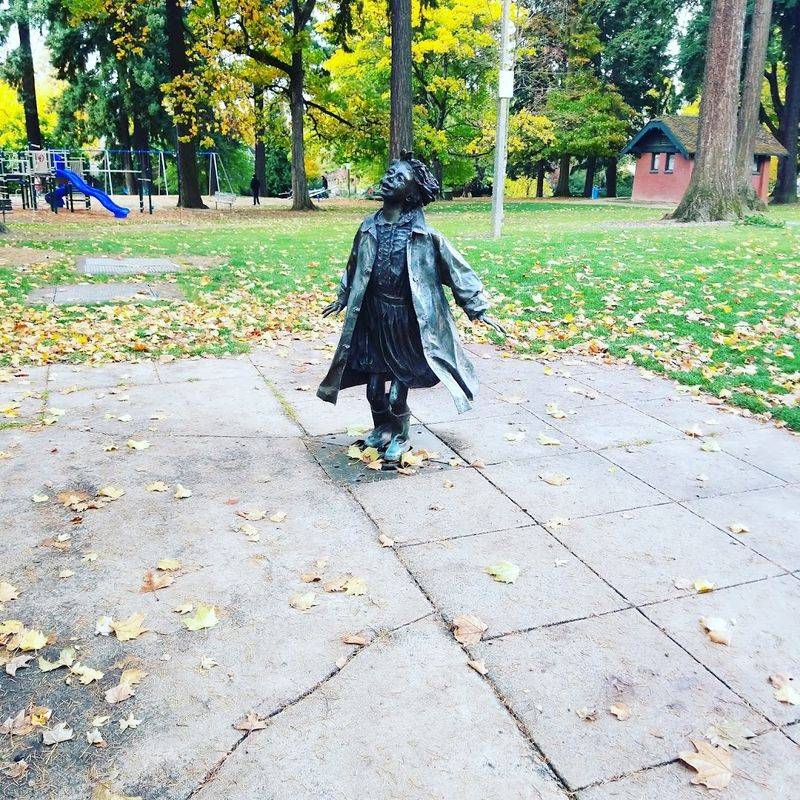
Of all three sculptures in the garden, Ramona Quimby tends to draw the longest stares and the most photographs. The bronze figure captures her mid-movement, full of the restless energy that made her so unforgettable on the page.
Ramona first appeared in “Henry Huggins” in 1950 as a minor character, a pesky little neighbor kid who kept showing up and stealing scenes. Cleary eventually gave her own series of books, starting with “Beezus and Ramona” in 1955, and readers never looked back.
The sculpture does a solid job of translating her personality into metal. You can almost hear her arguing with Beezus or insisting that she is not a pest, even though everyone around her quietly disagrees.
Fans of the books often mention that standing next to the statue feels oddly emotional, like running into a childhood friend you had nearly forgotten. It is a small thing, a bronze figure in a Portland park, but for the right person on the right afternoon, it carries a surprising amount of weight.
Henry and Ribsy: A Boy and His Very Good Dog
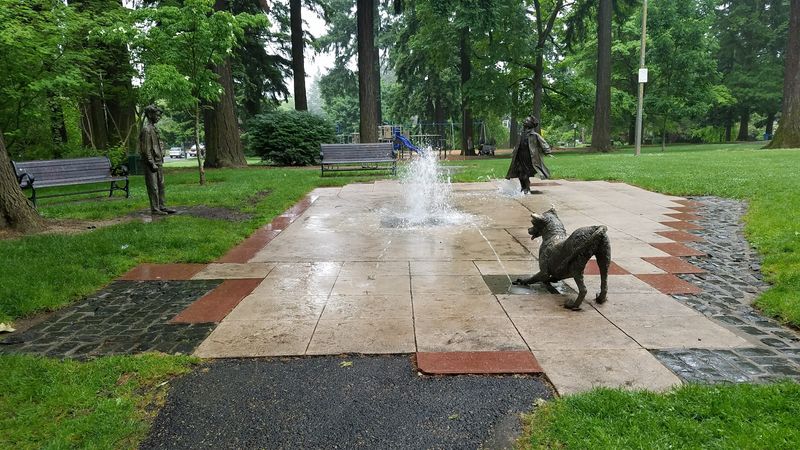
Henry Huggins and his dog Ribsy stand together in the sculpture garden as a pair, which feels exactly right for two characters who were practically inseparable throughout their book series. Henry was the kind of kid who always seemed to be getting himself into situations that were entirely accidental and completely unavoidable.
Ribsy, the scruffy mutt who became one of children’s literature’s most beloved dogs, has his own dedicated book published in 1964. The bronze version of Ribsy reportedly gets sniffed by actual dogs visiting the park on a regular basis, which is arguably the highest possible compliment a dog sculpture can receive.
The proportions and details on both figures are carefully rendered, with Ribsy’s coat texture and Henry’s relaxed posture giving the pair a natural, lived-in quality. They do not look like monuments.
They look like characters who simply paused for a moment and forgot to start moving again.
Henry’s book series began in 1950 and ran for six volumes, making him one of Cleary’s most enduring creations and a perfect companion to Ramona in both fiction and bronze.
The Splash Fountain: When Water Joins the Fun
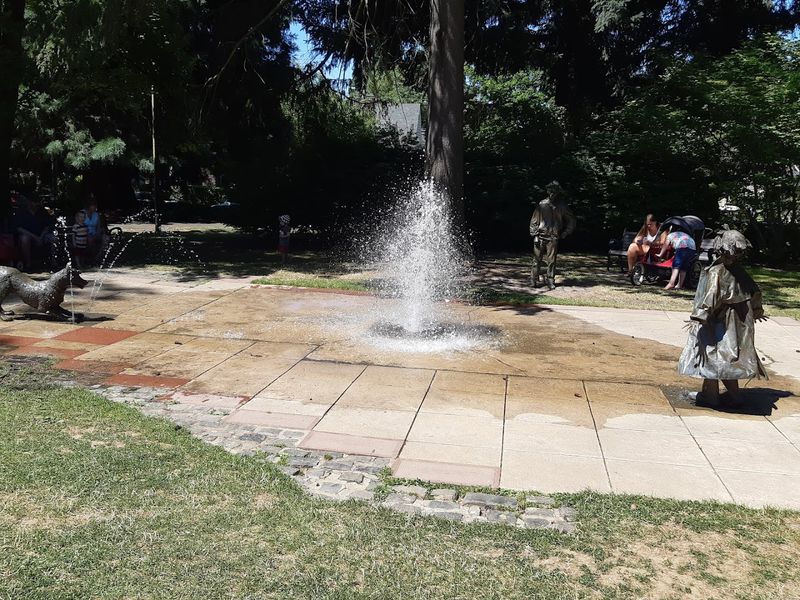
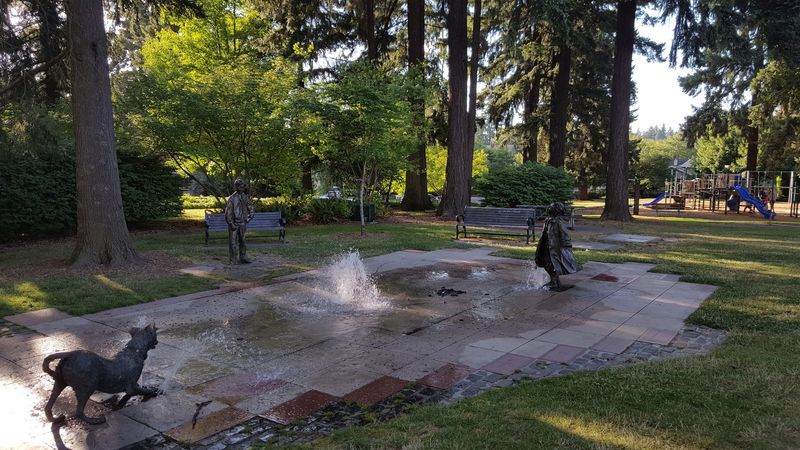
The sculpture garden doubles as a splash zone during warmer months, which transforms the space from a quiet literary landmark into something far more lively and chaotic in the best possible way. Kids who arrive expecting only statues suddenly find themselves ankle-deep in cool water on a hot Portland afternoon.
The fountain does not operate year-round, so timing your visit matters if water play is part of the plan. Summer and late spring are the safest bets, while fall and winter visits will be drier but no less interesting for book fans who just want to see the sculptures up close.
On days when the splash pad is running, the whole area takes on a festive energy. Parents sit on nearby benches while children dart between the bronze figures and the water jets, occasionally pausing to actually look at the statues before sprinting off again.
Even on days when the fountain is switched off, the plaza area around the sculptures is pleasant and shaded, making it a comfortable spot to spend time without the noise and splash of an active water feature pulling everyone’s attention away from the artwork.
Book Quote Plaques: Small Words With Big Impact
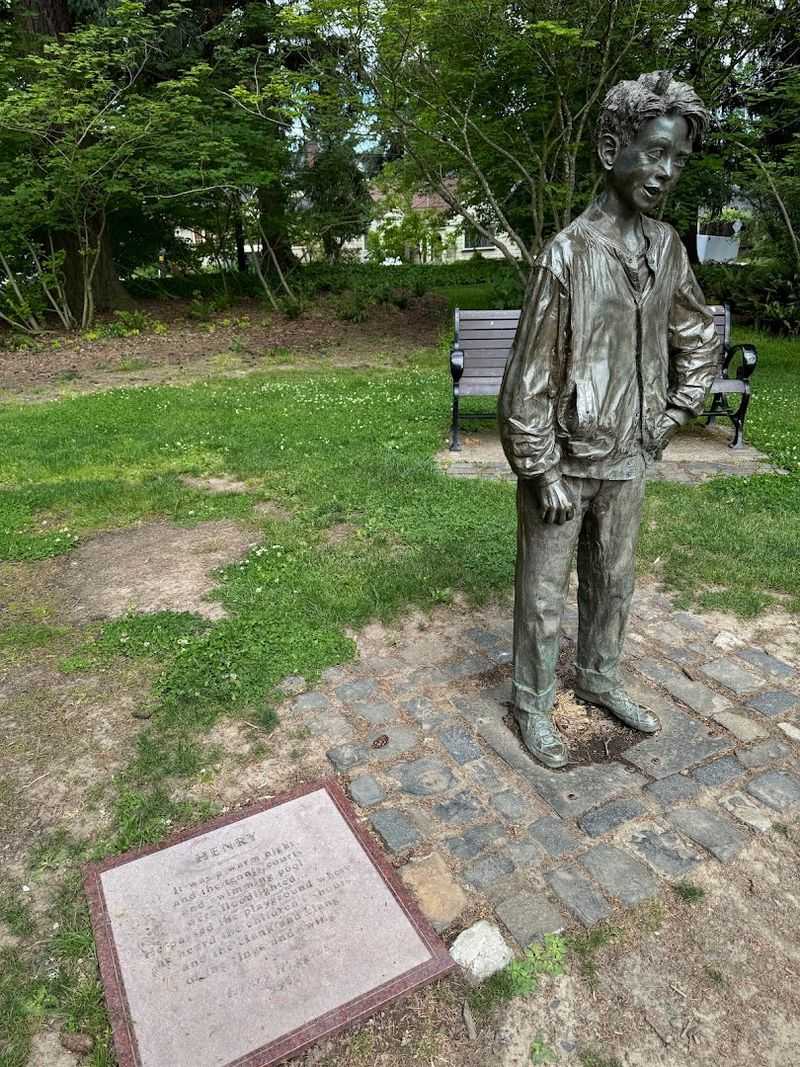
Scattered around the sculpture area, a series of plaques display titles and quotes from Beverly Cleary’s books, giving the space an extra layer of meaning that goes beyond the three main sculptures. For readers who grew up with these stories, the quotes land with the quiet force of a memory suddenly surfacing.
The plaques have aged over the years, and some show wear that makes them a little harder to read in certain lighting conditions. Bringing a pair of reading glasses or crouching down for a better angle can help, especially with older, more weathered sections of text.
Each block surrounding the sculptures reportedly lists titles from Cleary’s bibliography, turning the garden into a small literary tour for anyone patient enough to walk the full perimeter. It is a detail that rewards slow visitors far more than those who rush in for a quick photo and leave.
The combination of sculptural art and written word feels true to Cleary’s spirit as an author who believed strongly in the power of everyday language to connect with young readers. The plaques are understated, but they give the garden its genuine literary identity.
The Park Beyond the Sculptures: What Else Grant Park Offers
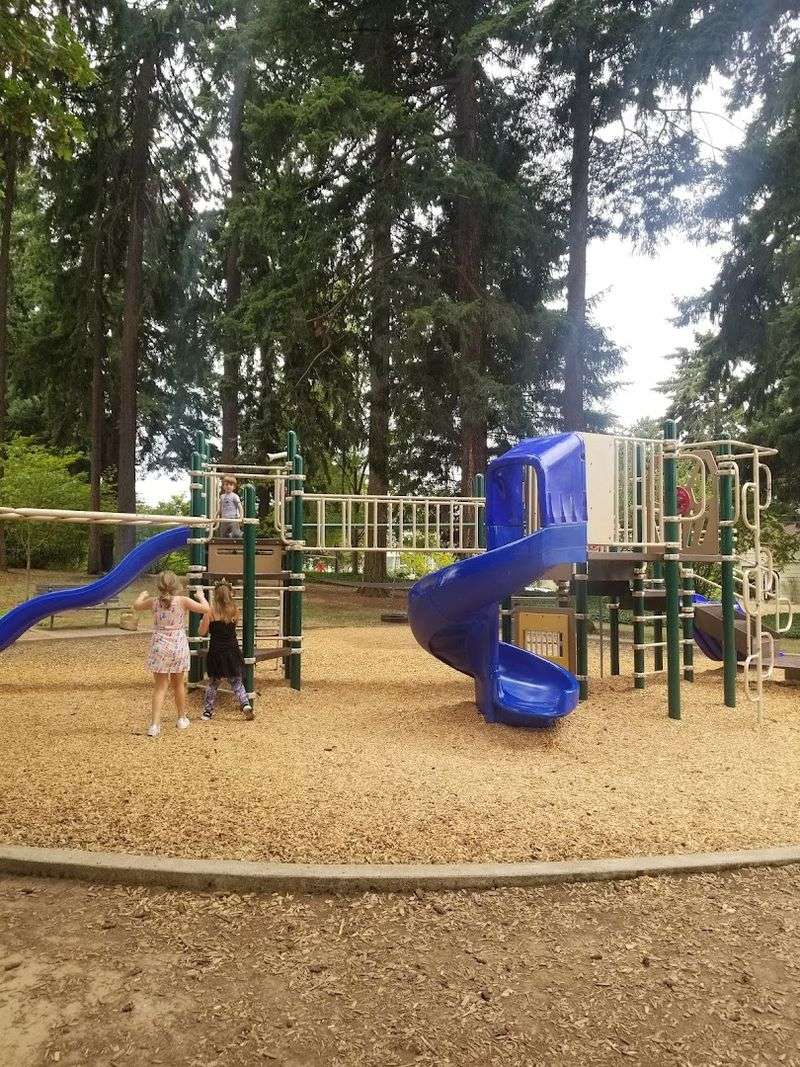
Grant Park itself is a substantial neighborhood park that offers far more than just the sculpture garden, which makes the trip worthwhile even for visitors who are not particularly devoted Beverly Cleary fans. The park includes a playground in excellent condition, tennis courts, basketball hoops, and a running track adjacent to the park near Grant High School.
The playground equipment is well-maintained and popular with younger children, so families can easily spend a couple of hours between the sculptures, the splash pad, and the play structures without anyone running out of things to do. Dogs are welcome throughout the park, which adds to the relaxed, neighborhood atmosphere.
The surrounding area features some genuinely impressive residential architecture, and the streets leading into the park feel like a quiet residential neighborhood that has managed to stay charming without becoming overly polished or touristy.
Grant Park sits in the Grant neighborhood of northeast Portland, a part of the city that feels lived-in and genuine. The park is the kind of place where locals jog past sculptures without a second glance while out-of-town visitors stop and stare, and somehow both reactions feel completely appropriate.
Best Times to Visit and Practical Tips
Spring and summer are the most rewarding seasons to visit the Beverly Cleary Sculpture Garden, particularly if seeing the splash fountain in action is part of the plan. The park is open daily from 5 AM to midnight, which gives visitors a wide range of options that go well beyond the typical tourist schedule.
Weekday mornings are consistently the least crowded, making it easier to take unhurried photographs and read the plaques at a comfortable pace. Saturday afternoons tend to bring the largest crowds, especially in warm weather when the splash pad draws families from across the city.
Street parking is available along the surrounding blocks but can fill up quickly on busy days. Arriving early or using a nearby side street can save a frustrating amount of time circling the block.
The park is also accessible by public transit, which is worth considering given Portland’s generally solid bus network.
For families with young readers, bringing a Beverly Cleary book along for the visit adds a lovely extra dimension to the experience. Reading a passage aloud next to the relevant sculpture is the kind of small, memorable moment that tends to stick with kids for a long time.
A Note on Expectations: Size, Scale, and Honest Impressions
Honesty seems like the kindest gift to give anyone planning a visit here. The Beverly Cleary Sculpture Garden is compact.
Three sculptures, a fountain plaza, and a set of plaques do not fill a large area, and visitors who arrive expecting a sprawling outdoor gallery may need to recalibrate their expectations before stepping out of the car.
The sculptures themselves are modestly sized rather than monumental, which actually suits the subject matter quite well. Ramona was never a towering figure in the literal sense, and keeping the bronze figures at a child-friendly scale gives the whole installation an intimacy that larger statues would likely lose.
The garden earns its 4.5-star rating not through sheer spectacle but through the genuine warmth it generates in the right visitors. Parents who read these books as children and are now introducing them to their own kids tend to have the strongest reactions, which says something meaningful about what the space actually accomplishes.
Coming with modest expectations and an open heart tends to produce the best outcomes here. The garden is a small place with a large amount of meaning attached to it, and that balance works best when visitors let the meaning do most of the heavy lifting.
Why Portland Chose Beverly Cleary: A City and Its Author
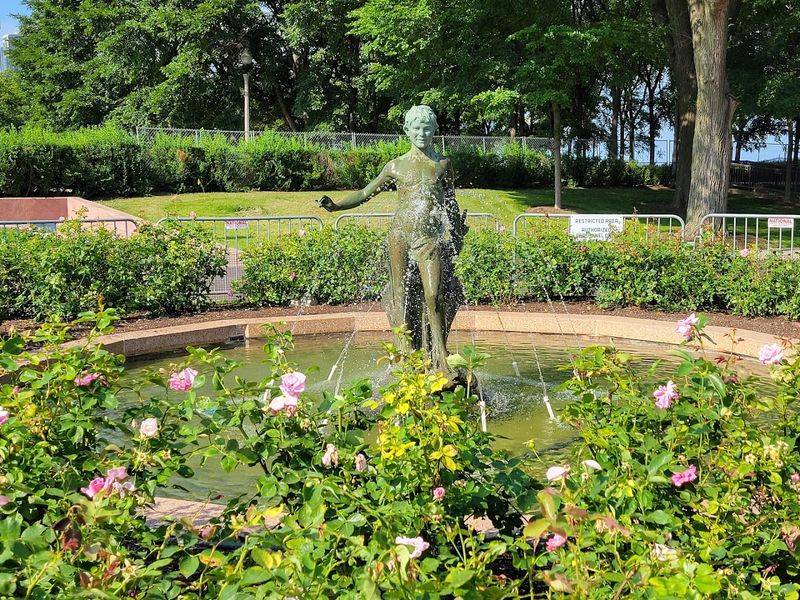
Beverly Cleary grew up partly in Portland, and the city has never forgotten it. The neighborhood where she lived as a child is just a short distance from Grant Park, which is part of why the sculpture garden feels rooted in something real rather than placed arbitrarily in a random green space.
Portland has a long tradition of celebrating literary figures and public art, and the Beverly Cleary Sculpture Garden fits naturally into that broader cultural identity. The city also named a library branch after her, and local schools have deep connections to her work through decades of curriculum use.
It is worth noting that while Portland is the setting here, Beverly Cleary’s reach extends far beyond Oregon. Her books have been read by children across the country, including generations of young readers who grew up nowhere near the Pacific Northwest, from small towns in the Midwest to neighborhoods in states like Oklahoma, where her books found devoted audiences just as enthusiastic as any Portland kid.
The sculpture garden is Portland’s most tangible tribute to Cleary, but the real monument to her work is the ongoing love that readers of all ages, in cities across America, including Oklahoma and beyond, continue to bring to her stories.
Share this story