 Unearth The Voyage
There is a corner of Hoboken, New Jersey, where the calendar stopped sometime around 1939 and nobody complained. A red-sauce Italian restaurant has been holding down that corner ever since, run by the same family across four generations, and the place looks almost exactly the way it did when it first opened its doors.
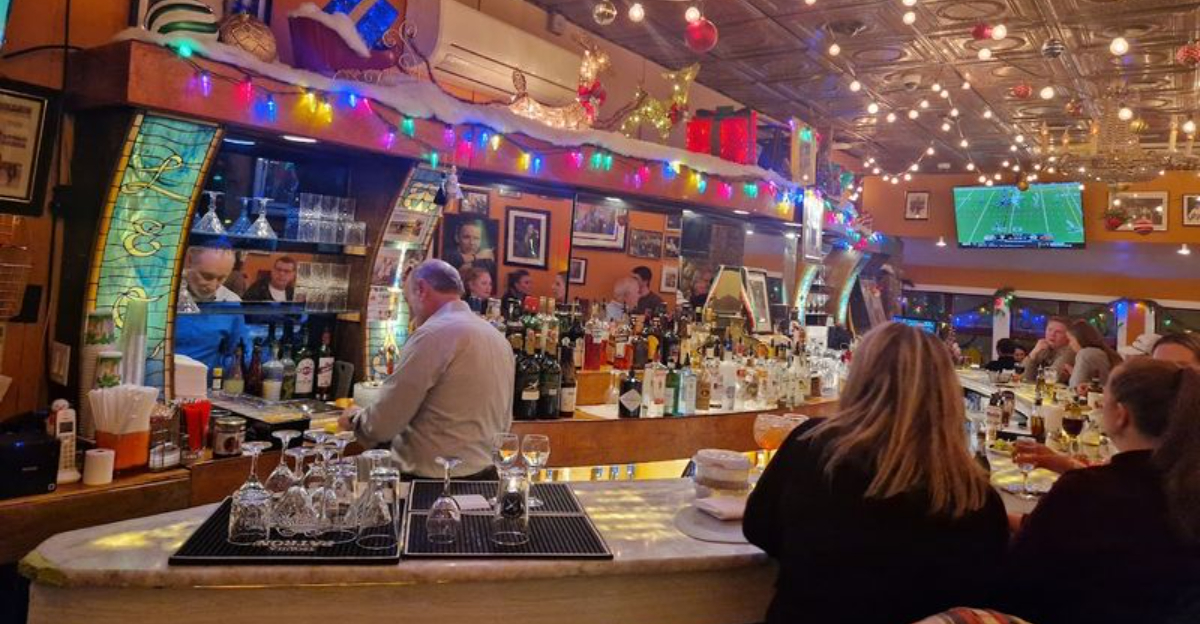
Frank Sinatra used to eat there. His barstool is still mounted above the bar.
The menu reads like a greatest-hits collection of old-school Italian-American cooking, and the jukebox plays the Chairman of the Board on repeat. If that combination does not make you want to find a table immediately, keep reading, because it gets better from there.
Where Grand Street Meets Old Hoboken
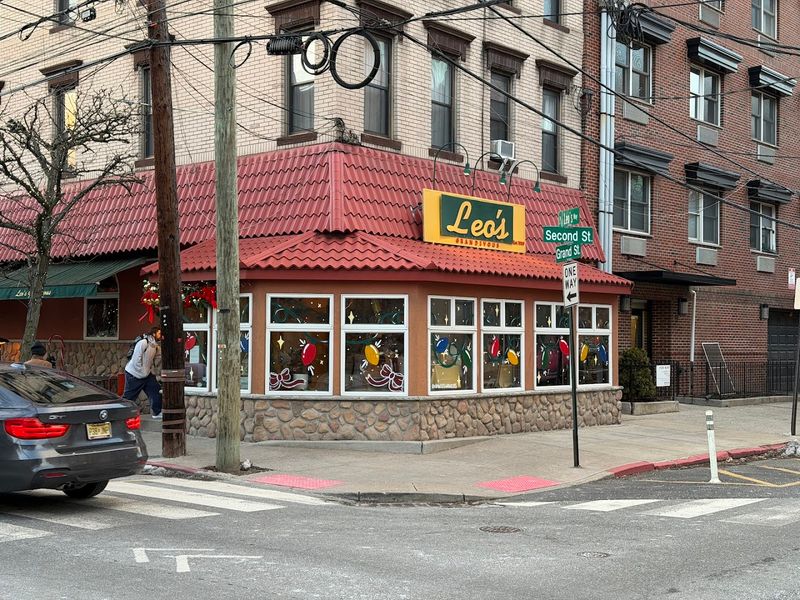
At 200 Grand Street in Hoboken, New Jersey 07030, Leo’s Grandevous occupies a corner spot that has anchored the neighborhood since 1939. The address puts it right in the heart of a city that has changed enormously over the decades, yet this particular corner has resisted nearly every trend that swept through.
Hoboken sits just across the Hudson River from Manhattan, making it accessible from New York City while still feeling like its own tight-knit community. Grand Street runs through a residential stretch of the city, and Leo’s fits right into that fabric.
The restaurant does not accept reservations, so arriving early on busy nights is the smart move. Weekday lunch hours start at noon Wednesday and Thursday, while weekend dinner service kicks off at 4 PM on Saturday and Sunday.
The building itself is unassuming from the outside, which makes the interior all the more surprising when the door swings open.
Eight Decades and Still Counting
Opening a restaurant in 1939 is one thing. Keeping it running through recessions, pandemics, changing neighborhoods, and shifting food trends for over eight decades is something else entirely.
Leo’s Grandevous has done exactly that, and the longevity is not accidental.
The secret is a combination of consistency and family ownership. The same family has passed the restaurant down through four generations, and each generation has understood that the regulars come back precisely because nothing changes.
The menu stays faithful to Italian-American classics. The decor stays frozen in a mid-century moment.
The portions stay generous.
That kind of commitment to staying the course is rare in the restaurant world, where turnover is notoriously high and trends push operators to reinvent themselves constantly. Leo’s has never chased a trend.
It has simply kept doing what it does well, and the loyal following that has built up over 85-plus years is the proof that the strategy works beautifully.
The Interior That Time Forgot
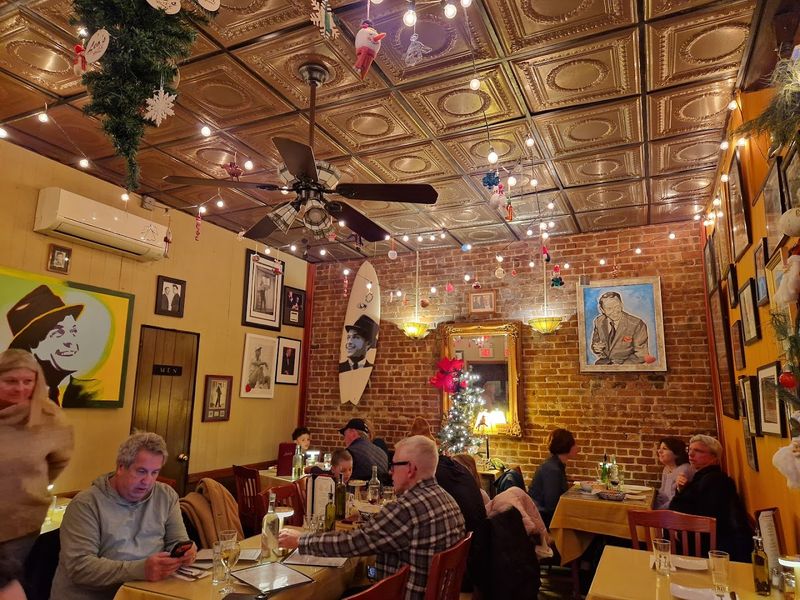
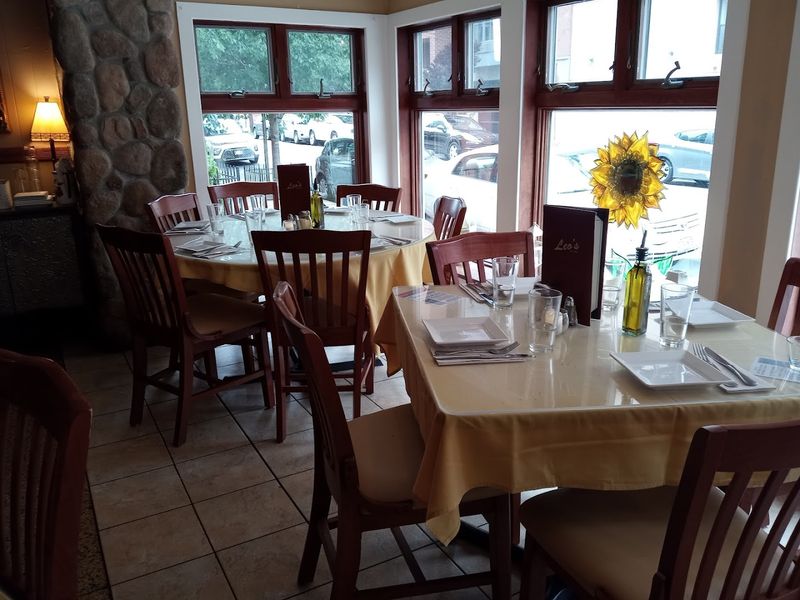
The interior of Leo’s Grandevous looks like it has not been significantly updated since the Eisenhower administration, and that is absolutely a compliment. The design is a faithful snapshot of mid-century Italian-American restaurant culture, with the kind of details that modern designers spend serious money trying to recreate from scratch.
The space is small, which contributes to the neighborhood feel. Tables are close together the way they were in old-school joints where the assumption was always that everyone in the room was practically family anyway.
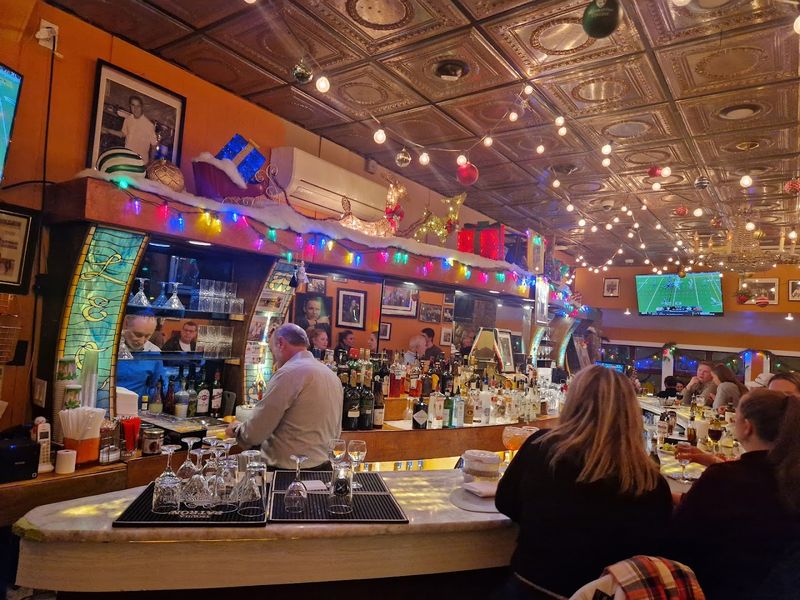
The bar area anchors one side of the room and draws its own crowd of regulars.
Nothing about the space tries too hard. There are no mood boards or brand consultants behind the look of Leo’s.
The atmosphere is the organic result of a family running the same room for generations, accumulating photographs, keepsakes, and character along the way. That kind of patina cannot be manufactured, and it is exactly what keeps people coming back.
Bar Pies Worth the Trip Alone
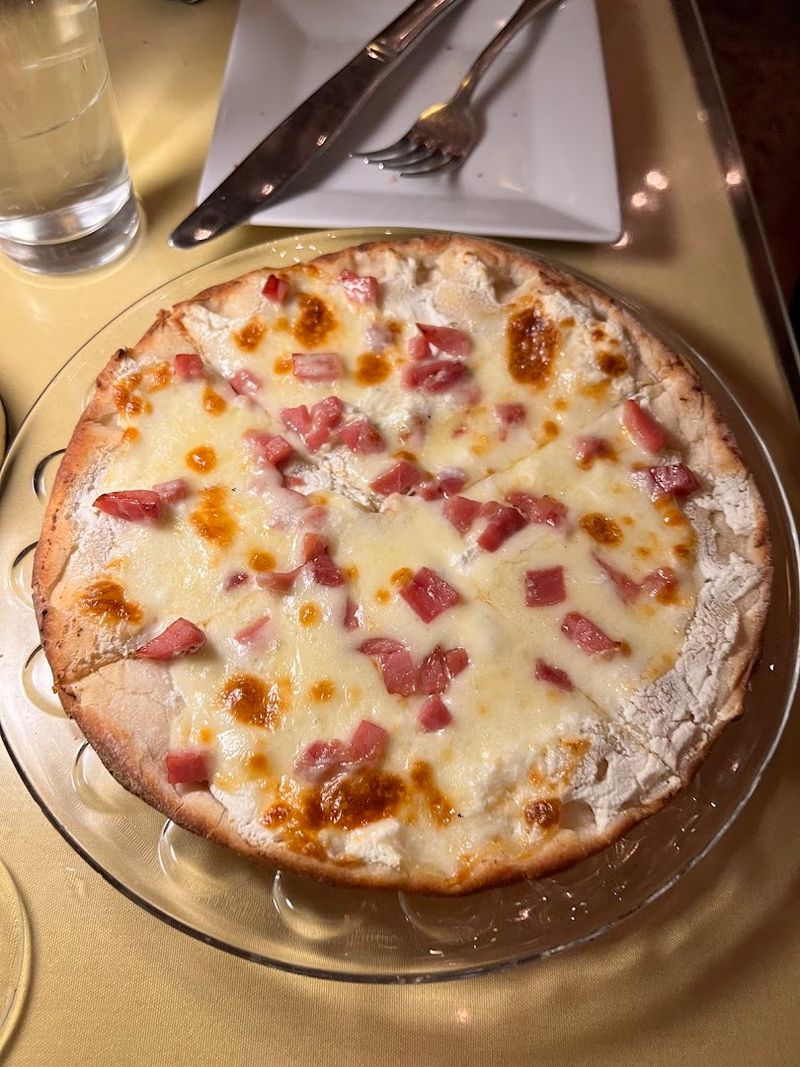
Bar pies have a devoted following in New Jersey, and Leo’s Grandevous has earned its place in that conversation. The pizza comes out thin-crusted and cooked in a way that delivers a crispy base with just the right amount of char.
Regulars recommend it as a starting point for anyone new to the menu.
The bar pie at Leo’s holds up against comparisons to some of the most respected pizza in the region, including spots in Hoboken, Jersey City, New Haven, and New York City. That is not a small claim in a part of the country where pizza opinions run extremely strong and everyone has a definitive ranking.
The mussels in marinara sauce come up repeatedly as another standout appetizer worth ordering early in the meal. Pairing the bar pie with an order of mussels and the house bread from a local bakery covers the appetizer course in a way that sets the table for whatever comes next.
Italian Classics Done the Old Way
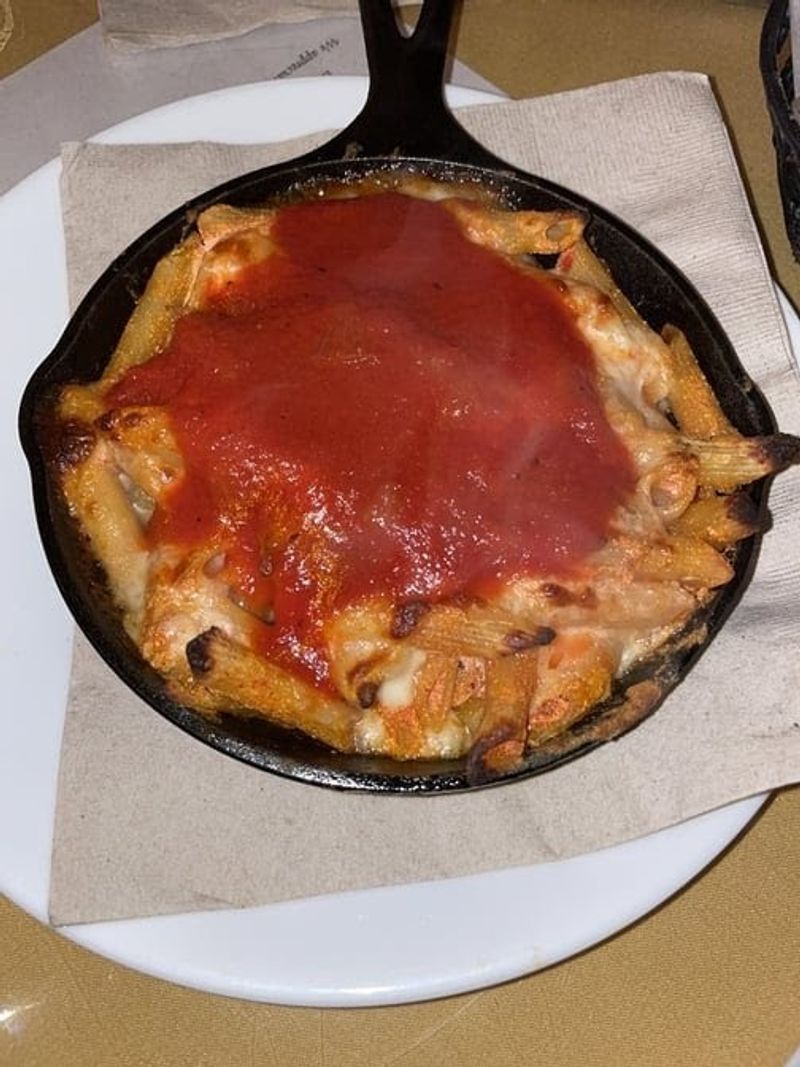
The menu at Leo’s reads like a tour through the Italian-American canon. Baked ziti, lasagna, spaghetti and meatballs, chicken parm, veal parm, chicken francese, chicken marsala, saltimboca, manicotti, gnocchi, and cheese ravioli all appear on the regular menu.
Daily specials rotate in dishes like fra diavolo preparations and short rib options that give regulars a reason to check in frequently.
The meatballs draw consistent praise. The veal parm, francese, and saltimboca are described as textbook examples of each preparation.
The fra diavolo sauce is spicy enough to make an impression and works well with the pasta dishes that anchor the entree section.
Portions are generous, which is in keeping with the old-school Italian-American tradition of making sure nobody leaves hungry. The baked ziti has been a long-standing favorite, and the lasagna on the daily special rotation gives it serious competition.
Cannoli and tiramisu round out a dessert list that stays faithful to the classics all the way to the final course.
Soups and Starters Worth Saving Room For
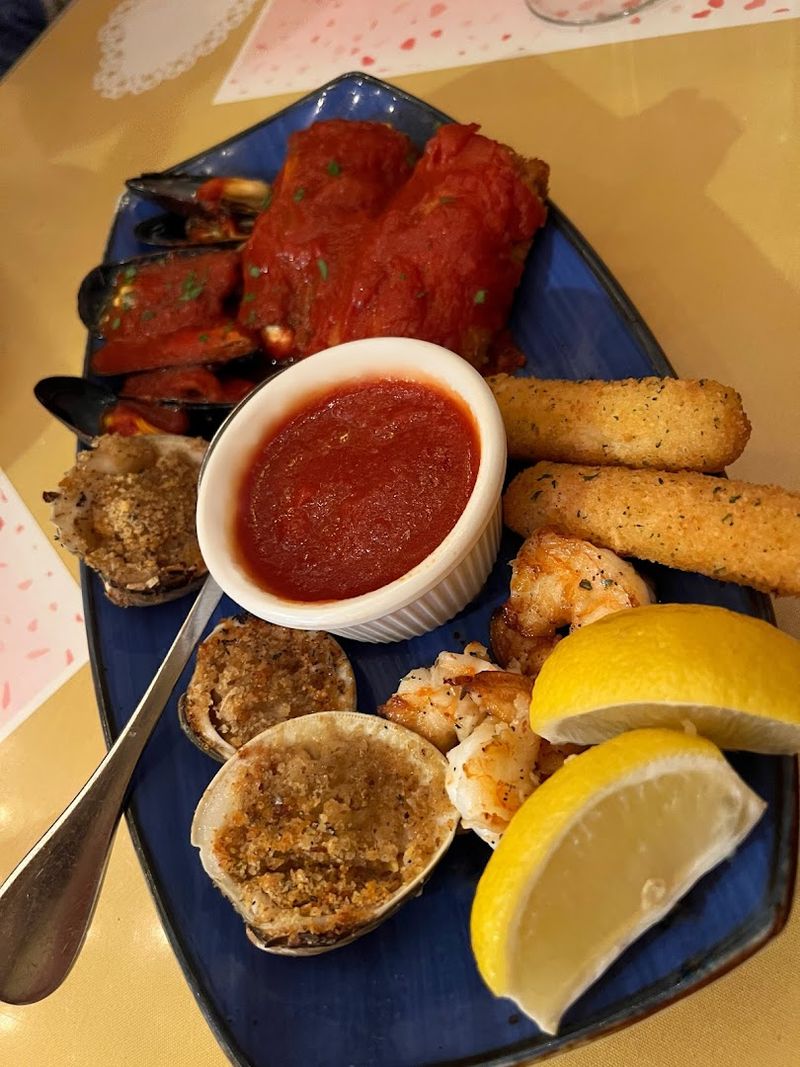
Before the entrees arrive, the soup and starter section of the menu at Leo’s Grandevous deserves serious attention. Manhattan chowder and pasta fagioli both appear as options, and the portion sizes are generous enough that ordering soup alongside an entree can be a strategic challenge worth planning around.
Baked clams and mozzarella sticks round out the appetizer options for those who want to start with something other than soup. The bread arrives at the table from a local bakery and sets a high bar early in the meal.
It is the kind of bread that disappears quickly and makes everyone at the table wish they had ordered more.
The mussels in marinara sauce are the appetizer that gets mentioned most consistently by people who have eaten their way through the menu multiple times. Served with linguine, the mussels are fresh and the marinara sauce has the depth that comes from a kitchen that has been making it the same way for a very long time.
A Fourth-Generation Family Operation
Four generations of the same family have worked at Leo’s Grandevous since it opened in 1939. That kind of continuity is genuinely unusual in any industry, but it is especially rare in the restaurant business, where the average lifespan of a new establishment is measured in months rather than decades.
The family ownership shows up in the way the restaurant operates. Staff members know regular customers by name.
The owner responds personally to feedback and clearly has strong feelings about the place and its history. The warmth that runs through the service style is not a training manual outcome.
It comes from people who grew up in the restaurant and understand what it means to the neighborhood.
When the fourth generation is actively working the floor and keeping the kitchen consistent, the result is a restaurant that functions less like a business and more like an institution. Leo’s has been woven into the social fabric of Hoboken for so long that it is hard to separate the two.
No Reservations, No Problem
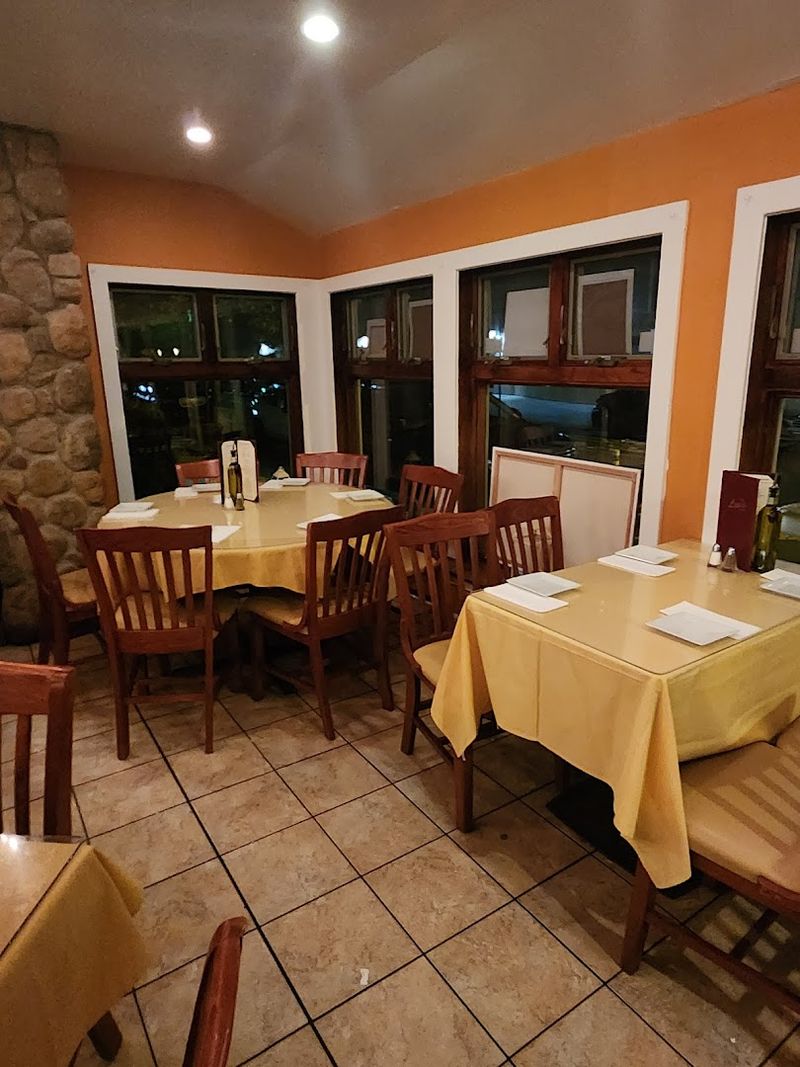
Leo’s Grandevous does not accept reservations, which means the seating situation on a busy Friday or Saturday night operates on a first-come, first-served basis. The restaurant is small, and word has spread far enough beyond Hoboken that wait times on weekends can be significant.
The practical advice from people who eat there regularly is simple: arrive early. Weekday lunch service on Wednesday and Thursday starts at noon, which is the lowest-pressure time to get a table without a long wait.
Friday dinner service begins at 11 PM closing, with doors open from noon. Saturday and Sunday dinner service starts at 4 PM, so arriving right at opening gives the best chance of walking straight to a table.
The bar area provides a comfortable place to wait when the dining room is full, and the bartenders are known for being genuinely friendly rather than the kind of efficient-but-distant that busy spots sometimes produce. The wait, when it happens, tends to be worth it.
The Jukebox That Sets the Mood
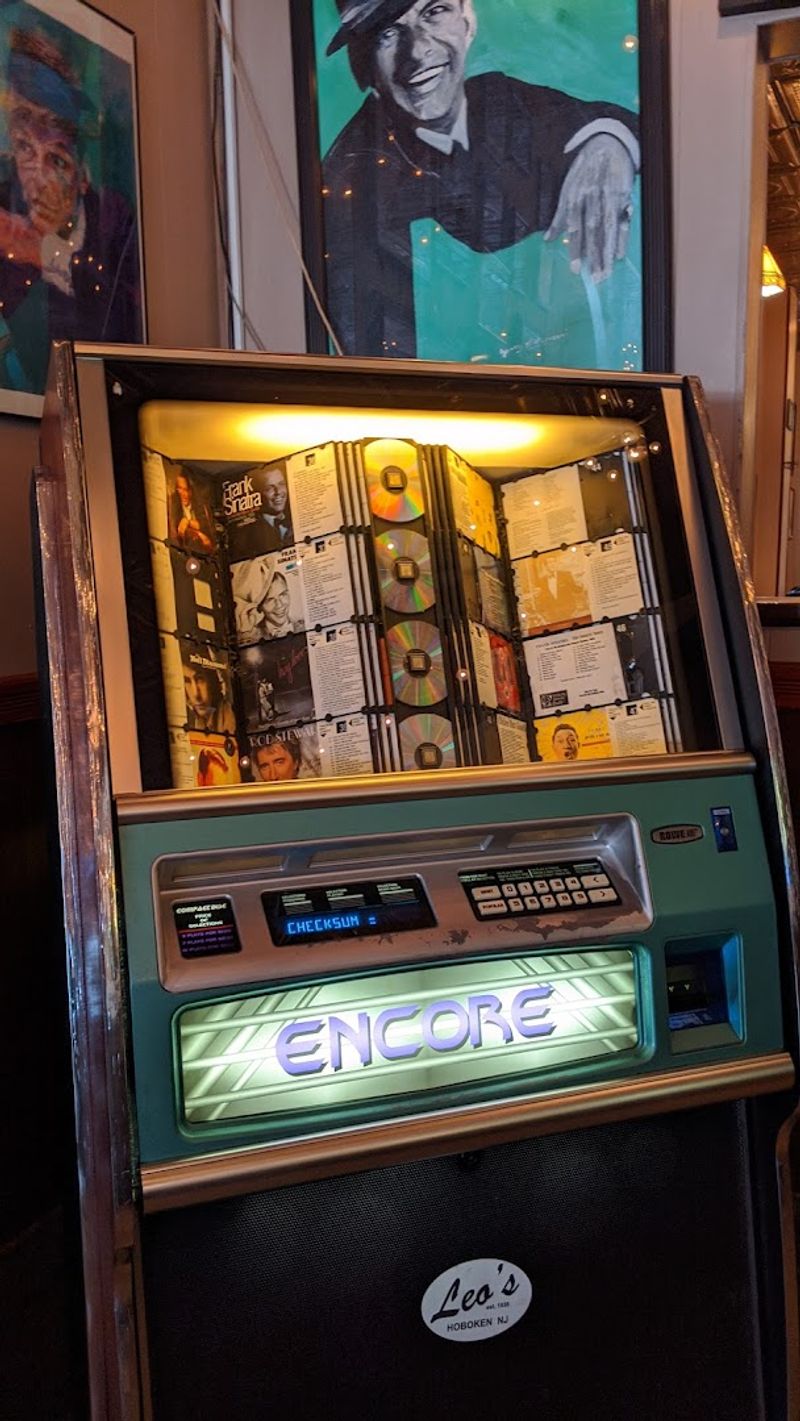
The jukebox at Leo’s Grandevous is not decorative. It plays, and the customers choose the songs.
Sinatra tracks dominate the selections, which makes complete sense given the restaurant’s history and the framed photographs of Old Blue Eyes covering nearly every available wall surface.
Music has always been part of the Leo’s experience, and the jukebox keeps the room from ever feeling too quiet. On slower weekday afternoons the music fills the space in a way that adds to the time-capsule quality of the whole setting.
On busier nights it competes with conversation in a way that feels lively rather than overwhelming.
The combination of Sinatra on the jukebox, his photographs on the walls, and his barstool mounted above the bar creates a coherent tribute that goes well beyond a simple restaurant theme. It is a genuine expression of local pride from a city that produced one of the most recognizable voices in American popular music and has never stopped celebrating that fact.
What the Menu Does Best
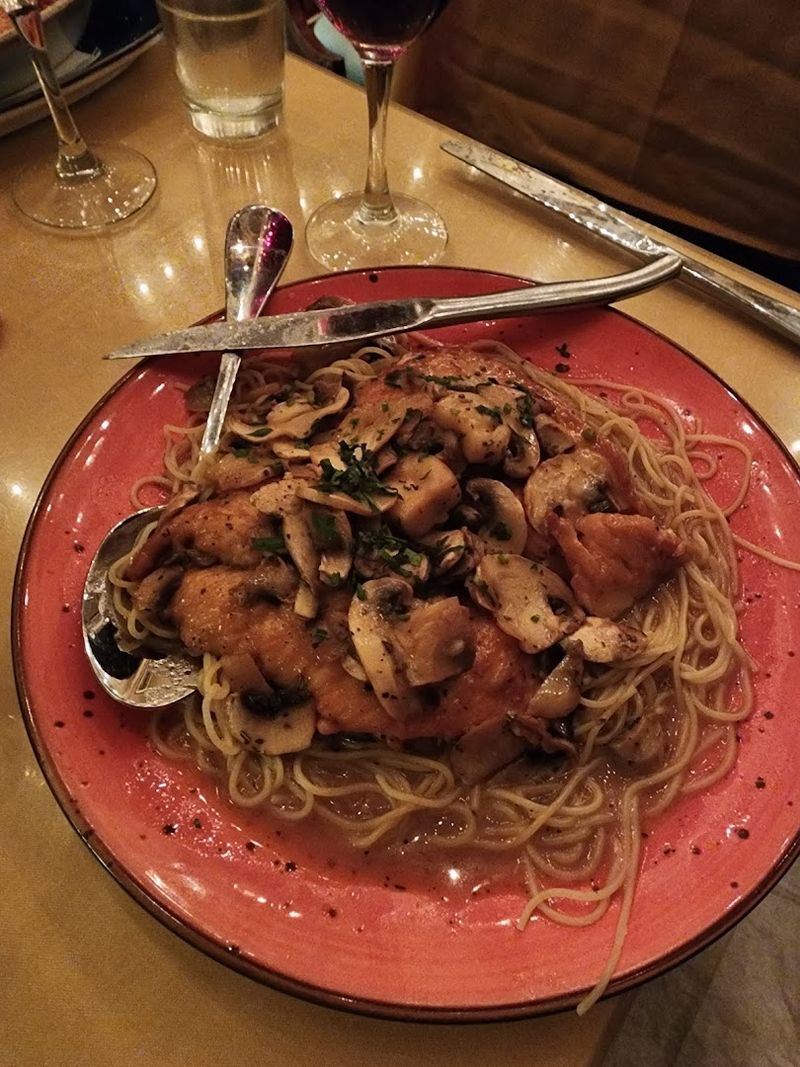
Chicken parm at Leo’s is the benchmark dish for first-time visitors who want to understand what the kitchen does well. The preparation is straightforward and executed with the kind of confidence that comes from making the same dish the same way for a very long time.
The result is a version of the classic that holds up against any comparison.
The saltimboca and chicken marsala both get consistent praise as textbook examples of their respective preparations. The gnocchi is soft and satisfying in a way that rewards anyone who orders it over a heavier pasta option.
The tri-color gnocchi variation adds a visual element to a dish that is already reliable on its own.
Daily specials give the kitchen a chance to show range beyond the regular menu. The short rib special is one that regulars return for specifically, and the lasagna on the Wednesday special rotation has converted more than a few baked ziti loyalists into lasagna believers.
The kitchen clearly knows its strengths and plays to them consistently.
A Hoboken Institution Worth the Visit
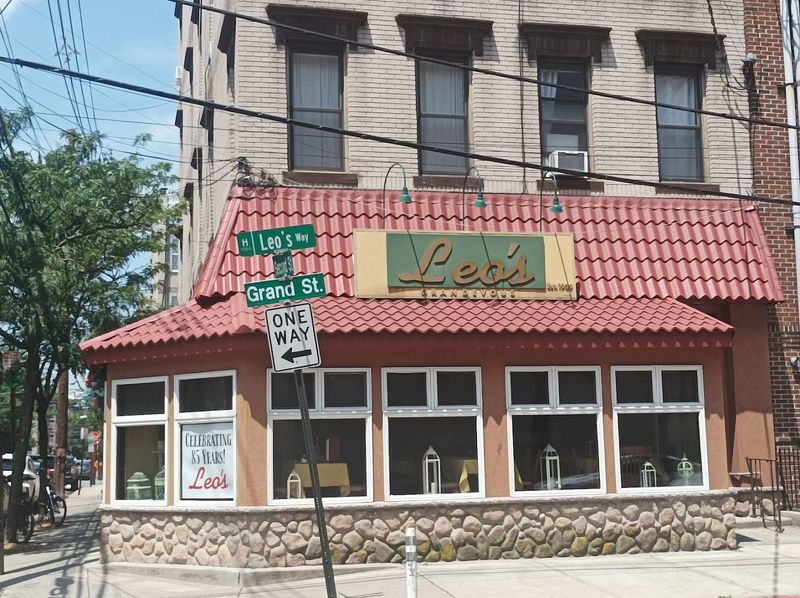
Leo’s Grandevous has been part of Hoboken for long enough that it has outlasted entire generations of restaurants that opened and closed while Leo’s kept serving the same baked ziti and playing the same jukebox. That staying power is the most honest endorsement any restaurant can earn.
The combination of genuine history, consistent cooking, and a family ownership model that clearly cares about the place makes Leo’s more than just a dinner option. It is a functioning piece of Hoboken’s past that happens to still be open for business on Grand Street, six nights a week, with portions large enough to send people home satisfied.
For anyone making the trip from outside Hoboken, the advice is consistent: get there early to avoid a wait, order the bar pie and the mussels to start, and pay attention to the daily specials. The place has been doing this for over 85 years, and it shows in every plate that comes out of the kitchen.



