 Unearth The Voyage
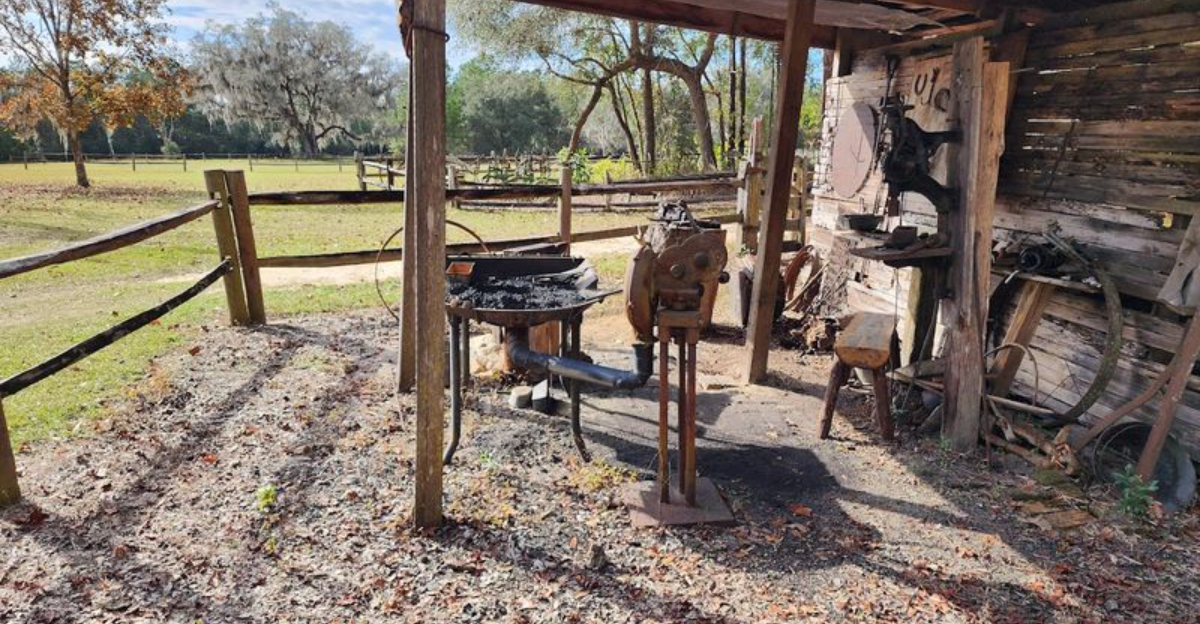
There is a place in North Central Florida where time genuinely seems to have stopped, and not in a dusty, forgotten kind of way. The farmstead feels lived-in, warm, and real, as if the family just stepped out to tend the fields and will be back any minute.
For just five dollars, you get access to over a century of Florida history, live animals, heritage gardens, and trails that genuinely calm the mind. This is the kind of place that surprises you, changes how you think about Florida’s past, and sends you home with a jar of blackberry jam and a lot to talk about.
Where the Farm Sits and What to Expect When You Arrive
A brown highway sign is all the warning you get before turning off onto 18730 W Newberry Rd, Newberry, and suddenly the noise of the road disappears behind you. The parking lot is spacious, clean, and shaded by mature trees that make the Florida heat feel a little more forgiving the moment you step out of your car.
The visitor center sits right at the entrance, small but well-organized, with air conditioning that feels like a reward after the walk from your vehicle. An honor system fee of five dollars per car covers your whole visit, which is genuinely one of the best deals in the Florida State Parks system.
The park is open Wednesday through Sunday from 9 AM to 4 PM, so plan accordingly.
The Dudley Family Story That Built This Place
The Dudley family first settled this land in the 1850s, and what they built here lasted through three full generations before the property was finally transferred to the state of Florida. The last surviving Dudley daughter passed away in 1996 at the age of 94, which means living memory of this farm stretched almost to the present day.
The original property covered around 900 acres and supported a full plantation operation that included cotton, corn, grain, and cattle. Over the decades, land was sold off and traded, leaving the current footprint at just over 300 acres, which is still a substantial and beautiful piece of North Florida landscape.
The farm also has a difficult history that the park does not shy away from, as the Dudley operation once relied on the labor of approximately 30 enslaved people. That part of the story is acknowledged as a necessary and honest piece of the full picture.
The Short Video That Makes Everything Click
Before heading out to the farmstead, stop inside the visitor center and watch the short orientation video. It runs for just a few minutes, but it packs in enough context about the Dudley family, the timeline of the farm, and the significance of the property that everything you see afterward suddenly makes much more sense.
The video is shown in a clean, air-conditioned room with seating, which also gives you a chance to cool down before the outdoor portion of your visit. Staff and volunteers are usually nearby and happy to answer questions once the video ends.
Most people skip informational videos at historic sites, but this one is genuinely worth your time. It sets the emotional tone for the whole visit and helps you understand why so many of the original Dudley family objects are still inside the buildings exactly where they were left.
Walking the Trail From the Visitor Center to the Farmstead
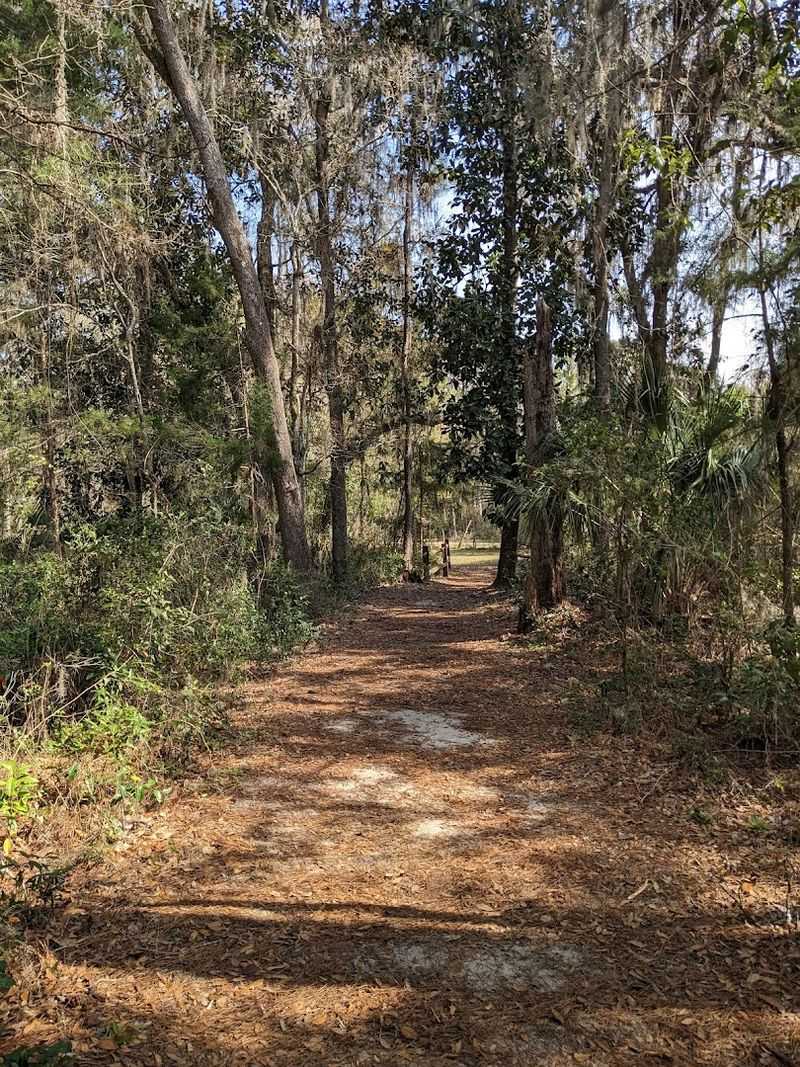
The walk from the visitor center to the main farmstead takes only a few minutes, but it feels like crossing a threshold between the modern world and something much older. The trail is lined with mature trees that form a natural canopy overhead, and the temperature drops noticeably once you are under that shade.
The path is well-maintained and relatively flat, making it manageable for most visitors including older guests and young children. The park even offers a large-wheeled, sand-capable wheelchair for visitors who need mobility assistance, which is a thoughtful and genuinely useful amenity that sets this park apart.
As you walk, the sounds of the road fade and the sounds of the farm take over. By the time the farmhouse comes into view through the trees, you have already started to slow down a little, breathe a little deeper, and pay attention in a way that most modern places simply do not inspire.
Over a Dozen Historic Buildings to Explore Up Close
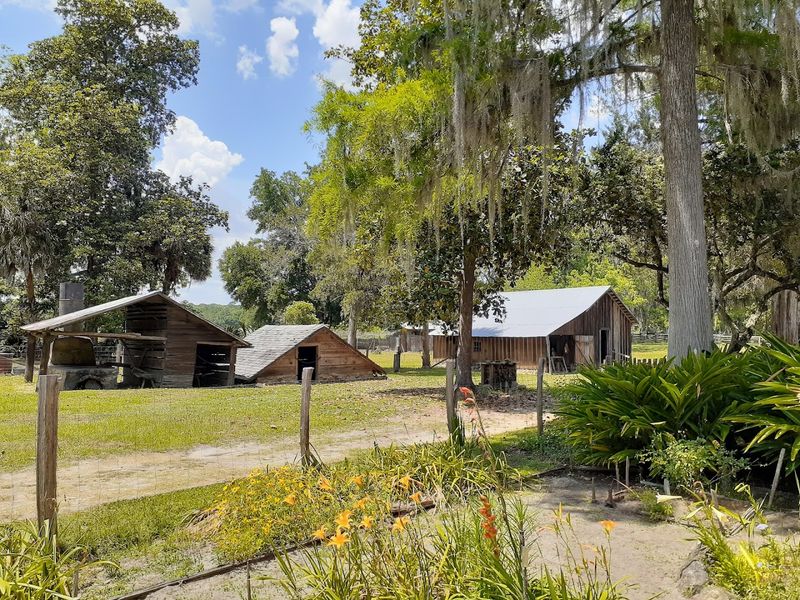
The farmstead at this park is not a single building behind a rope barrier. There are more than a dozen original structures spread across the property, each one serving a different purpose and telling a different part of the Dudley family’s daily life.
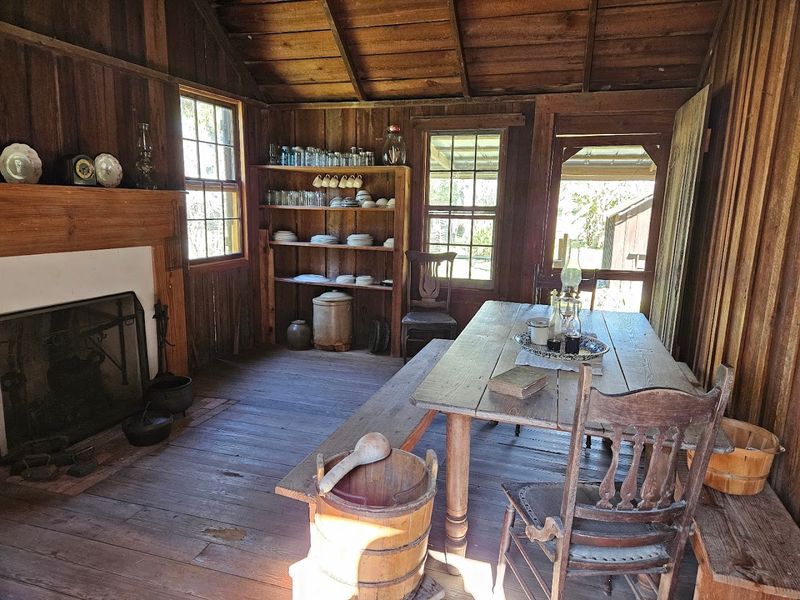
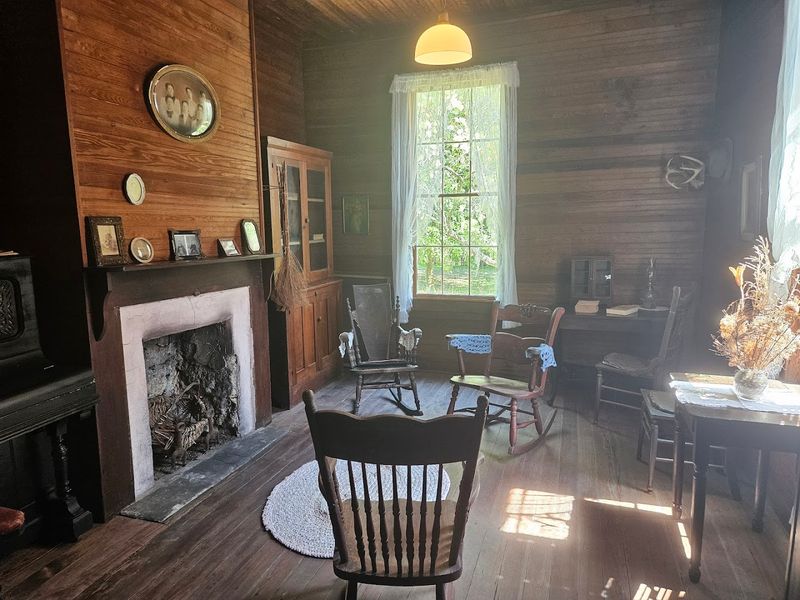
The main farmhouse anchors the property, but surrounding it you will find a separate kitchen building, a smokehouse, a root cellar, barns, a sugar mill area, and various outbuildings that supported the full operation of a working farm. Most of the items inside these buildings belonged to the actual Dudley family, not reproductions sourced from elsewhere.
That detail matters more than it might seem. When you open a door and see a cast iron pot, a hand tool, or a piece of furniture, you are looking at the real thing.
That sense of authenticity is rare in living history museums and makes every room feel genuinely worth pausing in.
Live Animals That Keep the Farm Feeling Real
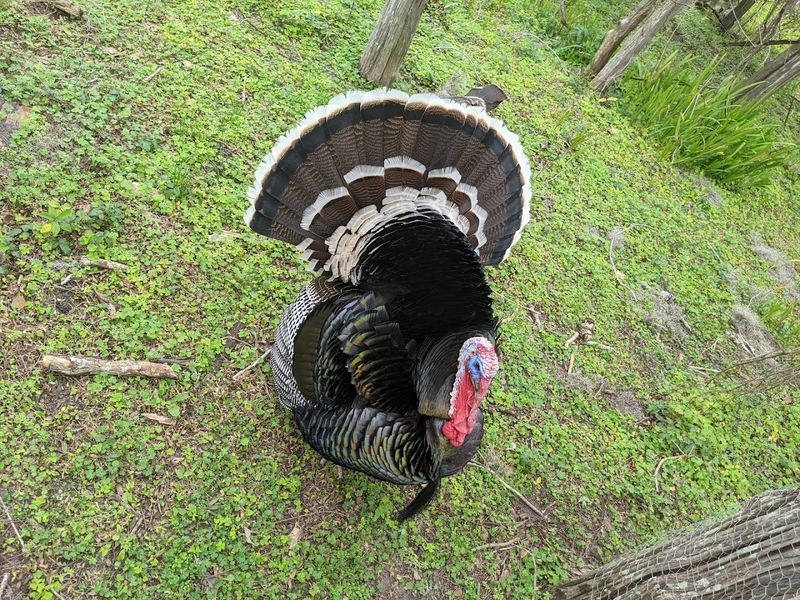
One of the first things you notice when you reach the farmstead is that this is not a static display. Roosters crow, turkeys strut across the yard, and chickens scratch at the ground near the barn in a way that makes the whole place feel genuinely alive rather than frozen in a museum case.
Cows and horses have also been part of the property, and the animals are cared for year-round by the dedicated volunteer staff who treat the farm chores as a real and ongoing responsibility. On a recent visit, a staff member even let a young child help with feeding, turning a simple tour into a hands-on memory that the family said they would not forget.
The animals are not a gimmick or a backdrop. They are part of what makes this place feel honest, grounded, and worth every minute of the drive out to Newberry.
Heritage Gardens Full of Plants You Did Not Expect to Find
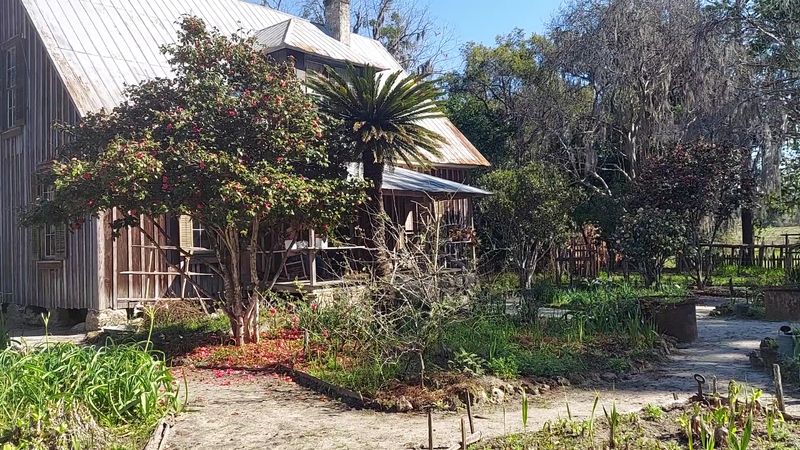
Tucked around the farmstead buildings are gardens that reflect exactly what a working North Florida farm would have grown for both food and practical use. Banana plants, fig trees, ginger, roses, and a variety of other heritage plants grow in organized beds that have clearly been tended with care and knowledge.
These are not ornamental displays planted to look pretty for visitors. They represent the actual crops and plants that the Dudley family cultivated over generations, and volunteers can tell you specifically how each plant was used, preserved, or traded in the farm’s daily economy.
The gardens also make for some of the best photography on the property, especially in the morning light when the shade trees cast long shadows across the beds. Plant lovers in particular tend to linger here longer than anywhere else, and it is easy to understand why once you see how much is actually growing.
The Sugarcane Syrup Event That Draws Crowds Every Fall
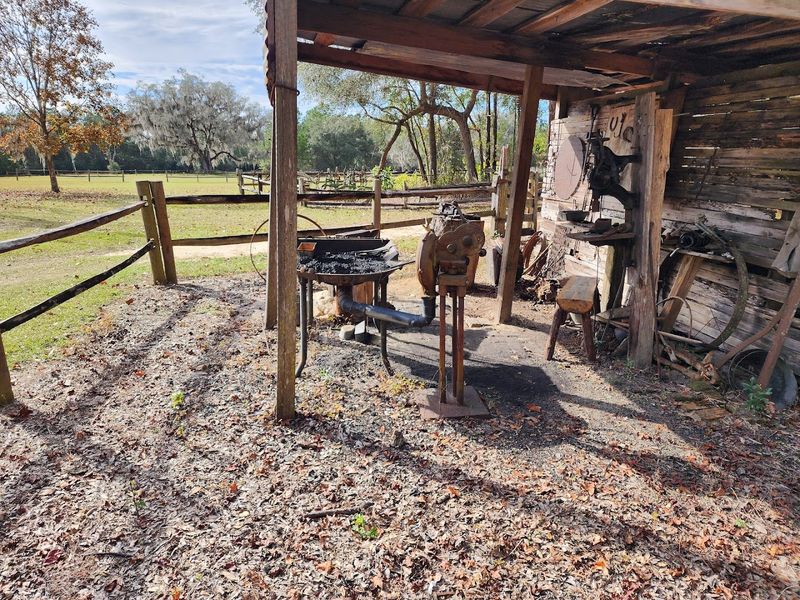
If you want to see the farm operating at its most dramatic and most delicious, plan your visit for the fall sugarcane event. This seasonal demonstration is one of the most popular events on the park’s calendar, drawing visitors who want to watch the full process of turning raw sugarcane into syrup using traditional methods and equipment.
The sugar mill on the property is original, and watching it run during the demonstration gives you a concrete sense of how labor-intensive and skillfully managed this process was for farming families across North Florida for over a century. The smell alone is worth the trip.
Check the park’s official website at floridastateparks.org before visiting to see the current event schedule, since seasonal demonstrations like this one fill up quickly. The park hosts other events throughout the year as well, and the calendar changes with the seasons in ways that give regular visitors a reason to keep coming back.
The Commissary That Doubles as a General Store
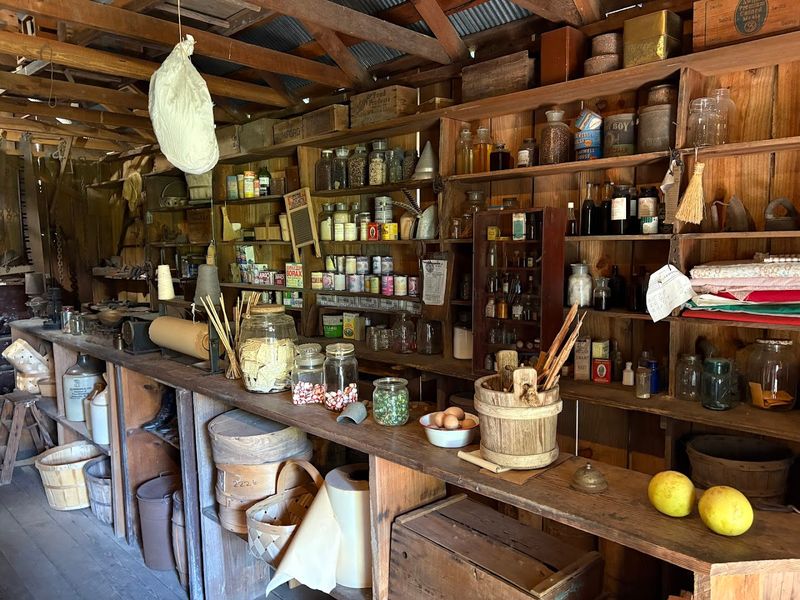
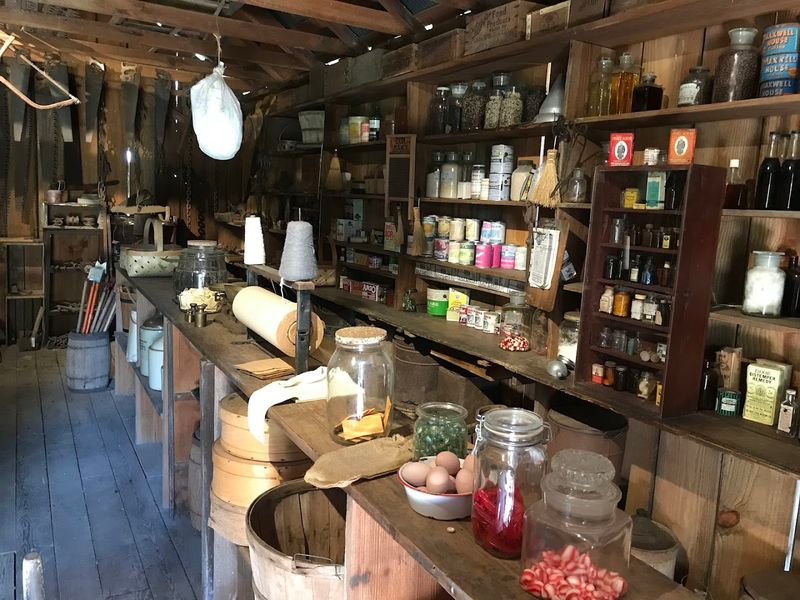
Near the visitor center sits a small commissary that operates something like an old-time general store, stocked with handmade gifts, locally produced preserves, honey, pickled okra, strawberries, and other items that feel genuinely connected to the farm’s agricultural heritage. It is the kind of shop where you go in for a look and come out with three things you did not plan to buy.
The blackberry jam and local honey in particular come up again and again as favorites worth picking up. These are not mass-produced souvenirs but small-batch goods that reflect the region’s farming traditions in a very direct and tasty way.
A nursery selling native Florida plants is also part of the commissary area, which is a lovely touch for gardeners who want to take a piece of the farm’s plant heritage home with them. Staff are friendly and generous about opening the commissary even for visitors who arrive just to browse.
Volunteers in Period Clothing Who Know Everything
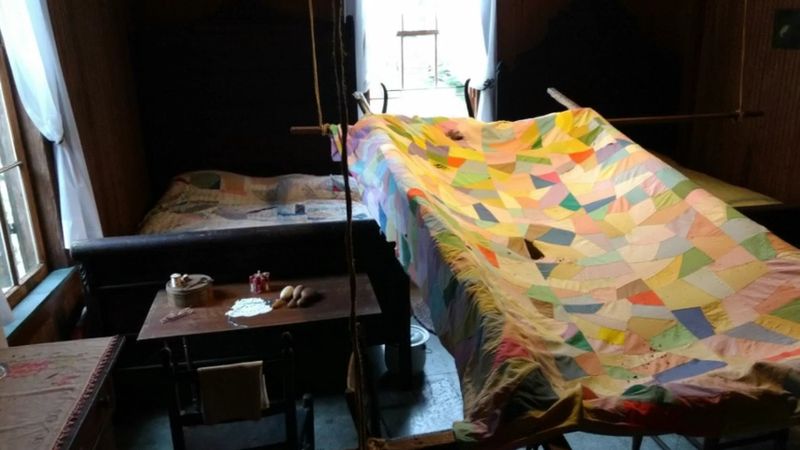
The volunteers at this park are one of its most talked-about features, and for good reason. They dress in period-appropriate clothing, stay in character, and carry an impressive depth of knowledge about the Dudley family, the farm’s operations, and the broader history of North Florida agriculture in the 1800s and early 1900s.
Some volunteers demonstrate traditional skills like sewing, quilting, and food preservation, and they are happy to teach visitors who want to try these crafts themselves. That participatory quality turns a walk through old buildings into something more interactive and personal.
The best part is that these are not bored employees reading from a script. The enthusiasm feels genuine, the conversations feel real, and the lack of phones and screens in the mix creates a kind of focused, present-tense interaction that has become genuinely rare.
Talking with these volunteers is often the part of the visit that people remember most vividly.
The Pause and Ponder Trail for When You Need to Slow Down
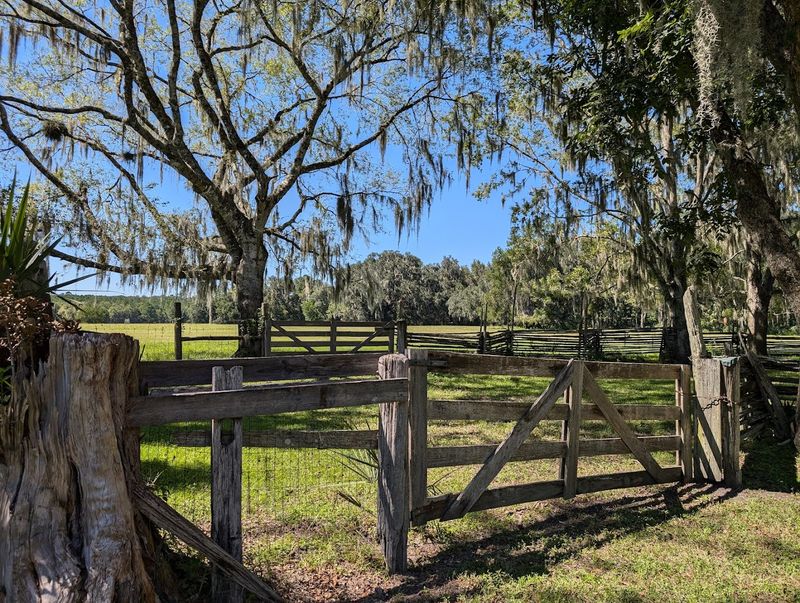
Away from the farmstead buildings, the Pause and Ponder Trail offers a different kind of experience that feels less like a history lesson and more like a genuine mental reset. The trail winds through the natural landscape of the property and is quiet enough that you can actually hear yourself think, which is rarer than it should be.
The name is not just a clever label. Benches and stopping points along the route are positioned in ways that invite you to sit, look around, and be still for a moment before continuing.
One visitor described sitting on the trail as one of the most genuinely soothing hours of their recent life, and that kind of feedback says something real about what the space offers.
The trail is also dog-friendly, making it one of the few parts of the park where leashed pets are welcome. The farm buildings and gardens are pet-free zones, so plan accordingly if you bring a four-legged companion.
What the Farm Looked Like From the 1850s to the 1940s
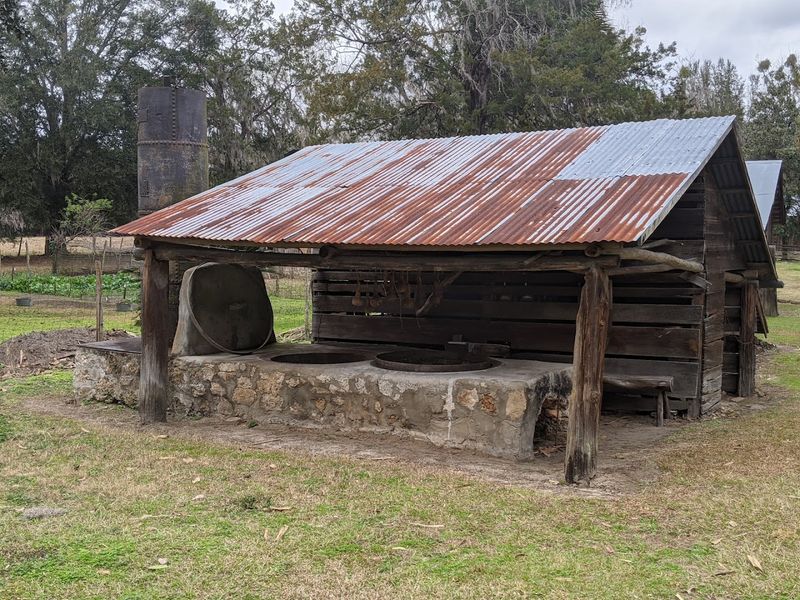
The park covers nearly a full century of Florida farm life, from the earliest days of the Dudley family’s settlement in the 1850s through to the mid-twentieth century when the farm was still actively producing crops and livestock. That span of time is visible in the buildings, the tools, and the layout of the property itself.
Different structures on the property represent different eras, and paying attention to the details, like the evolution of construction methods, the types of equipment in the barns, and the changes in the kitchen building, tells a story about how farming technology and family life shifted over those decades.
The self-guided phone tour available on the property helps connect these dots in a clear and accessible way. Visitors who use it tend to notice details they would otherwise walk right past, turning the farmstead from a scenic stroll into a genuinely layered historical experience that rewards curiosity.
Tips for Families and Young Visitors
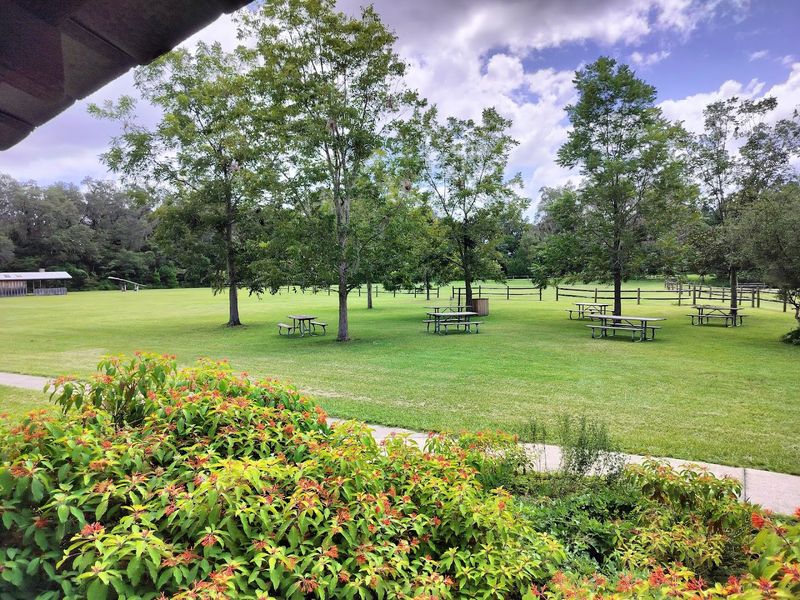
Families with young children consistently report that this park works better than expected for kids, which is not always the case with history-focused sites. The live animals, the hand pump that kids can actually operate, the open grassy areas, and the interactive volunteer demonstrations all give younger visitors something concrete to engage with rather than just look at.
Field trips from local schools are a regular occurrence here, and the staff is experienced at making the content accessible for different age groups. The property is large enough to feel like an adventure but compact enough that small legs can cover it without a meltdown.
A few practical notes for families: bring comfortable shoes because there is a fair amount of walking, pack snacks since the commissary is not always open, and keep an eye on young children near the edges of garden beds where thorny vines can grow close to the ground.
Accessibility Features That Make the Park Work for Everyone
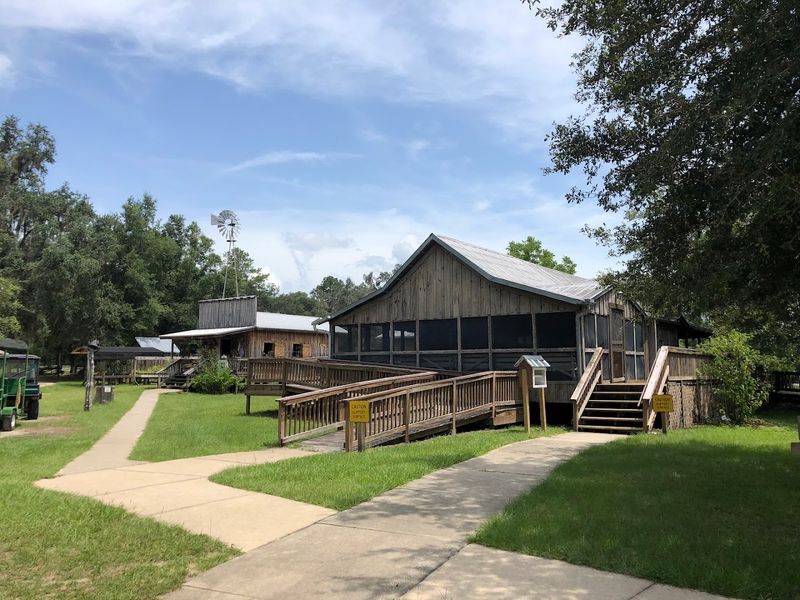
Accessibility at outdoor historic sites can be hit or miss, but this park puts genuine thought into making the experience available to visitors with different physical needs. The visitor center is fully air-conditioned and handicap accessible, and the short video orientation can be enjoyed without any outdoor walking at all.
The most impressive accessibility feature is the large-wheeled, sand-capable wheelchair available for use on the property. The trails and paths around the farmstead are not paved, but the wide-wheeled chair handles the terrain well enough that visitors who have used it describe the experience as genuinely manageable and worthwhile.
Clean, well-maintained restrooms are located near the parking lot, and the overall layout of the property keeps key attractions within a reasonable distance of one another. The park earns high marks for making sure that the history here is not just accessible to the physically able, but truly open to everyone who wants to experience it.



