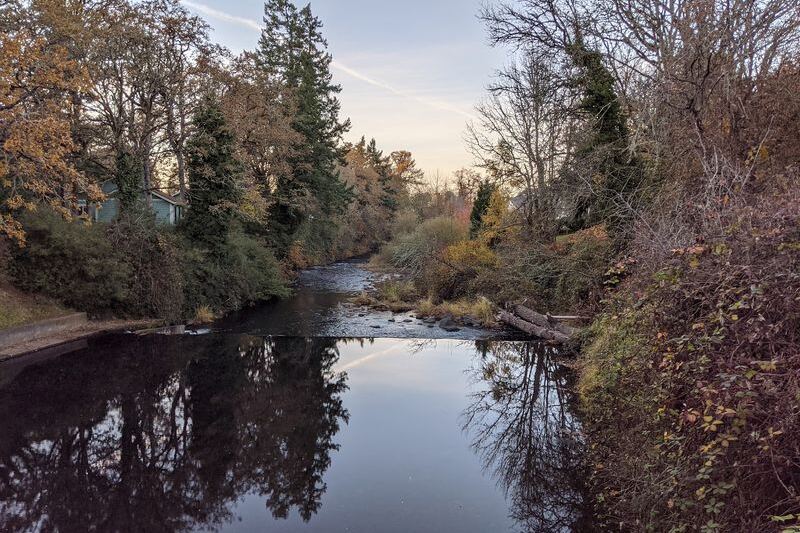
There is a trail in the Oregon Coast Range where the trees grow so thick that you can walk for miles without ever losing sight of water. The creek never disappears.
The shade never breaks. And somewhere along the way, you stop counting the waterfalls because there are simply too many to keep track of.
Sweet Creek Falls Trailhead, tucked into the Siuslaw National Forest near Mapleton, Oregon, is the kind of place that makes you wonder why you ever spent a weekend anywhere else. This article walks you through everything you need to know before you lace up your boots and head out.
Where the Trail Begins: Location and Access
The trailhead sits at the end of Sweet Creek Road in Mapleton, Oregon 97453, about eleven miles from the town itself and roughly fifteen miles from Florence via Highway 126. You can reach it by phone at (541) 750-7000, and the official site is managed by the Siuslaw National Forest through the U.S.
Forest Service.
Getting there is part of the experience. Sweet Creek Road starts wide and paved, but it narrows to a single lane after the first park entrance, with tight curves and dense forest pressing in on both sides.
In winter, frost and ice can coat the road early in the morning, so cautious driving is a must.
There are two main parking areas. The first lot holds about ten cars and has a vault toilet, while the second lot further up the road fits fifteen to twenty vehicles but has no restroom.
Both lots are free to use. Arriving before 11 a.m. on weekends gives you the best shot at a spot before the trail fills up with families and day hikers ready to explore.
The Shady Forest Canopy That Covers the Whole Route
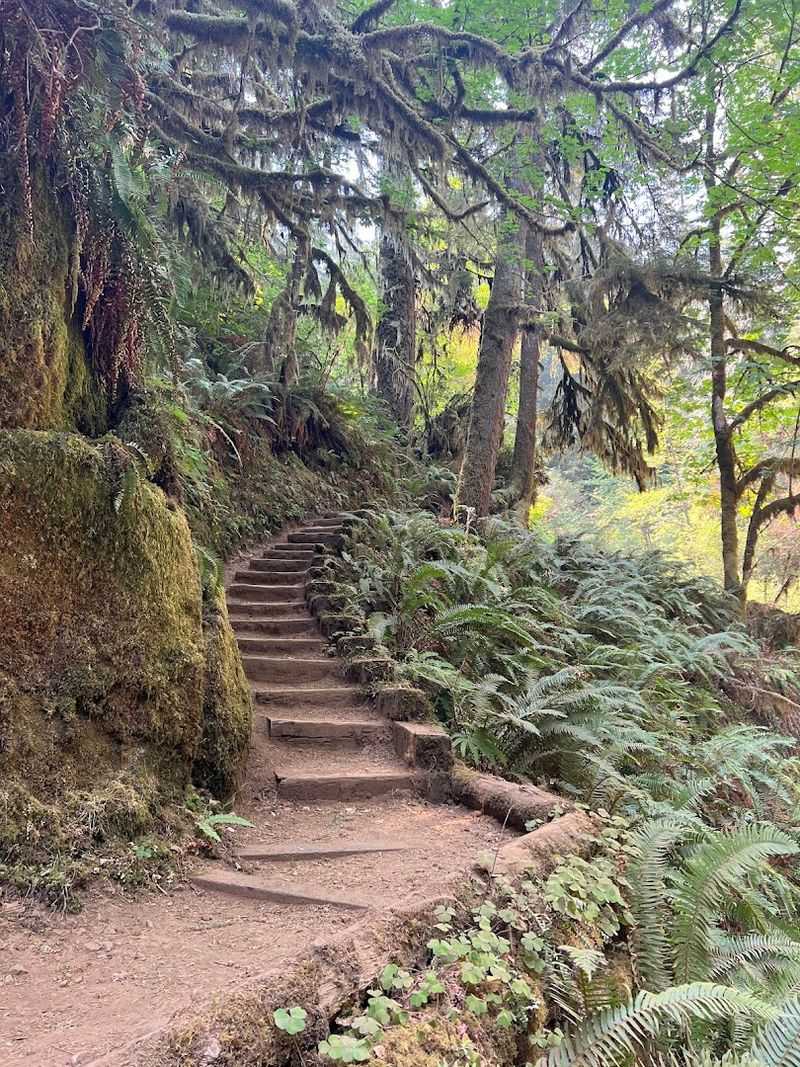
One of the first things you notice on this trail is how completely the trees take over. Tall Douglas-fir, Red Alder, and Big Leaf Maple grow so close together that the sunlight barely makes it to the ground, leaving the path cool and green even on the warmest summer days.
The shade is not just pleasant, it is practically a feature of the hike itself.
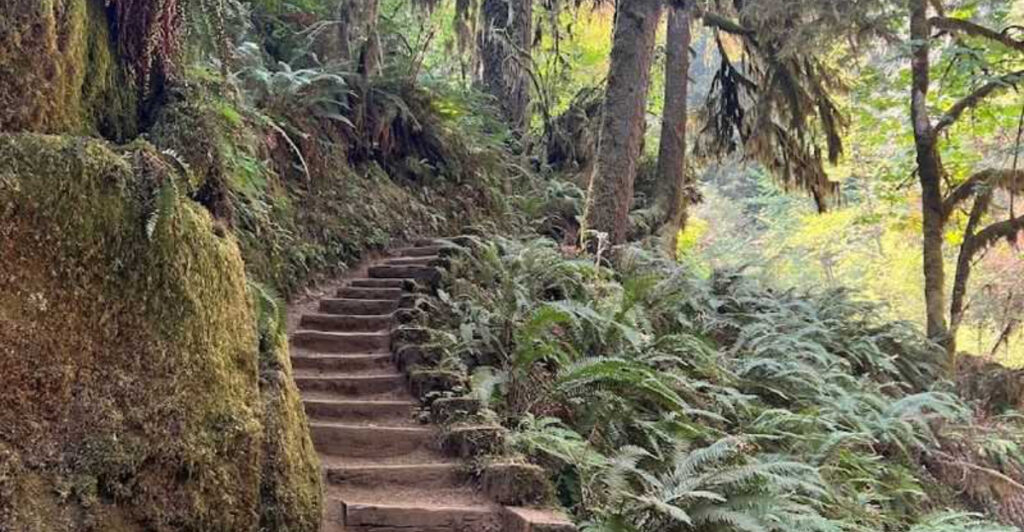
That canopy does more than keep you comfortable. It creates a humid microclimate where moss clings to every rock and root, ferns carpet the forest floor, and the whole place takes on a soft, almost underwater quality.
The air smells like wet earth and pine, and the sound of the creek drifts through the trees constantly.
On a day when the temperature outside hits the eighties, the trail can feel ten to fifteen degrees cooler under those branches. Hikers who come in late summer specifically mention how refreshing the shade feels after a long, hot drive.
The forest is doing you a favor the entire way, and honestly, it knows it. Bring a light layer just in case the breeze picks up near the water.
Creek Views That Never Quit
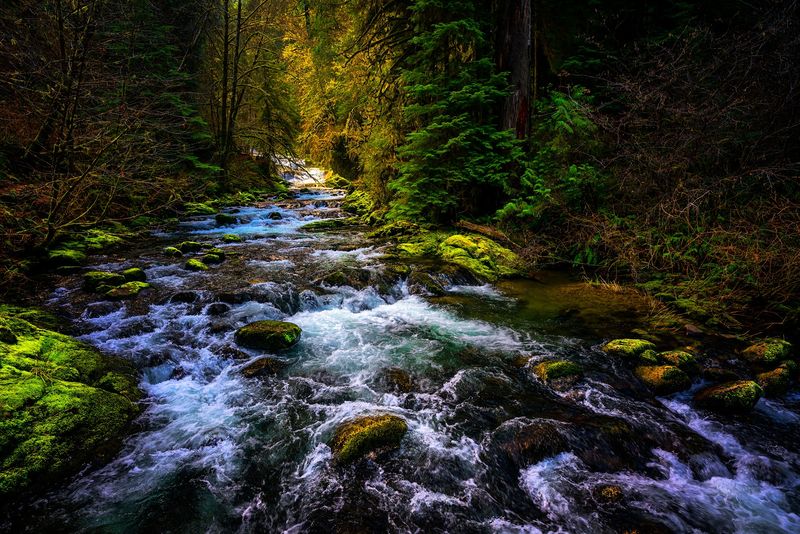
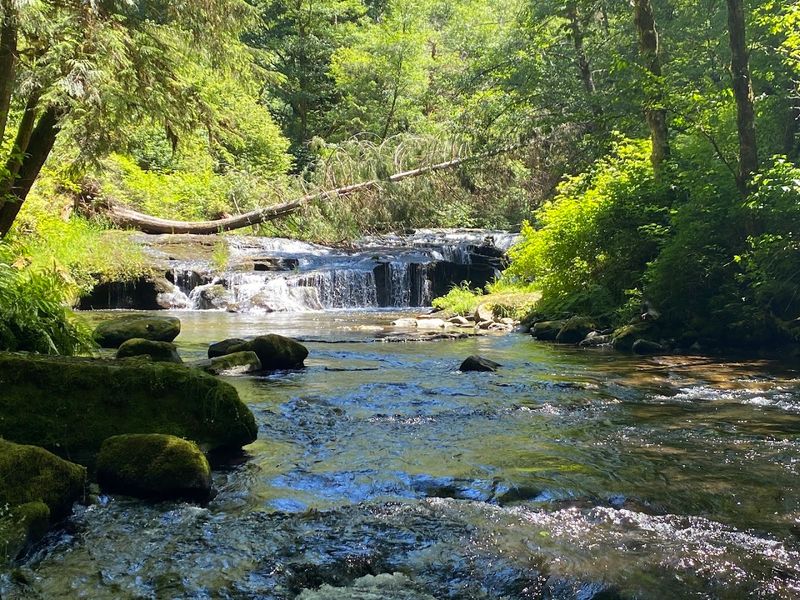
Sweet Creek earns its name about thirty seconds after you step onto the trail. The water is always right there, sometimes roaring through a narrow channel, sometimes pooling into wide, glassy stretches that reflect the tree canopy above.
You never lose sight of it, and that consistency makes the hike feel like a single long conversation with the creek rather than a series of separate scenes.
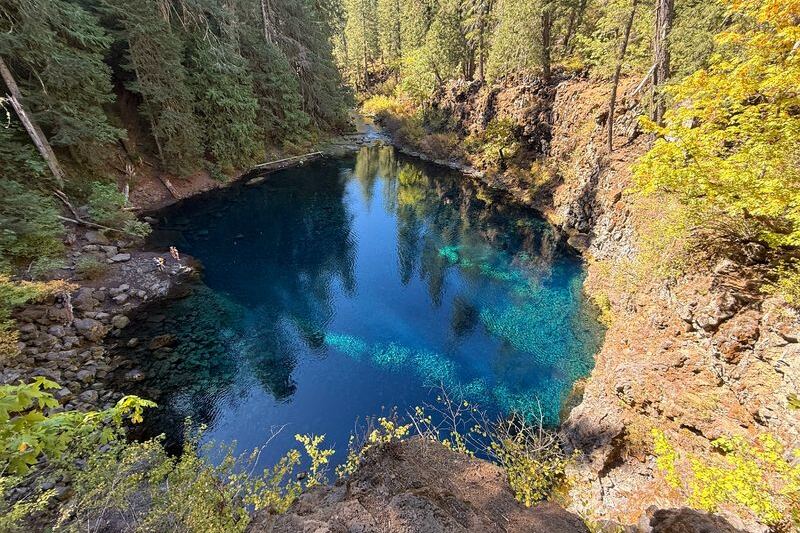
The water runs remarkably clear. On calm sections, you can see straight to the rocky bottom, and the depth surprises you.
Several natural pools along the route are deep enough to swim in, with smooth rock walls and cool, refreshing water that hikers describe as chilly at first but impossible to leave once you are in.
The creek also changes character as you move upstream. Near the lower trailhead, it moves quickly and loudly over exposed boulders.
Further up, it slows into quieter stretches where you can hear individual drops falling from the mossy cliffs above. Bring water shoes if you plan to wade, and pack a towel because the temptation to get in is real and persistent every single step of the way.
The Waterfalls: Small Ones First, Then the Grand Finale
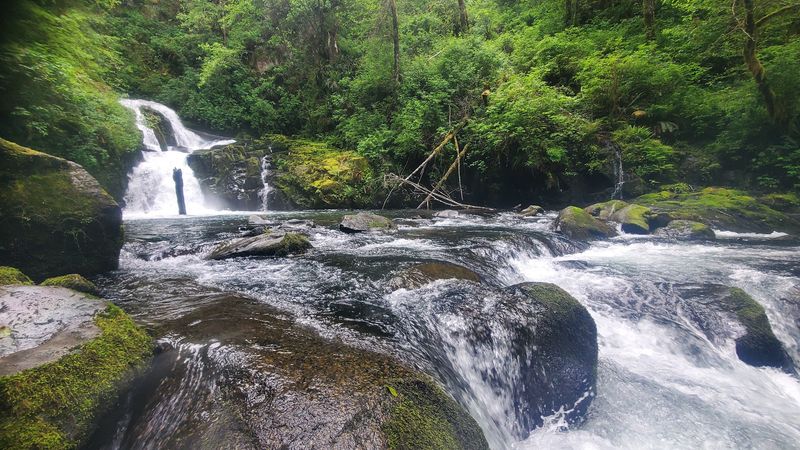
The trail does not save all the drama for the end. Small waterfalls appear early and often, some just a trickle of water weeping through a curtain of moss, others short but forceful drops that send spray drifting across the path.
The variety keeps the hike from ever feeling repetitive, which is a real achievement for a trail that covers the same creek the entire way.
By the time you reach the main falls at the upper end of the trail, the buildup has done its job. The large waterfall at the end is not the tallest you will ever see in Oregon, but it has a presence that quieter waterfalls often lack.
It moves fast, hits hard, and the mist it throws into the air is enough to cool you down from twenty feet away.
The trail system as a whole covers eleven waterfalls across four trailheads along Sweet Creek, making it one of the more waterfall-dense corridors in the Siuslaw National Forest. Even if you only do the main section, you will pass enough cascades to fill a camera roll and still feel like you missed a few.
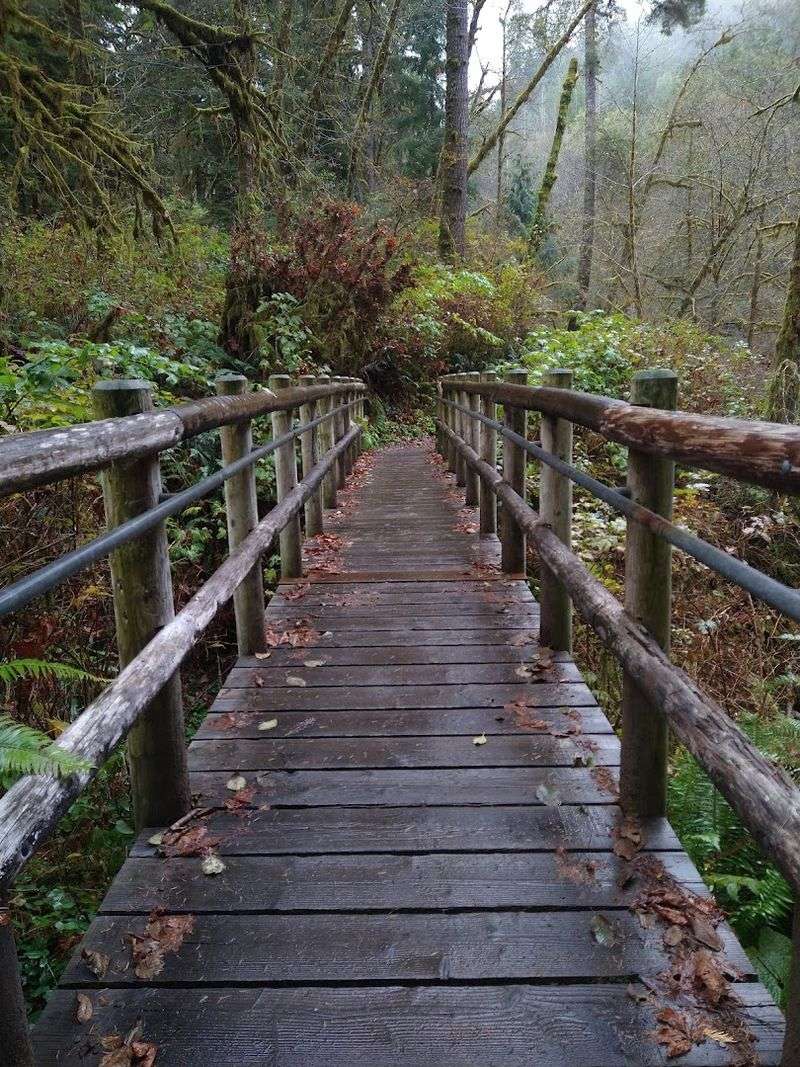
The broken bridge has been repaired as of 2025, so the full route is now accessible again.
Trail Conditions and What to Watch Your Step For
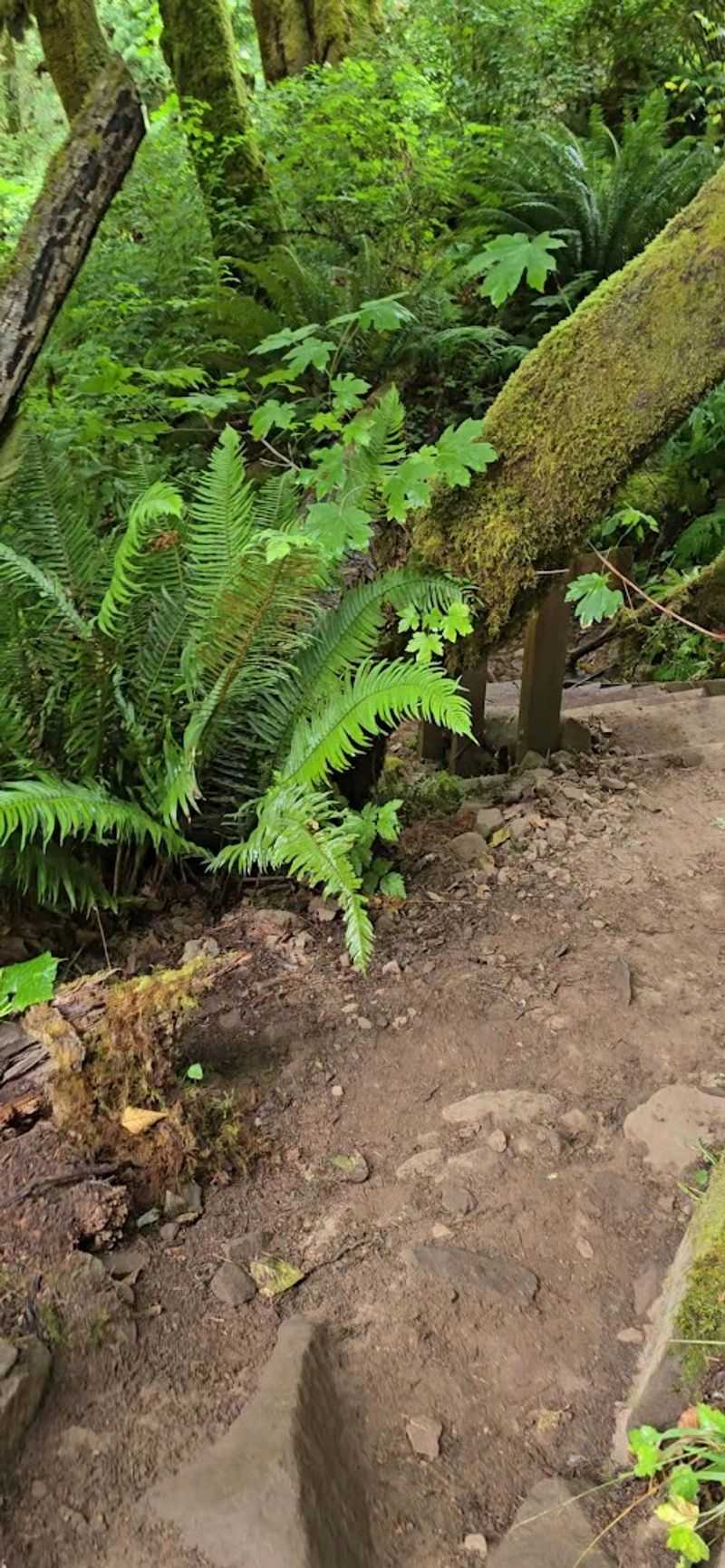
The trail earns its reputation as accessible, but that does not mean effortless. Exposed tree roots cross the path constantly, and the rocks are often wet and slippery from creek spray and morning moisture.
Good footwear with solid grip is not optional here, it is the difference between a great day and a frustrating one.
Muddy sections appear regularly, especially in fall and winter when the rain picks up. Some stretches of the trail are narrow, with steep drop-offs toward the creek on one side and mossy rock walls on the other.
When the trail gets busy on weekends, passing other hikers in these tight spots requires patience and a little creative footwork.
Poison oak grows along sections of the trail, so staying on the path and keeping hands away from trailside plants is smart practice. The upper viewpoint above the main falls involves a steeper and narrower climb that not everyone in a group may feel comfortable with.
Rangers have been spotted at the trailhead on busy days, and they are genuinely helpful for answering questions about current conditions. A walking stick makes the whole experience noticeably more comfortable for anyone who wants extra stability on the uneven ground.
Wildlife and Nature Along the Way
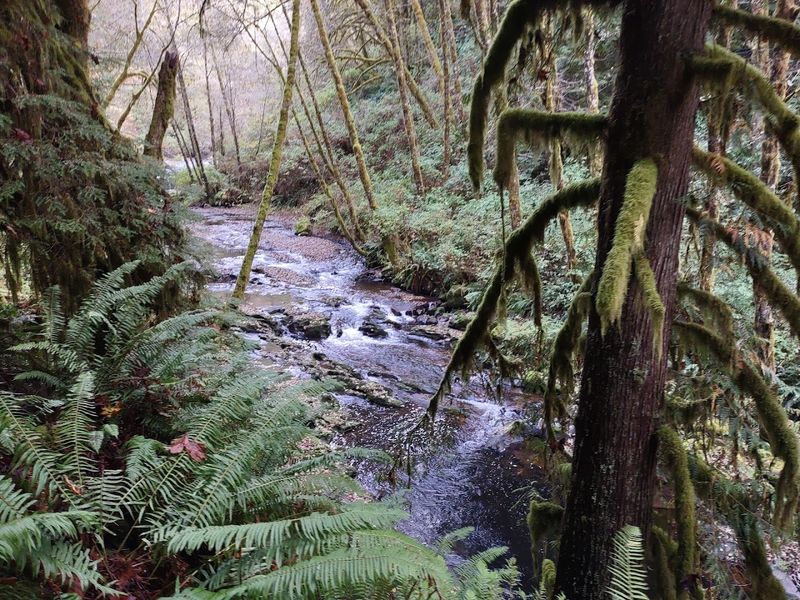
The forest along Sweet Creek is not just a backdrop. It is an active, living system that makes itself known in small, surprising ways throughout the hike.
Banana slugs are practically trail ambassadors here, appearing on logs and leaves with a slow-moving confidence that suggests they have absolutely nowhere to be and know it.
Beaver activity is visible along the creek banks, and rangers have been known to set up informal nature stations at the trailhead, complete with photos and examples of beaver prints, water quality samples, and information about the local flora and fauna. That kind of on-the-ground education makes the hike feel richer, especially for kids who are old enough to be curious about what they are seeing.
The trees themselves are worth paying attention to. Douglas-fir towers overhead while Big Leaf Maple and Red Alder fill in the middle layers, creating a layered forest that supports an enormous variety of mosses, lichens, and ferns.
The creek is a healthy, fast-moving waterway, and its clarity is a sign of how well the surrounding forest filters and protects it. On a quiet morning, the whole ecosystem hums along in a way that feels genuinely undisturbed.
Swimming Holes and Water Play
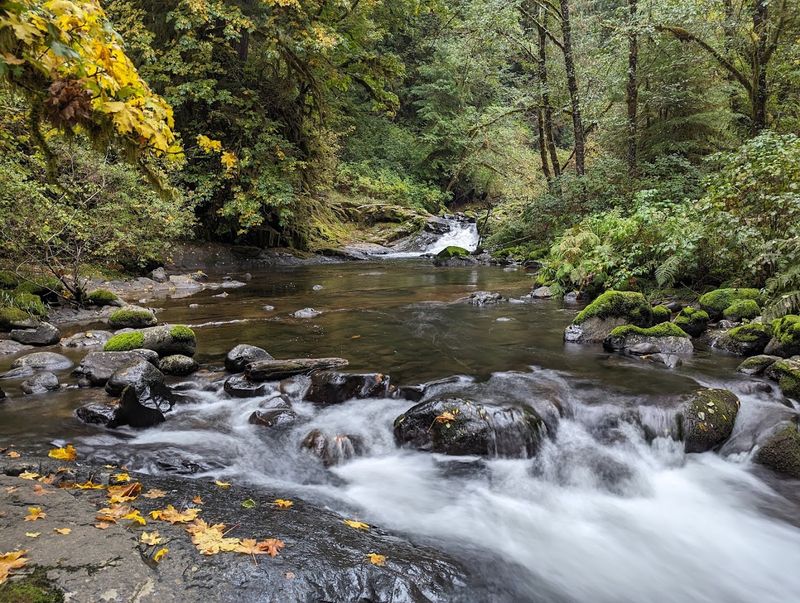
The swimming along this trail is not a side note. For a lot of visitors, it is the whole point.
The natural pools scattered along Sweet Creek are deep, clear, and cold enough to be genuinely refreshing on a warm day. Several are large enough for actual swimming, with smooth rock walls and pebble bottoms that make entry and exit manageable.
The water is chilly at first contact, but most people who get in report the same thing: after a minute, you stop noticing the temperature and start noticing how clear it is. One pool on the lower section is reportedly deep enough to see clearly with goggles, and the rock formations around it make it a natural spot for jumping in from low ledges.
Water shoes make navigating the creek bed significantly easier.
Families arrive on summer weekends with full gear: bathing suits, towels, dry bags, and lunches packed in backpacks. The creek is wide enough in places that you can spread out and find your own spot without crowding.
Coming before 11 a.m. helps with both parking and securing a good pool before the afternoon rush arrives. This is a trail where you could easily spend three to four hours without ever feeling like you wasted a minute.
Best Times to Visit and Seasonal Highlights
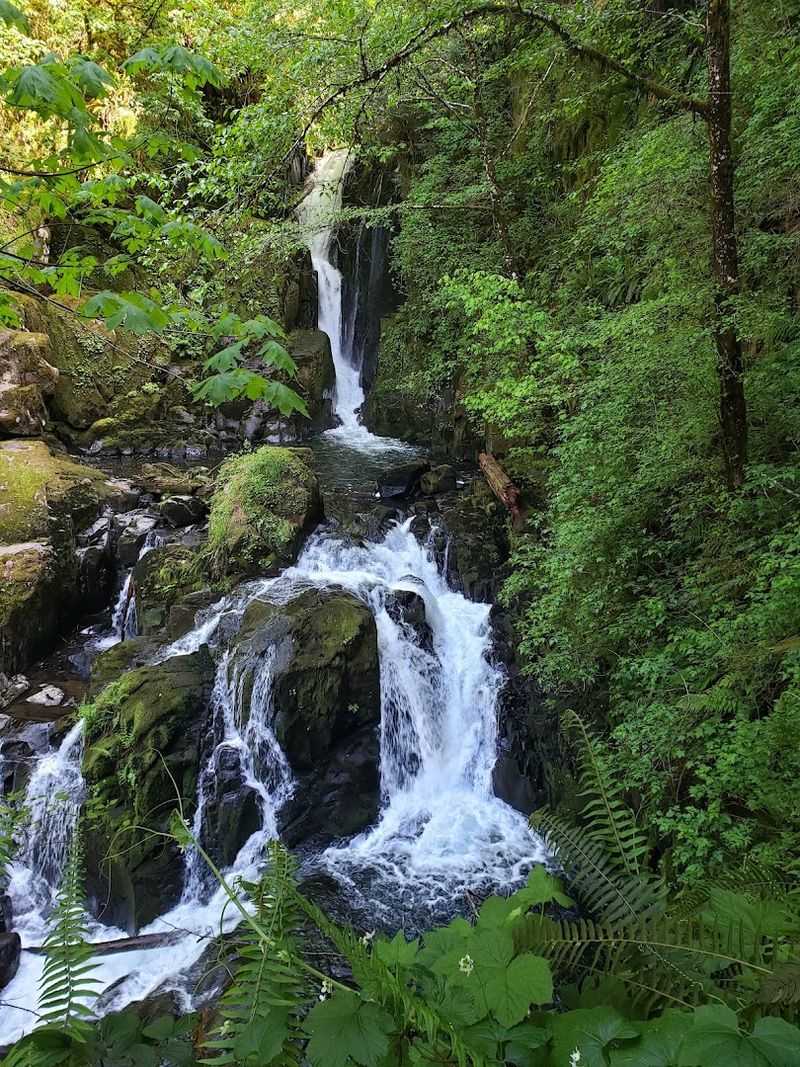
Every season brings something different to this trail, and none of them are truly bad. Spring is the showiest time, when snowmelt and rain push Sweet Creek to its fullest and the waterfalls run with a power that makes the ground vibrate slightly underfoot.
The green of the forest in April and May is almost unreasonably vivid.
Summer brings the swimming crowd and warmer temperatures that make the creek’s cold water feel like a reward rather than a shock. Late August visits are popular, and the trail holds up well even under heavy foot traffic because the forest floor stays relatively cool.
Fall adds color to the canopy and thins the crowds noticeably, making it one of the quieter times to enjoy the trail without waiting at narrow sections.
Winter visits are possible and genuinely beautiful, with the creek running high and the forest taking on a misty, atmospheric quality. The road, however, demands extra caution in cold weather.
Ice and frost on the narrow curves of Sweet Creek Road in early morning can make the drive in feel more adventurous than intended. Whenever you go, arriving early in the day is always the right call for both parking and peace of mind.
Practical Tips for Planning Your Visit
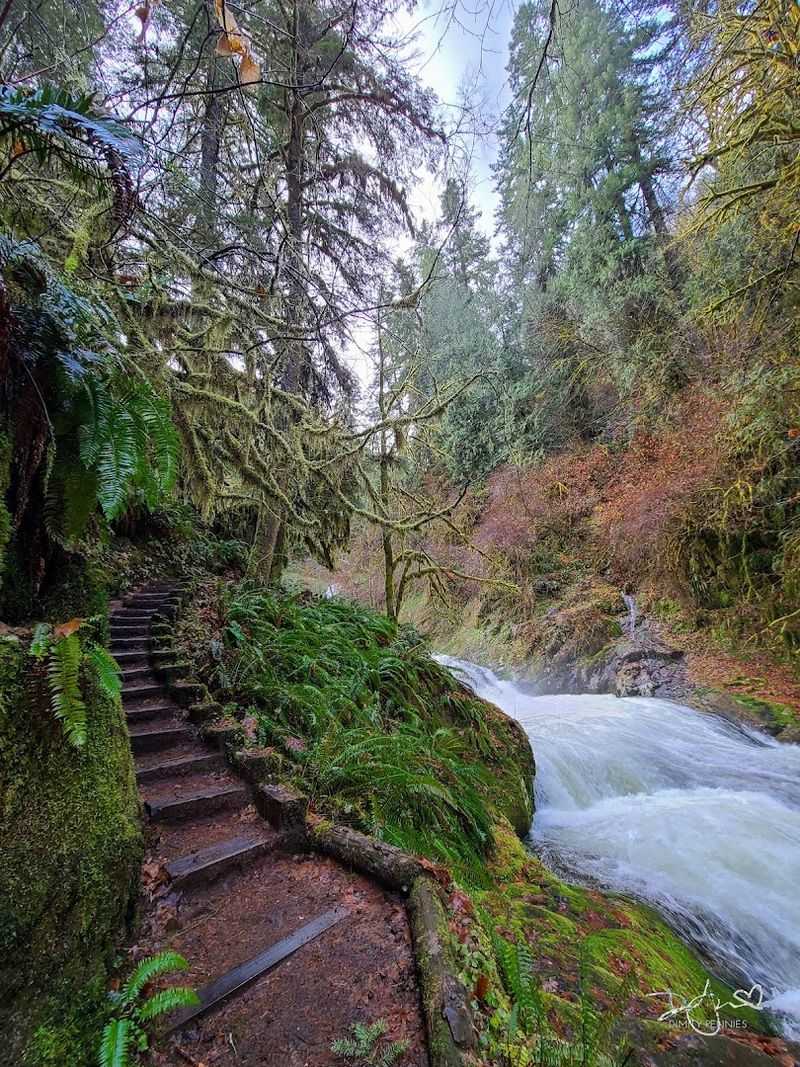
A little preparation goes a long way on this trail. The hike itself is not physically demanding, but the terrain is uneven enough that proper footwear matters more than most people expect.
Trail runners with good grip or light hiking boots are the right call. Sandals and casual sneakers tend to become liabilities on the wet, rooted sections.
Parking is free but limited, and weekends fill up fast. The first lot has a vault toilet, which is the only restroom on the property, so plan accordingly before heading up to the second lot.
The trail is open 24 hours a day, seven days a week, which makes early morning visits entirely feasible and genuinely rewarding when the light is low and the crowds have not yet arrived.
Bring water, snacks, and a small first aid kit as standard practice. High theft has been reported in the parking area, so leave valuables at home or keep them completely out of sight.
Dogs are welcome but need to stay under control on narrow sections where passing other hikers can get tricky. Cell service is limited on the road in, so download offline maps before you leave and let someone know your plan for the day.
Why This Trail Stays With You Long After You Leave
Some trails are impressive for one big reason. Sweet Creek Falls is impressive for about eleven reasons, spread across a couple of miles of forest that manages to feel both wild and welcoming at the same time.
The combination of constant water, deep shade, and accessible terrain creates something that is harder to find than you might think.
The trail works for solo hikers who want quiet and a camera. It works for families with older kids who are ready for real terrain.
It works for anyone who has been sitting at a desk too long and needs a few hours of green, moving, living world to reset. The creek has a rhythm to it that the rest of life rarely matches.
Visitors come back repeatedly, sometimes three or four times, which says something real about the place. It is not the longest trail in Oregon or the most dramatic, but it delivers something consistent and genuine every single time.
The waterfalls are always running, the moss is always green, and Sweet Creek is always right there beside you, doing exactly what it has always done, long before the first hiker ever found this road.
Share this story