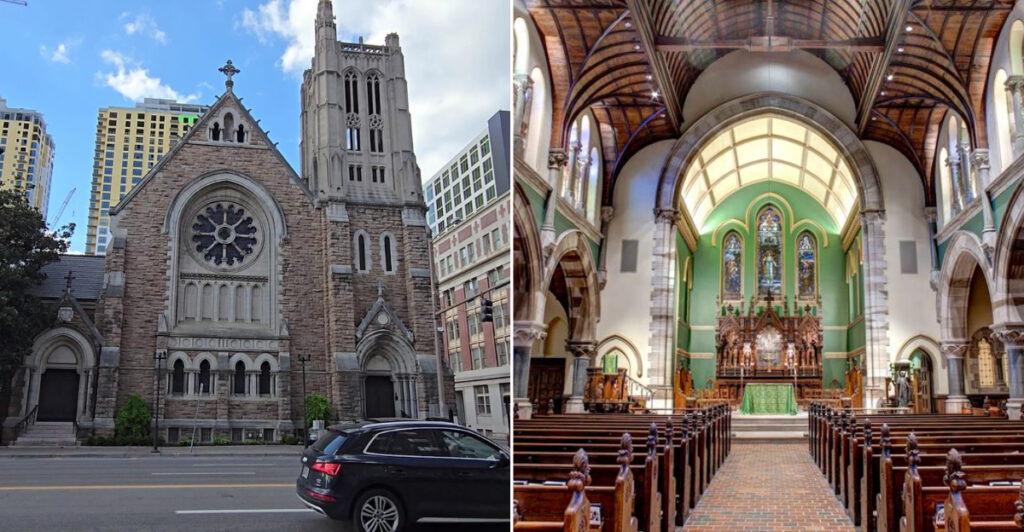
Nashville is best known for honky-tonks and neon lights, but tucked along Broadway is a building that looks like it was lifted straight from the English countryside. A Victorian Gothic cathedral stands quietly in the middle of all that noise, offering something completely different from the city’s usual energy.
Built in 1894, this historic Episcopal church is Nashville’s oldest Episcopal parish, and its architecture alone makes it worth a detour. From hand-carved woodwork to towering stained glass windows and a pipe organ that commands the room, every detail inside tells a story that stretches back more than a century.
Whether you are drawn by history, architecture, or simply curiosity, this downtown landmark has a way of stopping people in their tracks.
A Building Born in the Victorian Era
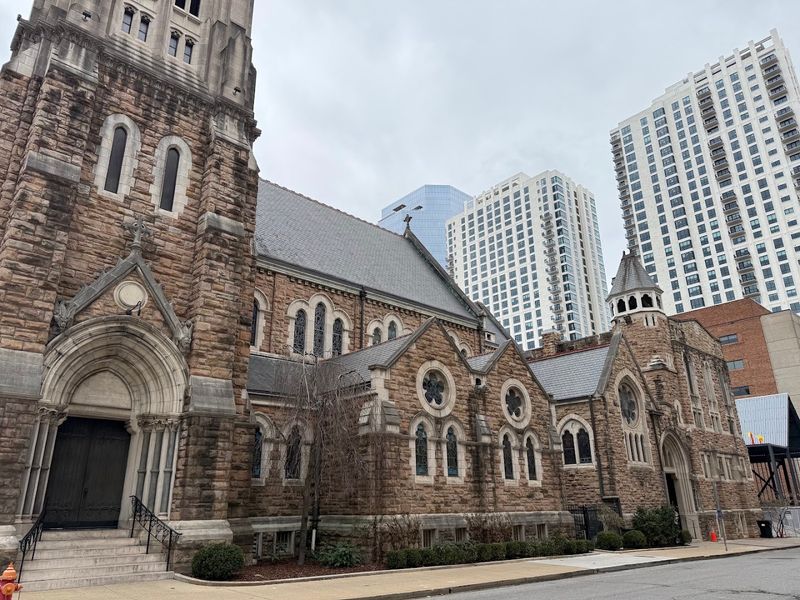
The year 1894 was a long time before Broadway became a tourist destination, and Christ Church Cathedral was already standing tall when most of Nashville looked nothing like it does today. The building was designed in the Victorian Gothic style, a tradition that drew heavily from medieval English church architecture and emphasized height, pointed arches, and detailed stonework.
Victorian Gothic churches were built to convey permanence and reverence, and this one does exactly that. Every element of the structure, from the steep rooflines to the carved stone details on the exterior, reflects the craftsmanship standards of the late 19th century.
Few buildings in downtown Nashville have maintained their original character as well as this one has. While the city has transformed dramatically around it, the cathedral has remained a consistent and recognizable presence.
Its age is not just a number here; it is written into every stone and beam of the structure.
Gothic Arches and Hand-Carved Wood
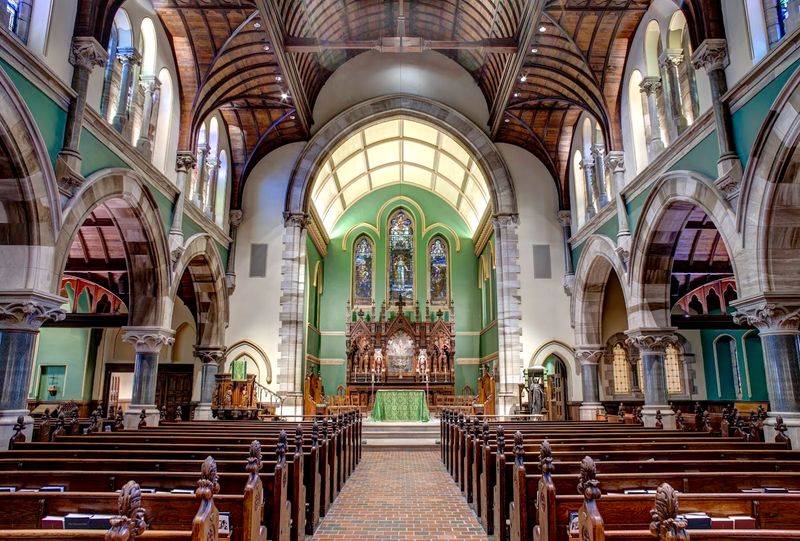
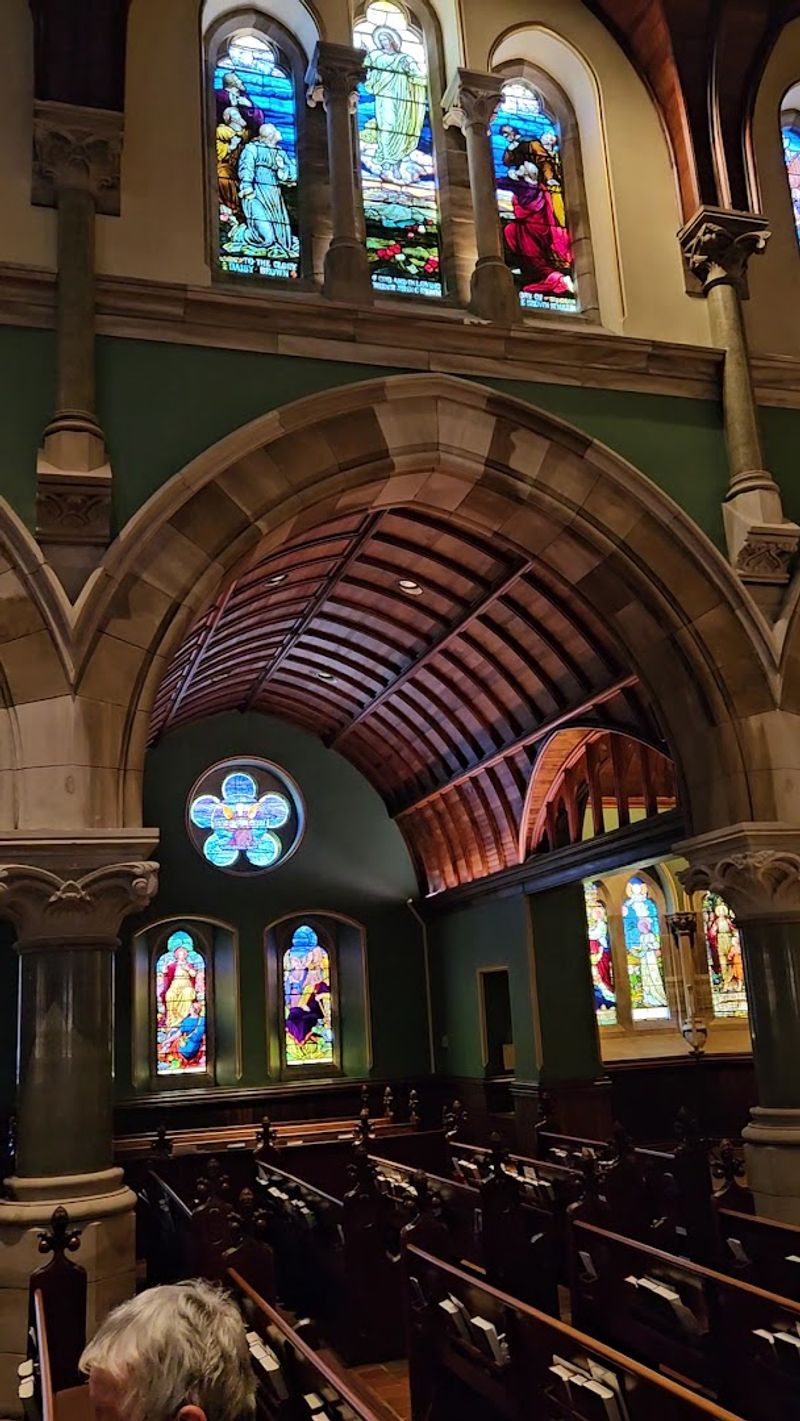
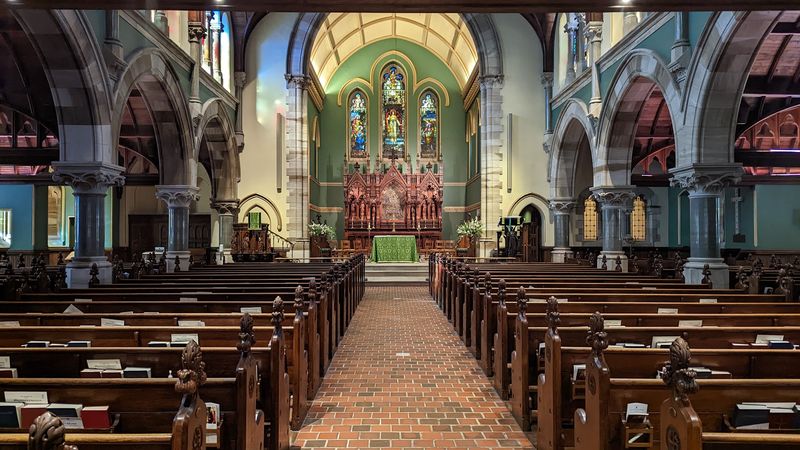
The interior of Christ Church Cathedral is where the Victorian Gothic design truly comes to life. The curved wooden ceiling arches overhead in a way that draws the eye upward immediately, and the craftsmanship involved in those arches is remarkable by any standard.
The woodwork throughout the nave is hand-carved, featuring detailed patterns on the altar, the ceiling ribs, and the surrounding millwork. This level of detail in wood is uncommon even in historic churches, and the quality of preservation here makes it even more impressive.
The wood has been maintained with obvious care over more than a century.
The overall effect of the interior is one of careful proportion and deliberate design. Nothing feels accidental.
Every element from the pew arrangements to the carved altar details contributes to a cohesive architectural statement that reflects both the era it was built in and the tradition it belongs to.
Stained Glass That Tells a Story
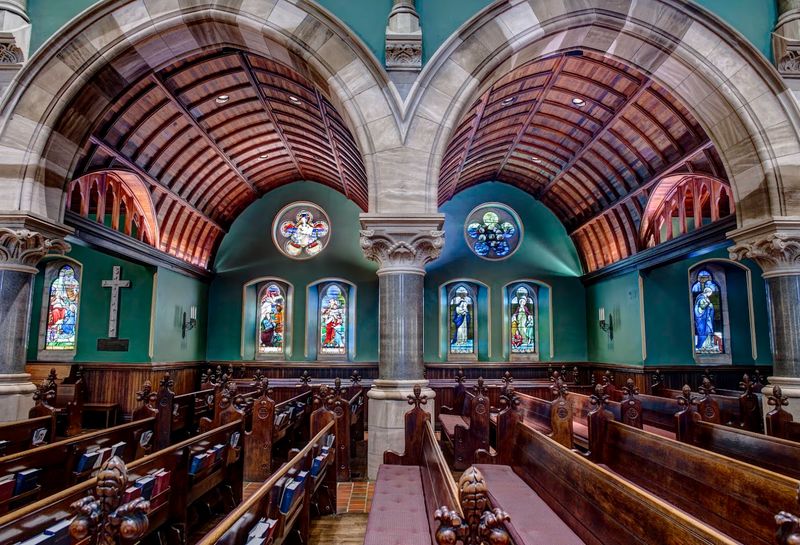
The stained glass windows at Christ Church Cathedral are among the most distinctive features of the entire building. Each window is a detailed composition of colored glass, and the craftsmanship reflects the high standards that defined ecclesiastical art in the late 19th and early 20th centuries.
Unlike generic decorative glass, these windows carry specific imagery and intentional design. The colors are rich and layered, and when natural light passes through them, the interior of the cathedral takes on a different quality altogether.
The windows are positioned throughout the nave and side chapels, giving each part of the building its own character.
For anyone interested in religious art, architectural history, or simply well-made things, the stained glass here is worth a careful look. The detail in each panel rewards close attention.
These are not background elements; they are central to the identity of the space and to the story the building has been telling since 1894.
The Pipe Organ That Commands Attention
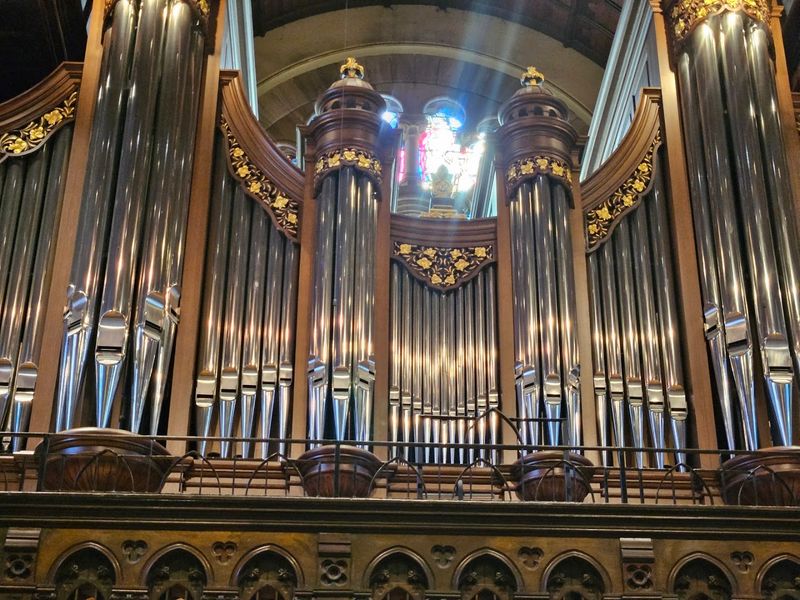
The pipe organ at Christ Church Cathedral is one of the most talked-about features of the building, and for good reason. The instrument is large, historically significant, and exceptionally well preserved.
Its pipes are visible from the nave, rising within an ornate wooden case that was clearly designed to be part of the architectural composition, not just a functional addition.
Pipe organs of this caliber are rare in any city, and Nashville is fortunate to have one housed in a building that complements it so well. The organ loft sits in a position that allows the sound to carry through the full length of the nave, making it particularly effective during worship services and concerts.
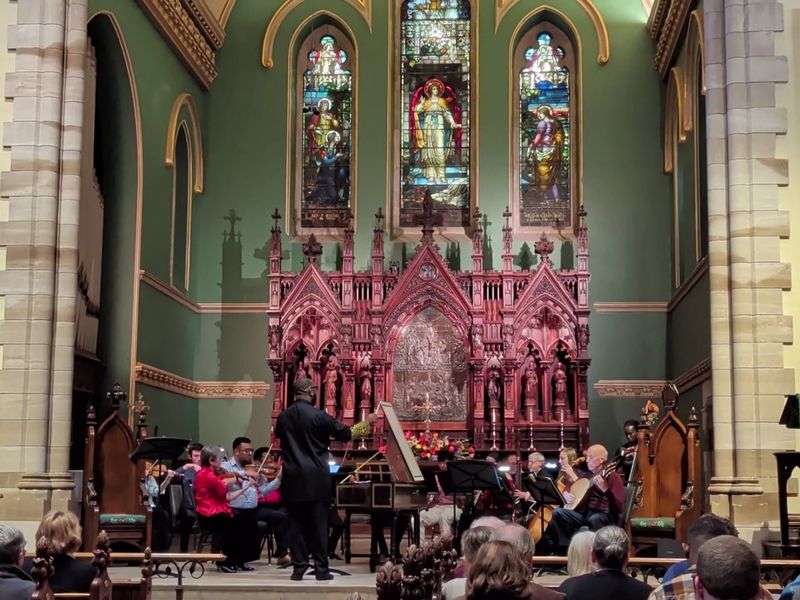
The cathedral has hosted musical performances that take advantage of the instrument’s capabilities, including Handel’s Messiah performances and a monthly Jazz Mass on Sunday evenings. Hearing this organ in a full musical setting is an experience that the building was genuinely designed to support.
Nashville’s First Episcopal Parish
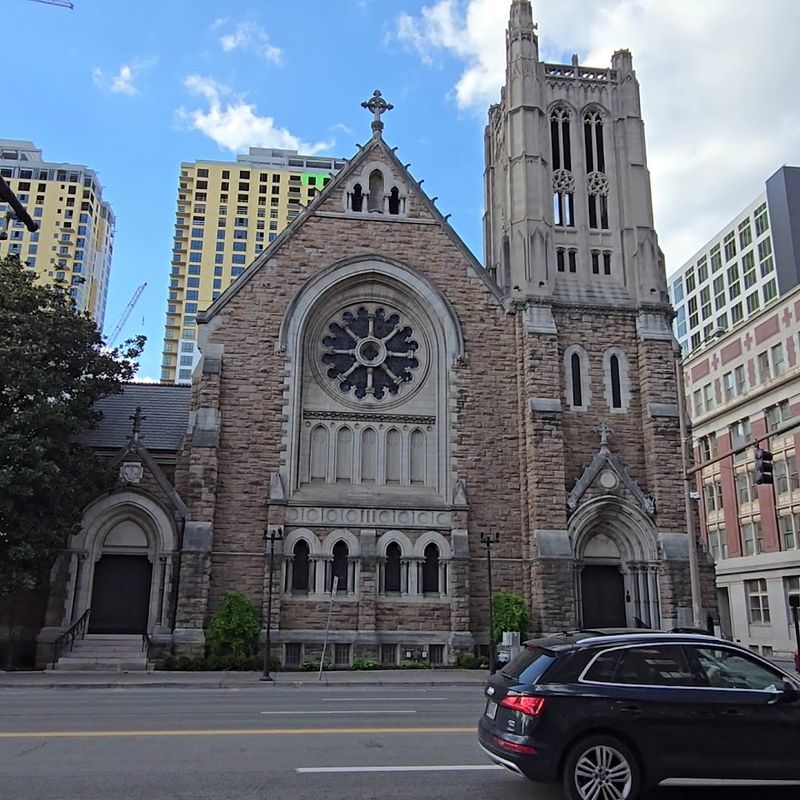
Christ Church Cathedral holds the distinction of being Nashville’s first Episcopal parish, a title that carries real historical weight. The congregation was founded in 1829, nearly 65 years before the current building was completed.
That timeline means the community predates the Civil War, Reconstruction, and the dramatic transformation of Nashville into a modern city.
Episcopal churches in America trace their roots to the Church of England, and Christ Church has maintained that liturgical tradition throughout its history. The worship style at this cathedral leans toward what is known as high church practice, which includes formal liturgy, choral music, and structured services following the Book of Common Prayer.
Being the oldest Episcopal parish in the city gives Christ Church Cathedral a particular kind of authority in Nashville’s religious landscape. It has witnessed and participated in the city’s history for nearly two centuries.
That continuity, from the early 19th century to the present day, is part of what makes this congregation genuinely significant.
Guided Tours on Saturday Mornings
For those who want to explore the building in depth, Christ Church Cathedral offers guided tours on Saturday mornings from 10 a.m. until noon. These tours are an opportunity to learn about the history of the congregation, the architectural details of the building, and the stories behind specific features like the stained glass windows and the pipe organ.
The tours are led by knowledgeable guides who can point out details that would be easy to miss on a self-guided walk through. Historical books about the building are also available inside, including guides to specific points of interest such as the Baptismal Chapel, which reportedly contains a hidden trapdoor.
Checking the cathedral’s website before visiting is recommended, as tour availability and schedules can change around holidays and special events. The website also lists upcoming concerts, worship services, and community programs.
For architecture enthusiasts or history buffs, the Saturday morning tour is one of the most rewarding ways to experience this building.
Worship Services Open to All
Christ Church Cathedral holds multiple worship services throughout the week, with Sunday being the most active day. Sunday morning services include a traditional Rite I service at 7:30 a.m. using classic liturgical language, followed by two Rite II services at 8:45 a.m. and 11:15 a.m. using contemporary language.
All Sunday services include the Eucharist.
The Sunday evening service, called BreakingBread at 6, runs at 6 p.m. and offers a more casual worship experience. On the first Sunday of each month, that evening service becomes a Jazz Mass, blending liturgical worship with jazz music in a format that is genuinely unusual and worth experiencing.
The Episcopal tradition at Christ Church holds that all are welcome at the communion table. The congregation is active and engaged, and the clergy team includes several women, which reflects the broader practices of the Episcopal Church.
Visitors attending for the first time generally find the services well-organized and accessible regardless of their background.
Community Programs Beyond the Pews
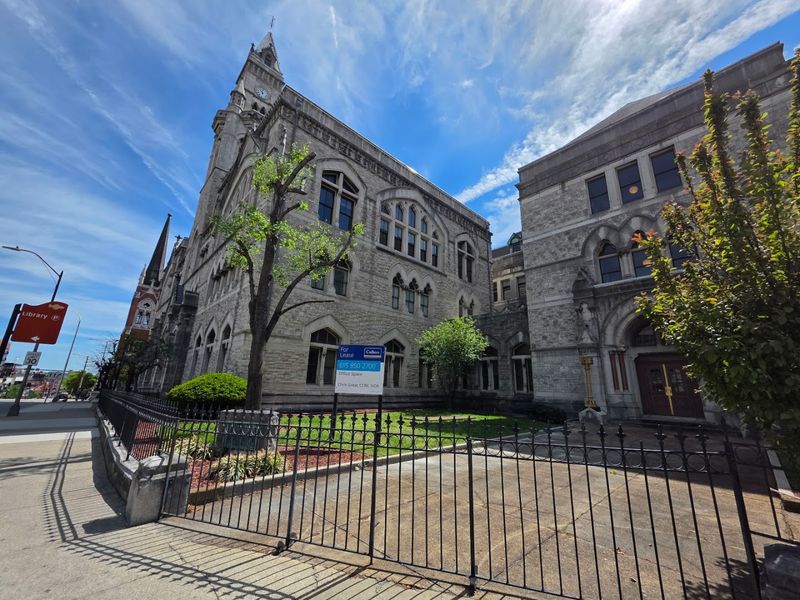
Christ Church Cathedral is not simply a historic building that holds services. The congregation runs an active set of community programs that extend well beyond Sunday worship.
These programs reflect a long-standing commitment to serving the Nashville community in practical ways.
The cathedral’s social outreach efforts address a range of needs, and the congregation has built partnerships with organizations throughout the city over many decades. This kind of community engagement is consistent with the Episcopal tradition of combining worship with active service, and Christ Church has been doing it long enough to have established real roots in the city’s civic life.
The cathedral’s YouTube channel also streams Sunday services and special liturgies for those who cannot attend in person, making the community accessible beyond the building itself. Whether someone is looking for a place to worship, a historic site to explore, or a congregation with genuine ties to the city, Christ Church Cathedral operates on multiple levels that are worth knowing about.
What to Know Before You Visit
Planning a visit to Christ Church Cathedral is straightforward, but a few practical details make the trip smoother. The cathedral is located at 900 Broadway in downtown Nashville, and on-site parking is available, which is a genuine advantage in that part of the city.
Access from major roads is easy, and the location is walkable from several downtown hotels.
The building is generally open to the public during daytime hours, though it is worth checking the cathedral’s website at christcathedral.org before arriving, especially around holidays or special events when schedules may shift. Guided tours run Saturday mornings from 10 a.m. to noon.
Photography is welcomed, and the interior offers plenty of compelling subjects from the carved wooden ceiling to the stained glass and the organ. Visitors are asked to be respectful of any ongoing services or quiet reflection time.
The cathedral maintains an open and welcoming posture toward anyone who walks through the door, regardless of their reason for visiting.
Where History Meets Broadway
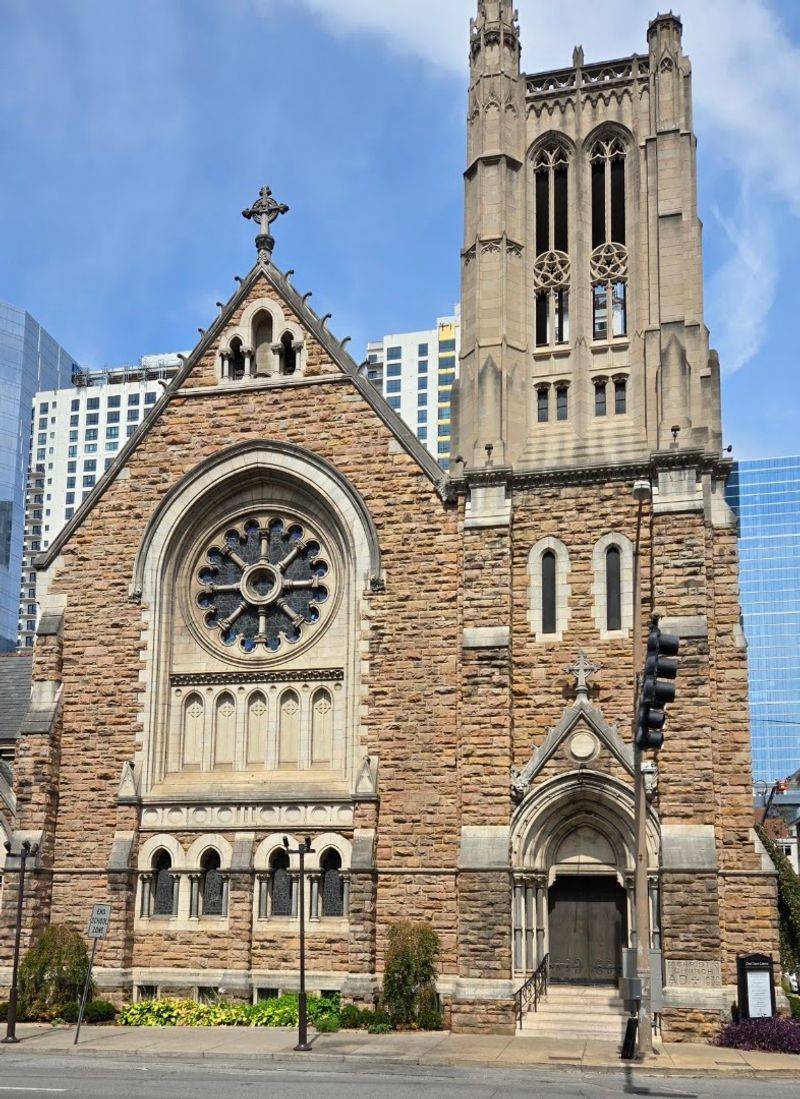
At 900 Broadway, Nashville, TN 37203, Christ Church Cathedral sits in one of the city’s most unexpected spots. Just steps from the entertainment corridor that defines modern Nashville, this Victorian Gothic stone building looks like it belongs in a different century entirely, and that contrast is exactly what makes it so striking.
Founded in 1829, Christ Church is Nashville’s first Episcopal parish. The current building was completed in 1894, and it has anchored this corner of Broadway ever since.
The architecture follows a distinctly English Gothic tradition, with pointed arches, a solid stone exterior, and a tower that rises above the surrounding streetscape.
Parking is available on site, and the church is easy to reach from major roads nearby. For a city block that could easily be overlooked, this address delivers one of the most architecturally significant experiences in all of downtown Nashville.
Share this story