Most houses sit on top of the land. This one grew out of it.
Covered in grass, shaped like something between a cave and a shell, and tucked into a hillside just outside Mexico City, this structure challenges every assumption you have about what a home is supposed to look like. There are no sharp corners, no flat ceilings, and almost no straight lines anywhere.
What you find instead is a building that feels alive, warm, and somehow deeply familiar, like the earth itself decided to fold inward and make room for people to live inside it.
The Architect Behind the Vision
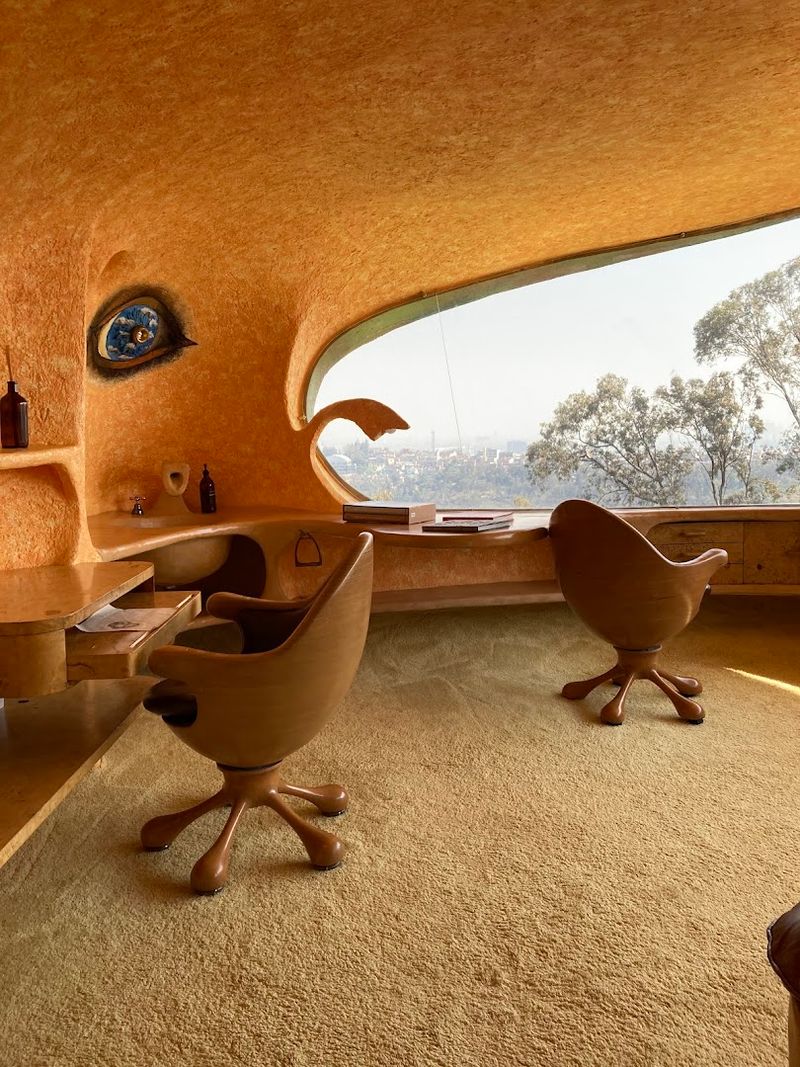
Javier Senosiain is not the kind of architect who draws boxes. The Mexican designer has spent decades pushing the idea that buildings should respond to nature rather than fight it, and Casa Orgánica is widely considered his most personal and complete statement on that philosophy.
Senosiain studied architecture and later developed a deep interest in what he called bio-architecture, a way of designing spaces that mirror the shapes found in the natural world. Curved walls, organic forms, and seamless transitions between indoor and outdoor spaces became his signatures.
What makes his work at Casa Orgánica especially compelling is that he did not just design the house. He lived in it.
Every decision, from the angle of a window to the texture of a wall, came from someone who experienced the space daily and kept refining it over time.
Finding Casa Orgánica
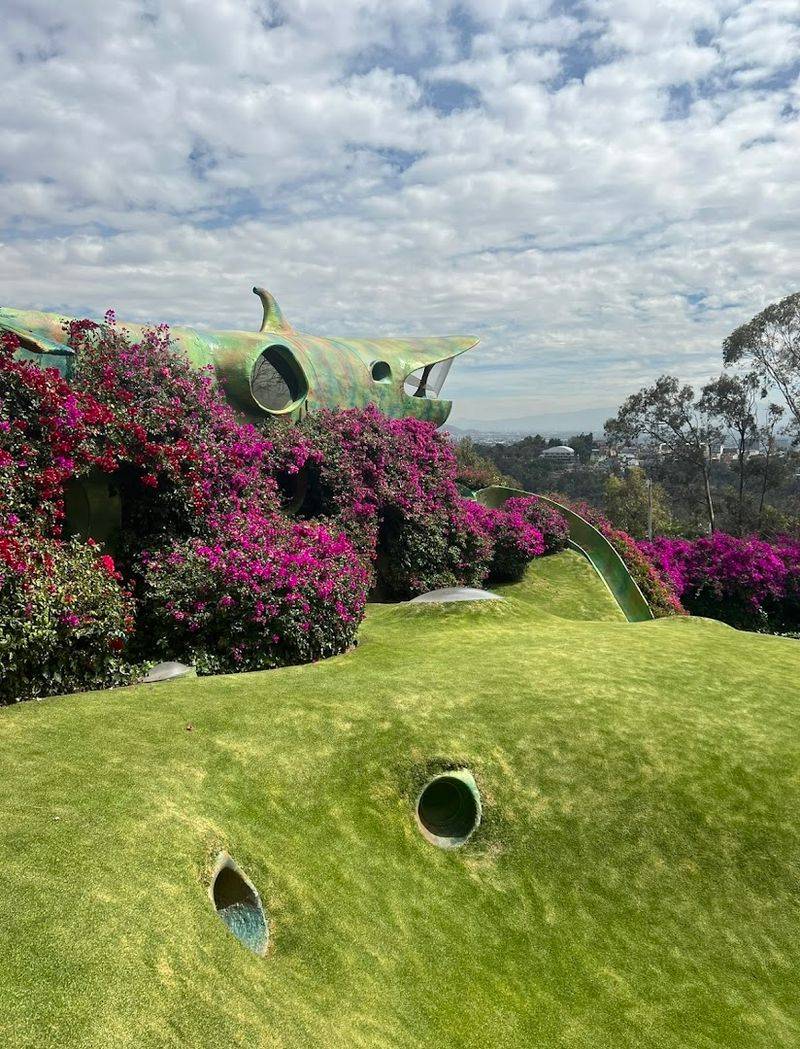
The address is Acueducto Morelia 26, Vista del Valle, 53296 Naucalpan de Juárez, Méx., Mexico, and getting there takes some planning. Most visitors arrive by rideshare from central Mexico City, a trip that typically runs about 30 to 40 minutes depending on traffic.
The neighborhood sits in a hilly area west of the city, and the drive itself gives you a gradual sense of leaving the urban grid behind. By the time you arrive, the shift in surroundings feels intentional, like the landscape is preparing you for something different.
The house is not immediately visible from the street the way a conventional building would be. It blends into its surroundings so effectively that first-time visitors sometimes walk past it.
That quiet camouflage is not accidental. It is the whole point of everything Senosiain set out to build here.
What Organic Architecture Actually Means
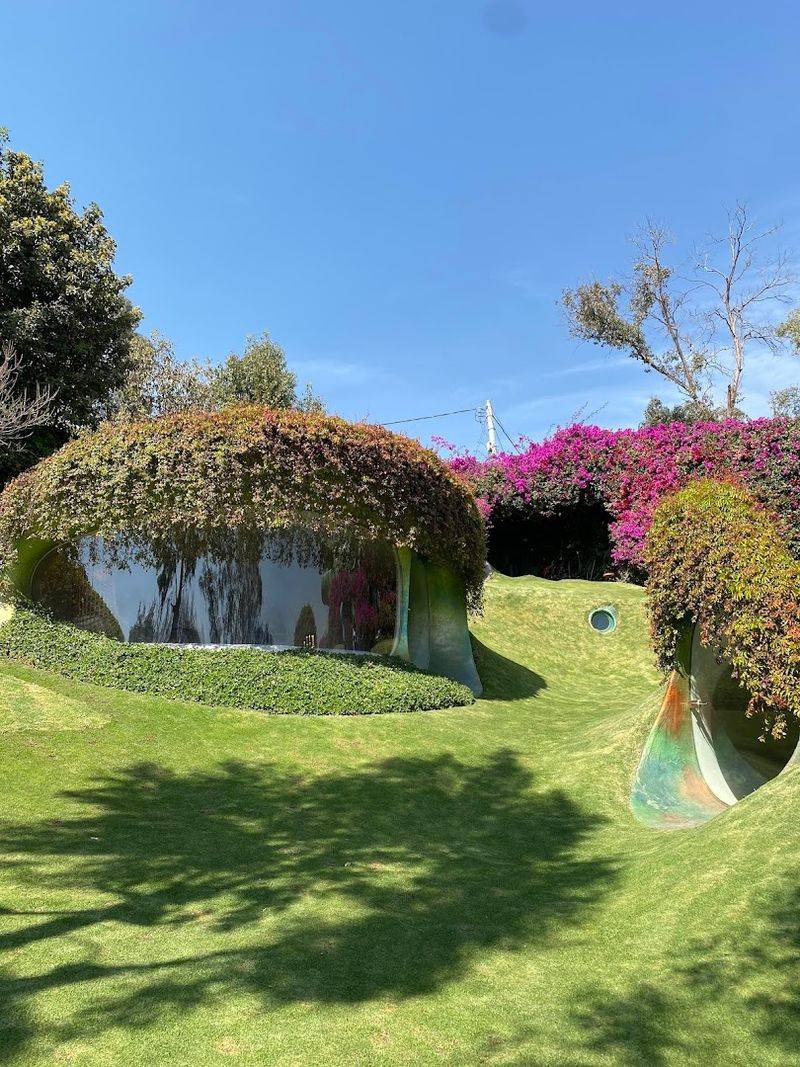
The term organic architecture gets used loosely, but at Casa Orgánica it has a precise meaning. Every room, wall, and surface was designed to feel continuous with the natural terrain around it.
There are no abrupt transitions, no hard stops where the building ends and the outdoors begins.
Senosiain drew heavily from the ideas of American architect Frank Lloyd Wright and the Spanish visionary Antoni Gaudí, both of whom believed that buildings should grow from their sites the way trees grow from soil. He then pushed those ideas further by using the terrain of the Mexican hillside as both a foundation and a design partner.
The result is a home where rooms flow into each other without doorframes in the traditional sense, where ceilings curve overhead like the inside of a shell, and where the boundary between shelter and landscape stays deliberately blurred throughout the entire structure.
The Grass Roof That Defines the House
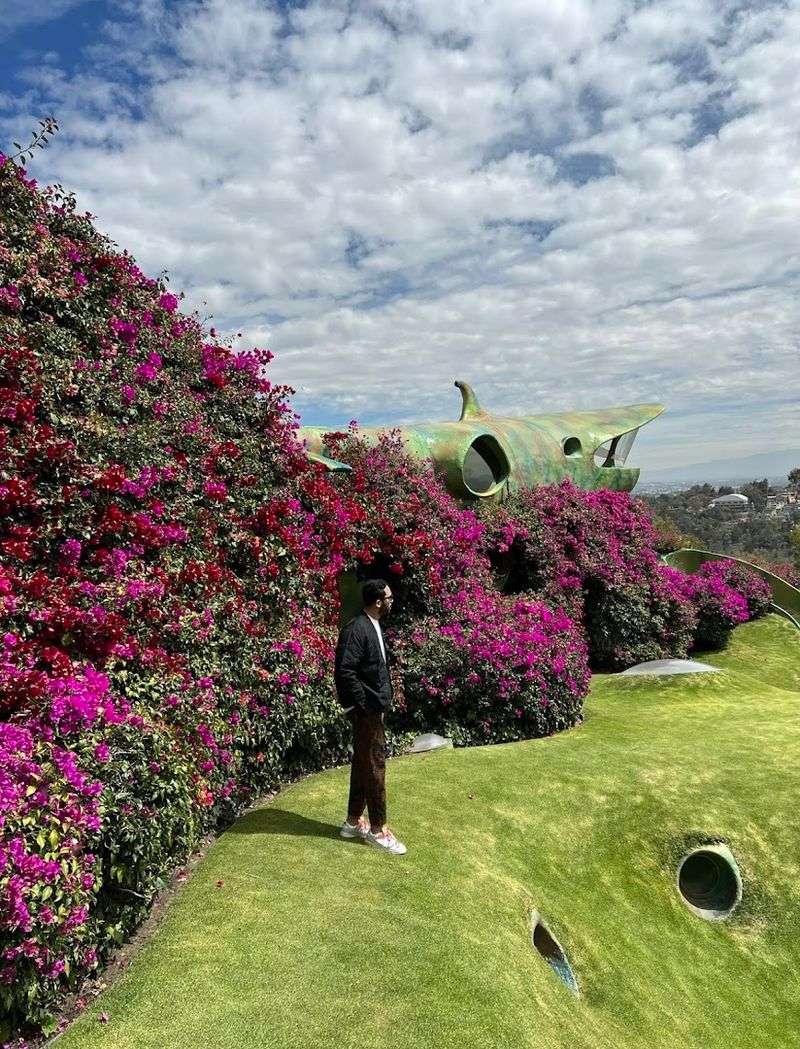
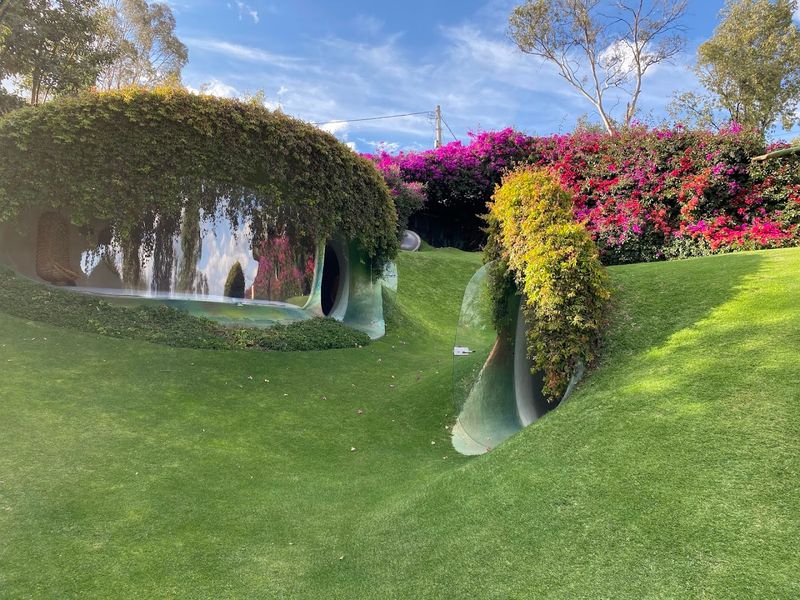
The grass-covered roof is the feature that stops people mid-sentence when they first see a photo of Casa Orgánica. It is not decorative turf or a symbolic gesture.
The living roof is a functional part of the structure, providing insulation, managing rainwater, and helping the building maintain a stable interior temperature year-round.
From above or from a distance, the house reads as a gentle mound of earth with windows. The grass grows thick and uninterrupted across the curved surface, making the building look more like a landform than a structure.
Up close, the effect is even more striking. You can reach out and touch the grass while standing at the entrance.
The contrast between the soft, living exterior and the solid concrete underneath gives the whole thing a texture that photographs struggle to capture. You really have to stand there to understand it.
Stepping Inside for the First Time
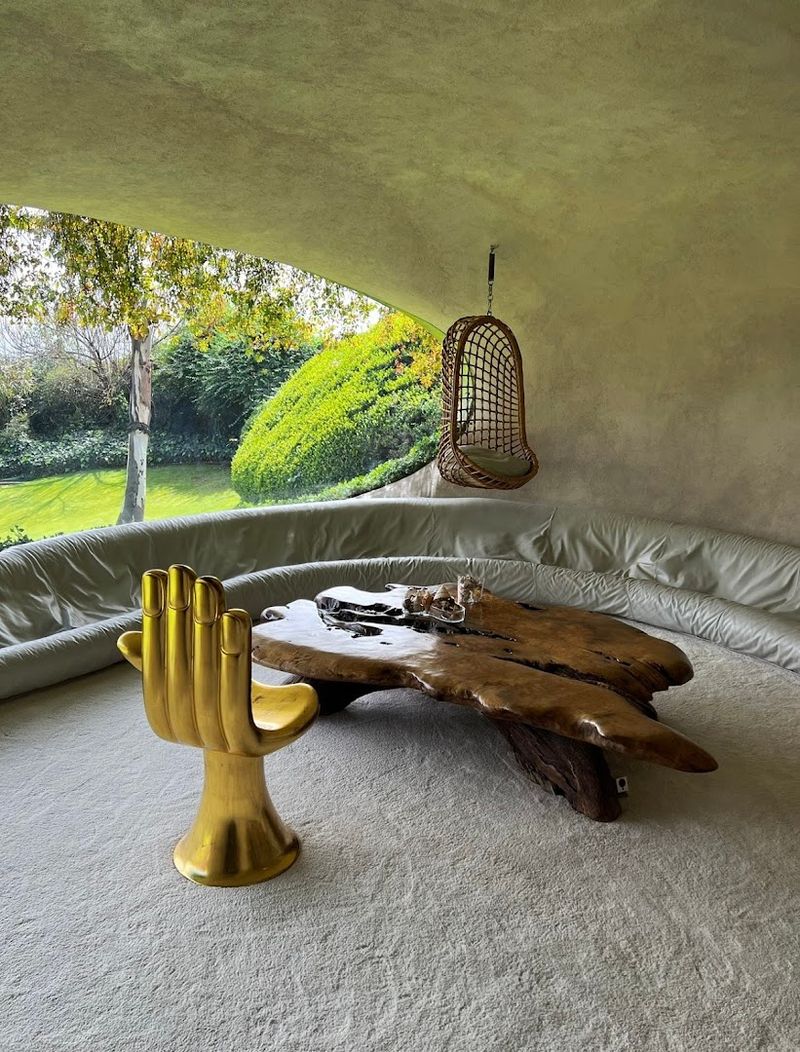
Visitors remove their shoes before entering, and that small ritual turns out to matter more than you might expect. The floors inside are covered with an extraordinarily thick carpet that cushions every step, and feeling it underfoot immediately changes how you move through the space.
You slow down. You pay attention differently.
The living room greets you with curves in every direction. The ceiling arches overhead, the walls bend around you, and the floor has a gentle contour that shifts underfoot.
Nothing is flat. Nothing is rigid.
The overall sensation is one of being held rather than surrounded.
Soft music played during my visit, and it fit the atmosphere so naturally that it was hard to tell whether someone had chosen it deliberately or whether the acoustics of the rounded walls simply made any sound feel warmer. Either way, the entry sets a tone that stays with you through the entire tour.
Colors That Shift With the Light
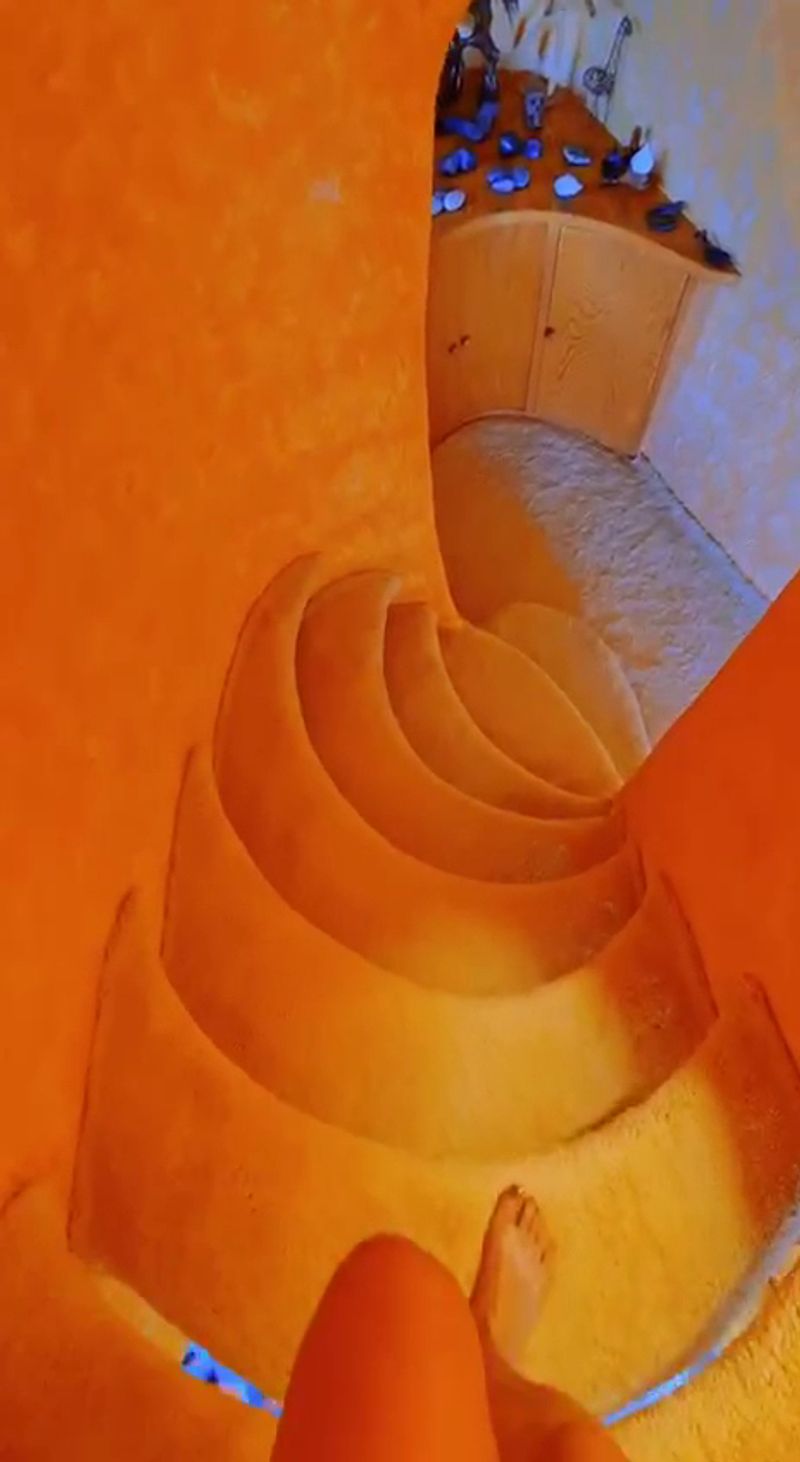
One of the most disorienting and wonderful things about moving through Casa Orgánica is how dramatically the color palette shifts from room to room. Deep ocean blues give way to warm amber tones, then to rich purples, each transition feeling intentional rather than random.
Senosiain believed that color affects emotional states in ways that most architects ignore. The choices at Casa Orgánica reflect that belief directly.
Certain rooms feel calm and meditative. Others feel energizing.
The shift happens before you consciously register the color change, which is exactly the point.
Natural light plays a major role in how the colors read throughout the day. Rounded windows and skylights channel light in ways that flat-walled rooms simply cannot replicate.
The light curves along the walls, softens in the corners, and creates gradients that make the painted surfaces look almost luminous at certain hours of the afternoon.
The Slide That Surprises Every Visitor
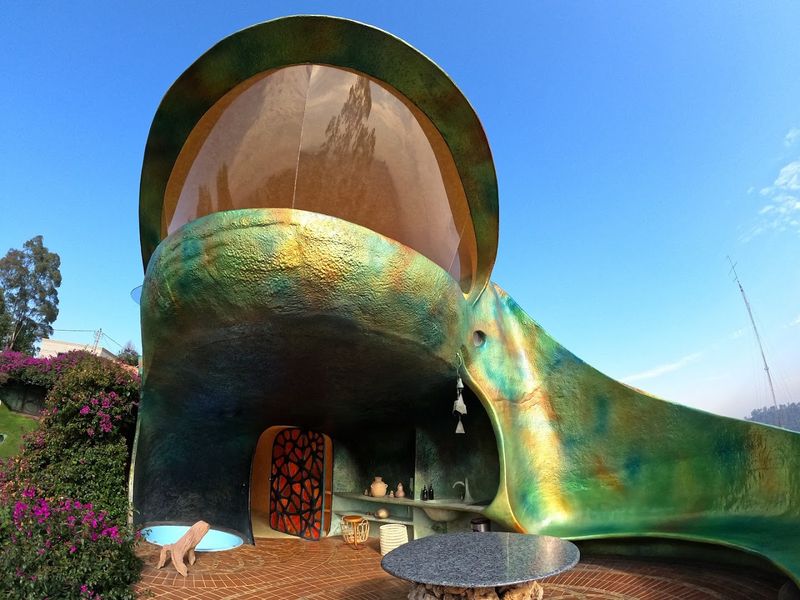
Somewhere in the middle of the tour, the guide pauses and points to what looks like a curved opening in the wall. It is a slide.
A real, functional slide built directly into the architecture of the house, connecting one level to another in the most unexpected way possible.
Senosiain included the slide not as a gimmick but as a genuine design choice that reflects his belief that homes should be joyful. Why use stairs when you can descend in a way that makes you laugh?
The logic is completely consistent with everything else about the house.
Fair warning: the landing at the bottom sits close to the garden, and at least one visitor in my group arrived there with muddy feet. Wear shoes you do not mind getting dirty, or simply land with your feet raised.
Either approach works, though only one of them is elegant.
The Garden and Ironwork Details
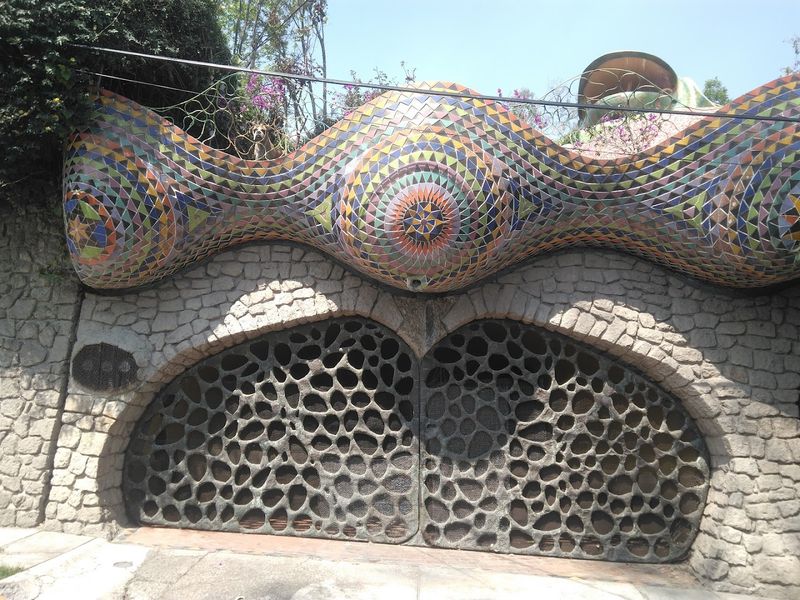
The garden at Casa Orgánica is easy to rush through on the way to the next interior room, but slowing down here rewards the patient visitor. The ironwork throughout the outdoor spaces is crafted with the same attention to organic form that defines the building itself.
There are no straight lines in the metalwork either.
Curved iron gates, plant holders, and structural details echo the shapes of the house in a smaller scale. It gives the entire property a coherent visual language, as though the same hand drew every element from the largest wall to the smallest hinge.
The garden also holds some of the architectural easter eggs that sharp-eyed visitors notice and others walk right past. Symbolic forms, references to Mexican culture, and small sculptural details are worked into surfaces throughout the outdoor area.
A good guide will point some of them out, but not necessarily all of them.
The Guided Tour Experience
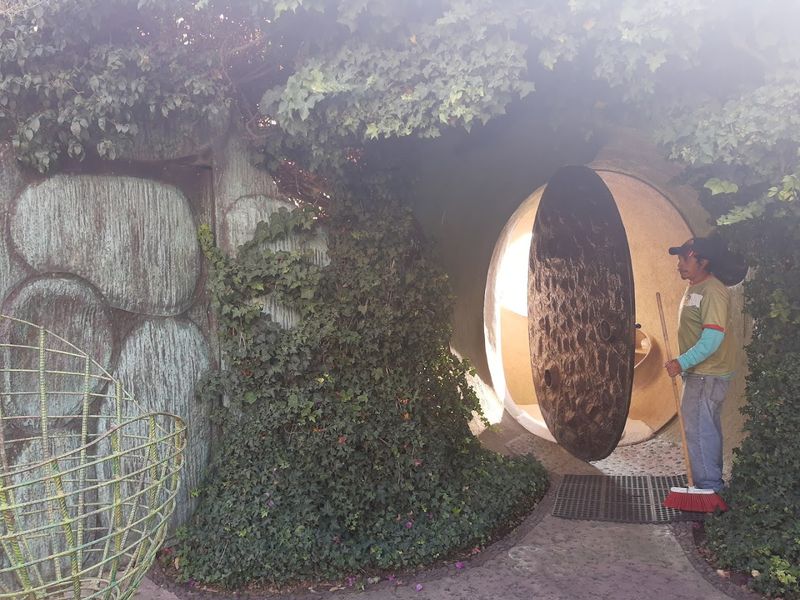
Tours at Casa Orgánica run in small groups, which keeps the experience from feeling like a crowded museum visit. The intimacy matters because the house itself is intimate.
Large groups would overwhelm the space and make it harder to absorb what you are seeing.
Guides lead visitors through the rooms in a specific sequence that mirrors the flow of the architecture. The tour covers the history of the house, Senosiain’s design philosophy, and the practical details of how the organic structure was built and maintained over the years.
Tours are typically offered in both Spanish and English, and groups have been known to accommodate non-Spanish speakers when possible. The flow of the tour is unhurried, which suits the house perfectly.
This is not a place you want to speed through. Every room has something worth pausing over, and a good guide will give you the time to do exactly that.
Booking Tickets in Advance
Tickets for Casa Orgánica sell out quickly, and this is not the kind of place where showing up without a reservation works in your favor. The house is a private residence that opens for limited tours, so the number of available spots at any given time is genuinely small.
Planning several weeks ahead is a reasonable starting point. During peak travel seasons or around holidays, booking a month or more in advance is not unusual.
The website at casaorganica.org is the best place to check current availability and make a reservation.
Tours run Wednesday through Saturday, with hours generally from 9 AM to 4 PM. The house is closed Sunday, Monday, and Tuesday.
Payment is accepted in cash only, and both Mexican pesos and US dollars are welcome. Bringing the right amount in cash avoids any last-minute complications on the day of your visit.
How the Building Was Constructed
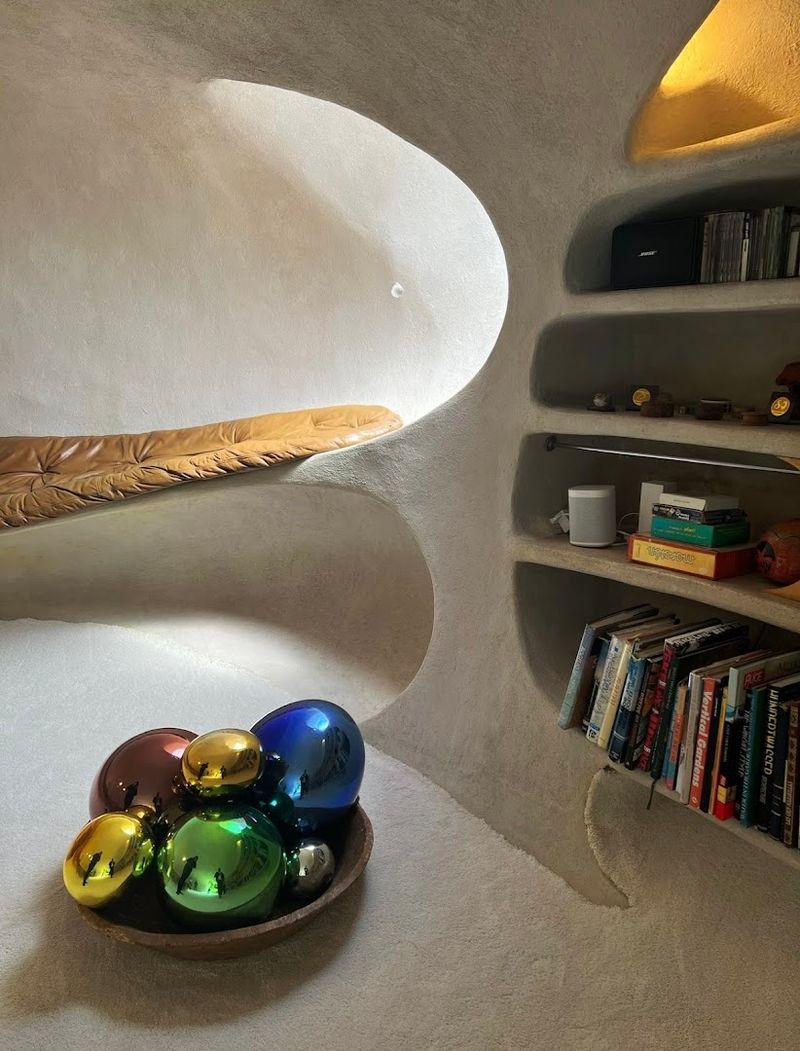
Building a house with no straight walls and no flat ceilings requires a completely different construction process than conventional architecture. At Casa Orgánica, the structure was built using a technique that involved spraying concrete over a shaped framework, allowing the material to follow curves that standard forming methods cannot produce.
The result is a shell-like structure that is both extremely strong and visually seamless. There are no visible joints or seams where separate sections meet.
The walls, ceilings, and floors read as one continuous surface, which is part of what gives the interior its cave-like quality.
Senosiain worked on and refined the house over many years rather than completing it in a single construction phase. That ongoing process of adjustment and addition is visible in how organically the different areas of the house connect.
The building grew with its creator rather than arriving finished all at once.
The Nido de Quetzalcoatl Connection
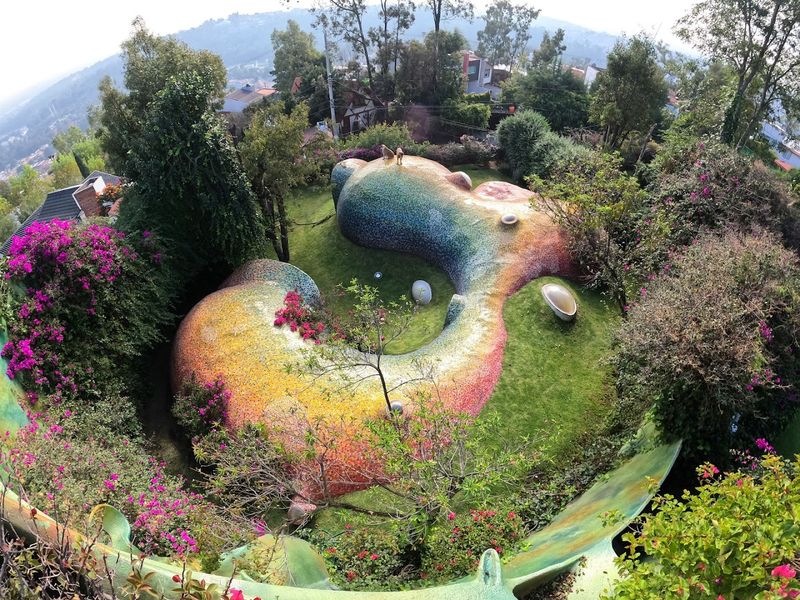
Senosiain’s work extends beyond Casa Orgánica. One of his most ambitious projects is the Nido de Quetzalcoatl, a roughly 5,000-square-meter organic architecture park that takes the same bio-architecture principles and scales them up dramatically into a shared public space.
Visitors who tour Casa Orgánica and find themselves wanting more of Senosiain’s vision often seek out the Nido de Quetzalcoatl as a follow-up. The two projects complement each other well.
The house is intimate and personal. The park is expansive and communal, but both speak the same architectural language.
Understanding that Senosiain built an entire body of work around these ideas, rather than producing a single unusual house, changes how you see Casa Orgánica. The house is not an experiment or an oddity.
It is the most personal expression of a fully developed philosophy that this architect has spent a career refining and expanding.
How the House Feels Emotionally
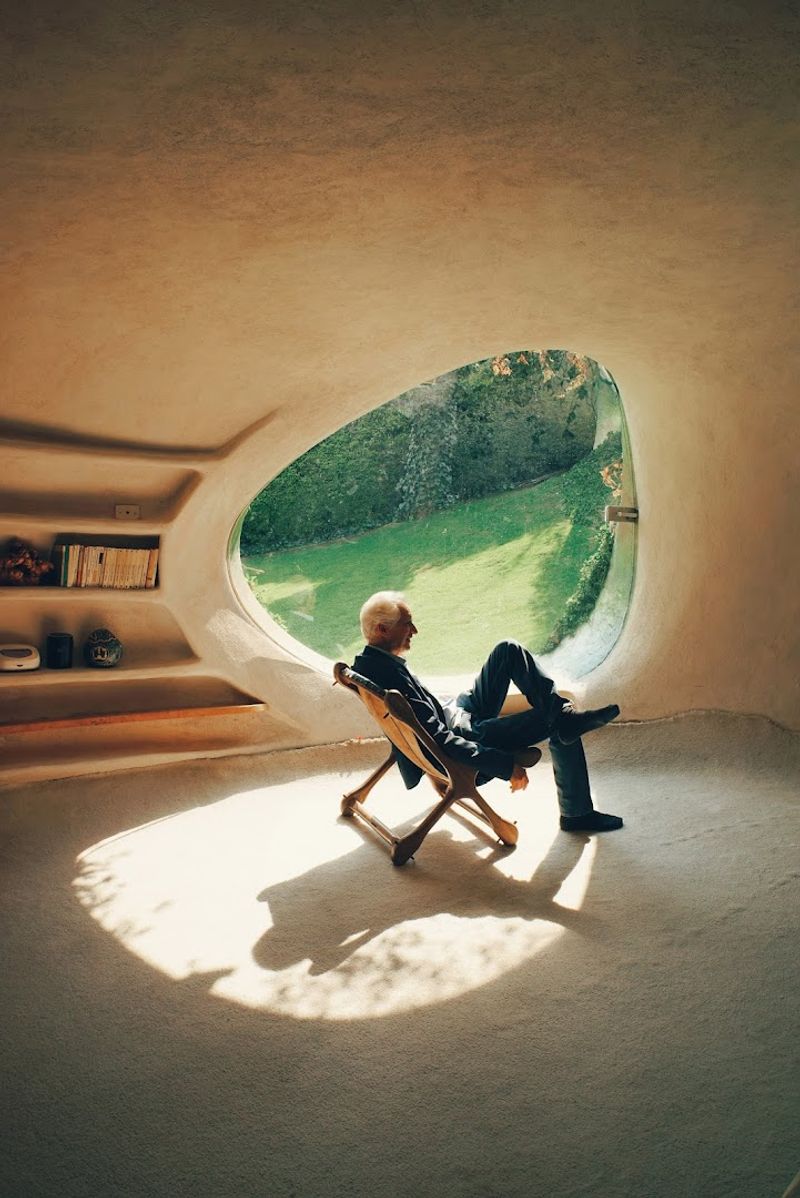
Several visitors who have toured Casa Orgánica describe a shift in how they feel inside the space, and it is not easy to explain without sounding overly philosophical. The rounded walls create an acoustic softness.
The curved ceilings feel lower in a comforting way rather than a confining one. The overall effect is genuinely calming.
Research on curved versus angular spaces suggests that humans respond differently to organic forms, tending to associate them with safety and comfort at a level that bypasses conscious thought. Casa Orgánica seems to have been designed with exactly that response in mind.
One visitor put it simply during the tour I joined: the house feels like being underwater, but in the best possible way. That description stuck with me.
There is a quality of suspension inside these rooms, as though the usual rules of how space behaves have been quietly and pleasantly rearranged around you.
Practical Tips for the Visit
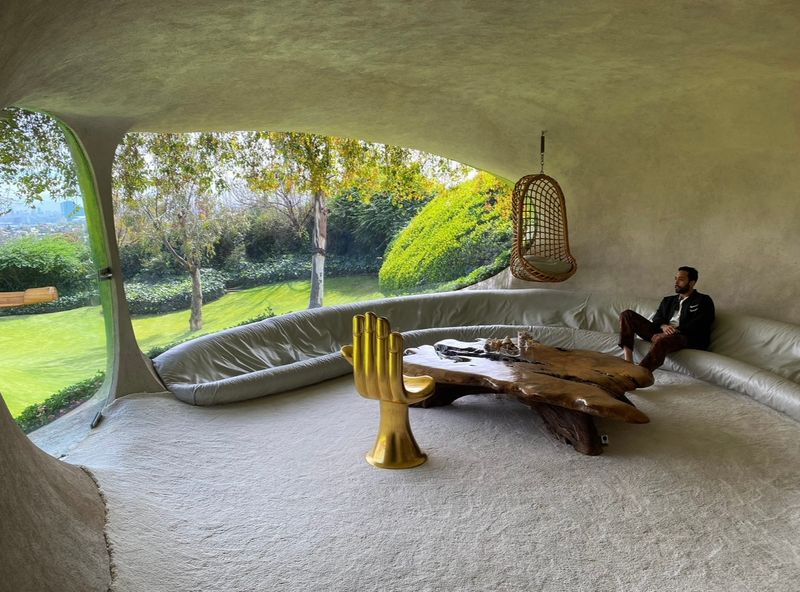
A few practical details make the visit run more smoothly. The shoe-free policy is strictly observed, so wearing socks you are comfortable walking around in is a good idea.
That said, thick socks on the lush carpet can get slippery on the slopes and curved surfaces, so thin socks or bare feet tend to work better.
Bring cash in either Mexican pesos or US dollars since the house does not accept cards. The rideshare ride from central Mexico City takes roughly 30 to 40 minutes and is generally the most straightforward way to get there and back without navigating unfamiliar local transit routes.
Photography is welcome during the tour, and the house offers genuinely striking images from almost every angle. The best light tends to come through the rounded windows during midday hours, when the sun hits the interior walls at angles that bring out the depth of the colors most vividly.
Why This House Changes How You See Architecture
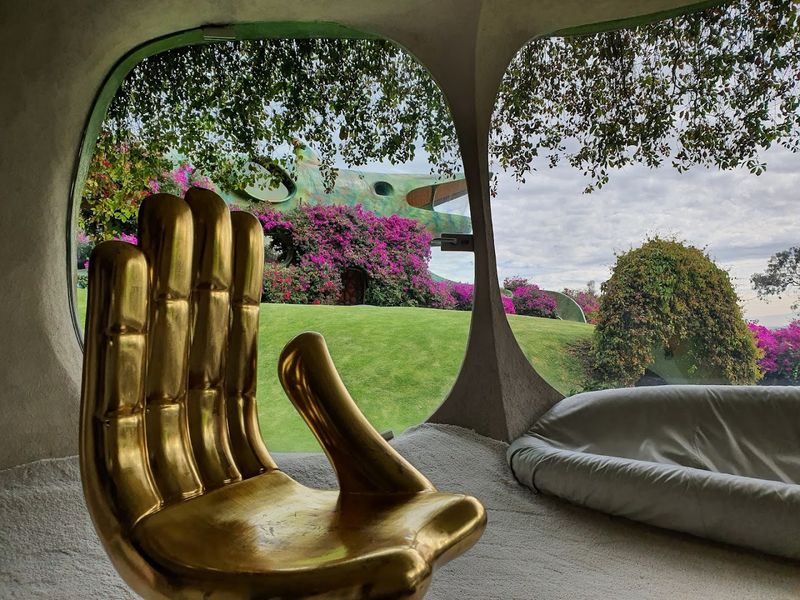
Most people leave Casa Orgánica thinking differently about buildings. That sounds like an overstatement, but it comes up consistently among visitors who have spent time inside the house.
When every surface curves, when every room flows naturally into the next, the standard rectangular room starts to look like an arbitrary choice rather than an inevitable one.
Senosiain’s house makes a quiet argument that human beings did not evolve in boxes, and that our built environments do not have to resemble them. The argument is made entirely through experience rather than words.
You feel it before you think it.
Whether or not Casa Orgánica represents the future of residential design, it absolutely represents a fully realized alternative to the present one. Spending an afternoon inside it is enough to make you look at every building you enter afterward with slightly different eyes, noticing the corners and flat ceilings that you never questioned before.
Share this story