There is a trail in Honolulu where the air smells like rain even on a sunny day, where the trees grow so tall and thick that you almost forget the city exists just a few miles away. A short hike through a lush rainforest and a swaying bamboo grove brings you face to face with a 150-foot waterfall that crashes down a mossy cliff with serious dramatic energy.
This is not a trail that makes you suffer for the reward. Most people finish it in under an hour, yet they walk away feeling like they stumbled into a scene from a blockbuster film, because in many ways, they actually did.
Read on to find out exactly what makes this trail one of the most unforgettable outdoor experiences on the island of Oahu.
The Trail That Starts It All
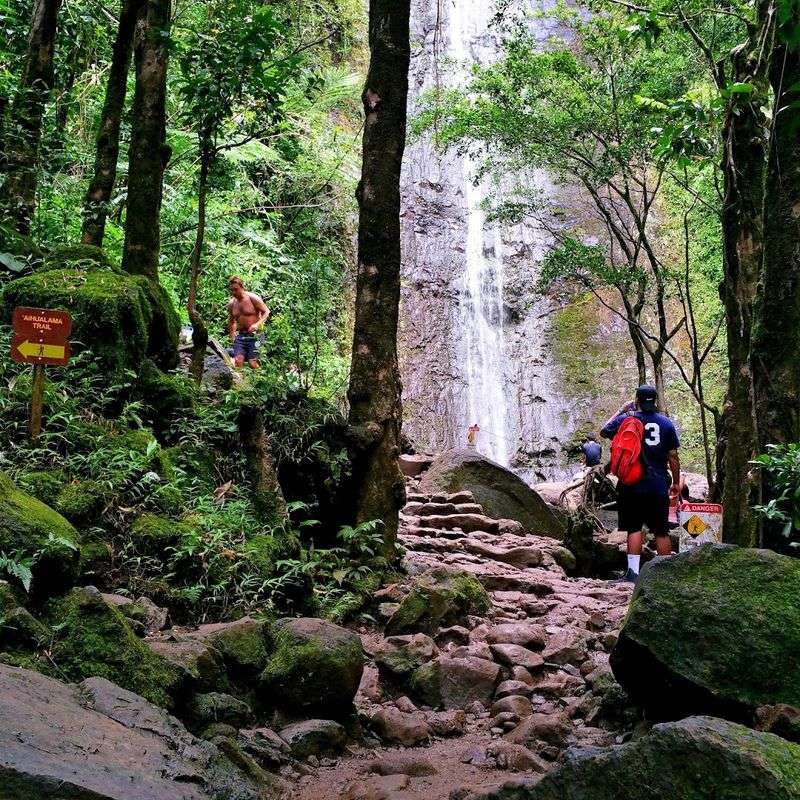
Few trails on Oahu pack this much personality into such a short distance. The Mānoa Falls Trail runs about 1.6 miles round trip, making it one of the most accessible waterfall hikes in all of Hawaii.
The trailhead sits at the end of Mānoa Road in Honolulu, HI 96822, tucked at the back of the Mānoa Valley. You do not need to be an experienced hiker to tackle this path, but you should expect some mud, uneven roots, and a few rocky sections that keep things interesting.
The trail climbs gently through a canopy of towering trees, and the sound of running water follows you almost the entire way. It is the kind of hike that feels effortless going in, but leaves you genuinely amazed by the time you reach the end.
Where Exactly You Are Going
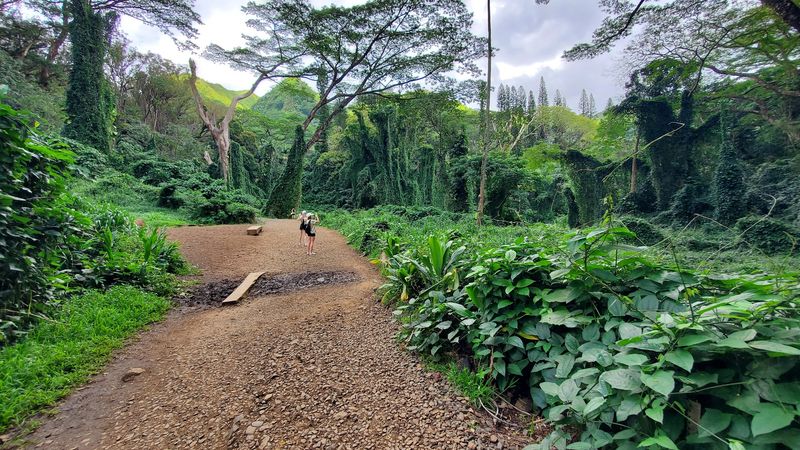
The trail is officially part of the Na Ala Hele trail system, which is Hawaii’s statewide trail and access program. The address most visitors use to navigate there is the end of Mānoa Road in Honolulu, HI 96822, near the Lyon Arboretum.
Mānoa Valley itself sits just a few miles northeast of downtown Honolulu, making it surprisingly easy to reach from Waikiki in about 20 minutes by car. GPS coordinates place the trailhead at approximately 21.3360 degrees north, 157.7999 degrees west.
Parking is available nearby, though it fills up fast on weekends and you may need to use a paid lot. The valley is one of the wettest spots on Oahu, receiving over 150 inches of rain per year, which explains why everything here looks almost impossibly green year-round.
A Rainforest That Feels Like Another World
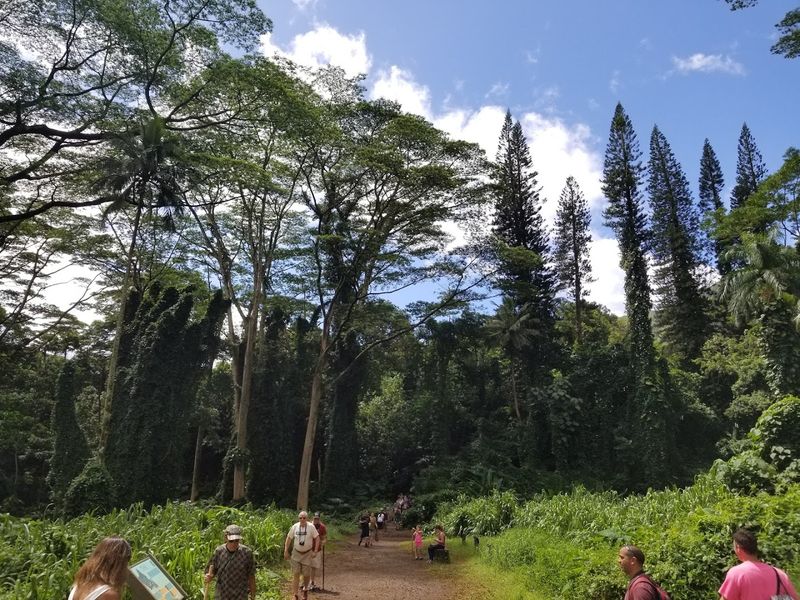
The forest along this trail is not subtle about what it is. Within the first few minutes of walking, the canopy closes in overhead and the temperature drops noticeably, creating a cool, humid pocket of green that feels completely removed from the sunny Honolulu streets below.
The trees here include a mix of native and introduced species, with massive kukui trees, African tulips, and towering guava creating layers of shade. Mossy rocks line the trail edges and the smell of wet earth and tropical vegetation is constant and deeply satisfying.
Wildlife is active throughout the forest too. You might spot red-billed leiothrix birds flitting through the undergrowth, or hear the call of Japanese white-eyes in the canopy above.
The forest does not just surround you here, it actively performs for you at every turn.
The Bamboo Grove That Steals the Show
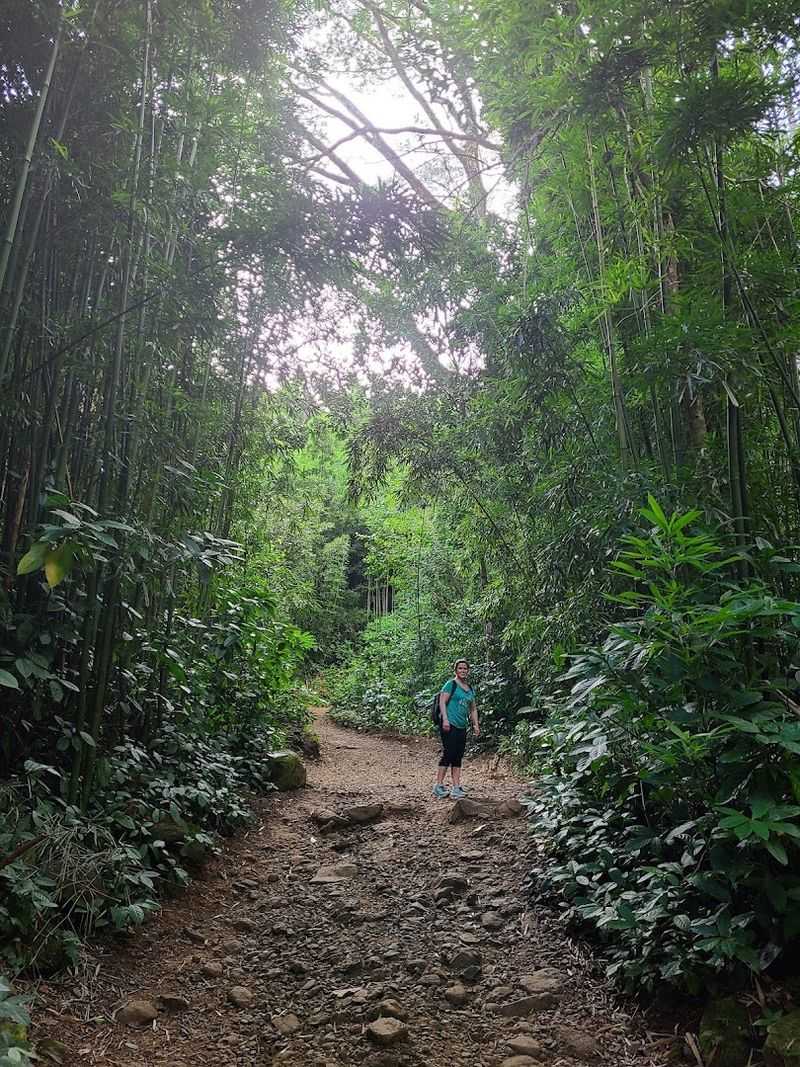
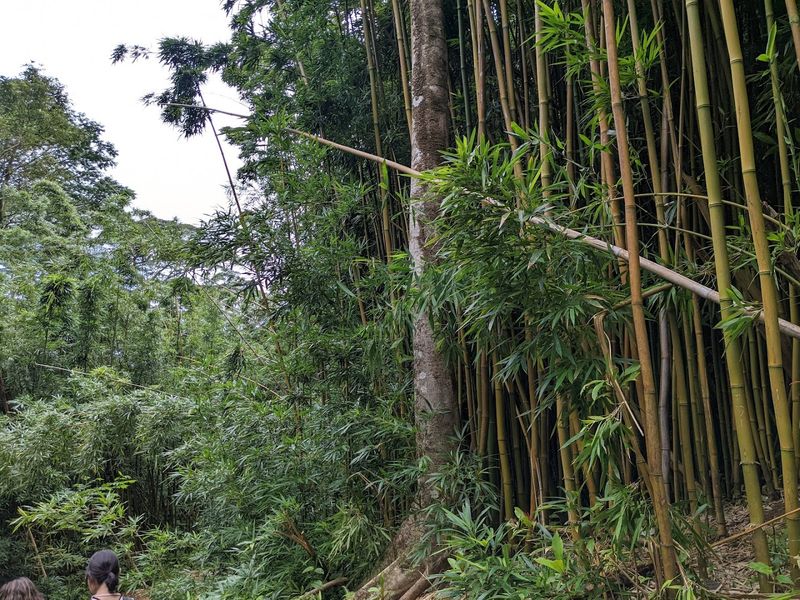
Somewhere along the trail, the forest shifts and you find yourself walking through a dense bamboo grove that is genuinely stunning. The stalks shoot upward like pale green columns, and when the wind moves through them, they creak and sway in a way that sounds almost musical.
This section of the trail is one of the most photographed spots on the entire hike, and for good reason. The bamboo creates a natural tunnel effect that makes every photo look like it belongs in a travel magazine.
Bamboo is not native to Hawaii, but it has established itself so thoroughly in Mānoa Valley that it now feels like an essential part of the trail’s character. Walking through it feels like a quiet intermission between the dense rainforest and the dramatic waterfall waiting just ahead, and it is a moment worth slowing down to enjoy.
The 150-Foot Waterfall Payoff
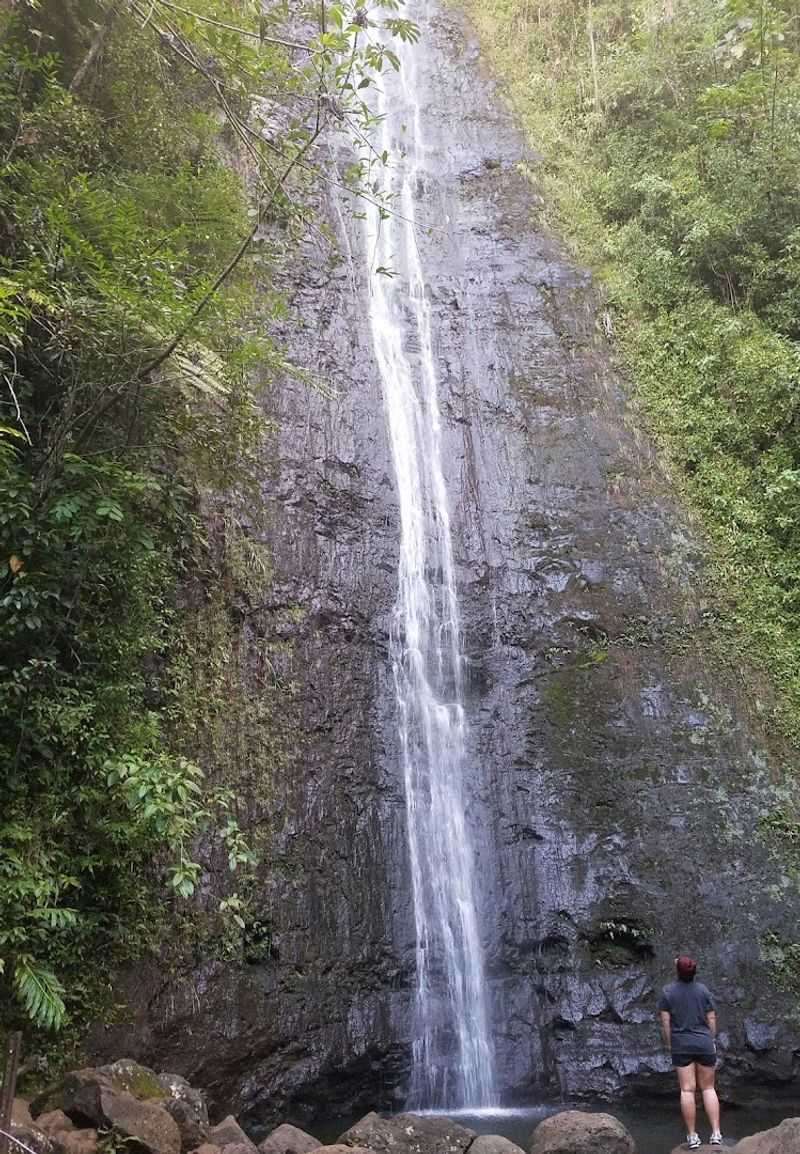
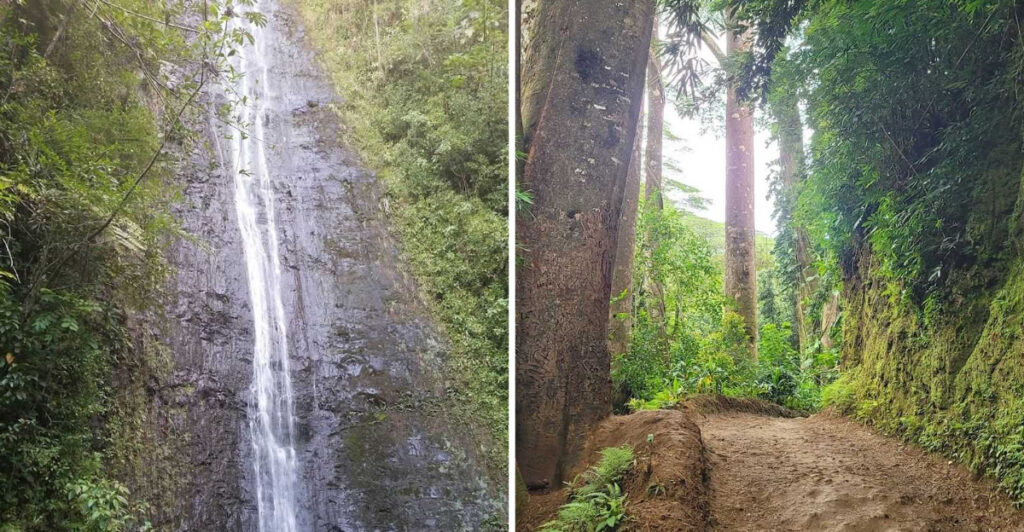
Nothing quite prepares you for the moment the waterfall comes into view. Mānoa Falls drops approximately 150 feet down a sheer basalt cliff face, and the spray reaches you well before you actually arrive at the viewing area.
The falls flow year-round thanks to Mānoa Valley’s extraordinary rainfall totals, so you are virtually guaranteed to see an active, powerful waterfall no matter when you visit. After heavy rain, the volume of water increases dramatically and the roar of the falls fills the entire clearing.
A rope barrier keeps visitors at a safe viewing distance from the base, and swimming is not permitted due to the risk of falling rocks and flash flooding. That said, standing there with mist on your face while looking up at 150 feet of cascading water is a reward that needs absolutely no improvement.
The Movie Magic Behind the Trees
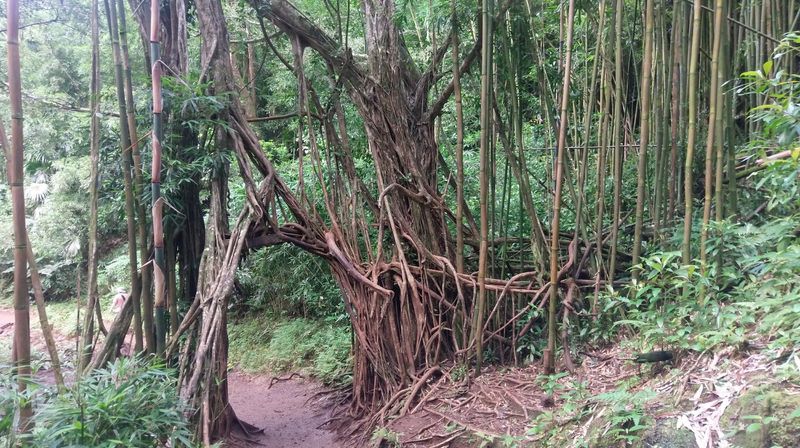
The Mānoa Valley rainforest has a Hollywood resume that most trails can only dream about. Parts of this forest and the surrounding valley have been used as filming locations for major productions, most famously the original Jurassic Park from 1993.
The dense, prehistoric-looking vegetation and towering trees made Mānoa Valley a perfect stand-in for a world where dinosaurs roam free. Scenes that made audiences grip their armrests were filmed just minutes from where you park your car.
The forest has also appeared in other productions over the years, lending its dramatic green backdrop to films and television shows that needed a convincingly wild jungle setting. Walking the trail with that knowledge in mind adds a whole extra layer of fun to the experience, and you will almost certainly find yourself scanning the trees for something large and prehistoric moving between them.
Trail Conditions and What to Expect Underfoot
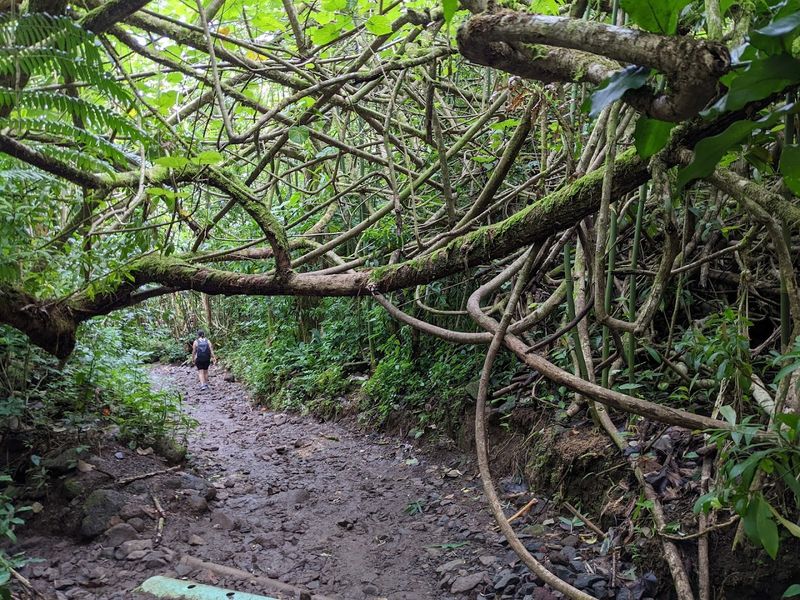
Honesty is the best policy when it comes to trail conditions here: Mānoa Falls Trail is muddy. Not sometimes muddy, not occasionally muddy, but reliably, enthusiastically muddy for most of its length.
The valley receives so much rainfall that the trail surface stays soft and slick even during dry stretches. Tree roots cross the path in unpredictable patterns, and some sections require a bit of careful footwork to navigate without slipping.
Wearing proper footwear is one of the best decisions you can make before arriving. Waterproof trail shoes or hiking boots with good grip will protect your feet and keep your confidence high on the wetter sections.
Sandals and flip-flops are a recipe for a very muddy, very humbling experience. The trail is well-maintained overall, but no amount of maintenance changes the fundamental character of a rainforest floor.
What to Pack Before You Head Out
Packing smart for this hike makes the difference between a great experience and a soggy, itchy one. The trail is short, but the rainforest environment means you should prepare for conditions that can change quickly.
A lightweight rain jacket or poncho is worth its weight in gold here, since afternoon showers roll through Mānoa Valley with very little warning. Bug spray is also a smart addition, as mosquitoes thrive in the humid, shaded sections of the trail.
Bring enough water for the hike even though the distance is short, because the humidity can be surprisingly draining. A small dry bag or waterproof phone case will protect your electronics from both rain and the mist near the falls.
Sunscreen matters less on this trail than on most Oahu hikes, since the canopy blocks direct sunlight for the majority of the route.
The Best Time of Day to Visit
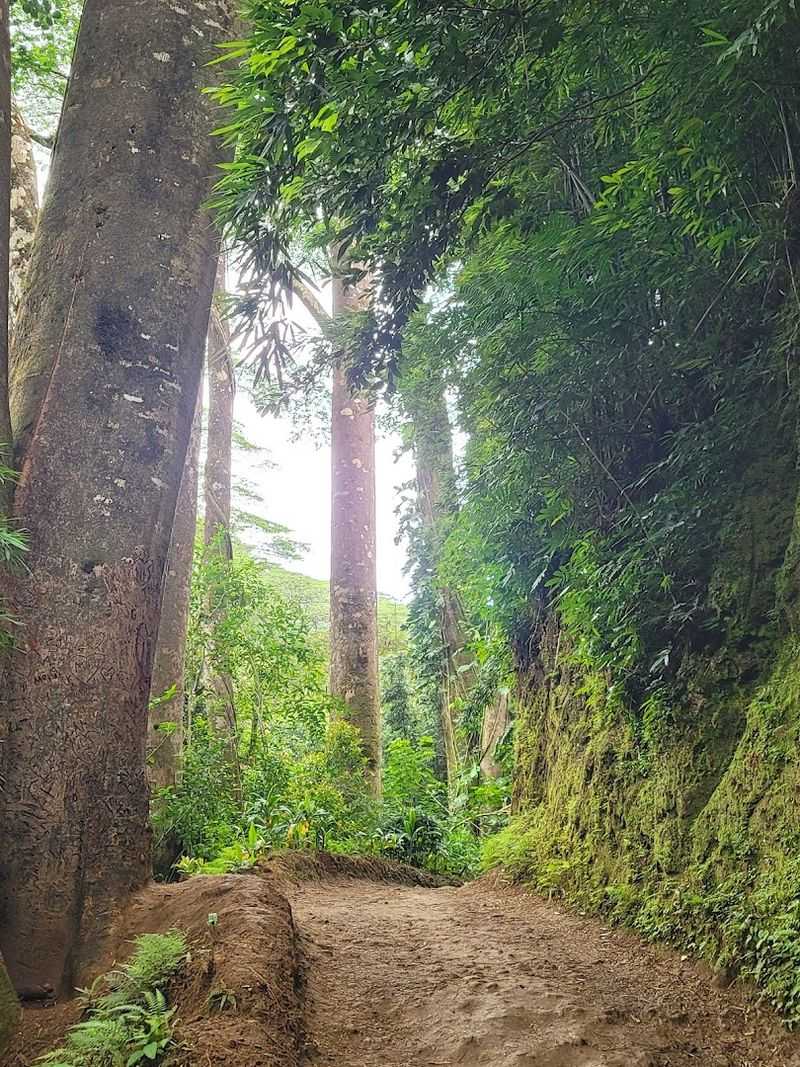
Timing your visit to Mānoa Falls Trail makes a noticeable difference in how much you enjoy it. Early morning is consistently the best window, both for cooler temperatures and for avoiding the crowds that build up as the day goes on.
Arriving before 8:00 a.m. gives you a real chance of having large sections of the trail nearly to yourself, which transforms the experience from a group excursion into something that feels genuinely personal and peaceful. The light filtering through the canopy in the early morning hours also creates beautiful conditions for photography.
Midday visits are perfectly doable but expect more foot traffic, especially on weekends and holidays. Afternoons bring a higher chance of rain showers, which can enhance the atmosphere dramatically but also make the trail slicker.
Weekday mornings in the off-season are the sweet spot for the most serene version of this hike.
Flora That Looks Like It Belongs in a Textbook
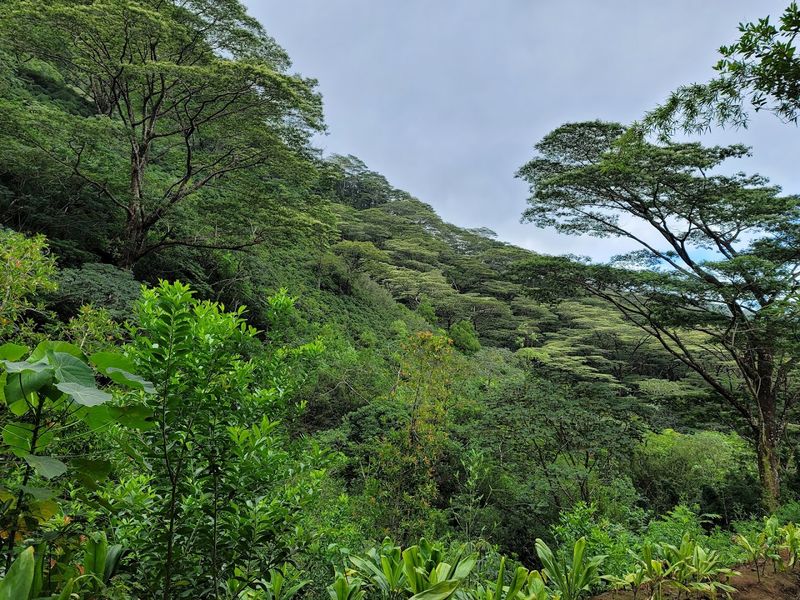
Botanical enthusiasts will find Mānoa Falls Trail genuinely exciting for reasons that have nothing to do with the waterfall. The plant life along this trail is extraordinary in both variety and scale, with species from across the Pacific and beyond growing in close proximity.
Wild taro grows in patches near the stream, its giant heart-shaped leaves collecting rainwater in small pools. Enormous tree ferns unfurl their fronds overhead, and the ground is carpeted with mosses and smaller ferns that create a texture like green velvet underfoot.
The Mānoa Stream runs alongside much of the trail, and the vegetation along its banks is especially lush and layered. Ginger plants bloom in shaded corners, filling the air with a faint sweetness that mixes pleasantly with the smell of damp earth.
Every ten steps reveals something new worth stopping to look at.
The Mānoa Stream That Walks With You
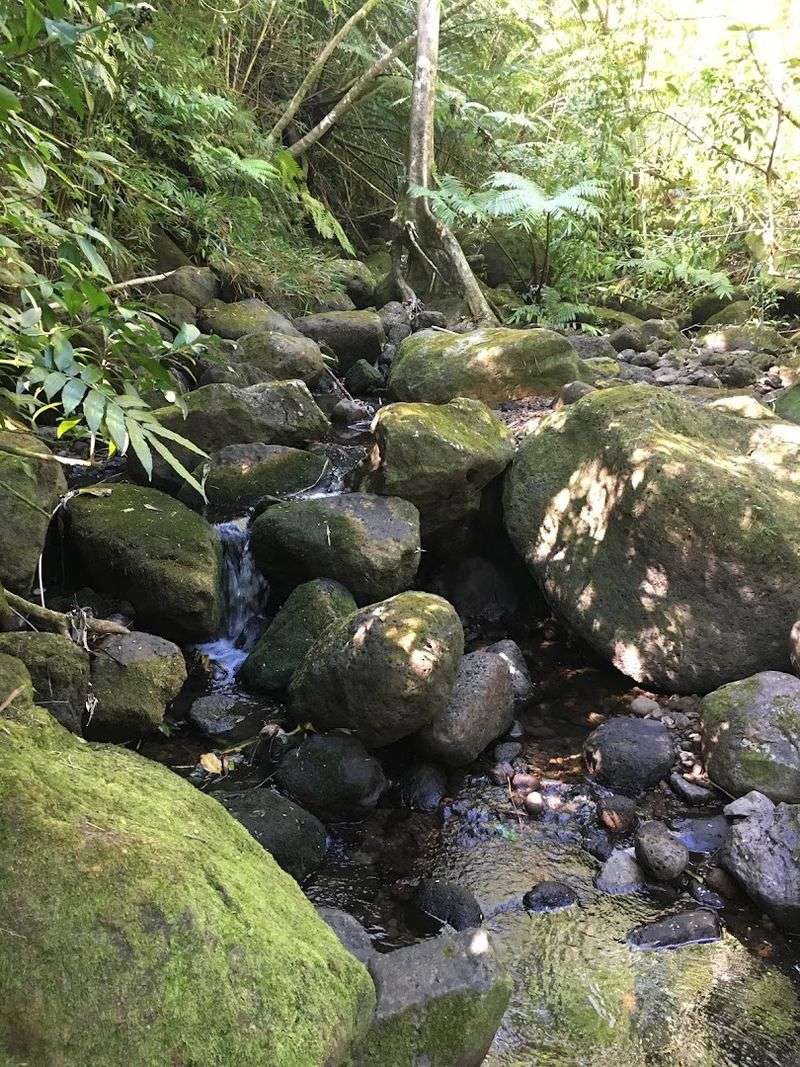
One of the quiet pleasures of this hike is the company of Mānoa Stream, which runs alongside the trail for much of its length. The sound of moving water is a constant companion from the trailhead all the way to the falls, and it gives the walk a calm, meditative quality that is easy to appreciate.
The stream itself is clear and fast-moving after rain, tumbling over mossy boulders and between the roots of large trees. It is beautiful to look at, but worth treating with caution since flash flooding can occur quickly in the valley during heavy rainfall.
Several small footbridges cross the stream at different points along the trail, offering good vantage points for watching the water move below. The stream is the reason this entire ecosystem exists in the form it does, feeding the falls and nourishing every plant and creature in the valley.
Safety Tips Worth Taking Seriously
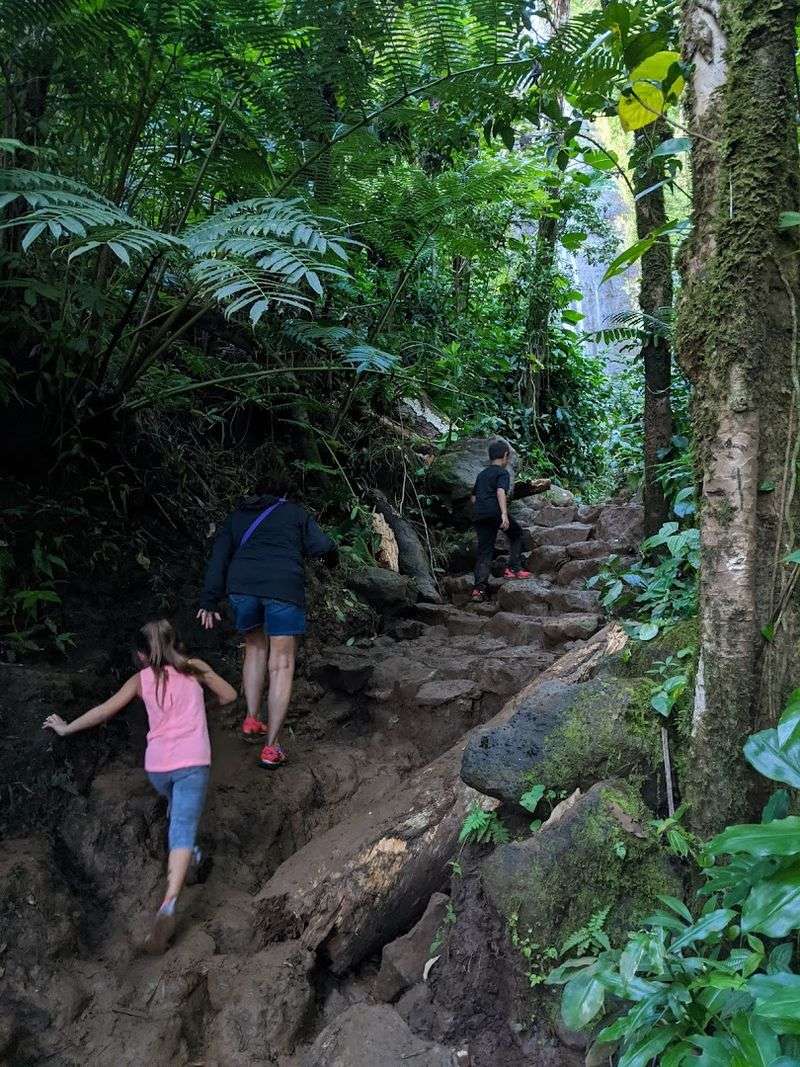
The beauty of Mānoa Falls Trail comes with a few genuine safety considerations that are worth knowing before you go. The most important one involves the waterfall itself: swimming in the pool at the base is not allowed, and the barrier rope is there for very good reasons.
Falling rocks are a real hazard near the cliff face, and flash flooding can turn the stream from a gentle trickle into a powerful surge with very little warning. If you hear heavy rain starting while you are on the trail, it is smart to begin heading back toward the trailhead immediately.
The trail is not technically difficult, but the muddy, root-covered surface does cause slips and falls for visitors who underestimate it. Staying on the marked trail and avoiding any attempt to scramble up toward the falls protects both you and the fragile surrounding ecosystem.
Wildlife Encounters Along the Way
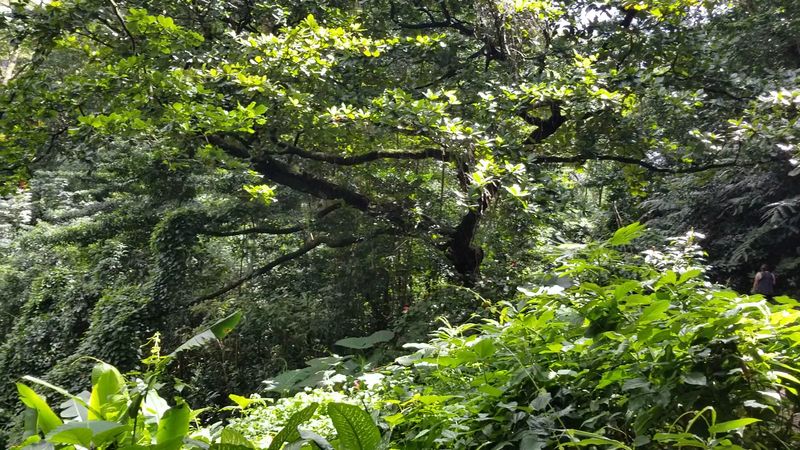
The forest along Mānoa Falls Trail is alive in ways that reward patient and attentive walkers. Birds are the most visible form of wildlife here, and the variety is genuinely impressive for such a short trail.
The red-billed leiothrix is one of the most striking species you might spot, with its vivid red and yellow coloring making it stand out even in dense undergrowth. Japanese white-eyes flit through the canopy in small, energetic flocks, and the common myna calls loudly from the forest edges.
Insects are abundant too, including some impressively large specimens that remind you exactly what kind of ecosystem you are passing through. The stream supports small freshwater creatures, and if you look carefully at the rocks along its banks, you may spot tiny native gobies moving through the shallows.
The forest has more going on than most first-time visitors expect.
Getting There From Waikiki
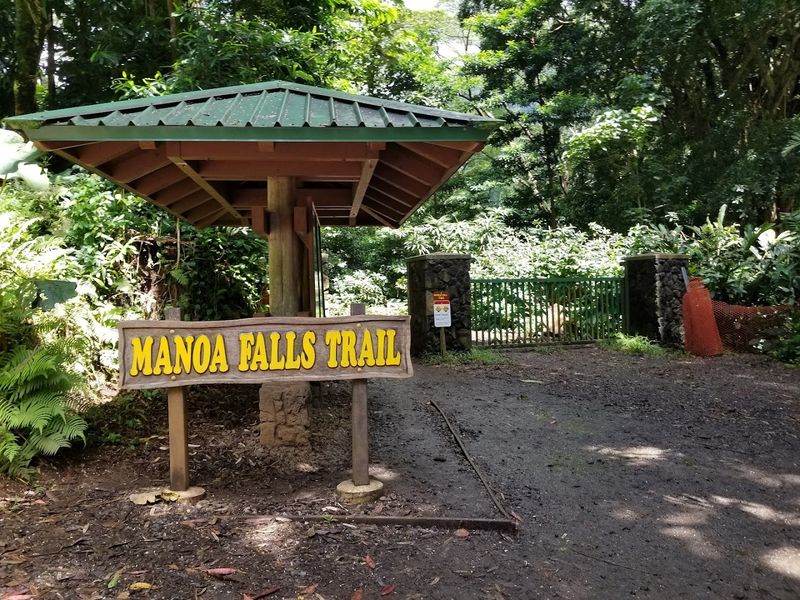
Getting to Mānoa Falls Trail from Waikiki is straightforward and takes roughly 20 minutes by car under normal traffic conditions. The most common route follows University Avenue north through the Mānoa neighborhood, eventually turning onto Mānoa Road and following it all the way to its end.
Paid parking is available near the trailhead, though the lots are small and can fill up early on busy days. Arriving by rideshare is a popular option that eliminates the parking headache entirely, and the drop-off point puts you right at the trailhead.
Public bus service also reaches the Mānoa Valley area via TheBus routes, making the trail accessible without a rental car. The valley road itself is a pleasant drive, passing through a quiet residential neighborhood before the trees close in and the forest takes over completely.
The transition from city to jungle happens faster than you might expect.
Why This Trail Deserves a Spot on Your Oahu List
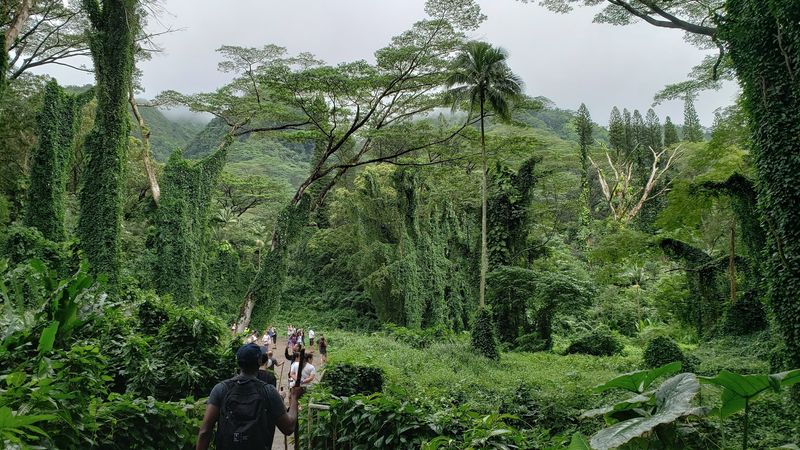
Oahu has no shortage of things to do, and the competition for your time is real. But Mānoa Falls Trail earns its place on any itinerary because it delivers something genuinely different from a beach day or a luau: a full sensory experience in one of the most dramatic natural environments in the United States.
The combination of a lush rainforest, a photogenic bamboo grove, a year-round waterfall, and a legitimate Hollywood connection makes this trail more layered than its short length suggests. Most visitors finish it in under an hour, which means it fits easily into a packed travel schedule without requiring any sacrifice.
Whether you are a first-time visitor to Hawaii or someone who has been coming to the islands for years, this trail has a way of feeling fresh every single time. The forest keeps its secrets close, and the waterfall never gets old.
Share this story