 Unearth The Voyage

There is a stretch of shoreline in Cape May, New Jersey, that most tourists never find, and the locals who know about it would rather keep it that way. No boardwalk, no concession stands, no badge checks, and no crowds fighting over the same patch of sand.
Just a wide, natural beach along Delaware Bay where dogs run free, birds fill the treetops at dawn, and the occasional buried train track pokes through the sand after a storm. I made the drive out to Higbee Beach on a weekday morning, and by the time I left, I completely understood why regulars treat it like a well-guarded secret.
This article covers everything you need to know before your first visit, from what to pack and when to go, to the wildlife surprises and hidden history waiting right under your feet.
Where Higbee Beach Actually Is
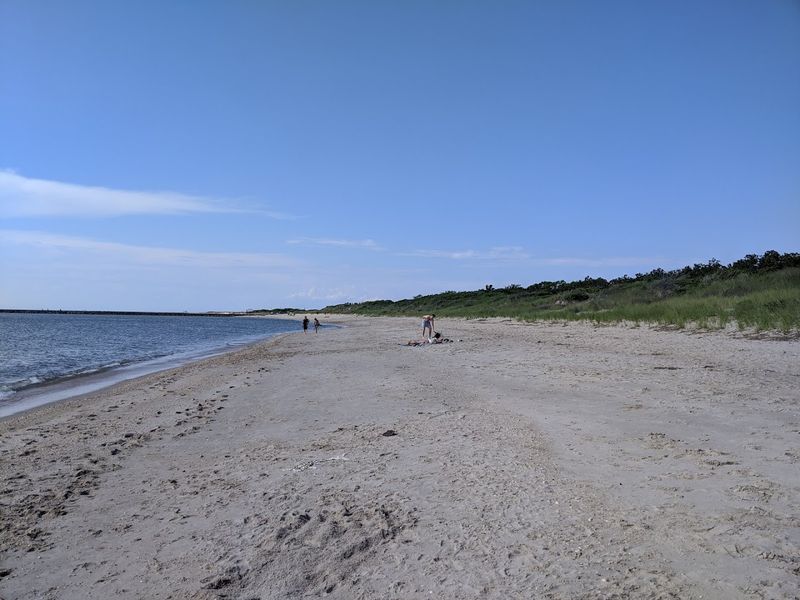
Tucked away at 1 Higbees Beach Rd, Cape May, NJ 08204, this beach sits on the Delaware Bay side of the Cape May peninsula, not the Atlantic Ocean side. That distinction matters more than most people realize before their first visit.
Because it faces the bay rather than the open ocean, the water here tends to be calmer and, depending on the season, noticeably warmer than the ocean beaches nearby. The beach falls within the Higbee Beach Wildlife Management Area, a protected natural space managed by the state of New Jersey.
Getting there requires a short drive through a residential area and then a bumpy gravel parking lot road, so take it slow on the approach. Free parking is available in the lots, but spaces fill up fast on warm weekends.
Arriving early is the smartest move, especially during summer months when the lot gets surprisingly competitive for a spot most tourists have never heard of.
The Walk from the Lot to the Water

The path from the parking area to the shoreline is not long, but it does require some effort. Soft, deep sand makes up most of the trail, and on a hot afternoon, that walk can feel significantly longer than it actually is.
Wearing shoes or sandals with good grip helps, especially if you are carrying a bag, a cooler, or beach chairs. The trail winds past low shrubs and coastal vegetation before opening up to the beach, and the transition from shaded path to open shoreline happens quickly.
For visitors with mobility concerns or young children in strollers, the soft sand can be genuinely challenging. Packing light and wearing comfortable footwear makes the whole experience easier.
Once you hit the waterline and feel the firmer, packed sand underfoot, the effort of the walk fades completely. Most people who make the trip agree that whatever the walk demands, the beach on the other side is worth every step.
Bird Watching at the Morning Flight Platform
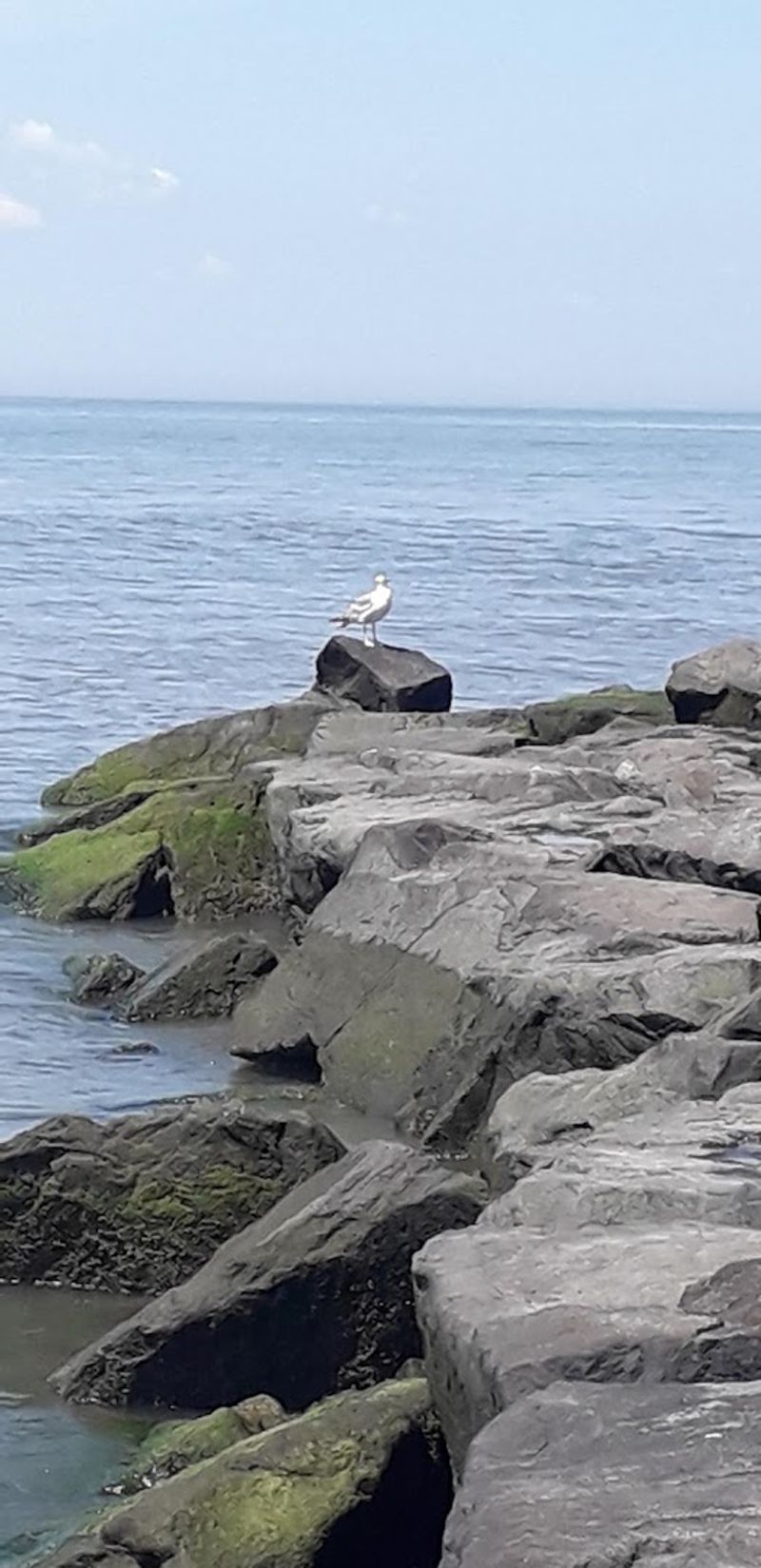
Cape May is one of the most celebrated bird watching destinations in the entire country, and Higbee Beach sits right at the heart of that reputation. Every autumn, migrating birds funnel through the Cape May peninsula in massive numbers, and Higbee Beach catches a remarkable share of them.
The Morning Flight platform near the beach access trail is a dedicated observation spot where birders gather at dawn to count warblers, swallows, sparrows, hawks, and dozens of other species moving through in the early hours. Visiting around 8 AM during migration season gives a front-row view of the action.
Bringing binoculars is strongly recommended, and a field guide or birding app helps with identification. The inland trails through open fields and wooded areas add more opportunities to spot birds that prefer cover over open sky.
Whether you are a dedicated birder or just curious about the wildlife, the variety of species passing through here is genuinely hard to match anywhere else in the region.
Dogs Running Free on the Shore

Dog-friendly beaches are more common than they used to be, but most still come with leash rules, restricted hours, or seasonal bans. Higbee Beach operates differently, with no official leash policy in place, which means well-behaved dogs can roam the sand with a level of freedom that most beaches simply do not allow.
The calm bay water makes it especially good for dogs who love to swim. The waves are gentle compared to the ocean side, so even smaller or older dogs can wade in without getting knocked around.
Plenty of visitors come specifically because their dog gets a real beach day rather than a supervised, leashed stroll.
That said, not every person on the beach wants a stranger’s dog approaching them, and responsible owners keep that in mind. Making sure your dog has solid recall before letting them loose is important.
Bringing fresh water for your pet is also essential since there are no rinse stations or water sources on-site.
The Ghost Tracks Hidden in the Sand

Here is one of the more unusual things Higbee Beach has going for it: buried railroad tracks that surface from the sand after strong storms, then disappear again within days. They are not always visible, which is part of what makes spotting them feel like a genuine discovery.
The tracks run roughly halfway between the Higbee Beach access point and Sunset Beach, closer to the waterline than to the dune line. They date back to an era when a rail line served the tip of the Cape May peninsula, and the shifting sand has swallowed them over the decades.
When storm activity or tidal patterns expose them, the news travels fast through local beachgoer communities online. Checking social media or local Cape May groups before a visit can tip you off about whether the tracks are currently showing.
If they are visible when you arrive, getting a photo is worth the effort, because within a few tidal cycles, the sand usually takes them back.
What the Shoreline Actually Looks Like

This is not a manicured beach with raked sand and rental umbrellas lined up in neat rows. Higbee Beach is a natural, undeveloped stretch of shoreline that looks more or less the way it always has, and that is a large part of its appeal.
The sand has a gravelly quality in spots, with small rocks and pebbles mixed in, which makes walking barefoot less comfortable than on a typical ocean beach. Horseshoe crabs wash ashore regularly, especially during their spawning season in late spring, and the occasional jellyfish or stingray appears along the waterline as part of the natural coastal ecosystem.
The water color reflects the bay rather than the open Atlantic, and visibility varies depending on boat traffic and tidal conditions. None of this is a flaw; it is just what an honest, unfiltered natural beach looks like.
Visitors who come expecting a wild, rustic experience leave satisfied, while those expecting a polished resort beach are better off heading to Cape May proper.
Hunting for Cape May Diamonds
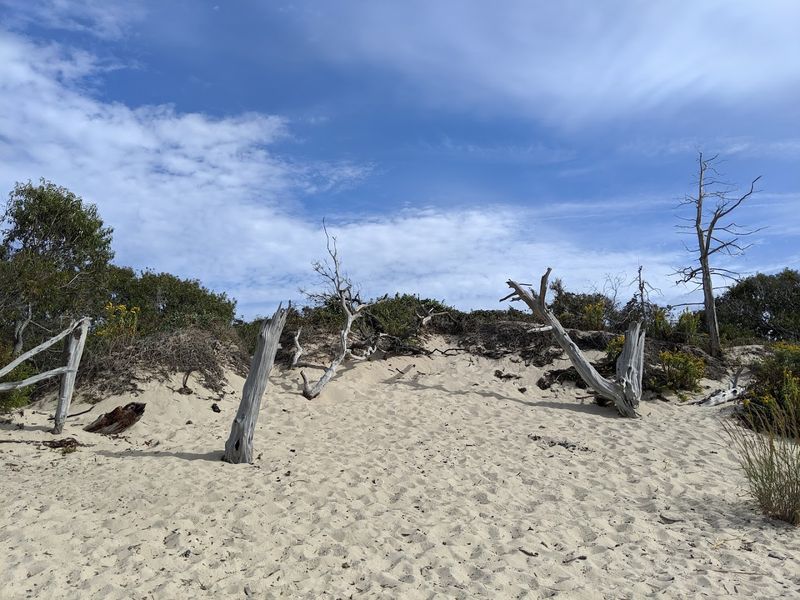
The Delaware Bay has a long tradition of depositing small, smooth quartz stones along its shores, and beachcombers have been collecting them for centuries. Locally, these stones are called Cape May Diamonds, and Higbee Beach is one of the better spots along the bay to find them.
They are not actual diamonds, of course, but they polish up beautifully and have a translucent quality that makes them genuinely appealing as keepsakes. Quartz crystals from inland rivers travel down to the bay over long periods and get tumbled smooth by the current before washing ashore.
Finding them takes patience and a good eye. The best strategy is to scan the pebble-mixed sections of the shoreline during low tide, when more of the beach surface is exposed.
Some visitors bring small bags specifically for collecting. Children tend to love the hunt, and even adults who come with low expectations often end up walking away with a handful of stones they cannot quite bring themselves to leave behind.
Watching the Cape May Ferry Pass By

One of the unexpected pleasures of spending time at Higbee Beach is watching the Cape May-Lewes Ferry move across the bay. The ferry runs between Cape May, New Jersey, and Lewes, Delaware, and the route takes it close enough to the beach that you get a clear, unobstructed view of the crossing.
The ferry is large, and watching it glide across the open water gives the beach a sense of scale that is hard to get anywhere else along the cape. Some visitors time their beach trips to catch a departure or arrival, and the sight of the ferry pulling away from the terminal on a calm bay day is genuinely worth pausing for.
Dolphins have been spotted near the rocky jetty area at the end of the beach, often riding the wakes created by passing vessels. Fishing from the rocks is also popular, with the area producing decent catches for those who bring gear and patience in equal measure.
No Lifeguards, No Amenities, No Crowds

Higbee Beach operates without lifeguards, without restrooms, without food vendors, and without any of the infrastructure that most public beaches consider standard. That is not an oversight; it is the nature of a wildlife management area beach, and it shapes the experience entirely.
Coming prepared is not optional here. Packing water, sunscreen, food, a first aid kit, and anything else you might need before leaving home is the only way to make the day work smoothly.
There is no nearby concession stand to bail you out if you forget something important.
The payoff for that self-sufficiency is a beach that feels genuinely uncrowded, even on days when the lot is full. Without the draw of amenities, the visitors who do show up tend to be people who actually want to be at a natural beach rather than people who wandered over from a resort strip.
That filters the crowd in a way that no sign or policy ever could.
Sunsets Over Delaware Bay
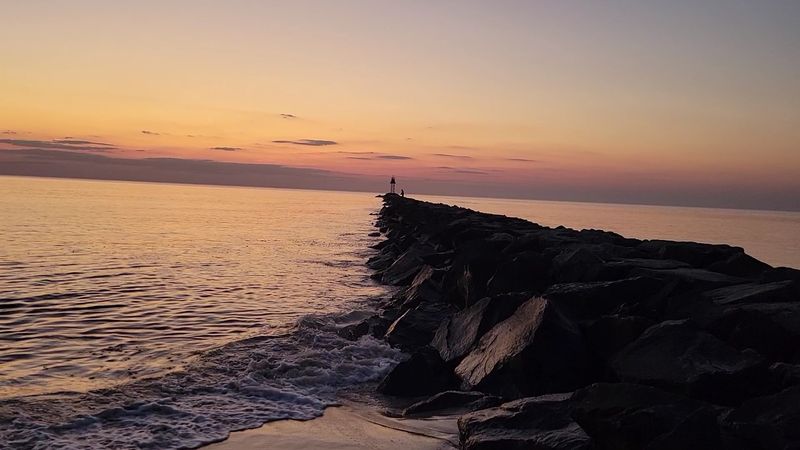
The west-facing orientation of Higbee Beach along Delaware Bay means the sun sets directly over the water from this spot, which is not something you get on the Atlantic-facing beaches nearby. That simple geographic fact turns the end of the day into something worth staying for.
Bay sunsets tend to be wide and unobstructed, with the flat water reflecting the colors across a large surface area. The lack of buildings or structures along the Higbee shoreline keeps the horizon clear in a way that developed beaches rarely manage.
Arriving an hour or so before sunset gives enough time to settle in, find a good spot, and watch the light change gradually rather than rushing to catch the final minutes. The beach is typically quieter in the late afternoon than at midday, which makes the whole experience more comfortable.
Bringing a blanket and something to sit on is worthwhile since the evening air off the bay can get cool even in summer.
Practical Tips Before You Go
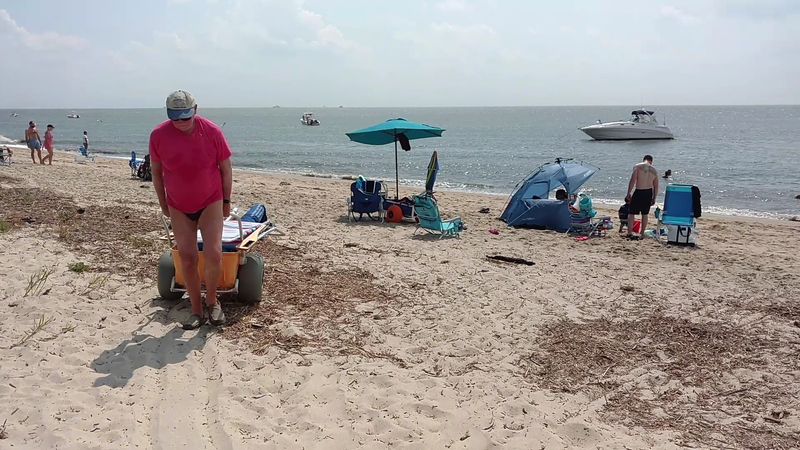
A few practical notes can make the difference between a great visit and a frustrating one at Higbee Beach. Bug spray belongs at the top of the packing list, especially during warmer months when mosquitoes are active near the wooded trail areas leading to the shore.
Footwear that handles soft sand comfortably is worth thinking about before you go, since the walk from the parking lot to the waterline crosses a stretch of deep, loose sand that flip-flops handle poorly. Bringing more water than you think you need is also a smart call, given that there is no water source on-site.
Plan restroom stops before arriving since there are no facilities at the beach. Arriving early solves the parking challenge and gives the best conditions for bird watching, beachcombing, and general peace and quiet.
The beach rewards visitors who come a little prepared and expect a wild, natural experience rather than a polished one, and those visitors almost always leave wanting to come back.



