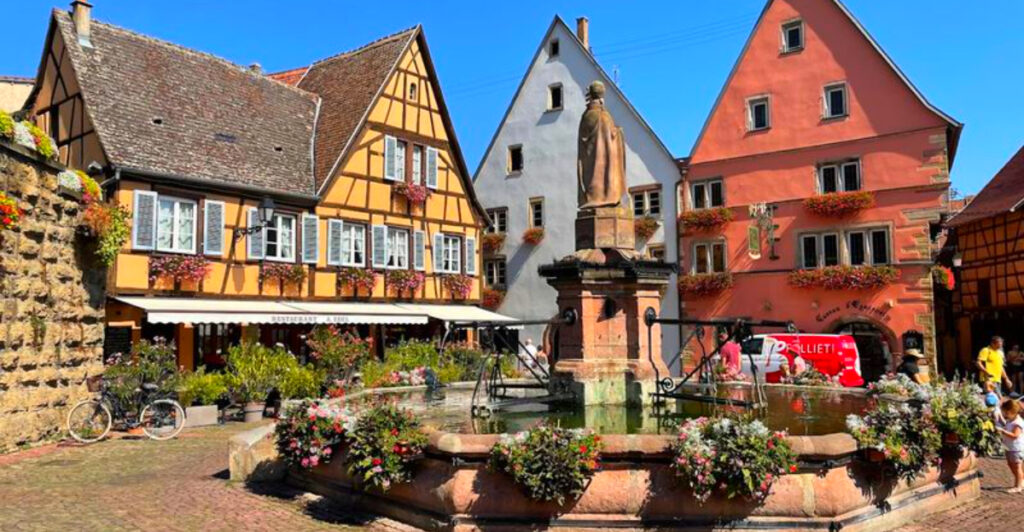
Eguisheim, a picturesque village in France’s Alsace region, looks so storybook-perfect that it hardly seems real. With its cobblestone streets, colorful half-timbered houses, flower-filled windows, and medieval charm, it’s easy to see why many believe it helped inspire the world of “Beauty and the Beast”.
From the castle at its center to the storks perched on rooftops, every corner feels like a scene from a fairy tale. Keep reading to discover what makes Eguisheim one of France’s most enchanting villages.
Where Fairy Tales Actually Live: The Village of Eguisheim
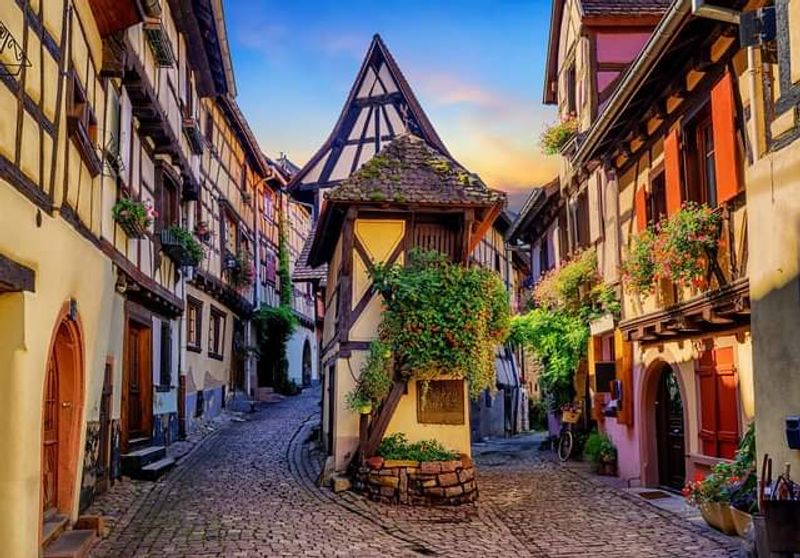
Right in the heart of Alsace, France, the village of Eguisheim sits at the foot of the Vosges Mountains, about five kilometers southwest of Colmar. Its official address places it in the Haut-Rhin department, with the main square known as Place du Chateau Saint-Leon serving as the geographic and emotional center of everything.
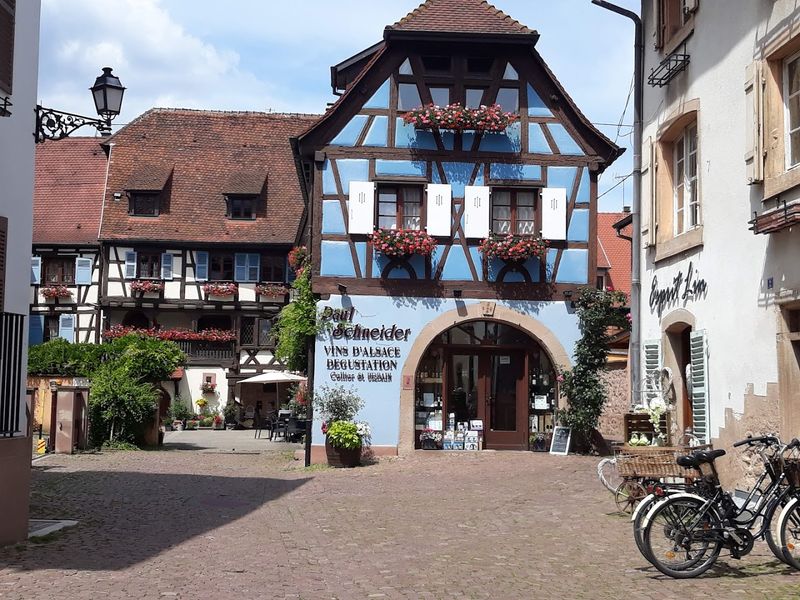
The layout of the village is unlike almost anywhere else in Europe. Three concentric rings of narrow streets wrap around the central chateau like the layers of a very beautiful onion, and every ring is lined with preserved half-timbered houses that date back to the 16th and 17th centuries.
What makes this layout so striking is how deliberate it feels, as if someone designed it specifically for people to wander slowly and get pleasantly lost. The village covers a compact area, which means you can walk the entire old town in under an hour, though most visitors end up spending far longer than that once the details start pulling them in.
The Disney Connection That Is Impossible to Ignore
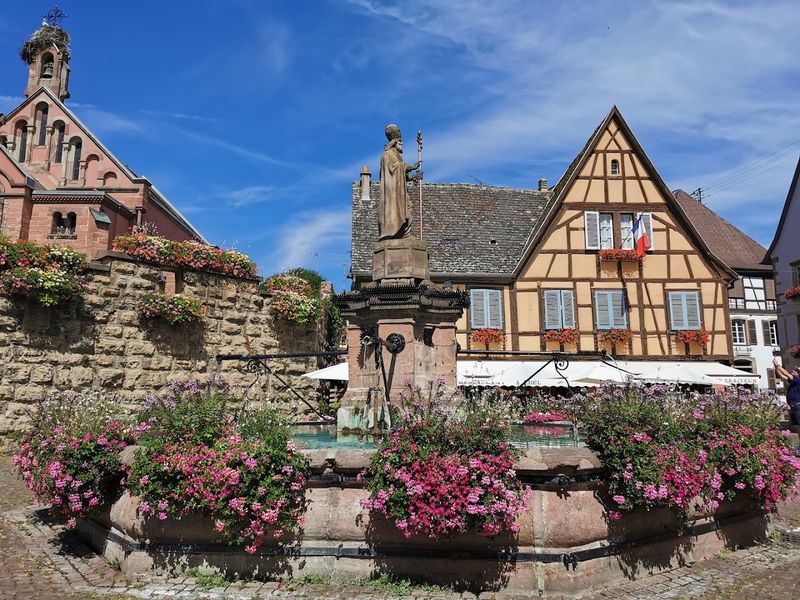
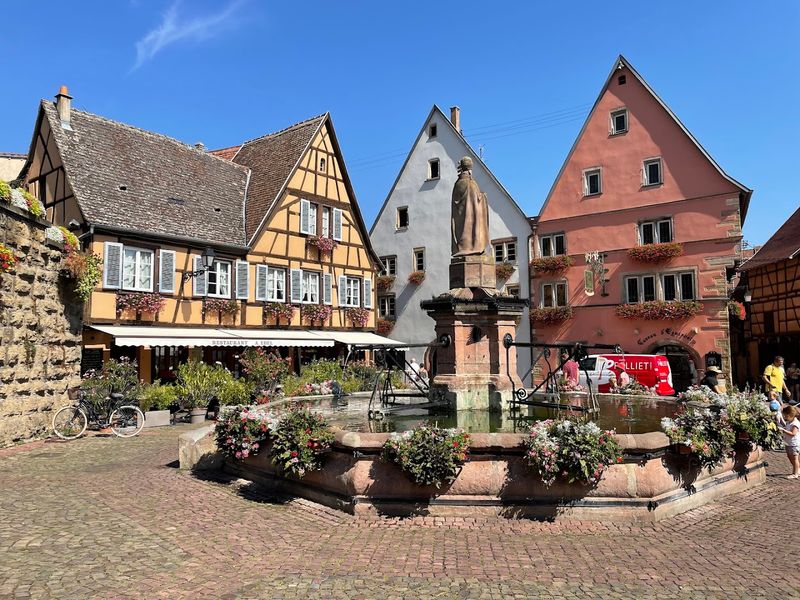
The Saint-Leon fountain at the center of Eguisheim’s main square is the detail that most visitors come specifically to find. Disney animators reportedly used it as a direct reference for the scene in Beauty and the Beast where Belle sings while sheep wander around the village fountain, and standing next to it in person makes that connection feel remarkably clear.
The fountain is modest in size but sits within a square framed by buildings so colorful and well-preserved that the whole composition looks staged. The half-timbered facades, the hanging flower baskets, the uneven stone underfoot, all of it lines up almost exactly with what appears in the animated film.
What is fascinating is that the village was not built with tourism in mind. These houses were homes, the streets were practical, and the fountain was functional.
The fact that it all looks like a movie set is simply a happy accident of centuries of careful preservation, and that authenticity is exactly what makes it so moving to stand there and look around.
A Castle at the Center of It All
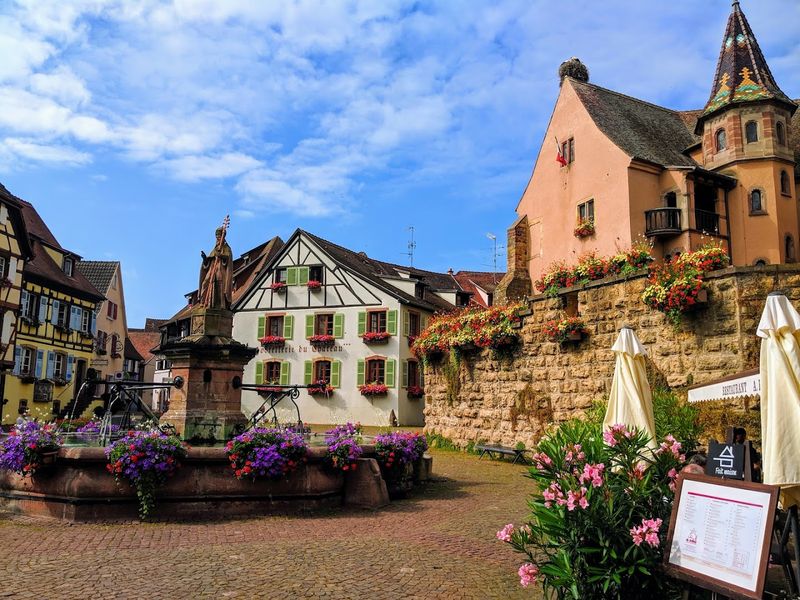
The Chateau Saint-Leon anchors the entire village both physically and historically. Built in the 8th century, around 720 AD, it originally served as a fortified residence for the counts of Eguisheim, and its distinctive octagonal shape makes it stand out even among Alsace’s many medieval structures.
Today the chateau functions partly as a residential building, which gives it an unusual lived-in quality that most historic castles lack. You can walk right up to its exterior walls and trace the old stonework with your eyes, noticing how centuries of weather and repair have layered different textures across the same surface.
The chapel attached to the chateau is dedicated to Pope Leo IX, who was born in Eguisheim in 1002 AD and remains the village’s most historically significant figure. The combination of the chapel, the castle walls, and the cobblestones surrounding them creates a courtyard atmosphere that feels genuinely ancient, and it is the kind of spot where you find yourself standing still for longer than you planned, just absorbing it all.
The Pope Who Called This Village Home
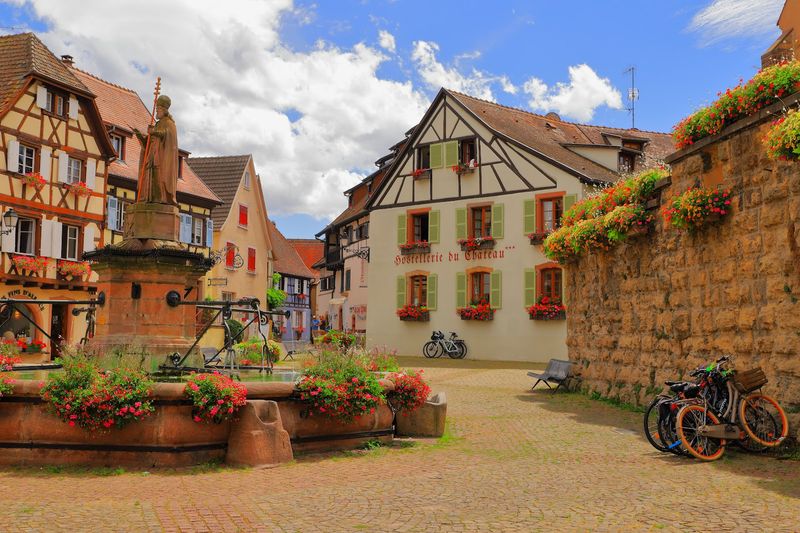
Not many villages can claim a pope as a native son, but Eguisheim holds that distinction with quiet pride. Bruno of Eguisheim-Dagsburg was born here in 1002 AD and later became Pope Leo IX, one of the most influential reformers of the medieval Catholic Church.
The Chapel of Saint Leon inside the chateau complex commemorates his birth and life, and a statue of him stands in the village square, giving visitors an unexpected history lesson right in the middle of what otherwise feels like a leisurely stroll. The statue is detailed and dignified, and it tends to catch people off guard simply because they did not expect papal history to pop up between flower boxes and pastry shops.
Leo IX served as pope from 1049 until 1054 AD, a period marked by significant church reform efforts across Europe.
Streets That Were Designed to Make You Slow Down
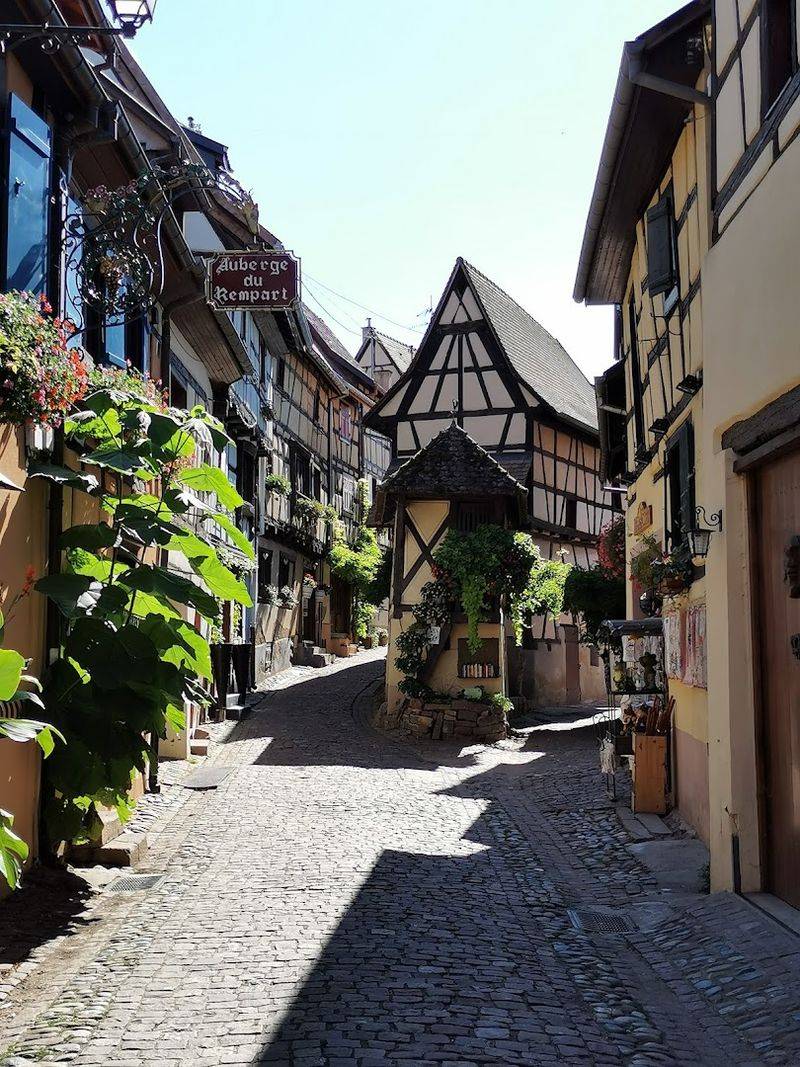
The three concentric rings of streets that define Eguisheim’s old town are named Grand Rue, Rue du Rempart, and Rue des Trois Chateaux, and each one offers a slightly different visual experience as you move from the outer edge toward the center.
The outer ring tends to be quieter, with fewer shops and more residential buildings, while the inner streets grow progressively more lively with small boutiques, creperies, and wine tasting rooms tucked between the old timber-framed facades. The stone underfoot is uneven in the most satisfying way, worn smooth in the middle where centuries of feet have passed and rougher at the edges where moss and small plants find their footing.
What strikes most visitors about these streets is how human the scale feels. Nothing is oversized or built to impress from a distance.
Every doorway, every window, every overhanging beam exists at a height and width that invites you to look closely rather than stand back, and that intimacy is what gives the village its particular warmth.
Storks on the Rooftops and Why They Matter
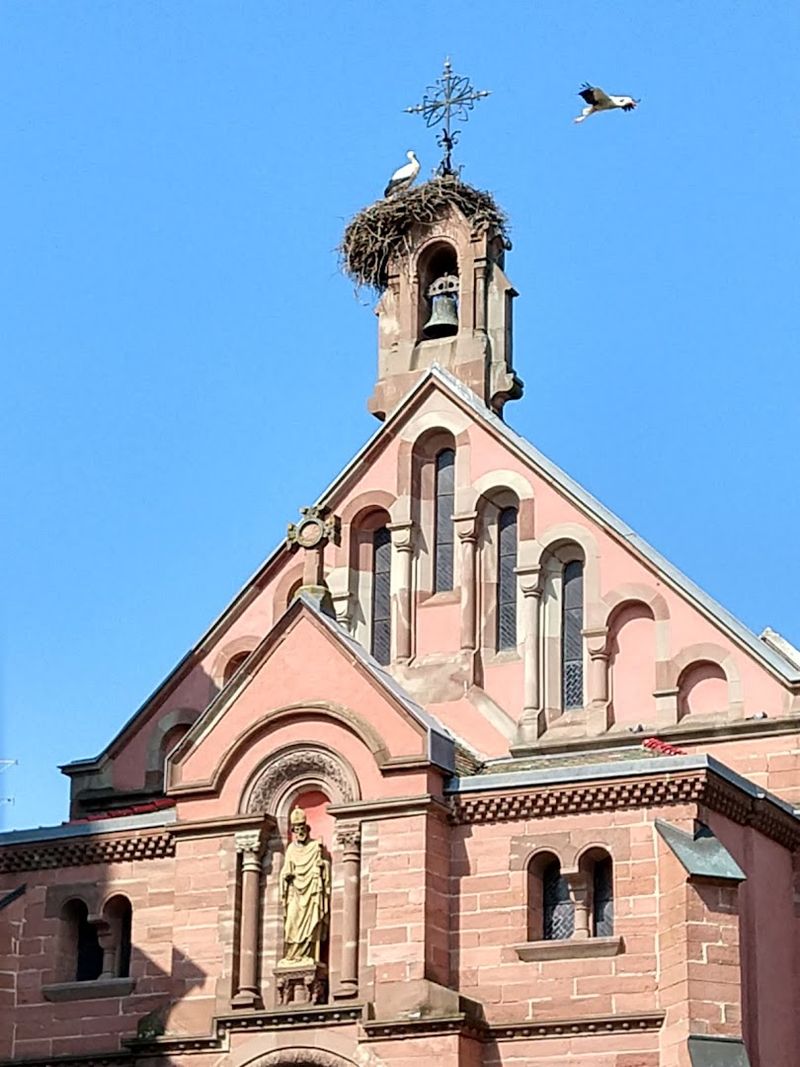
One of the first things you notice when you look up in Eguisheim is the nests. White storks have been returning to Alsace for centuries, and the village rooftops and church towers serve as prime real estate for their enormous stick nests, some of which get added to year after year until they reach an almost comical size.
Storks hold a special place in Alsatian culture, symbolizing good fortune and the arrival of spring, and seeing them perched on a medieval chimney stack with the vineyard hills visible in the background is one of those images that feels almost too perfect to be real. They are large birds, much bigger than most people expect, and watching one land on a rooftop nest with its wings spread wide is genuinely impressive.
The best time to spot them is spring and early summer, when the nesting pairs are most active. They are completely unbothered by tourists below, which makes photography easy and observation endlessly entertaining.
Their presence adds a living, breathing layer to the village that no amount of architecture alone could provide.
The Wine Route That Runs Right Through the Village
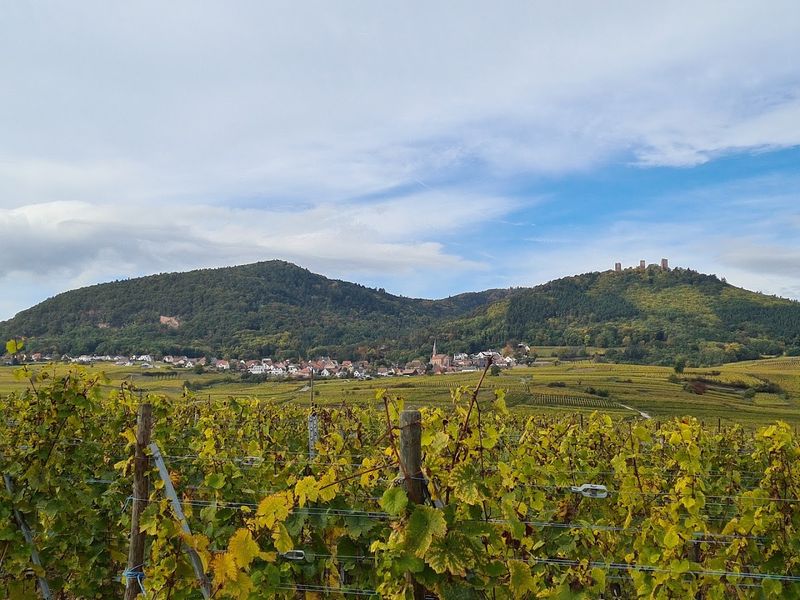
Eguisheim sits directly on the Alsace Wine Route, one of France’s most celebrated wine roads, and the vineyards begin almost immediately where the village streets end. The surrounding hills produce two grand cru wines, Eichberg and Pfersigberg, which are made primarily from Riesling and Gewurztraminer grapes and are considered among Alsace’s finest.
Walking out of the old town and into the vineyard paths takes about three minutes on foot, and the transition from cobblestone to dirt path between vine rows is one of the more satisfying shifts in scenery I have experienced on any trip. The rows of vines stretch up the gentle slopes in perfectly organized lines, and in late summer the green is so dense it almost looks artificial.
Several small producers in and around the village welcome visitors for tastings, and the caves, which are the local term for wine cellars, are often built into the ground floors of the same half-timbered houses you admire from the outside. The connection between the architecture and the agricultural tradition here is not decorative, it is structural and centuries old.
France’s Favourite Village and What That Title Actually Means
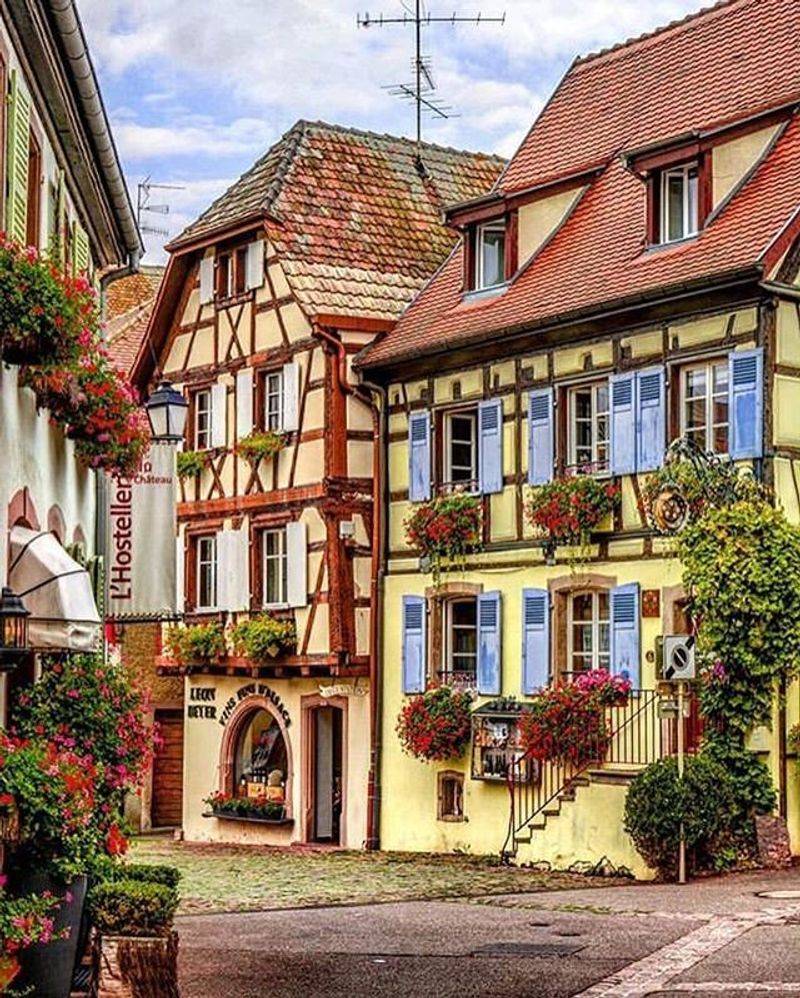
In 2013, French television viewers voted Eguisheim “France’s Favourite Village” in a national competition that drew entries from hundreds of communities across the country. That title was not handed out lightly, and the village had already been listed among “Les Plus Beaux Villages de France,” a formal classification recognizing the most beautiful villages in the country, since 2003.
What those distinctions reflect is not just visual appeal but a commitment to preservation that the village has maintained for decades. The local community has consistently chosen to protect the historic character of the old town rather than modernize it, which means the buildings you see today look remarkably close to how they appeared several centuries ago.
That level of care is visible in small details: the paint colors chosen for each facade follow traditional Alsatian palettes, the flower displays on window boxes are replanted each season, and the streets remain free of the kind of commercial clutter that tends to erode historic charm elsewhere.
The Three Castle Ruins That Watch Over the Village
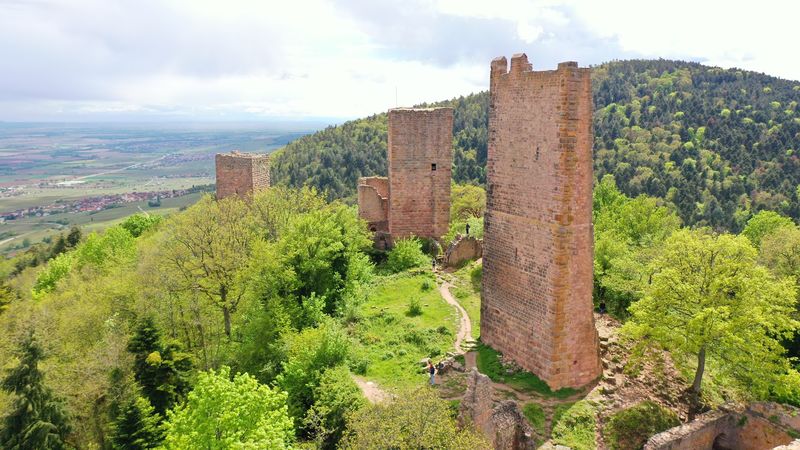
Southwest of the village, on a ridge above the surrounding vineyards, stand the ruins of the Three Castles of Eguisheim. Known individually as Weckmund, Wahlenbourg, and Dagsbourg, these medieval towers date from the 12th and 13th centuries and were built by the counts of Eguisheim to control the passes through the Vosges Mountains.
The hike up to the ruins takes roughly 45 minutes from the village edge and passes through forest and vineyard terrain that is beautiful in every season. From the top, the view back down over Eguisheim’s rooftops and the Alsatian plain stretching toward the Rhine River is the kind of panorama that makes you stop talking mid-sentence just to take it in.
The ruins themselves are not restored or manicured, which gives them a raw, atmospheric quality that contrasts nicely with the polished perfection of the village below. Chunks of old masonry sit where they fell, moss covers everything, and the towers stand at different heights as if frozen mid-collapse.
It is a completely different kind of beautiful from the flower-box charm of the streets, and the contrast between the two makes each one feel richer by comparison.
What to Eat and Where the Best Bites Hide
The food in Eguisheim reflects the broader Alsatian tradition, which sits at a cultural crossroads between French and German culinary influences and produces results that are hearty, flavorful, and deeply satisfying. The dish most associated with the region is tarte flambee, a thin-crust flatbread topped with cream, onions, and lardons that comes out of a wood-fired oven with crispy edges and a soft, yielding center.
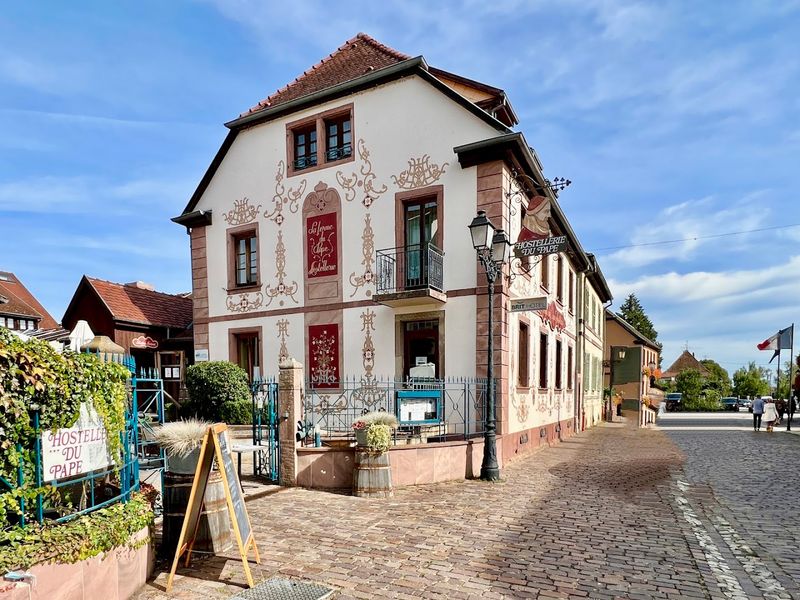
Several small restaurants and winstubs, which are the Alsatian equivalent of a cozy tavern-style dining room, are tucked into the ground floors of the old town buildings. The interiors tend to be low-ceilinged and warm, with wooden furniture and the kind of ambient noise that signals a room full of people genuinely enjoying their meal.
Choucroute garnie, the regional take on sauerkraut served with various cuts of pork and potatoes, is another staple worth trying if you want to eat the way locals have eaten here for generations.
Practical Things to Know Before You Go
Eguisheim is about five kilometers from Colmar, which is the nearest city with a train station, and the two are connected by bus and taxi. Most visitors base themselves in Colmar and make the short trip to Eguisheim as a half-day excursion, though the village does have a small number of guesthouses for those who want to wake up inside the old town walls.
The best seasons to visit are late spring through early autumn, when the flower boxes are in full bloom and the vineyard hills are green and lush. July and August bring the most visitors, so arriving early in the morning, before 9 AM, gives you a much quieter experience of the streets and the main square before the tour groups arrive.
Parking is available just outside the old town perimeter, and the entire historic center is walkable from there in minutes.
Why This Village Stays With You Long After You Leave
There is something about Eguisheim that resists easy explanation. It is not the largest historic village in Alsace, not the most visited, and not the one with the biggest museum or the flashiest attraction.
What it has instead is a kind of completeness, a sense that every element of the place, the layout, the architecture, the agriculture, the history, fits together without anything feeling forced or out of place.
The Disney connection brings many first-time visitors, and that is a perfectly good reason to come. But most people who make the trip end up staying longer than planned and leaving with a feeling that goes beyond having seen something pretty.
The village has been continuously inhabited for well over a thousand years, and that continuity is palpable in a way that is hard to describe but easy to feel. The houses are old but cared for, the streets are ancient but alive, and the whole place hums with the quiet confidence of somewhere that has never needed to reinvent itself to stay worth visiting.
Share this story