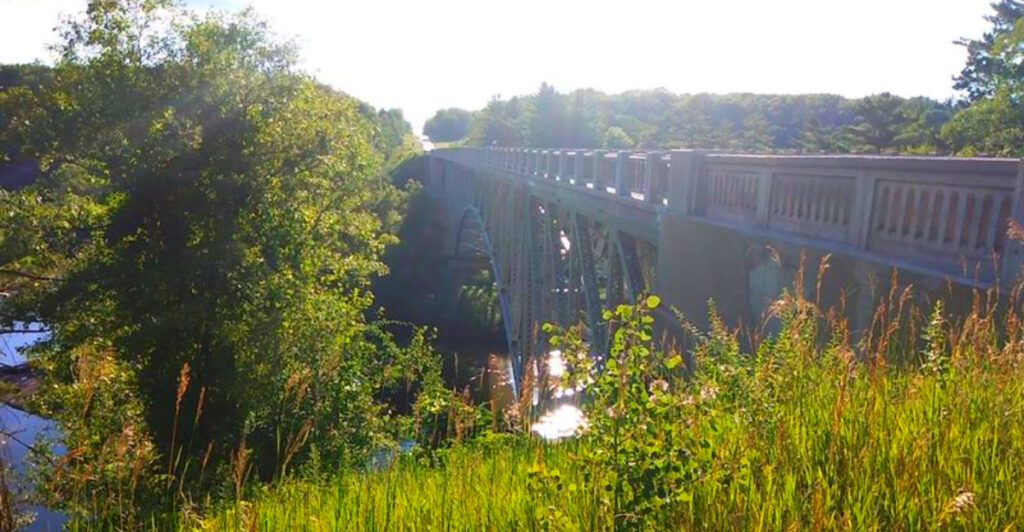
This 1935 bridge over the Pine River in northern Michigan is easy to overlook from the road, but it stands out once you see it up close. What looks like a routine crossing reveals detailed stonework and construction that reflects a level of craftsmanship rarely seen in roadside infrastructure today.
A short walk down from the roadway brings you beneath the bridge, where the river and surrounding area create a completely different perspective. It is a simple stop, but one that offers more than most drivers expect.
It is not widely promoted, which is part of the appeal. Those who take the time to explore it get a closer look at a historic structure that quietly ranks among the more interesting hidden landmarks in the region.
Where Exactly You Will Find This Hidden Landmark
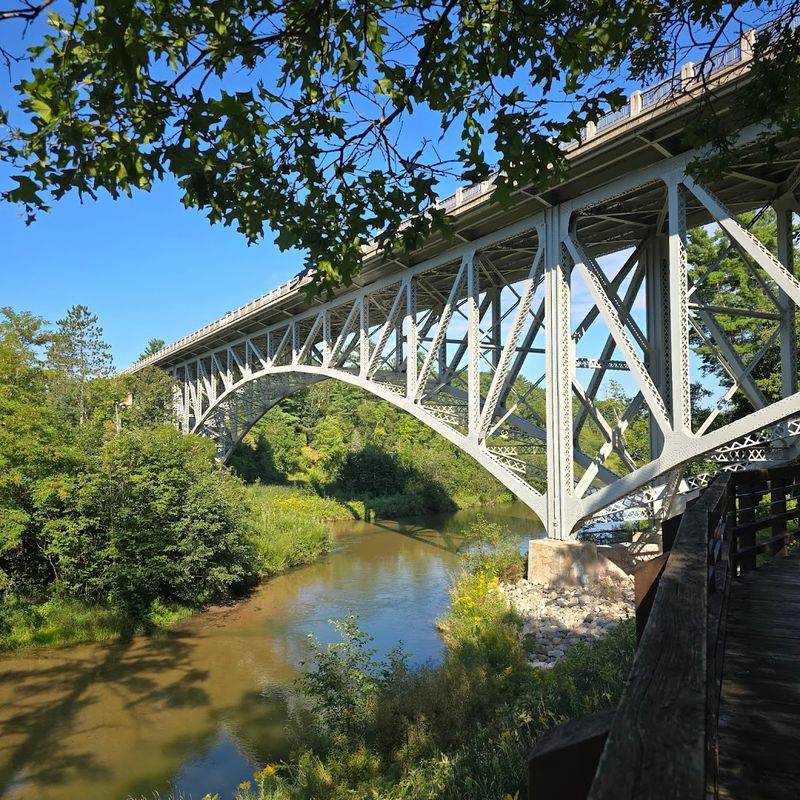
Most travelers passing through Manistee County, Michigan, have no idea what they are missing. Cooley Bridge sits in Wellston, MI 49689, right along a stretch of road that locals use for everyday travel, yet it holds a secret that only the curious discover.
The bridge crosses the Pine River, one of northern Michigan’s most beloved waterways, and it is listed as a historical landmark with a well-deserved reputation for stunning architecture and natural beauty.
A roadside park sits right next to the bridge, making it easy to pull over and begin your exploration without any complicated planning. There is ample parking, including longer straight spots that can accommodate campers and RVs, which is a thoughtful detail for road-trippers.
The site is open 24 hours a day, seven days a week, so there is truly no wrong time to stop. Whether you arrive at sunrise or late afternoon, the Pine River always has something worth pausing for.
The Story Behind a Bridge Built in 1935
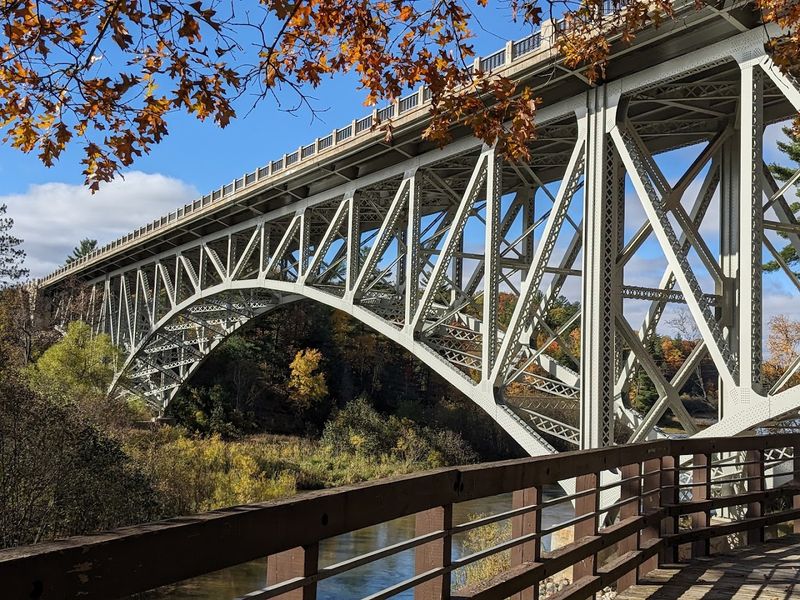
Built in 1935, Cooley Bridge carries nearly nine decades of history in its beams and bolts. That was a time when bridge construction was considered a true craft, and the engineers who designed this crossing clearly took their work seriously.
The structure was built during an era when public works projects were meant to last, and Cooley Bridge has done exactly that, remaining well-preserved and structurally sound to this day.
What makes the history even more interesting is how the bridge was designed to be experienced from multiple levels. You can walk across it from above, or descend the staircase and walk beneath it along the riverbank, seeing the underside of the structure up close.
Most people who have driven over it for years never realized there was anything special about it until someone pointed them toward the stairs. That sense of hidden history, right in plain sight, is part of what gives Cooley Bridge its quiet, lasting appeal.
What the Architecture Looks Like Up Close
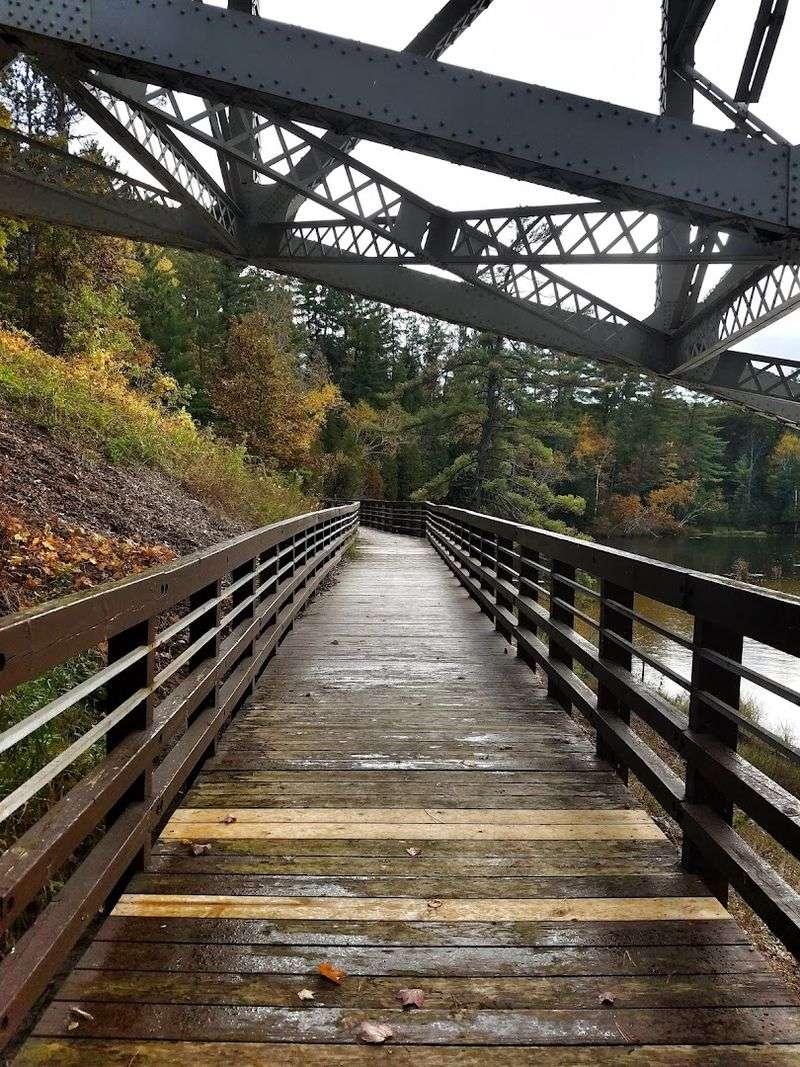
From the road, the bridge does not reveal much. But stand beneath it, and the engineering becomes genuinely impressive.
The underside of Cooley Bridge shows a complex arrangement of beams and supports that reflects careful, deliberate construction.
The craftsmanship feels almost artistic, the kind of structural design that modern highway bridges rarely attempt. Visitors consistently describe it as a piece of historical art, and that description is hard to argue with once you have seen it yourself.
The way the light filters through the structure and reflects off the Pine River below creates a visual experience that is surprisingly dramatic for a roadside stop. Photography enthusiasts tend to linger much longer than they planned, trying to capture the geometry of the supports against the moving water.
There is a reason this bridge earned a 4.7-star rating from over 135 visitors. The architecture alone justifies the detour, and the natural surroundings only add to the effect.
The Staircase That Changes Everything
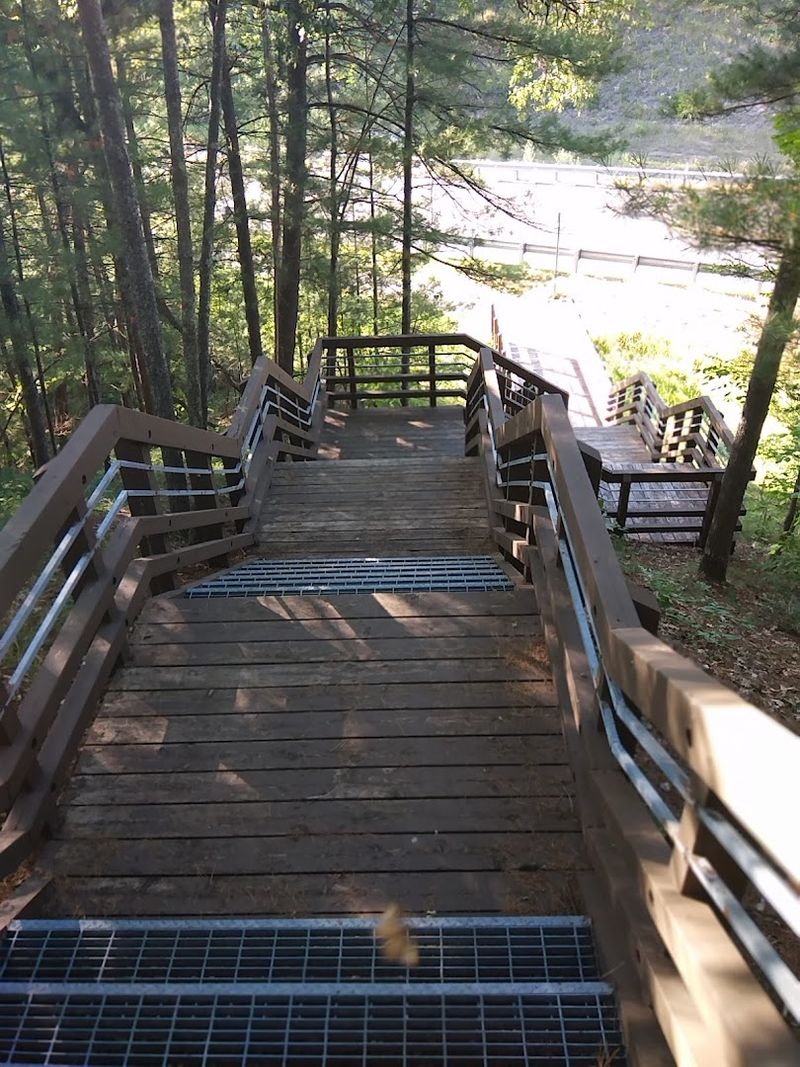
The real experience at Cooley Bridge begins the moment you find the staircase at the adjacent roadside park. With around 200 stairs total, the descent is not exactly a casual stroll, but every single step is worth the effort.
The stairs take you from road level down to the riverbank, where the full scale of the bridge becomes visible and the sound of the Pine River surrounds you completely. It is the kind of physical transition that signals you are entering somewhere genuinely different.
The stairs are generally well maintained, though some visitors have noted that the wooden sections near the viewing area could use occasional upkeep. Wearing comfortable shoes with good grip is a practical recommendation, especially if the weather has been wet.
Once you reach the bottom, the payoff is immediate. The bridge towers above you, the river flows past, and the noise of passing traffic disappears almost entirely.
Keep reading to find out what wildlife might be waiting for you down there.
Wildlife Encounters That Will Catch You Off Guard
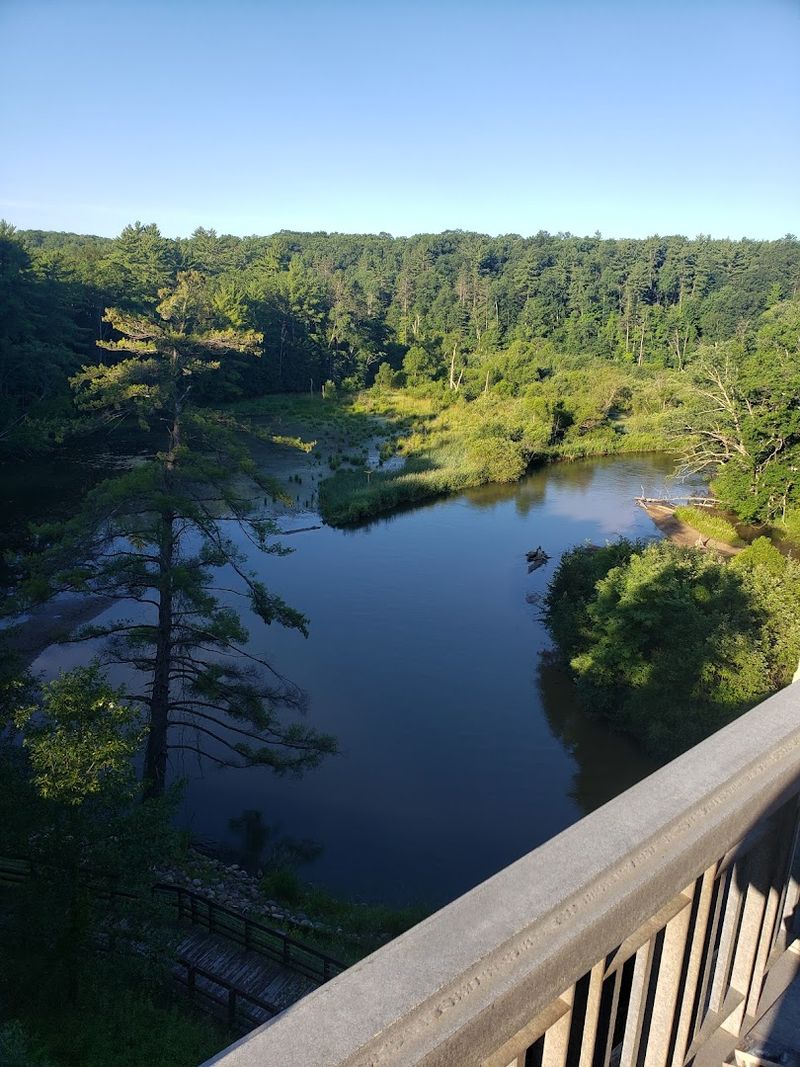
One of the most unexpected pleasures of visiting Cooley Bridge is the wildlife. The Pine River corridor attracts a surprising variety of animals, and the area beneath and around the bridge has become a quiet sanctuary for birds and river creatures.
Families of swans have been spotted enjoying the river near the bridge, their white feathers catching the light as they drift along the current. It is the kind of sight that makes you reach for your camera immediately and then forget to take the photo because you are too busy just watching.
Bald eagles have also been seen circling the area, which adds a genuinely thrilling layer to what might otherwise feel like a simple roadside stop. Spotting one overhead while standing beneath a 1935 bridge is the sort of moment that sticks with you.
The bird-watching potential here is real, so bringing a pair of binoculars is not a bad idea at all if nature observation is part of your travel style.
The Pine River and Why It Makes This Spot So Special
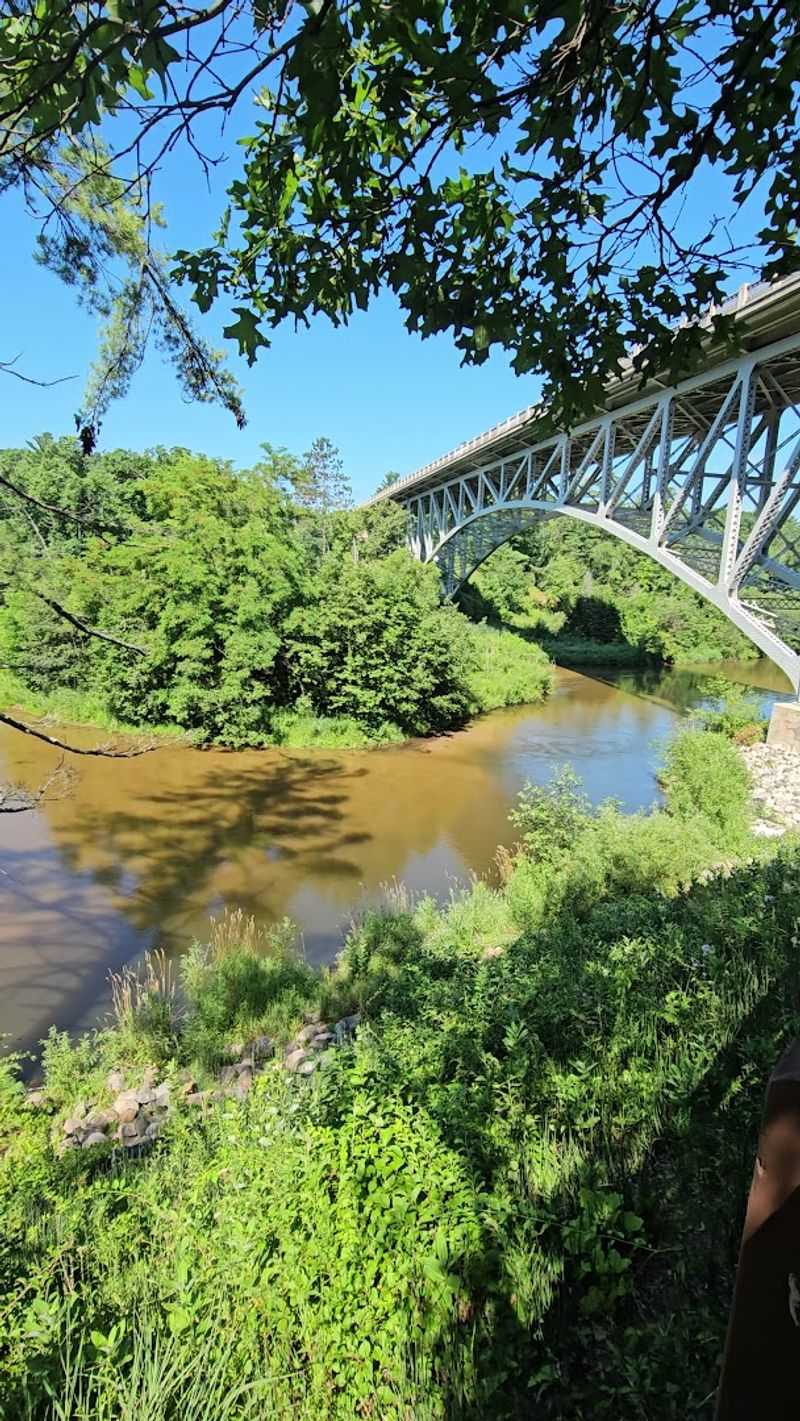
The Pine River is not just a backdrop at Cooley Bridge. It is genuinely one of the main characters of the whole experience.
Known throughout Michigan as a premier paddling and fishing river, the Pine River runs cold, clear, and fast through Manistee County.
From the viewing area beneath the bridge, you get a perspective of the river that most visitors never see. The water moves with purpose, curling around rocks and tree roots, and the forested banks on either side create a sense of total immersion in the natural landscape.
Anglers have discovered that fishing from beneath the bridge is a rewarding experience, with the structure providing shade and the river offering solid catches. The water access near the bridge is limited, so most serious fishing requires a short walk, but the effort pays off.
The combination of moving water, towering trees, and historic structure above creates an atmosphere that feels more like a national park than a roadside stop in rural Michigan.
Why Fall Is the Best Season to Visit
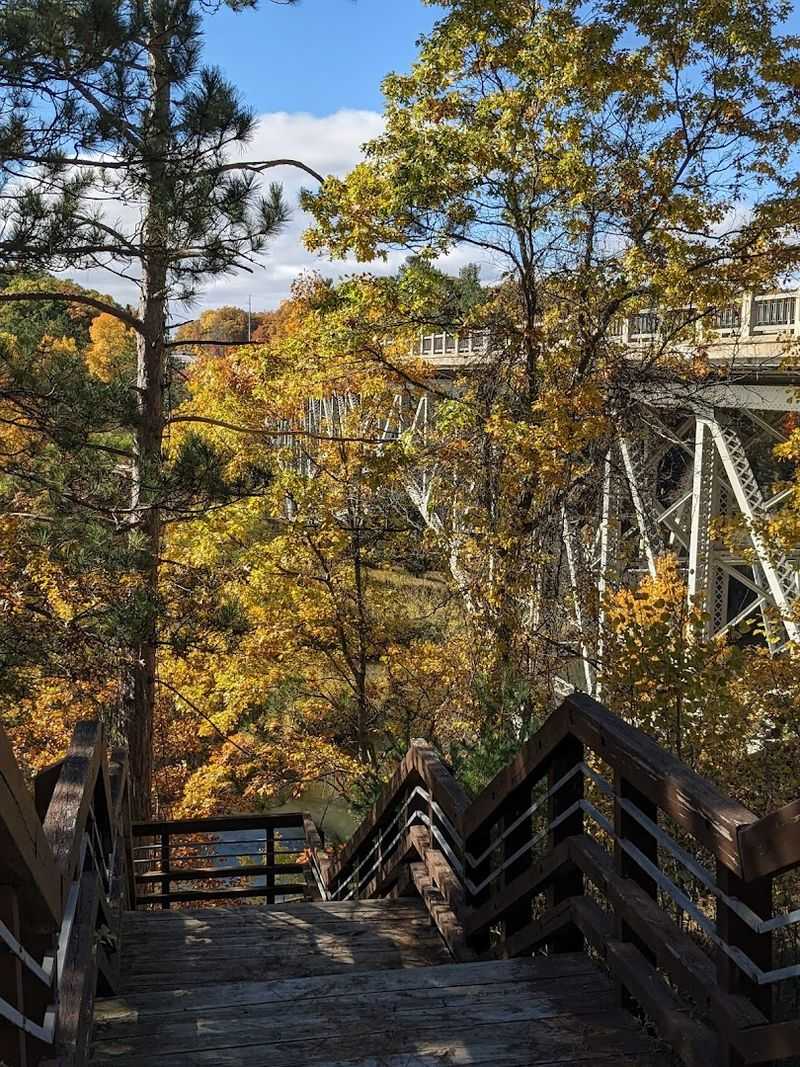
Every season brings something different to Cooley Bridge, but fall earns a special mention from those who have made the trip multiple times. When the trees along the Pine River shift into their autumn colors, the entire scene becomes almost impossibly photogenic.
Red, orange, and gold leaves frame the bridge from every angle, and the river reflects the colors back in a shimmering display that no filter can improve. The air cools down, the crowds thin out, and the whole experience takes on a peaceful, unhurried quality that summer visits sometimes lack.
Northern Michigan falls tend to arrive in late September and peak through mid-October, so planning around that window gives you the best chance of catching the full color display. The roadside park makes it easy to arrive, spend an hour, and continue on your route without losing much travel time.
If you can only make one trip to Cooley Bridge, timing it for fall is the choice that most repeat visitors would strongly endorse.
The Roadside Park That Makes the Visit Easy
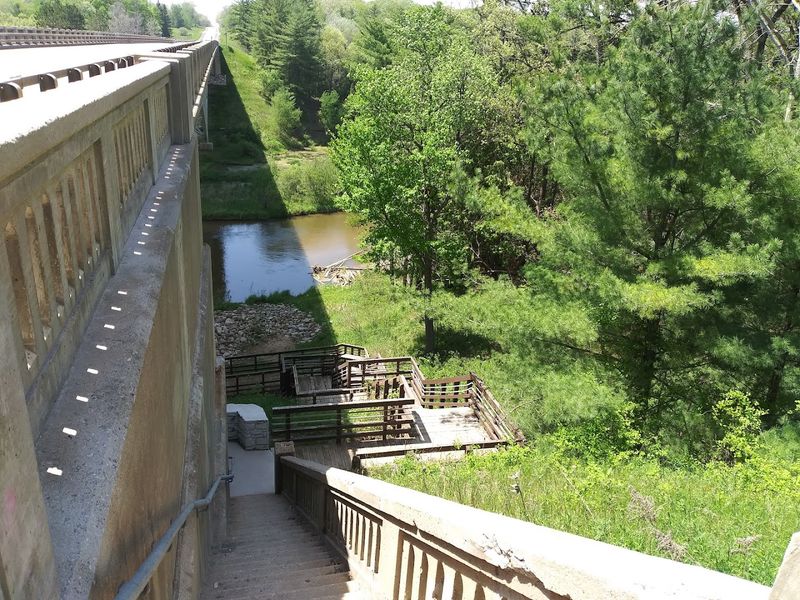
One of the practical details that makes Cooley Bridge so accessible is the well-equipped roadside park right next to it. The park includes grills for outdoor cooking, a restroom facility, and enough parking space to handle regular tourist traffic comfortably.
The longer straight parking spots are a thoughtful addition for anyone traveling with a camper or RV, which is common in this part of northern Michigan where road trips are a way of life. The park itself is clean and maintained, offering a pleasant place to rest before or after the staircase descent.
There are benches and shaded areas where you can sit, watch the birds, and simply decompress for a few minutes. For families with young children, the park provides enough open space to let kids stretch their legs safely.
The combination of a restroom, grills, and ample parking makes this more than just a quick photo stop. It is a genuine rest point on a longer drive through Manistee County, and that practical value adds a lot to the overall experience.
What It Feels Like to Stand Beneath the Bridge
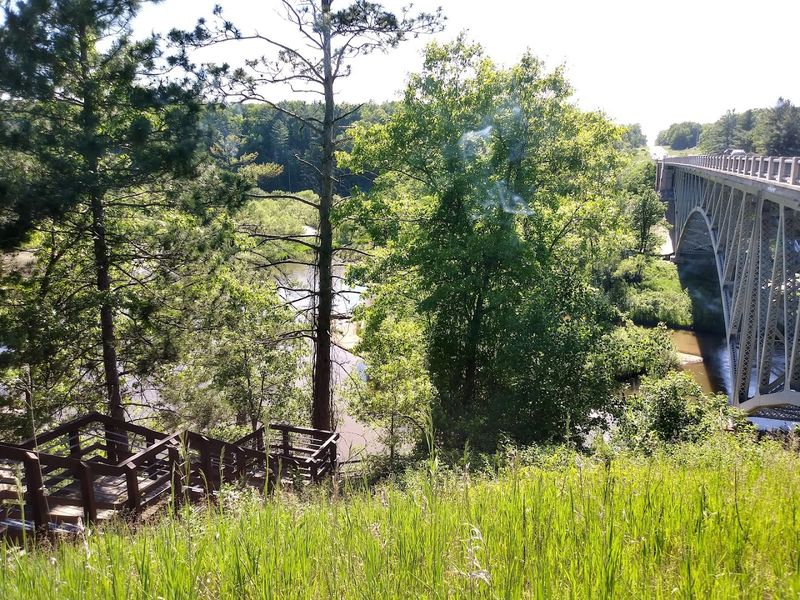
There is a particular feeling that comes from standing directly beneath Cooley Bridge that is genuinely hard to describe without sounding dramatic. The bridge rises above you, the river moves past your feet, and the trees close in on both sides to create a natural amphitheater of sound and shadow.
Time seems to slow down in a way that is rare for a roadside stop. The traffic noise from above fades, replaced by the rhythm of the current and the occasional call of a bird passing through.
It is the kind of place where you find yourself standing still longer than you intended.
The scale of the structure is much more apparent from below than from the road. Drivers crossing at highway speed have no idea what they are missing, and that contrast between the ordinary experience of crossing the bridge and the extraordinary experience of standing beneath it is part of what makes this spot so memorable.
Tips for First-Time Visitors Who Want to Make the Most of the Stop
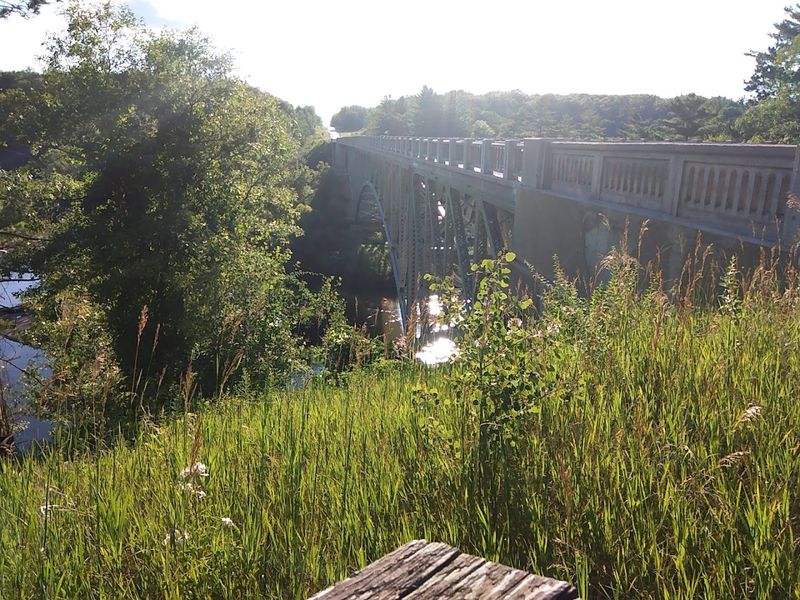
A few practical tips can make a big difference in how much you enjoy your visit to Cooley Bridge. First, wear comfortable shoes with solid grip.
The staircase involves around 200 steps, and some sections can be slick after rain, so footwear matters more than you might expect.
Bring a camera or make sure your phone is fully charged before you arrive. The views from beneath the bridge are the kind you will want to share, and the architecture combined with the river creates genuinely striking images at almost any time of day.
Morning light tends to hit the bridge at a flattering angle, making early arrivals particularly rewarding for photography. If you are traveling with children, the descent is manageable for older kids, though very young children should be supervised carefully on the stairs.
Finally, check the Manistee County visitor’s guide before your trip. It includes Cooley Bridge among its recommended stops and occasionally provides updated information about trail conditions and seasonal highlights worth knowing about.
How Cooley Bridge Fits Into a Broader Northern Michigan Road Trip
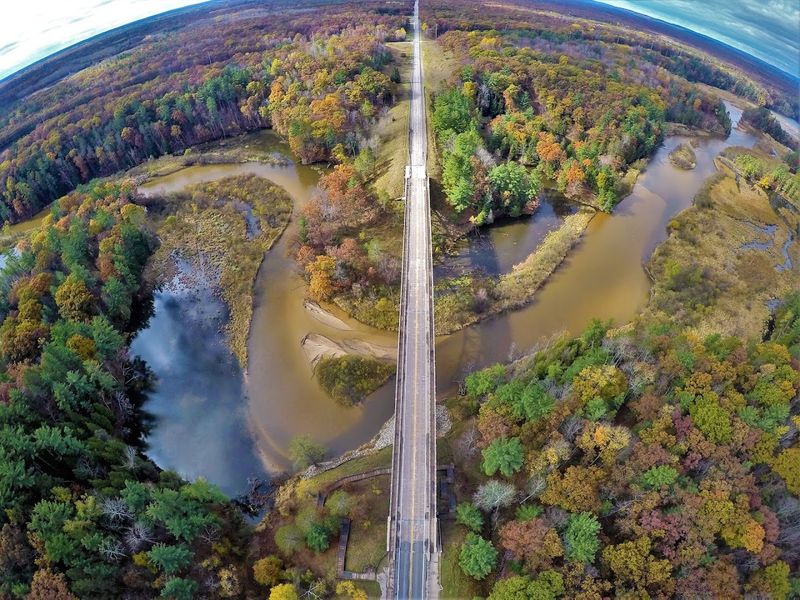
Cooley Bridge does not exist in isolation. It sits in the heart of Manistee County, a region that rewards slow travel and deliberate detours.
The surrounding area offers dense forests, river paddling, fishing access, and a relaxed pace that feels genuinely restorative.
Wellston itself is a small community, but the roads leading to and from it pass through some of the most scenic terrain in the Lower Peninsula. Pairing a stop at Cooley Bridge with a paddle on the Pine River or a drive through the Manistee National Forest creates a full day of outdoor experience without requiring any elaborate planning.
The bridge is conveniently accessible from US-10, which connects it to larger towns in both directions and makes it a natural midpoint stop on longer routes across northern Michigan. Road-trippers heading toward Traverse City or Ludington can easily add this stop without significantly extending their travel time.
Once you see how naturally Cooley Bridge fits into the landscape of this region, it becomes hard to imagine driving past it ever again.
Why This Bridge Deserves a Spot on Your Michigan Bucket List
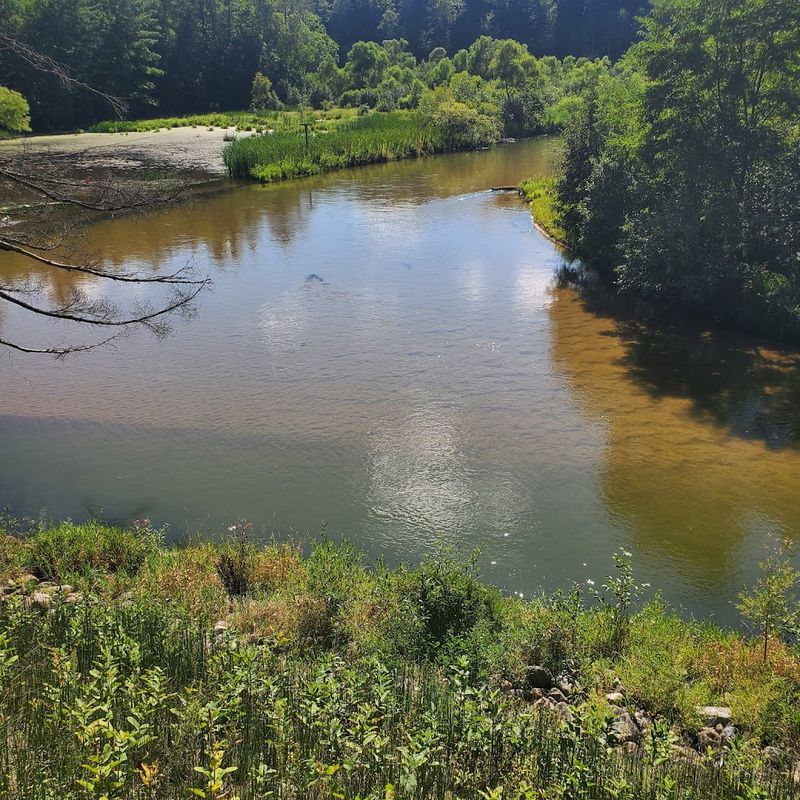
Michigan has no shortage of beautiful places, but Cooley Bridge earns its reputation by offering something that most roadside stops simply cannot match: a genuine sense of discovery. The fact that drivers pass over it daily without ever realizing its beauty below makes the experience of finding it feel almost personal.
It is the kind of place that generates loyalty, with many visitors returning year after year to check in on the swans, test the fishing, or simply enjoy the river from a different season’s perspective.
Historical landmarks in rural Michigan often struggle to draw attention, but Cooley Bridge benefits from being genuinely photogenic, accessible, and free to visit at any hour. There are no tickets, no reservations, and no crowds to fight through.
Some of the best travel experiences are the ones that cost nothing but a willingness to stop, and Cooley Bridge is proof of exactly that.
Share this story