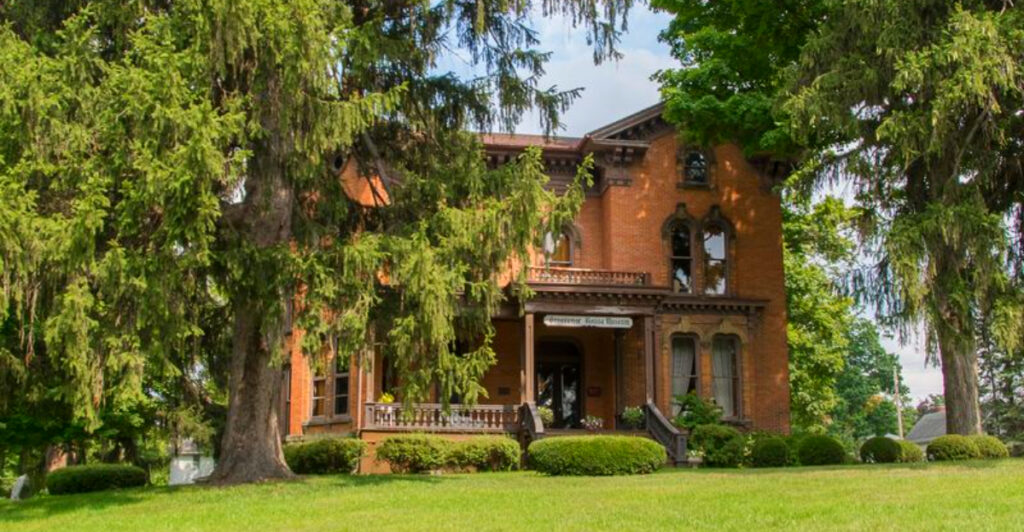
A 32-room Victorian mansion in small-town Michigan offers the kind of craftsmanship and history most visitors never expect to find outside a major city. Designed by the architect behind the Michigan State Capitol, the home still features much of its original interior, including Italian marble fireplaces, carved woodwork, and historic gas light fixtures that have survived for more than 150 years.
For four generations, the mansion belonged to one of the region’s most influential families before becoming a museum dedicated to preserving local history. Beyond the impressive exterior, visitors discover rooms filled with detailed craftsmanship and stories that reveal how much influence one household had on the surrounding county.
It is the kind of historic landmark that quietly exceeds expectations the moment you step inside.
Where to Find This Victorian Treasure
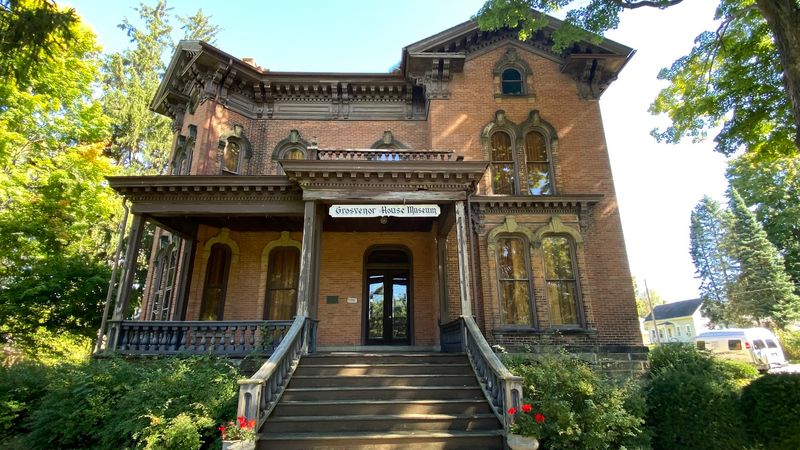
Right in the heart of Jonesville, Michigan, the Grosvenor House Museum stands at 211 Maumee Street, Jonesville, MI 49250, and it is honestly not the kind of place you expect to find in a small town of this size.
Jonesville sits in Hillsdale County in southern Michigan, close to the Ohio border, and the surrounding neighborhood still feels like a step back in time.
Several of the homes nearby were reportedly built to complement this estate, which tells you something about the influence this property once had on the entire community.
The museum is open by appointment, so calling ahead at 517-849-9596 is a must before you make the trip. The parking lot is easy to navigate, and the approach to the front of the house gives you a first impression that is genuinely hard to shake.
This is not a roadside attraction you stumble upon by accident; it rewards the visitor who plans ahead and arrives ready to be surprised.
The Architect Behind the Grandeur
Not many private homes in Michigan can claim they were designed by the same architect responsible for the state capitol building, but that is exactly the distinction the Grosvenor House carries with quiet confidence.
Elijah E. Myers drafted the plans for this mansion between 1872 and 1874, bringing the same eye for grandeur and proportion that he applied to civic buildings of state importance.
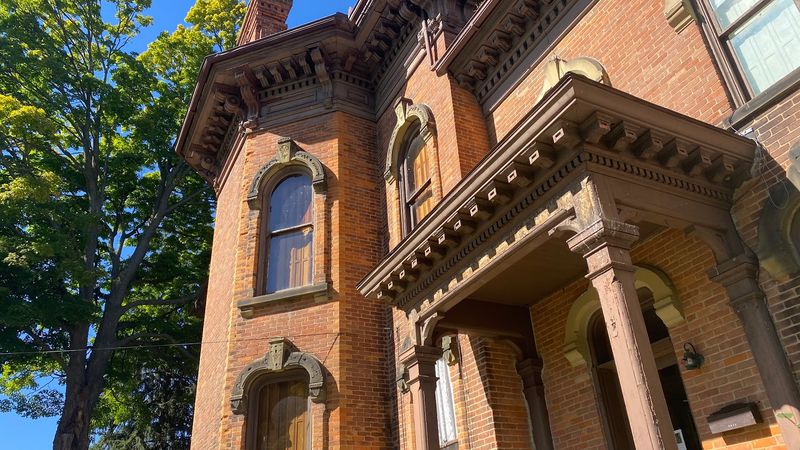
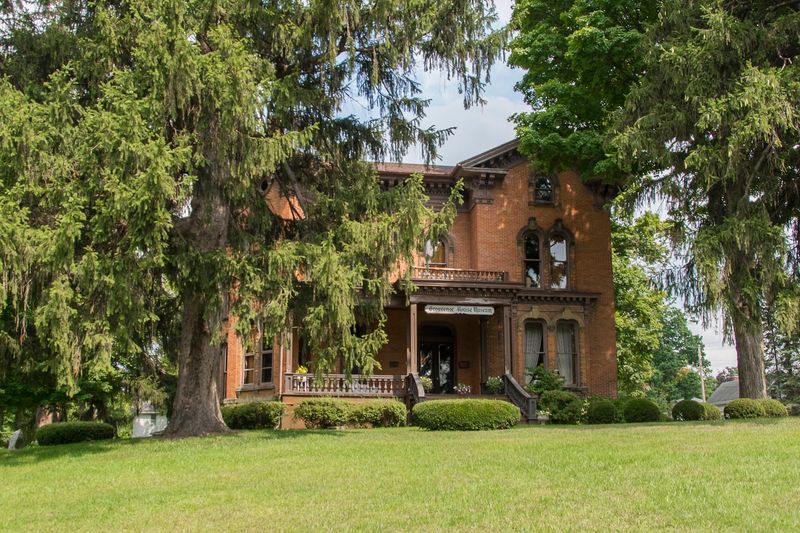
The result is a High Victorian Italianate structure that architectural historians consistently rank among the most magnificent residences ever built in Michigan.
Myers had a talent for balancing bold exterior statements with thoughtful interior layouts, and both qualities show up clearly here. The roofline, the window proportions, and the decorative bracketing all reflect a designer who understood how to make a building feel both powerful and welcoming at the same time.
Knowing this backstory before you walk through the front door makes the experience of touring the house feel considerably richer and more meaningful.
The Vision Behind the Mansion
Ebenezer Oliver Grosvenor was far more than a wealthy homeowner with a taste for grandeur. He served as a banker, Michigan state senator, state treasurer, and eventually Lieutenant Governor, becoming one of the state’s most influential Republican figures during the late 19th century.
When Grosvenor commissioned this mansion, he invested roughly $37,000 into its construction—an enormous sum for the 1870s. The extraordinary craftsmanship still visible throughout the home reflects both the scale of that investment and the ambition behind it.
Rather than simply building a residence, Grosvenor created a home that projected status, confidence, and permanence. Every architectural detail seems designed to communicate the values and aspirations of a man deeply involved in shaping Michigan’s political and financial landscape.
Over time, four generations of the Grosvenor family lived within these walls, adding layers of personal history to the home’s already remarkable architecture. Knowing the story behind E.O.
Grosvenor gives visitors a deeper appreciation for the mansion, transforming it from a historic structure into a place shaped by real lives, ambitions, and memories.
Eight Fireplaces, Zero Repeats
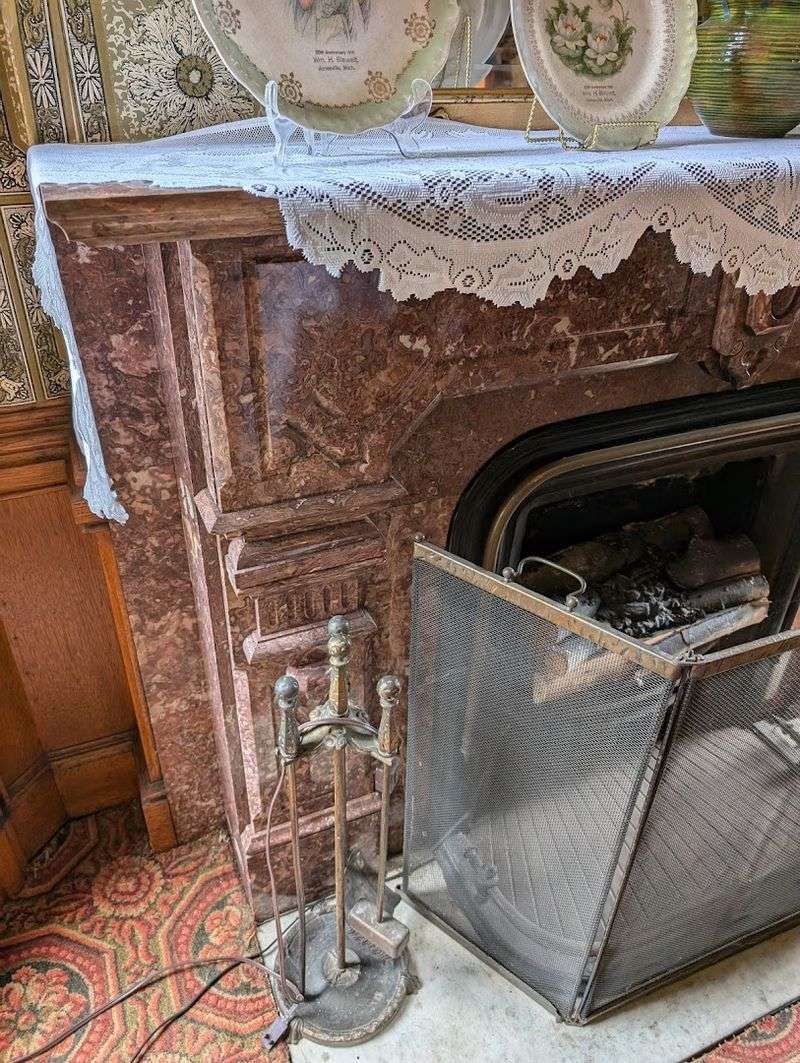
Most historic homes might have one or two impressive fireplaces. The Grosvenor House has eight, and not one of them is the same color as another.
Each fireplace was crafted from a different variety of Italian marble, and the range of hues moving from room to room creates a visual rhythm that feels almost like a curated art collection rather than a home heating system.
The 12-foot ceilings in many of the rooms give these fireplaces room to breathe, allowing each one to command its space without feeling crowded by the surrounding decor.
The contrast between the cool marble surfaces and the warm walnut woodwork throughout the house is one of those details that photographs simply cannot capture the way your eyes can in person. Standing in front of one of these fireplaces and looking up at the ceiling height above you is one of those quiet moments during the tour that tends to stop visitors mid-sentence.
Technology That Shocked the Neighbors
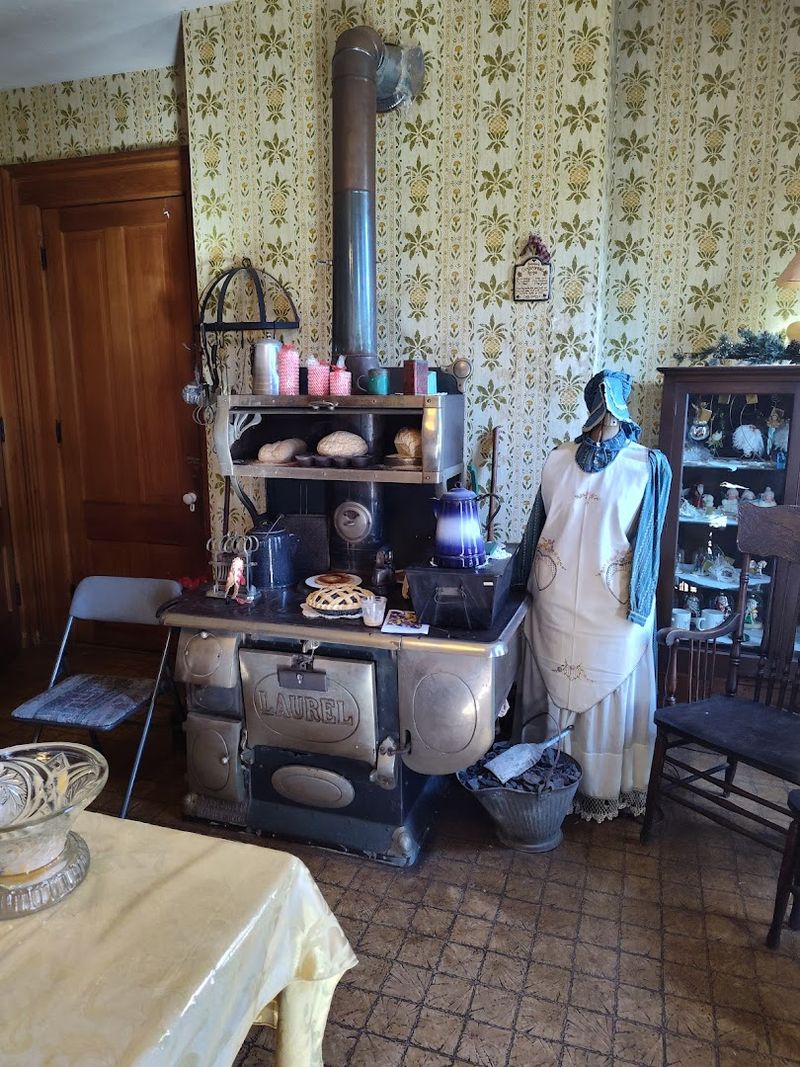
When this house was completed in 1874, it came equipped with features that most Americans would not have in their homes for another generation or more.
Centralized heating, indoor plumbing, flush toilets, and carbide gas lighting were all built into the original design, making the Grosvenor House a genuine showcase of 19th-century technological ambition.
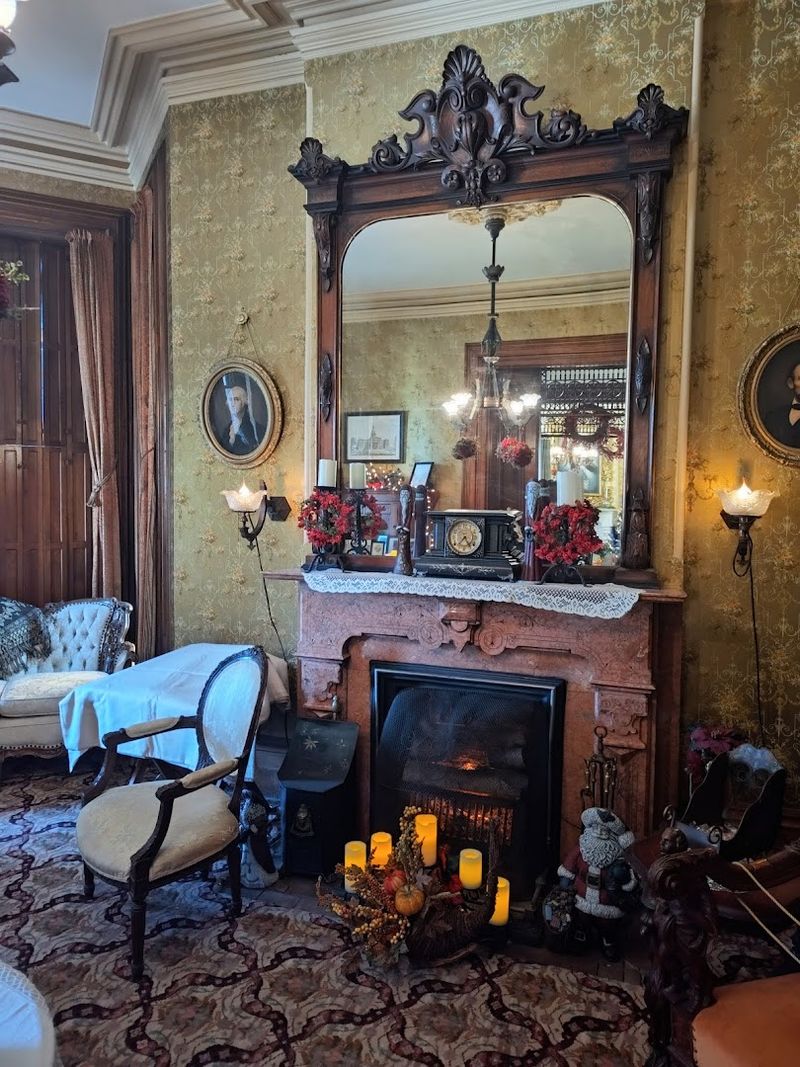
Electricity arrived in 1915, but here is the part that surprises most visitors: several of the original gas-operated globe lights were never removed and still hang in the house today, creating an atmospheric layering of two different eras of lighting technology in the same rooms.
The front of the house was finished with expensive walnut and butternut woods paired with thick plate glass, while the back sections and former servants’ quarters used simpler pine and thinner glass, a distinction that reflects the social hierarchies of the time with remarkable honesty. That contrast alone is worth a long conversation during the tour.
Woodwork That Tells Its Own Story
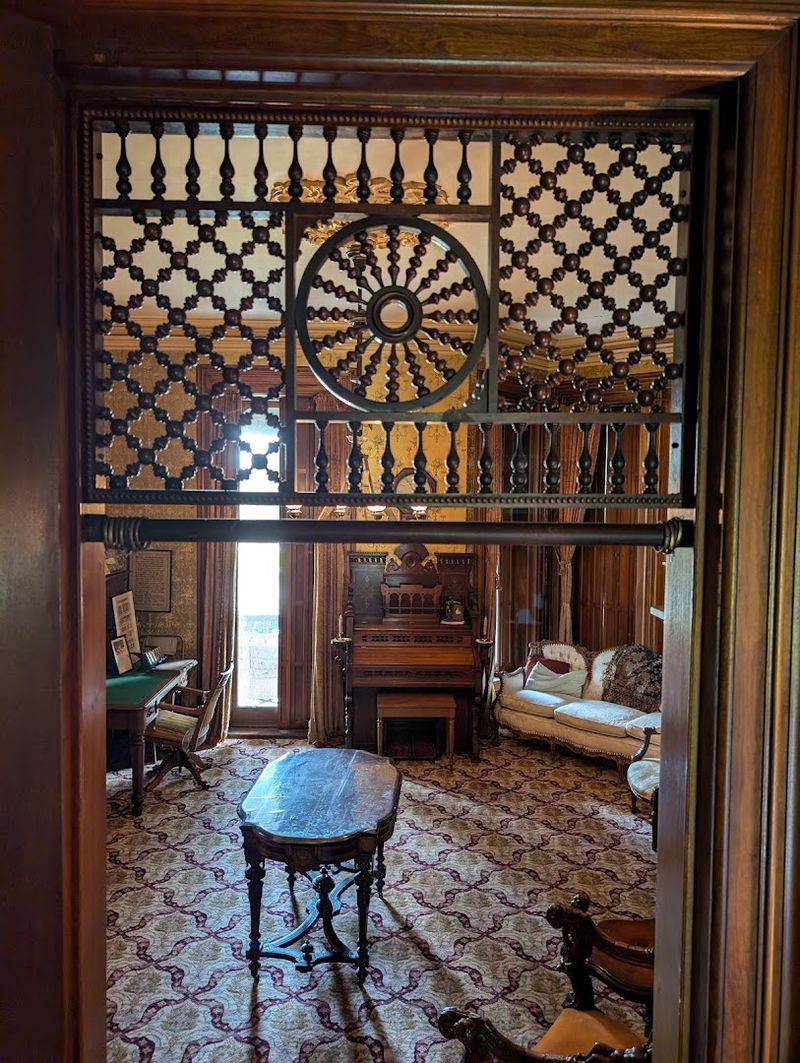
The carved walnut window valances featuring Egyptian heads are the kind of decorative detail that makes you stop and wonder what the designer was thinking, and then immediately appreciate the audacity of the choice.
Egyptian Revival motifs were fashionable among wealthy American homeowners in the post-Civil War era, and E.O. Grosvenor clearly had no interest in doing things halfway when it came to interior decoration.
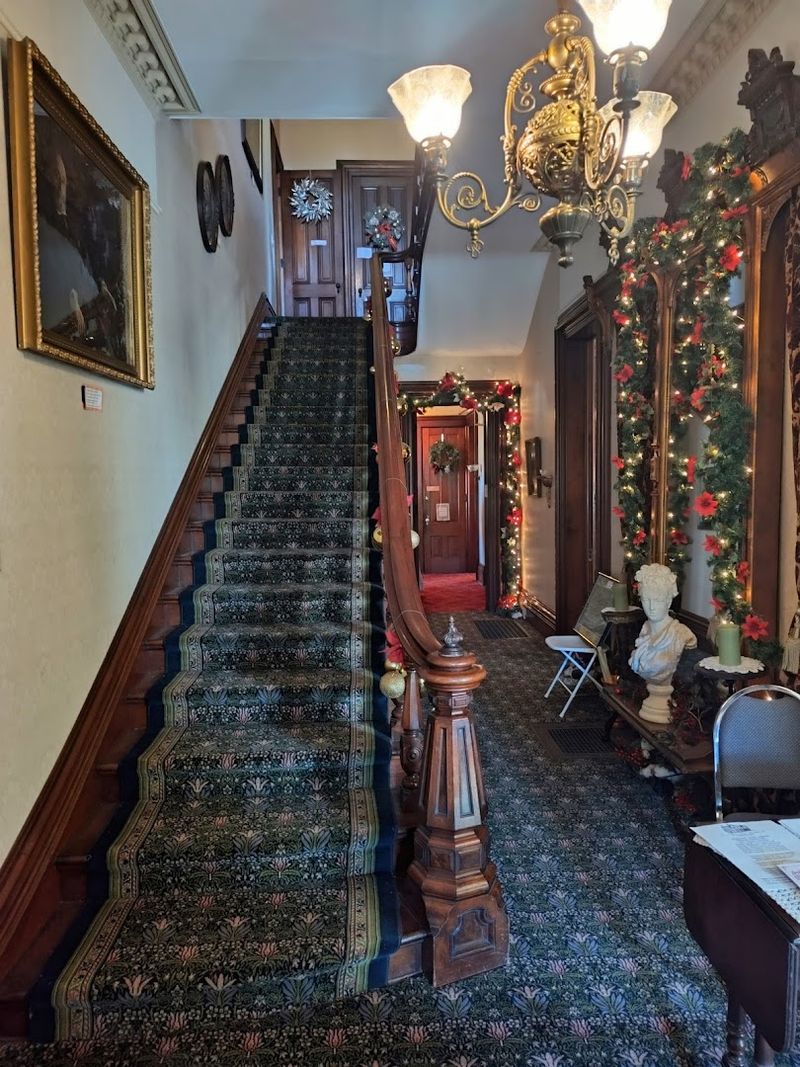
The sweeping balustrade staircase is another showstopper, rising through the center of the house with a confidence that anchors the entire interior layout.
Walnut and butternut woods were used extensively throughout the formal rooms, and the craftsmanship has held up remarkably well over 150 years. Running your eyes along the grain of the woodwork and the precision of the joinery gives you an appreciation for what skilled 19th-century craftsmen were capable of producing before power tools existed.
The staircase in particular tends to draw the longest pauses from visitors during any given tour.
A Piano With More History Than Most People
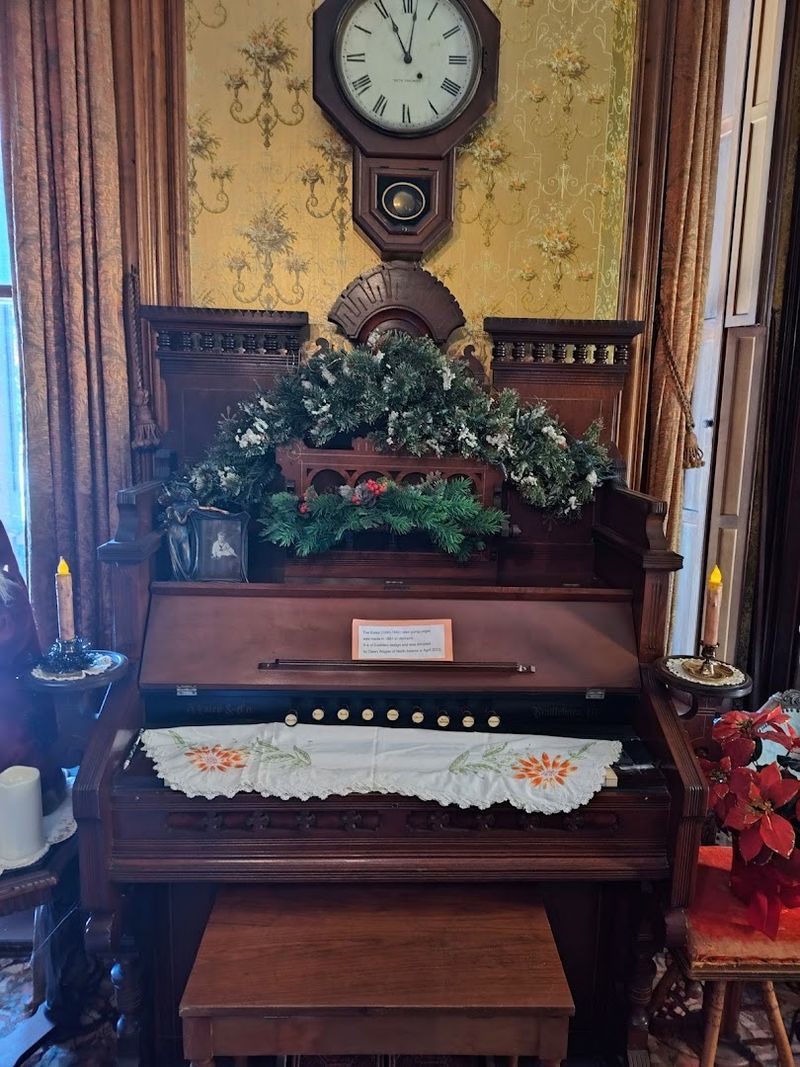
An 1865 Chickering piano sits in the parlor of the Grosvenor House, and it still plays beautifully after more than 160 years of existence.
Chickering was one of the most respected piano manufacturers in 19th-century America, and owning one was a clear signal of cultural refinement and financial standing, both of which the Grosvenor family had in abundance.
During holiday events at the museum, a pianist performs on this instrument while visitors tour the decorated rooms, creating a sensory experience that connects the present moment directly to the 1870s with unusual immediacy.
The sound of live piano music drifting through rooms furnished with period antiques and lit by original gas globe lights is the kind of atmosphere that no amount of digital recreation can replicate. The piano is not behind a velvet rope or sealed behind glass; it remains a functioning part of the house, which makes the whole experience feel less like a museum visit and more like a genuine encounter with the past.
The Children’s Room and Its Victorian Playthings
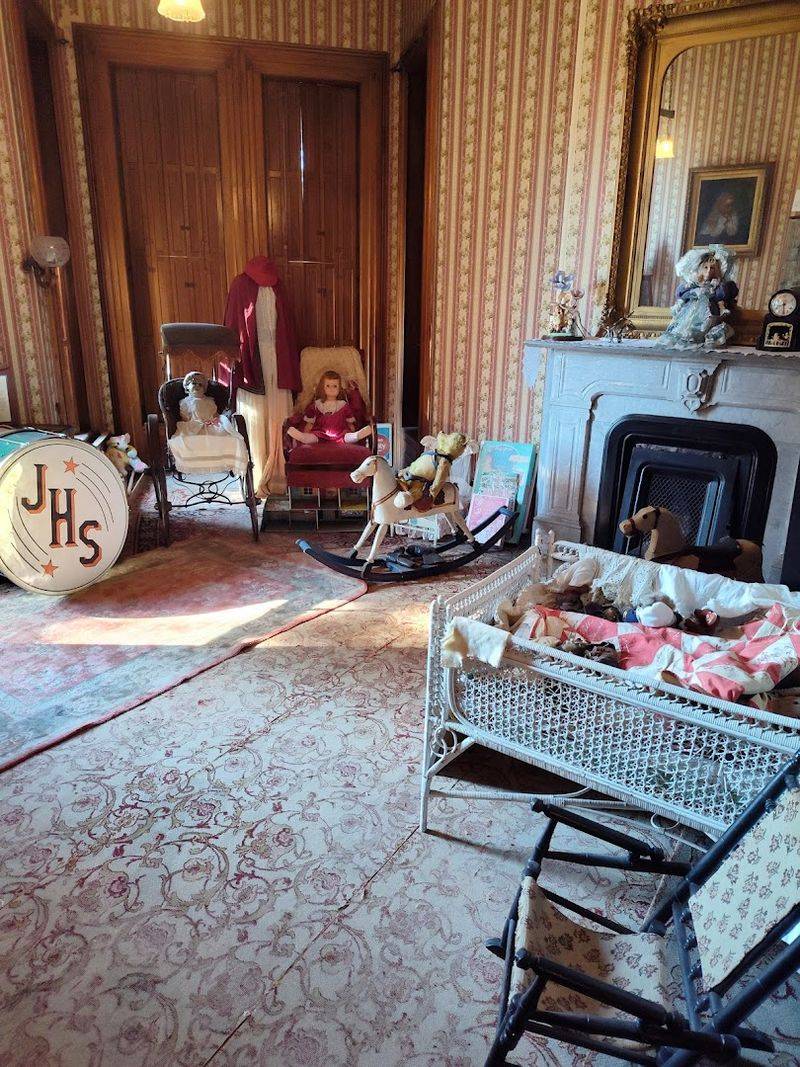
One of the most unexpectedly delightful stops on any tour of this mansion is the children’s room, which is stocked with 19th-century toys that offer a surprisingly vivid window into what childhood looked like for a wealthy Victorian family.
Wooden dolls, tin toys, and period games fill the space with a warmth that contrasts pleasantly with the more formal grandeur of the downstairs rooms.
Kids who visit today tend to find this room genuinely fascinating rather than just politely interesting, partly because the toys are so different from anything they have ever played with and partly because the room feels genuinely lived-in rather than staged.
Parents often linger here longer than they expect to, reading the labels and imagining what daily life looked like for the Grosvenor children in the 1880s. The children’s room is one of several details that make this museum feel personal rather than institutional, and it is a reliable highlight for families touring together.
Events That Bring the House Back to Life
The Grosvenor House Museum is not the kind of place that sits quietly behind a locked door waiting for the occasional curious visitor.
Throughout the year, the museum hosts Victorian tea parties, holiday-themed tours decorated from basement to attic, and the RiverFest Living History Event, which brings a reenactment energy to the surrounding community each summer.
Christmas at the Grosvenor House is particularly atmospheric, with every floor decorated in period style and volunteers from local choral groups performing in the parlor while the Chickering piano accompanies the singing.
Birthday parties have also been held here, with groups divided into smaller tours led by knowledgeable guides, making the experience feel personal rather than crowded. The events calendar, available through the museum’s website at grosvenorhouse.wordpress.com, is worth checking regularly because the special programming genuinely changes what the house feels like from one season to the next.
Why This Place Deserves More Visitors
Some historic homes feel distant, almost untouchable behind ropes and glass cases. The Grosvenor House Museum feels different.
The moment you step inside, it becomes clear that this is not just a preserved building. It is a place filled with stories, personalities, and details that still feel deeply alive more than 150 years later.
A big reason for that is the people giving the tours. The guides here are genuinely passionate, and many are lifelong locals who grew up hearing stories about the Grosvenor family and the role this mansion played in Jonesville history.
They point out the kinds of details most visitors would otherwise miss, from hidden craftsmanship in the woodwork to the social customs reflected in the layout of the rooms. The conversations feel personal rather than rehearsed, and that warmth changes the entire experience.
Admission is donation-based, which honestly feels almost unbelievable considering what you are getting access to. Very few places allow you to explore a 32-room Victorian mansion designed by the same architect responsible for the Michigan State Capitol without a fixed ticket price.
It makes the museum approachable for families, casual travelers, and curious history lovers who may have stumbled across it while exploring southern Michigan.
Share this story