 Unearth The Voyage
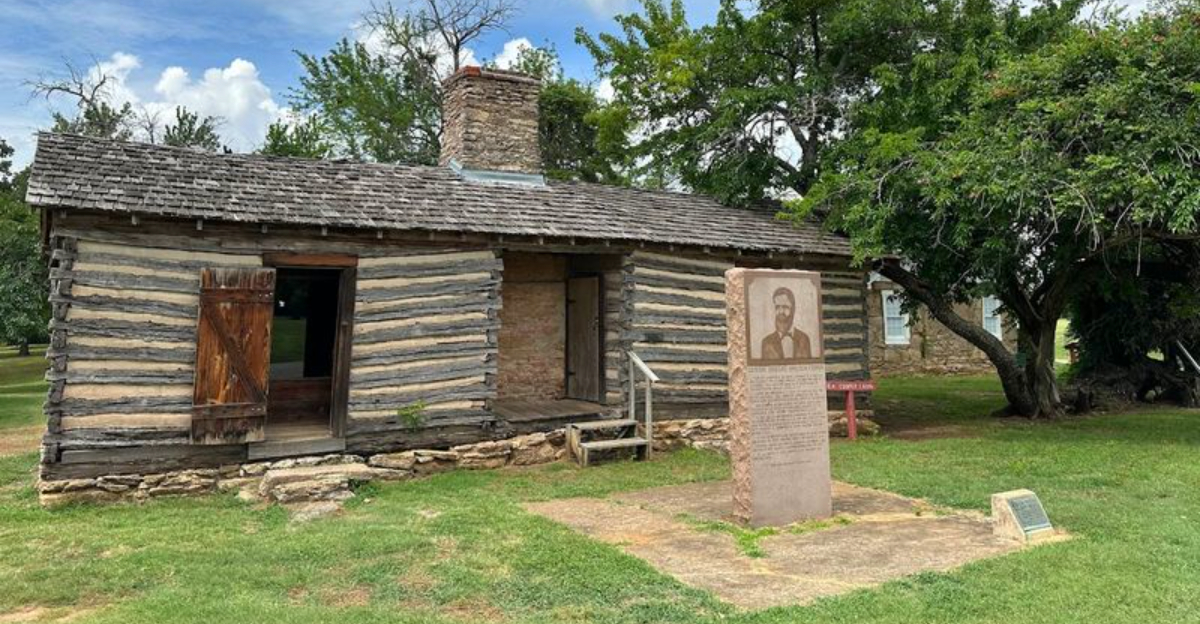
Somewhere along a quiet stretch of Oklahoma highway, history is waiting to ambush you in the best possible way. An old frontier fort, weathered stone walls, fossilized building blocks, and the faint echoes of a past that shaped an entire region sit just off the road near Durant, and most people drive right past without a clue.
Fort Washita Historic Site is one of those rare places where you can actually feel the weight of history beneath your boots as you walk the grounds. From its days as a U.S.
Army outpost to its role in the Civil War era, this place has layers of stories that deserve far more attention than they get. Read on and you will see exactly why this fort is worth every mile of the drive.
Finding Fort Washita: Address, Location, and Getting There
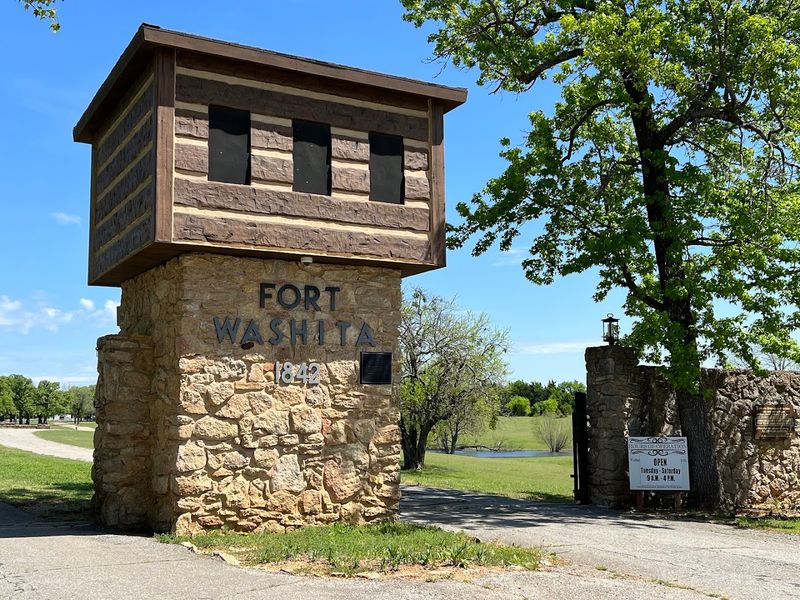
The fort sits at 3348 OK-199, Durant, OK 74701, tucked along a rural stretch of Oklahoma highway that does not exactly announce itself with fanfare.
Durant is the closest town, and the drive out to the site passes through classic southern Oklahoma countryside: rolling fields, scattered trees, and the kind of open sky that makes you feel like time has slowed down a little.
The site is managed and preserved with real care, and the grounds are well-maintained and easy to navigate once you arrive. Free parking is available right at the entrance, which is already a good sign before you even step out of the car.
The phone number for the site is +1 580-924-6502, and the official website is https://www.battlefields.org/visit/heritage-sites/fort-washita-historic-site for anyone who wants to plan ahead.
Hours run Tuesday through Saturday from 9 AM to 4:30 PM, and the site is closed on Sundays and Mondays. Arriving early gives you the best chance to explore without feeling rushed, and the staff inside are genuinely happy to point you in the right direction.
A Fort Born From Politics and Protection
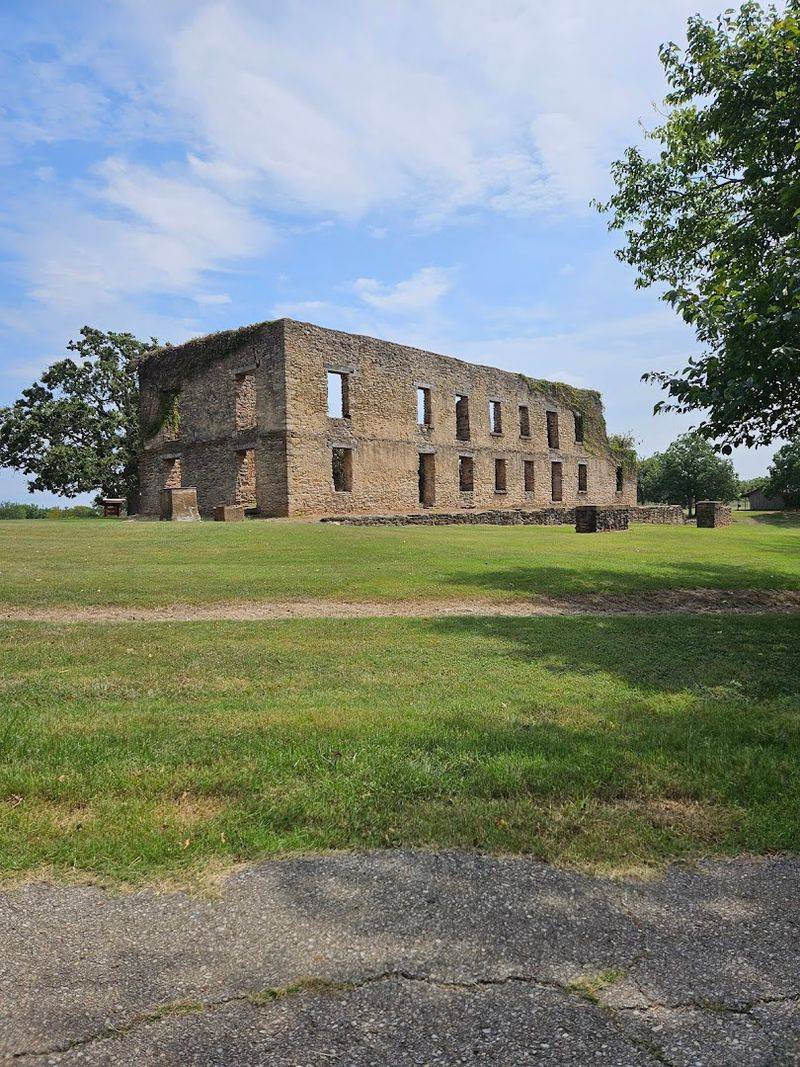
Fort Washita was established in 1842, ordered by President John Tyler and built under the command of General Zachary Taylor, who would later become the 12th President of the United States.
The fort’s original purpose was to protect the Choctaw and Chickasaw Nations, who had been relocated to Indian Territory through the painful forced removals of the 1830s. The U.S. government had promised protection from raids by Plains tribes to the west, and this fort was supposed to deliver on that promise.
That backstory adds a complicated layer to every stone wall and crumbling foundation you see on the grounds. This was not just a military base but a symbol of a government obligation, one that played out against the larger and deeply troubling story of Native American displacement in Oklahoma.
The fort quickly grew into a significant supply depot and communication hub, serving as a lifeline between the eastern settlements and the wild frontier beyond. By the time the Civil War arrived, Fort Washita had already lived through more political drama than most places see in a century.
The Civil War Chapter That Changed Everything
When the Civil War broke out in 1861, the U.S. Army abandoned Fort Washita, and Confederate forces moved in almost immediately.
The fort became a Confederate stronghold and was used as a base of operations in Indian Territory, a region where tribal loyalties were painfully divided. Some tribal members sided with the Confederacy, others with the Union, and the fort sat right at the center of that tension.
Confederate General Douglas Cooper used Fort Washita as a headquarters during parts of the conflict, and the fort saw significant military activity throughout the war years. Supply lines, troop movements, and political negotiations all passed through these grounds.
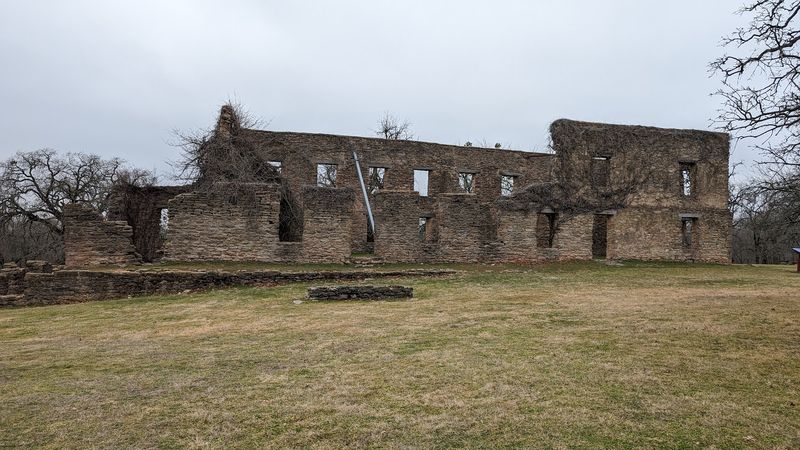
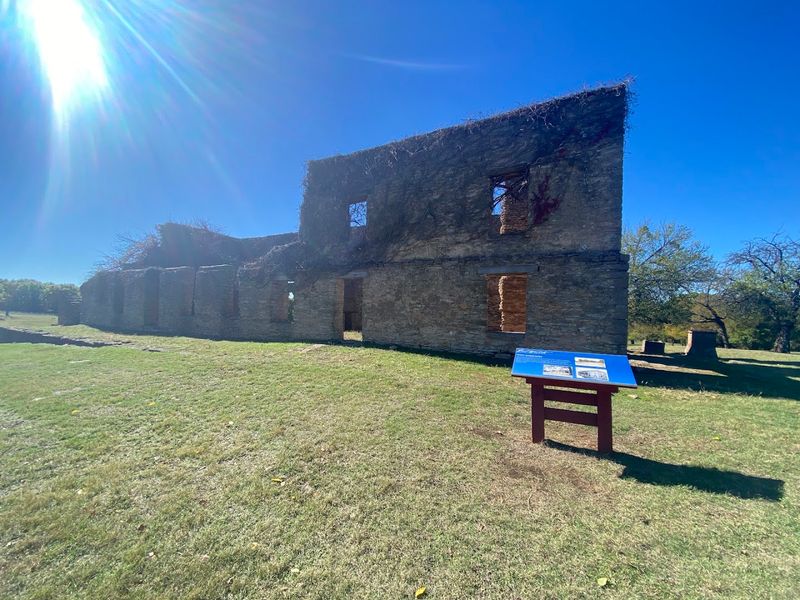
After the war ended, the fort was never fully reactivated as a U.S. military post. It passed through several hands and eventually fell into partial ruin, which is exactly what gives it such a haunting and authentic atmosphere today.
The Civil War chapter is one of the most compelling parts of the site’s story, and the staff in the visitor center are remarkably well-informed about this period. Walking through those ruins knowing the weight of that history makes every crumbling wall feel like a chapter from a book you cannot put down.
Walls Built From Fossils
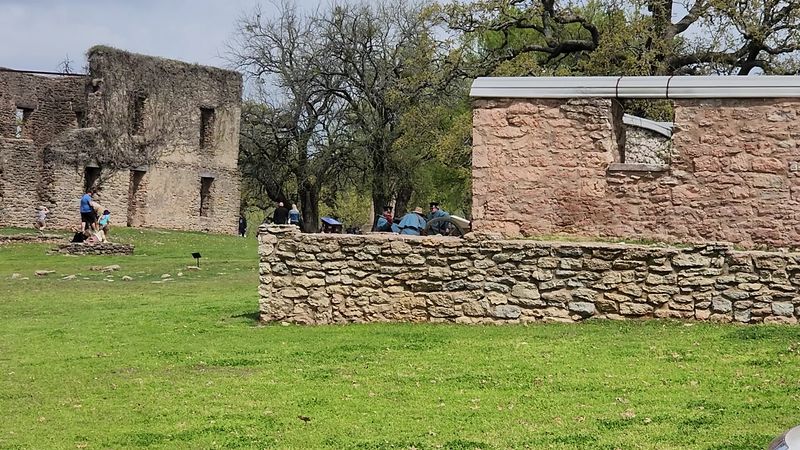
Here is a detail that stops most visitors cold: the walls of Fort Washita are built from fossilized stone, packed with ancient marine shells and other prehistoric remnants.
The builders used locally quarried limestone that happened to contain fossils from a time when this part of Oklahoma was covered by a shallow inland sea. Run your hand along the wall and you might feel the outline of a shell that is tens of millions of years old pressed right into the surface.
That unexpected geological surprise turns a history visit into something that touches on natural history too. Kids especially tend to go wide-eyed when they realize they are touching actual fossils in a standing structure rather than looking at them behind museum glass.
The fossil-rich walls are one of the most talked-about features of the site, and they give the fort a texture and character that no replica could ever replicate. The stone has a warm, honey-colored tone in good light, and the whole effect is both rugged and surprisingly beautiful.
Few historic forts in the country can claim walls that double as a natural history exhibit, and that alone makes Fort Washita genuinely one of a kind.
The Grounds, the Ruins, and the Reconstructed Cabins
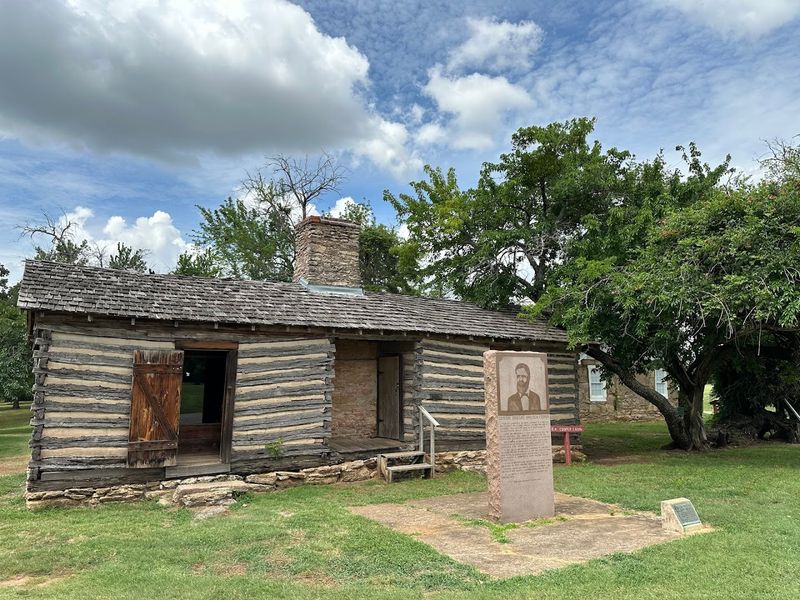
The physical layout of Fort Washita is one of its greatest strengths as a place to visit.
Original stone foundations mark where buildings once stood, giving you a clear sense of scale and arrangement even where walls no longer reach full height. Reconstructed log cabins stand nearby, built to reflect what the fort’s structures looked like during its active years, and they are detailed enough to feel genuinely immersive rather than like props on a movie set.
The grounds are wide open and walkable, with well-maintained paths that make it easy to move from one area to the next without losing your bearings. Signage throughout the site explains what each foundation or structure represents, so you are never left guessing what you are looking at.
A cemetery sits further back on the property, and it is absolutely worth the short drive or walk to reach it. The older markers there carry names and dates that connect the abstract history of the fort to real individual lives.
The whole property has a peaceful, unhurried quality that encourages you to slow down and actually absorb what you are seeing rather than rushing through for a quick photo and leaving.
The Visitor Center and the Staff Who Bring It to Life
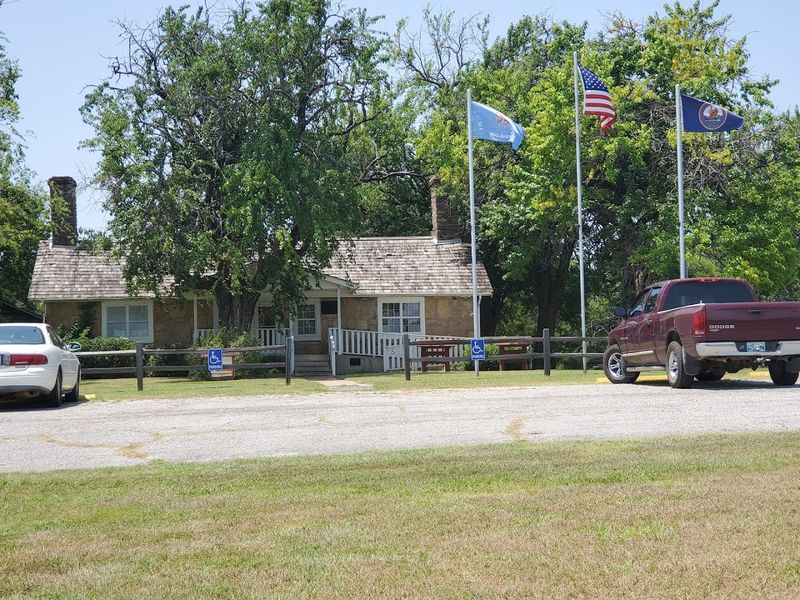
The small visitor center at Fort Washita does a lot with a modest footprint.
Inside, you will find a compact museum with artifacts, photographs, and informational displays that cover the fort’s full history from its founding through the Civil War and beyond. The exhibits are organized clearly and written in language that is accessible without being dumbed down, which is a harder balance to strike than most people realize.
The real standout, though, is the staff. The people working there are consistently described as knowledgeable, warm, and genuinely enthusiastic about sharing the fort’s story.
They do not recite facts robotically but actually engage with visitors, answer questions thoughtfully, and often share details that you would never find on a sign.
On one visit, the staff member on duty spent a solid twenty minutes walking through the political context of the fort’s founding without once making it feel like a lecture. That kind of human connection is what transforms a historic site from a place you visit into a place you remember.
There is also a small gift shop with reasonably priced items, and a few souvenirs that lean toward the historical and educational rather than the purely commercial.
Free Admission and What That Really Means
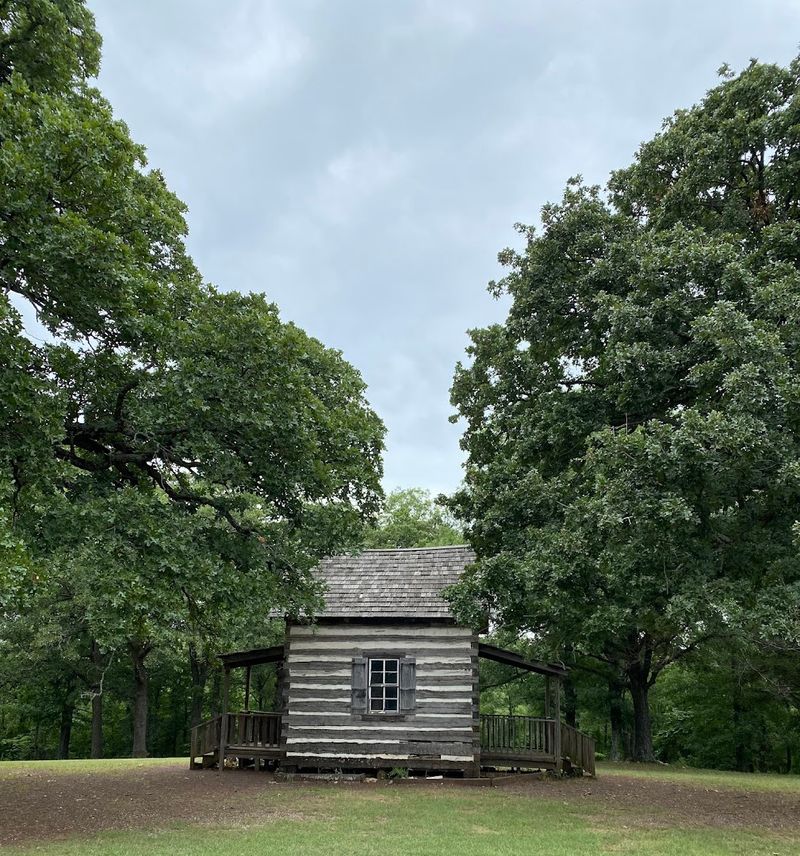
Fort Washita Historic Site charges absolutely nothing to enter, which feels almost scandalous given how much history the place holds.
Free admission and free parking mean that a full family outing here costs nothing beyond the gas it takes to get there, and that is not a small thing. A lot of historic sites charge entry fees that can add up quickly for a family of four, so finding a place this rich in content and this generous with access is genuinely refreshing.
The no-cost entry also removes any psychological pressure to rush through and feel like you got your money’s worth. You can take your time, double back to look at something again, or just sit on the grounds and absorb the atmosphere without watching a clock.
That openness extends to the general spirit of the place. The staff welcome curious visitors of all ages, and there is no sense that you need to be a history scholar to appreciate what is here.
The site is supported and managed with clear dedication, which makes the free access feel less like a budget operation and more like a genuine public service. Whoever decided to keep this place free deserves a standing ovation.
Annual Events That Bring the Fort Back to Life
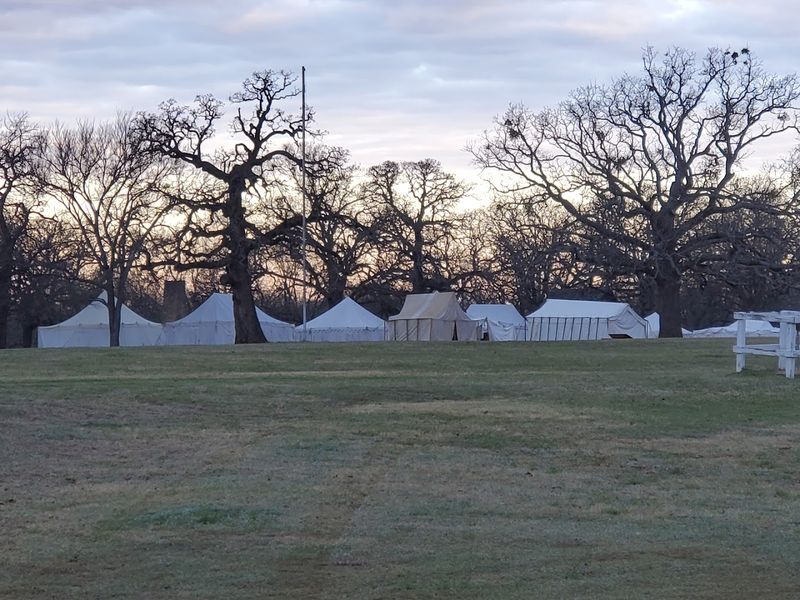
Fort Washita does not just sit quietly waiting for visitors to wander through. The site hosts a packed calendar of events throughout the year that bring the grounds to vivid, noisy, fully costumed life.
The annual Rendezvous is the crown jewel of the event calendar. Fur traders, frontier crafters, blacksmiths, and reenactors gather on the grounds to recreate the atmosphere of the 1800s frontier in remarkable detail.
Campfires crackle, traditional music drifts across the open fields, and the smell of open-fire cooking fills the air in a way that no museum exhibit could replicate.
Civil War reenactments are another major draw, with participants recreating both Union and Confederate scenarios with a level of historical accuracy that genuinely impresses even visitors who come in skeptical. World War I and World War II reenactments have also been held at the site, which speaks to the versatility of the grounds and the ambition of the organizers.
October brings Ghost Tours, which take advantage of the site’s atmospheric ruins and long history to create an event that is spooky without being disrespectful to the history. Following the fort’s Facebook page is the best way to stay current on the full event schedule.
The Cemetery: A Quiet Corner With Loud Stories
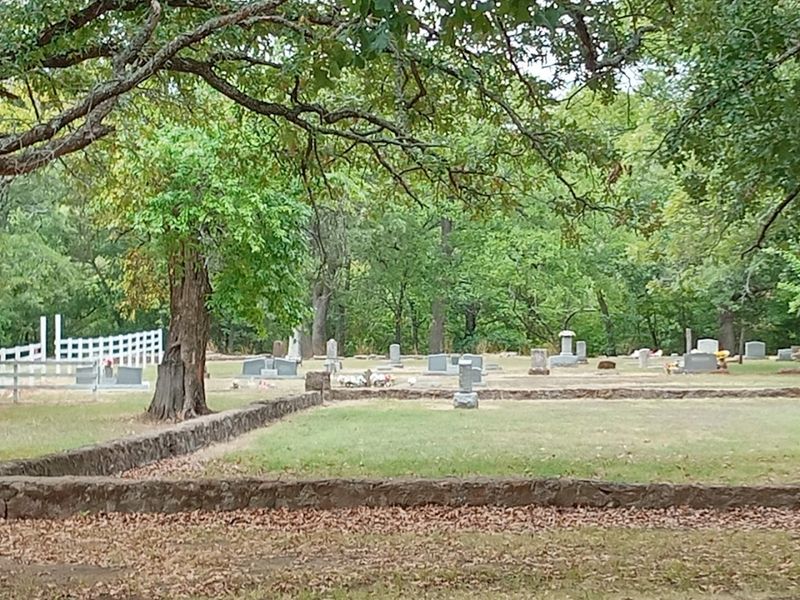
Most visitors focus on the main fort structures and might miss one of the most quietly powerful parts of the property: the cemetery located further back on the grounds.
The older sections of the cemetery contain markers for soldiers and civilians connected to the fort’s history, and reading the names and dates carved into those stones adds a deeply personal dimension to everything you have already seen. These were real people navigating the same dramatic events that the exhibits describe in general terms.
The cemetery is well-maintained and treated with obvious respect, and the setting around it, shaded trees, open Oklahoma sky, and the distant sound of wind moving through the grass, gives it a reflective, unhurried quality.
Visitors who drive back to explore it consistently come away saying it was one of the most memorable parts of the trip, and that reaction makes complete sense. History told through names and dates on stone markers hits differently than history told through text panels.
Getting there requires a short drive further into the property, and the route is clearly accessible. Do not let the extra few minutes discourage you, because the cemetery earns its place as a genuine highlight of the full Fort Washita experience.
Tips for Planning Your Visit to Fort Washita
A few practical notes can make the difference between a good visit and a great one at Fort Washita.
The site is open Tuesday through Saturday from 9 AM to 4:30 PM and is closed on Sundays and Mondays, so checking the calendar before you head out is worth the thirty seconds it takes. Arriving at least two hours before closing gives you enough time to tour the grounds, visit the museum, and still make it out to the cemetery without feeling rushed.
Summer visits in Oklahoma can get genuinely hot, so bringing water and wearing sun protection is practical advice rather than an overstatement. The grounds are largely open with limited shade, and the walking paths cover more distance than the map might suggest at first glance.
Comfortable walking shoes are a better choice than sandals, especially if you plan to explore the less-groomed areas near the ruins and the cemetery path.
Photography enthusiasts will find the fossilized stone walls, the reconstructed log cabins, and the open-sky landscapes all highly photogenic at different times of day. Morning light tends to be particularly flattering on the warm-toned stone.
The site rewards slow, curious visitors far more than quick ones, so plan to linger and let the layers of this remarkable Oklahoma landmark reveal themselves at their own pace.



