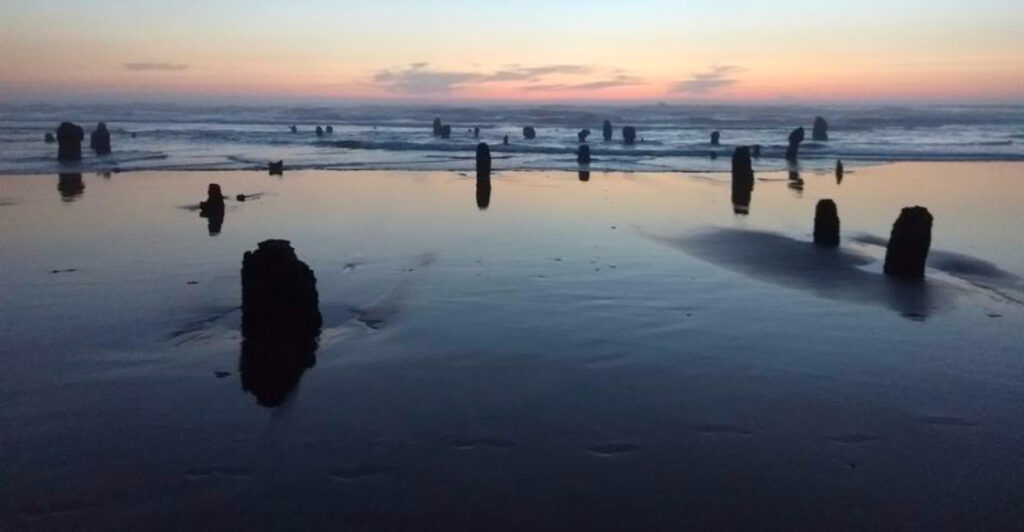
There is a stretch of Oregon coastline where ancient tree stumps rise out of the sand and surf like silent sentinels from another era. These are not driftwood pieces or random rocks.
They are the preserved remains of a Sitka spruce forest that vanished roughly 2,000 years ago, swallowed by the earth during a massive seismic event and only recently reclaimed by the tide. The Neskowin Ghost Forest is one of the most unusual and quietly dramatic natural landmarks on the entire West Coast, and the best part is that most people driving along Highway 101 have no idea it exists.
Keep reading, because this place is worth every step of the sandy walk to get there.
Where Exactly This Eerie Landmark Sits
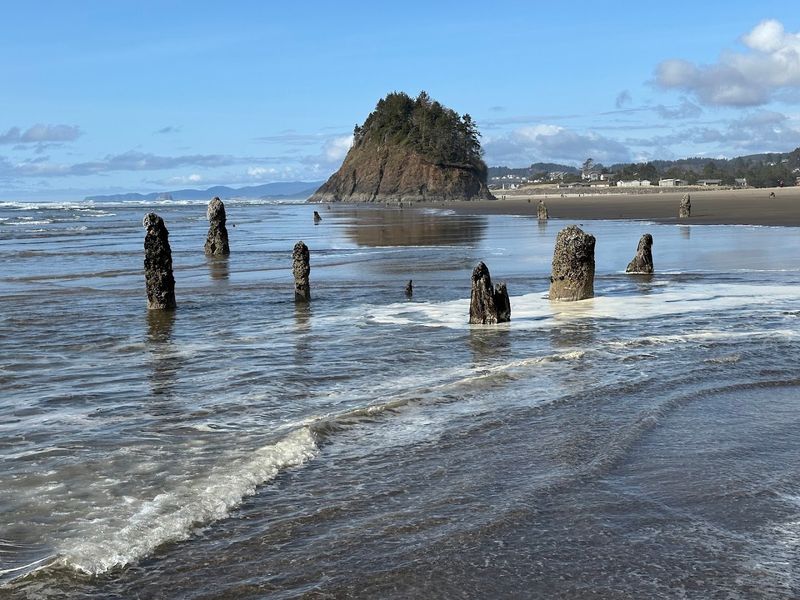
Few places on the Oregon coast carry the kind of quiet, unassuming power that this one does. The Neskowin Ghost Forest is located at Neskowin Beach in Neskowin, OR 97149, a small coastal community tucked between Lincoln City and Pacific City along the central Oregon coast.
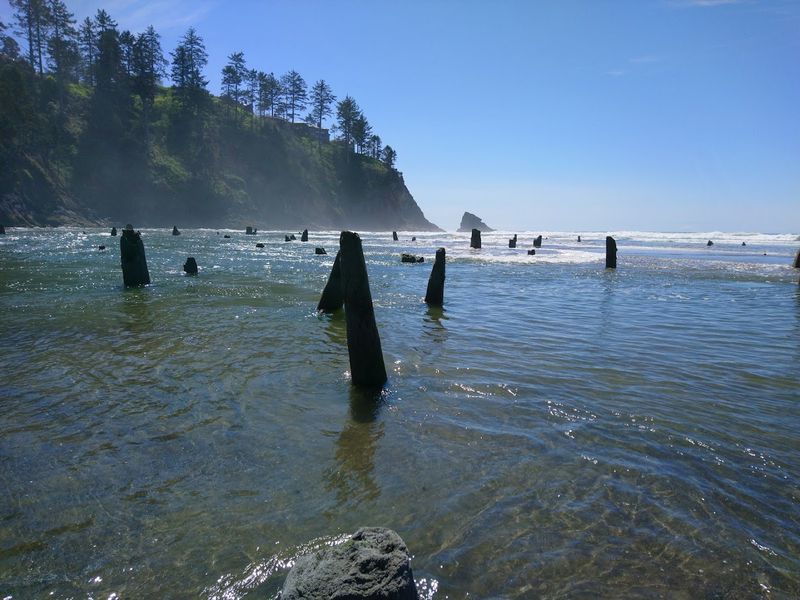
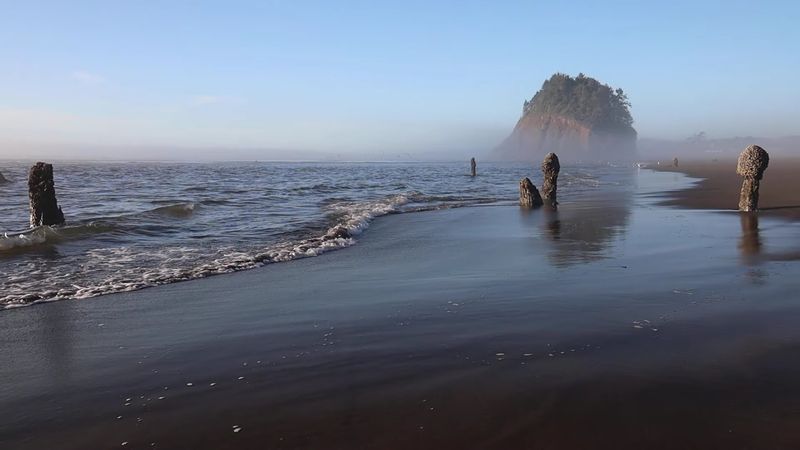
The beach sits at the base of a forested hillside, with Proposal Rock standing guard just offshore as a dramatic natural landmark. The ghost forest itself is found south of Proposal Rock, scattered across the lower beach flats where the tidal creek meets the ocean.
To reach it, you park at the main Neskowin Beach parking lot near Hawk Creek Cafe and make the 15 to 20 minute walk south across the beach. You will cross a small tidal creek along the way, which can range from ankle-deep to knee-deep depending on recent rainfall and tidal conditions.
The site is open daily from 6 AM to 5 PM. The surrounding landscape, with its mix of pine-covered hillsides, sea stacks, and wide sandy flats, makes the journey to the stumps feel like a reward in itself before you even arrive.
The Ancient Story Behind the Stumps
About 2,000 years ago, a massive Cascadia Subduction Zone earthquake struck the Pacific Northwest coast with enough force to drop the land several feet in a matter of moments. The forest that once stood here, a thriving stand of Sitka spruce trees, sank below the tide line almost overnight.
Saltwater flooded in and preserved the wood in a way that dry air never could have. The stumps were buried under layers of sand for centuries, protected from decay by the cold, oxygen-poor conditions beneath the beach surface.
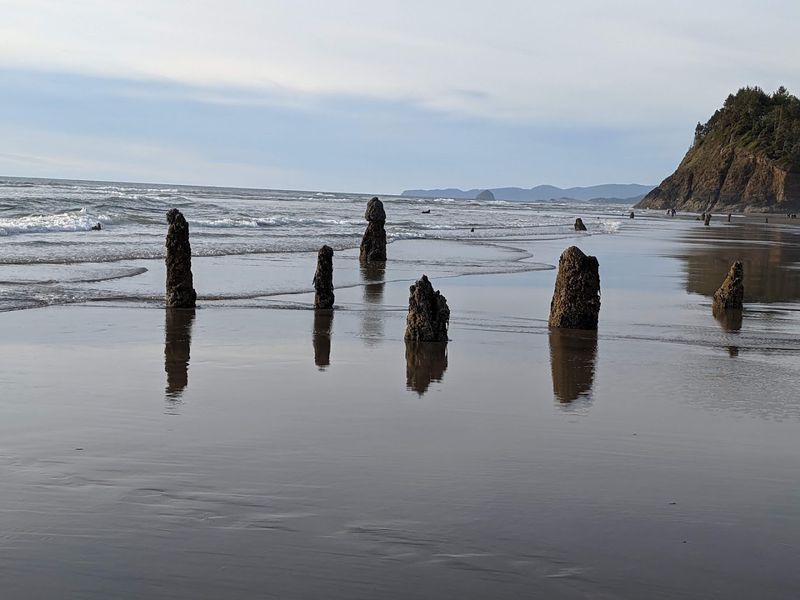
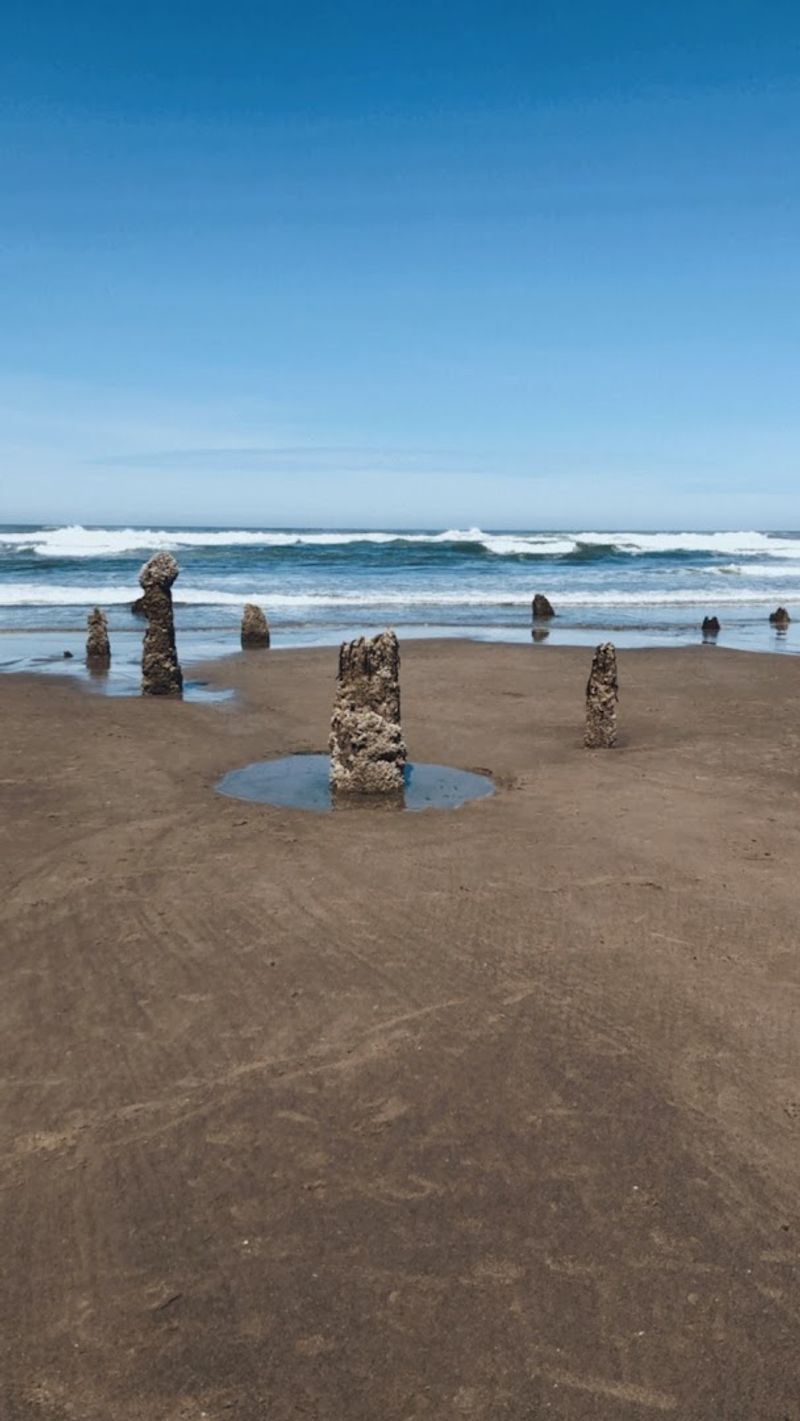
Over recent decades, shifting sands and erosion have slowly uncovered these ancient remnants. At the lowest tides, dozens of stumps become visible, their dark, barnacle-encrusted bases rising from the wet sand in ghostly rows.
Scientists and geologists have studied the site to better understand the earthquake history of the Cascadia fault, which runs along the entire Pacific Northwest coast and remains active today. The stumps are not just a curiosity.
They are a preserved record of one of the most powerful geological forces on the planet, written in wood that has survived two millennia beneath the Oregon surf.
What the Stumps Actually Look Like Up Close
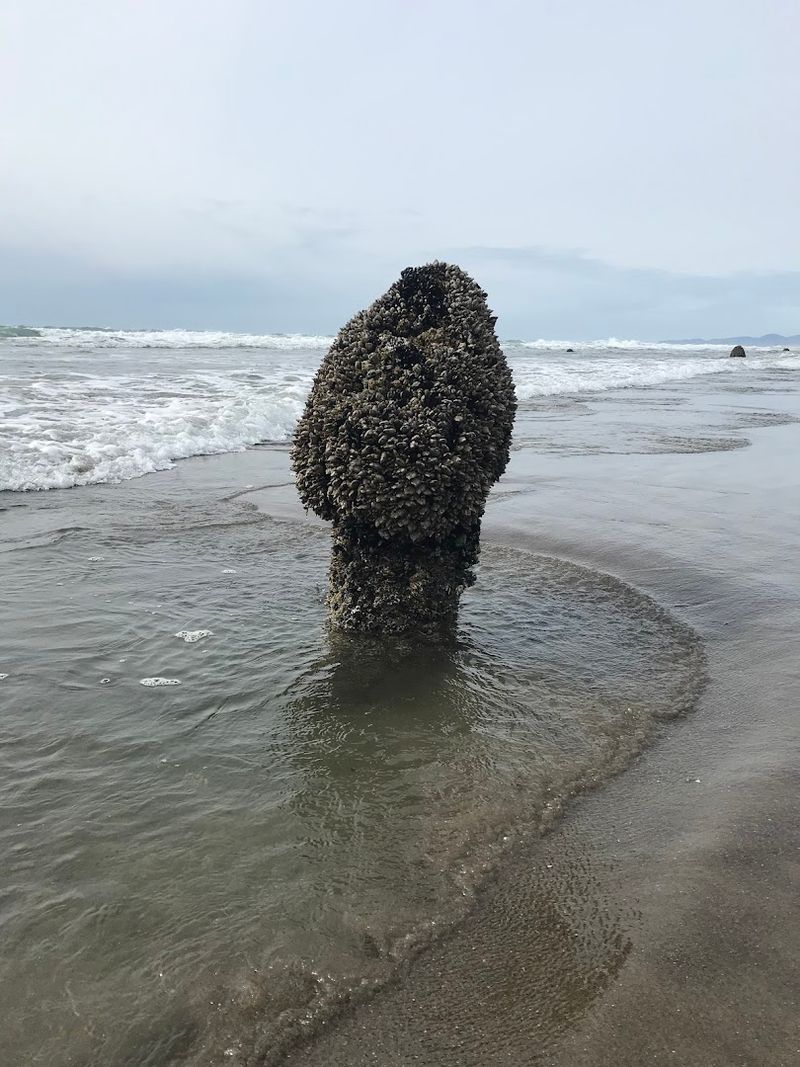
Nothing quite prepares you for the first moment you see them. From a distance, the stumps look like dark boulders scattered across the lower beach, easy to mistake for rocks if you are not paying close attention.
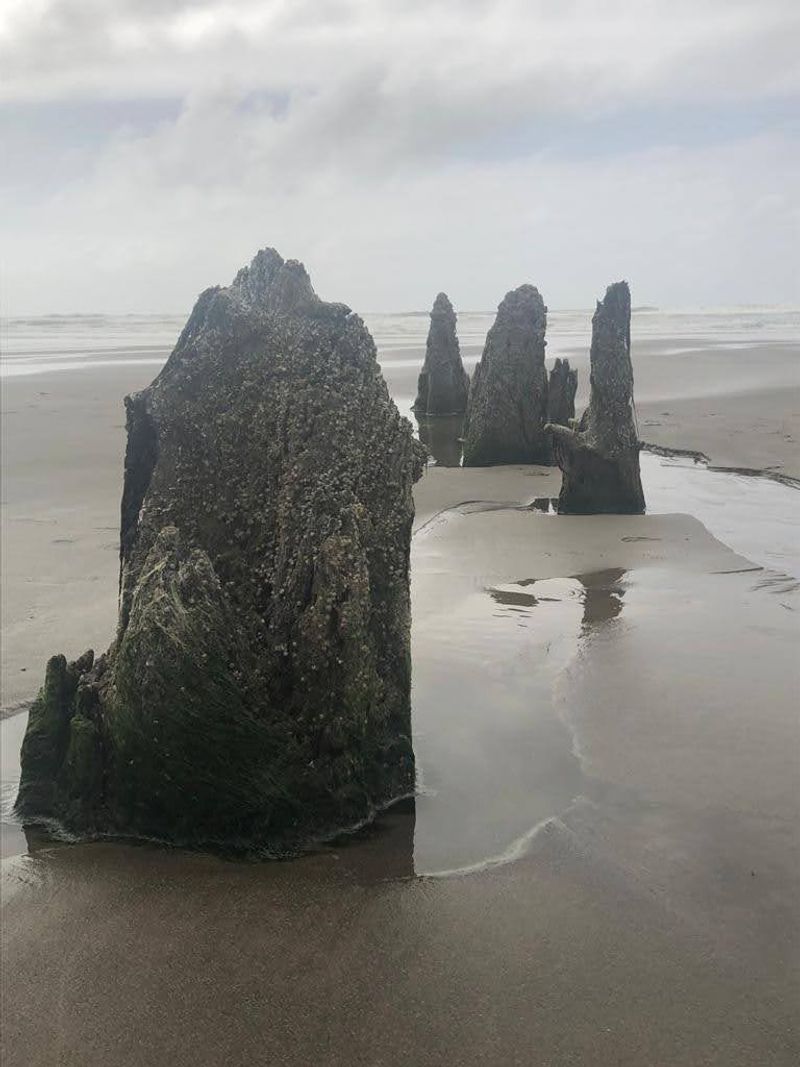
Up close, the texture tells a different story. The wood is dark, almost black in places, and incredibly dense.
Barnacles, mussels, and small shells have colonized the outer surfaces, giving each stump a layered, sculptural quality that feels more like a tide pool exhibit than a forest remnant.
The largest stumps stand roughly knee-height above the sand, while others are barely visible as low dark rings at the surface. Some have hollow centers where the heartwood has broken down over centuries, creating small pockets that collect seawater and shelter tiny crabs and other marine creatures.
Running your hand across the grain of wood that has been sitting in saltwater for 2,000 years is a strangely grounding experience. The stumps are disintegrating gradually, and visitors who came just two or three years ago report that the forest looks noticeably smaller than it once did, making every visit feel like a chance to witness something before it disappears completely.
Timing Your Visit Around the Tides
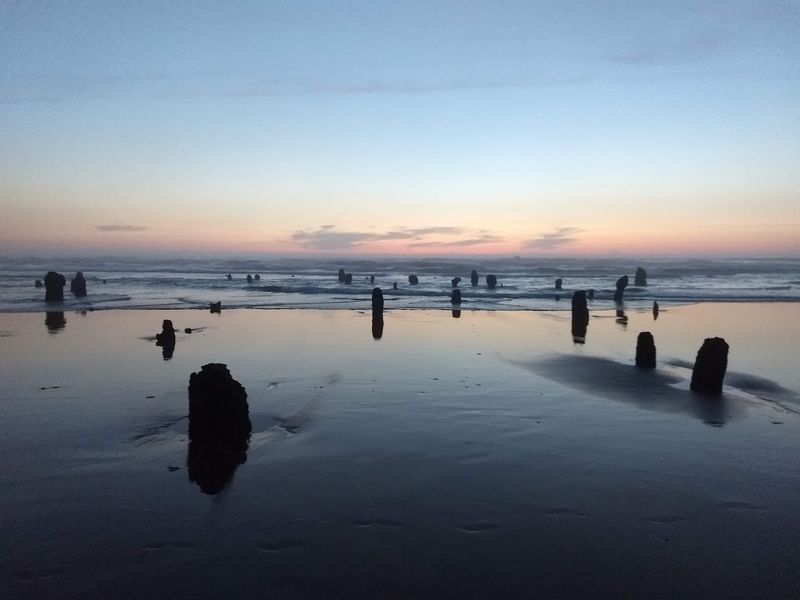
Timing is everything at this spot. The ghost forest is essentially invisible at high tide, hidden beneath several feet of ocean water and wet sand.
At a moderate low tide, you might catch a handful of the larger stumps poking through the surface. At an extreme low tide, the scene opens up dramatically and dozens of stumps appear across a wide stretch of beach.
Before visiting, check a reliable tide chart for the Neskowin area and aim for a tide of one foot or lower on the table. Tides below zero feet are the sweet spot for seeing the full scope of the forest.
Early morning low tides in summer can be especially rewarding because the light is soft, the crowds are minimal, and the wet sand reflects the sky in a way that makes the stumps look even more otherworldly. Sunset low tides offer the best photography conditions, with warm light raking across the dark wood.
Keep in mind that heavy rainfall can raise the level of the tidal creek that crosses the beach, making the crossing deeper and more challenging even when the ocean tide is low. Checking recent weather conditions alongside the tide chart will save you a soggy surprise on arrival.
Crossing the Tidal Creek to Reach the Forest
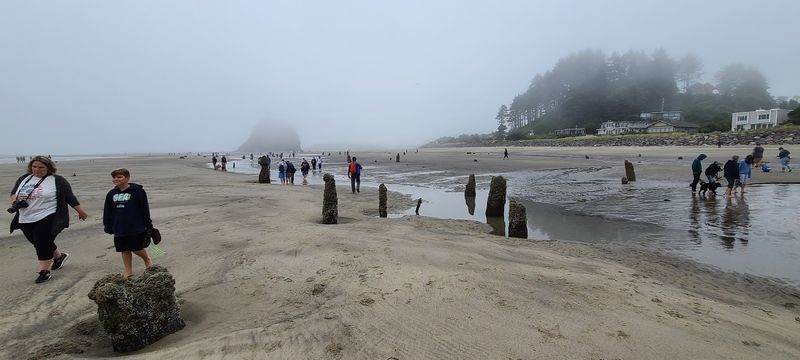
Between the parking area and the ghost forest lies a small but real obstacle: a tidal creek that cuts across the beach and empties into the ocean. This creek is always there, and you will always need to cross it.
The question is just how much water you will be wading through.
During a low tide following a dry stretch of weather, the crossing is typically less than ankle-deep and easy enough to manage with rolled-up pants or water sandals. After periods of heavy rain or flooding, the creek can swell considerably, with some visitors reporting knee-deep or deeper crossings even at low tide.
The best strategy is to walk alongside the creek toward the ocean, where the water tends to spread out and become shallower before meeting the surf. Crossing near the creek mouth rather than further inland usually means less depth and a firmer sand bottom underfoot.
Water shoes or old sneakers are a smarter choice than hiking boots here. The sand along the creek edges is packed and easier to walk on than the loose dry sand further up the beach.
Once across, the stumps are just a short walk south, and the effort of the crossing makes the arrival feel genuinely earned.
Proposal Rock and the Broader Beach Scene
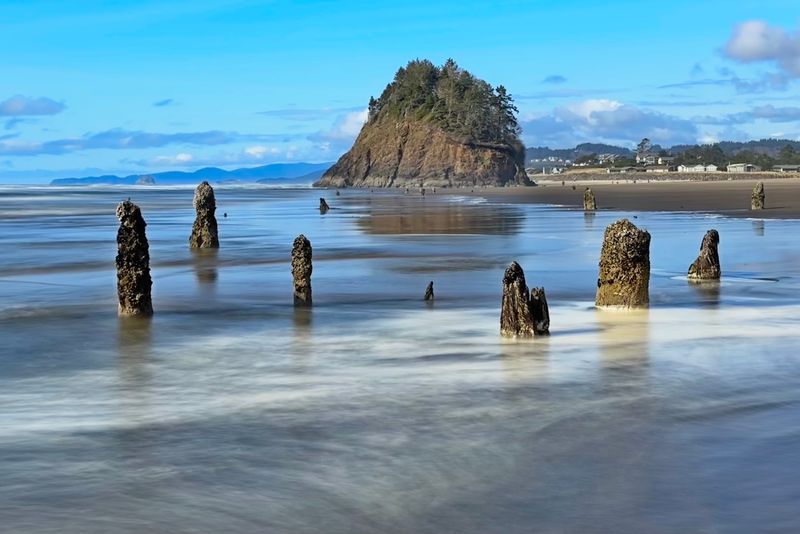
The ghost forest is the headliner, but Proposal Rock deserves its own moment in the spotlight. This impressive sea stack sits just offshore from Neskowin Beach, connected to the sand at low tide by a narrow stretch of exposed beach that allows you to walk around its base.
The rock is covered in pine trees on top, which gives it a surprisingly lush appearance for something surrounded by ocean. Tidepools at its base hold sea anemones, hermit crabs, and small fish, making it a worthwhile stop for anyone who enjoys a close look at marine life without needing a boat.
The beach itself is wide, flat, and made of fine sand that is genuinely pleasant to walk on, even barefoot. The surf here tends to be calmer than at more exposed beaches further north, which gives the whole area a relaxed, unhurried atmosphere.
Haystack Rock and Cape Kiwanda are visible to the north on clear days, offering a sense of the broader coastal landscape stretching out in both directions. The combination of the sea stack, the wide sandy flats, and the forested hillside behind the beach creates a setting that feels complete and self-contained, like its own small coastal world tucked away from the main tourist trail.
Wildlife and Sea Life Worth Watching For
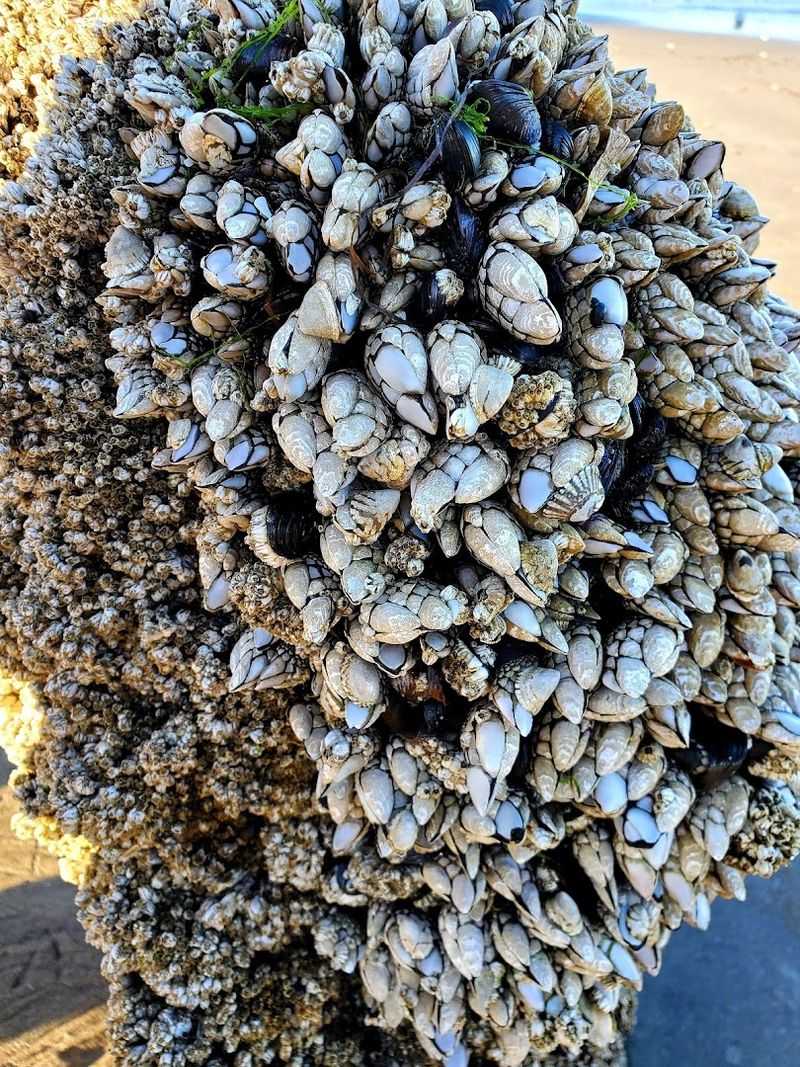
The ghost forest draws most of the attention, but the surrounding beach and tidepools offer their own surprises for anyone willing to slow down and look carefully. The hollow cavities inside some of the older stumps collect seawater at high tide and become miniature habitats, sheltering small crabs and snails that cling to the barnacle-covered wood.
Proposal Rock’s base is especially rich with intertidal life. Sea anemones open their tentacles in the shallow pools, and hermit crabs drag their borrowed shells across the rock surfaces in the unhurried way they always do, completely unbothered by curious onlookers.
Shorebirds work the waterline constantly, probing the wet sand for small invertebrates and darting away from incoming waves with comic precision. On quieter mornings, harbor seals occasionally haul out on exposed rocks near the creek mouth, though they tend to slip back into the water if too many people approach.
The rocks along the beach also hold larger mussels in dense clusters, their dark shells packed tightly together above the waterline. The biodiversity packed into this small stretch of coast is genuinely impressive, and spending time observing it adds a whole second layer of interest to a visit that could easily be just about the stumps.
The Geology Behind the Ghost Forest Phenomenon
The Cascadia Subduction Zone is one of the most significant geological features in North America. It runs roughly 700 miles along the Pacific Northwest coast, from northern California up through Oregon and Washington and into southern British Columbia, where the Juan de Fuca tectonic plate slides beneath the North American plate at a slow but relentless pace.
Every few hundred years, the stress built up along this fault releases in a massive earthquake. The event that created the Neskowin Ghost Forest is estimated to have occurred around 2,000 years ago, dropping the land surface by several feet almost instantly and flooding the forest with seawater before the trees had any chance of survival.
Geologists have dated the stumps using radiocarbon methods and confirmed that they align with known earthquake events in the Cascadia record. The preserved wood has become a valuable scientific resource, helping researchers reconstruct the timing and intensity of past earthquakes along the fault.
The unsettling part of this story is that another major Cascadia earthquake is considered not just possible but inevitable by geologists. The stumps at Neskowin are a reminder that the coastline is not static, and the landscape visible today is just one frame in a much longer geological story still being written beneath the ocean floor.
Photography Tips for Getting the Best Shots
The ghost forest is one of those rare subjects that rewards patience and timing more than expensive gear. The stumps photograph best when there is standing water around their bases, which creates reflections that double the visual impact of the dark wood against a pale sky.
Overcast days actually work in your favor here. The soft, diffused light of a cloudy Oregon morning eliminates harsh shadows and brings out the texture of the barnacle-covered wood far better than direct sunlight.
Foggy conditions add an atmospheric quality that makes the stumps look genuinely ancient and mysterious.
Shooting from a low angle, close to the sand or water surface, emphasizes the height and presence of the stumps against the open sky. A wide-angle lens captures the scattered arrangement of the stumps across the beach, while a longer focal length lets you isolate individual stumps with Proposal Rock or the ocean in the soft background.
Sunset low tides combine the best of both worlds: warm directional light, exposed stumps, and a dramatic sky over the water. Arrive at least 30 minutes before the tide reaches its lowest point so you have time to explore the layout before committing to your composition.
The light changes fast on this coast, and the best moments tend to be brief.
Practical Tips Before You Make the Trip
A few practical details can make the difference between a smooth visit and a frustrating one. The main parking area is at Neskowin Beach, near the Hawk Creek Cafe.
Do not follow GPS directions that route you via Beach Road, as that leads into a gated residential community with no public access to the beach or the ghost forest.
Wear footwear you do not mind getting wet. Water sandals, old sneakers, or neoprene water shoes all work well for the creek crossing and the wet sand near the stumps.
Heavy hiking boots will hold water and make the walk back uncomfortable.
The beach sand between the parking lot and the ghost forest is soft and loose in places, which requires more effort than a packed trail. Anyone with knee or ankle issues should factor this in when planning the walk, as it is roughly 15 to 20 minutes each way.
The site is open daily from 6 AM to 5 PM, and visiting on a weekday morning tends to mean far fewer people on the beach. Bring snacks and water, as there are no facilities at the beach itself.
The Neskowin Provision store nearby is worth a stop after your visit for supplies, local goods, and a quality souvenir to remember the trip by.
The Atmosphere and Mood of the Place
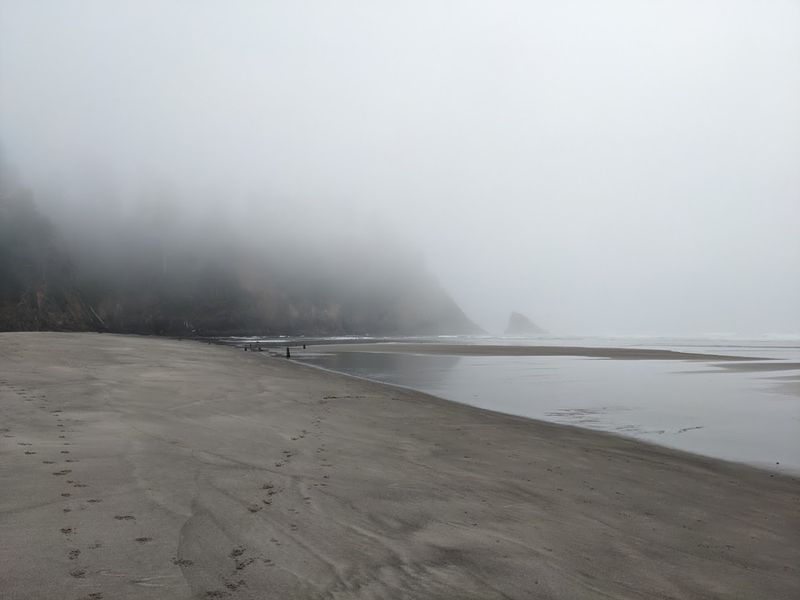
There is a particular stillness to this beach that is hard to find elsewhere on the Oregon coast. The combination of the forested hillside, the wide sandy flats, and the quiet surf creates a hushed, contemplative atmosphere that feels separate from the louder, more visited beaches to the north and south.
On foggy mornings, which are common here between spring and early summer, the stumps emerge from the mist in a way that makes the whole scene feel suspended in time. The fog mutes colors and softens edges, and the dark wood of the stumps stands out sharply against the pale sand and grey water.
Even on sunny days, the beach retains a quality of solitude that most popular coastal spots have long since lost. The walk required to reach the ghost forest acts as a natural filter, keeping the casual drive-by visitor away and leaving the space to those willing to put in the effort.
There is something genuinely moving about standing next to wood that has been sitting in this same spot for two thousand years, outlasting empires and civilizations while the Pacific tides rolled in and out overhead. The mood of the place earns that feeling honestly, without any manufactured drama or tourist infrastructure to get in the way.
Why This Spot Deserves a Place on Your Oregon Coast Itinerary
The Oregon coast has no shortage of dramatic scenery, but most of its famous landmarks are well-documented and well-traveled. Neskowin sits quietly off to the side of the main tourist circuit, and that is precisely what makes it worth seeking out.
The ghost forest offers something that viewpoints and scenic pullouts cannot: a direct, physical connection to a geological event that reshaped this coastline two millennia ago. You are not reading about it on a placard or watching a video.
You are standing on it, with the evidence of an ancient earthquake rising from the sand around your feet.
The beach itself is beautiful enough to justify the stop even if the stumps were not there. Proposal Rock, the tidepools, the fine sand, the views north toward Cape Kiwanda, and the general sense of unhurried calm all add up to a coastal experience that is more layered than it first appears.
For anyone building an Oregon coast road trip, Neskowin fits naturally between Lincoln City and Pacific City, making it an easy addition rather than a detour. The ghost forest will not be there forever, and the scientists studying the Cascadia fault would be the first to tell you that the next chapter of this coastline’s story is already being written underground.
Now is a good time to see what the last chapter left behind.
Share this story