 Unearth The Voyage
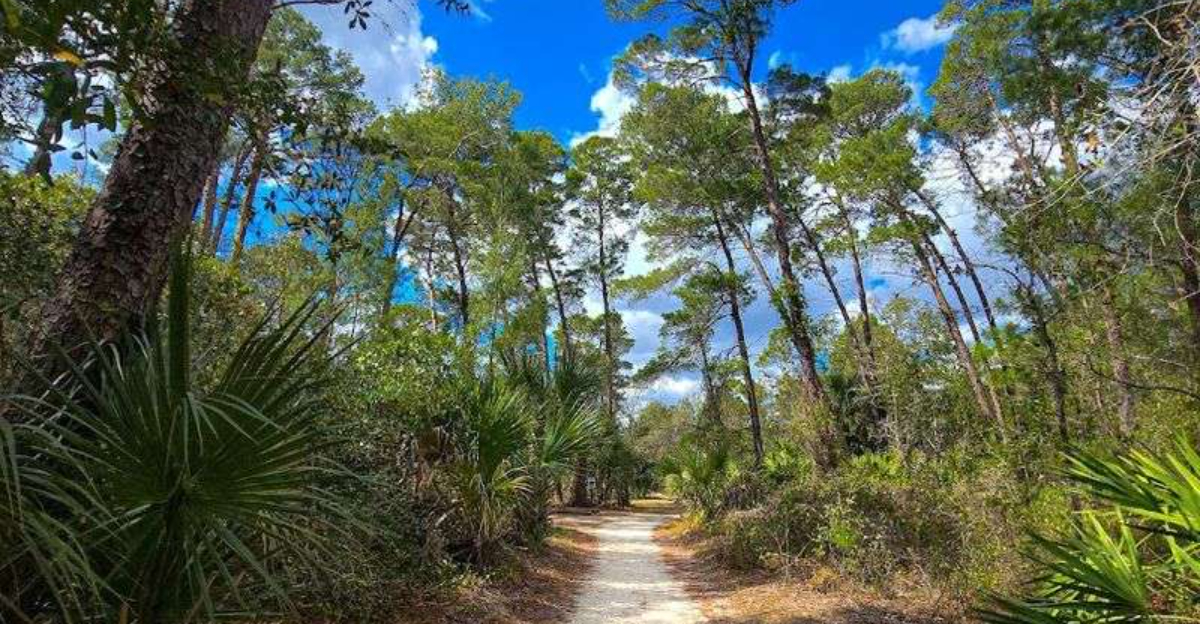
There is a place in Palm Bay, Florida, where the city noise fades the moment you step onto a wooden boardwalk surrounded by towering trees and the sound of water moving slowly below. It does not look like much from the road, and that is exactly the point.
Most people drive past it without a second thought, completely unaware that just beyond the parking lot sits 130 acres of wild Florida landscape packed with turtles, manatees, bobcats, and more. This sanctuary has been quietly winning over locals and visitors alike, and once you see what is hiding inside, you will wonder how it stayed off your radar for this long.
Where the Sanctuary Begins: Address, Location, and First Impressions
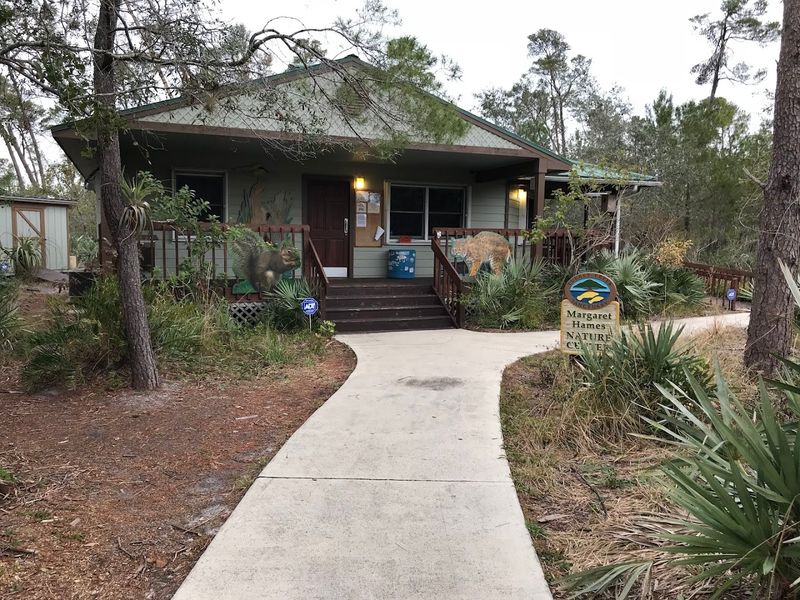
Turkey Creek Sanctuary sits at 1518 Port Malabar Blvd NE, Palm Bay, tucked between a public library and a quiet stretch of road that most drivers barely glance at twice.
The first thing that greets you is a butterfly garden right at the entrance, which immediately sets the tone for everything that follows. Free parking is available across the road, and the lot fills up quickly on weekends, so arriving early pays off.
The sanctuary is open every day of the week from 7 AM to 7 PM, giving you a solid window to explore without feeling rushed. A nature center sits near the entrance and is a great first stop before heading out on the trails.
The staff there are genuinely friendly and happy to point you in the right direction.
130 Acres of Wild Florida Packed Into One Preserve
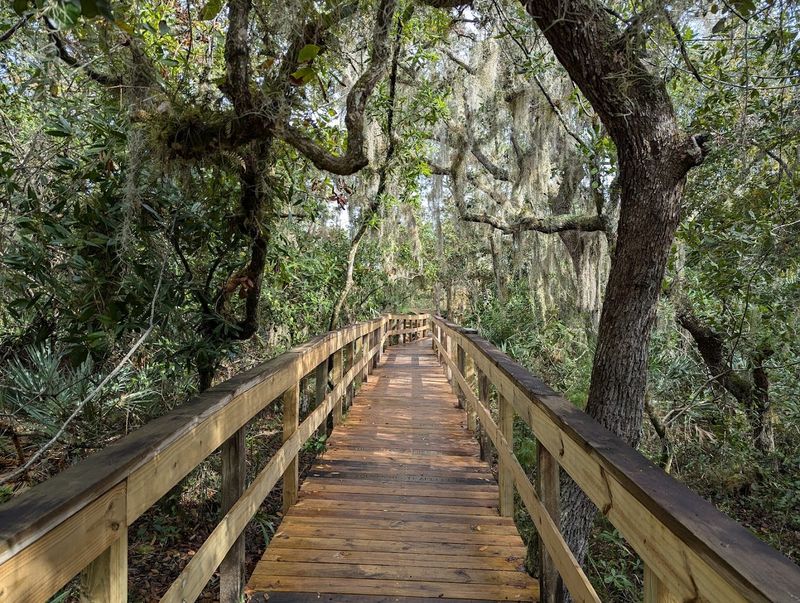
Most people do not realize just how much land is packed into this preserve until they are already deep inside it, looking around and wondering how they have never heard of it before.
The sanctuary covers 130 acres of protected Florida landscape, including hardwood hammock, sandy pine flatwoods, and the winding corridor of Turkey Creek itself. Each habitat feels distinct, and walking from one into another is like flipping through chapters of a nature book.
The variety keeps things interesting no matter how many times you visit. One loop might take you through cool, shaded canopy, while another drops you right along the water’s edge where the light hits differently and wildlife is easier to spot.
For a free destination in Palm Bay, the sheer scale of this preserve is genuinely surprising, and most visitors leave wishing they had planned for more time.
The Boardwalk: An Elevated Walk Above the Hammock
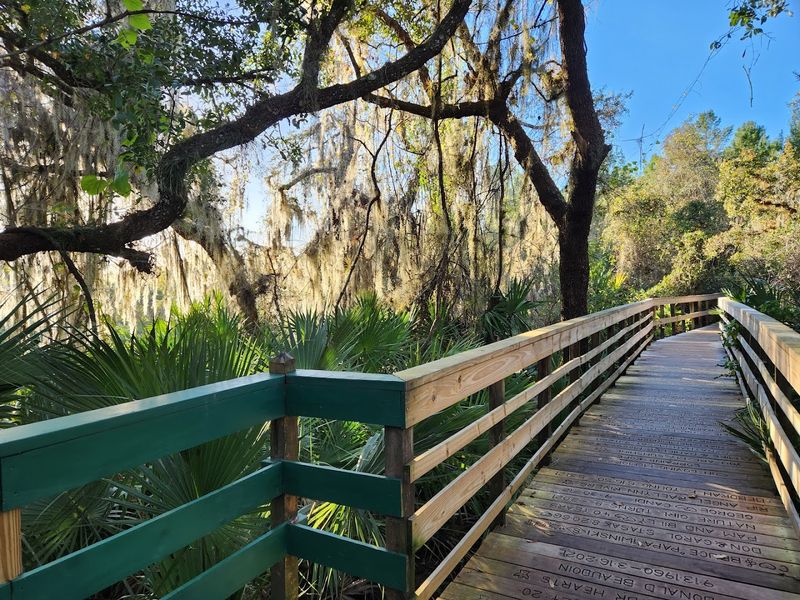
The boardwalk is the crown feature of the sanctuary, and it earns that reputation without any effort at all.
Raised above the hardwood hammock floor, it winds for just over a mile through a canopy so thick that the Florida sun barely reaches the ground beneath it. The shade alone makes it worth visiting on a warm day, and the views down into the hammock from that elevated angle feel almost cinematic.
What makes the boardwalk extra special is the engraved memorial planks installed along the path. Visitors can donate $75 to have a board engraved with a name, quote, or tribute, and reading those small messages as you walk adds a quietly moving layer to the experience.
Families with strollers manage the boardwalk without trouble, and benches are spaced along the route so you can pause, breathe, and just take it all in.
The Creek Trail: Where the Water Steals the Show
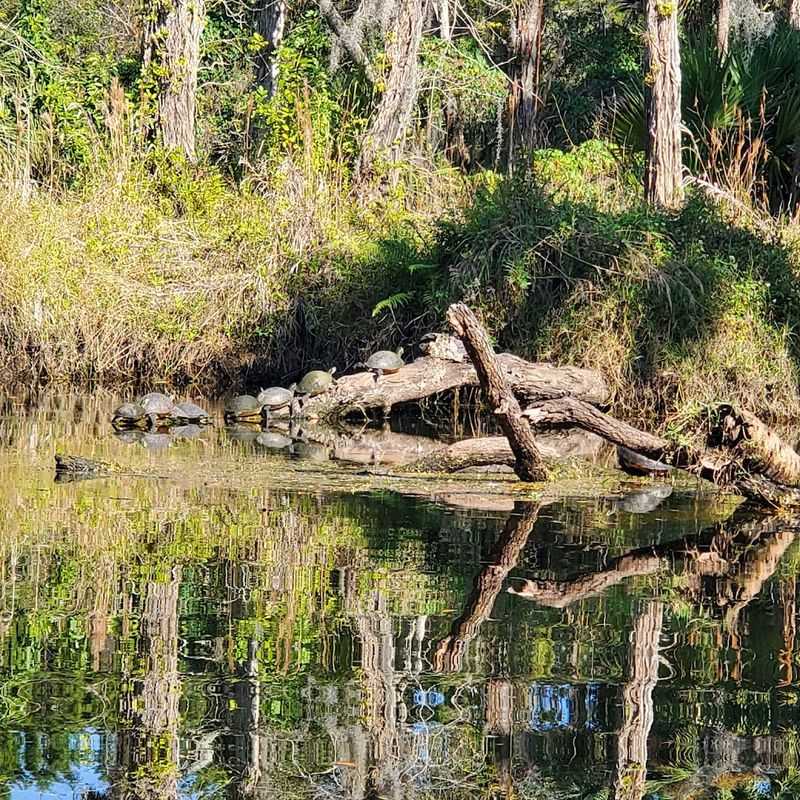
Running alongside Turkey Creek itself, this trail offers a completely different experience from the boardwalk above the hammock, and many visitors say it is their favorite part of the whole sanctuary.
The path hugs the water closely enough that you can watch turtles sunning on logs just a few feet away. Manatees have been spotted here too, gliding slowly through the creek in a way that stops you completely in your tracks.
The light plays differently near the water, especially in the early morning when the creek surface reflects the surrounding trees and everything feels still. After heavy rain, the water level rises right up to the wooden path, creating that rare sensation of practically walking on the surface of the creek.
Keep your eyes open and your footsteps quiet, because the wildlife along this stretch rewards patient observers more than anyone who rushes through.
The Hammock Loop and Sandy Pine Trails: Beyond the Boardwalk
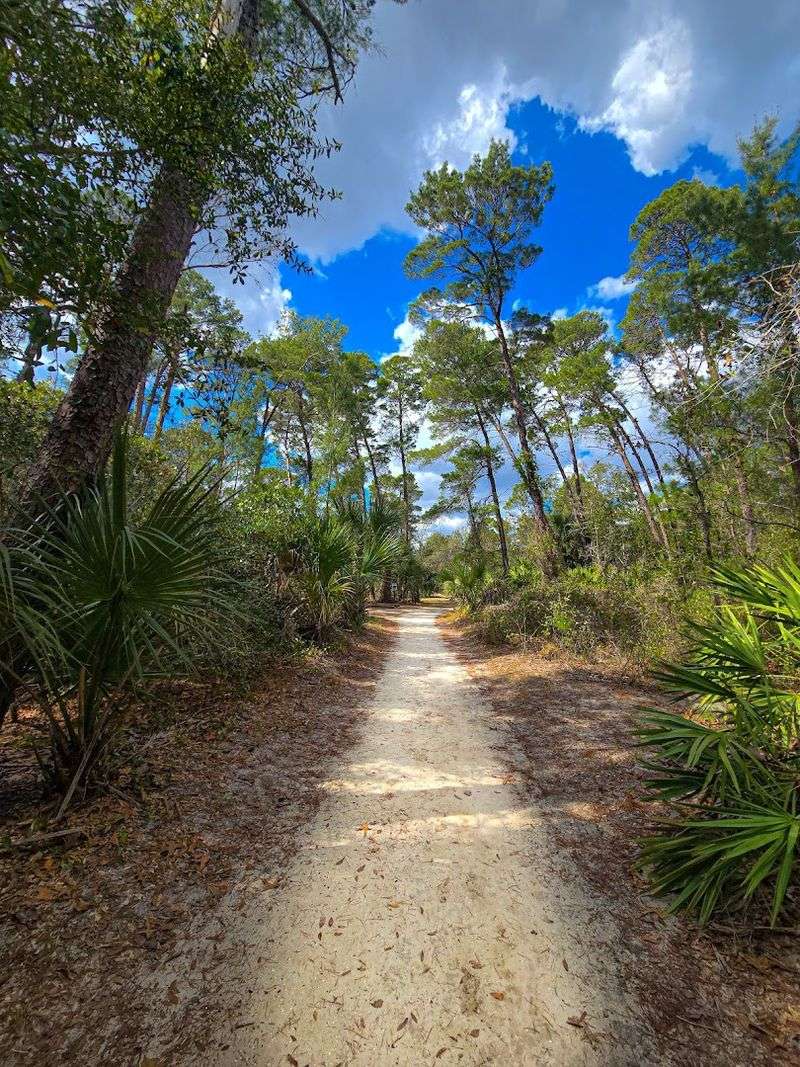
Beyond the main boardwalk, the sanctuary opens up into a network of off-boardwalk trails that feel genuinely adventurous, especially the Hammock Loop and the sandy pine trail that branches through open, sun-dappled terrain.
The Hammock Loop is where one visitor came face to face with a bobcat cutting across the path at dawn, which is the kind of story that earns serious bragging rights at any dinner table. The pine trail has a completely different character, trading dense canopy for open sky and sandy ground underfoot.
Trail navigation here does require some attention. The paths are not color-coded in the field the way the paper map suggests, and it is easy to lose your bearings at a junction.
Mini maps are posted throughout, but they do not mark your current location, so grabbing a paper guide from the nature center before you head out is genuinely useful advice.
Wildlife Watching: What You Might See on Any Given Morning
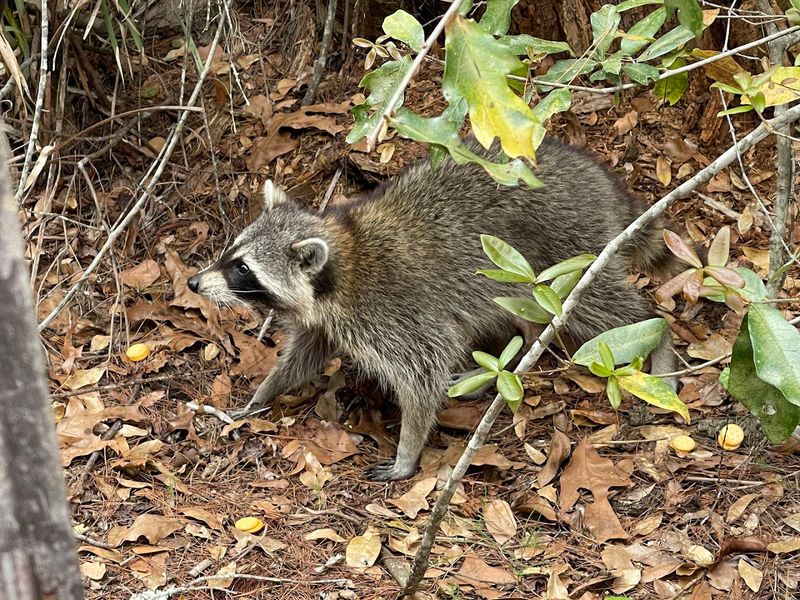
Arriving at the sanctuary early means sharing the trails with creatures that are just starting their day, and the variety of what you might encounter is one of the biggest draws of this place.
Gopher tortoises are practically regulars on the dirt paths, moving at their own unhurried pace and completely unbothered by curious hikers. Turtles cluster on logs along the creek, lizards dart through the underbrush, and squirrels and raccoons appear without warning just off the main boardwalk.
Alligator sightings are possible, and caution signs are posted throughout as a reminder that this is a real, working ecosystem rather than a manicured park. Manatees appear in Turkey Creek with enough regularity that spotting one feels like a real reward rather than a lucky accident.
The sanctuary also hosts a wide range of bird species, making it a solid spot for anyone who enjoys birding without needing to drive far from the Palm Bay area.
The Nature Center: Small Building, Big Personality
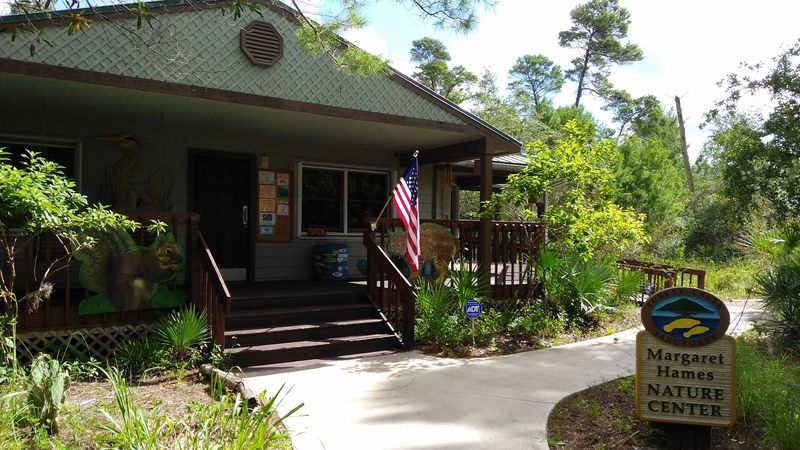
Right before the boardwalk entrance, the nature center sits quietly and is easy to walk past if you are in a hurry to hit the trails, but skipping it would be a mistake.
Inside, exhibits cover the local animals and plant life found throughout the sanctuary, giving context that makes the walk more interesting once you know what you are looking for. The displays lean toward educational rather than flashy, but the staff more than make up for it with genuine enthusiasm and helpfulness.
The center also has a small gift shop where you can pick up inexpensive jewelry and souvenirs, along with bottled water for the trail. On a rainy morning, one visitor arrived completely soaked and was offered a fresh cup of coffee by a staff member, which says a great deal about the kind of place this is.
Indoor restrooms are available at the visitor center, which is a detail worth knowing before you head out on a long loop.
The Butterfly Garden at the Entrance: A Small Surprise That Sets the Tone
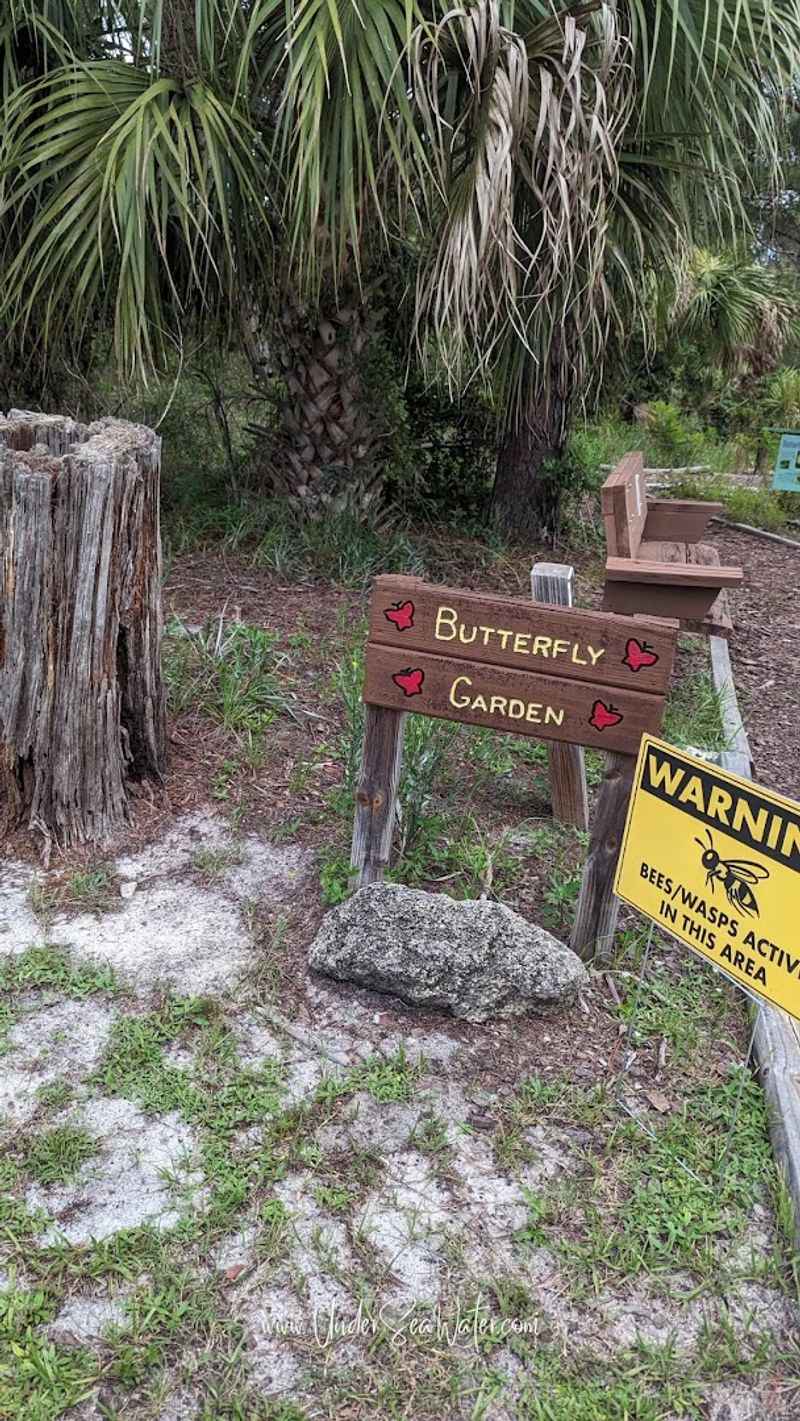
Before the boardwalk, before the creek, and before any of the trails, there is a butterfly garden waiting right at the entrance that catches most first-time visitors completely off guard.
It is a small garden by any measure, but the detail and care put into it communicate something important about how the sanctuary operates as a whole. Native flowering plants attract a rotating cast of butterfly species throughout the year, and spending five minutes there before a walk is a genuinely pleasant way to ease into the experience.
The garden also functions as a soft introduction to the sanctuary’s broader mission of preserving and celebrating Florida’s native ecosystems. For younger visitors especially, seeing butterflies up close before heading into the trails builds excitement in a way that no trail map ever could.
It is the kind of small touch that makes a place feel thoughtfully designed rather than thrown together, and it sticks with you long after the visit.
Exercise Stations and Fitness Trails: A Workout With a View
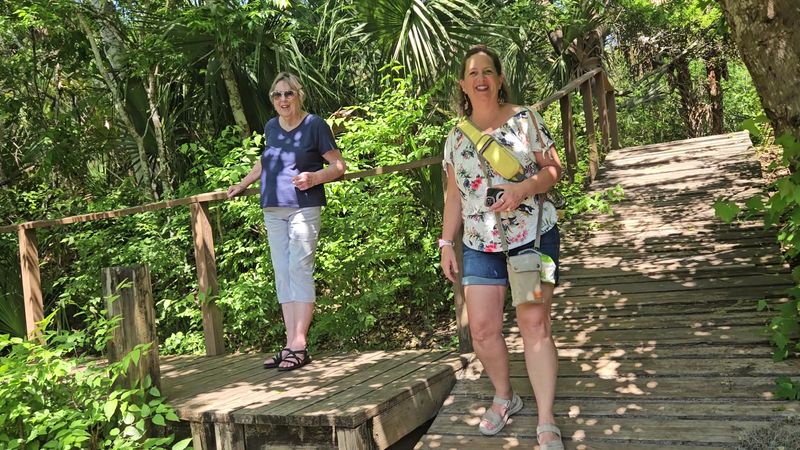
Not every visitor comes to the sanctuary purely for birdwatching or photography, and the preserve has clearly thought about that.
Scattered along one of the hiking paths, a series of outdoor exercise stations give fitness-minded visitors a reason to push a little harder while still surrounded by trees and fresh air. The setup is simple and functional, and working out here feels nothing like a gym, which is exactly the point.
The combination of physical activity and natural scenery has a way of making the effort feel less like exercise and more like play, especially when a turtle wanders across the path between sets. The trail itself has both shaded stretches and sunnier open sections, so the experience shifts as you move.
For Palm Bay residents looking for a free, outdoor fitness option that does not feel repetitive, this trail system checks every box and then adds a manatee sighting as a bonus.
Best Time to Visit: Early Birds Get the Manatees
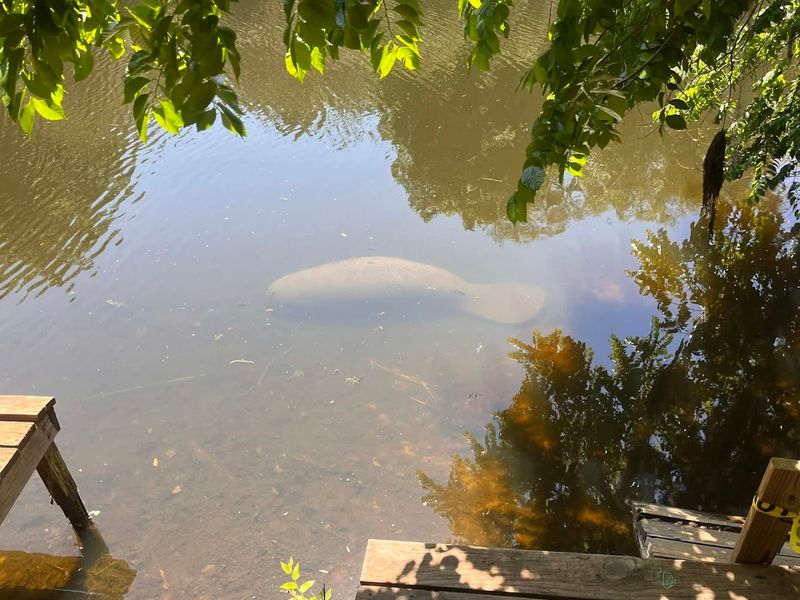
The sanctuary opens at 7 AM every day of the week, and the visitors who show up closest to that opening time consistently have the best experiences.
Early morning brings cooler temperatures, quieter trails, and wildlife that is far more active than it will be by midday. The light at that hour filters through the canopy in a way that makes everything look like a nature documentary, and the creek catches a soft golden reflection that disappears once the sun climbs higher.
By late morning on weekends especially, the parking lot fills up and the boardwalk gets noticeably busier. That does not ruin the experience, but it does change the atmosphere from serene to social, which is a different kind of enjoyable.
Mosquito levels are posted at the trailhead, rated on a scale that helps you decide whether to apply repellent before heading in, a thoughtful touch that first-time visitors genuinely appreciate.
Trail Length and Navigation: Planning Your Route
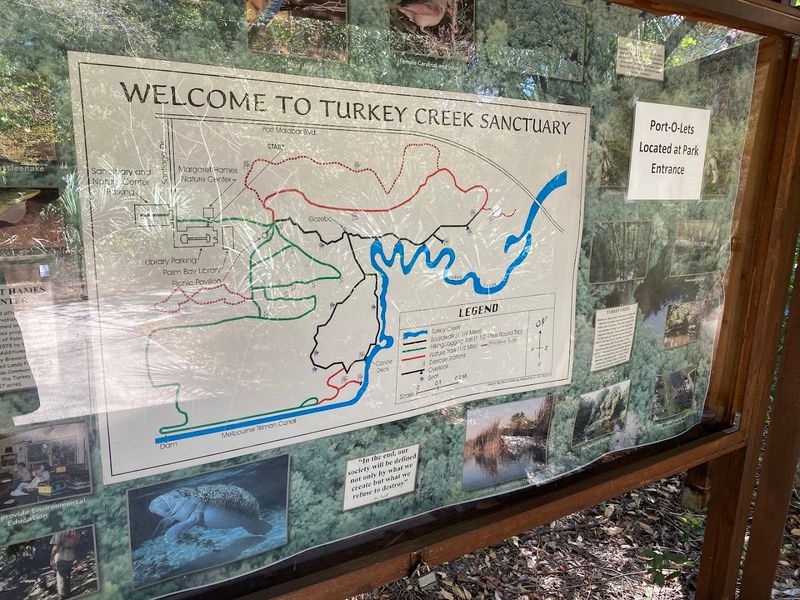
A full walk covering the boardwalk and several connecting trails adds up to around 2.5 miles, though the sanctuary has enough paths that you could extend that considerably if you wanted a longer outing.
The boardwalk alone runs just over a mile and is the most accessible route, suitable for strollers, casual walkers, and anyone who prefers a clear, well-maintained surface underfoot. The dirt trails branching off the boardwalk vary in character, with some feeling quite primitive while still being easy to follow.
Navigation does require some attention, since the trail junctions are not always as clearly marked in the field as they appear on the paper map available at the nature center. Mini maps posted along the trails help, but they do not indicate your current position, so downloading an offline map or grabbing a paper guide before heading out is a smart move.
Practical Details: Parking, Rules, and What to Bring
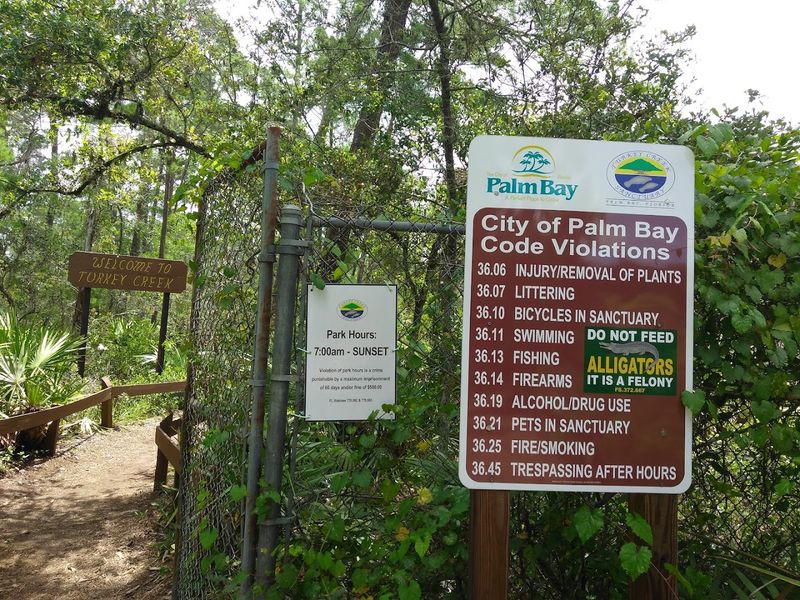
Free parking is available in a dedicated lot across the road from the sanctuary entrance, with additional overflow parking at the public library next door when things get busy on weekends.
Pets are not allowed inside the sanctuary, which keeps the wildlife undisturbed and the trails quieter for everyone else. The preserve is entirely free to enter, which makes it one of the better no-cost outdoor destinations in Brevard County.
Trash cans are placed along the trails, and the entire preserve is kept clean and well-maintained, which is something visitors consistently notice and appreciate. Bringing water is strongly recommended, especially during warmer months, and wearing closed-toe shoes makes the dirt trails much more comfortable.
The sanctuary can be reached by phone at +1 321-676-6690, and more information is available at turkeycreek.org, where you can also learn about volunteer opportunities and the boardwalk plank donation program.
Memorial Boardwalk Planks: A Personal Touch on a Public Trail
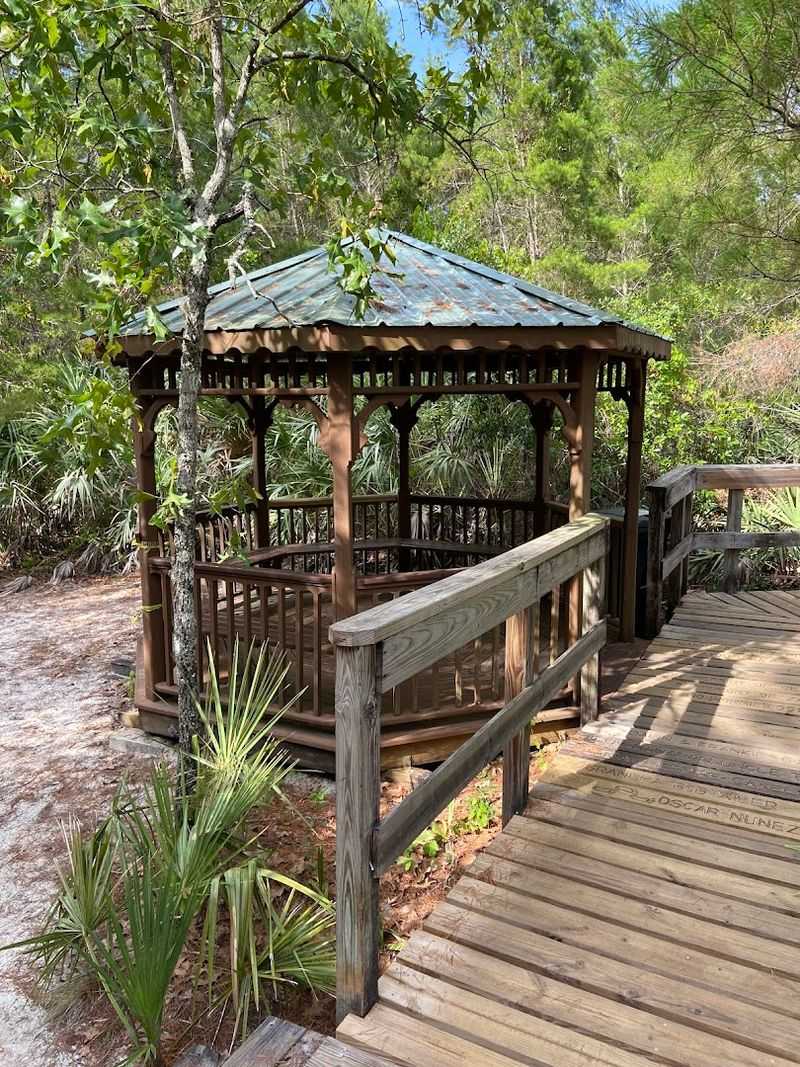
One of the most quietly moving details of the boardwalk is the collection of engraved memorial planks built right into the walking surface beneath your feet.
For a donation of $75 to the nonprofit that manages the sanctuary, visitors can have a plank engraved with a name, a quote, a group affiliation, or a tribute to someone they want to remember. The result is a boardwalk that tells dozens of small personal stories as you walk its length, which adds an unexpected layer of meaning to what might otherwise be a straightforward nature trail.
Reading the engravings becomes a quiet habit for returning visitors, who often pause at their own plank or one placed by a friend. The program also supports the sanctuary financially, helping fund maintenance and improvements that keep the trails in excellent condition year-round.
It is the kind of community-driven feature that turns a trail into something that genuinely belongs to the people who use it.
A Sanctuary With Deep Local Roots
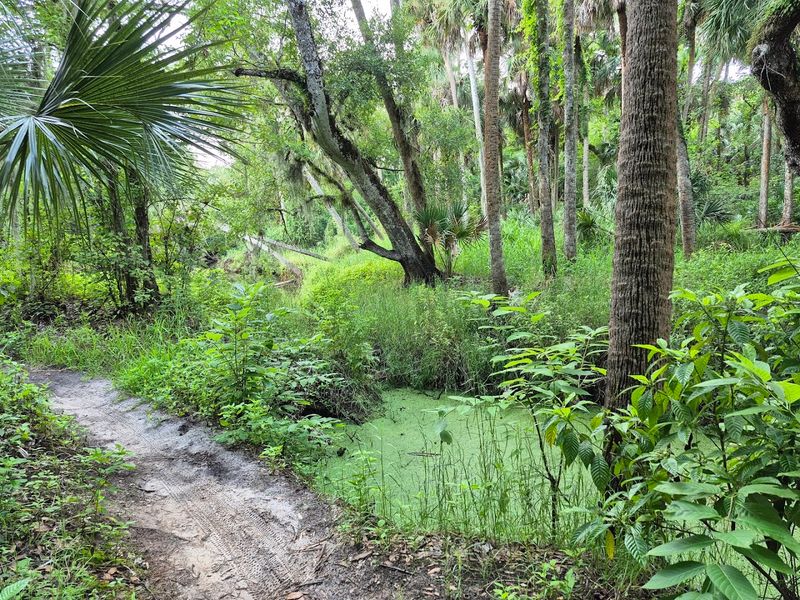
Some of the most enthusiastic visitors to Turkey Creek Sanctuary are the people who have lived in Palm Bay for decades and somehow never made it inside until recently.
The sanctuary has been part of the community long enough that some residents remember when the original boardwalk was first constructed, and returning after years away feels genuinely nostalgic. The preserve manages to hold onto that local character even as it attracts visitors from well beyond Brevard County.
Longtime Palm Bay residents describe it as the kind of place you can visit a hundred times and still notice something new, whether that is a different bird species, a change in the creek level, or a freshly installed boardwalk plank with a name you recognize.
That combination of familiarity and discovery is rare in any public space, and it is a big part of why the sanctuary has built such a devoted following over the years.
Why Turkey Creek Sanctuary Deserves a Spot on Your Florida List
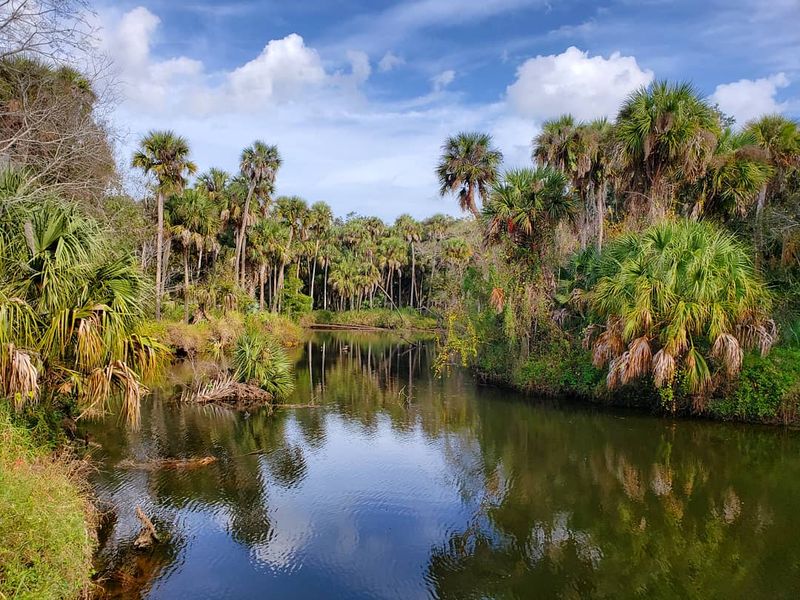
Florida has no shortage of nature preserves, state parks, and wildlife corridors, but very few of them are free, open every day, packed with this much variety, and located right in the middle of a suburban city.
Turkey Creek Sanctuary manages to deliver a genuine wild Florida experience without requiring a long drive, an entrance fee, or any special gear beyond comfortable shoes and a water bottle. The trails are well-maintained, the wildlife is real and plentiful, and the atmosphere shifts depending on when you arrive and which route you choose.
Whether you are a Palm Bay local who has somehow never stopped in, or a visitor passing through Brevard County with a free afternoon, this sanctuary rewards the curiosity it takes to pull off Port Malabar Blvd and see what is actually there.
Some of the best places in Florida are the ones that do not advertise themselves, and this is absolutely one of them.



