 Unearth The Voyage
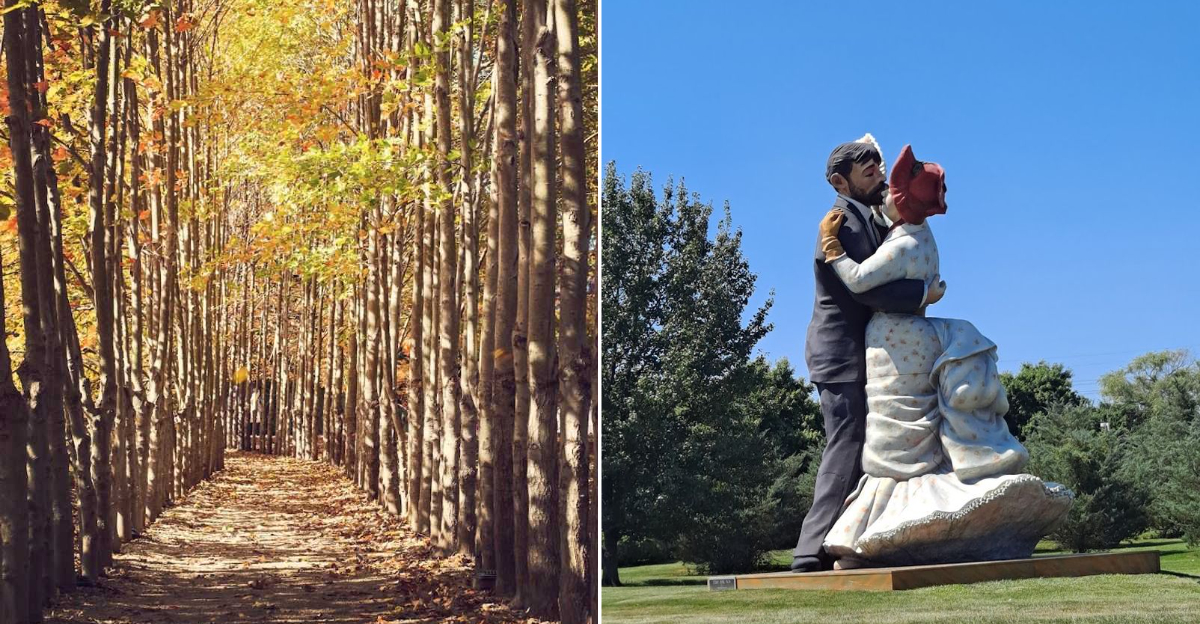
There is a 42-acre park in Hamilton Township, New Jersey, where contemporary sculptures hide behind flowering trees, koi ponds shimmer beside winding footpaths, and a Japanese-inspired bridge looks like it was lifted straight from a painting. Most people driving through Mercer County have no idea it exists.
That is exactly what makes it so worth talking about. This place has earned a 4.8-star rating from nearly 10,000 visitors, and once you read what is waiting inside, you will understand why so many people keep coming back for more.
Where the Magic Actually Lives
Grounds For Sculpture sits at 80 Sculptors Way, Hamilton Township, NJ 08619, right in the heart of Mercer County. The park was founded in 1992 by artist and collector J.
Seward Johnson Jr., who wanted to create a space where everyday people could experience world-class sculpture without the formality of a traditional museum.
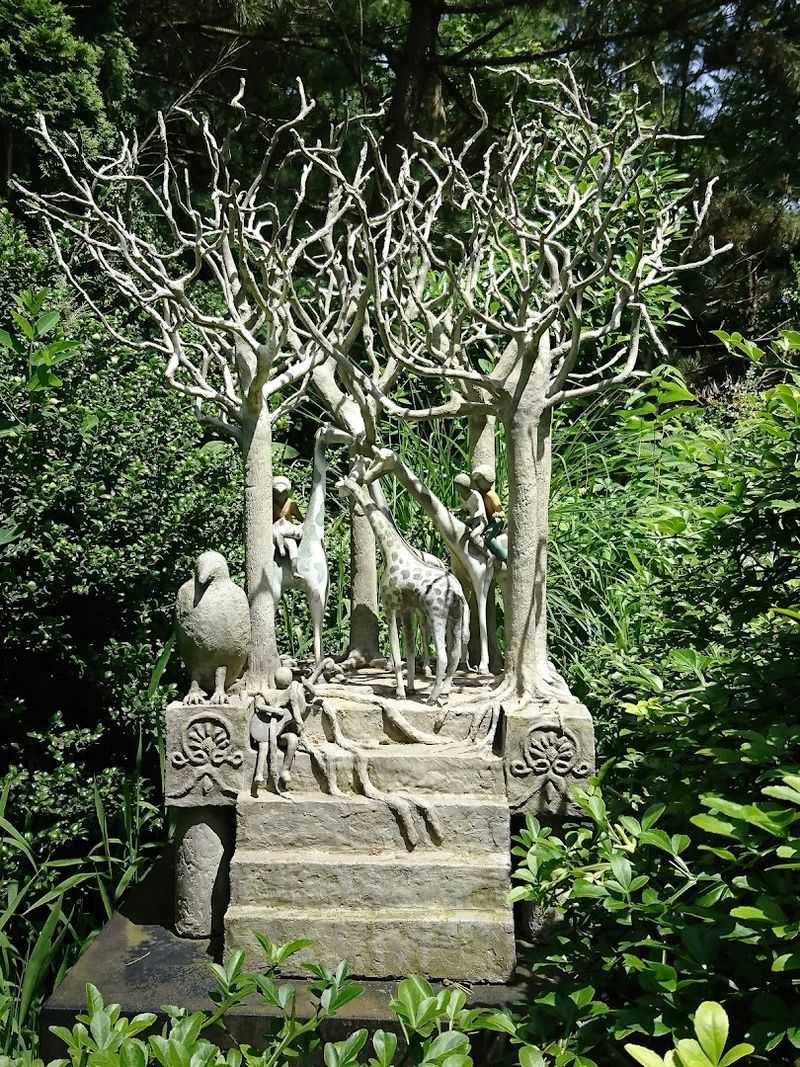
The 42-acre grounds were built on the former site of the New Jersey State Fairgrounds, which gives the property a fascinating layered history beneath all that carefully tended greenery. Today, the park holds over 270 sculptures by both established and emerging artists from around the world.
Two indoor museum buildings anchor the property, offering rotating seasonal exhibitions that complement the outdoor displays. There is also an arboretum threaded throughout the grounds, meaning the plant life here is just as intentional and curated as the artwork itself.
The park is open Wednesday through Monday from 10 AM to 5 PM, and is closed on Tuesdays. Timed entry tickets are recommended, and buying them online in advance will save you the wait at the gate.
Parking is available on site, making it an easy day trip from Philadelphia or New York City.
The Tree Tunnel That Started It All
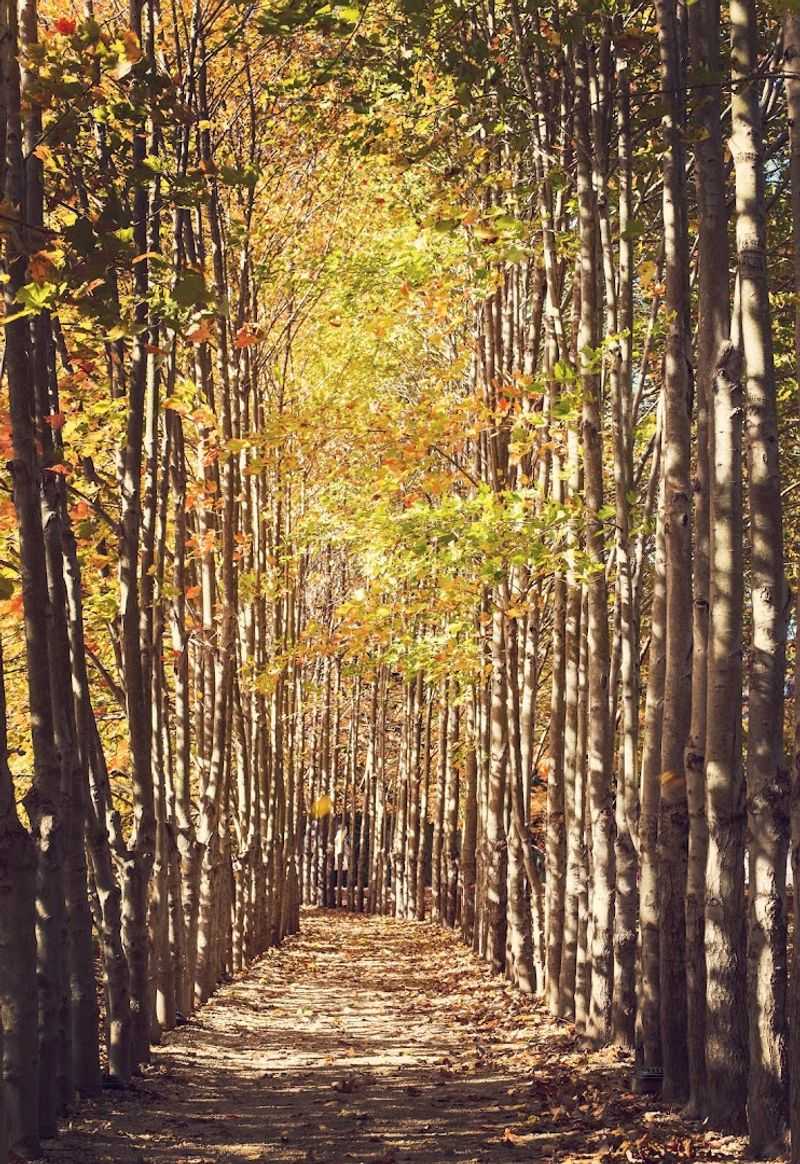
Not every park has a feature that stops visitors mid-step, but Grounds For Sculpture has one that earns its own dedicated fan base. The tree-lined pathways that wind through the property create natural tunnels of overlapping branches, forming a canopy that frames every walk in a way that feels almost theatrical.
These corridors are not accidental. The landscape design at Grounds For Sculpture was carefully planned so that pathways, plantings, and sculptures all work together as a unified experience.
Walking through one of these tree tunnels feels like moving through a living gallery, where the art on either side of you changes with every step.
Visitors who have photographed proposals and engagements here consistently point to these pathways as the most striking backdrops on the property. The interplay of light through the canopy at different times of day creates constantly shifting conditions, which is part of why the park looks different every time you visit.
Fall is a particularly popular season for these tunnels, when the foliage turns and the whole corridor shifts into warm amber and gold tones. Spring brings blossoms, summer brings full green coverage, and winter strips things back to an entirely different kind of beauty.
A Sculpture Park With a Real Story
J. Seward Johnson Jr. did not just want to display art.
He wanted to challenge the idea that sculpture was only for galleries and collectors. His vision was rooted in accessibility, which is why so much of the work at Grounds For Sculpture is placed at eye level, in open spaces, without barriers between the viewer and the piece.
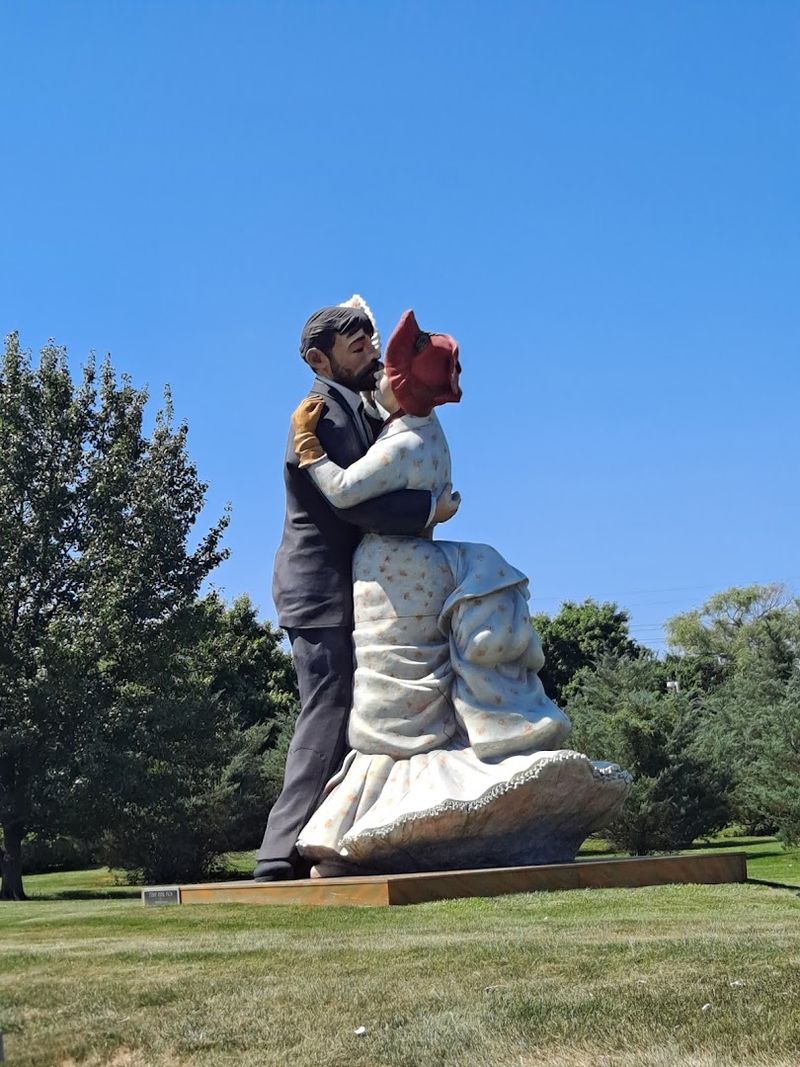
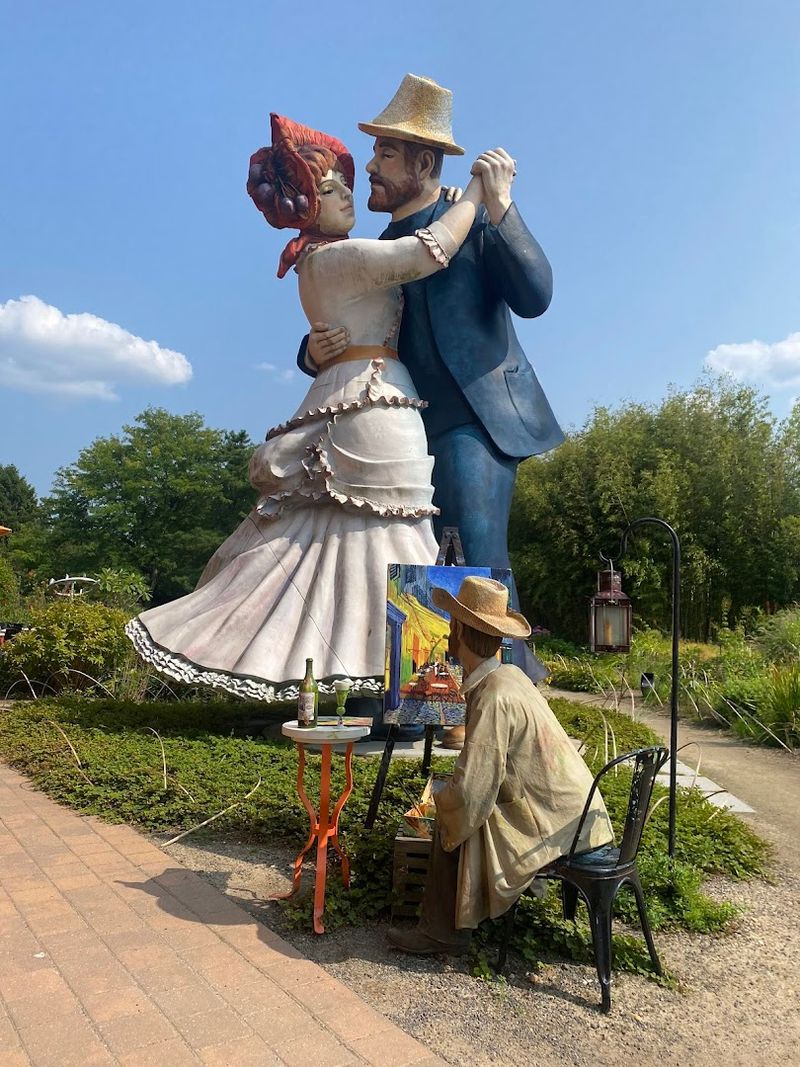
Johnson himself was known for hyperrealistic bronze figures that depicted ordinary people in everyday situations, and several of his works are still on display throughout the grounds. These pieces have a reputation for fooling first-time visitors, who sometimes approach them thinking they are looking at a real person sitting on a bench or reading a newspaper.
The park has grown significantly since its founding, expanding its collection and its programming over the decades. Today it operates as a nonprofit organization, with a mission that includes education, artist residencies, and community engagement alongside the public exhibitions.
That foundation gives every visit a slightly deeper layer of meaning. Knowing that the park was built with a specific purpose, to bring art into ordinary life, makes wandering through it feel a little less like tourism and a little more like participation in something that genuinely matters to the people who created it.
Monet’s Blue Bridge and the Impressionist Recreations
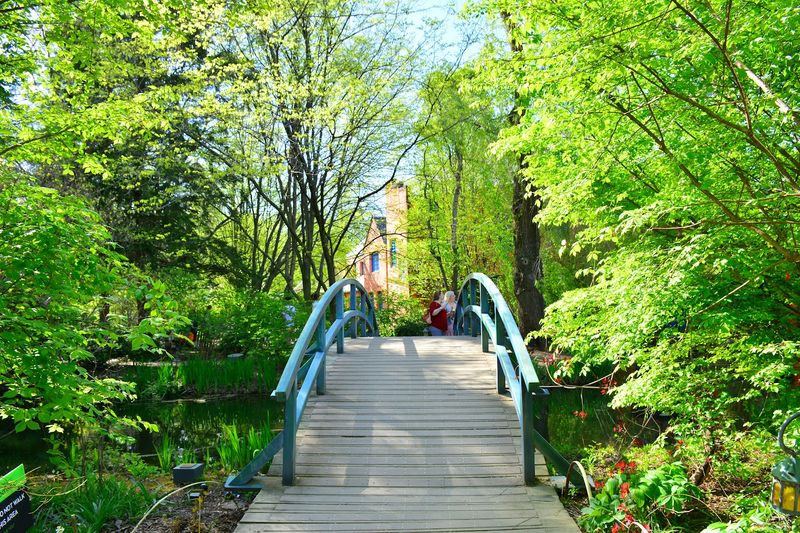
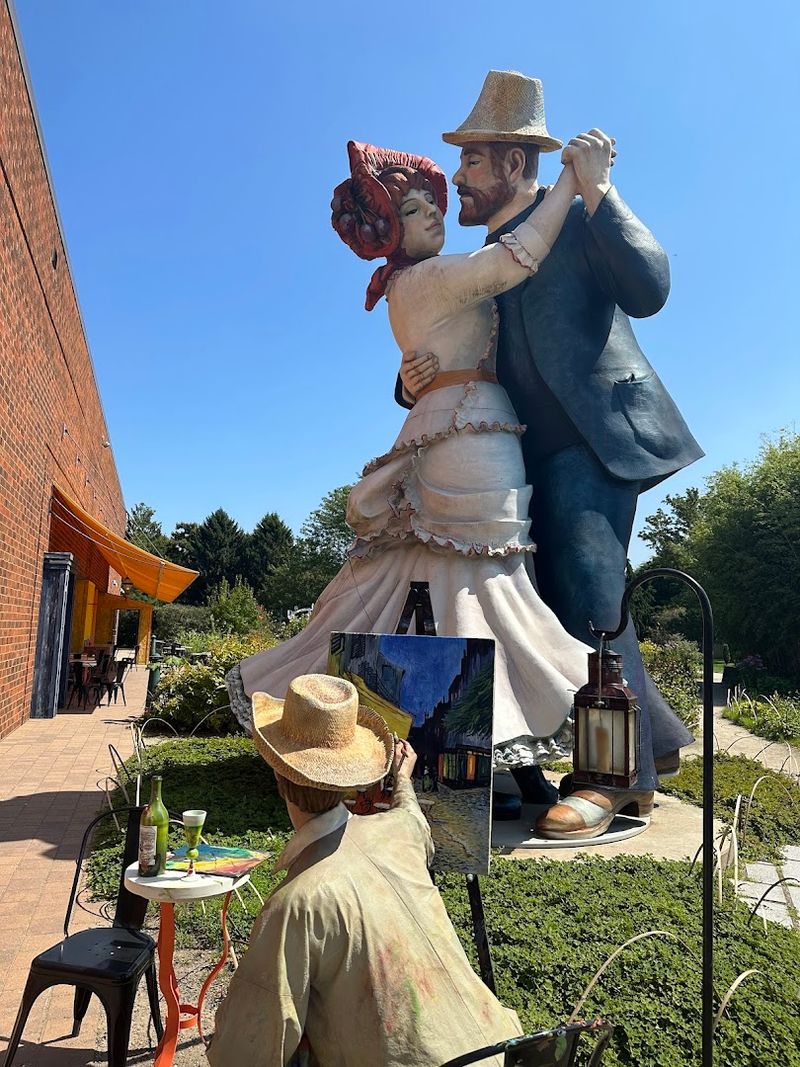
One of the most talked-about features at Grounds For Sculpture is the recreated Impressionist scenes scattered across the property. Artists and designers worked to translate famous paintings into three-dimensional, walk-through environments, so visitors can literally step inside a version of what they have only ever seen on a canvas.
Monet’s Blue Bridge is the crown jewel of this collection. Modeled after the Japanese bridge at Monet’s garden in Giverny, France, the structure arches over a pond filled with water lilies and surrounded by carefully chosen plantings that mirror the color palette of the original paintings.
It has become one of the most photographed spots in all of New Jersey.
The bridge is particularly popular during spring and early summer, when the pond plants are at their most lush and the reflections in the water are clearest. Couples often choose it as the backdrop for proposals and anniversary photos, and it is easy to see why once you are standing on it.
Other Impressionist recreations on the grounds draw from works by Renoir, Seurat, and other masters of the movement. Each one is placed in its own pocket of the park, giving visitors the pleasant surprise of rounding a corner and recognizing a scene they have seen before in a completely different form.
Over 270 Sculptures and Every One Has Something to Say
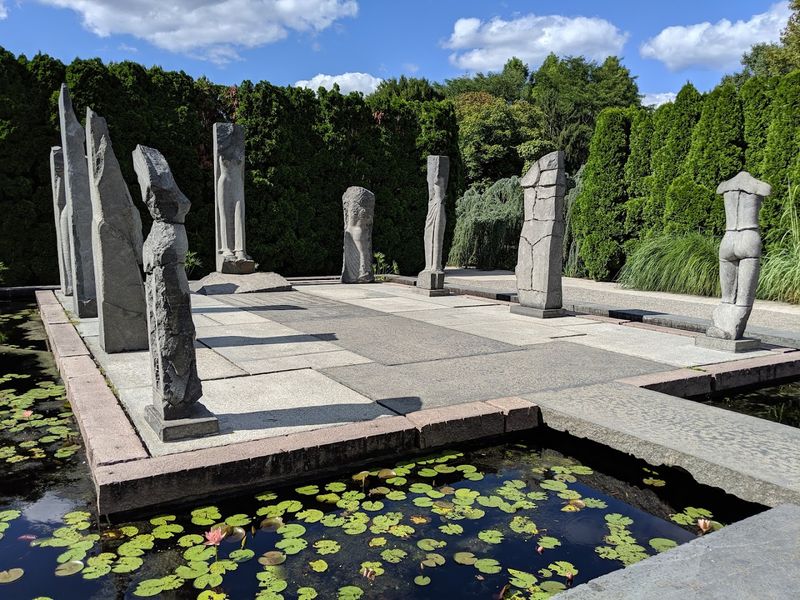
With more than 270 sculptures spread across 42 acres, the collection at Grounds For Sculpture is genuinely hard to take in during a single visit. Many visitors report spending three to five hours on the grounds and still not seeing everything.
That is not a complaint. That is the whole point.
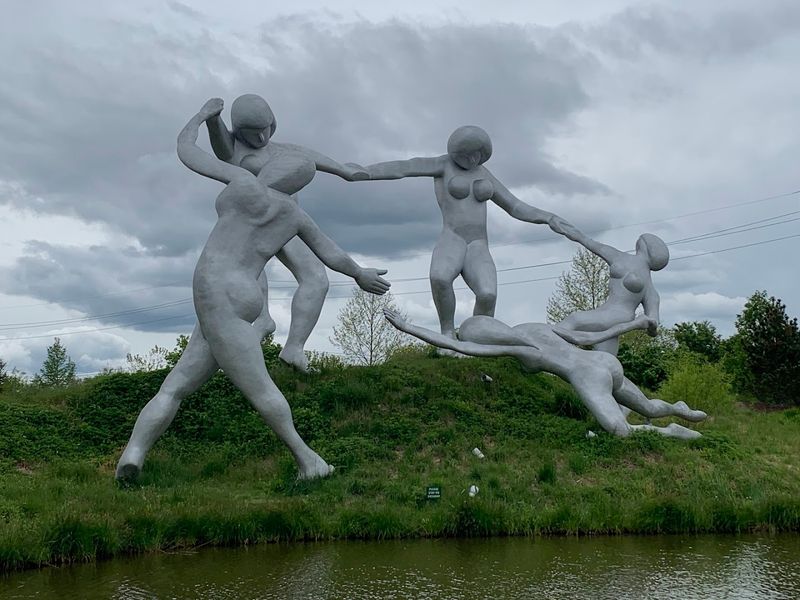
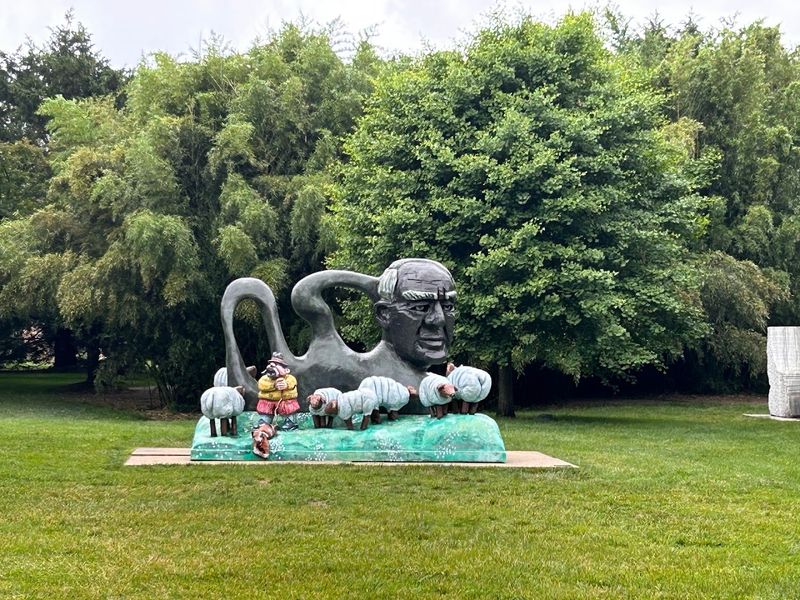
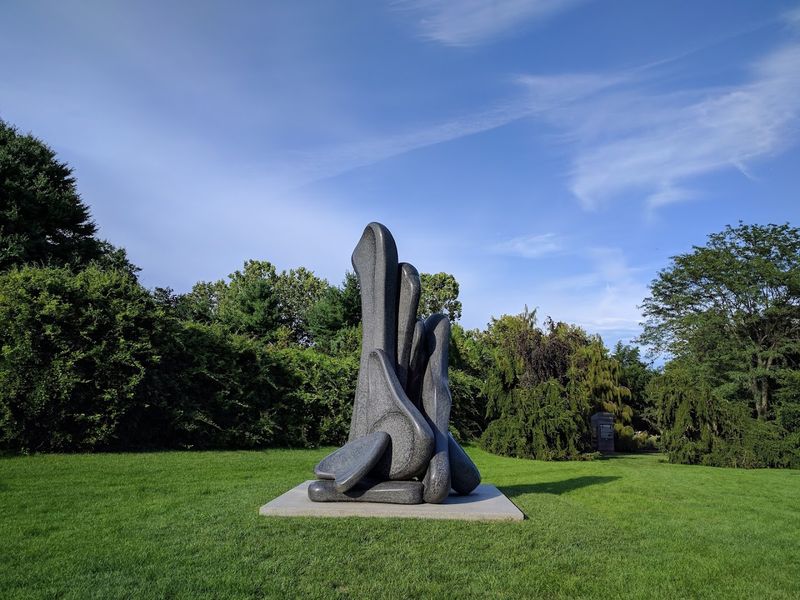
The works range from monumental abstract steel pieces that tower above the tree line to small, intimate figures tucked into garden corners that you might almost walk past if you are not paying attention. The variety keeps the experience from ever feeling repetitive, which is an impressive feat for a collection of this size.
Some sculptures are interactive, inviting visitors to touch, enter, or move around them in ways that change the experience depending on your angle. Others are purely visual, demanding that you stop and look from a specific distance before they fully reveal what they are doing.
The park rotates and updates parts of its collection regularly, which means repeat visitors almost always encounter something new. Several reviews from longtime fans mention that they have been coming for years and the grounds continue to surprise them.
That kind of staying power is not something every art destination can claim, and it speaks to the curatorial vision that has guided the park since its founding.
Rat’s Restaurant: The Meal You Did Not Expect
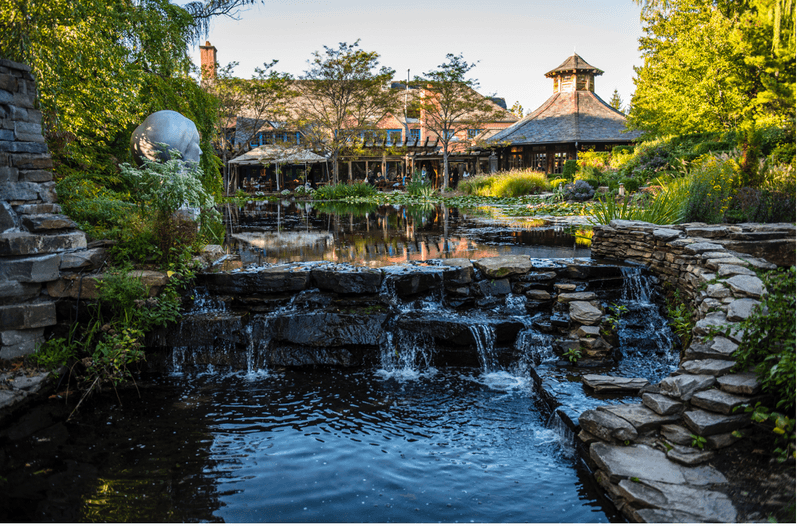
Named after the character from Kenneth Grahame’s classic novel The Wind in the Willows, Rat’s Restaurant is one of the most distinctive dining experiences in New Jersey. It sits right on the grounds of the park, overlooking a tranquil pond, and the interior design leans into a French-Moroccan theme that makes it feel like a completely different world from the sculpture garden just outside its doors.
Reservations are strongly recommended, and most visitors who have eaten there suggest booking a table before you even arrive at the park. The kitchen focuses on upscale American and French-inspired cuisine, and while the prices reflect that level of quality, most diners consider it worth the splurge for a special occasion meal.
Outdoor patio seating is available during warmer months, and eating beside the pond while koi drift beneath the surface is the kind of low-key, genuinely pleasant experience that is hard to replicate anywhere else. There is also a bar lounge inside with an inviting, layered atmosphere that works well for a pre-walk or post-walk stop.
For visitors who want something more casual, the park also has a cafe with lighter options. Either way, planning your meals ahead of time is smart, because the restaurant fills up quickly, especially on weekends and during peak visiting seasons.
The Arboretum Hidden in Plain Sight
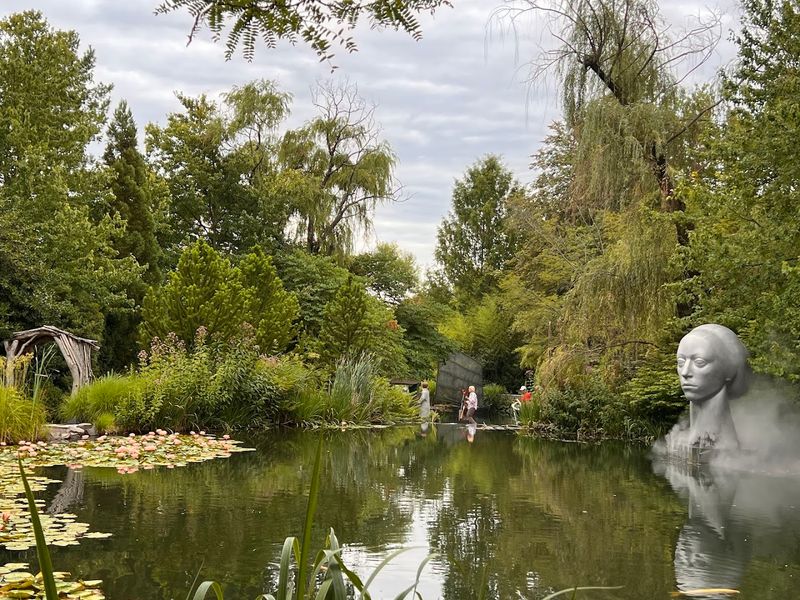
Most visitors come to Grounds For Sculpture for the art, but the arboretum woven throughout the property is a destination in its own right. The plant collection here is as carefully curated as the sculpture collection, with specimen trees, native plantings, and ornamental gardens all chosen to complement the works they surround.
Rare and unusual tree species are labeled throughout the grounds, which turns any walk into an informal botany lesson if you are curious enough to read the markers. The variety is wide enough that the grounds look noticeably different depending on the season, with spring blooms, summer foliage, autumn color, and winter structure each offering their own version of the same landscape.
Several visitors have specifically mentioned that the flora was a highlight of their trip, even when they arrived expecting the sculptures to be the main event. The peacocks that freely roam parts of the grounds add another layer of unexpected natural interest, appearing around corners without warning and generally doing whatever they please.
The combination of intentional horticulture and fine art gives Grounds For Sculpture a depth that most parks simply do not have. You are not just looking at things here.
You are moving through a landscape that was designed to be experienced as a whole, where every plant placement was a deliberate creative decision.
The Indoor Museums and Rotating Exhibitions
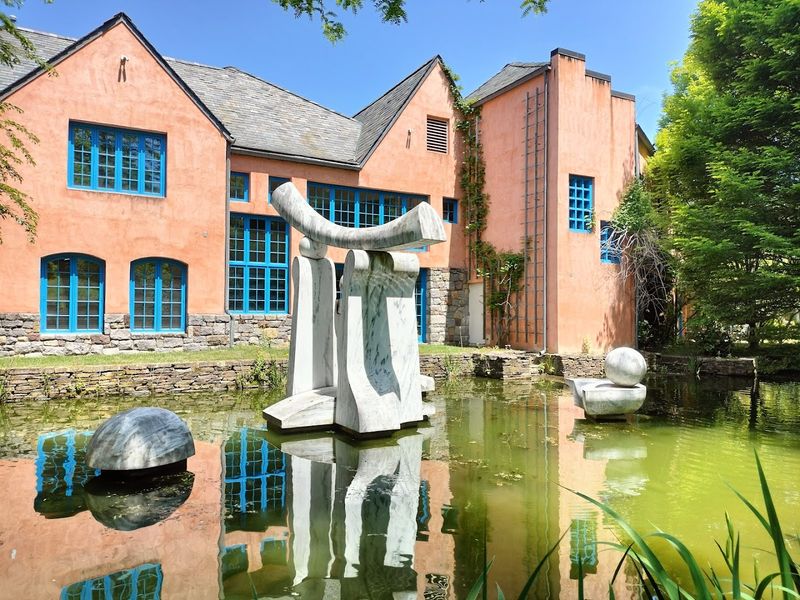
The outdoor grounds get most of the attention, but Grounds For Sculpture also operates two indoor museum buildings that host rotating seasonal exhibitions throughout the year. These spaces bring a more traditional gallery experience into the mix, offering curated shows that often complement or contrast with what is happening outside.
The East Gallery has hosted exhibitions that tackle significant social and political themes, including a recent show by a Mexican-American artist whose work centered on the border wall and the immigrant experience. Visitors who attended described it as one of the most thought-provoking art encounters they had in years.
The indoor spaces also allow the park to remain a compelling destination during colder or rainier months, when spending hours outside might not be the most appealing plan. Checking the park’s website before your visit is a good idea, because the current exhibitions are listed there and can help you decide how to structure your day.
Staff members in the galleries are notably knowledgeable and enthusiastic about the work on display. Multiple visitor reviews mention conversations with staff that turned a casual glance at a piece into a much deeper understanding of the artist’s intent, which is the kind of experience that sticks with you long after you leave the building.
Best Times to Visit and How to Plan Your Day
Timing your visit well makes a real difference at a park this size. Weekday mornings are consistently recommended by repeat visitors as the best window, both for avoiding crowds and for making the most of the cooler parts of the day before the sun gets high.
Arriving right at the 10 AM opening gives you a head start on the busiest paths.
Late afternoons on weekdays are another solid option. The light shifts as the day winds down, and the crowds thin out noticeably after 3 PM, giving you more space to wander without feeling rushed or hemmed in by other visitors.
Photography enthusiasts particularly favor this window.
Weekends draw larger crowds, especially during spring and fall when the grounds are at their most photogenic. If a weekend visit is your only option, buying timed entry tickets online in advance is not just convenient, it is essentially necessary.
Walk-up availability can be limited on busy days.
Plan for at least three to four hours on your first visit, and bring comfortable shoes because the paths cover a lot of ground. Water and snacks are available on site, but prices are on the higher end, so packing your own refreshments is a reasonable choice if you are watching your budget.
Wear layers in transitional seasons.
Photography at the Park: A Permit-Required Paradise
Grounds For Sculpture has quietly become one of the most sought-after photography locations in the entire tri-state area. Professional photographers working on engagement sessions, wedding portraits, and editorial shoots consistently return to the property because the variety of backdrops available within a single location is genuinely hard to match anywhere nearby.
The Japanese bridge, the Impressionist recreations, the tree tunnels, the open lawns with large-scale sculptures, and the reflective ponds all offer completely different visual environments within walking distance of each other. Switching between them during a single shoot means a photographer can deliver a wide range of looks without ever leaving the park.
Professional photography sessions require a permit, which must be arranged through the park’s administrative team. The process is described by photographers who have used it as straightforward and well-organized.
Permit fees vary depending on the scope of the shoot, and the park’s website has the most current information on how to apply.
Personal photography for non-commercial purposes is included in the cost of general admission, so casual visitors with cameras or phones are free to shoot as much as they like throughout the grounds. The park is remarkably photogenic in every season, and many visitors say their photo library from a single trip here is enough to fill an entire album.
Mobility Options and Accessibility at the Park
Covering 42 acres on foot is a commitment, and the park has thoughtfully provided options for visitors who need or prefer an alternative to walking the entire property. Mobility scooters are available for rent at the visitor center for around $25, and they have been a popular choice for visitors with mobility considerations or for anyone who wants to cover more ground without exhausting themselves early in the day.
One visitor described spending over four hours on a rented scooter while family members walked alongside, covering far more of the park than they would have managed on foot alone. The paved and compacted paths throughout the property are generally accessible, though some of the more tucked-away garden areas require a bit more navigating.
Restrooms are located at multiple points across the grounds, which is a practical detail that matters more than it sounds when you are spending a full afternoon outside. Several eateries and snack options are distributed across the property as well, so you do not need to return to the main entrance every time you want a break.
The park also offers a digital map that visitors can access on their phones, which is a more reliable navigation tool than the printed version, which some guests have found difficult to follow on the less-marked paths.
Events, Weddings, and Special Occasions

Grounds For Sculpture is not just a place to visit. It is a venue that hosts some of the most memorable special occasions in the region.
The park offers event spaces for weddings, corporate gatherings, and private celebrations, and the outdoor settings available across the 42 acres give event planners an enormous range of options to work with.
One couple who held their wedding ceremony at the park described the experience as flawless, even after rain moved in on their wedding day. The park’s event staff adapted the setup and kept everything on track, and the couple reported that the day turned out beautifully despite the weather.
That kind of flexibility and professionalism is what separates a good venue from a great one.
The combination of sculptural backdrops, manicured gardens, and the on-site restaurant makes Grounds For Sculpture a self-contained venue that can handle everything from the ceremony to the dinner in a single location. Couples who want a setting that is genuinely unlike any other in New Jersey consistently land here as their top choice.
Booking event spaces requires advance planning, and the park’s website has a dedicated section for event inquiries. Given the popularity of the venue for weddings and proposals, availability during peak spring and fall weekends tends to go quickly, so reaching out early is strongly advised.
The 9/11 Memorial and Art With a Purpose
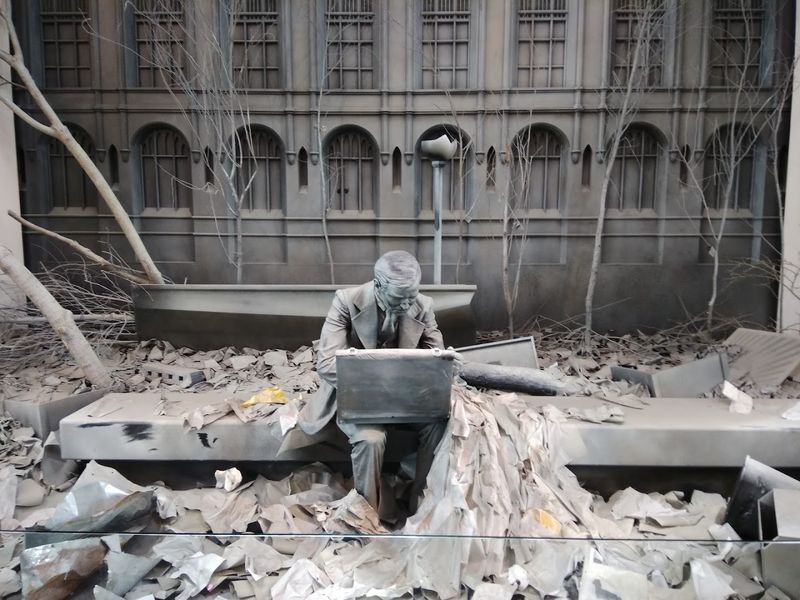
Among the hundreds of works spread across the property, one of the most quietly powerful is the 9/11 memorial installed on the grounds. Visitors who have encountered it describe it as beautiful in a way that is hard to put into words, a piece that holds weight without being heavy-handed about it.
The presence of this memorial is a reminder that Grounds For Sculpture has always been interested in art that does more than decorate a space. The park’s collection consistently includes works that engage with history, identity, loss, and community, giving visitors something to think about long after they have left the grounds.
The East Gallery exhibitions have reinforced this commitment over the years, bringing in artists whose work addresses current social and political realities. The Mexican-American artist whose border wall series was shown in a recent exhibition drew significant attention from visitors who described the experience as genuinely moving and thought-provoking.
This willingness to hold difficult subjects alongside more playful or purely aesthetic works is part of what makes the park’s collection feel honest rather than decorative. Art here is allowed to be uncomfortable, and the park does not shy away from giving that kind of work prominent placement.
That is a curatorial choice worth recognizing and appreciating as a visitor.
What Repeat Visitors Keep Coming Back For
The most telling sign that a destination is genuinely good is how many people come back. At Grounds For Sculpture, the repeat visitor rate is high enough that it shows up in review after review, with guests mentioning second and third trips as something they are actively planning before they have even finished their first visit.
Part of the reason is scale. The park is large enough that a single visit rarely covers everything, especially for people who spend time really looking at the works rather than moving briskly from one to the next.
Knowing that more is waiting gives every visit a natural reason to return.
The rotating exhibitions in the indoor galleries add another layer of motivation. Because the shows change seasonally, a visit in spring looks different from a visit in fall, both inside the buildings and outside on the grounds.
The arboretum shifts with the seasons, the light changes, and different sculptures seem to come forward or recede depending on the surrounding landscape.
Some visitors have been making annual trips for over two decades and still find the grounds rewarding. That kind of loyalty is not built on novelty alone.
It comes from a place that consistently delivers a quality experience, maintains its grounds with genuine care, and continues to evolve its collection in ways that feel meaningful rather than arbitrary.
Planning Your Visit: Practical Tips Before You Go
A few practical details can make the difference between a good visit and a great one at Grounds For Sculpture. Comfortable, supportive shoes are the single most repeated piece of advice from experienced visitors, and for good reason.
The paths cover a lot of ground, and you will almost certainly walk more than you planned.
Tickets can be purchased at the gate, but buying them online in advance is the smarter move, particularly on weekends and during peak seasons like spring and fall. Timed entry tickets help manage crowd flow, and arriving at your designated window keeps things running smoothly for everyone.
Checking the park’s website at groundsforsculpture.org before your trip will give you the most current pricing and availability information.
The park is located about 45 minutes from Philadelphia and roughly 70 miles from New York City, making it a practical day trip from either direction. Parking is available on site, and the main entrance on Sculptors Way is well-signed from the surrounding roads.
Bringing a hat, sunscreen, and a refillable water bottle will serve you well during warmer months. The park does have food and drink available, but costs are on the higher side.
A digital map accessed through your phone is more reliable than the printed version for navigating the less-marked corners of the property. Go with extra time built in, because you will want it.



