 Unearth The Voyage
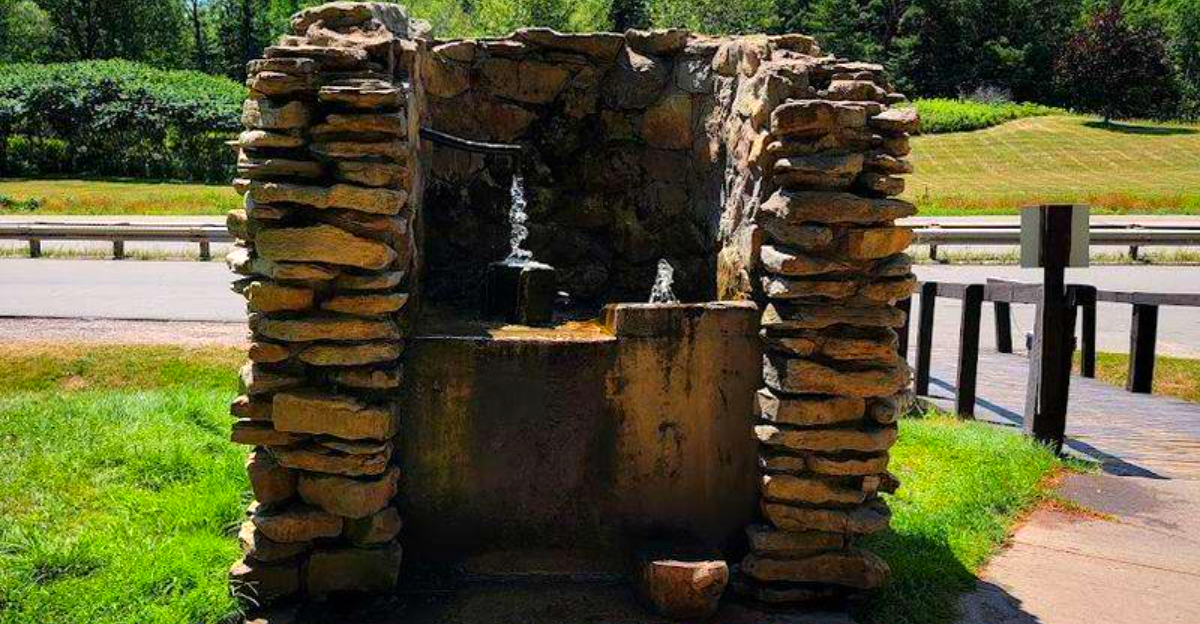
Some roadside stops barely deserve a brake tap, but this one made me pull over twice. I came expecting a quick look at a local curiosity and found cold, clear water pouring out of a story that started more than a century ago, with miners drilling for iron and accidentally uncorking something far more memorable.
There is a reason locals arrive with empty jugs, travelers linger longer than planned, and a simple spring along a highway keeps turning into the highlight of the day. Keep reading and I will show you what the place feels like, why the water matters, how the 1903 discovery still shapes the stop today, and what to know before you swing in for your own fill-up.
Where the roadside surprise begins
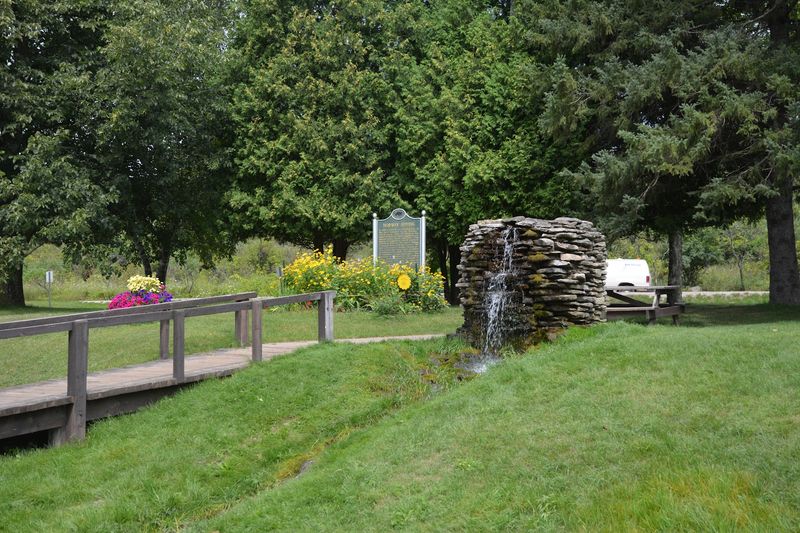
The first thing you should know is exactly where this stop sits: Norway Spring, US-2, Norway, MI 49870, in Michigan’s Upper Peninsula. I like that the address sounds almost too simple, because the experience feels that way too – easy to reach, easy to understand, and oddly hard to forget.
Cars roll in, people step out with bottles and jugs, and the whole place works without fuss. I found a small roadside park feel here, with shade, straightforward parking, and a spring that stays the main event instead of competing with flashy extras.
That simplicity is part of the charm, especially on a longer drive when most stops blur together. Here, the water gives the place a purpose, the historic marker gives it a backstory, and the steady flow hints that the best part of Norway Spring is not just how it looks, but how it came to be.
A drill bit changed everything
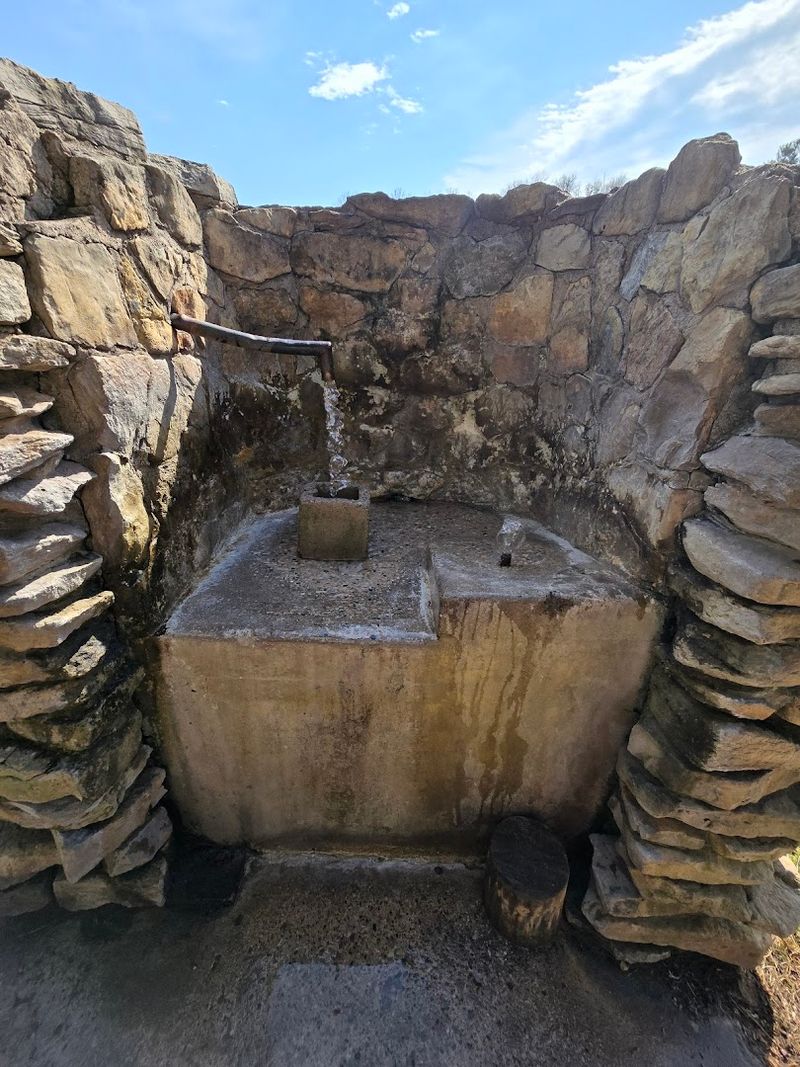
Long before travelers stopped here with refillable bottles, the ground was being tested for iron ore. In 1903, a 1094-foot hole drilled by the Oliver Mining Company cut into water-bearing layers, releasing pressure and creating the spring that still runs today.
I love that this place exists because someone was looking for one thing and found something entirely different. Instead of ore, the drill opened an artesian flow, and that scientific little twist gives the spring its personality as much as the water itself.
The historical marker turns that story into something you can stand beside and picture with surprising clarity. Once I read about the porous strata and the pressure from higher ground to the north, the site stopped feeling like a random roadside stop and started feeling like a lesson in geology with a refreshment break built in, which makes the next detail even more interesting.
Why the water never seems to quit
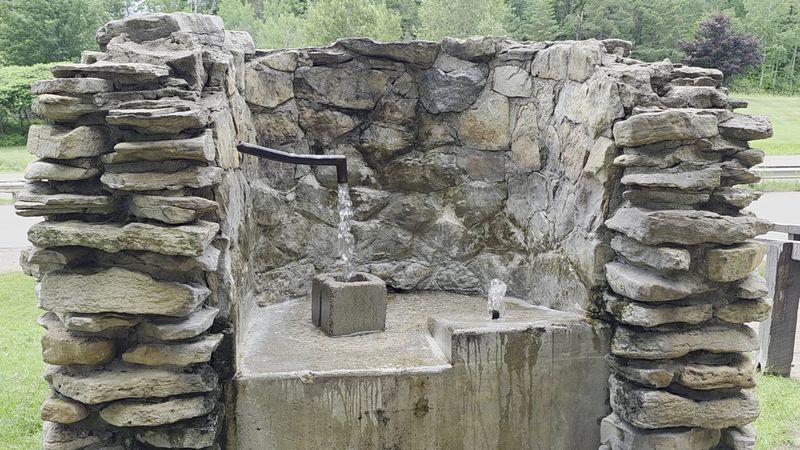
Cold water pours here with a confidence that makes tap water seem a little too proud of itself. The reason is simple and fascinating: the drilled hole tapped pressurized groundwater, so the spring behaves like an artesian well rather than a trickle that depends on a recent rain.
I stood there longer than expected just watching the stream run, because constancy has its own kind of drama. You can see why this place became useful to locals, not just scenic to passersby, since the water arrives already doing what everyone wants it to do – flow cleanly and steadily.
That technical explanation also changes how you experience the site. Instead of seeing only a pleasant stop, I started noticing the slope, the setting, and the quiet evidence that geology, elevation, and one deep hole teamed up to create a practical little wonder beside the road, and the people who show up with containers prove that story is still very much alive.
The local ritual of filling jugs
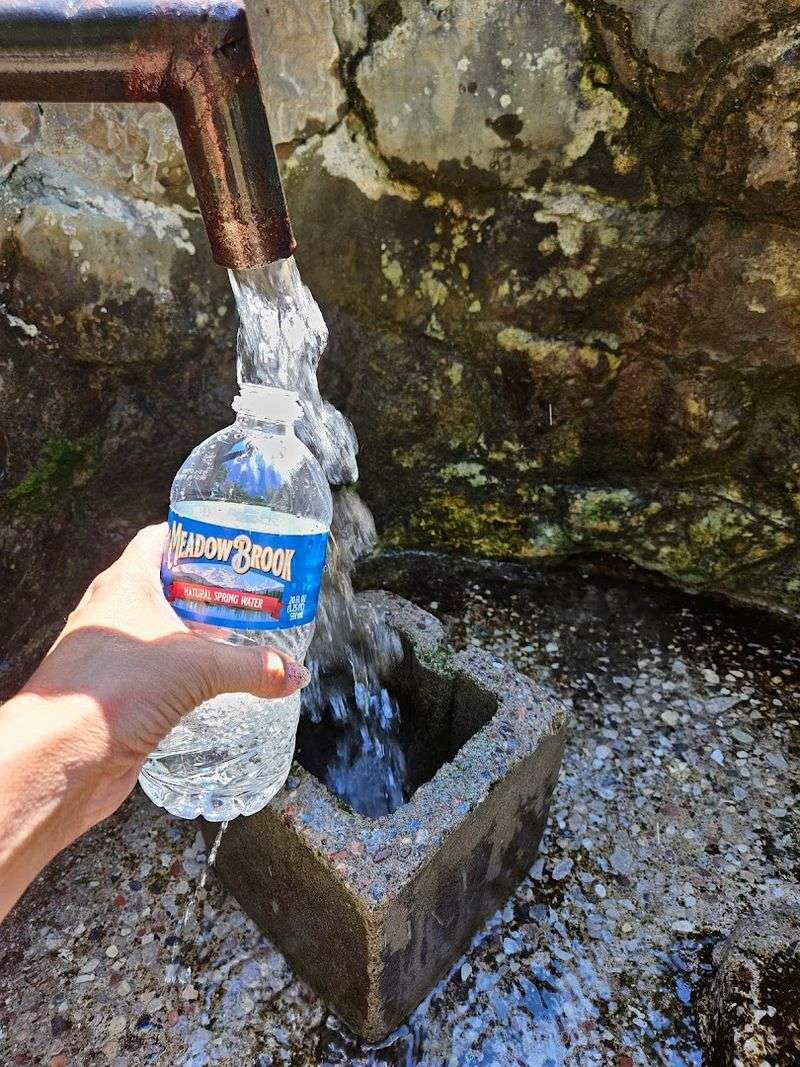
What makes Norway Spring feel different from many historic stops is that it is still actively used. I watched people arrive with everything from small bottles to serious multi-jug setups, and nobody seemed confused about the mission because the mission is deliciously clear.
The water is cold, crisp, and free, which is a combination that turns strangers into temporary teammates. There is a gentle rhythm to the place as people take turns, cap containers, and head back to their cars looking like they just completed a tiny but satisfying errand.
I liked that the spring is not frozen in museum mode, where you read a sign and leave without touching the story. Here, the history keeps running into the present quite literally, and that practical use gives the place a sense of community that feels earned rather than staged, which also explains why even a quick stop can turn into a longer pause under the trees.
Small park, big personality
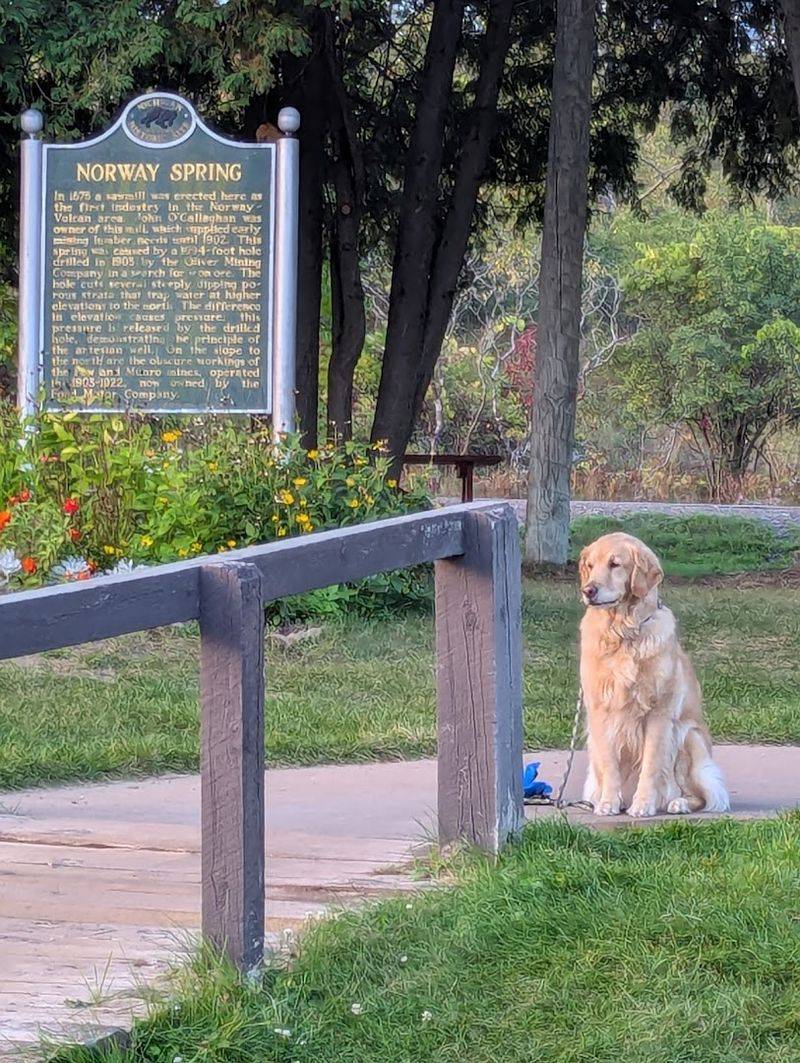
Plenty of roadside attractions rely on oversized signs or quirky props to demand attention, but this one keeps things modest. Norway Spring has a small park feel with shade, picnic tables, and enough breathing room to make the stop pleasant even if you are only there for ten minutes.
I appreciated how easy it felt to pull in, stretch my legs, and settle into the calm without needing a plan. The setting does not try too hard, which is refreshing in its own way, and the trees soften the highway edge so the spring feels more inviting than purely functional.
That combination matters because the place is not only about taking water and leaving. It also works as a pause button on a U.P. drive, the kind of stop where you can reset, sip something cold, and remember that simple amenities often do more for your mood than anything fancy ever could, and there is an even older layer of the site waiting just behind that quiet atmosphere.
Before the spring, there was industry
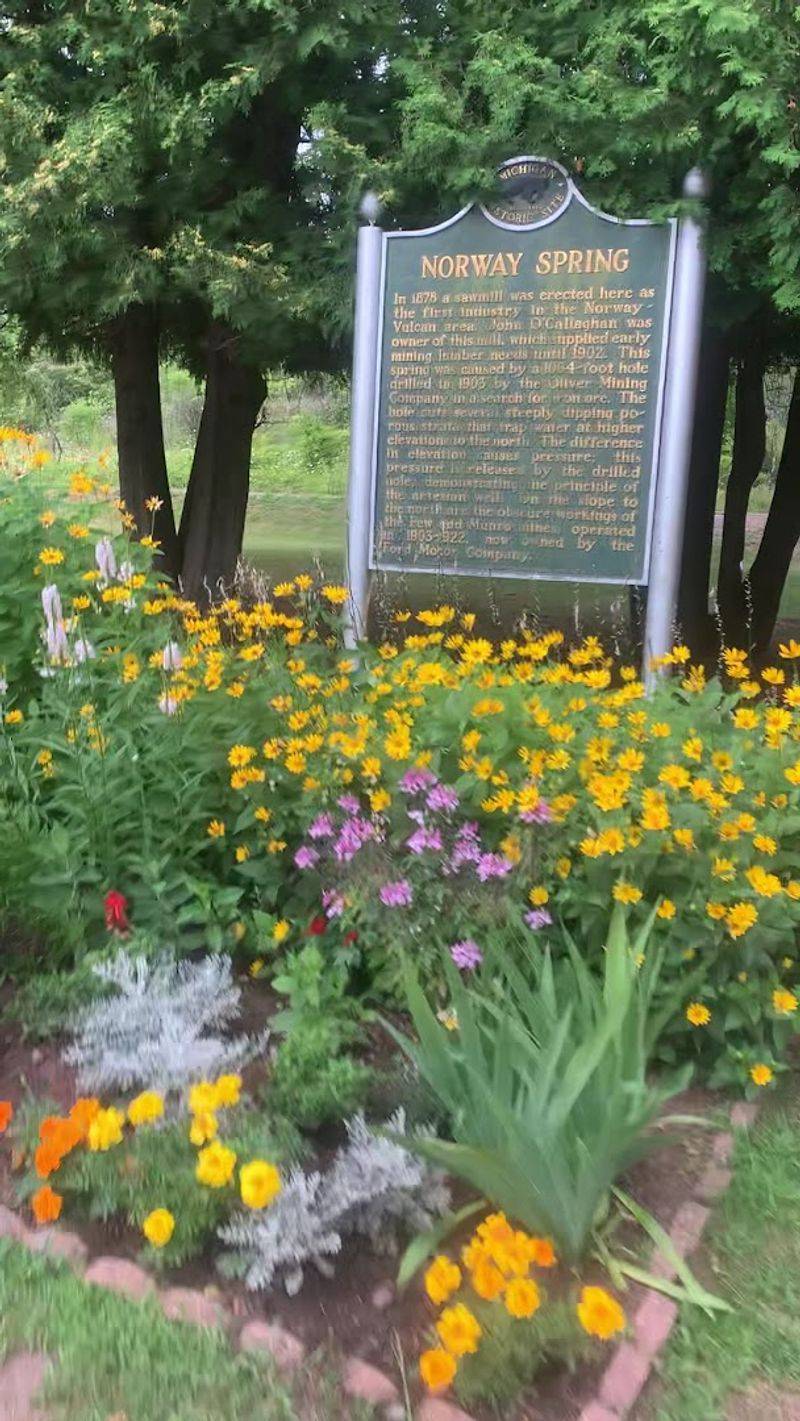
The spring’s story gets better when you zoom out and look at the earlier industrial life around it. A sawmill operated here beginning in 1878 and supplied lumber for the area’s early mining activity until 1902, so the site was already tied to work, resourcefulness, and movement before the water took center stage.
I find that layering especially satisfying because it keeps the place from feeling like a one-note stop. First came timber and the practical demands of a growing mining region, then the 1903 drilling revealed a spring that would outlast the boom-and-bust energy usually attached to industrial history.
Today, those older chapters do not overwhelm the visit, but they add welcome depth once you know where to look. The marker connects the spring to the wider Norway-Vulcan area story, and suddenly the site feels less like an isolated curiosity and more like a compact summary of how people, industry, and landscape shaped each other here, which sets up the experience of tasting the place for yourself.
Yes, the water is the star
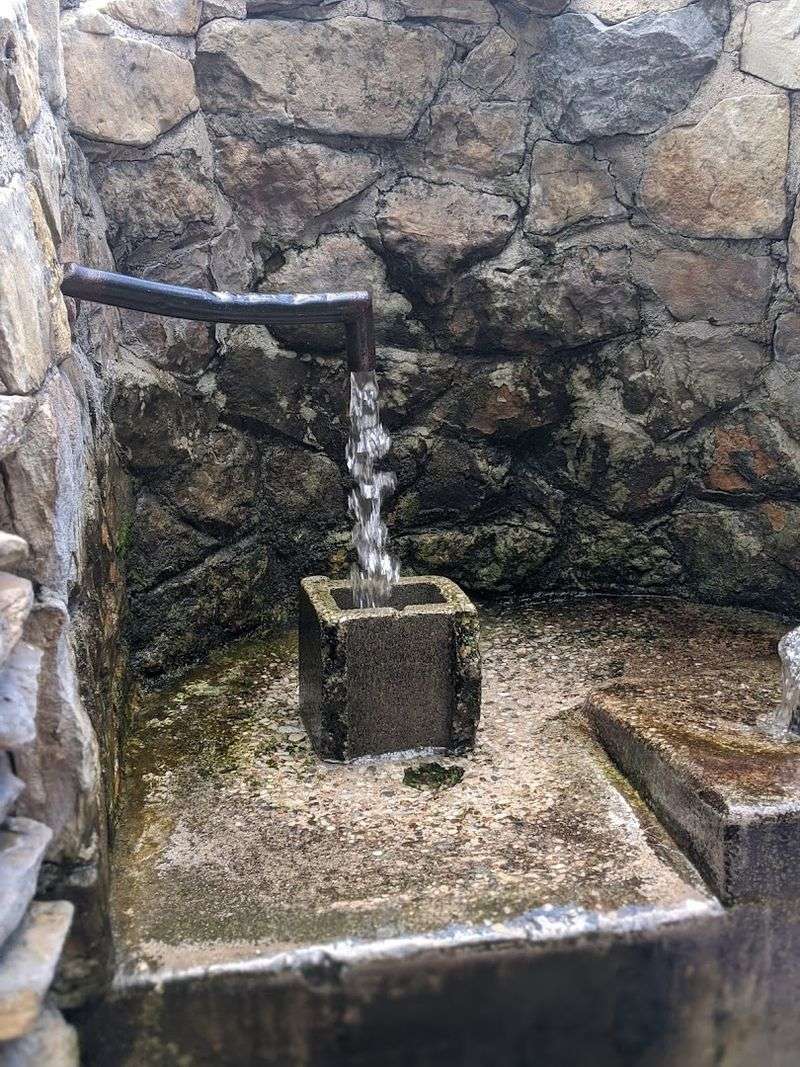
Some places ask you to admire them from a polite distance, but Norway Spring invites participation in the most direct way possible. I took a drink, then another, and immediately understood why people make a point of stopping here instead of just saying they might return someday.
The water tastes notably cold and clean, with that crispness people always hope for and rarely describe well. It is the kind of small pleasure that can improve an entire travel day, especially when you have been in the car long enough for every convenience store option to start feeling a little tired.
That sensory part of the visit matters because it turns the site into more than a historical footnote. You do not just learn about a 1903 discovery – you experience the result in real time, and that simple act of filling and sipping makes the place stick in memory far better than a plaque alone ever could, which is why timing your stop adds another useful layer.
Best moments to pull over
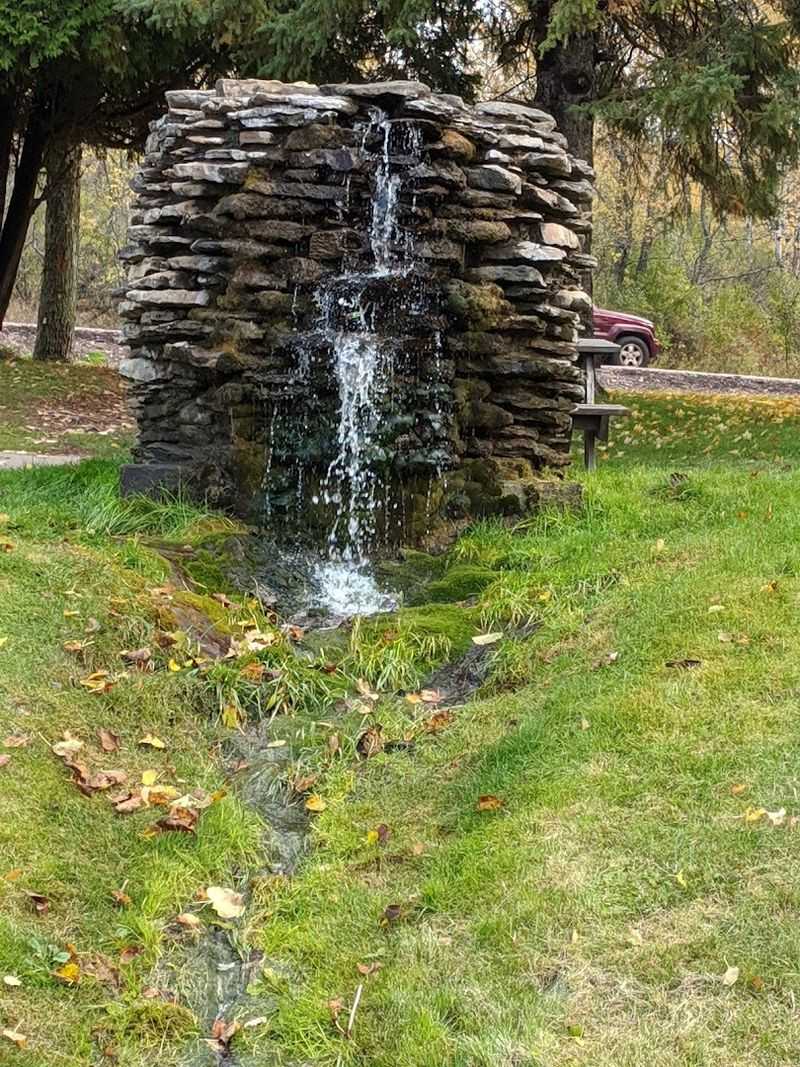
Timing changes the mood here more than you might expect from a simple roadside stop. I found early and quieter parts of the day best for lingering, while busier moments can bring a little line of people filling containers with the kind of focus usually reserved for coffee orders.
Even when it is active, the place rarely feels chaotic because everyone is there for the same uncomplicated reason. The stop is easy on and off US-2, so it works nicely as a planned refill point or a spontaneous detour when the sign catches your eye and your bottle happens to be empty.
I would bring containers if you want to take water with you, and I would not rush the experience once you arrive. A few extra minutes let you read the marker, notice the steady flow, and appreciate the strange excellence of a place whose main attraction is exactly what it says it is, and the visual details around the spring add one more layer of charm.
A bit of whimsy in the details
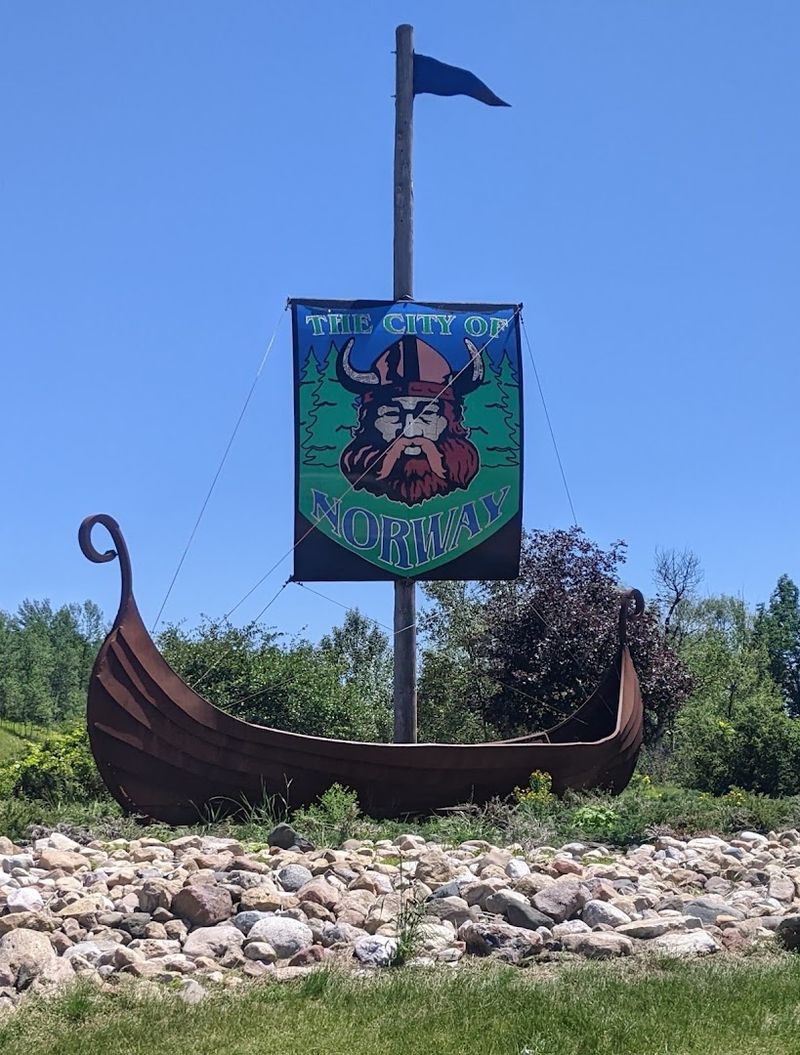
Roadside places can be purely functional, but this one slips in a little personality. Beyond the water itself, I noticed touches that make the stop feel rooted in Norway’s local identity, including the Viking motif people often mention when describing the site.
That hint of whimsy works because it never distracts from the spring’s real appeal. Instead, it gives the place a friendly face, the kind of small visual detail that makes you smile while you wait your turn, cap your jug, or wander over to read the historical information again.
I liked that balance between practical use and local character. Nothing feels overproduced, and the site keeps its honesty intact, but there is enough personality to remind you that this is not just any water stop off any highway – it belongs specifically to this town and this stretch of the U.P., which makes the final takeaway feel less like travel advice and more like a good habit worth stealing.
Why I would gladly stop again
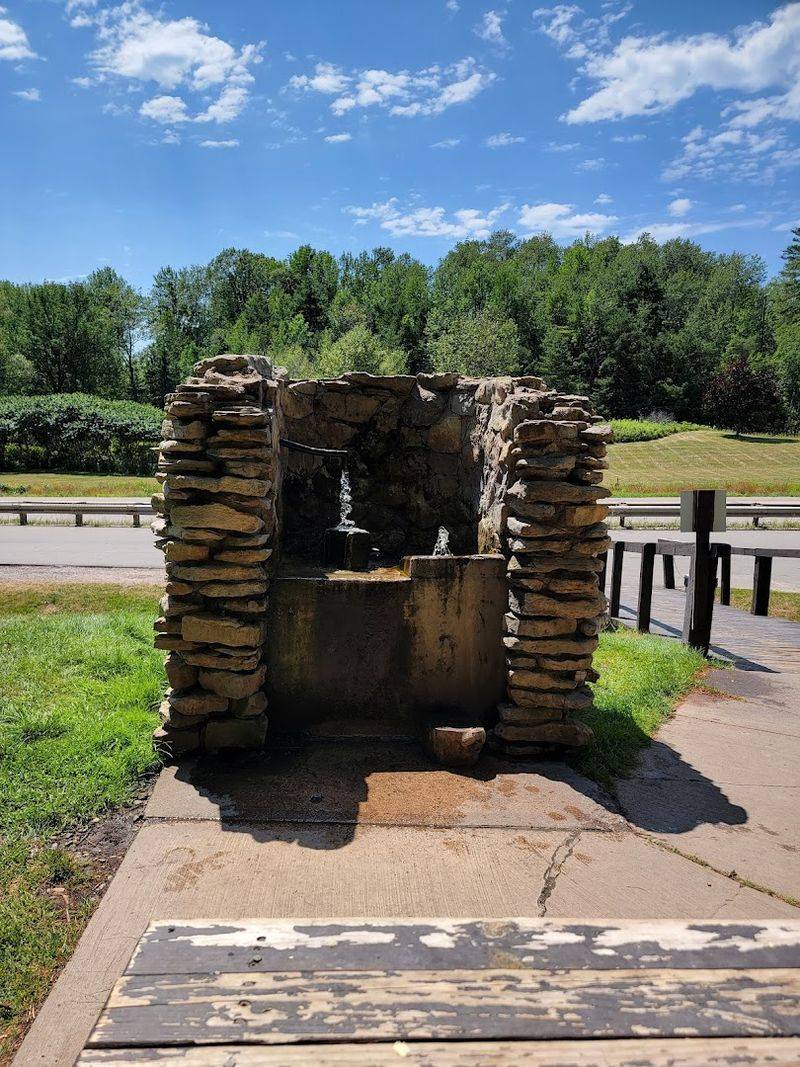
By the time I left, Norway Spring had done something many larger attractions fail to do – it justified a return visit without needing reinvention. The appeal is steady water, real history, easy access, and a setting that turns an ordinary break in the drive into a stop with actual texture.
I would come back for the practical reasons first, because filling bottles with cold spring water is wonderfully straightforward. Yet I would also come back for the quieter reward of the place, that satisfying mix of geology, local routine, and roadside calm that makes a few minutes feel pleasantly well spent.
In a region full of big landscapes and dramatic detours, this spring wins by staying modest and useful. That might be the secret to its staying power since 1903: it does not ask for much attention, but once you pull over, take a drink, and read the story, it becomes the kind of U.P. stop that keeps flowing through your memory long after the road bends away.



