Tucked along a quiet country road in western Wisconsin, there is a place that stops people mid-drive and makes them pull over just to stare. It is not a famous museum or a state park landmark.
It is the work of two retired farmers who, with no formal art training, spent years embedding thousands of pieces of colored glass into concrete structures that now stand as one of the most quietly remarkable roadside attractions in the entire Midwest. The grotto covers sculptures, a chapel, a ship, and more, all sparkling with glass donated or collected over decades.
Free to visit and open every day of the week, this spot near Sparta, Wisconsin, draws curious travelers, folk art enthusiasts, and anyone who appreciates a story about ordinary people doing something truly extraordinary. Keep reading to find out everything worth knowing before you visit.
Why Glass Was the Material of Choice
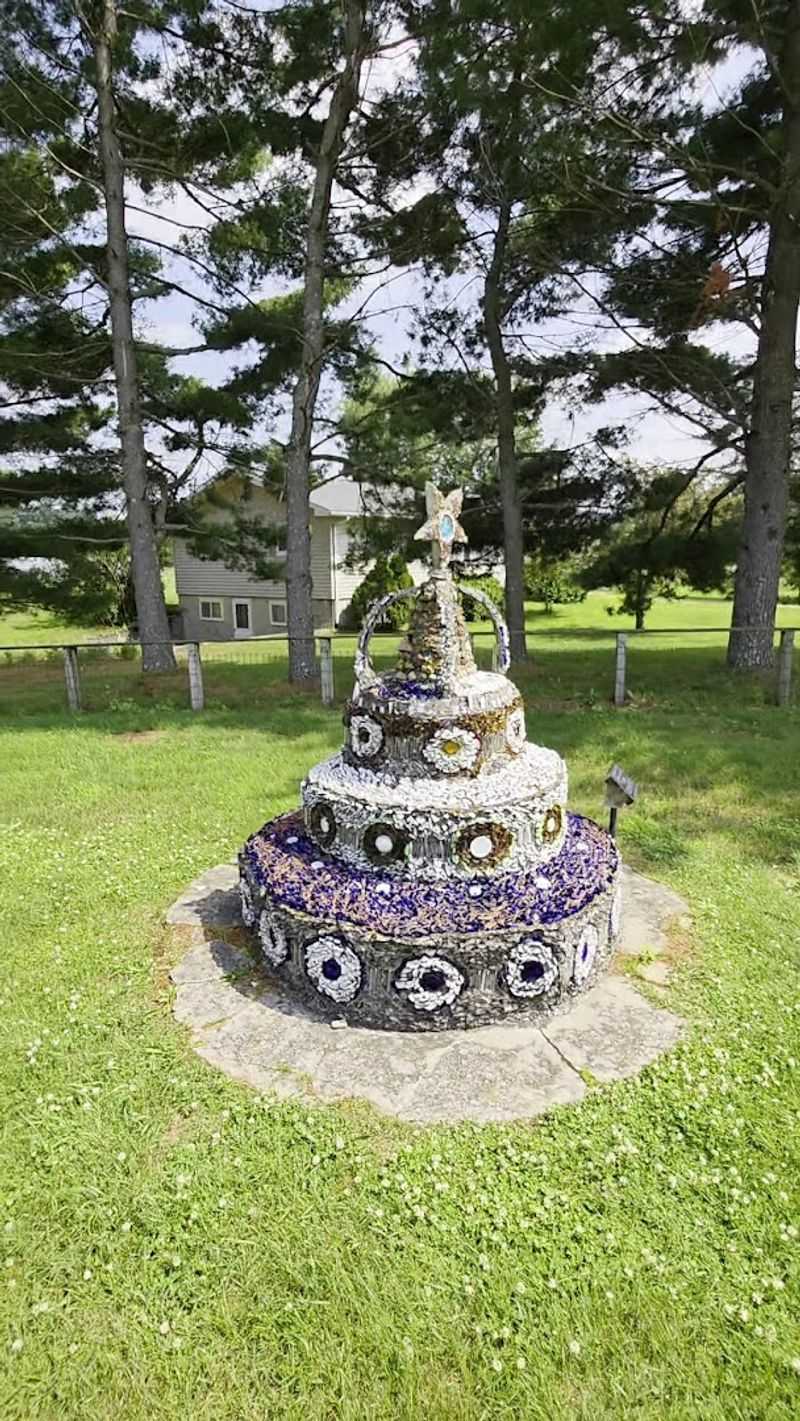
One of the first questions most people ask when they see the Wegner Grotto is: why glass? The answer is rooted in practicality as much as creativity.
Much of the glass used throughout the grotto was donated by neighbors and community members, making it a collective effort in a quiet but meaningful way.
Colored glass catches light differently depending on the time of day and the angle of the sun, which gives the sculptures a quality that plain stone or concrete simply cannot replicate. The result is a site that looks different every time you visit, depending on when you arrive.
It is worth noting that the glass shards throughout the property are not smoothed or polished. They are broken pieces with sharp edges, so visitors need to stay aware of their surroundings, especially when stepping back to take photos.
Children should be kept close and supervised throughout the visit to avoid accidental contact with exposed edges.
The Glass Church That Steals Every Photo
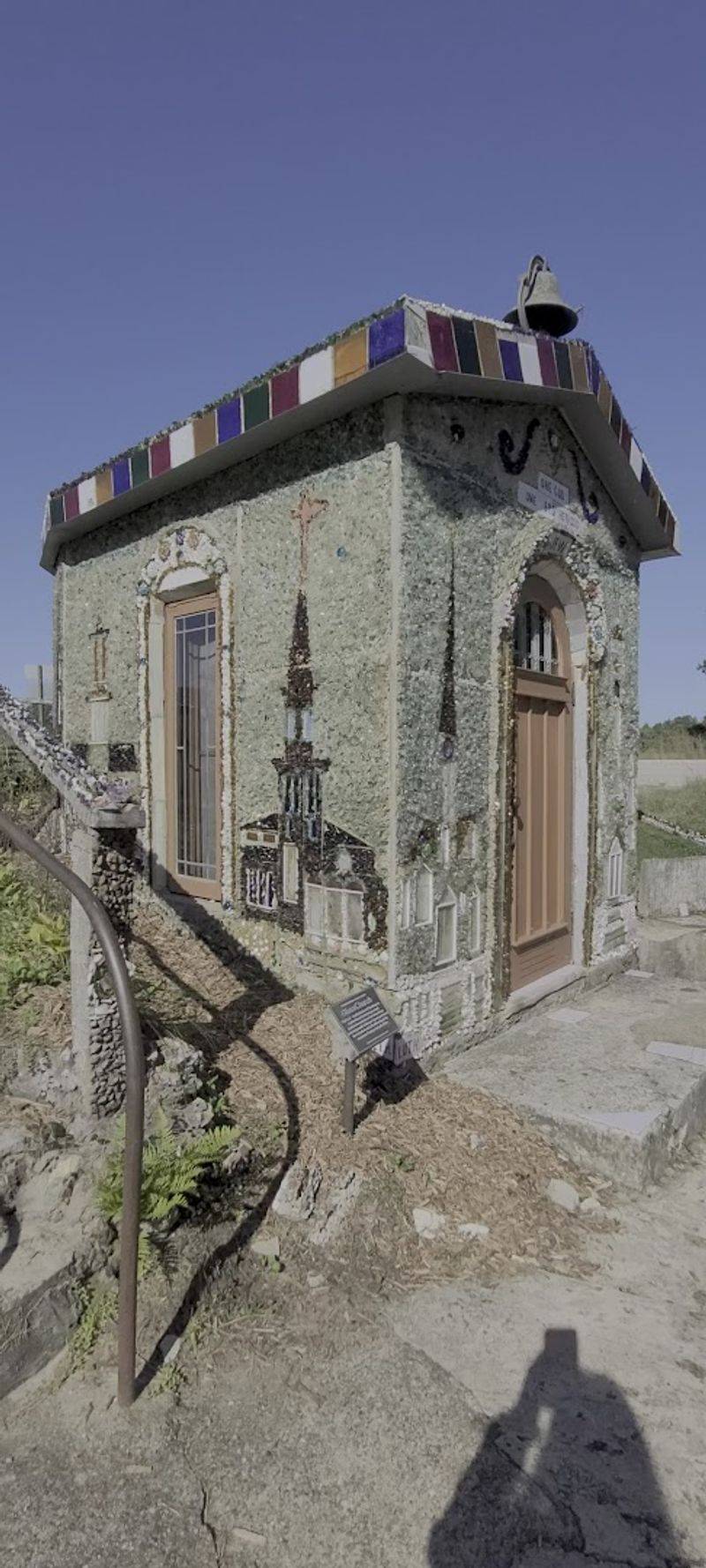
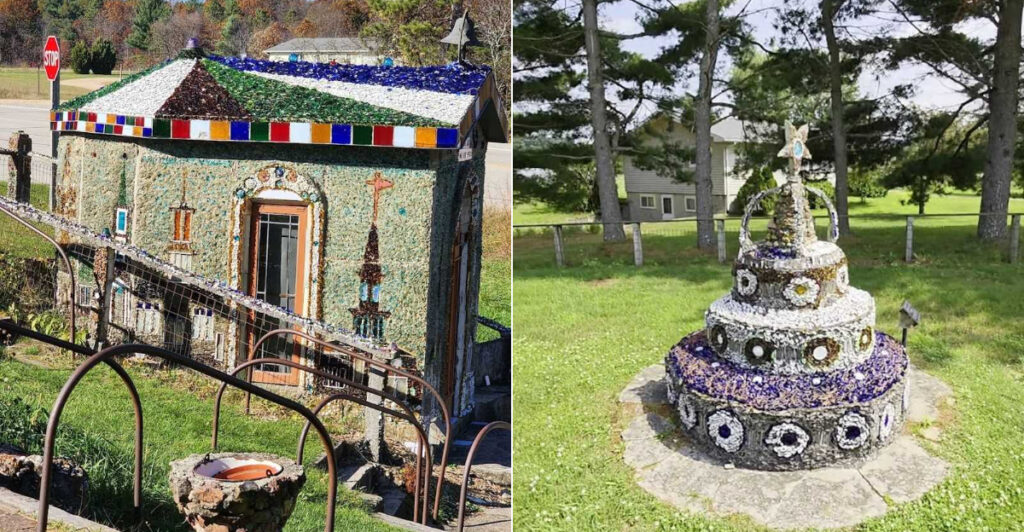
Among all the structures on the property, the small chapel is the one that draws the most attention. Sometimes called the glass church, it is a miniature building covered entirely in colored glass pieces that catch the light and create a striking visual effect across its exterior walls.
The chapel reflects the deeply Christian themes that run through much of the grotto’s artwork. Paul Wegner was a man of strong faith, and that belief system shaped what he chose to build and how he decorated each piece.
Religious imagery appears throughout the property, giving the site a reverent, contemplative quality that sets it apart from more whimsical roadside attractions.
The chapel is sometimes open for visitors to step inside, though this depends on the day and conditions. When it is accessible, the interior reveals the same careful glass-work that covers the outside, making the experience of standing inside it genuinely unlike anything most people have encountered at a roadside stop.
The Ship Sculpture That Came Out of Nowhere
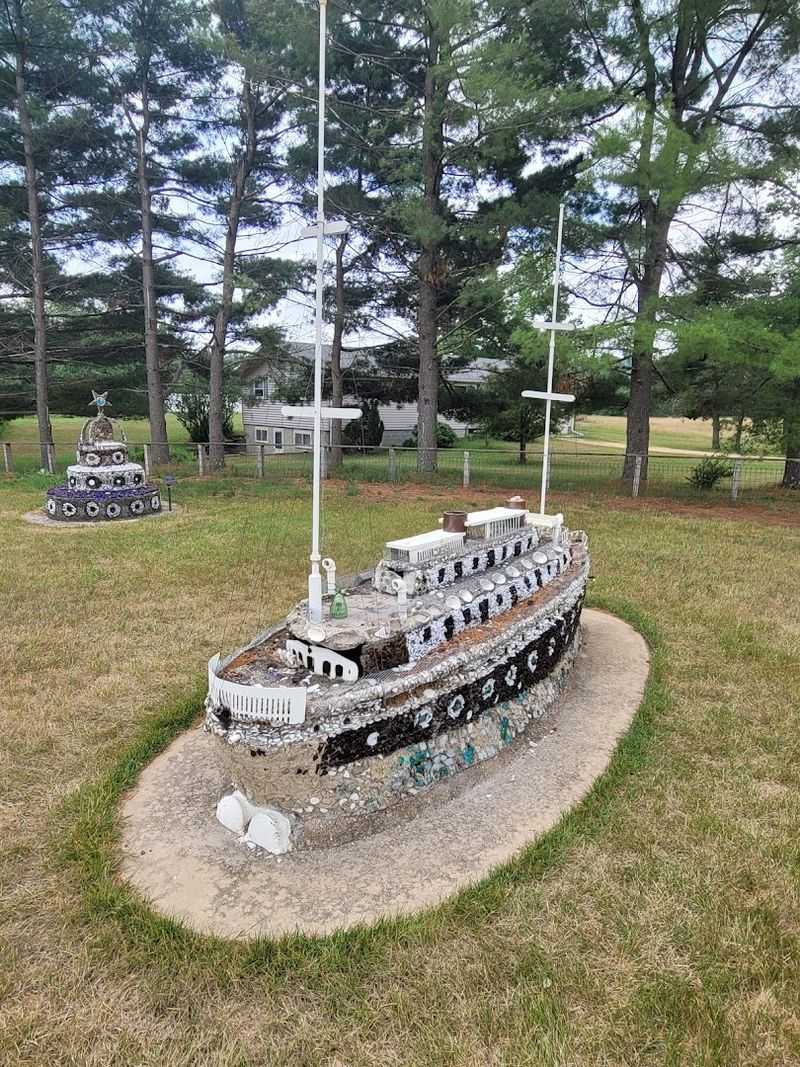
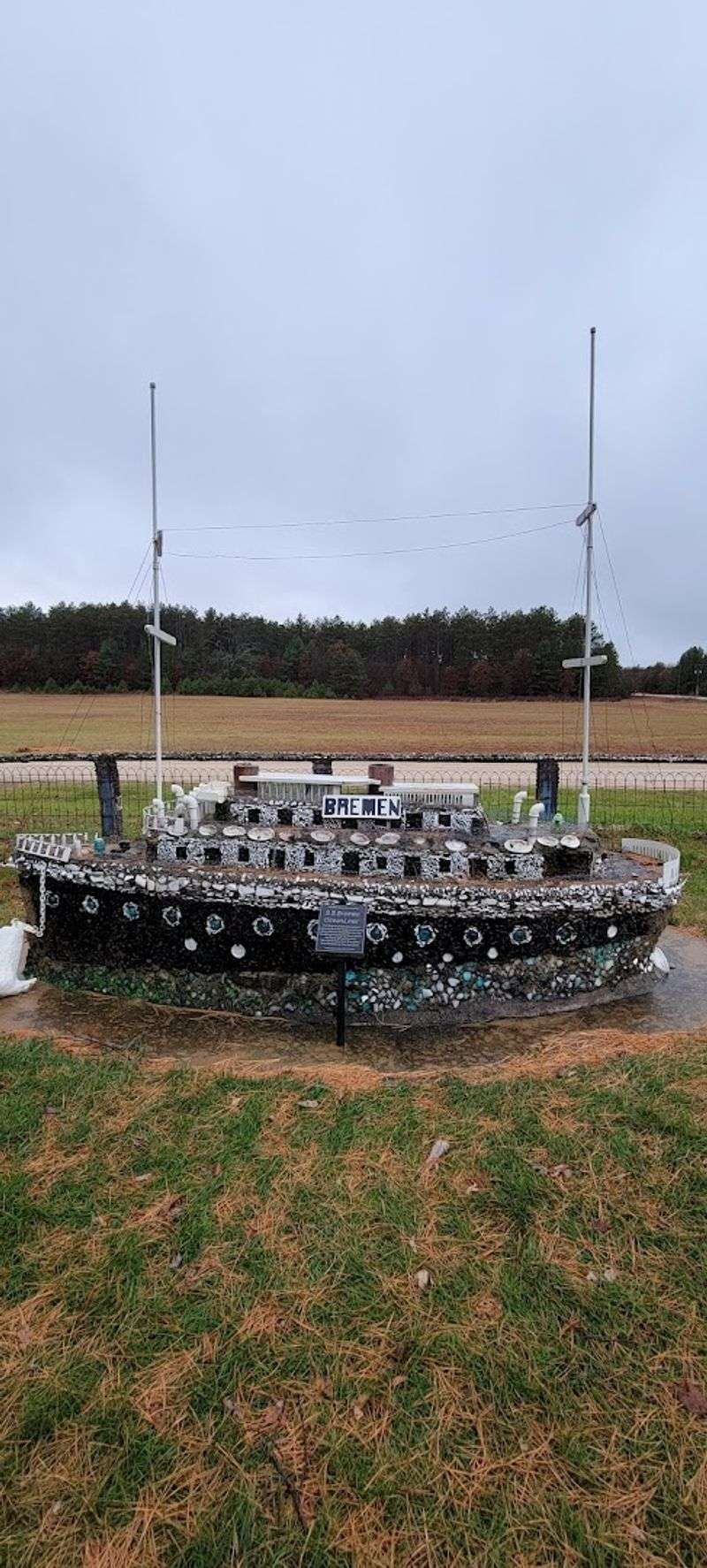
Not everything at the Wegner Grotto follows a strictly religious theme. One of the most surprising structures on the property is a ship, built from concrete and covered in the same colorful glass that defines the rest of the site.
It is an unexpected subject for a landlocked Wisconsin farmer to tackle, which is exactly what makes it so interesting.
The ship sits among the other sculptures and buildings on the property, and its scale is enough to make visitors stop and look twice. The detail work along the hull and deck areas shows the same patience and precision that Paul brought to every other structure he built during those years of retirement.
Folk art often works this way, with artists following their own logic rather than any conventional rule about what subjects belong together. The ship at the Wegner Grotto is a good example of that freedom, and it adds a layer of personality to the overall collection that keeps the site from feeling too solemn or predictable.
A Wedding Cake Frozen in Concrete and Glass
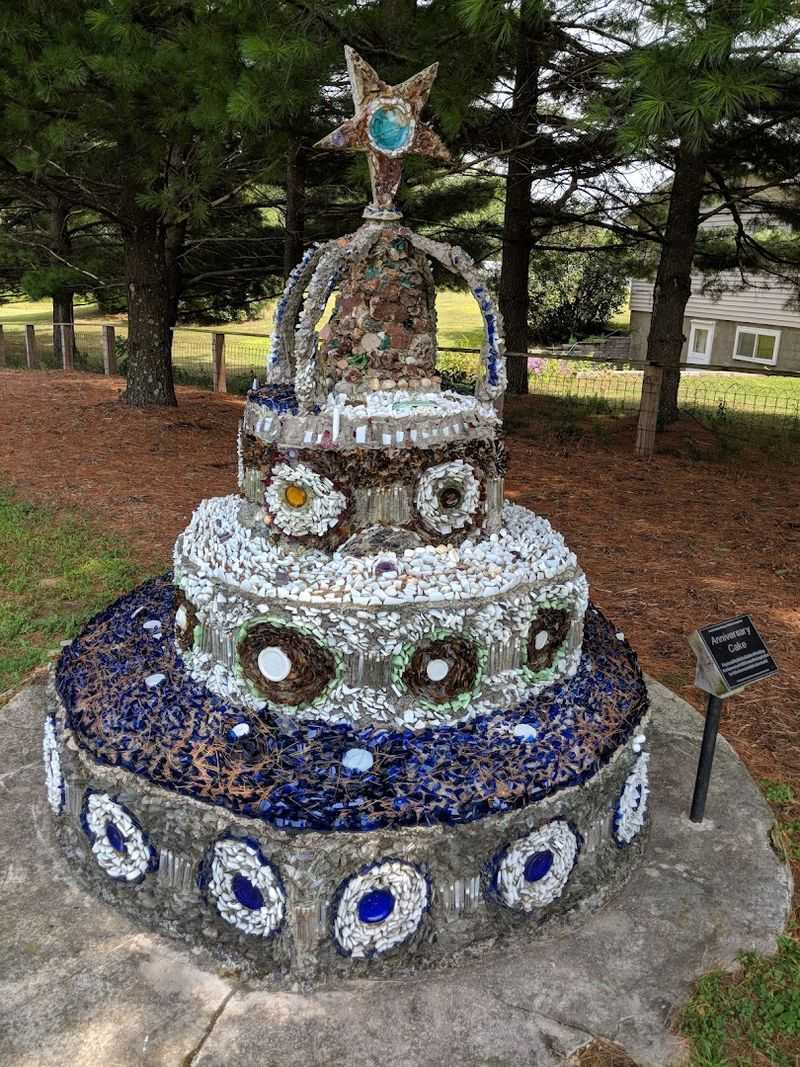
Another structure that surprises first-time visitors is the wedding cake. Paul built a large, multi-tiered wedding cake sculpture out of concrete and glass, and it stands as one of the more personal pieces in the entire collection.
It is widely understood to be a tribute to his marriage with Matilda and the life they built together.
The wedding cake is covered in the same style of embedded glass that appears across the rest of the property, with colored pieces arranged in patterns that give it a celebratory quality. It is not a small piece either.
The scale of it reflects how seriously Paul took the project and how much meaning he attached to the subject.
For anyone who visits the grotto looking for the human story behind the art, the wedding cake is probably the most direct expression of it. It is a big concrete declaration that this place was always about more than just building structures.
It was about honoring a life shared between two people.
The Prayer Garden and What It Means
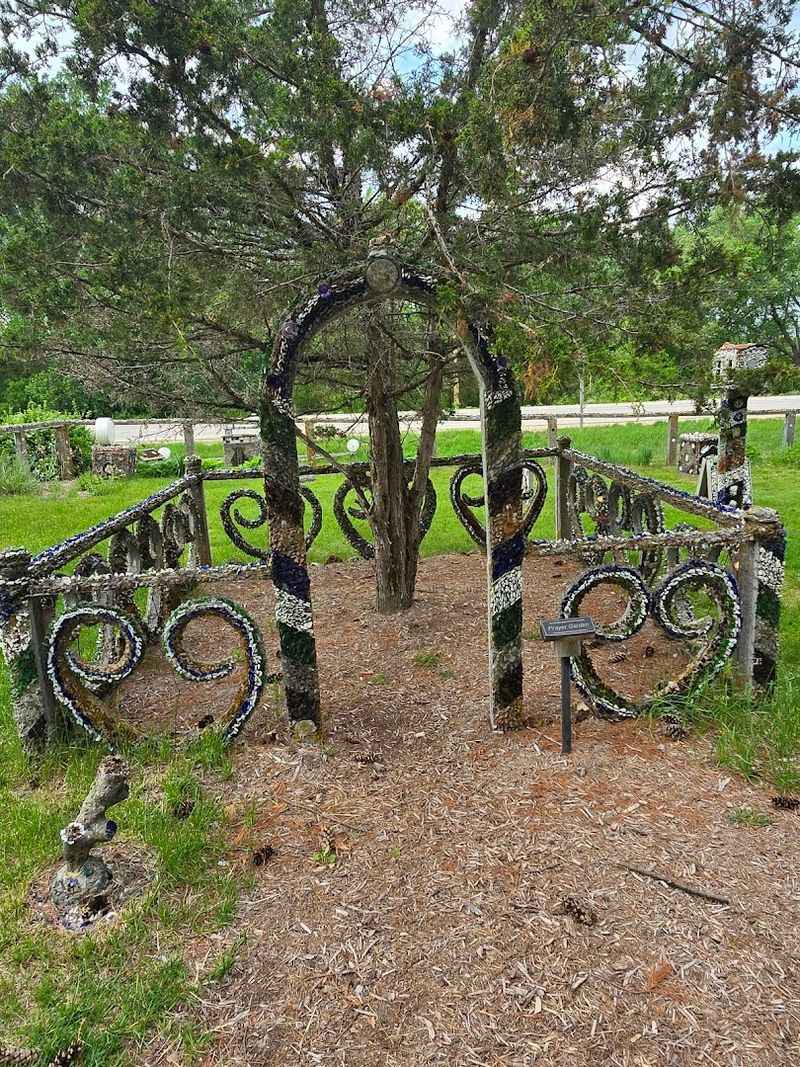
Beyond the individual sculptures, the grotto includes a prayer garden area where several religious figures and scenes are arranged across the grounds. This section of the property gives the site a meditative quality that visitors often comment on, noting that it feels like a genuinely peaceful place to walk through slowly.
The prayer garden reflects Paul Wegner’s Catholic faith, which was central to his life and clearly central to his creative work as well. The figures and scenes throughout this area are rendered in concrete and covered with the glass that defines the entire site, but the subjects here carry a more deliberate spiritual weight than the ship or wedding cake.
Walking through the prayer garden is a good way to understand the full scope of what Paul was trying to create. This was not simply a hobby project or a way to pass retirement hours.
It was an act of devotion, and the prayer garden is where that intention comes through most clearly for most people who visit.
Outsider Art and Why This Place Belongs in That Conversation
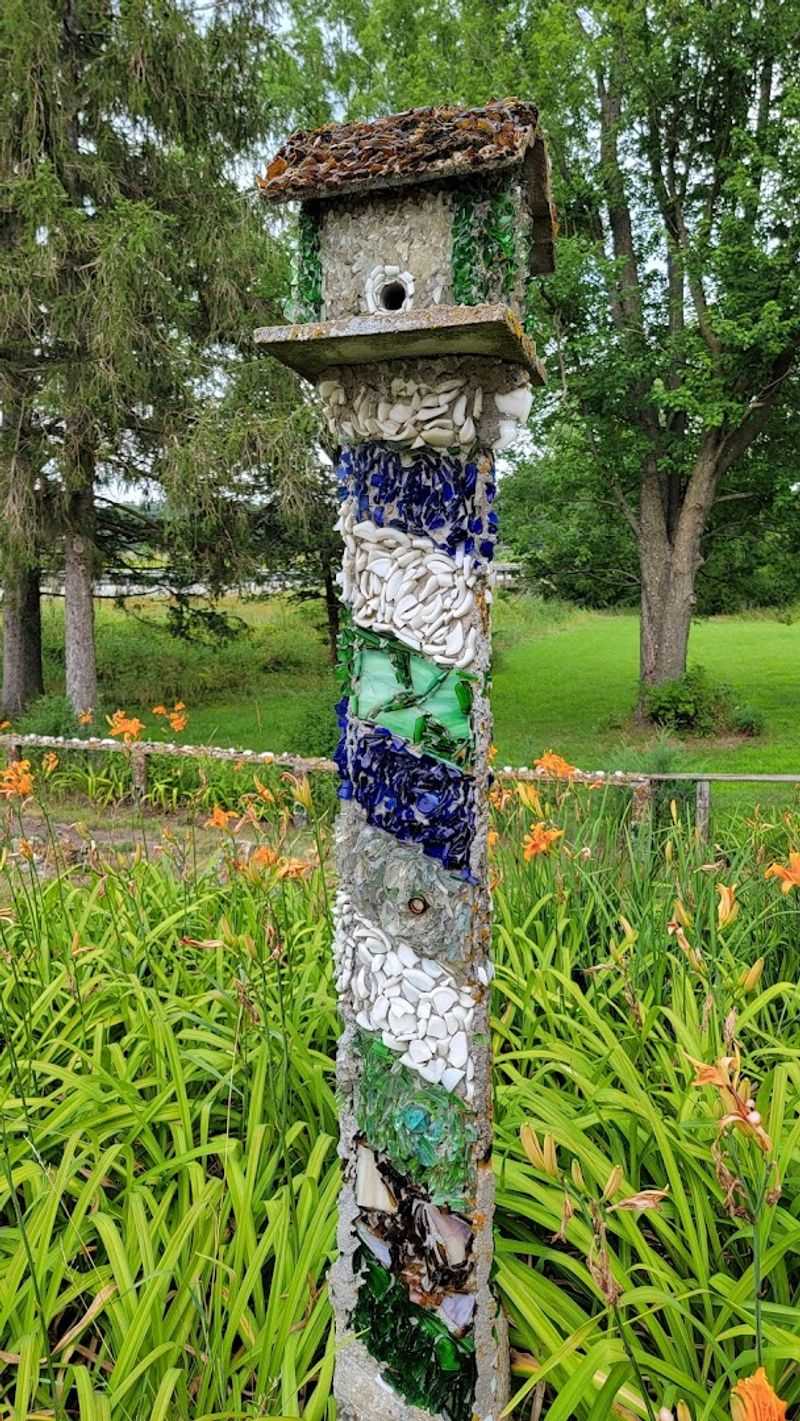
The Wegner Grotto belongs to a tradition known as outsider art, which refers to work created by self-taught artists who operate outside the formal art world. This category includes grotto builders, yard artists, and visionary environment creators across the United States, and the Wegner site holds its own among the best of them.
What defines outsider art is not a lack of skill but a lack of formal training combined with a deeply personal creative vision. Paul Wegner had both of those qualities.
He did not study at an art school or follow any established method. He simply built what he wanted to build, using materials that were available to him, and the result is a body of work that has outlasted him by decades.
Folk art enthusiasts who make a point of seeking out sites like this one will find the Wegner Grotto to be a rewarding stop. The level of detail across every structure is the kind that rewards slow, careful looking rather than a quick walk-through.
What to Expect When You First Arrive
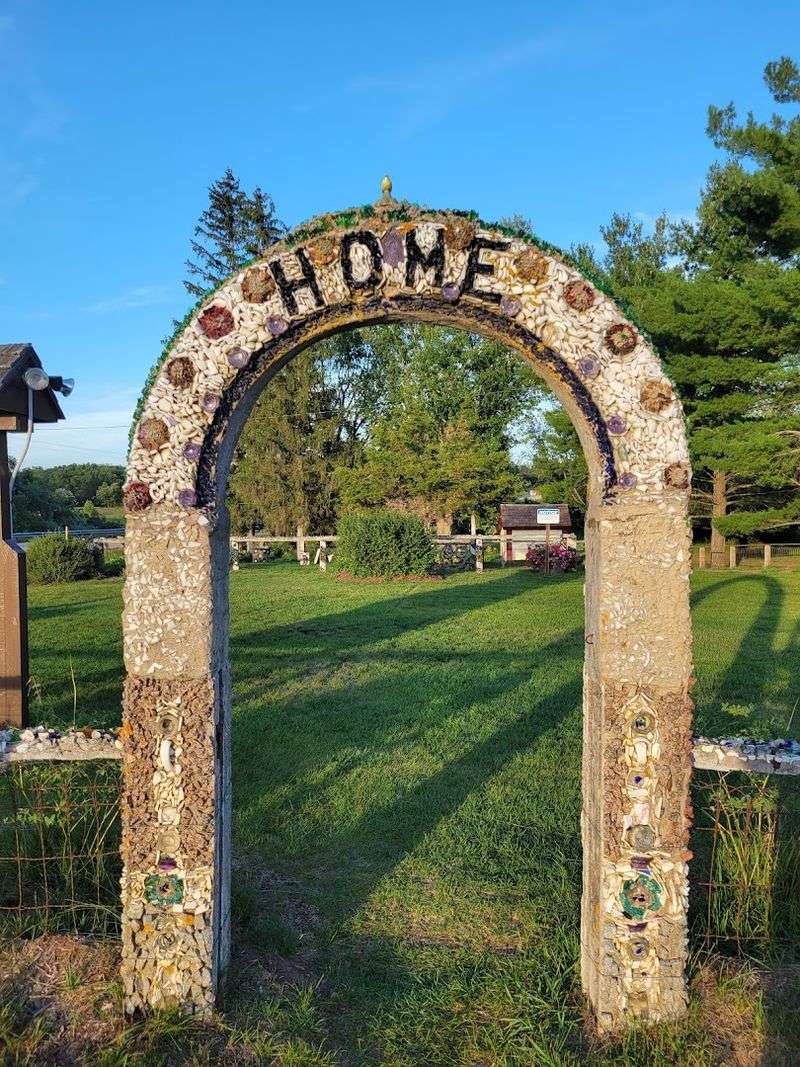
The parking situation at the Wegner Grotto is small, with room for only a handful of vehicles at a time. On busy weekend days during the warmer months, this can mean waiting for a spot or parking along the road and walking a short distance.
The area is rural and low-traffic, so this is rarely a serious issue.
A portable restroom is located across the road from the parking area, which is worth knowing before arrival, especially for families traveling with young children. There are no other facilities on-site, no gift shop, no concession stand, and no staff present during most visits.
The grounds are open and self-guided, meaning visitors walk through at their own pace and read the informational signage placed throughout the property. That signage covers the history of Paul and Matilda, the significance of individual pieces, and background on how the grotto was built.
Taking time to read those signs adds a lot of context to what you are looking at.
How the Community Has Helped Keep It Standing
The Wegner Grotto has faced the same challenges that most outdoor folk art environments deal with over time: weather, age, and occasional vandalism. Concrete cracks, glass pieces loosen, and the elements work steadily against structures that were built by hand without commercial-grade materials or engineering support.
The site has benefited from preservation efforts over the years, with community members and folk art advocates working to maintain the structures and keep the property accessible to the public. The free-will donation box on-site is one way that visitors contribute directly to those ongoing efforts.
The fact that the grotto is still standing and still open decades after Paul Wegner completed his work is not something that can be taken for granted. Many similar sites across the country have been lost to neglect or development.
The continued survival of this one reflects genuine community investment in keeping an irreplaceable piece of Wisconsin history available for future generations to see and appreciate.
Tips for Getting the Most Out of Your Visit
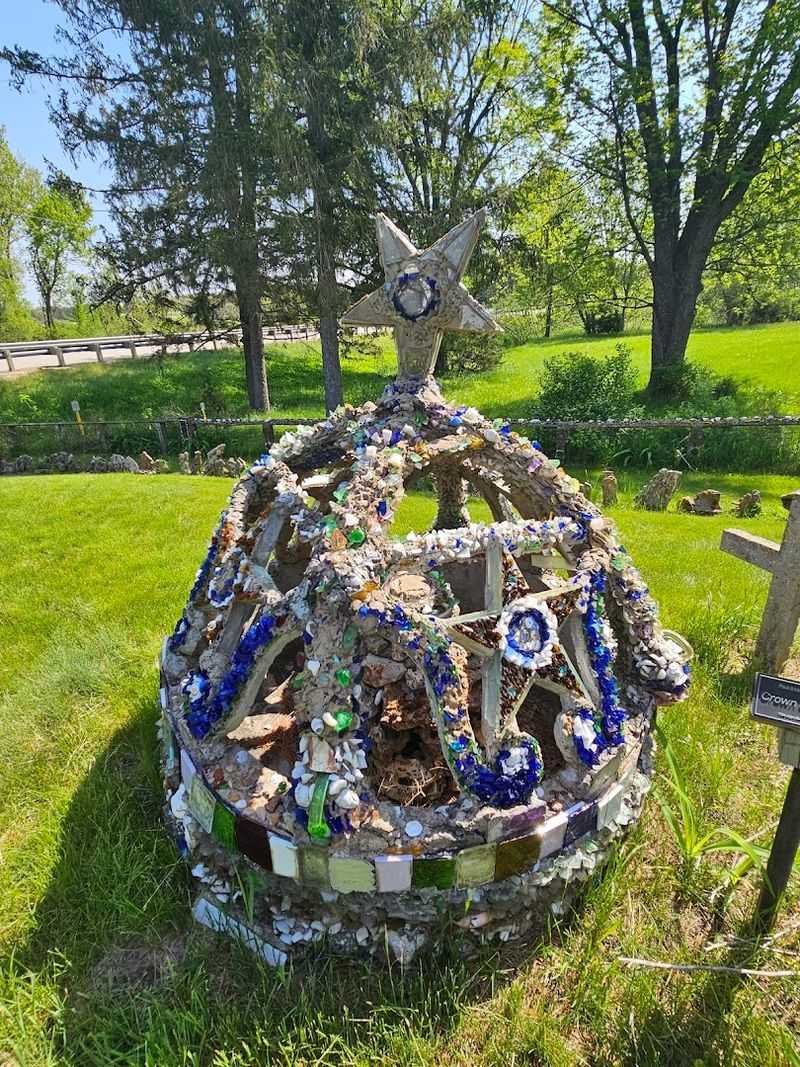
A few practical details can make a visit to the Wegner Grotto significantly better. Arriving in the morning, when the light is at a lower angle, tends to bring out more of the reflective quality in the glass pieces across the sculptures.
The site opens at 8 AM every day, so early arrivals have the grounds largely to themselves.
Wearing closed-toe shoes is a smart choice given the broken glass throughout the property. The shards are embedded in concrete, but pieces do protrude, and the ground around the sculptures can have loose fragments as well.
Comfortable footwear makes it easier to move around safely and focus on the artwork.
Building in at least 30 to 45 minutes for the visit allows enough time to read the signs, walk through all the structures, and take photos without feeling rushed. The site is small, but the detail work rewards slow attention.
A quick five-minute walk-through leaves too much unseen, and this is one of those places where the longer you look, the more you find.
Where Exactly is This Glass-Covered Place
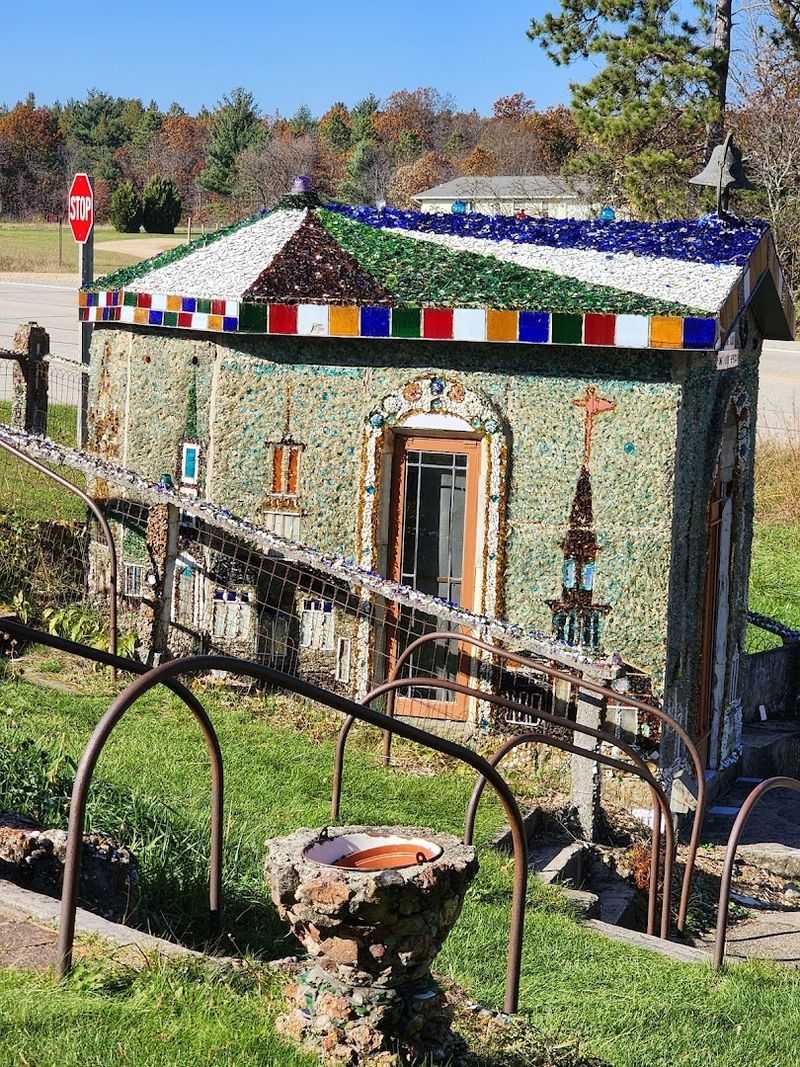
The Paul and Matilda Wegner Grotto sits at 7788 Daylight Rd, Sparta, WI 54656, tucked off a rural backroad in Monroe County in western Wisconsin. The location is easy to miss if you are not specifically looking for it, which is part of what makes stumbling upon it feel like such a reward.
Sparta is a small city that serves as the county seat of Monroe County and sits near Interstate 90, making it a convenient stop for travelers heading toward La Crosse or the Dells. The grotto itself is set on a modest piece of land with a small parking area and a portable restroom across the road.
The site is open seven days a week from 8 AM to 8 PM, giving visitors plenty of flexible time to stop in. There is no admission fee, though a free-will donation box is available to help with ongoing upkeep of the property.
Share this story