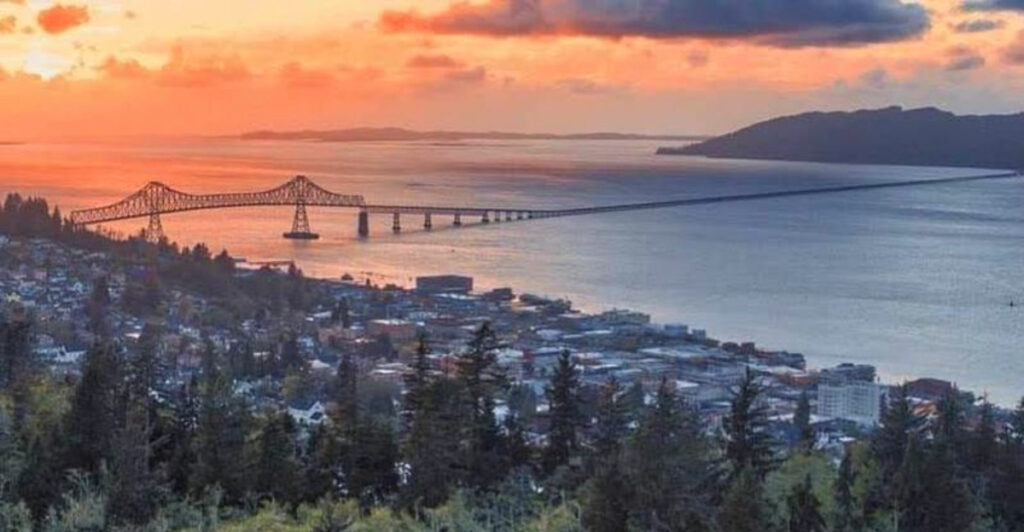
There is a town on the Oregon coast where the Columbia River meets the Pacific Ocean, and it has been quietly collecting surprises for over 200 years. It was the first American settlement west of the Rocky Mountains, and it still carries that pioneer energy in every cobblestone street and Victorian rooftop.
From a towering hilltop column you can spot from miles away to a maritime museum that practically pulls you in off the waterfront, this place layers history, nature, and local character in ways that genuinely catch you off guard. Pack your curiosity, because this coastal Oregon town is about to earn a permanent spot on your travel list.
Where It All Began: Astoria’s Address and Origins
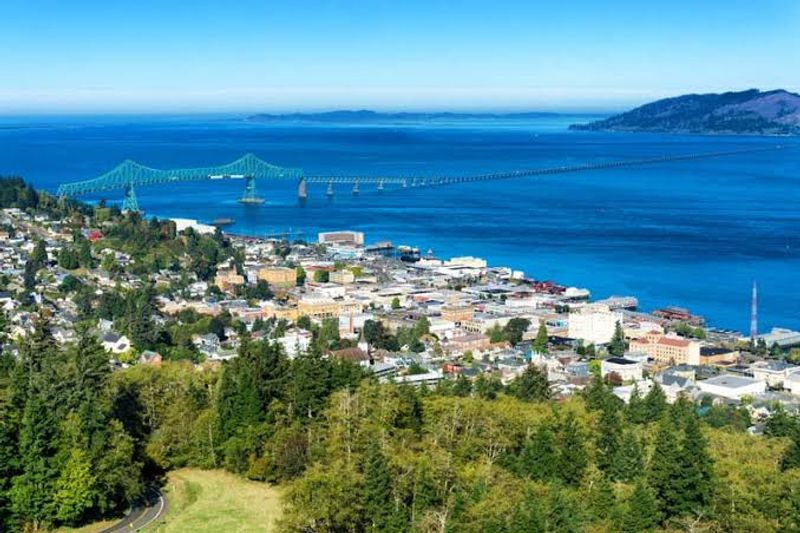
Few American towns carry as much founding weight as Astoria, Oregon, which sits at the northern tip of the Oregon coast at the mouth of the Columbia River, near the Pacific Ocean, with a general mailing address of Oregon 97103, and a city website at astoria.or.us.
This was the first permanent American settlement west of the Rocky Mountains, established in 1811 by John Jacob Astor’s Pacific Fur Company.
That founding story alone sets the tone for everything you encounter here. The town did not grow up around a gold rush or a railroad boom but around trade, water, and the sheer ambition of people willing to travel to the very edge of the continent.
Walking the streets today, you can still feel that original boldness in the architecture, the harbor views, and the proud local attitude toward history. Unlike many coastal towns that lean entirely into tourism, Astoria keeps a working-class, lived-in character that feels refreshingly honest.
Residents here know what their town is, and they are happy to share it with visitors who show genuine interest. That combination of deep history and unpretentious community spirit makes Astoria unlike almost anywhere else on the West Coast.
The Astoria Column: A View Worth Every Step
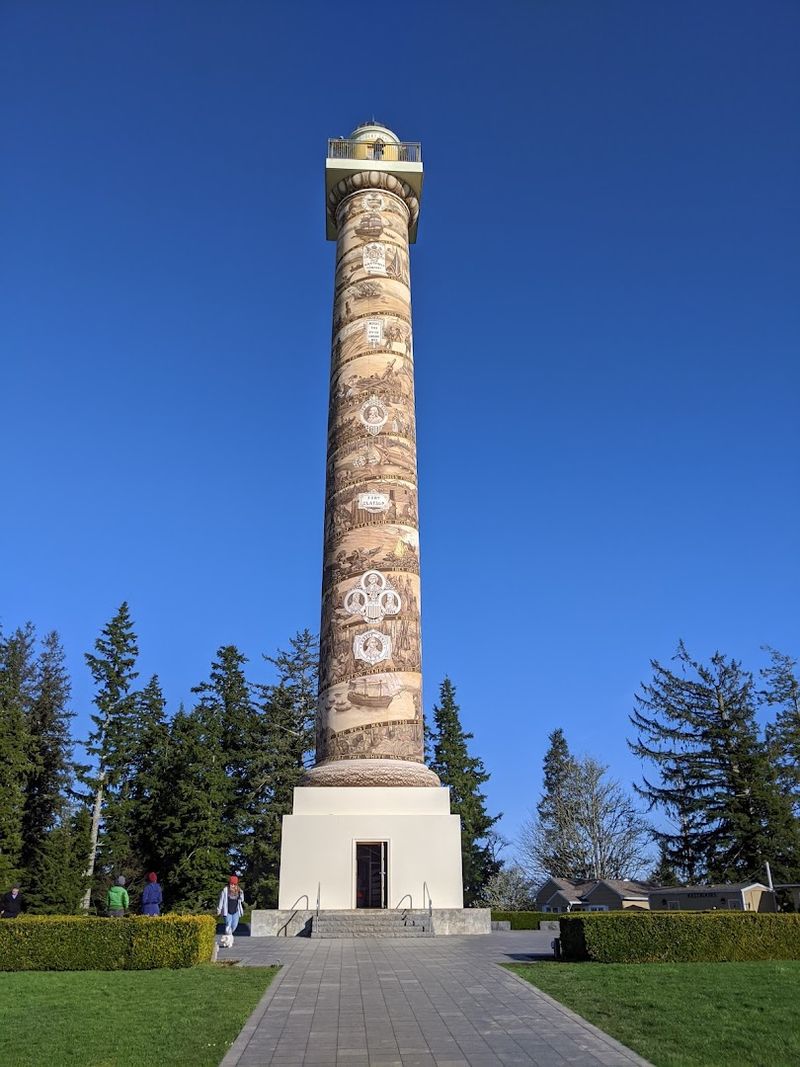
At 125 feet tall and perched on top of Coxcomb Hill, the Astoria Column is the kind of landmark that stops you mid-sentence when you first see it rising above the tree line.
Built in 1926 and modeled after the Trajan Column in Rome, it is covered in a continuous spiral mural depicting key moments in the region’s history, from the arrival of Native peoples to the Lewis and Clark Expedition to the settlement of the Pacific Northwest.
Climbing the 164 interior steps rewards you with a panoramic view that stretches across the Columbia River, the Pacific Ocean, and the forests of Washington state on the far bank. On a clear day, the scenery genuinely takes your breath away in the most literal, non-cliche sense.
Small balsa wood gliders are sold at the base, and watching visitors of all ages launch them from the top platform is one of the more joyful, low-key experiences the town offers.
The column sits inside a small forested park with picnic areas, making it a natural first stop that sets the tone for everything Astoria has in store for you.
Columbia River Maritime Museum: History Afloat
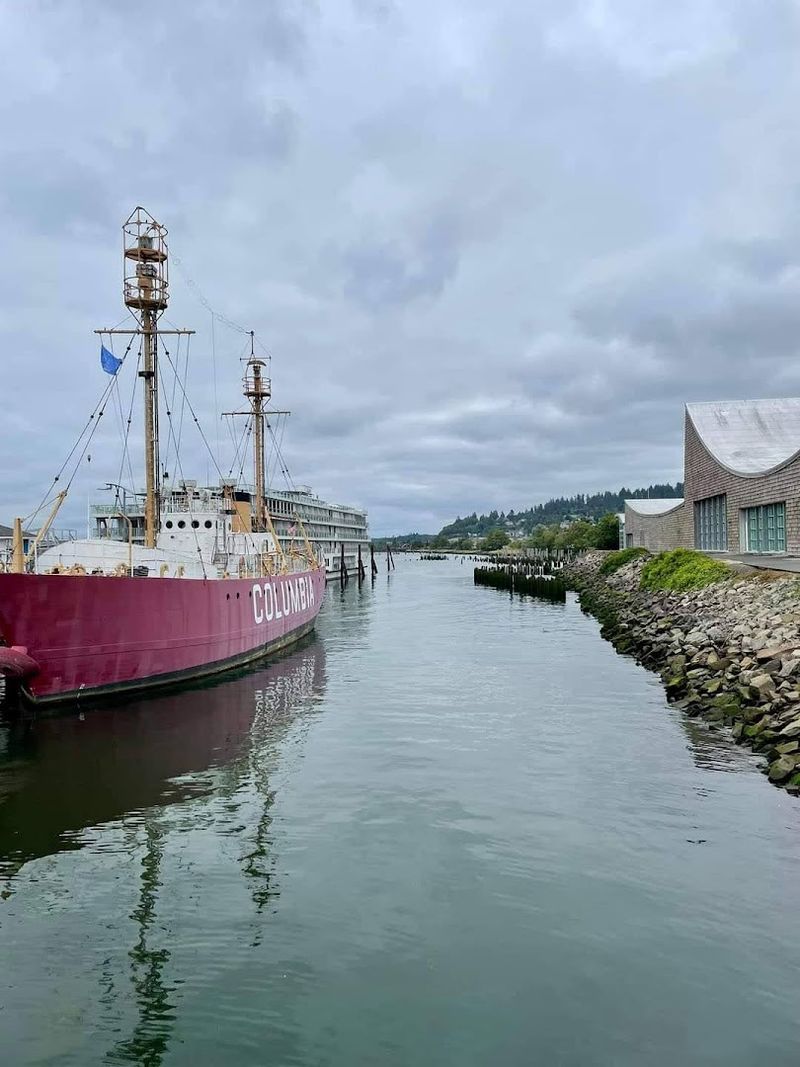
The Columbia River Maritime Museum sits right on the Astoria waterfront, and its bold, wave-shaped roof signals that this is not your average small-town history exhibit.
Opened in 1962 and expanded significantly over the decades, the museum covers the full sweep of maritime life along the Columbia River, from the dangers of the Columbia Bar crossing to the commercial fishing industry that shaped this region for generations.
One of the most striking exhibits features the lightship Columbia, an actual decommissioned vessel moored right outside that you can board and explore. The ship served as a floating lighthouse at the treacherous mouth of the river, and standing on its deck gives you an immediate, physical sense of how demanding life on the water once was.
Inside, detailed displays cover military history, navigation technology, and the cultural lives of fishing communities that stretched from Astoria all the way up the river. The museum does not talk down to its visitors.
It trusts you to handle the real, sometimes difficult stories of shipwrecks, hard labor, and the natural forces that made the Columbia one of the most challenging waterways in North America. Budget at least two hours here.
Flavel House Museum: Victorian Drama on Dry Land
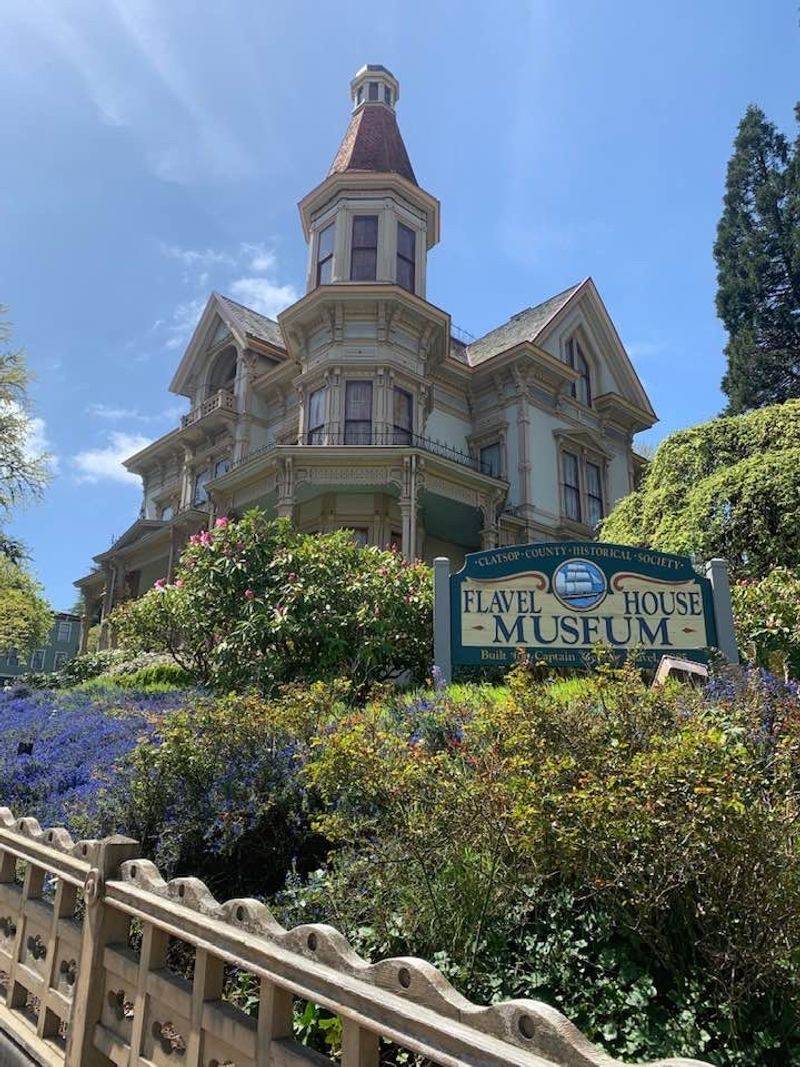
Captain George Flavel was one of the most powerful men in 19th-century Astoria, and the house he built in 1885 makes absolutely sure you know it.
The Flavel House Museum is a fully preserved Queen Anne-style Victorian mansion that anchors the corner of 8th and Duane Street in the heart of historic Astoria. With its sweeping wraparound porch, decorative woodwork, and original period furnishings still in place, the house feels less like a museum and more like a home whose owners just stepped out for a walk.
The interior rooms are furnished with meticulous attention to the tastes and habits of a wealthy Oregon family in the late 1800s. Every parlor, bedroom, and dining room tells a story about social ambition, domestic life, and the enormous wealth that the Columbia River bar pilot industry could generate.
Outside, the manicured gardens provide a quiet contrast to the ornate drama of the house itself. The Clatsop County Historical Society manages the property and keeps the interpretation grounded in real, documented history rather than theatrical storytelling.
For anyone curious about how prosperity looked and felt on the Oregon frontier, this house delivers answers in vivid, well-preserved detail that no textbook could match.
The Astoria Riverfront Trolley: A Slow Ride With Big Rewards
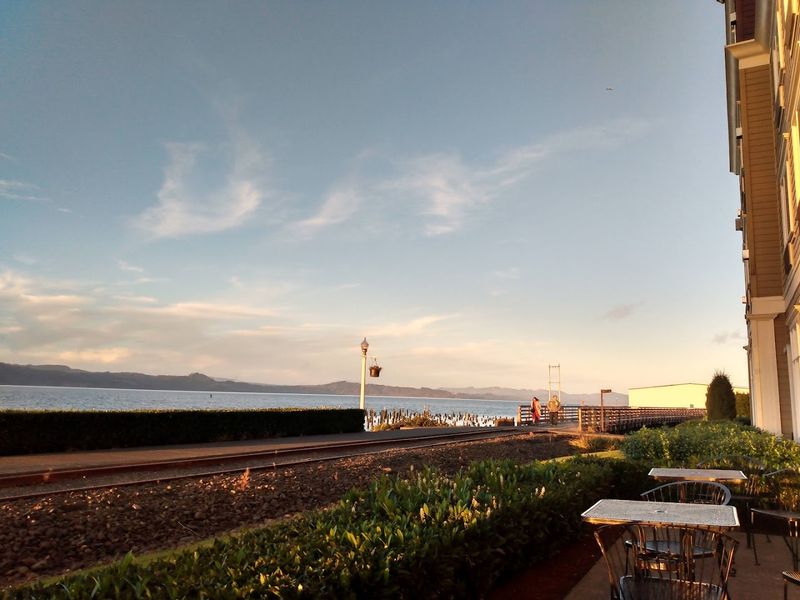
Old Trolley No. 300 has been rolling along the Astoria riverfront since 1993, and it covers about a mile and a half of waterfront track with the kind of unhurried charm that the rest of modern travel has mostly forgotten.
The trolley runs seasonally and connects several key waterfront spots, including the Columbia River Maritime Museum and the east end of the riverwalk. Riding it is genuinely fun rather than just convenient, partly because the restored 1913 streetcar feels like a moving piece of local history.
The route hugs the river closely enough that you get unobstructed views of the water, the fishing boats, and the long Astoria-Megler Bridge stretching across to Washington state. That bridge, by the way, is the longest continuous truss bridge in North America, a fact that tends to surprise first-time visitors.
The trolley also passes some of the town’s best-known murals and public art installations, making it a low-effort way to orient yourself before exploring on foot.
Locals use it casually alongside tourists, which gives the whole experience a neighborly, unpretentious feel that fits Astoria’s personality perfectly. It costs very little and delivers a lot of quiet satisfaction.
Fort Clatsop and the Lewis and Clark Connection
In the winter of 1805 to 1806, the Lewis and Clark Expedition camped near present-day Astoria at a place they called Fort Clatsop, and the National Park Service has preserved that story with remarkable care at Lewis and Clark National Historical Park.
The park sits just a few miles south of downtown Astoria and features a full-scale reconstruction of the original fort, built to match the dimensions recorded in the expedition’s journals. Ranger-led programs bring the historical context to life without oversimplifying the complicated relationships between the Corps of Discovery and the Native Clatsop people who had lived in this region for thousands of years.
The surrounding forest trails offer a genuine sense of the dense, wet, Pacific Northwest landscape that the expedition endured for months. The journals describe rain on all but twelve days of that winter, and standing in those woods in November, that claim feels entirely believable.
This site connects Astoria to one of the most significant chapters in American exploration history. It also quietly reminds visitors that this corner of Oregon was already a sophisticated, inhabited world long before any American expedition arrived to document it.
The park is free with a National Parks pass and well worth a half-day visit.
Local Food Culture: Fresh, Honest, and Surprisingly Good
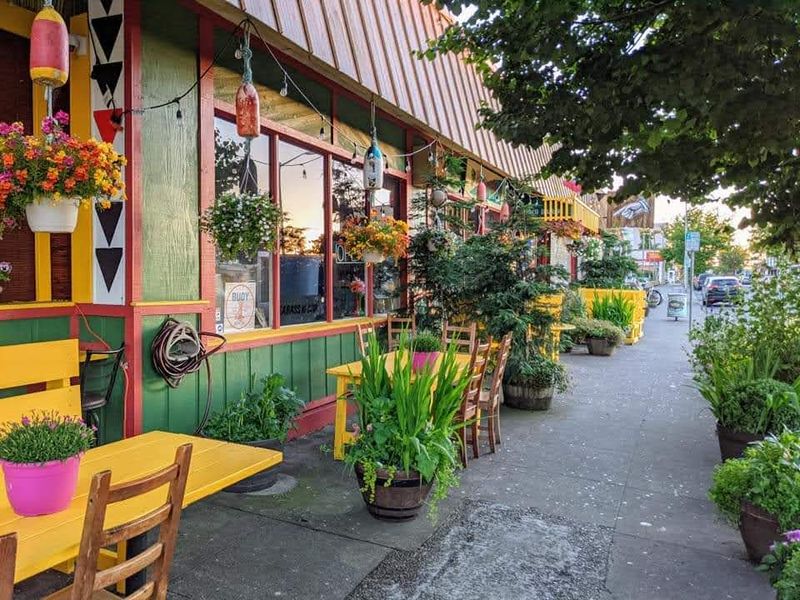
Astoria’s food scene does not try to be trendy, and that restraint turns out to be one of its greatest strengths.
The town sits at the intersection of the Columbia River and the Pacific Ocean, which means the seafood here arrives with a freshness that coastal restaurants in landlocked states like Oklahoma can only approximate. Dungeness crab, Chinook salmon, and fresh clams show up on menus throughout town, prepared simply and served without unnecessary fuss.
The Astoria Sunday Market, held weekly from May through October, draws local farmers, bakers, and food vendors to a lively outdoor space near the waterfront. It is the kind of market where you end up buying smoked fish and homemade jam because the person selling them caught the fish themselves and grew the fruit in their backyard garden.
Several small coffee roasters and independent cafes line the downtown streets, and the quality is consistently high. The town also has a strong brewing culture, with local establishments producing craft sodas, kombucha, and small-batch root beer that pair surprisingly well with a bowl of chowder on a foggy morning.
Eating in Astoria feels like a natural extension of the place itself, unpretentious, locally rooted, and much better than you expected.
Why Astoria Keeps Pulling People Back
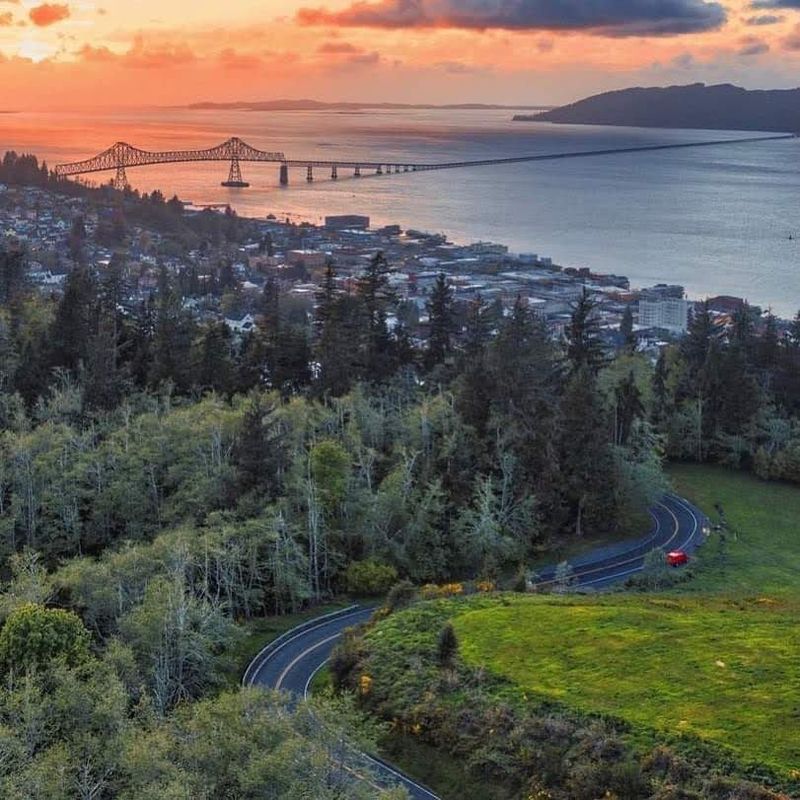
Travelers who visit Astoria once tend to start planning their return trip before they even leave the parking lot, and that reaction is not hard to understand once you have spent a full day here.
The town sits in a genuinely dramatic natural setting, with forested hills rising steeply behind the Victorian streetscapes and the wide Columbia River spreading out in front. That physical geography gives Astoria a sense of scale and grandeur that surprises people who expected a quiet fishing village.
The film industry discovered this quality decades ago, and productions including The Goonies and Kindergarten Cop were filmed here in the 1980s, a fact that local businesses celebrate with cheerful, self-aware humor. You will find references to both films scattered across downtown shops and restaurants, though the town never lets nostalgia overshadow its genuine historical identity.
From landlocked states like Oklahoma, the drive or flight to reach Astoria takes real commitment, but the town rewards that effort with a layered, authentic experience that goes far beyond a single attraction.
Astoria is the kind of place that reminds you why travel exists in the first place: to encounter somewhere so specific and so itself that it changes your sense of what a town can be. Oklahoma travelers especially tend to find the coastal contrast striking and deeply memorable.
Share this story