Most people drive through small Minnesota towns without expecting to find anything that stops them in their tracks. But every so often, a place quietly holds something so stunning that word eventually gets out.
There is a Catholic church in central Minnesota where the interior restoration work is so breathtaking that visitors who step inside often go completely silent. The craftsmanship, the color, the sheer devotion built into every corner of this sanctuary make it one of the most remarkable religious spaces in the entire state.
A Church That Earns Its Reputation
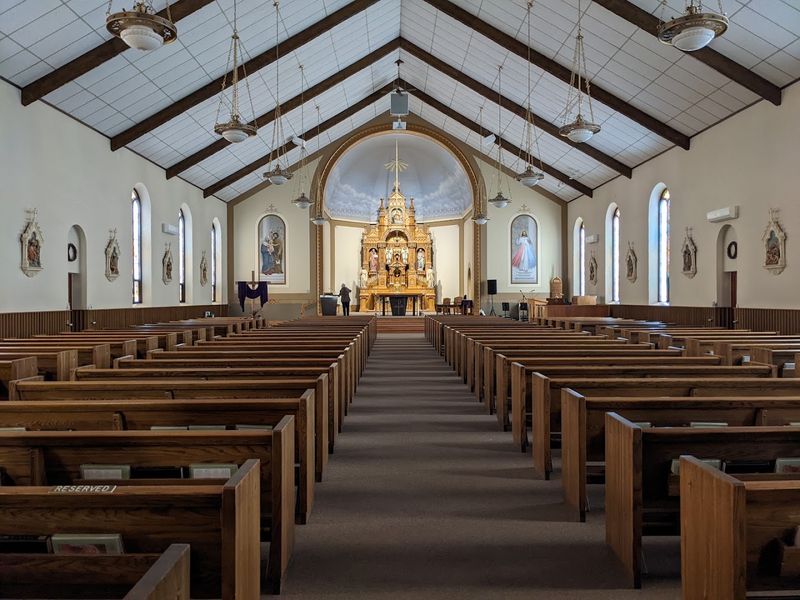
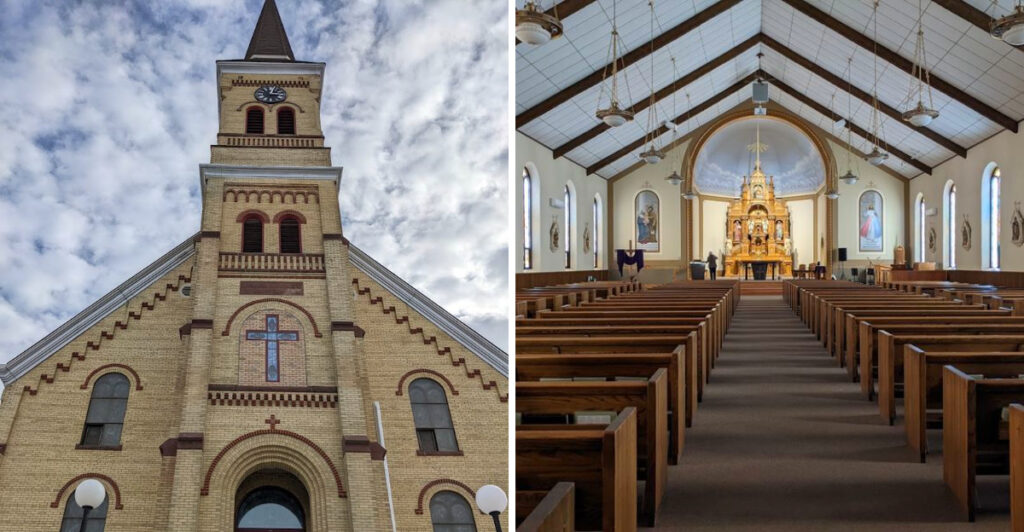
Not every historic church manages to balance age and beauty the way this one does. St. Mary of Mount Carmel Catholic Church, located at 409 Central Ave, Long Prairie, Minnesota 56347, sits at the heart of a small central Minnesota town that most travelers pass through without slowing down.
That is their loss. The church has built a quiet but powerful reputation among parishioners, visitors, and architecture enthusiasts who make a point of seeking it out.
Long Prairie itself sits in Todd County, surrounded by farmland and lakes, which gives the church an almost unexpected grandeur against its modest surroundings. The building commands attention the moment you spot it from the street.
There is something about its presence that signals this is not an ordinary stop on the map, and that instinct turns out to be completely correct.
The Sanctuary That Silences Visitors
The moment you walk through the front doors, the interior does something unexpected. It stops you.
The restored sanctuary at St. Mary of Mount Carmel is the kind of space that makes people forget what they were about to say mid-sentence.
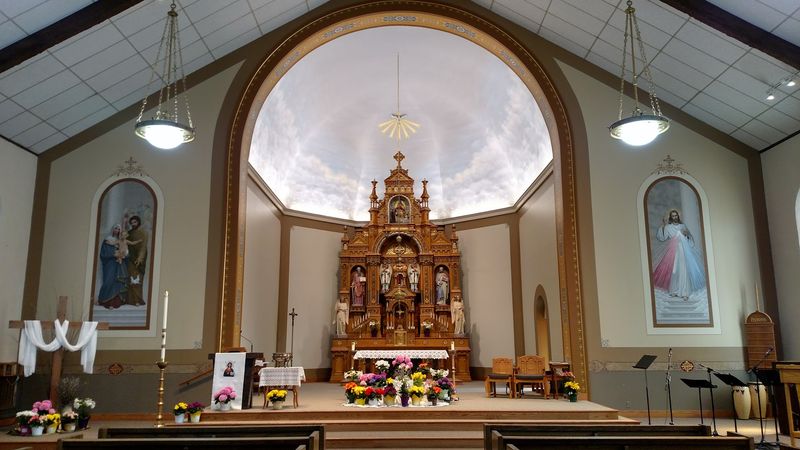
The altar area draws the eye immediately, with its careful detail and devotional craftsmanship that reflects years of intentional restoration work. Colors that might have faded over decades have been brought back with obvious care and reverence.
There is a warmth here that goes beyond lighting or decoration. The space feels lived-in and loved, which is exactly what a sanctuary should feel like.
Whether you arrive for Mass or simply to appreciate the artistry, the interior rewards every moment you spend looking closely at its details. Few spaces this size carry this much visual and spiritual weight.
A History Rooted in Community Faith
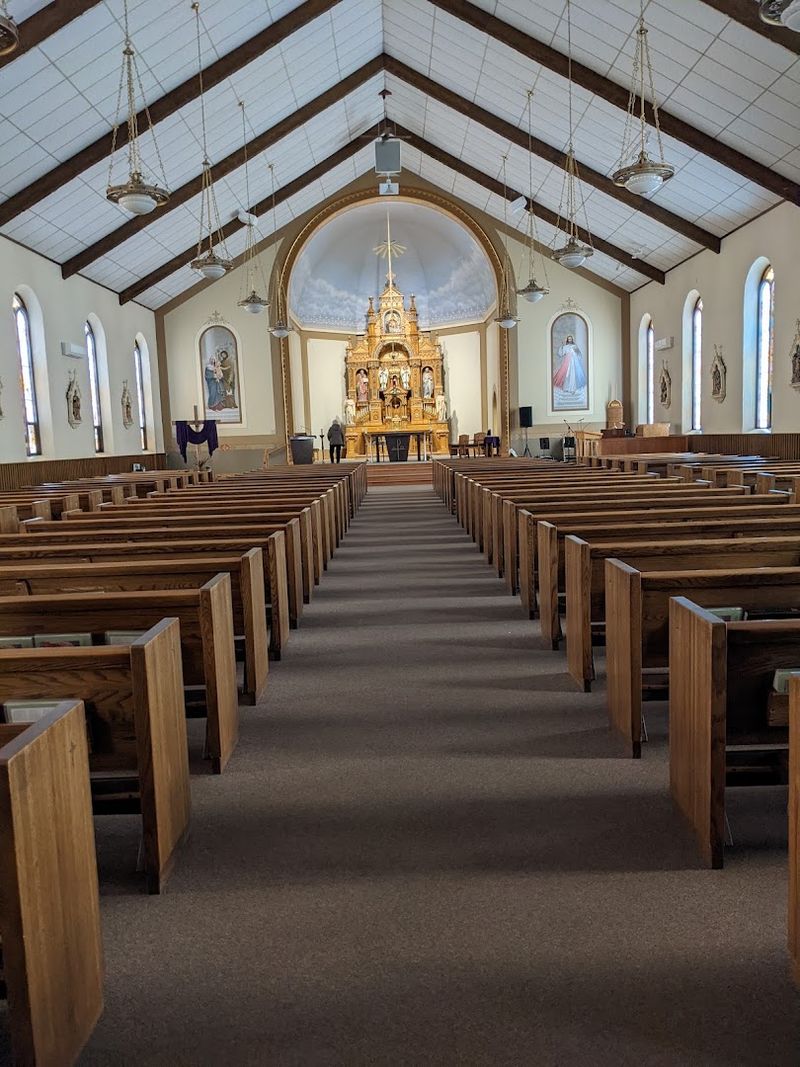
Catholic parishes in small Midwestern towns carry history in ways that urban churches rarely do. St. Mary of Mount Carmel has served the Long Prairie community through generations of families, celebrations, and hardships that shaped the region over more than a century.
The parish reflects the kind of deep-rooted faith that built much of rural Minnesota. Families who first joined the congregation passed their connection to the church down through their children and grandchildren, creating a living thread of community that still holds strong today.
That generational continuity shows up in the care taken to preserve and restore the building. When a community truly loves its church, the building shows it.
Every restored surface and every maintained detail at St. Mary of Mount Carmel tells a story about a congregation that refused to let its spiritual home become a faded version of itself.
The Stained Glass That Tells Stories in Light
Good stained glass does not just decorate a space. It transforms it.
The windows at St. Mary of Mount Carmel filter light in ways that shift throughout the day, casting color across the pews and stone floors in patterns that change with the seasons and the hour.
Each window carries visual storytelling rooted in Catholic tradition, depicting scenes and figures that have guided the faithful for centuries. Up close, the craftsmanship reveals a level of detail that rewards patient observation.
Stained glass in historic churches often suffers from age, cracking, fading, or outright breakage. When a parish invests in preserving or restoring these windows, it signals a commitment to keeping the full visual experience of the sanctuary intact.
At this church, the windows remain a central part of what makes the interior so visually arresting, and they are worth every minute spent studying them.
Architecture Built to Inspire Awe
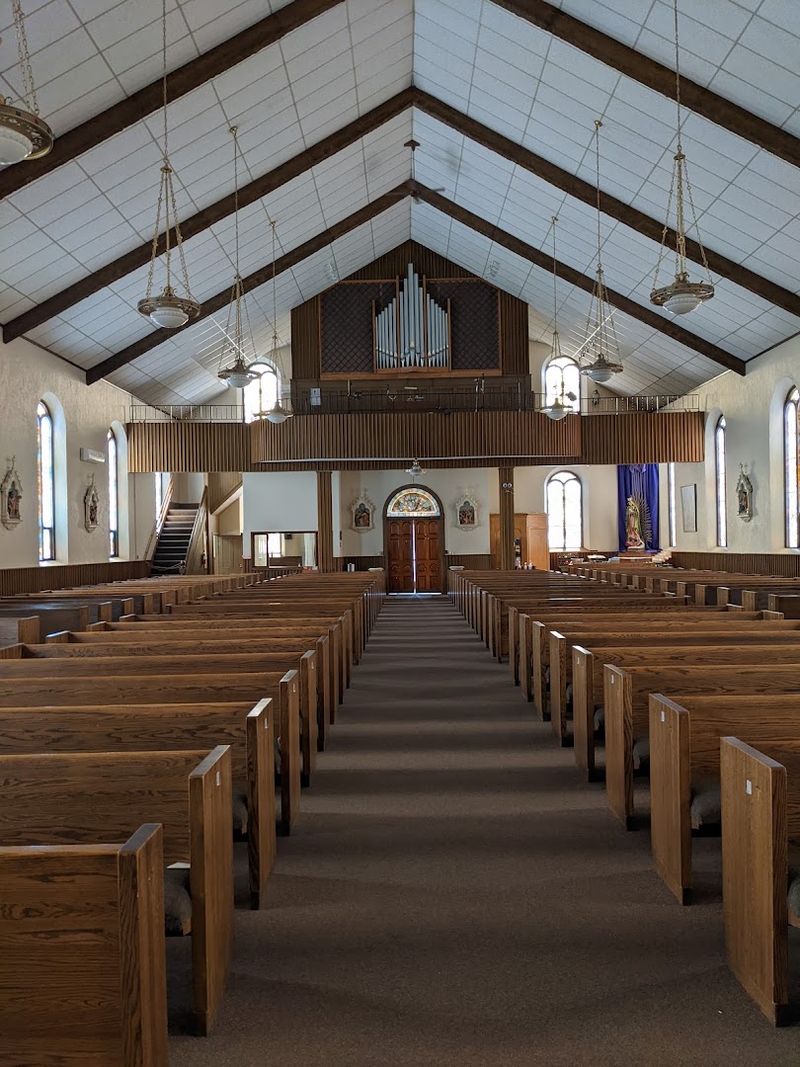
Church architecture in the Catholic tradition has always served a deliberate purpose. The height of the ceilings, the proportion of the nave, the way the building funnels attention toward the altar.
All of it is intentional. St. Mary of Mount Carmel was designed with that same intention, and the bones of the building still deliver that effect powerfully.
The vertical lines of the interior draw the eye upward, which is exactly what good sacred architecture is meant to do. High ceilings give the space a sense of scale that feels larger than the building’s exterior might suggest from the outside.
The wooden pews, the flooring, and the structural details all contribute to an atmosphere that feels both historic and alive. This is not a museum space preserved behind velvet ropes.
It is a working church where the architecture serves real worship every week, and that active use gives it an energy that purely preserved spaces often lack.
The Altar as the Heart of the Space
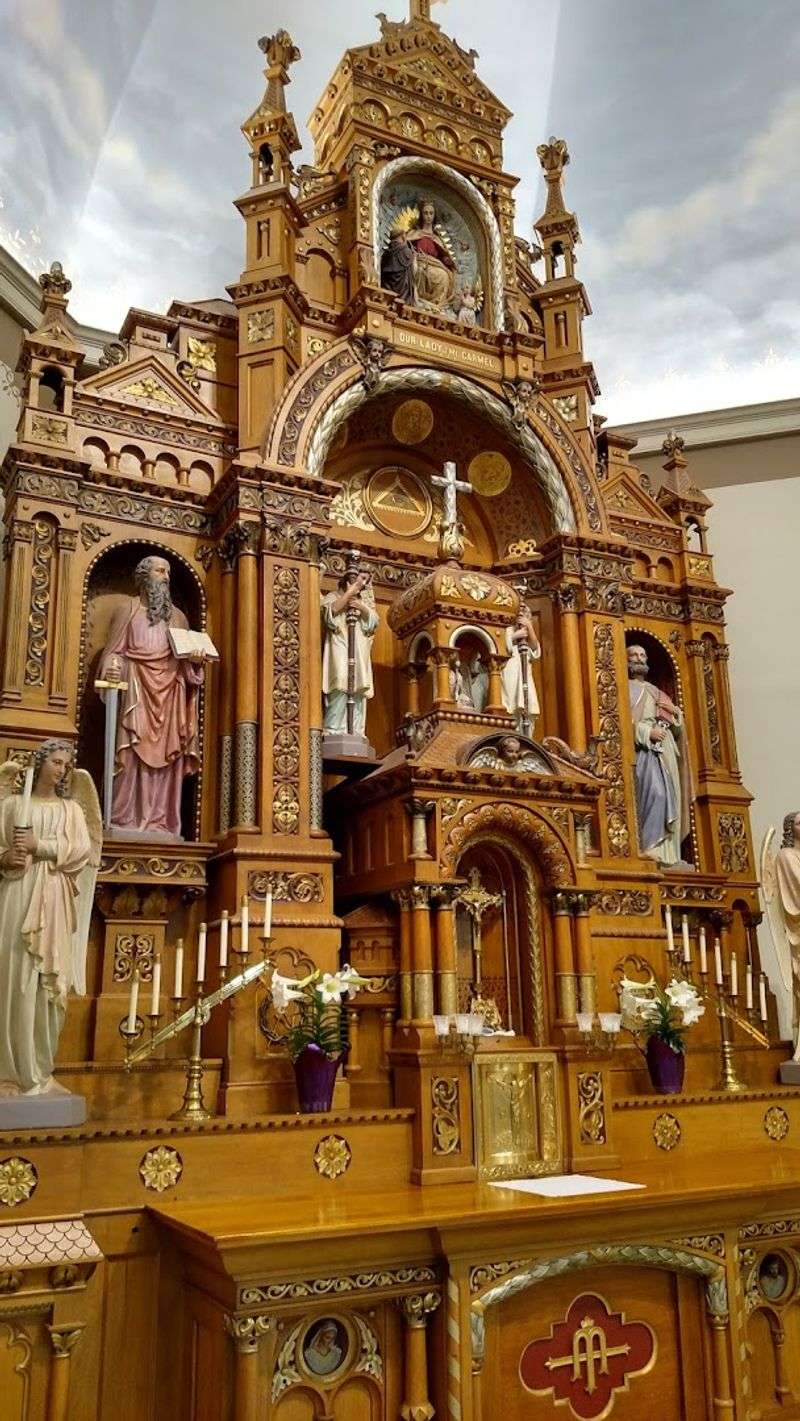
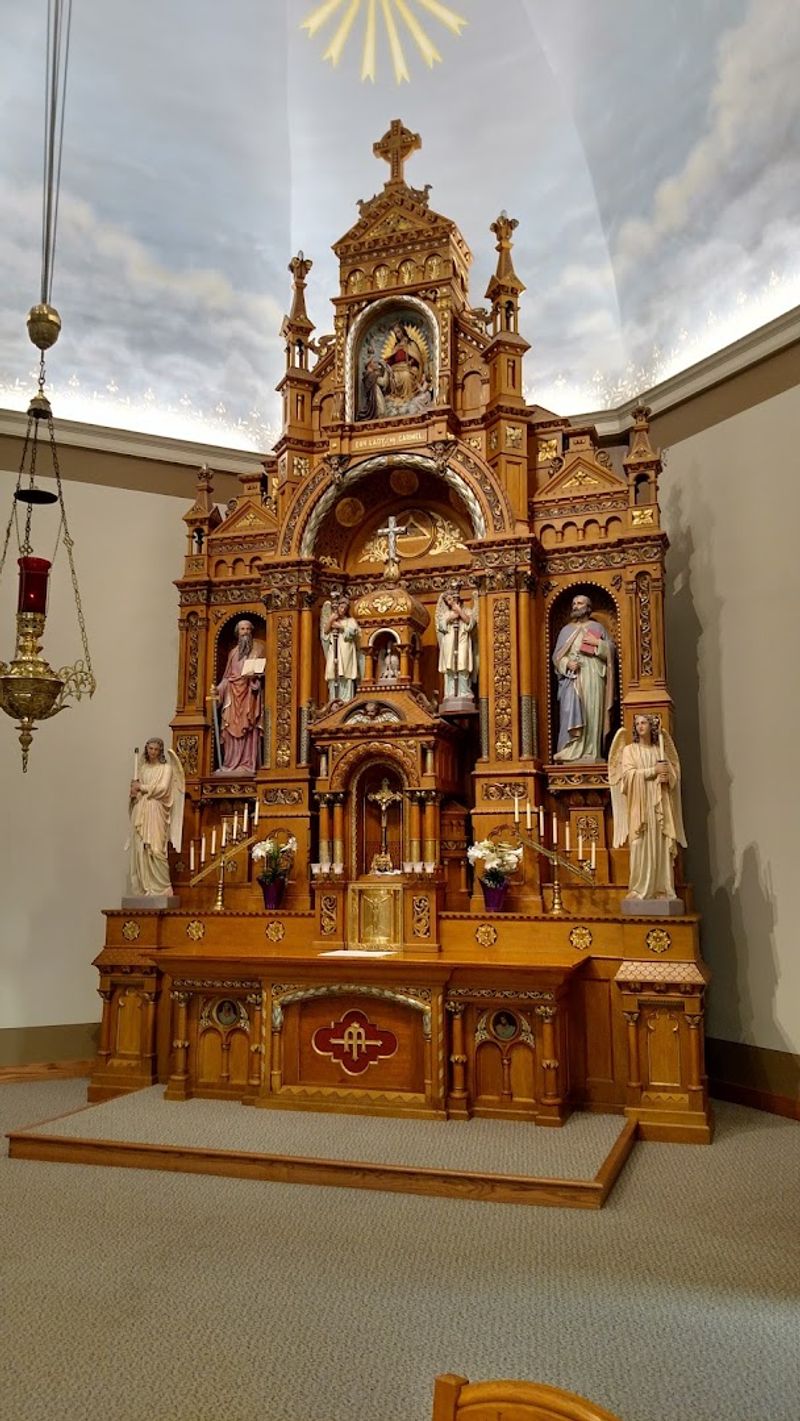
Every Catholic church is oriented toward its altar, but not every altar commands the room the way this one does. The altar at St. Mary of Mount Carmel functions as the visual and spiritual anchor of the entire sanctuary, drawing attention from the moment you enter through the back of the nave.
The restoration work done on and around the altar area reflects serious craftsmanship. Gold detailing, carefully maintained statuary, and a painted backdrop combine to create a focal point that rewards close examination.
Nothing about it feels generic or mass-produced.
There is a difference between a church that maintains its altar and one that clearly treasures it. The altar here falls firmly in the second category.
It has the kind of presence that makes the surrounding space feel purposeful rather than merely decorative, which is the mark of a sanctuary that takes its role seriously and always has.
Bilingual Worship in a Small Town
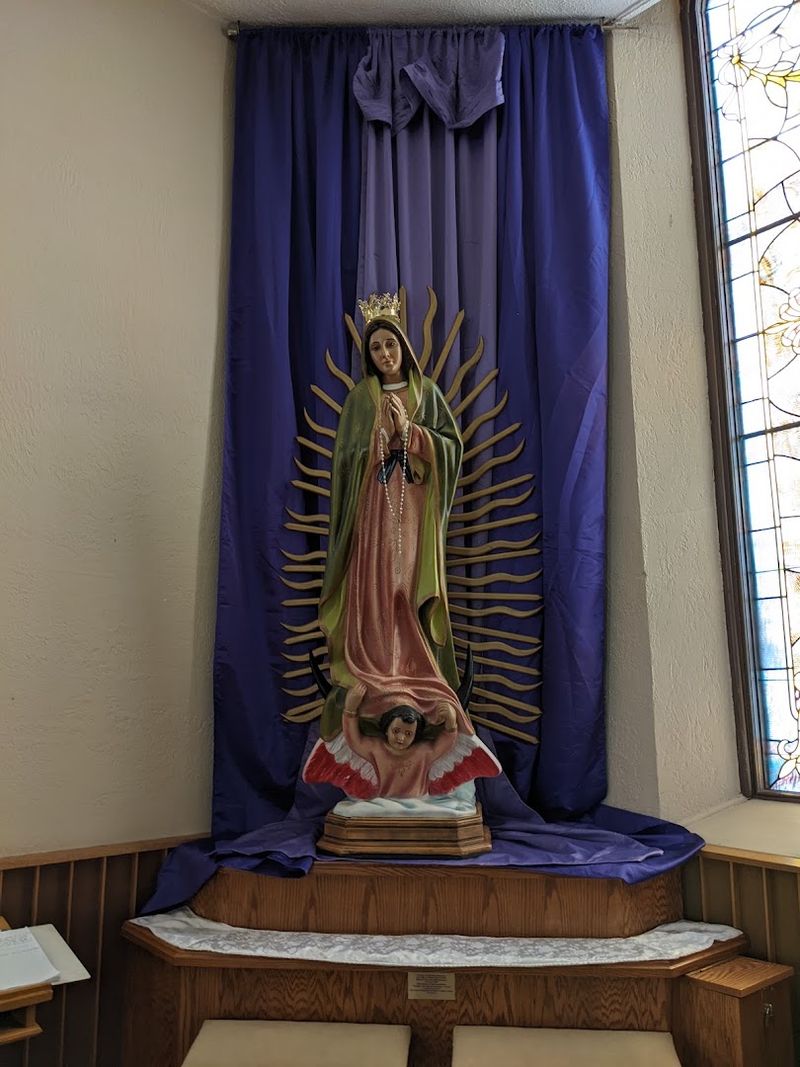
One of the more quietly remarkable things about St. Mary of Mount Carmel is that it holds services in both English and Spanish. For a small town in central Minnesota, that reflects a community that has grown and changed over time in genuinely meaningful ways.
Bilingual worship is not unusual in large urban parishes, but finding it in a community like Long Prairie says something real about the congregation’s composition and its commitment to welcoming everyone. The church functions as a spiritual home for a broader cross-section of the local population than many outsiders might expect.
That cultural inclusivity adds a layer to the church’s story that goes beyond architecture and aesthetics. A building can be beautiful, but a community that actively makes room for multiple languages and backgrounds gives that beauty a living purpose.
At St. Mary of Mount Carmel, the two things reinforce each other in a way that feels completely genuine.
What the Restoration Actually Involved
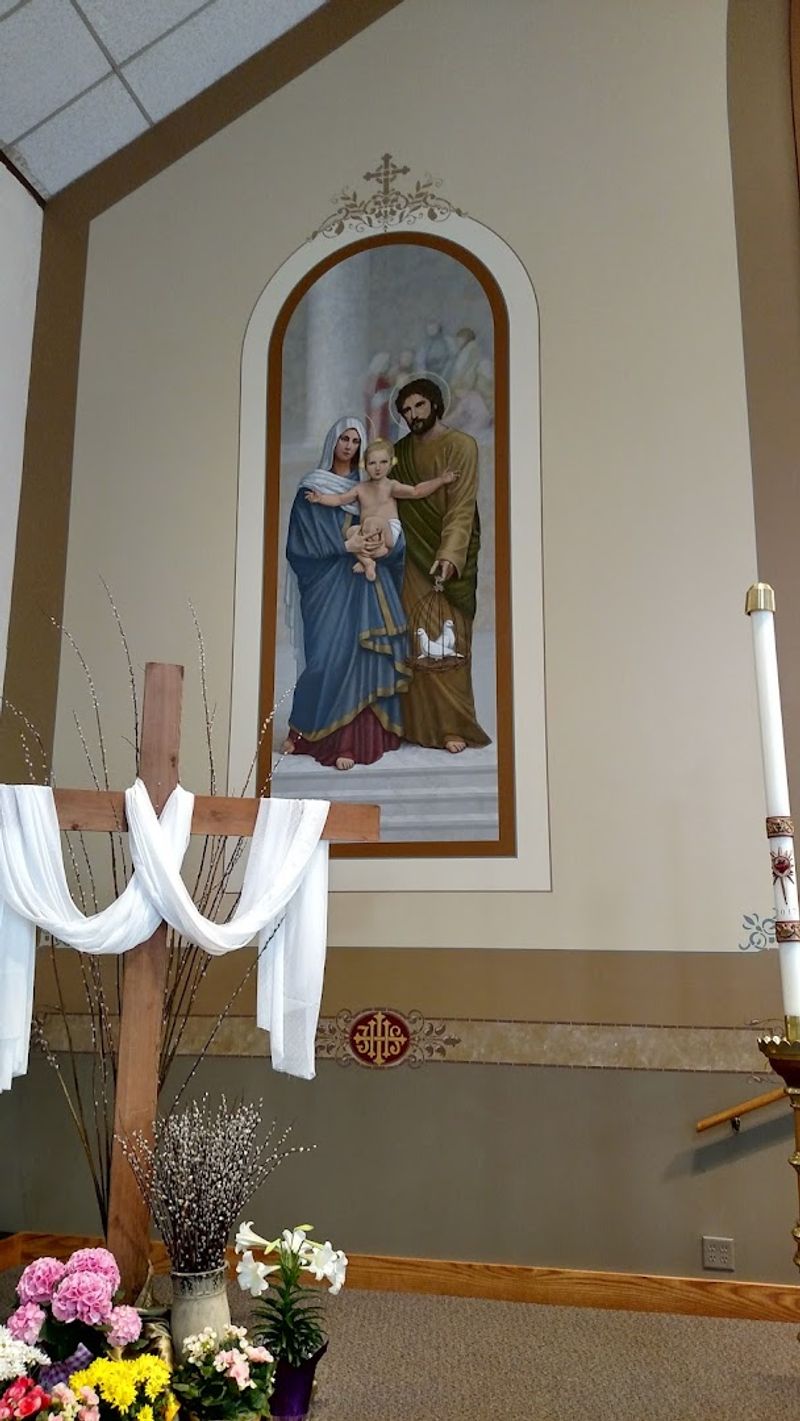
Restoring a historic church sanctuary is not a weekend project. It requires skilled artisans, careful planning, significant funding, and a congregation willing to commit to a long process.
The results visible inside St. Mary of Mount Carmel suggest that all of those elements came together in a serious way.
Restoration work in historic churches typically involves cleaning and repairing painted surfaces, reinforcing structural elements, restoring or replacing damaged decorative features, and ensuring that modern needs like lighting and sound do not compromise the original character of the space.
When restoration is done well, the finished church does not look artificially new. It looks like itself, only clearer and more vivid than it had been in decades.
That is the effect achieved here. The sanctuary reads as genuinely historic while also feeling cared-for and current, which is the ideal outcome and one that many restoration projects never quite manage to reach.
The Role of the Parish in Long Prairie’s Identity
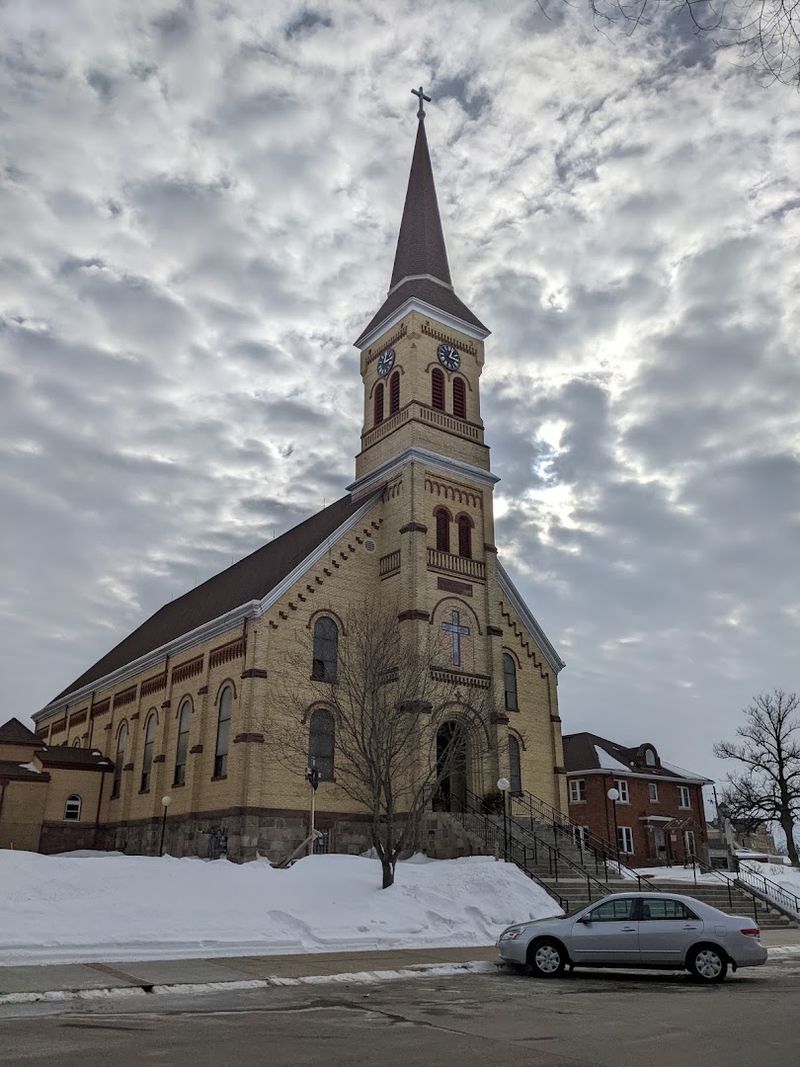
Long Prairie is the county seat of Todd County, and like many small Minnesota county seats, it carries a civic identity shaped by its institutions. St. Mary of Mount Carmel is one of those institutions, woven into the social and historical fabric of the town in ways that extend well beyond Sunday morning.
Parish events, community gatherings, and the rhythms of the liturgical calendar all contribute to the town’s character. For many Long Prairie families, the church has marked the most important moments of their lives, from baptisms to funerals, and everything in between.
That kind of institutional depth makes a church building more than just a structure. It becomes a physical record of a community’s shared experience.
The building at 409 Central Ave holds that record in its walls, its windows, and its carefully maintained interior, making it a place of genuine historical weight for anyone who takes the time to understand what it represents.
Visiting as a Non-Parishioner
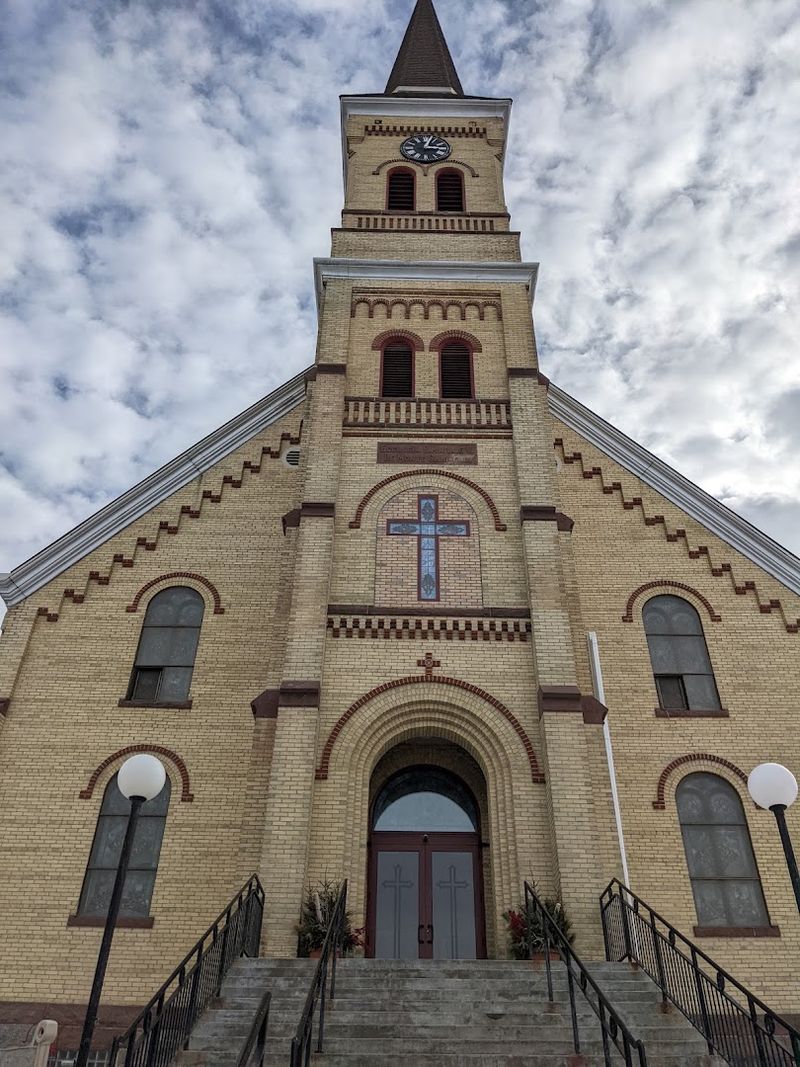
You do not have to be Catholic, or even religious, to appreciate what St. Mary of Mount Carmel has to offer as a historic and architectural space. Many of the most visited churches in the world attract people who come purely for the art, the history, and the craftsmanship.
If you plan to visit, the church offices are open Monday through Thursday from 8 AM to 12 PM. Visiting outside of Mass times gives you the opportunity to move through the space at your own pace and take in the details without distraction.
Common courtesy applies, of course. This is an active place of worship, and treating it with appropriate respect ensures that the experience is positive for everyone.
Most visitors who approach historic churches with genuine curiosity and quiet respect find that the space gives back far more than they expected, and this one is no exception.
The Painted Interior and Its Visual Impact
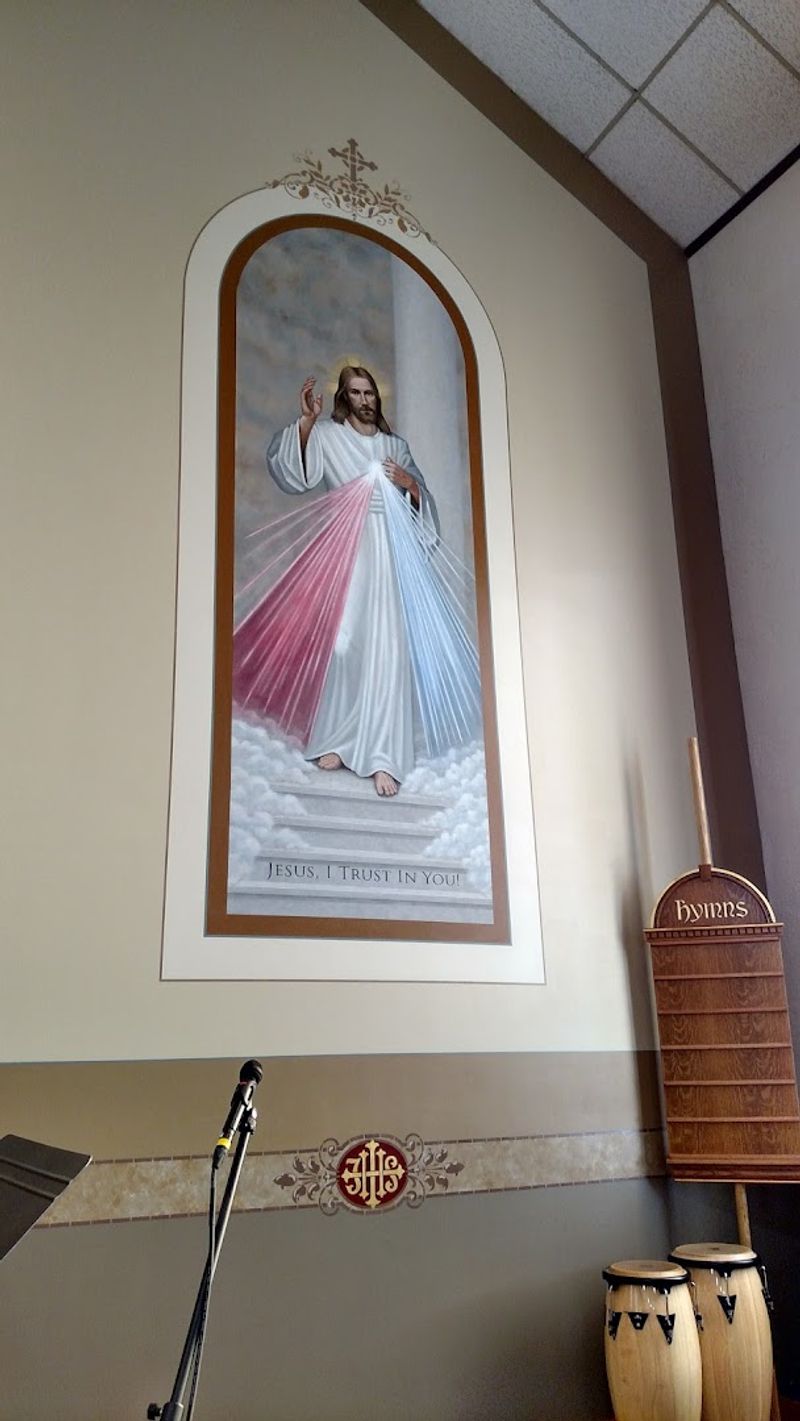
Painted church interiors require a different kind of attention than stone or plain plaster walls. At their best, they create an immersive environment where color and imagery work together to reinforce the spiritual experience of being in the space.
The painted surfaces inside St. Mary of Mount Carmel contribute significantly to the overall impression the sanctuary makes. Decorative motifs, religious imagery, and carefully chosen color palettes work together to make the interior feel cohesive rather than cluttered, which is a harder balance to strike than it might seem.
Over time, painted interiors fade, crack, and lose their original vibrancy. Restoring them requires not just technical skill but also a deep understanding of the original artistic intent.
When that restoration is handled with genuine expertise, the result is an interior that feels both authentic and alive. That is precisely the effect achieved in this sanctuary, and it is genuinely worth seeing in person.
How the Church Fits Into Minnesota’s Broader Religious Heritage
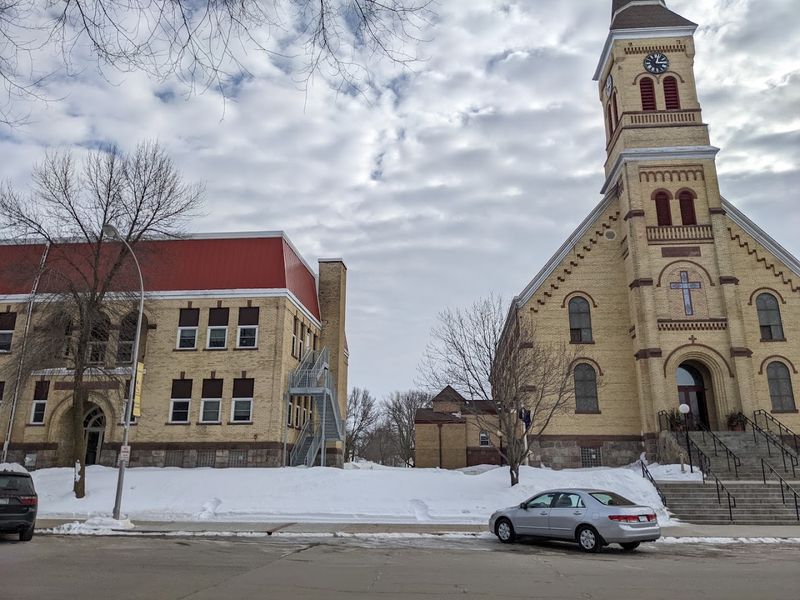
Minnesota has a remarkable concentration of historic Catholic churches, many of them built by immigrant communities who brought their faith and their architectural traditions from Europe. German, Polish, Czech, and Irish parishes all left their mark on the Minnesota landscape in the form of beautiful and often surprisingly elaborate church buildings.
St. Mary of Mount Carmel fits into that broader tradition while also reflecting the specific history of Long Prairie and Todd County. The church is part of a regional story about how faith communities shaped the physical appearance of small Minnesota towns and gave them their distinctive character.
Exploring Minnesota’s historic churches as a travel interest has grown steadily among people who appreciate both architecture and local history. St. Mary of Mount Carmel stands comfortably among the state’s most visually rewarding examples, which is a meaningful distinction in a state where the competition for that recognition is genuinely strong.
The Quiet Power of a Small-Town Sanctuary

There is something specific about a small-town church that large urban parishes rarely replicate. The scale is human.
The connection between the building and the community it serves is direct and visible. Every surface has been touched by people who actually know each other.
At St. Mary of Mount Carmel, that intimacy is part of what makes the space so affecting. The sanctuary is large enough to impress but not so vast that it loses its personal character.
You can feel the congregation in the space even when no one else is there.
That quality is hard to manufacture and impossible to fake. It comes from generations of real use, real investment, and real care.
Visitors who are drawn to historic churches for their atmosphere rather than just their architecture will find that this sanctuary delivers on both counts in a way that lingers well after you have left.
Planning Your Visit to Long Prairie
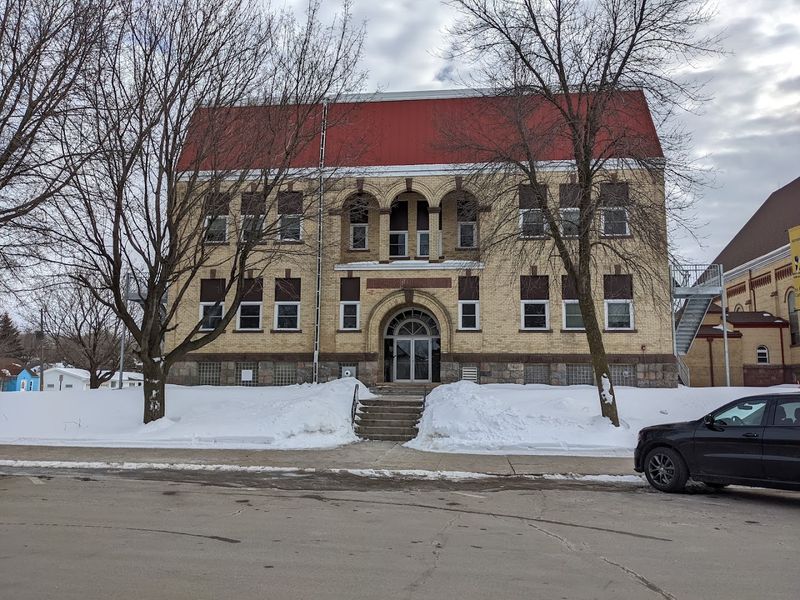
Long Prairie sits along U.S. Highway 71 in central Minnesota, making it accessible from multiple directions without requiring a significant detour from the main routes through the region.
The town itself is compact and easy to navigate, with the church on Central Avenue easy to locate.
Todd County has a number of lakes and natural areas worth exploring if you want to extend your time in the region. The surrounding countryside shifts beautifully with the seasons, from green summers to vivid autumn color to the stark quiet of a Minnesota winter landscape.
If you are building an itinerary around Minnesota’s historic churches or small-town architecture, Long Prairie works well as a stop that rewards a few hours of genuine attention. The church alone justifies the drive for anyone with an interest in restored sacred spaces, and the town around it adds enough context to make the visit feel complete.
Share this story