There is a place in northern New Mexico where history does not sit behind a velvet rope or gather dust in a display case. It lives in the walls, walks the streets, and hangs in gallery windows.
Taos has been drawing artists, explorers, and curious travelers for centuries, and the reason is not hard to figure out once you set foot in its historic downtown plaza. The adobe architecture alone tells a story that stretches back hundreds of years, and every shop, courtyard, and side street adds another chapter.
This is not your average town square. This is a rare kind of place where the past and present share the same sidewalk, and somehow, it works beautifully.
Read on to find out exactly what makes this plaza worth the trip and why so many people keep coming back.
The Story Behind the Square
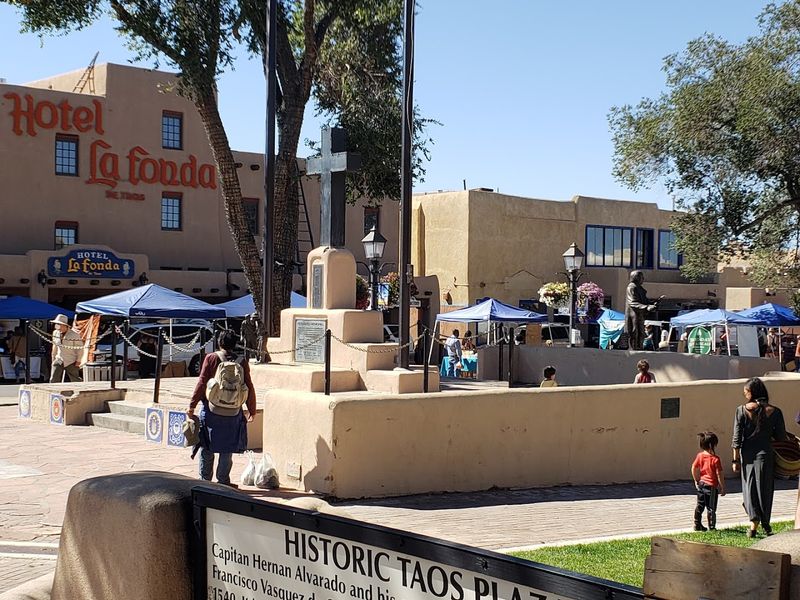
Taos Plaza has been at the center of community life for well over 400 years. Spanish settlers established the town in the early 1600s, and the plaza was designed in the classic Spanish colonial style, with a central open square surrounded by buildings on all sides.
That original layout still defines the district today.
The area carries deep layers of history. It was a trading hub during the era of the Santa Fe Trail, a gathering point during periods of political upheaval, and later a magnet for the famous Taos Society of Artists in the early 20th century.
Each of those chapters left something behind.
Walking through the district, it is possible to stand in spots where traders, soldiers, artists, and Indigenous community members all crossed paths over the centuries. Few places in the American Southwest carry that kind of layered, continuous human history within such a compact and walkable area.
Adobe Architecture That Does the Talking
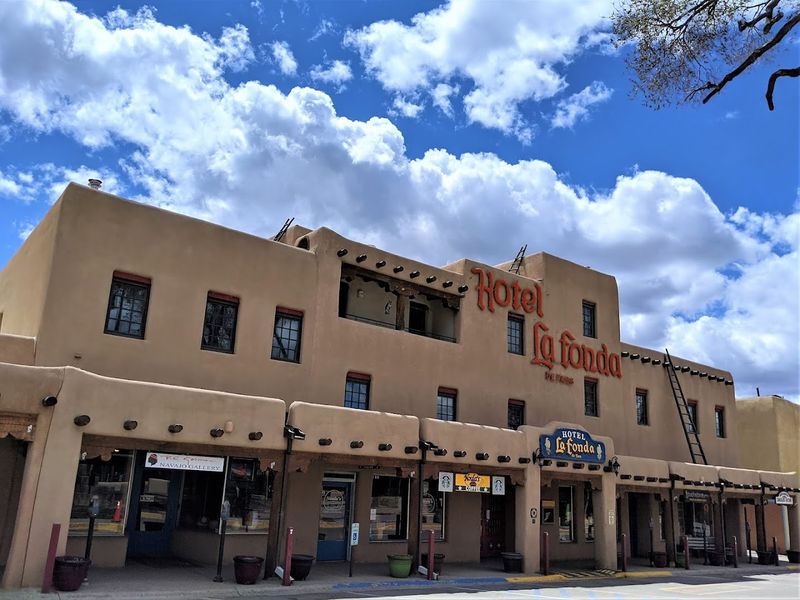
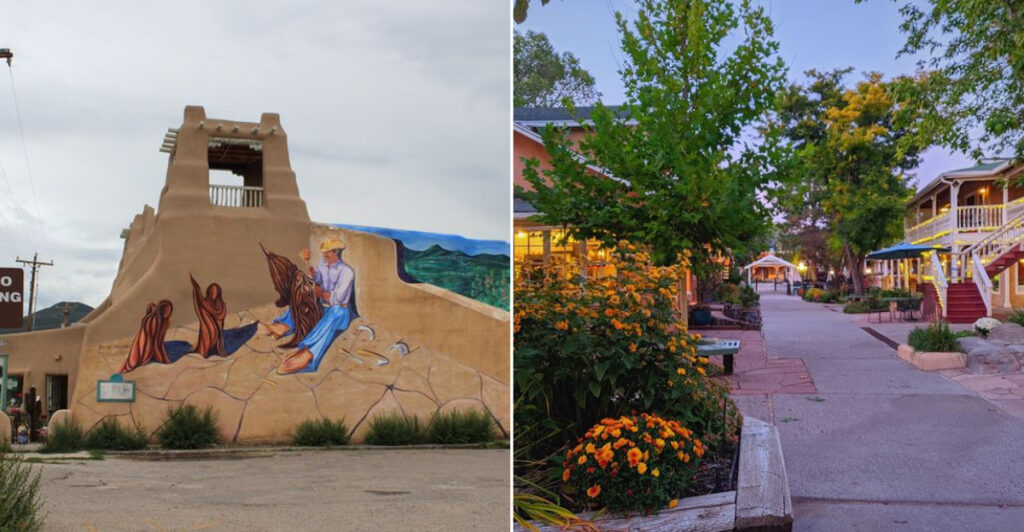
The buildings in the Downtown Taos Historic District are not trying to imitate anything. They are the real thing.
Adobe construction, which uses sun-dried mud bricks mixed with straw, has been the building method of choice in this region for centuries, and the structures here reflect that tradition honestly.
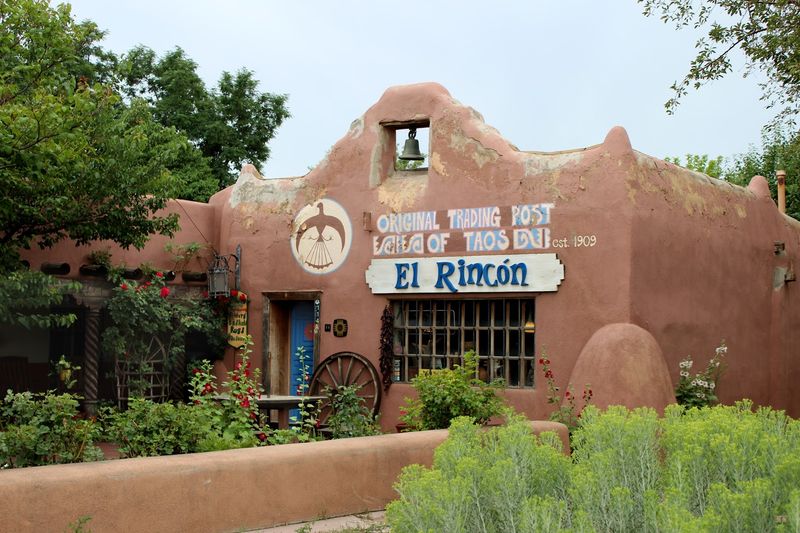
Thick walls, rounded corners, and wooden vigas, the log beams that poke through exterior walls, are the defining visual language of Taos architecture. Doorways are often painted in turquoise or deep red, and hand-carved wooden details appear on gates, lintels, and window frames throughout the district.
What makes the architecture here feel different from a staged historic village is that these buildings are still in use. Shops, galleries, and small businesses occupy the same walls that merchants used generations ago.
The structures age with purpose rather than being frozen in place, and that ongoing use gives the district a lived-in character that no restoration project can fully manufacture.
An Art Scene That Refuses to Be Quiet
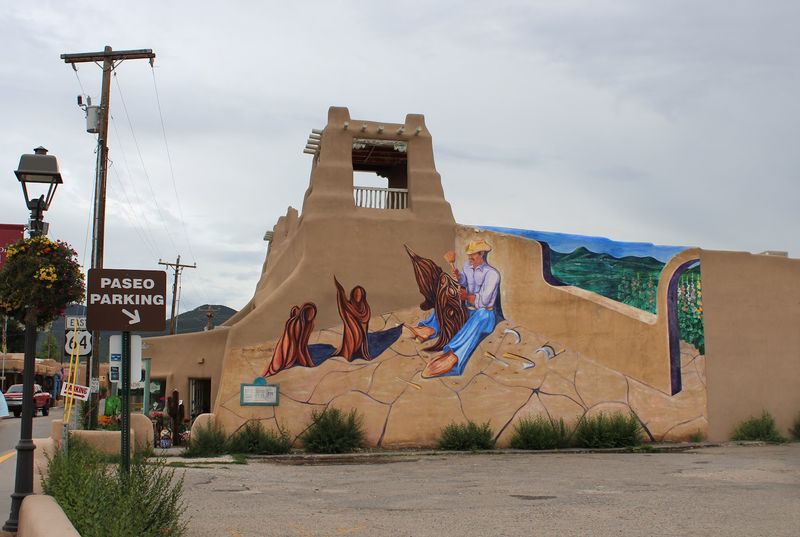
Taos has one of the most concentrated and long-standing art communities in the entire United States. The Taos Society of Artists was founded in 1915, and the tradition those painters established never really faded.
Today, the downtown district is lined with galleries showcasing everything from traditional Southwestern painting to contemporary sculpture and photography.
The variety is part of what keeps the art scene here from feeling predictable. One gallery might feature large-scale oil paintings of the Taos mountains, while the next displays hand-thrown pottery or fiber arts rooted in Pueblo traditions.
The work on display often reflects the specific landscape and cultural heritage of northern New Mexico in ways that feel genuinely local rather than mass-produced.
Gallery hopping through the district requires no appointment and no special knowledge of art history. The doors are open, the owners are often present, and the conversations that happen inside these spaces tend to be as interesting as the work hanging on the walls.
Shopping That Actually Means Something
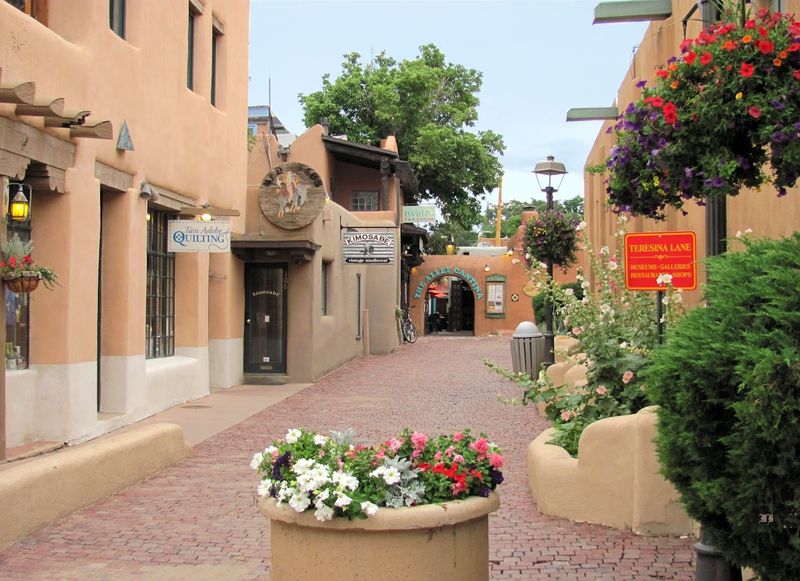
Not every plaza town can claim that its shops carry things you genuinely cannot find anywhere else, but the Downtown Taos Historic District makes a strong case. The stores here lean heavily toward locally made, regionally sourced, and one-of-a-kind goods that reflect the culture of northern New Mexico.
A kitchen store just off the square has developed a loyal following among those who appreciate specialty food products and cookware with a Southwestern angle. The Made in New Mexico store is another standout, carrying products from across the state, including seasoning blends, sauces, and pantry staples that travel well and make meaningful gifts.
The shopping experience here rewards slow browsing. Rushing through the district means missing the hand-stamped jewelry tucked in a corner case, the hand-stitched textile folded on a back shelf, or the small-batch product made by someone who lives just down the road.
The stores here have personality, and that personality is distinctly Taos.
The Plaza as a Living Gathering Space
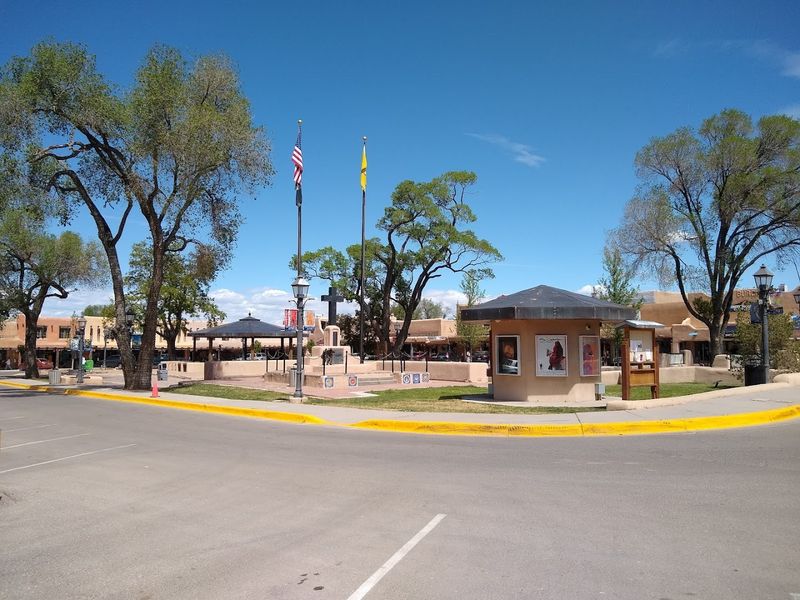
The central plaza in Taos functions the way a town square is supposed to function, as a place where community life actually happens. On any given day, the square might host local vendors selling handmade goods, buskers performing original music, or simply a crowd of locals and travelers sharing the same outdoor space without any particular agenda.
The live music element is worth noting. Street musicians show up regularly and add an unscripted energy to the plaza that no planned event could replicate.
The performances range from traditional New Mexican folk styles to acoustic originals, and they tend to draw small crowds that form and dissolve naturally as people move through the square.
There is a relaxed, unhurried quality to the plaza that sets the tone for the entire downtown district. Nobody is rushing.
The pace here encourages people to stop, look around, and stay longer than they originally planned, which is exactly what a well-designed public square should do.
The Mountains Are Always in the Frame
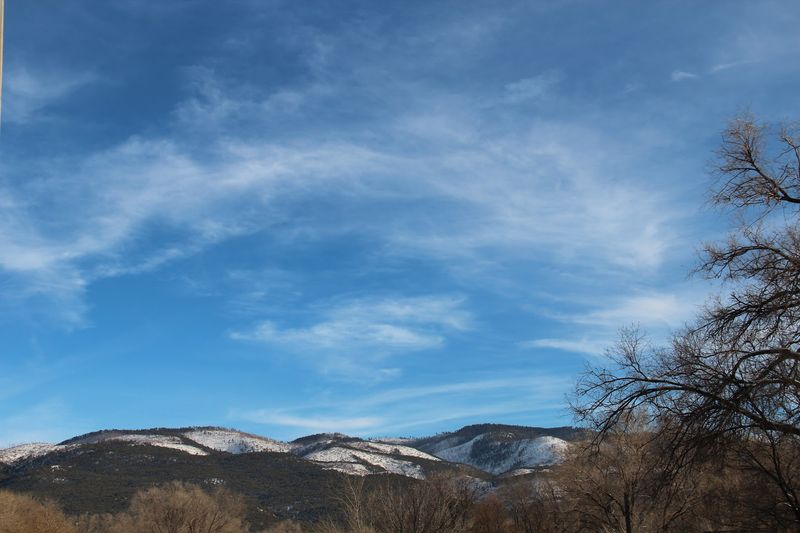
One of the most striking things about the Downtown Taos Historic District is the backdrop it operates against. The town sits in a high-desert valley, and the Sangre de Cristo Mountains rise sharply to the east, creating a visual frame that is present from nearly every street corner in the district.
The mountains are not a distant smudge on the horizon. They are close enough to feel like a wall of the plaza itself, and their presence changes throughout the day as light shifts across the ridgelines.
The flatlands that stretch in other directions add to the dramatic contrast, giving the whole town an almost theatrical quality.
This combination of low-lying adobe buildings against a jagged mountain skyline is part of what made Taos so compelling to the painters who settled here in the early 1900s. That same visual dynamic is still fully intact today, and it gives the historic district a natural grandeur that no amount of urban planning could engineer.
A Cultural Crossroads With Deep Roots
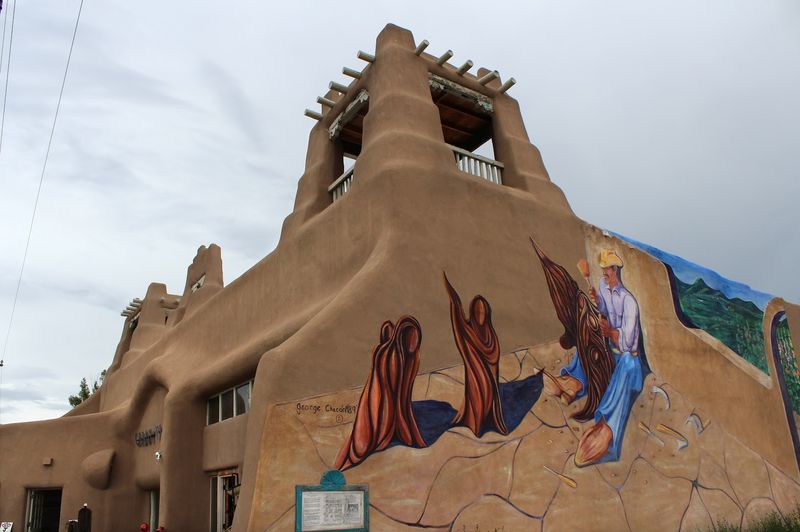
The cultural identity of the Downtown Taos Historic District cannot be understood without acknowledging the Taos Pueblo, the Indigenous community that has lived in this area for over a thousand years. The Pueblo sits just north of the historic district and is one of the oldest continuously inhabited communities in North America.
The influence of Pueblo culture is visible throughout the downtown area, from architectural styles to the art displayed in galleries to the crafts sold in local shops. Taos has always been a meeting point between Indigenous, Spanish colonial, and Anglo-American cultures, and the downtown district reflects all three in ways that feel organic rather than curated.
That layered cultural presence gives the district a depth that purely commercial historic districts tend to lack. The history here is not presented as a theme.
It is embedded in the community itself, which means every visit offers a chance to engage with something genuinely meaningful rather than simply decorative.
What the Historic Hotel Reveals
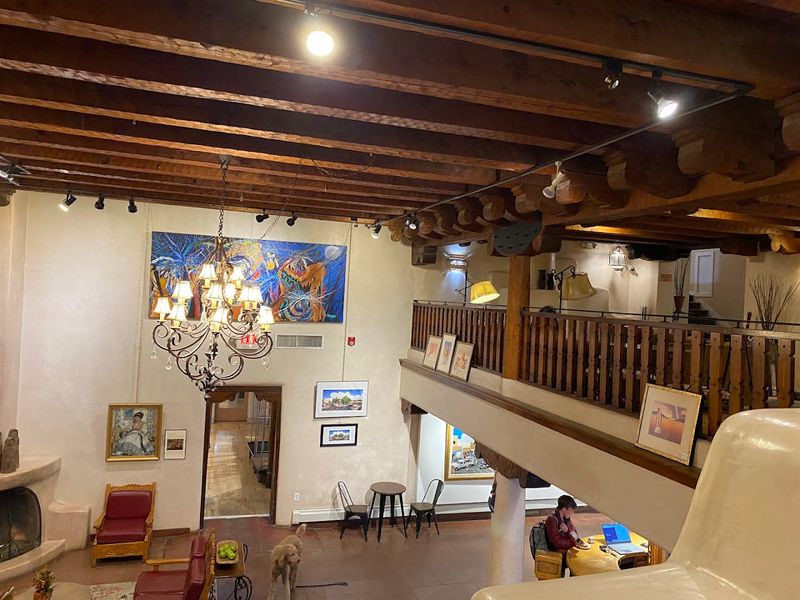
The historic hotel on the Taos Plaza is one of those buildings that deserves more than a passing glance. Its exterior fits seamlessly into the surrounding adobe streetscape, but the interior holds a collection of Southwestern art that lines the entry and common areas with work that reflects the region’s long artistic tradition.
The hotel has been a fixture of the plaza for generations, and its presence gives the square a sense of continuity. Guests staying there can walk directly onto the plaza in seconds, which makes it one of the most convenient bases for exploring the historic district on foot.
Even for those not staying overnight, stepping inside for a look at the art on the walls is well worth the detour. The building functions as an informal gallery in addition to its role as a lodging destination, and the combination of historic architecture and rotating artwork gives it a character that standard hotel lobbies rarely achieve.
Getting Around: Parking, Walking, and Pacing Yourself
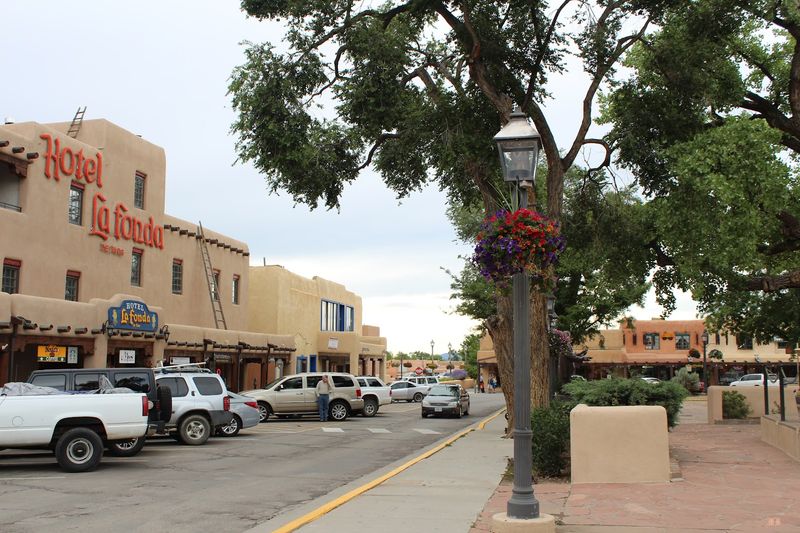
The Downtown Taos Historic District is compact enough to explore entirely on foot, which is genuinely the best way to experience it. Most of the galleries, shops, and points of interest are within a short walk of the central plaza, and the streets are flat and easy to navigate.
Parking requires a bit of strategy. Metered spots close to the plaza fill up quickly, especially on weekends and during peak travel seasons.
Several parking lots in the area charge a small fee, typically around five dollars, payable by card. Those willing to park a few blocks away and walk can usually find free street parking without too much trouble.
The district rewards a slow pace. Rushing through it means missing the side streets, hidden courtyards, and small details that make the area worth visiting in the first place.
A half-day is a reasonable minimum, though most people find that a full day passes quickly once they start exploring.
When to Visit and What to Expect
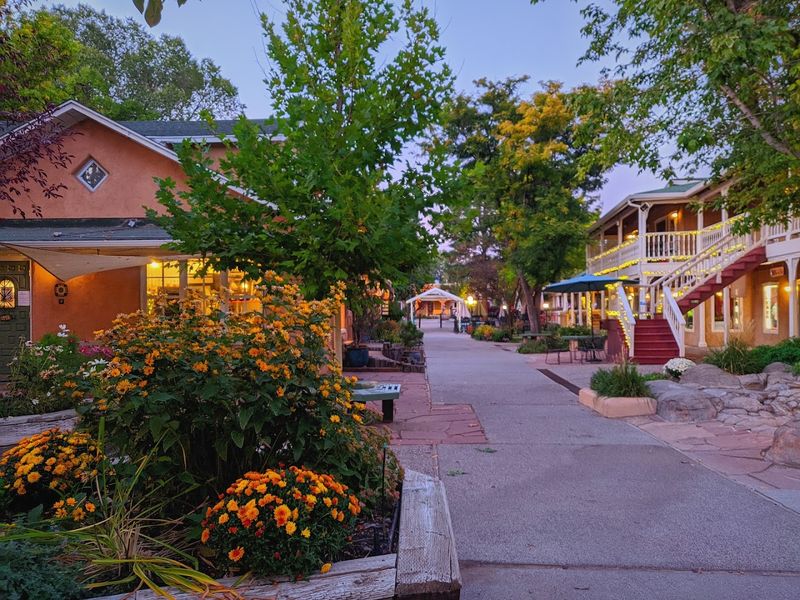
The Downtown Taos Historic District is open around the clock, every day of the year, so the question of when to visit comes down to personal preference and what kind of experience you are after. Each season brings a different version of the district.
Spring and fall are widely considered the most comfortable times to visit. Temperatures are mild, crowds are manageable, and the light at those times of year has a quality that makes the adobe buildings and mountain backdrop look particularly striking.
Summer brings more foot traffic and a livelier plaza atmosphere, with more vendors and musicians showing up regularly.
Winter has its own appeal. Snow on the rooftops of the adobe buildings creates a visual contrast that photographers and casual observers alike tend to appreciate.
The nearby Taos Ski Valley also draws winter travelers to the area, which keeps the downtown district active even during the colder months.
Galleries, Museums, and the Art of Slowing Down
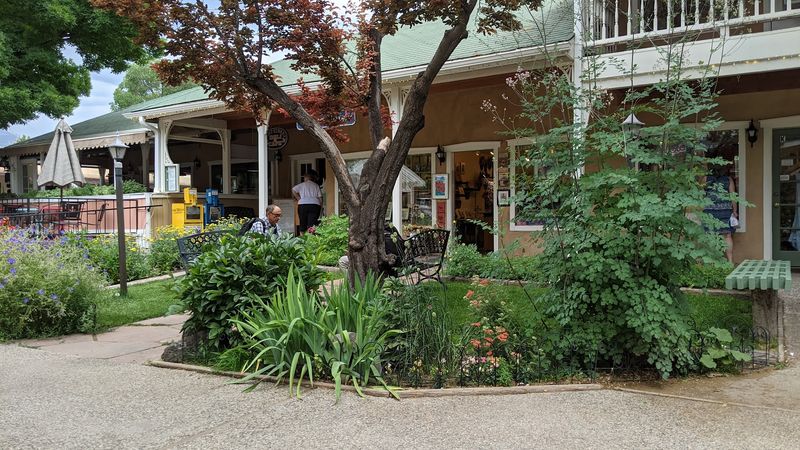
Beyond the commercial galleries, the Downtown Taos Historic District sits within easy reach of several museums that give the art and history of the region additional context. The area has more cultural institutions per square mile than most towns of its size anywhere in the country.
Many of these museums and galleries keep standard business hours rather than staying open around the clock, so planning visits on weekdays or checking hours in advance helps avoid arriving to find a closed sign on the door. Sunday afternoons in particular tend to see reduced operating hours for some establishments.
The pace that works best in the district is one that allows for unplanned stops. The most interesting discoveries here often happen when a window display catches the eye or a doorway leads somewhere unexpected.
The district is dense with things worth looking at, and the best approach is to treat the whole area as a single, sprawling, walkable exhibition.
The Southwestern Vibe That Sets Taos Apart
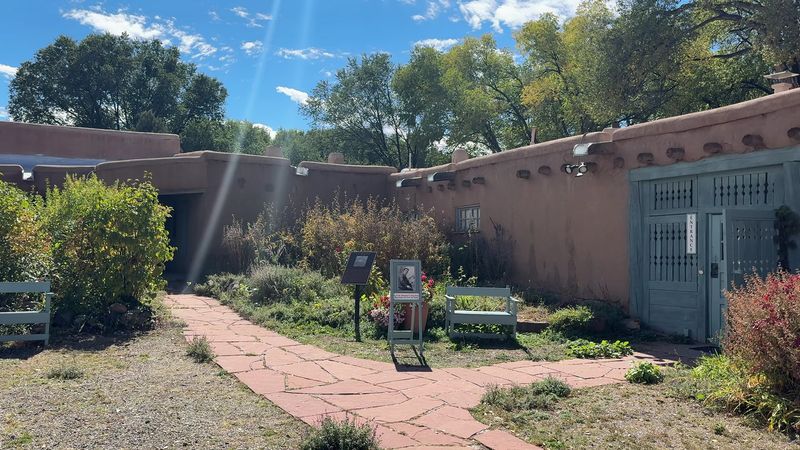
There is a specific visual and cultural identity to northern New Mexico that Taos embodies more fully than almost anywhere else in the state. The combination of Indigenous, Spanish colonial, and Anglo-American influences has produced a regional style that shows up in architecture, art, clothing, home goods, and even the way public spaces are designed.
That identity is not manufactured for tourists. It grew organically over centuries and continues to evolve as new artists, craftspeople, and entrepreneurs bring their own perspectives to the district.
The result is a place that feels authentically rooted rather than assembled for effect.
Taos is sometimes compared to Santa Fe, and the similarities are real: both are historic New Mexico towns with strong art scenes and distinctive architecture. But Taos is smaller, quieter, and less polished in ways that many travelers find more appealing.
The rough edges are part of the charm, and the downtown district wears them without apology.
The High Road to Taos and the Journey In
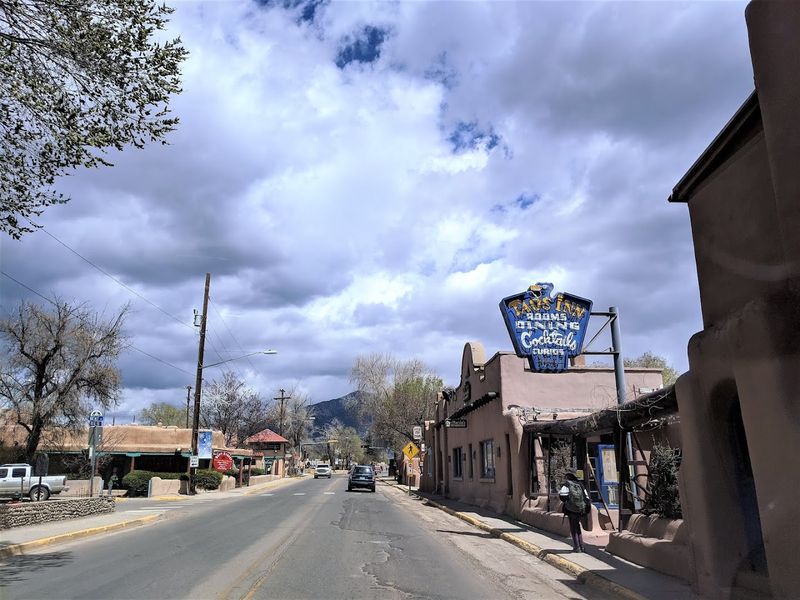
Getting to the Downtown Taos Historic District is part of the experience for many travelers. The High Road to Taos is a designated scenic byway that winds through the mountains north of Santa Fe, passing through small historic villages, old Spanish colonial churches, and high-altitude landscapes that shift dramatically over the course of the drive.
Communities along the route include Chimayo, known for the Santuario de Chimayo, one of the most significant religious sites in the Southwest, as well as Truchas and Las Trampas, each with its own historic church and distinct character. The drive takes longer than the direct interstate route but delivers a far richer introduction to the region.
The Low Road back along the Rio Grande Gorge offers a completely different perspective on the same landscape, following the river through dramatic canyon terrain. Together, the two routes form a loop that turns the journey to and from Taos into a destination in its own right.
Why People Keep Coming Back to the Plaza
The Downtown Taos Historic District has a 4.5-star reputation among the hundreds of people who have shared their experiences, and the reasons for that consistent appreciation are not hard to identify. The district delivers on multiple levels simultaneously, offering history, art, shopping, architecture, and natural beauty within a single walkable area.
What keeps people returning is harder to quantify. Part of it is the authenticity of the place.
The buildings are genuinely old. The art is made by people who live here.
The cultural traditions on display have real roots in the community rather than being imported for commercial purposes.
Part of it is also the scale. The district is small enough to feel manageable and personal, but rich enough that a single visit never quite covers everything.
There is always another gallery to check, another side street to follow, another detail on a building facade that was missed the first time around. That is the mark of a place worth returning to.
Where History Has a Street Address
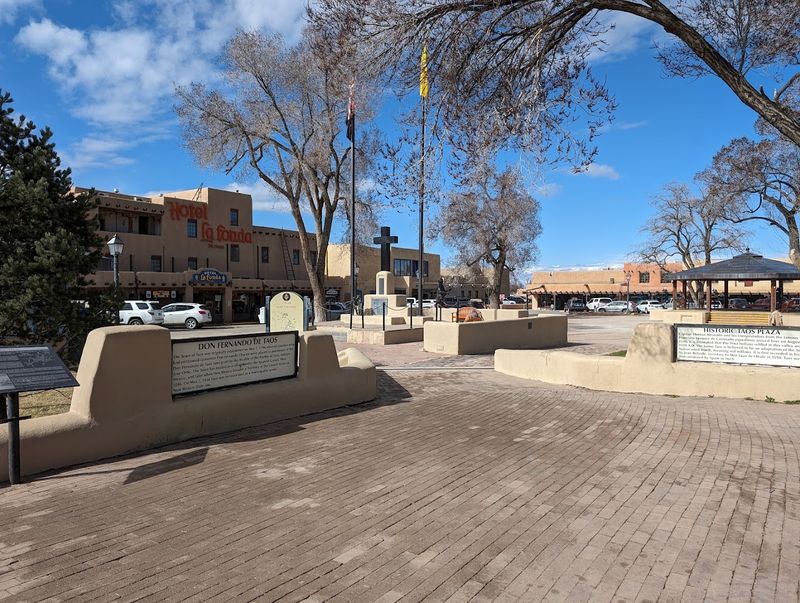
The Downtown Taos Historic District sits at N Plaza, Taos, NM 87571, right in the heart of one of New Mexico’s oldest and most storied communities. The plaza is open 24 hours a day, every day of the week, which means there is never a wrong time to show up and start exploring.
Taos itself is nestled in the high desert of northern New Mexico, surrounded by the Sangre de Cristo Mountains on one side and the vast Taos Plateau on the other. The town sits at roughly 6,969 feet above sea level, which gives the air a crispness that catches first-time visitors off guard.
The historic district is the geographic and cultural center of it all. Streets radiate outward from the plaza, lined with low adobe buildings that have been standing for generations.
Getting oriented here is easy, and once you find the plaza, everything else falls naturally into place around it.
Share this story