 Unearth The Voyage
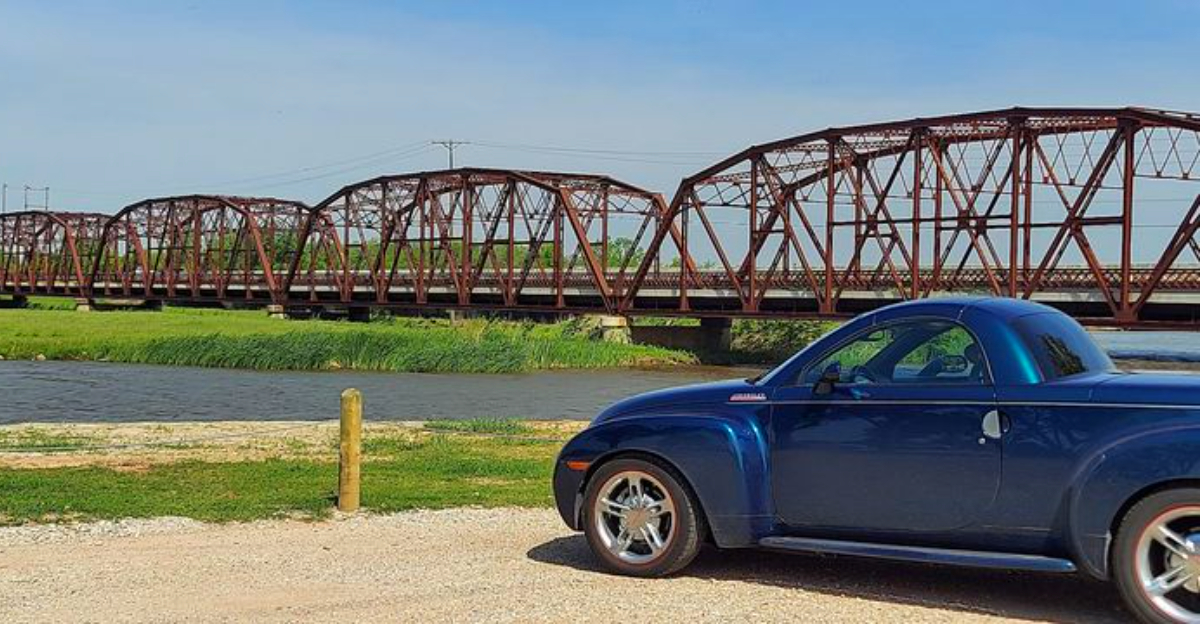
There is a bridge in Oklahoma that most drivers on the nearby interstate never even notice, and that is exactly what makes it so special. Tucked along the old Mother Road corridor just west of Oklahoma City, this iron structure has been quietly carrying history across the North Canadian River for nearly a century.
It has survived the rise and fall of Route 66, watched the landscape change around it, and still stands firm enough to drive across today. If you love road trips, history, or just finding places that feel genuinely untouched by modern hype, keep reading because this one is worth every mile.
Where the Bridge Actually Is
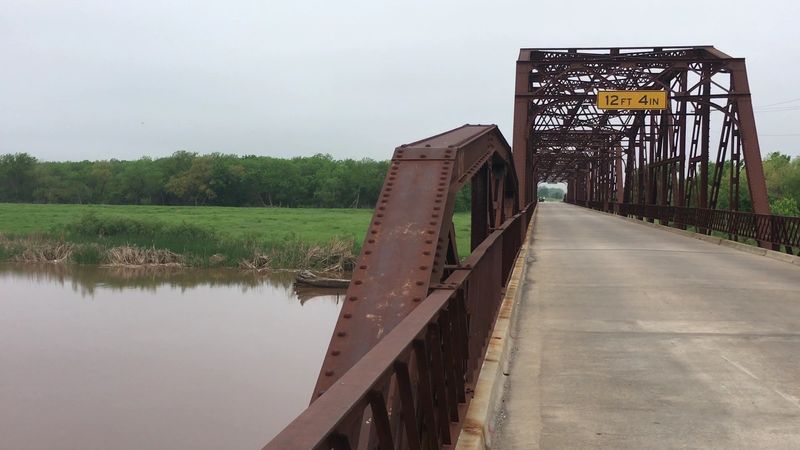
The Lake Overholser Iron Bridge sits at 8703-8709 Overholser Drive in Bethany, Oklahoma 73008, just on the western edge of the Oklahoma City metro area. That address might sound suburban, but the moment you pull off the main road and approach the bridge, the city noise fades fast.
The bridge spans the North Canadian River at the northern inlet to Lake Overholser, and the surrounding area feels far more rural than its location would suggest. You get open water views, native grasses stretching along the riverbanks, and a sky that seems bigger out here than it does anywhere in the city.
The bridge is open 24 hours a day, every day of the week, so there is no rushing to beat a closing time. Whether you show up at sunrise with a camera or roll through on a quiet weekday afternoon, the bridge is ready when you are, no ticket required.
A Quick History of This Iron Structure
Built in the 1920s, the Lake Overholser Iron Bridge was once a functioning segment of historic Route 66, the legendary highway that connected Chicago to Los Angeles and carried millions of Americans westward during the 20th century. This bridge was their path across the North Canadian River.
As Route 66 was eventually bypassed by the Interstate Highway System, many of its original structures were torn down or left to deteriorate. This bridge was nearly demolished too, but its historical significance convinced local and state authorities to preserve and refurbish it instead of replacing it with something modern.
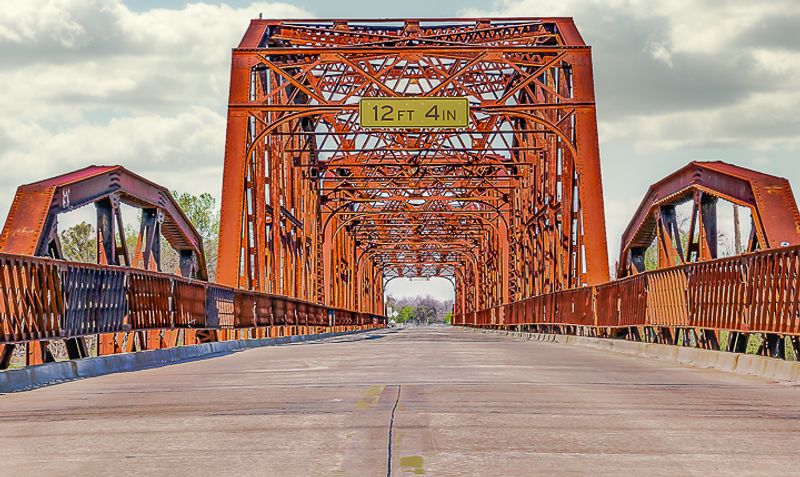
The result is one of a small handful of original Route 66 steel bridges still standing in Oklahoma, and one of the few you can actually drive across. The rust color you see on the iron is authentic, not decorative, and it gives the structure a raw, working-class character that newer bridges simply cannot replicate.
Knowing that this bridge has outlasted the road it once served makes every crossing feel a little more meaningful.
What the Bridge Looks Like Up Close
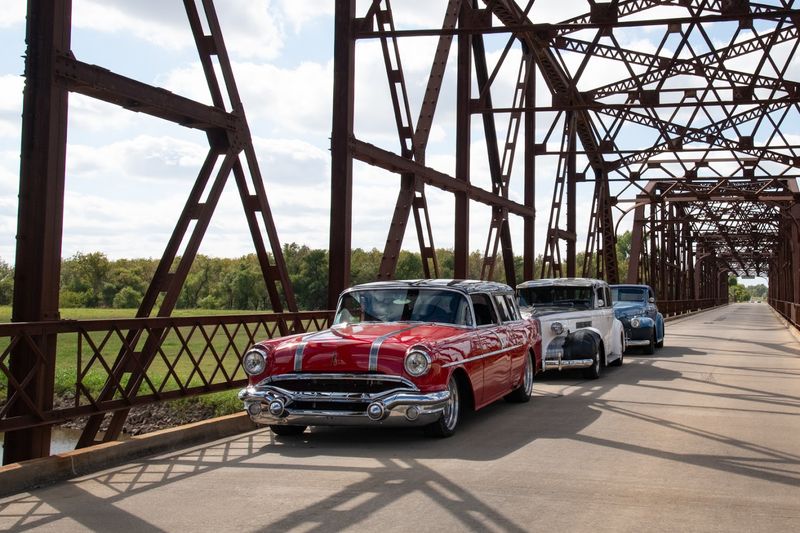
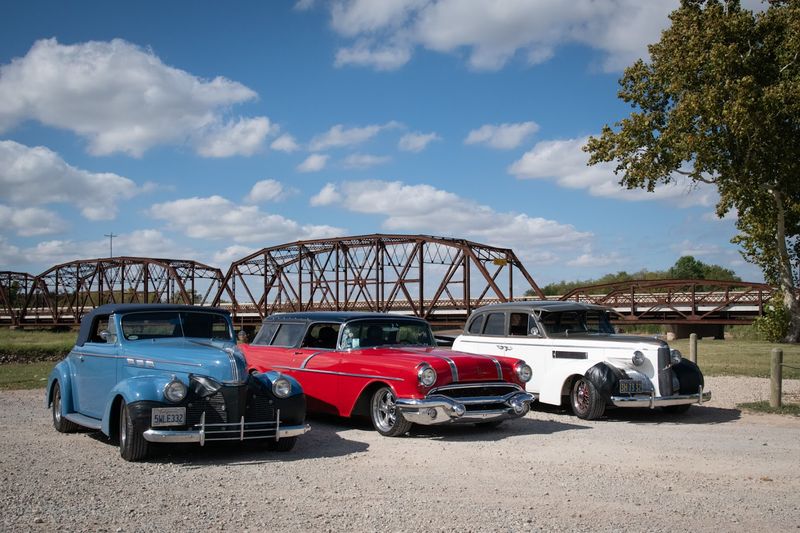
The bridge is a classic through-truss steel design, the kind of structure that was engineered for function first and aesthetics second, yet somehow ended up being genuinely beautiful. The rust-colored iron framework rises above the roadway in a series of connected triangles, forming a tunnel of steel that frames the water and sky ahead of you as you cross.
The roadway itself is narrow, two lanes with very little margin for error, which gives drivers a real sense of how motoring felt in the early days of Route 66 when cars were smaller and speeds were lower. Passing another vehicle on the bridge requires both drivers to stay alert and respectful of the lane lines.
At night, the bridge takes on a completely different character. Without streetlights overhead, the crossing becomes dark and atmospheric, giving you a genuine sense of what the Mother Road felt like after sundown decades ago.
The iron superstructure catches whatever moonlight is available, and the water below reflects it back in long, rippling streaks that make the whole scene feel quietly cinematic.
The Route 66 Connection That Makes It Special
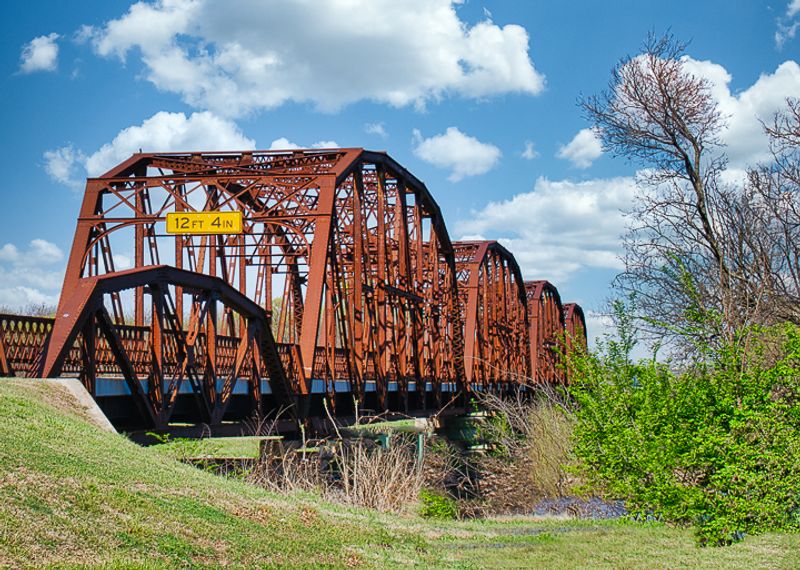
Route 66 carries a kind of cultural weight that few roads in the world can match. For decades it was the main artery connecting the American Midwest to the Pacific Coast, and it became a symbol of freedom, movement, and the open road.
Most of that original highway is gone now, replaced by interstates or simply reclaimed by nature.
The Lake Overholser Iron Bridge is one of the rare physical survivors of that era, a piece of the actual route you can still touch, drive across, and stand on. Driving it both ways, as many visitors do, gives you a small but real taste of what it felt like to travel the Mother Road when it was alive with traffic and purpose.
For Route 66 enthusiasts, this bridge is a must-visit landmark on any Oklahoma stretch of the historic highway. It connects the past to the present in a way that no museum exhibit or historical marker can fully replicate.
The road beneath your tires is the same road that carried travelers westward during one of the most significant chapters in American transportation history.
Golden Hour and Photography Opportunities
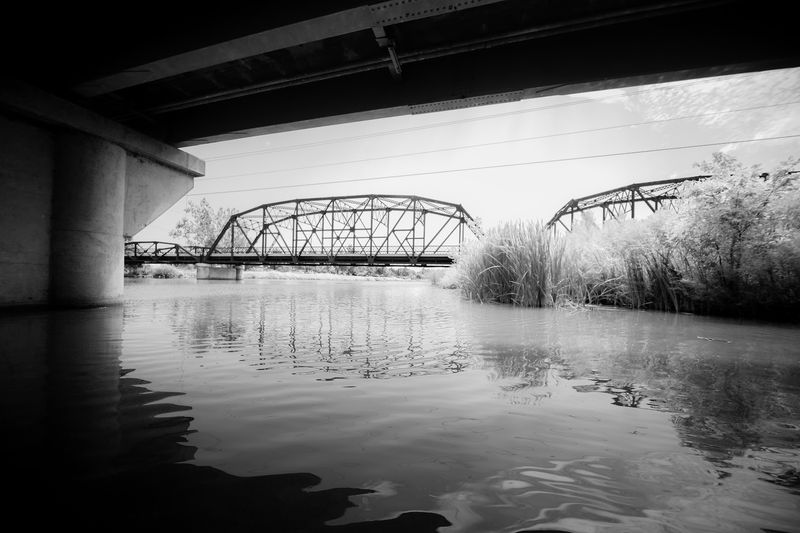
Few spots near Oklahoma City reward photographers the way this bridge does, and the golden hour here is genuinely something worth planning your schedule around. When the sun gets low in the west, the light hits the rust-colored iron at an angle that turns the whole structure a deep amber, and the water below mirrors the color back in a way that makes every shot look intentional.
The bridge superstructure creates natural framing for landscape photos, with the triangular steel trusses acting as a geometric border around whatever you are shooting beyond them. Sunrise shots through the iron framework, with the sun climbing through the steel beams, produce dramatic, high-contrast images that look polished without any special equipment.
Drone photography is popular here too, and the aerial views of the bridge spanning the river with the lake spreading out behind it give a sense of scale that ground-level shots cannot capture. Whether you are shooting on a phone or a professional camera, the combination of historic architecture, open water, and Oklahoma sky gives you more compositional options than most urban photo spots can offer.
Kayaking and Paddling on the Water Below
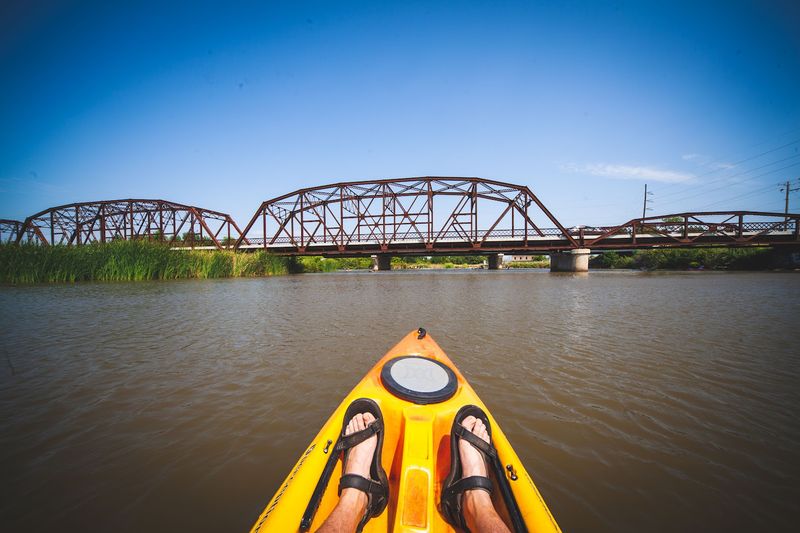
The water beneath the bridge is one of the best reasons to visit even if you have no interest in the bridge itself. The North Canadian River at this point is calm, accessible, and surrounded by native grasses that grow up to ten feet tall on either side, creating a natural corridor that feels surprisingly remote for a spot so close to the city.
Launching a kayak here is straightforward, with a boat launch point about twenty feet from the parking area. Paddlers can weave through the grass-lined channels, pass under the historic bridge, and explore the broader lake beyond.
White storks sometimes swoop down just inches above the water surface, and ducks dive in and out of the reeds alongside you with zero concern for human company.
A day boat permit costs six dollars and can be purchased at several nearby vendors, including a sporting goods store about ten minutes away at 63rd and NW Expressway. An annual permit runs thirty dollars, which pays for itself quickly if you plan to paddle here regularly.
The water rarely gets crowded, which means you often have the whole river corridor to yourself on a weekday morning.
Wildlife and Nature Along the Riverbanks
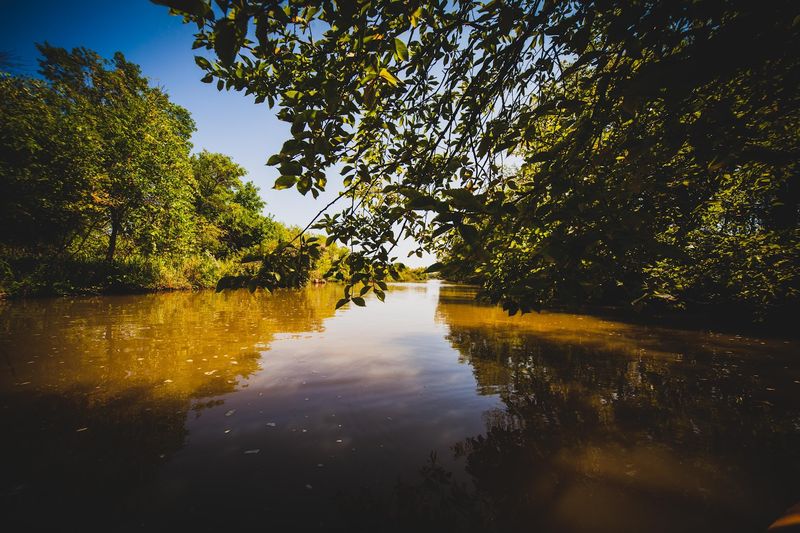
The area around the bridge is richer in wildlife than most visitors expect. A wildlife refuge sits on the far side of the bridge, which means the natural habitat here is protected and largely undisturbed.
Birds are the most visible residents, and the variety on a single visit can be impressive.
White storks glide just above the water’s surface with a quiet grace that stops you in your tracks. Ducks patrol the reeds in small groups, diving and surfacing with practiced efficiency.
During quieter mornings, the birdsong from the refuge side of the bridge is consistent enough to feel like a soundtrack that someone specifically composed for the setting.
The native grasses along the riverbanks provide cover and habitat for a range of smaller creatures too, and the transition between the open lake and the river corridor creates the kind of ecological edge that tends to attract diverse wildlife. Bringing binoculars makes the experience significantly richer, especially during migration seasons when species passing through Oklahoma stop to rest along the water.
The whole area rewards slow, patient observation rather than a quick walk-through.
Fishing at the Bridge and Along the Lake
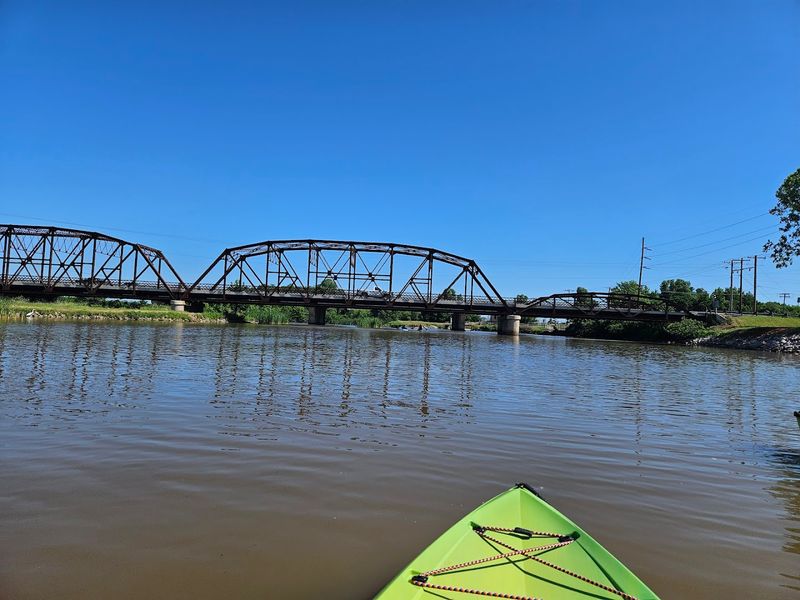
Fishing near the bridge draws a steady crowd on weekends, and the spot has a reputation among local anglers as a reliable place to spend a few hours. The river bend near the bridge creates the kind of current variation that fish tend to favor, and the combination of river and lake habitat means a decent variety of species can be found in the same general area.
One practical tip worth passing along: fish on the lake side rather than the riverside. The riverside has a significant amount of submerged tree debris that will snag your line regularly and turn a relaxing afternoon into a frustrating one.
The lake side offers cleaner water and fewer obstacles, making for a more enjoyable session regardless of your experience level.
Weekday mornings tend to be the quietest times to fish here, before the cyclists, dog walkers, and weekend crowds arrive. The proximity to the wildlife refuge also means the water quality in this area is generally good, which supports healthier fish populations than you might find in more urban waterways.
A folding chair, a cooler with snacks, and a couple of hours here can feel like a proper reset from city life.
The Surrounding Park and Recreational Area
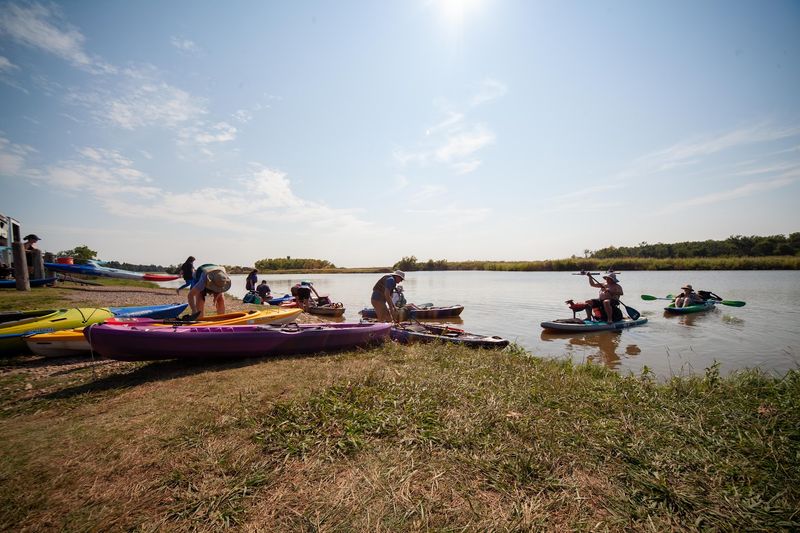
The bridge does not exist in isolation. The surrounding area includes a well-maintained park on the west side of the lake that offers a surprising range of activities for visitors of all ages.
There is a skate park, open green space for picnicking, and enough room to spread out without feeling crowded on most days.
The park is pet-friendly, which makes it a popular destination for dog owners looking for a route with interesting scenery and enough space for their animals to move around. Cyclists show up in significant numbers on pleasant weather days, using the paths around the lake as a training route or a casual weekend ride.
The combination of the historic bridge, the open water, and the recreational facilities creates a layered destination where different visitors find completely different reasons to be there.
Entry to the park is free, which removes one of the most common barriers to outdoor recreation. Families use it regularly for informal gatherings, and the farmers market accessible via the bridge adds a practical, community-oriented dimension to the area.
The whole setup feels like a neighborhood resource that happens to sit on top of a piece of American road history.
Best Times to Visit the Bridge
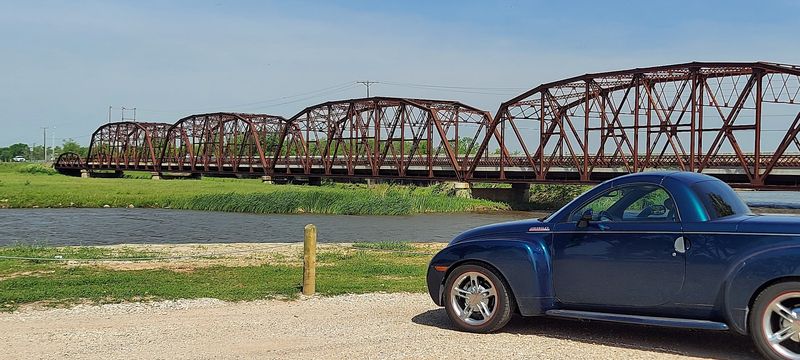
The bridge is open around the clock every day of the year, which gives visitors a lot of flexibility, but certain times genuinely outperform others depending on what you are after. Early mornings on weekdays offer the most peaceful experience, with minimal traffic on the bridge and soft light that makes both photography and quiet walks especially rewarding.
Winter visits have a loyal following among locals who appreciate the reduced crowds and the stripped-down atmosphere. Without the summer foliage, the views across the water open up considerably, and the cooler temperatures make long walks along the riverbank comfortable rather than draining.
Dog owners in particular seem to favor the off-season here, when the paths are quieter and their pets can move freely without navigating around cyclists and large groups.
Sunset on a clear evening is reliably spectacular regardless of the season, and the western orientation of the bridge means you get the full benefit of the fading light directly ahead of you as you cross from east to west. Arriving about thirty minutes before the sun drops gives you time to find a good vantage point and settle in before the best light arrives.
The bridge rewards those who are willing to time their visit with a little intention.
Driving Across the Bridge as an Experience
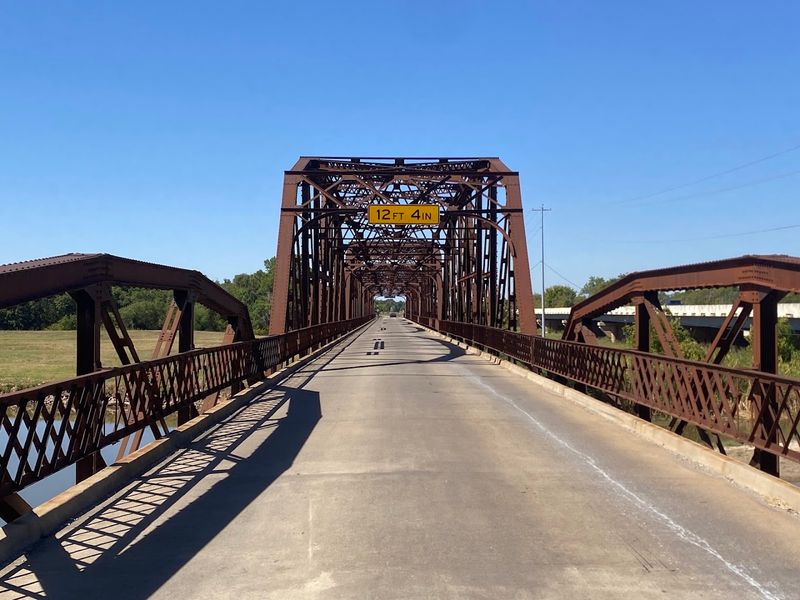
There is something genuinely different about driving across a bridge that was built a century ago for cars that no longer exist. The narrowness of the two lanes keeps your speed down naturally, and the iron framework overhead creates a brief but immersive tunnel effect that modern highway bridges simply do not produce.
Many visitors drive across in both directions to get the full experience from each angle. Heading west, you get the broader lake view opening up ahead of you.
Heading east, the river bend and the native grass corridor come into focus. Neither direction is more impressive than the other; they just tell different parts of the same story.
At night, the absence of overhead lighting makes the crossing feel genuinely historic. The darkness is not threatening, just honest, and it gives you a clear sense of what Route 66 travel felt like before the era of highway lighting and rest stop illumination every few miles.
Driving across slowly with the windows down, listening to the water below and the creak of the old road surface, is one of those small travel experiences that stays with you longer than you expect it to.
Why This Bridge Deserves a Spot on Your Road Trip List
Not every great road trip stop needs to be a major attraction with a gift shop and a parking fee. Some of the most satisfying stops are the ones that ask nothing of you except a willingness to slow down and pay attention.
The Lake Overholser Iron Bridge is exactly that kind of place.
It is historically significant without being overdeveloped. It is scenic without requiring a hike to reach the view.
It is free, open at all hours, and surrounded by enough activity options that you can make it a quick ten-minute detour or a full afternoon depending on your mood and schedule. The fact that you can still drive across it, kayak beneath it, fish beside it, and photograph it from every angle makes it unusually versatile for a single landmark.
Oklahoma has no shortage of Route 66 history, but this bridge stands out because it is still functional, still accessible, and still genuinely beautiful in a way that feels earned rather than curated. Any road trip through the state that skips this bridge is leaving one of its best chapters unread, and that seems like a shame when the detour off Interstate 40 takes less than fifteen minutes.



