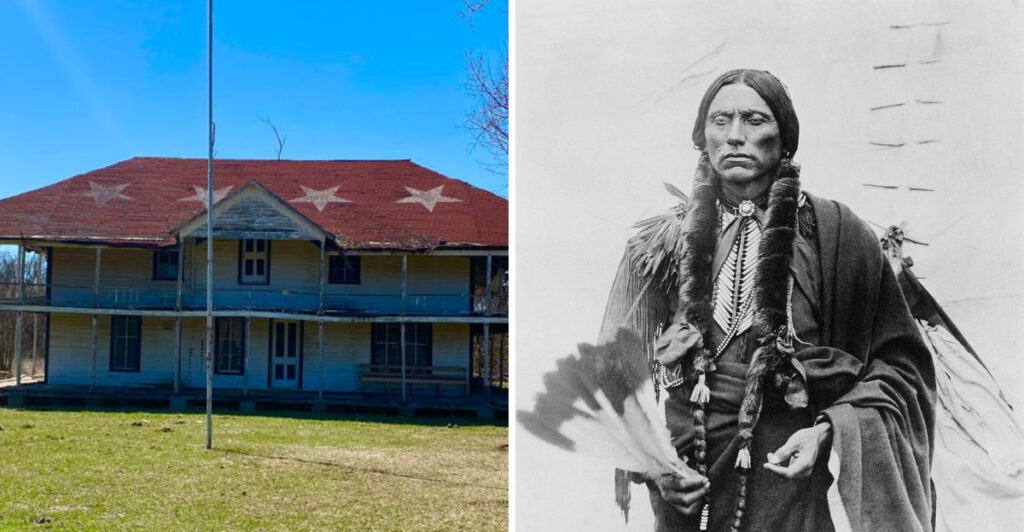
There is a house in southwest Oklahoma that carries more history in its weathered walls than most museums could ever hold. It was built for a man who rode with warriors, negotiated with presidents, and bridged two worlds without apology.
The stars painted on its roof were not decoration for decoration’s sake. They were a direct message to Theodore Roosevelt that this Comanche leader lived in a five-star home.
Today, the Quanah Parker Star House stands on private land near Cache, slowly losing its battle with time, and the story behind it is one that every American should know before it disappears entirely.
The Address and Setting of the Star House
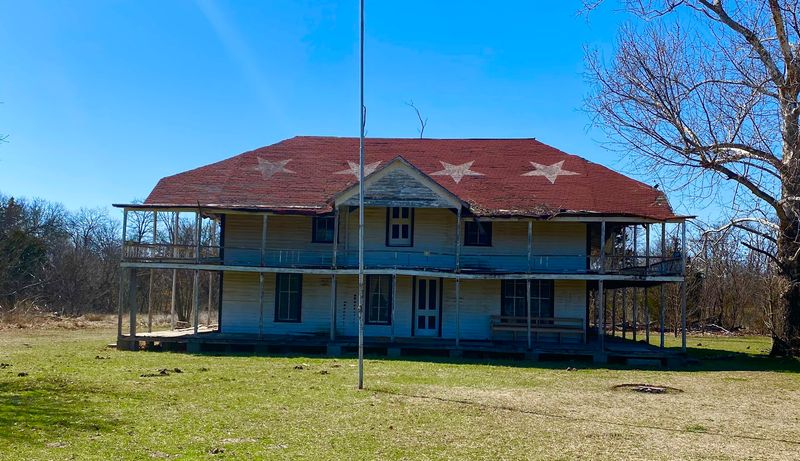
The Quanah Parker Star House sits at N 8th St, Cache, OK 73527, tucked behind a small roadside trading post on a stretch of flat southwestern Oklahoma land that feels like it belongs to another century.
To reach it, you do not simply pull up and walk in. The property is privately owned, and access requires coordination with the current owner, Wayne, who runs the Trading Post diner on the same grounds.
Tours typically begin after 2 PM on weekdays, once the diner has closed for the afternoon. The drive back to the house follows a dirt farm road with deep dips and ruts, so a vehicle with decent clearance is genuinely helpful.
The land around the Star House holds other forgotten structures too, including what is said to be the first doctor’s office ever built in Cache, and a house once connected to Frank James, brother of the outlaw Jesse James.
The whole property has a layered, time-capsule quality that is hard to describe until you are standing in the middle of it, surrounded by relics from completely different eras of American history all quietly coexisting on the same Oklahoma soil.
Who Was Quanah Parker and Why His Home Matters
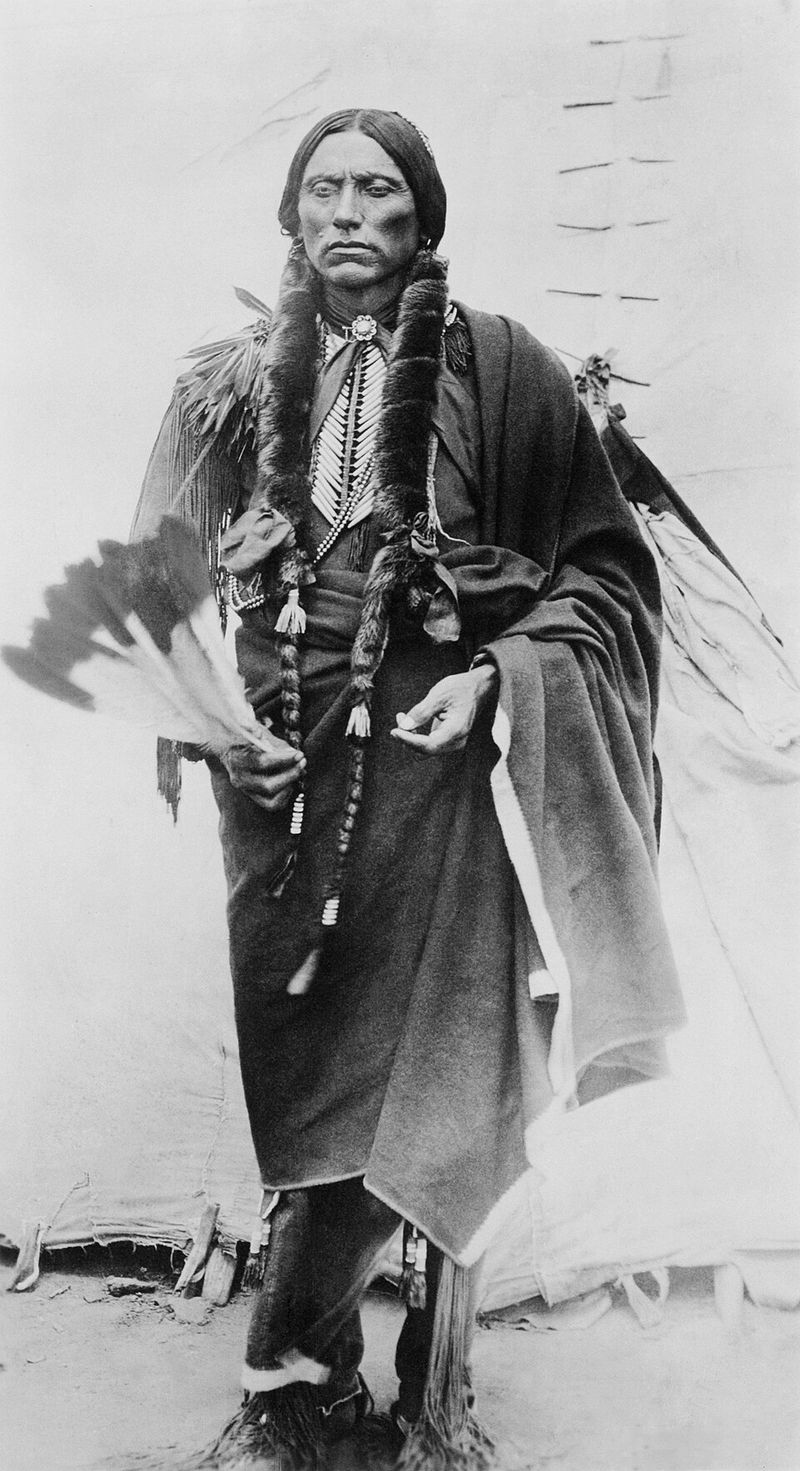
Quanah Parker was the last free chief of the Comanche Nation, a man whose life story reads like two completely different histories stitched together at the spine.
His mother, Cynthia Ann Parker, was a white woman taken by Comanche warriors as a young girl. She eventually married a Comanche chief and gave birth to Quanah, who inherited his mother’s blue eyes and his father’s warrior instincts.
For years, Quanah led fierce resistance against the expansion of European settlers across the southern plains. After the Red River War of 1874, he led his people onto the reservation at Fort Sill rather than watch them disappear entirely, a decision that required a different kind of courage than any battlefield.
Once settled, he became a political leader, a businessman, and a statesman who welcomed powerful guests into his home and negotiated on behalf of his people with remarkable skill.
His Star House was not just a residence. It was a deliberate symbol that the Comanche chief could operate in both the Indigenous and the European-American worlds with equal confidence, and that duality is exactly what makes it one of the most significant historic homes in all of Oklahoma.
The Architecture That Blends Two Worlds
Few buildings in the American West carry as much symbolic weight in their physical structure as the Star House does, because the architecture itself tells a story of cultural fusion that words can only partially capture.
Texas cattlemen who had business dealings with Quanah Parker funded the construction of the house around 1890. The design followed the Victorian style common in European-American settlements of that era, featuring a large two-story frame with wraparound porches and multiple rooms built to accommodate Quanah’s large household.
What made the building uniquely his were the five large stars painted on the roof, a detail that placed Indigenous symbolism directly on top of a European architectural form in a way that was entirely intentional.
The stars earned the house its name and became the subject of one of the most entertaining exchanges in frontier diplomatic history, when Quanah reportedly told President Theodore Roosevelt that his home had five stars compared to the four-star hotel Roosevelt had hosted him in during a Washington D.C. visit.
That kind of wit, wrapped inside a building that physically combined two design traditions, says everything about the man who lived there and the layered Oklahoma history the house continues to represent today.
The Connection to President Theodore Roosevelt
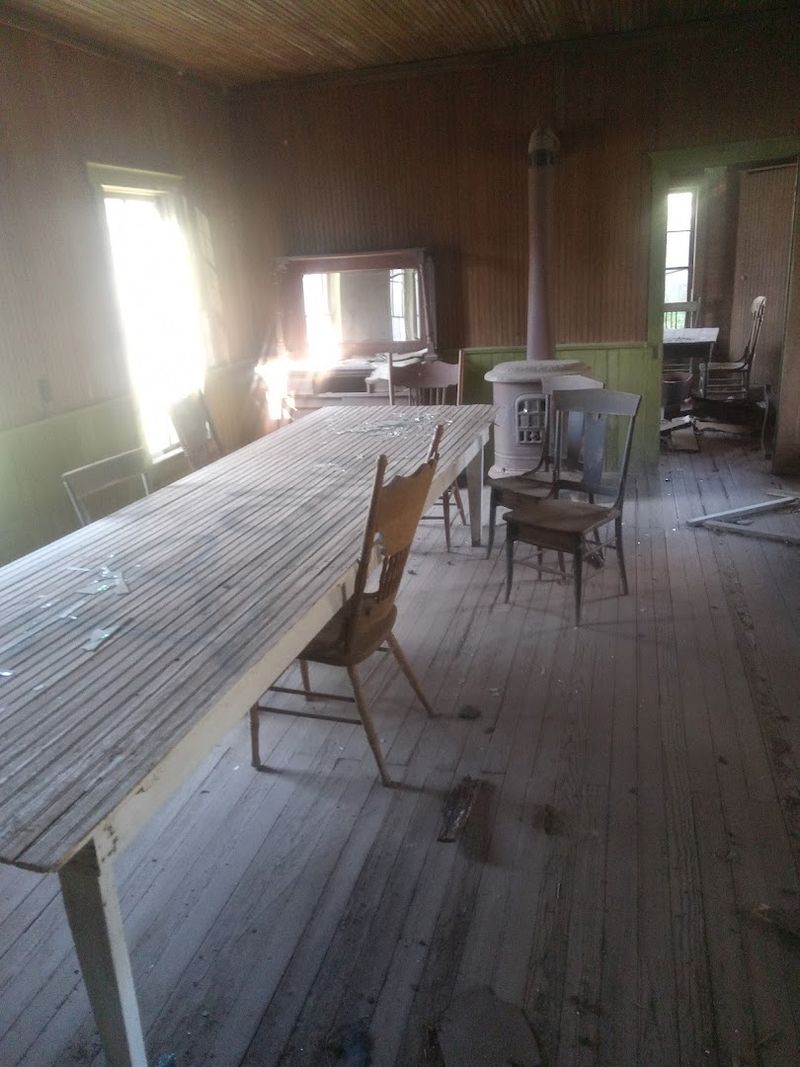
Not many private homes in the American West can claim a sitting United States president as a houseguest, but the Star House is one of them, and the story behind that visit adds a remarkable layer to an already extraordinary place.
Theodore Roosevelt and Quanah Parker developed a genuine friendship rooted in mutual respect. Roosevelt was a known admirer of the frontier West, and Quanah was one of the most politically astute Indigenous leaders of his era.
When Roosevelt came to Oklahoma to designate the first U.S. Wilderness Area near the Wichita Mountains west of Cache, Quanah made sure the president stayed at the Star House.
Chairs that Roosevelt reportedly sat in were still inside the house as recently as a decade ago, visible through broken windows to those who visited.
The five stars painted on the roof were Quanah’s playful way of telling Roosevelt he was staying somewhere grander than any Washington hotel, a gesture that perfectly captures the chief’s confident personality.
That friendship between a Comanche chief and an American president, played out partly on this Oklahoma property, represents a chapter of frontier diplomacy that deserves far more attention than it currently receives in mainstream history books.
The Current State of the Building
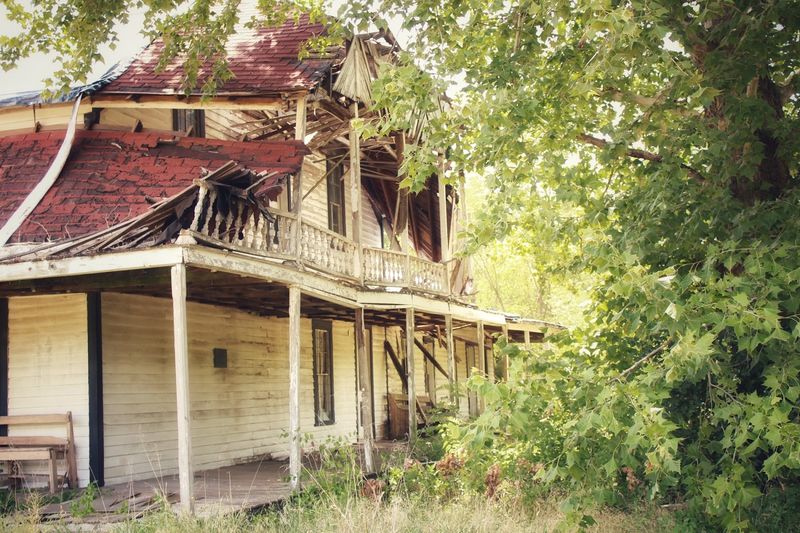
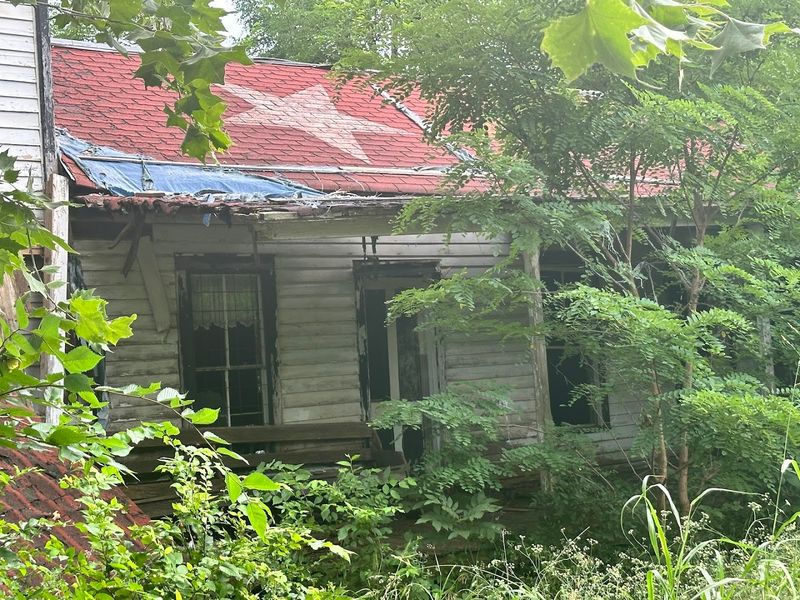
Honesty requires saying plainly that the Star House is in serious trouble, and anyone planning a visit should understand what they are actually going to see before making the trip.
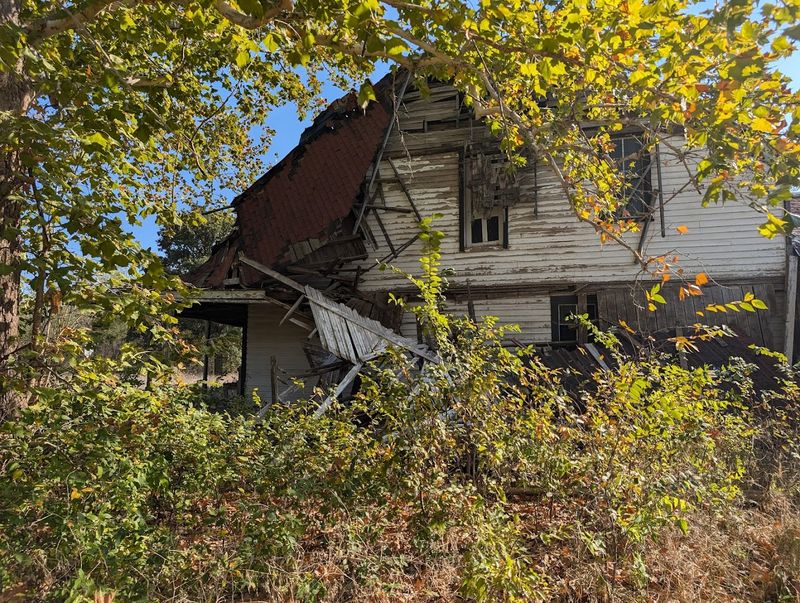
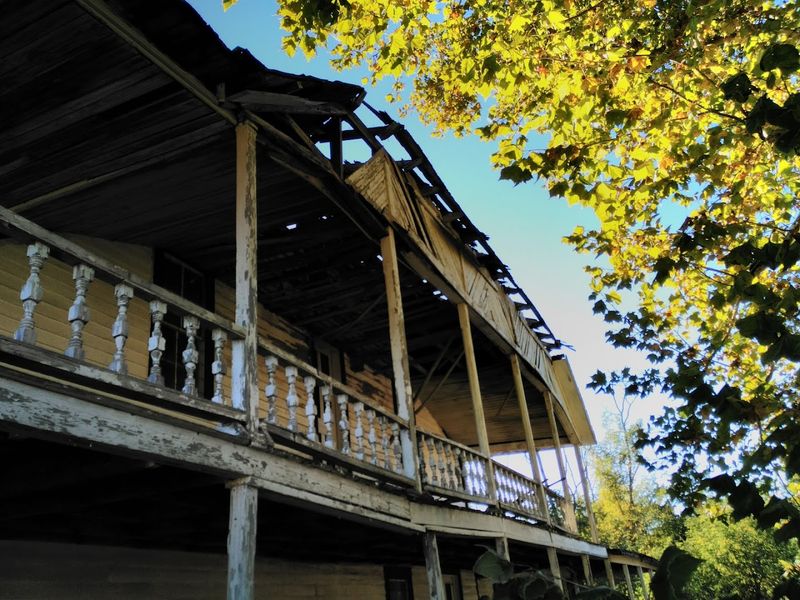
The roof has been caving in for years, and a tarp now covers parts of it in an attempt to slow the water damage. Every window is broken.
The north side of the structure has partially collapsed into the surrounding overgrown brush, and visitors are no longer permitted to enter the building because the interior is no longer structurally safe.
The furniture inside, including chairs associated with Theodore Roosevelt’s visit, has been exposed to the elements and is deteriorating along with the walls around it.
Vandals have broken in multiple times, and the combination of weather, neglect, and unauthorized entry has accelerated the damage significantly over the past several years.
Tours now consist of viewing the house from a respectful distance while Wayne, the current owner, shares what he knows about its history. It is still worth seeing, but the experience carries a weight of urgency that is hard to shake once you are standing in front of what remains of one of Oklahoma’s most historically significant structures.
How to Arrange a Visit and What to Expect
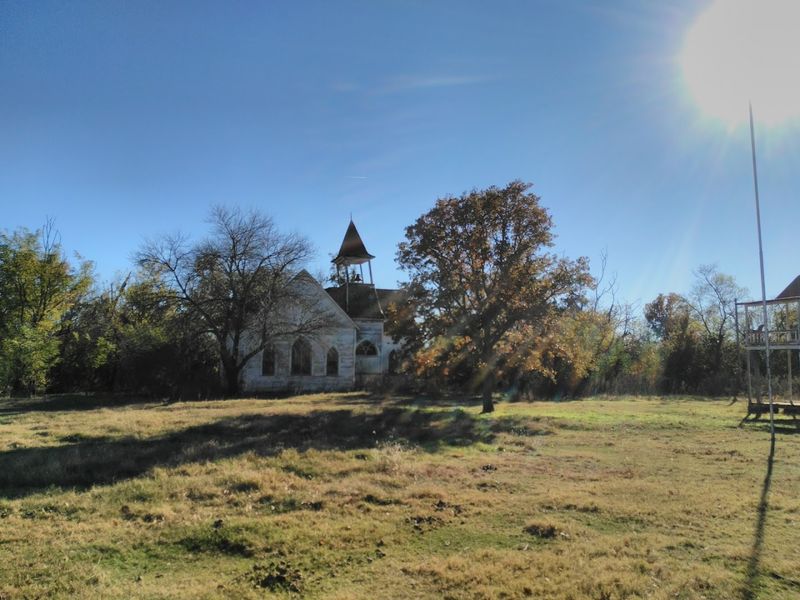
Getting to see the Star House takes a bit of planning, and arriving without a plan will almost certainly result in a wasted trip based on the experiences of many previous visitors.
The process starts at the Trading Post diner on the same property. Wayne, the owner, runs the diner and manages tours himself, so the timing of your visit depends entirely on when he can step away from the restaurant.
On weekdays, tours generally begin around 2 PM after the diner closes. On weekends, the window shifts to approximately 4 PM.
Calling ahead is strongly recommended because Wayne handles the restaurant, a gift shop, and the property largely on his own.
The phone number on record is +1 580-232-7516, and the website savestarhouse.com may have updated information. Tours are conducted by donation, not a fixed fee, so bring cash and give generously considering what you are accessing.
Wear long pants because ticks are genuinely a problem on the property, particularly in warmer months. Bring a vehicle that can handle a bumpy dirt road.
Most importantly, arrive with patience and realistic expectations because this is a personal, informal experience hosted by one person on private Oklahoma land.
The Preservation Debate Surrounding the Star House
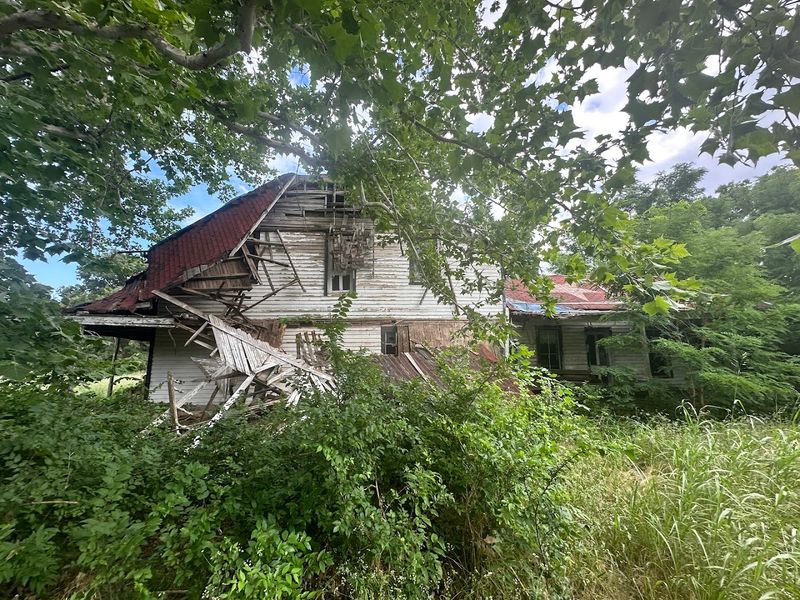
Few historic preservation debates in Oklahoma carry as much emotional weight as the ongoing situation surrounding the Star House, and the conversation involves tribal politics, private property rights, and the question of who gets to decide the fate of a culturally significant structure.
The Comanche Nation has reportedly expressed interest in acquiring the property over the years, and one account mentions an offer of one million dollars that was declined by the current owner. Other preservation groups have also approached Wayne Gibson without reaching an agreement.
The core tension is straightforward. Wayne has indicated he wants the house restored but will not allow it to be moved again, and potential restoration partners have historically wanted to relocate it.
That standoff has lasted long enough for the building to deteriorate past the point of easy repair.
A preservation fund called the Herbert Woesner Preservation Fund has been established at All American Bank in Cache, Oklahoma, for anyone who wants to contribute financially to the care of the property, which includes what is referred to as Eagle Park.
The debate is not simply about one building. It is about who bears responsibility for protecting a place where Indigenous leadership, frontier diplomacy, and American architectural history all converge on the same patch of southwestern Oklahoma ground.
The Broader Historical Significance of the Property
The Star House does not stand alone on the property, and that fact alone makes the land behind the Cache Trading Post one of the more quietly remarkable historic sites in the entire state of Oklahoma.
Among the other structures on the grounds is what is identified as the first doctor’s office ever built in Cache, a small wooden building that represents the earliest days of organized medical care in that part of the territory.
There is also a structure said to have been the home of Frank James, the brother of outlaw Jesse James, which adds a layer of frontier criminal history to a property already overflowing with significant stories.
All of these buildings share the same condition as the Star House, meaning they are deteriorating without active restoration, turning the property into something that feels more like an outdoor museum of collapse than a preserved historic site.
The concentration of significant structures in one place is genuinely unusual, and it raises a larger question about what Oklahoma as a state chooses to protect versus what it allows to disappear quietly into the brush while the clock runs out on buildings that can never be rebuilt once they are gone.
Why This Place Still Deserves Your Attention
Despite its condition, and despite the logistical challenges of arranging a visit, the Star House remains one of the most genuinely meaningful historic sites a person can experience in the American Southwest, precisely because it has not been sanitized into a polished tourist attraction.
What you see when you stand in front of it is the real, unfiltered result of history being treated as a private asset rather than a shared inheritance, and that lesson is uncomfortable in a way that no museum exhibit can quite replicate.
The house connects threads that rarely appear together in a single location. Indigenous leadership, frontier politics, presidential friendship, Victorian architecture, Comanche culture, and the story of Cynthia Ann Parker all converge on this one patch of Oklahoma land.
Quanah Parker’s grave, along with his mother Cynthia Ann Parker’s grave, is located near Fort Sill, not far from Cache, making the broader region a meaningful destination for anyone interested in this chapter of American history.
The Star House may not survive another decade without serious intervention. Visiting it now, contributing to the preservation fund, and sharing its story are the most practical ways any individual can help ensure that Quanah Parker’s extraordinary legacy does not simply rot away in silence on the Oklahoma plains.
Share this story