 Unearth The Voyage
There is a sandstone building in Tahlequah, Oklahoma, that has been standing since 1875, and the stories trapped inside its walls are anything but ordinary. This was no ordinary county lockup.
The Cherokee National Prison once held some of the most notorious outlaws and lawbreakers in Indian Territory history, and today it opens its doors as a museum where you can walk the same corridors those prisoners once paced. Admission is free, the staff is genuinely knowledgeable, and the history packed into those two compact buildings will surprise you at every turn.
Trust me, once you start reading the exhibits, an hour disappears faster than you expect.
The Building Itself: A Sandstone Survivor from 1875
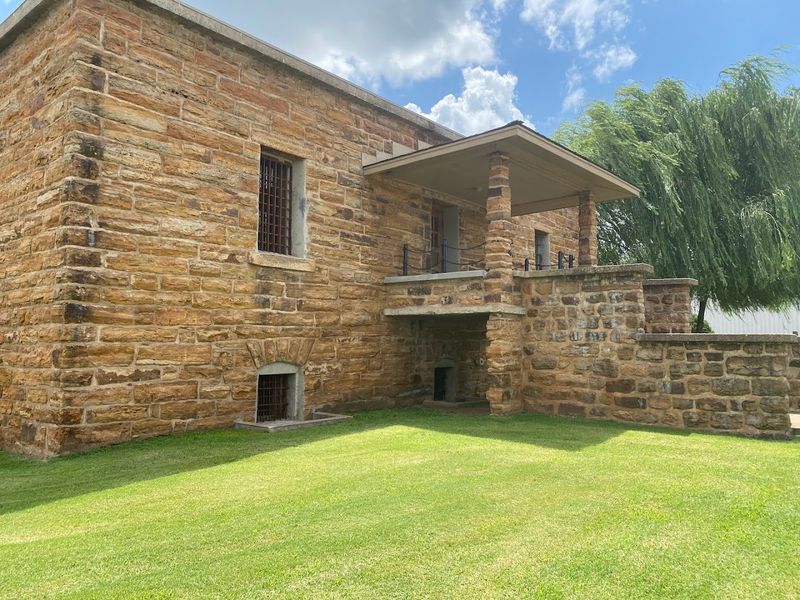
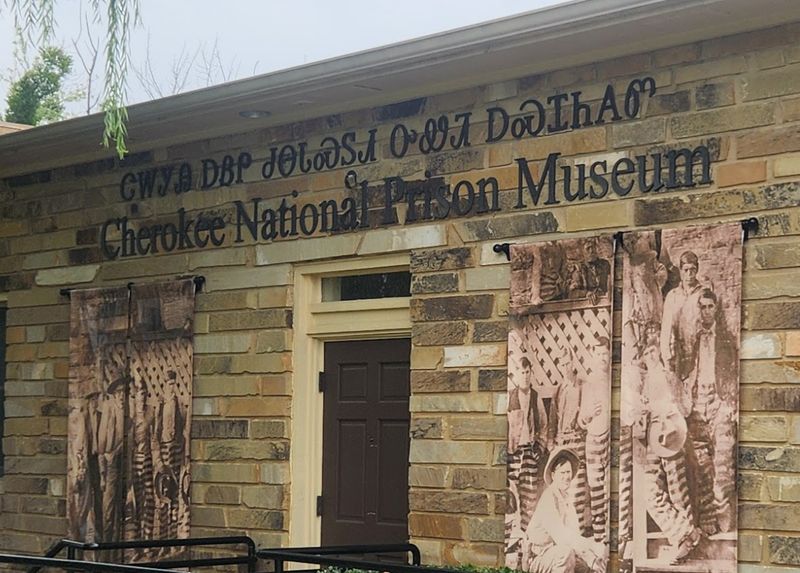
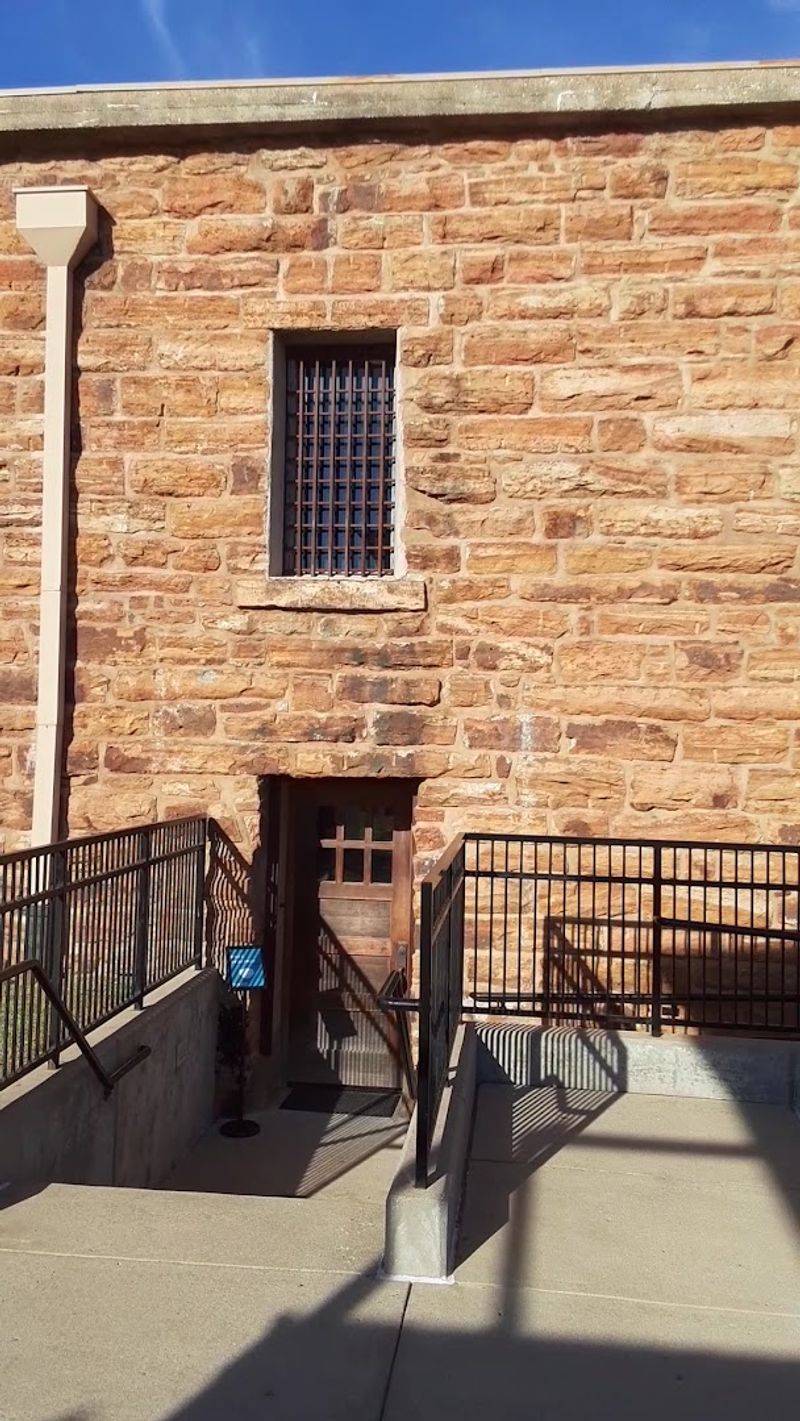
Some buildings demand your attention the moment you see them, and the Cherokee National Prison Museum is exactly that kind of place. The address is 124 E Choctaw St, Tahlequah, OK 74464, and from the street, the sandstone walls give off a weight and permanence that modern construction simply cannot fake.
The structure dates back to 1875, making it one of the oldest surviving correctional facilities in what was then Indian Territory. Two separate buildings make up the complex, and both are listed on the National Register of Historic Places.
The sandstone was quarried locally, which gives the exterior a warm, golden-brown color that photographs beautifully in afternoon light.
The thick walls were designed to keep prisoners in, but today they keep the summer heat out, which visitors appreciate during warm Oklahoma months. Walking up to the entrance, you get a clear sense that this place was built to last centuries.
The building has done exactly that, and it wears its age with a quiet kind of pride that sets the tone for everything you are about to learn inside.
Free Admission and What That Really Means for Your Visit
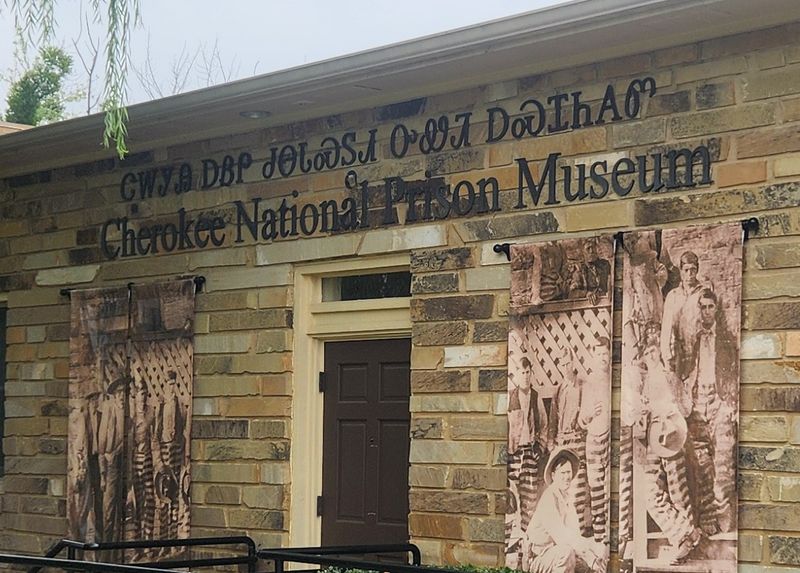
Free admission at a museum of this quality feels almost too good to be true, but the Cherokee National Prison Museum genuinely charges nothing to walk through the door. The Cherokee Nation funds the museum as part of a broader commitment to preserving and sharing its cultural and legal history with the public.
The museum is open Tuesday through Saturday from 10 AM to 4 PM, and it is closed on Sundays and Mondays, so plan accordingly. The phone number is 918-207-3640 if you want to call ahead, and the official website at visitcherokeenation.com has updated information on special events or closures.
Because there is no ticket price to justify, visitors tend to relax and take their time rather than rushing through to feel like they got their money’s worth. Families with kids, solo history buffs, and road-trippers passing through Tahlequah all find the free entry makes a spontaneous stop completely stress-free.
The Cherokee Nation’s generosity here is not a small thing; it makes this history genuinely accessible to everyone who wants it.
The Cherokee Justice System: A Legal World of Its Own
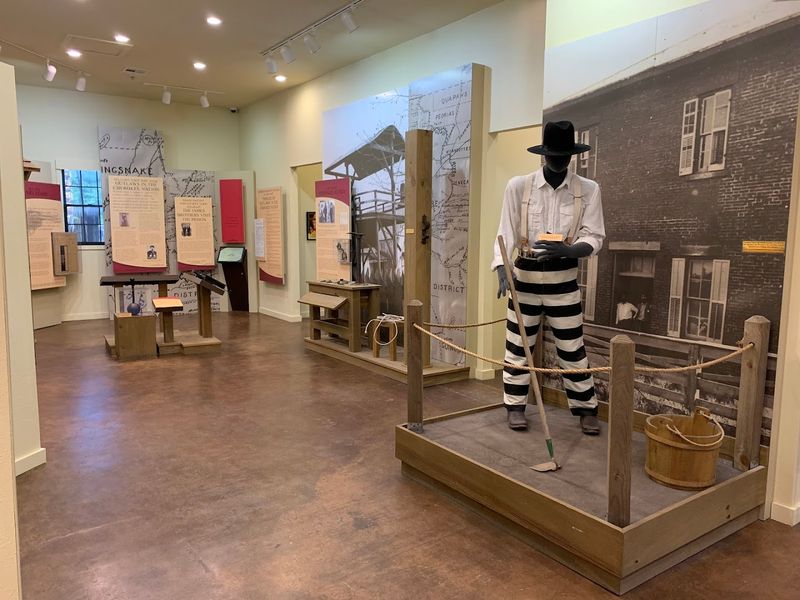
Most visitors arrive expecting a straightforward jail museum, but what they find is something far more layered. The Cherokee Nation operated its own fully functioning legal system long before Oklahoma achieved statehood in 1907, and the exhibits here walk you through exactly how that system worked.
The Cherokee had their own courts, their own law enforcement officers called Light Horsemen, and their own codes of justice that governed the Nation’s citizens. The museum explains how this sovereign legal structure handled everything from minor offenses to serious crimes within the boundaries of Indian Territory.
What makes this especially fascinating is seeing how the Cherokee justice system eventually collided with the expanding reach of the United States federal court system, particularly the jurisdiction of Judge Isaac Parker’s court in Fort Smith, Arkansas. That tension between two legal worlds created complicated situations for both Cherokee citizens and non-Native people living within the Territory.
The exhibits present this conflict honestly and with real depth, giving visitors a much clearer picture of how law and sovereignty intersected in this corner of Oklahoma history.
The Cells: Tight Quarters and Hard Realities
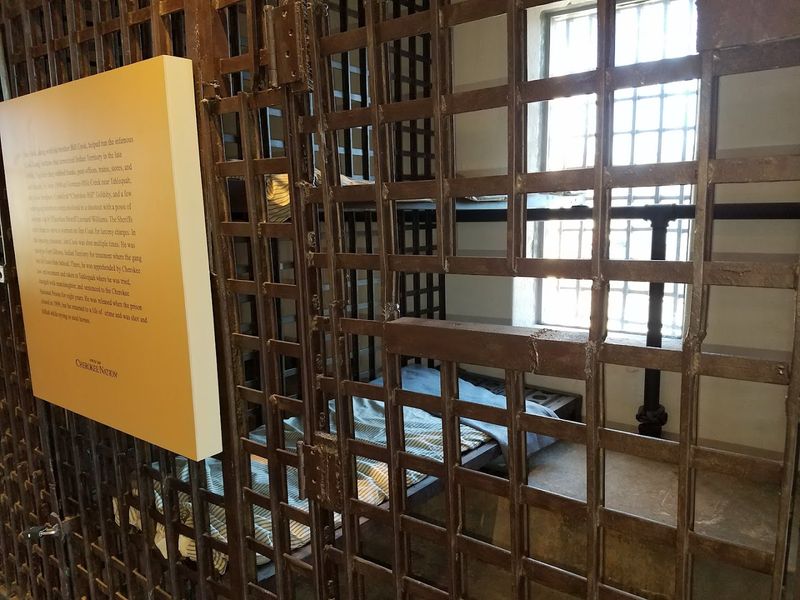
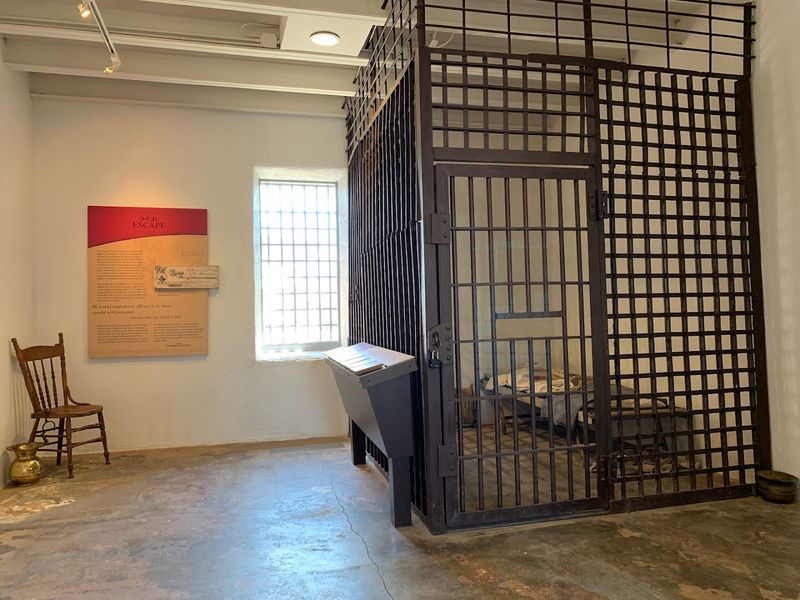
Nothing prepares you for the moment you actually stand inside one of the original cells. The space is shockingly small, and when you consider how many prisoners were held together in a single room, the physical reality of 19th-century incarceration hits with unexpected force.
The sparse furnishings inside the cells are part of what makes the experience so memorable. A shared chamber pot, thin bedding, and stone walls with no insulation tell you everything you need to know about conditions inside this facility during its operating years.
There was nothing comfortable about doing time here.
The museum has preserved these spaces thoughtfully rather than dramatizing them. You are not looking at a Hollywood recreation; you are standing in the actual rooms where real people served real sentences under the authority of the Cherokee Nation.
The narrow walkways between exhibits can get a little tight with a stroller or a larger group, but the staff is helpful in guiding visitors through. Standing in front of those cell doors, even briefly, leaves a lasting impression that no photograph fully captures.
Outlaws, Desperadoes, and the Characters Who Passed Through
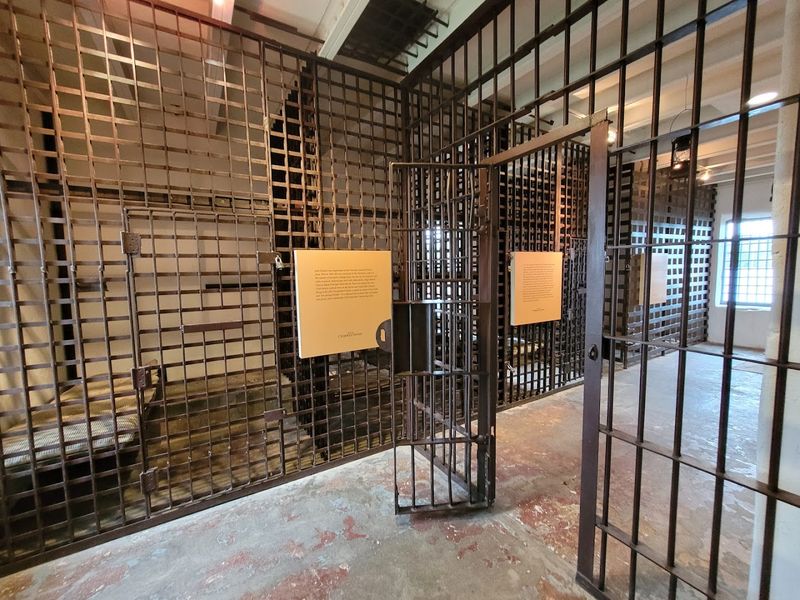
The Indian Territory era produced some of the most colorful criminal figures in American frontier history, and a good number of them ended up behind the walls of the Cherokee National Prison. The museum dedicates real exhibit space to profiling the outlaws and desperadoes who were held here or who operated in the surrounding region.
Reading through the individual case histories, you start to notice patterns. Many of these men were products of a chaotic time when jurisdictional boundaries were blurry, law enforcement was stretched thin, and opportunity for trouble was everywhere.
Some were violent; others were opportunists caught up in the wrong situation at the wrong moment.
The museum does not glorify these figures, but it does give them context, which is far more interesting than simple condemnation. You learn about their crimes, their trials, and in some cases their fates, all presented with the kind of detail that makes history feel personal rather than distant.
By the time you finish this section of the exhibits, you will have a genuine appreciation for just how wild and complicated life in Oklahoma Territory actually was during those years.
The Gallows: A Sobering Corner of the Museum
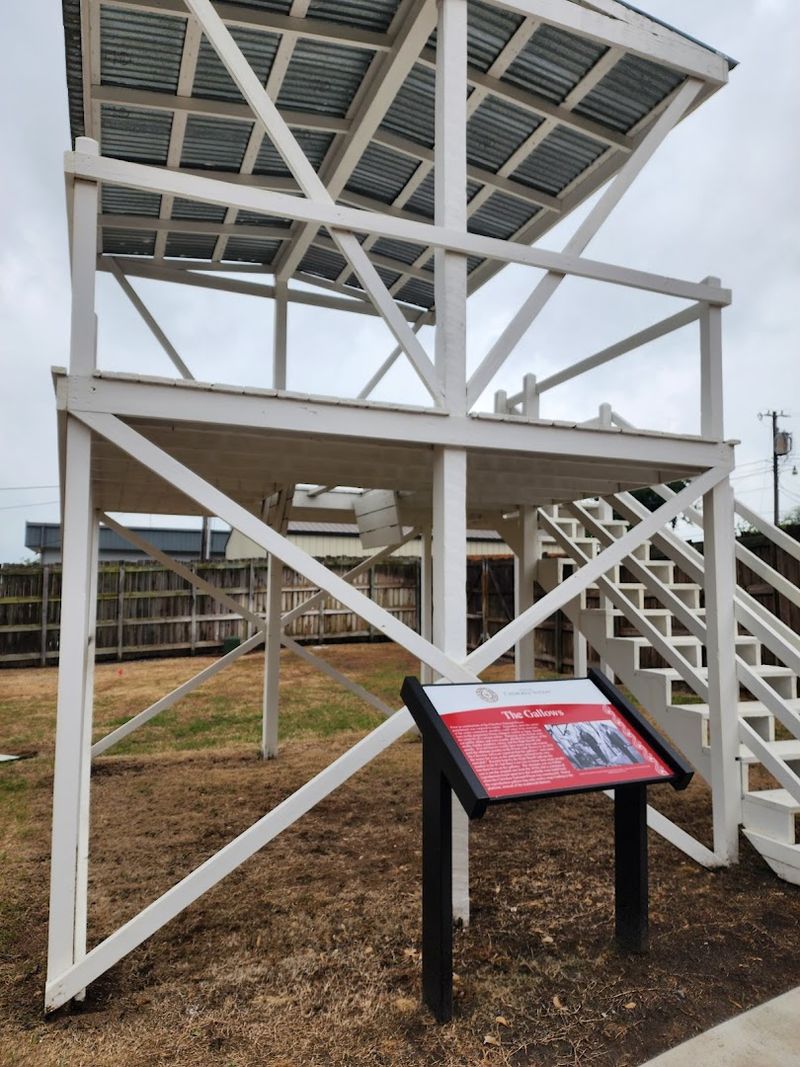
Tucked within the museum is a section that stops most visitors mid-step: the area dedicated to the gallows used during the prison’s operating years. The Cherokee Nation’s legal code included capital punishment for the most serious offenses, and this part of the exhibit does not shy away from that history.
The presentation is handled with care and solemnity. There are no sensational displays or dramatic lighting tricks designed to shock.
Instead, the museum presents the facts surrounding executions in a way that encourages reflection on the nature of justice and the weight of legal authority during a turbulent period in the Territory’s history.
Several visitors have noted that this section of the museum carries a distinct atmosphere, and more than a few have reported unexplained feelings while passing through. Whether you put stock in that kind of thing or not, the history alone is enough to make you pause and think.
The Cherokee Nation used its judicial power seriously and deliberately, and the gallows exhibit makes that point without ever crossing into exploitation. It is one of the most quietly powerful corners of the entire museum experience.
The Kitchen and Other Preserved Spaces
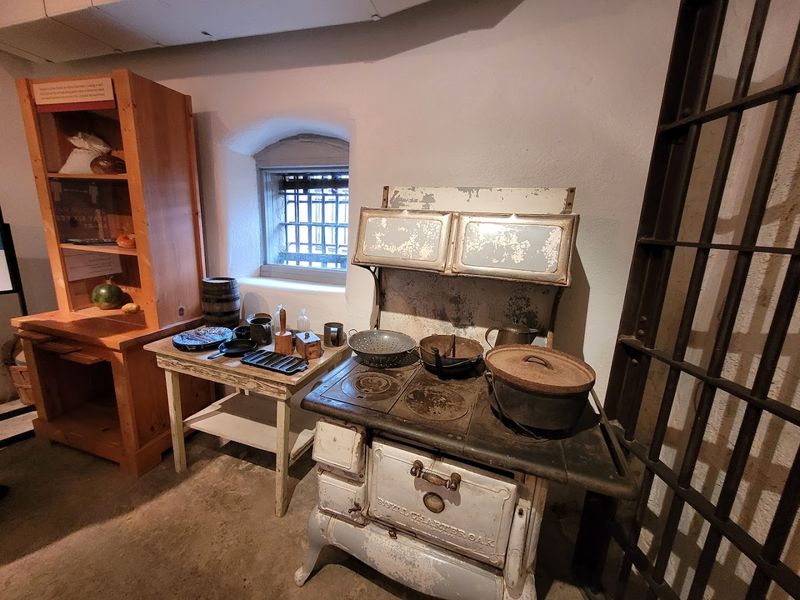
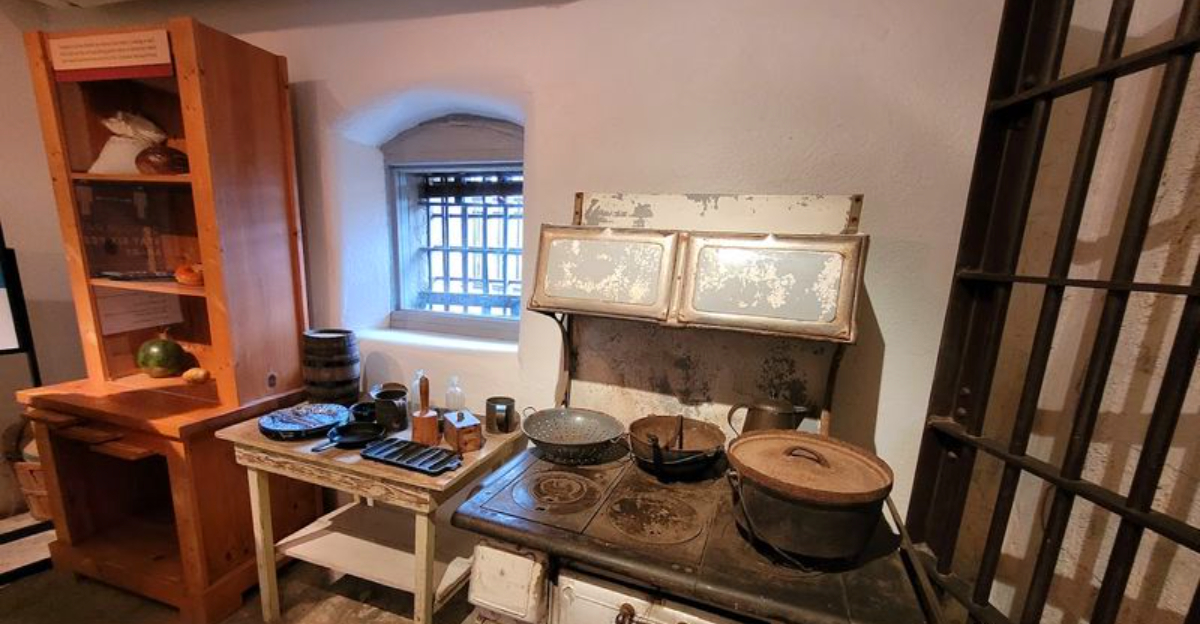
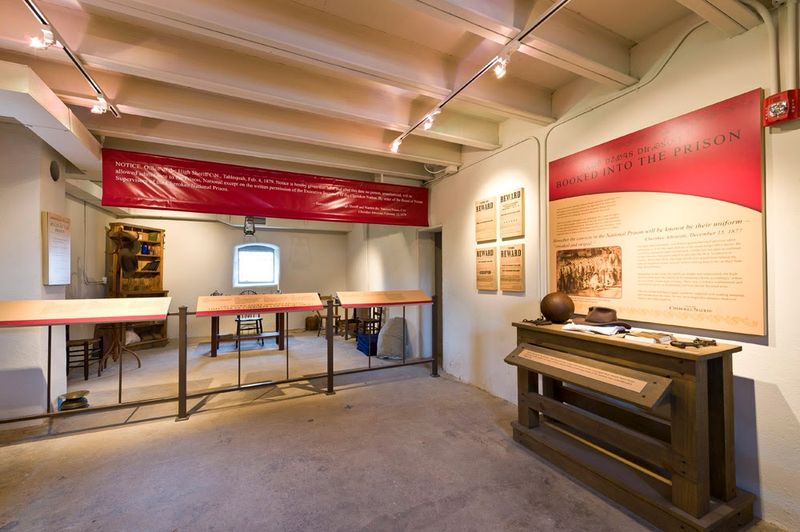
Beyond the cells and the more dramatic exhibits, the Cherokee National Prison Museum preserves several functional spaces that give you a fuller picture of daily life inside the facility. The kitchen is one of the most memorable stops on the self-guided tour.
Seeing the cooking equipment and the layout of the space makes you think about the logistics of feeding a prison population in the 1870s and 1880s. There were no modern conveniences, and every meal required significant labor from the people assigned to prepare it.
The kitchen exhibit connects the human, everyday side of prison life to the larger historical narrative in a way that feels grounding rather than grim.
A few visitors have shared that the kitchen gave them an odd, slightly unsettled feeling during their tour, and at least one person described a strange sensation near the center of the room that they could not easily explain. The staff is open to discussing the building’s more unusual reputation, and they handle those conversations with a relaxed, matter-of-fact humor that keeps things light.
The kitchen alone makes the self-guided walk worth taking from start to finish.
Ghost Stories and Unexplained Moments
Not every museum comes with its own collection of unexplained visitor experiences, but the Cherokee National Prison Museum has quietly built a reputation for exactly that. The staff does not lead with ghost tours or paranormal marketing, but they are entirely willing to talk about what visitors and employees have reported over the years.
A shirt tail tugged in the kitchen with no object nearby to catch it. A camera that kept taking pictures on its own inside the jail area.
A general sense of unease in certain corridors that visitors describe independently of one another. The staff treats these accounts with calm curiosity rather than theatrical enthusiasm, which somehow makes the stories more believable.
Whether you are a firm skeptic or someone who keeps an open mind about these things, the building’s age and history give any unexplained moment a certain weight. Over a century of human experience passed through these walls under difficult circumstances, and the museum sits honestly with that reality.
You do not have to believe in anything supernatural to find this layer of the Cherokee National Prison Museum genuinely compelling and a little hard to shake after you leave.
The Staff: Knowledgeable, Friendly, and a Little Funny
A museum is only as good as the people running it, and by that measure, the Cherokee National Prison Museum is in excellent shape. The staff here consistently earns praise for being genuinely informative without being dry or lecture-heavy about it.
The self-guided tour format means you move at your own pace through the exhibits, but the staff members are positioned throughout and happy to answer questions whenever you have them. They know the material deeply, and they share details that are not always written on the exhibit panels, which adds a layer of richness to the experience that you would not get from a pamphlet alone.
One of the front desk staff members has a sharp sense of humor that catches visitors off guard in the best possible way. Several people have mentioned leaving the museum in a genuinely good mood partly because of the warm and witty interaction at check-in.
That combination of expertise and personality is rarer than it should be in museum settings. The Cherokee Nation has clearly invested in people who care about this history and enjoy sharing it, and that enthusiasm is contagious from the moment you walk through the door.
Visiting With Kids: More Engaging Than You Might Expect
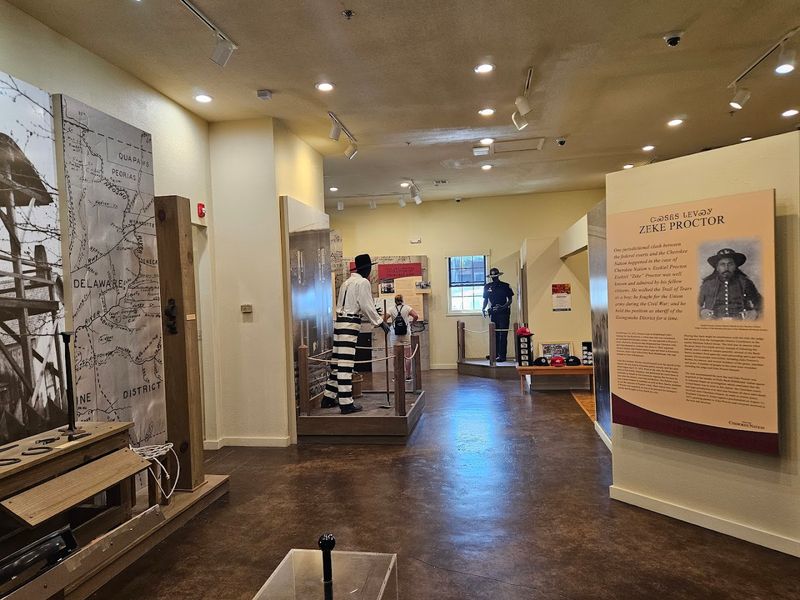
Taking children to a former prison might sound like an unusual family outing, but the Cherokee National Prison Museum works surprisingly well for younger visitors. The physical nature of the space, actual stone cells, original fixtures, and preserved rooms, gives kids a tangible connection to history that a textbook simply cannot replicate.
Children tend to respond strongly to the scale of the cells and the visible austerity of the conditions inside. Questions come naturally in a space like this, and the staff is patient and skilled at explaining the history in ways that are age-appropriate without dumbing anything down.
The museum covers topics like law, justice, and Cherokee sovereignty in ways that spark genuine curiosity in younger visitors.
The walkways are a bit narrow in certain sections, so a stroller can be tricky to maneuver, but it is manageable with a little patience. Groups of mixed ages, from grandparents to school-age children, consistently report that everyone found something to engage with during the visit.
The free admission makes it an easy yes for families who are not sure how long they will want to stay, and most end up spending more time than they planned.
The Broader Cherokee Heritage Context in Tahlequah
The Cherokee National Prison Museum does not exist in isolation. Tahlequah serves as the capital of the Cherokee Nation, and the city is layered with history that extends far beyond any single building or exhibit.
The museum fits into a larger network of Cherokee cultural and historical sites that reward visitors who take the time to explore the area.
The Trail of Tears brought the Cherokee people to this region in the late 1830s under devastating circumstances, and Tahlequah became the seat of their rebuilt Nation in the years that followed. Understanding that backstory adds significant weight to everything inside the prison museum, because the Cherokee legal system represented not just law enforcement but the determination of a people to govern themselves on their own terms.
Several other Cherokee Nation museums and cultural sites operate nearby, many of them also free to visit. Spending a full day in Tahlequah and moving between these sites gives you a much richer understanding of Cherokee history and Oklahoma’s complicated past than any single stop could provide.
The prison museum staff is happy to point you toward other nearby attractions that complement the stories told within these sandstone walls.
Planning Your Visit: Practical Tips Before You Go
A little advance planning makes a visit to the Cherokee National Prison Museum even smoother than it already is. The museum is open Tuesday through Saturday, 10 AM to 4 PM, and closed Sunday and Monday, so a weekend road trip needs to account for that Saturday cutoff as the only weekend option.
Parking in the area around 124 E Choctaw St is generally straightforward, and the museum is easy to find in downtown Tahlequah. The tour is self-guided, so you control your own pace entirely.
Most visitors spend between 45 minutes and just over an hour inside, though those who stop to read every panel and chat with the staff often find themselves stretching that to 90 minutes without realizing it.
The museum rates 4.7 stars across nearly 150 reviews, which is a strong signal that the experience consistently delivers. Comfortable shoes are a good idea since the floors are original and uneven in places.
The building is well maintained and clean, and the exhibits are thoughtfully presented throughout. Whether you are a lifelong Oklahoma history enthusiast or someone who just spotted a brown highway sign and pulled over on instinct, this museum will not disappoint you.



