Long before modern interstates crisscrossed the Pacific Northwest, one remarkable road introduced travelers to Oregon’s breathtaking landscapes. The Historic Columbia River Highway, completed in the early 20th century, was America’s first highway designed specifically for scenic touring.
Today, its preserved sections offer an unforgettable drive past waterfalls, basalt cliffs, lush forests, and sweeping views of the Columbia River Gorge. Buckle up, because this road trip is truly one for the books.
Vista House at Crown Point
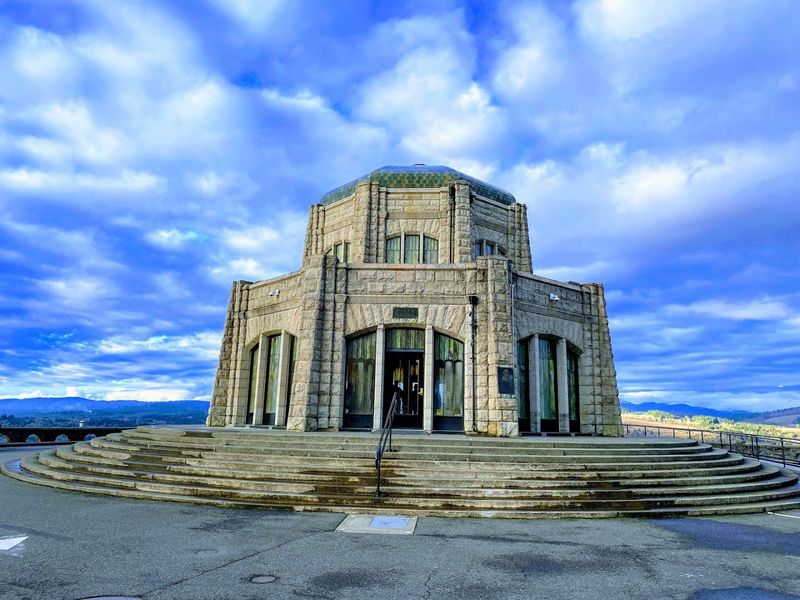
Standing nearly 750 feet above the Columbia River, Vista House has been making jaws drop since 1918. Built as a memorial to Oregon’s pioneers, this stunning octagonal stone structure was designed by architect Edgar Lazarus and took three years to complete.
Few roadside stops in America feel this dramatic.
Inside, you will find a small museum with exhibits about the highway’s history and construction. The building’s restored interior features beautiful marble floors and ornate bronze fixtures that transport you back to the early automobile era.
Photography enthusiasts absolutely love the light here during golden hour.
The views from the outdoor observation deck stretch for miles in both directions along the Gorge. On clear days, you can spot Mount Hood, Mount Adams, and Mount St. Helens all at once.
Even on cloudy days, the moody atmosphere makes the scene feel cinematic. Parking can get busy on summer weekends, so arriving early is a smart move.
This is the kind of stop that earns its reputation every single visit.
Latourell Falls
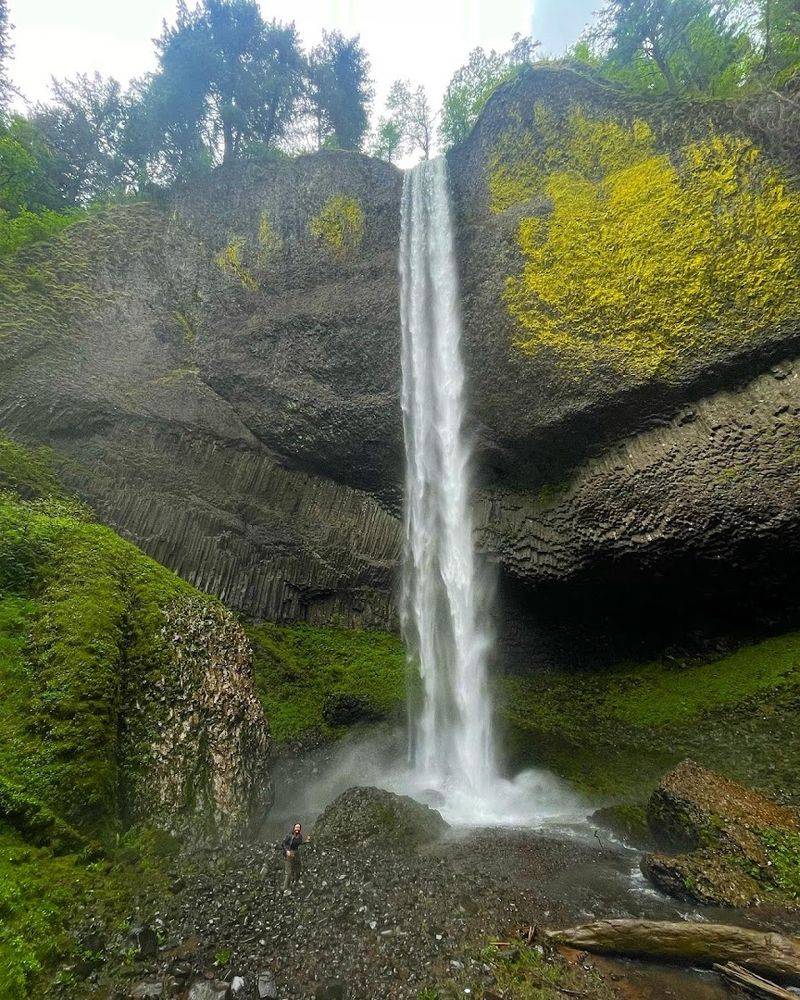
Yellow lichen splashed across dark basalt columns gives Latourell Falls a color palette you would not expect from a waterfall. Plunging 249 feet in a single dramatic drop, this is one of the tallest single-drop waterfalls in the entire Columbia River Gorge.
It also happens to be one of the most accessible.
The lower viewpoint is just a two-minute walk from the parking area, making it perfect for families with young kids or anyone short on time. Getting close enough to feel the mist on your face is genuinely thrilling.
A longer 2.4-mile loop trail winds uphill through old-growth forest to a second, smaller waterfall tucked above the main drop.
Latourell Creek runs crystal clear here, and the surrounding forest stays remarkably green year-round. Sword ferns, bigleaf maples, and mossy boulders frame every turn of the trail.
Winter visits are especially magical, when ice formations sometimes cling to the basalt walls beside the falls. Spring brings extra water volume that makes the roar of the falls even more impressive.
This spot earns repeat visits across every season without ever feeling old.
Shepperd’s Dell State Natural Area
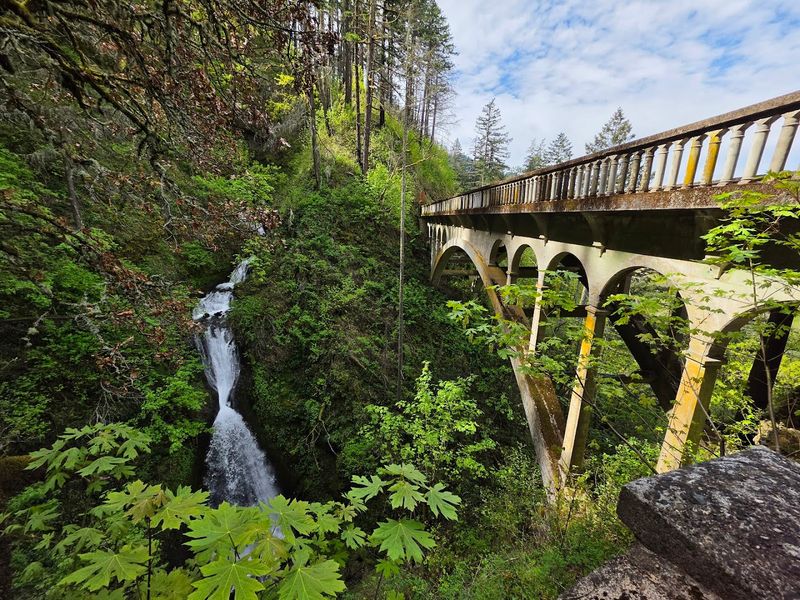
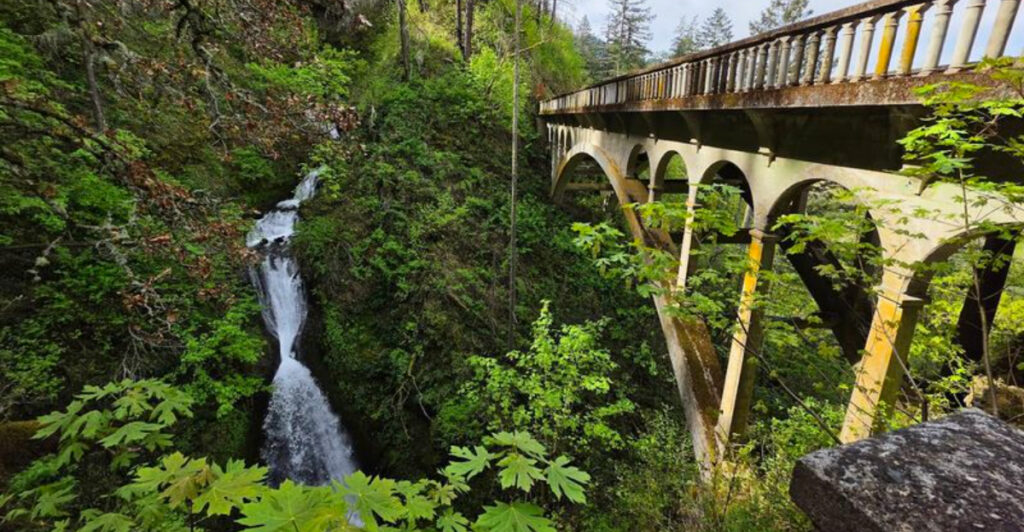
Hidden in plain sight along the highway, Shepperd’s Dell is the kind of place that rewards curious travelers who bother to pull over. Most people drive past without realizing a gorgeous stone arch bridge and a tucked-away waterfall are waiting just steps from the road.
Their loss, your gain.
The bridge itself was built in 1914 and is a masterpiece of craftsmanship, blending seamlessly into the natural canyon below. George Shepperd originally donated this land to the city of Portland as a memorial to his wife, which gives the spot a quietly moving backstory.
Standing on the bridge and looking down into the fern-filled canyon feels genuinely peaceful.
The waterfall beneath the bridge is modest in size but wildly photogenic, especially after heavy rain when the creek runs full and fast. A short trail leads down into the canyon for a closer look at the falls and the mossy rock walls surrounding it.
The light filtering through the forest canopy creates beautiful green-tinted shadows throughout the day. Visiting on a weekday almost guarantees you will have the place mostly to yourself, which makes the experience feel even more special.
Bridal Veil Falls State Scenic Viewpoint
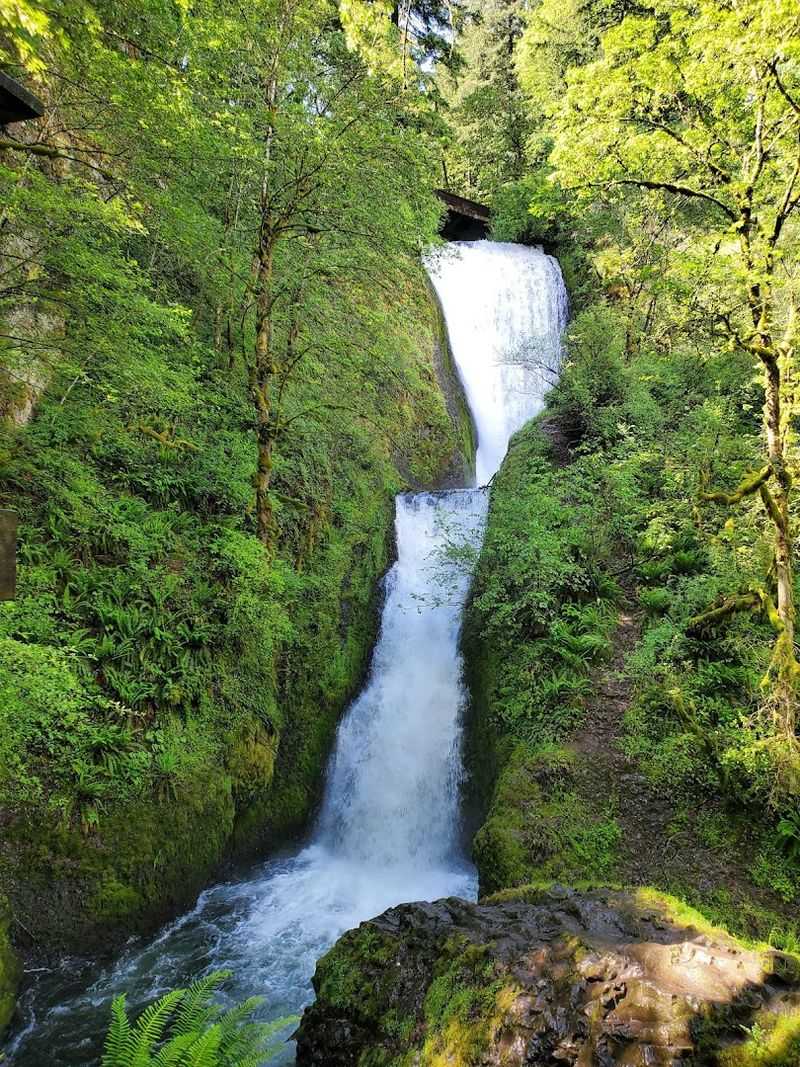
Few waterfall names in Oregon are as perfectly matched to their subject as Bridal Veil Falls. The two-tiered cascade spills roughly 118 feet into a lush, fern-draped canyon, creating a scene that looks almost too pretty to be real.
Even the trail leading there feels like walking through a nature painting.
The round-trip hike to the falls is only about 0.6 miles, making it one of the shortest rewarding walks on the entire highway. The path descends gently through old-growth forest before opening up to a viewing platform at the base of the falls.
Getting lightly misted by the spray is practically guaranteed, so a light rain jacket is always a good idea.
A second trail at the trailhead leads to a meadow overlook with sweeping views of the Columbia River Gorge. Combining both trails takes less than two hours and delivers two completely different types of scenery.
Wildflowers bloom along the meadow path in late spring, adding splashes of color to the green landscape. The parking area fills up quickly on sunny weekends, but the trail itself never feels overcrowded.
Bridal Veil Falls is short, sweet, and absolutely worth every step.
Multnomah Falls
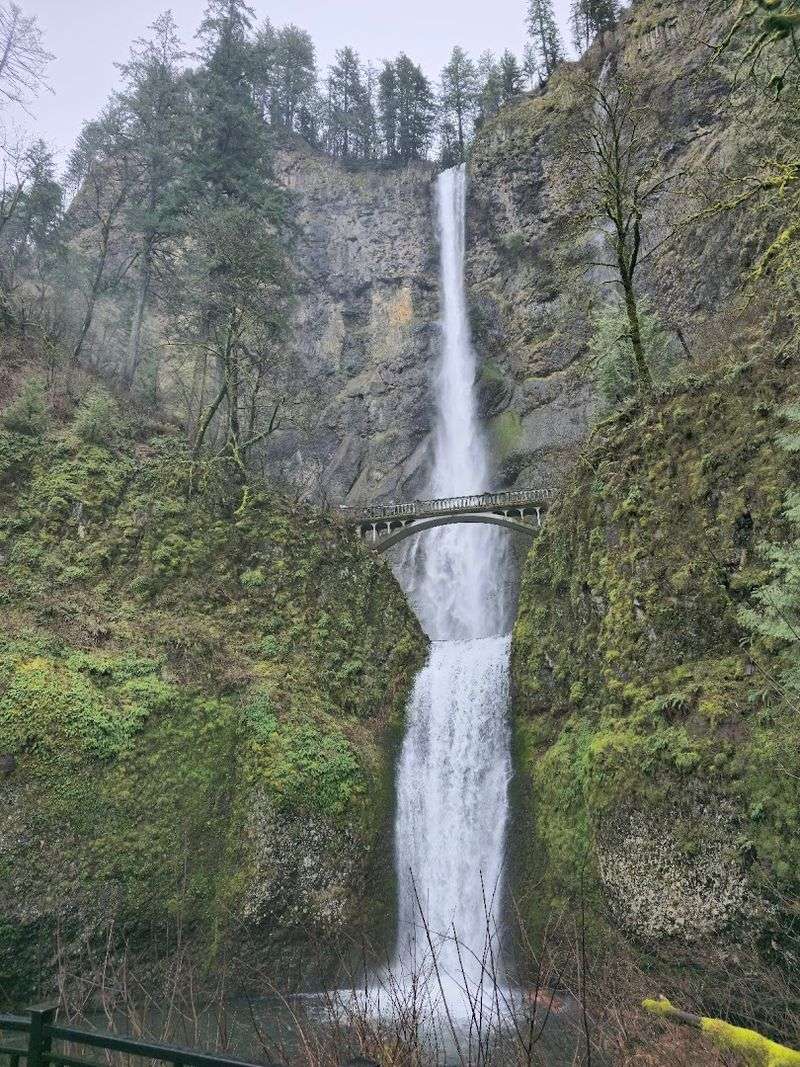
Oregon’s most famous waterfall does not need much of an introduction, but here is one anyway: Multnomah Falls drops a jaw-dropping 620 feet, making it the tallest waterfall in the state and one of the most visited natural sites in the entire Pacific Northwest. About two million people show up every year, and honestly, that number makes complete sense.
The iconic Benson Bridge, built in 1914, spans the gap between the upper and lower cascades at just the right spot for incredible photos. Hiking to the top of the falls rewards you with views looking straight down into the Gorge, which is equal parts terrifying and spectacular.
The paved trail to the bridge is steep but manageable for most visitors.
A full-service lodge at the base of the falls houses a restaurant, gift shop, and visitor center, making this a complete stop rather than just a quick pullout. Arriving before 9 a.m. on weekends is the best way to beat the crowds and snag a parking spot.
The falls run year-round, and winter visits offer the rare treat of ice formations on the surrounding cliffs. Multnomah Falls earns its legendary status every single day.
Wahkeena Falls
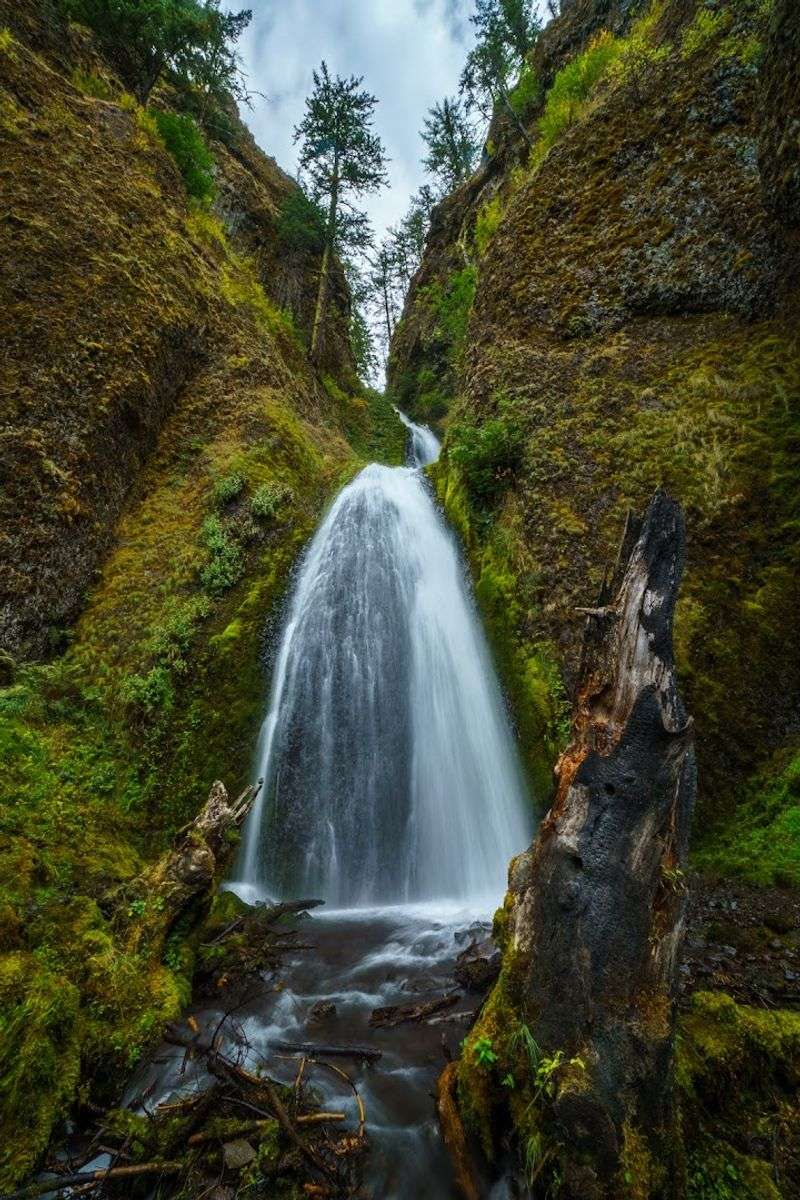
Right next door to Multnomah Falls but far less crowded, Wahkeena Falls is the kind of discovery that makes you feel like you found a secret. The name comes from a Yakama word meaning most beautiful, and the waterfall has been living up to that title for a very long time.
Water tumbles over a series of moss-draped basalt ledges in a graceful, staircase-like pattern.
The trail system around Wahkeena is genuinely excellent for hikers who want more than a quick look. A loop trail connects Wahkeena Falls to Multnomah Falls via a ridge route through old-growth forest, passing several smaller waterfalls along the way.
The full loop covers about five miles and offers constantly changing scenery.
Fairy Falls, a small fan-shaped cascade hidden partway up the Wahkeena Trail, is one of the most charming surprises along the route. The creek alongside the trail stays cold even in summer, making the hike feel refreshing on warm days.
Picnic tables near the trailhead make this a great lunch stop between waterfall visits. Wahkeena proves that sometimes the stop just around the bend from the famous one turns out to be equally memorable in its own quiet way.
Horsetail Falls
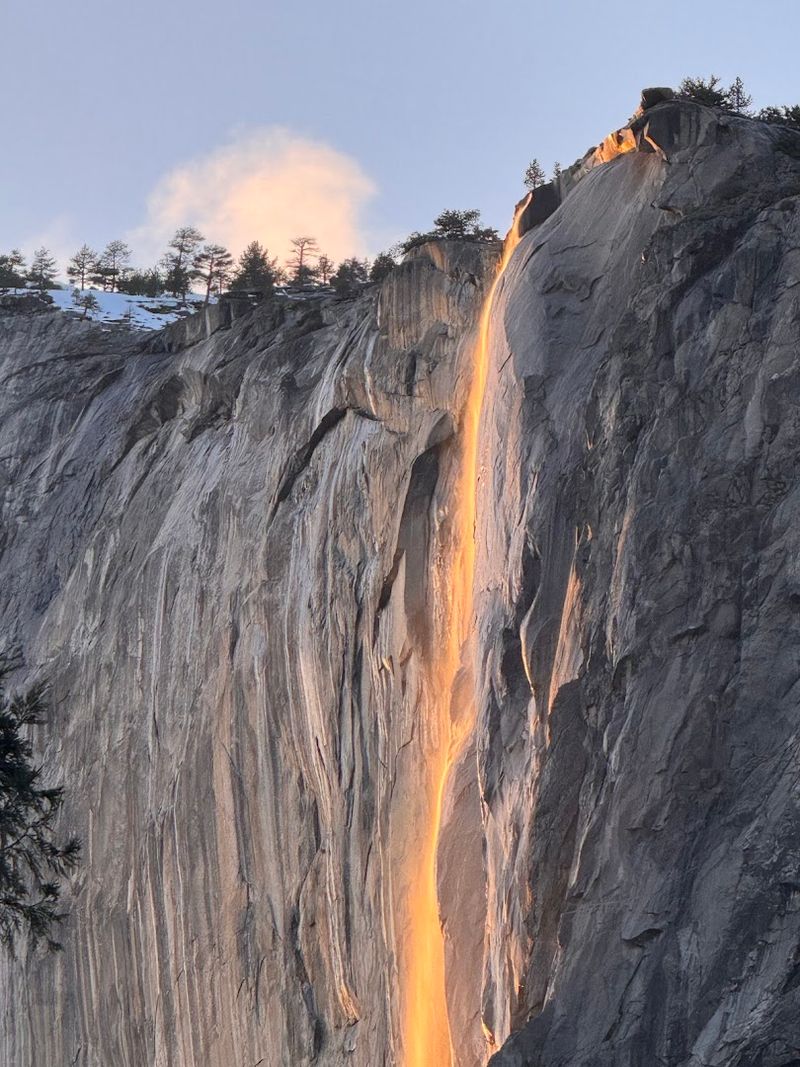
Horsetail Falls might be the only major waterfall in the Gorge where you can admire a 176-foot cascade without walking more than thirty feet from your car. The falls shoot off a basalt cliff and land in a pool right beside the highway, making it one of the most effortlessly satisfying stops on the entire route.
No trail shoes required for this one.
For those who want a little more adventure, the trail behind the falls is genuinely exciting. Upper Horsetail Falls, also called Ponytail Falls, allows hikers to walk directly behind the curtain of water through a carved-out cave in the basalt.
That experience alone is worth lacing up your boots.
The trail continues beyond Ponytail Falls to connect with Oneonta Gorge, offering a longer loop through some of the Gorge’s most dramatic terrain. Even if you only stop for the main falls, the scene is photogenic from every angle.
Morning light hits the waterfall beautifully, creating a soft glow through the mist. Horsetail Falls proves that not every great experience on this highway requires a big time commitment, and sometimes the best stops are the ones hiding in plain sight along the road.
Oneonta Gorge Area
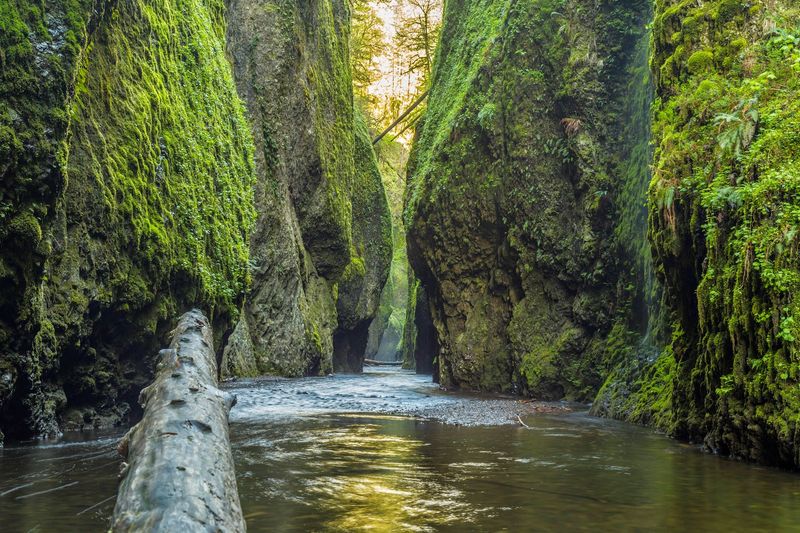
Slot canyons are usually associated with the desert Southwest, but Oneonta Gorge proves Oregon has its own spectacular version, and it is completely covered in green. The narrow basalt walls rise nearly 100 feet overhead while mosses, ferns, and wildflowers cling to every available surface.
It looks like something straight out of a fantasy novel.
Access into the gorge has been restricted and modified in recent years following significant flood damage and ongoing restoration efforts. Visitors should always check current conditions before planning a visit, as trail access and rules continue to change as restoration work progresses.
The surrounding viewpoints and the historic highway bridge over Oneonta Creek remain popular stops even when the gorge itself is off-limits.
The Oneonta Overlook trail offers views down into the canyon from above, giving a completely different perspective on the dramatic landscape. Botanists love this area because the gorge’s unique microclimate supports plant species found almost nowhere else in the Pacific Northwest.
Even a brief stop here leaves a strong impression. The combination of towering walls, rushing water, and impossibly lush vegetation makes Oneonta one of the most visually distinctive places along the entire historic highway corridor.
Cascade Locks
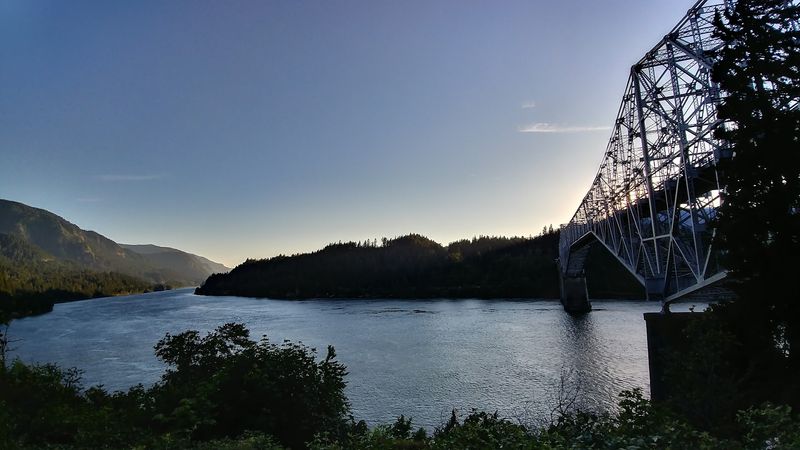
Not every great stop on a scenic highway has to involve a waterfall, and Cascade Locks makes that point beautifully. This charming small town sits right on the banks of the Columbia River and serves as the eastern gateway to the most waterfall-dense section of the historic highway.
The waterfront here is genuinely lovely for a slow afternoon stroll.
The Bridge of the Gods, a steel cantilever toll bridge spanning the Columbia River, is one of the town’s most photographed landmarks. The bridge connects Oregon to Washington and carries the Pacific Crest Trail across the river, so hikers completing long-distance treks often pass through town.
Spotting a PCT thru-hiker with a massive backpack is a common and entertaining sight here.
The town’s small marine park offers picnic areas, a boat launch, and views of commercial and recreational vessels navigating the river. The Columbia Gorge Sternwheeler, a replica paddle-wheel riverboat, departs from Cascade Locks on seasonal sightseeing cruises that offer a completely different perspective on the Gorge scenery.
Local restaurants and shops give the town a relaxed, welcoming atmosphere. Cascade Locks is the kind of place where stopping for an hour somehow turns into most of the afternoon.
Rowena Crest Viewpoint
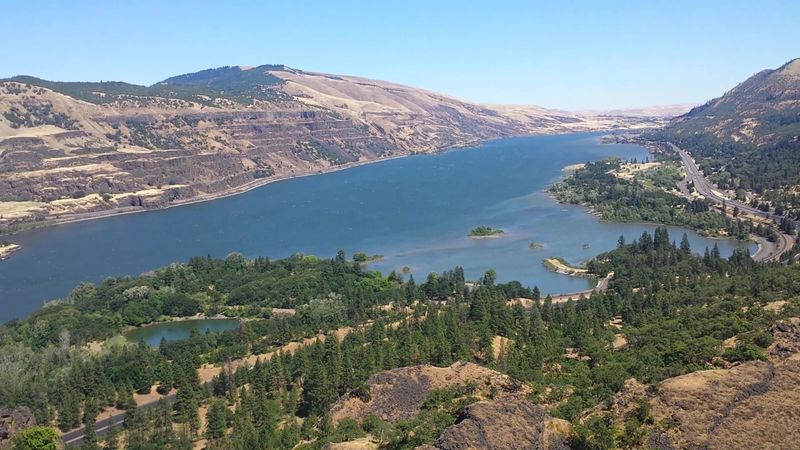
The further east you travel along the historic highway, the more the landscape shifts from dripping green forest to open golden hillside, and Rowena Crest captures that dramatic transition perfectly. Perched above a series of graceful highway switchbacks, this viewpoint delivers one of the most photographed overlooks in the entire state of Oregon.
The horseshoe curves of the road below look like something an architect dreamed up purely for aesthetics.
Rowena Plateau, just below the viewpoint, bursts into color every spring when wildflowers carpet the basalt tableland in shades of purple, yellow, and white. The Tom McCall Nature Preserve, which protects the plateau, is open for hiking and wildflower viewing from late March through early summer.
Picking flowers is strictly prohibited, which helps keep the blooms spectacular year after year.
The eastern Gorge gets significantly less rain than the western end, which means clearer skies and better long-distance views are more common here. Wind is nearly constant at Rowena Crest, keeping the air fresh and the grasses rippling in mesmerizing waves.
Sunset from this viewpoint paints the Columbia River in shades of orange and pink that feel almost unreal. Rowena Crest is the perfect final chapter to one of America’s most unforgettable scenic drives.
Share this story