Southern Illinois keeps a rugged secret tucked inside the Shawnee National Forest, and most people outside the state have never heard of it. A sandstone canyon carved by centuries of erosion, seasonal waterfalls tumbling over mossy ledges, and narrow cliff-side paths that demand your full attention make this one of the most thrilling hikes in the Midwest.
The trail is only about three miles long, but those three miles pack in more adventure than most people expect from Illinois. By the time you finish, your legs will feel it, your camera roll will be full, and you will already be planning your next visit.
Where the Trail Begins: Location and Access
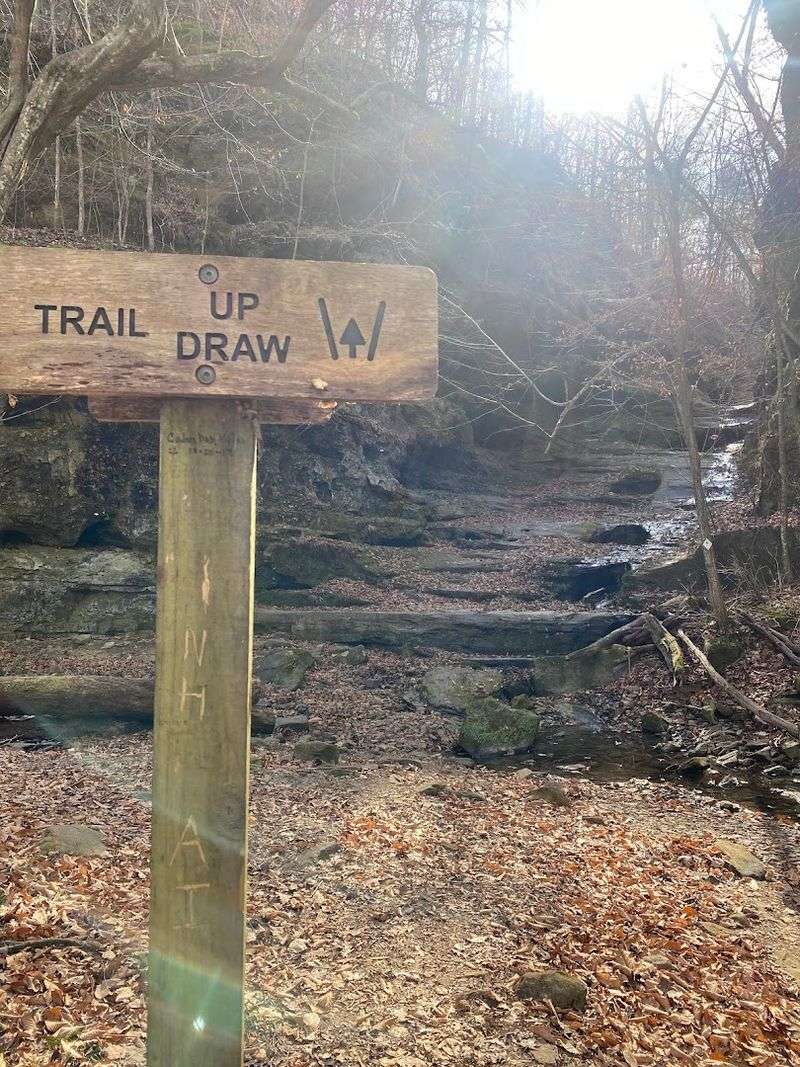
The trailhead for Little Grand Canyon sits at Pomona, IL 62975, deep inside the Shawnee National Forest in southern Illinois. The phone number for the managing office is (618) 253-7114, and the official site through the U.S.
Forest Service lists it under recreation area ID 27713.
The parking area is small but functional, with restrooms available on-site, which is a welcome detail when you are gearing up for a multi-hour hike. Two separate parking lots sit right next to each other, each serving a different starting point on the loop trail.
The trail is open 24 hours a day, seven days a week, every day of the year. That said, arriving in daylight is strongly recommended since parts of the route involve narrow ledges and boulder scrambles that are genuinely tricky to navigate after dark.
Weekday visits tend to mean fewer cars and a quieter experience overall. The area earns a strong 4.7-star rating across hundreds of reviews, which tells you something about how consistently rewarding this hike turns out to be for visitors.
The Canyon Itself: Sandstone Walls and Ancient Geology
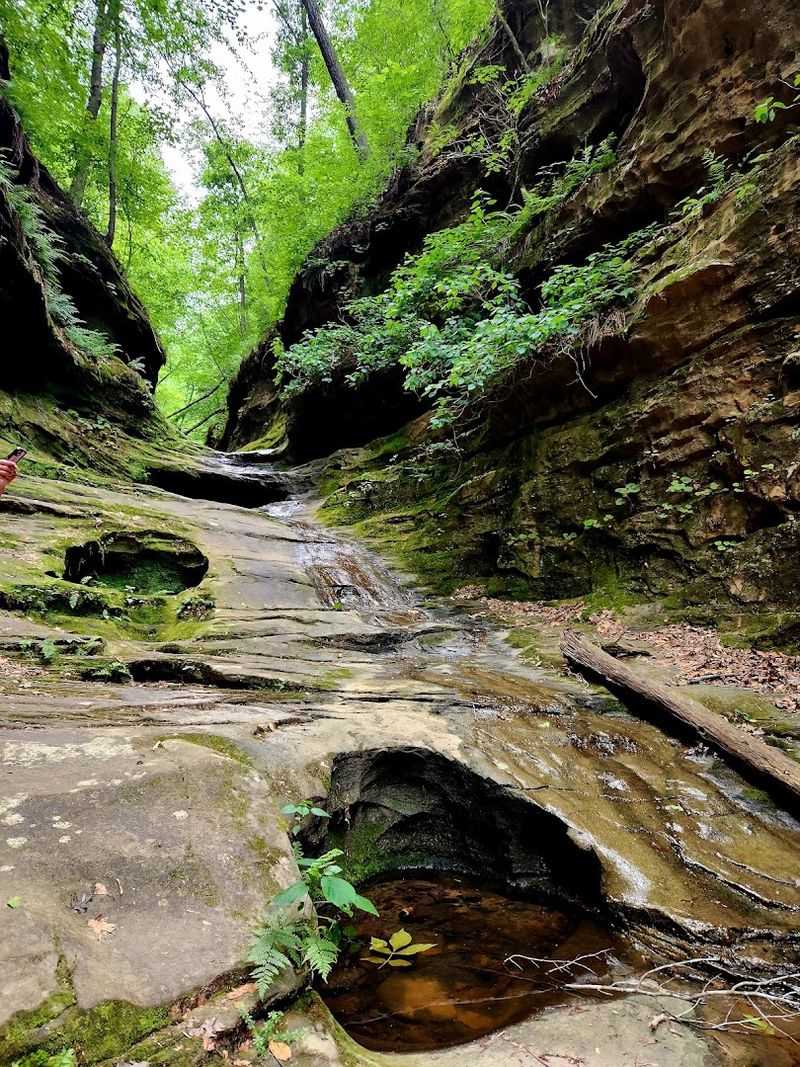
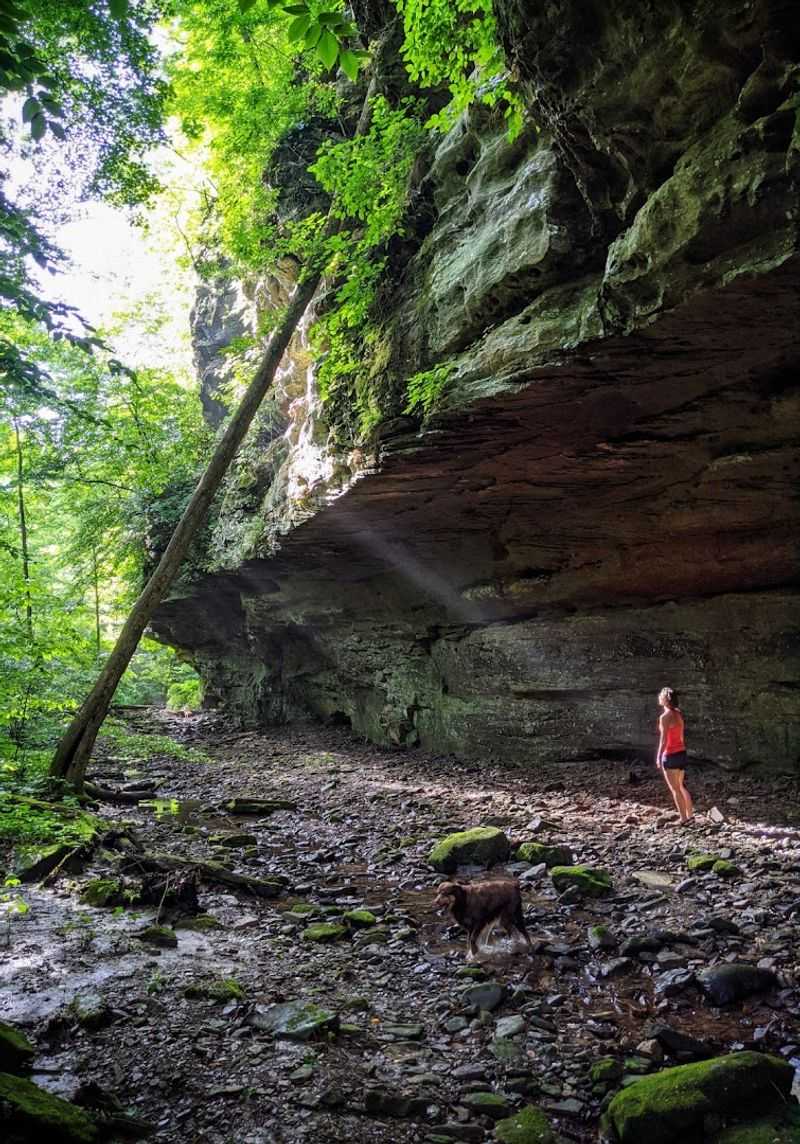
The canyon walls here are the main event, and they do not disappoint. Carved from sandstone over thousands of years by water and wind, these cliffs rise dramatically on either side of the trail, creating a sense of scale that feels genuinely surprising for a state better known for cornfields than canyons.
The rock has a warm, layered texture with shades of tan, orange, and rust running through it. Ferns and mosses cling to the damp surfaces, and the whole scene has a lush, almost prehistoric quality, especially after recent rainfall when everything looks freshly painted.
One canyon is accessible from the lower parking lot and offers a shorter, gentler descent. The second canyon, reached from the upper parking lot, is longer, steeper, and more dramatic, living up to the trail’s bold name with narrow ridgelines and breathtaking lookout points.
Geologically, this landscape represents millions of years of natural sculpting. The sandstone formations are unique in Illinois, making this one of the few places in the state where you can genuinely feel surrounded by canyon terrain rather than flatland.
The Seasonal Waterfalls: When Water Brings the Trail to Life
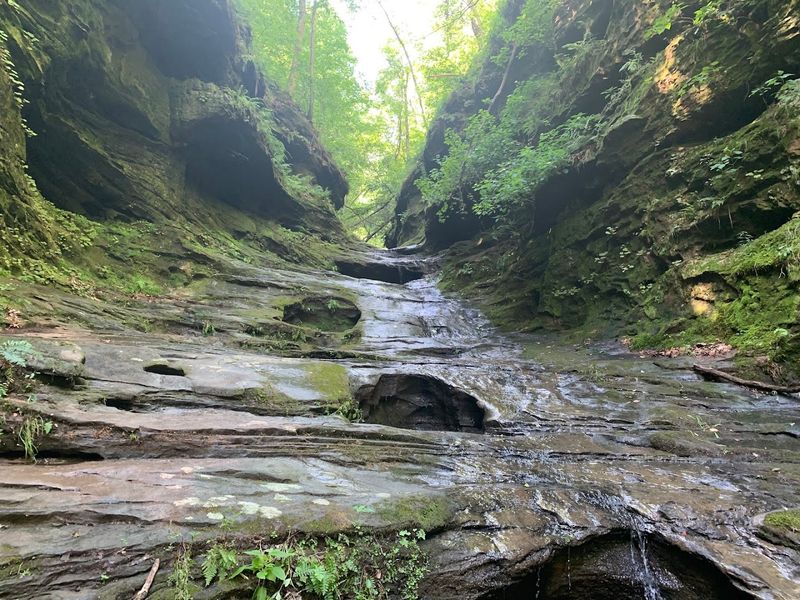
Rain timing is everything at this trail. After a good amount of precipitation, water pours over the sandstone ledges and fills the creek bed, creating waterfalls that turn an already beautiful hike into something truly spectacular.
Spring tends to be the best season for waterfall viewing, when snowmelt and April showers keep the water flowing consistently. The falls are not permanent fixtures, so checking recent rainfall totals before your trip can help you time the visit for maximum impact.
The creek bed itself runs through the bottom of the canyon, and hikers spend a solid stretch of the trail crossing and recrossing it using stepping stones. When water levels are moderate, this adds a fun, interactive element to the hike that kids and adults both enjoy.
Visiting right after heavy rain, however, is not a good idea. The rocks become dangerously slick, the creek can run high, and some of the boulder scramble sections become genuinely hazardous.
A day or two after rain, when things have settled but water is still flowing, tends to be the sweet spot for the most rewarding experience.
Trail Difficulty: What to Realistically Expect
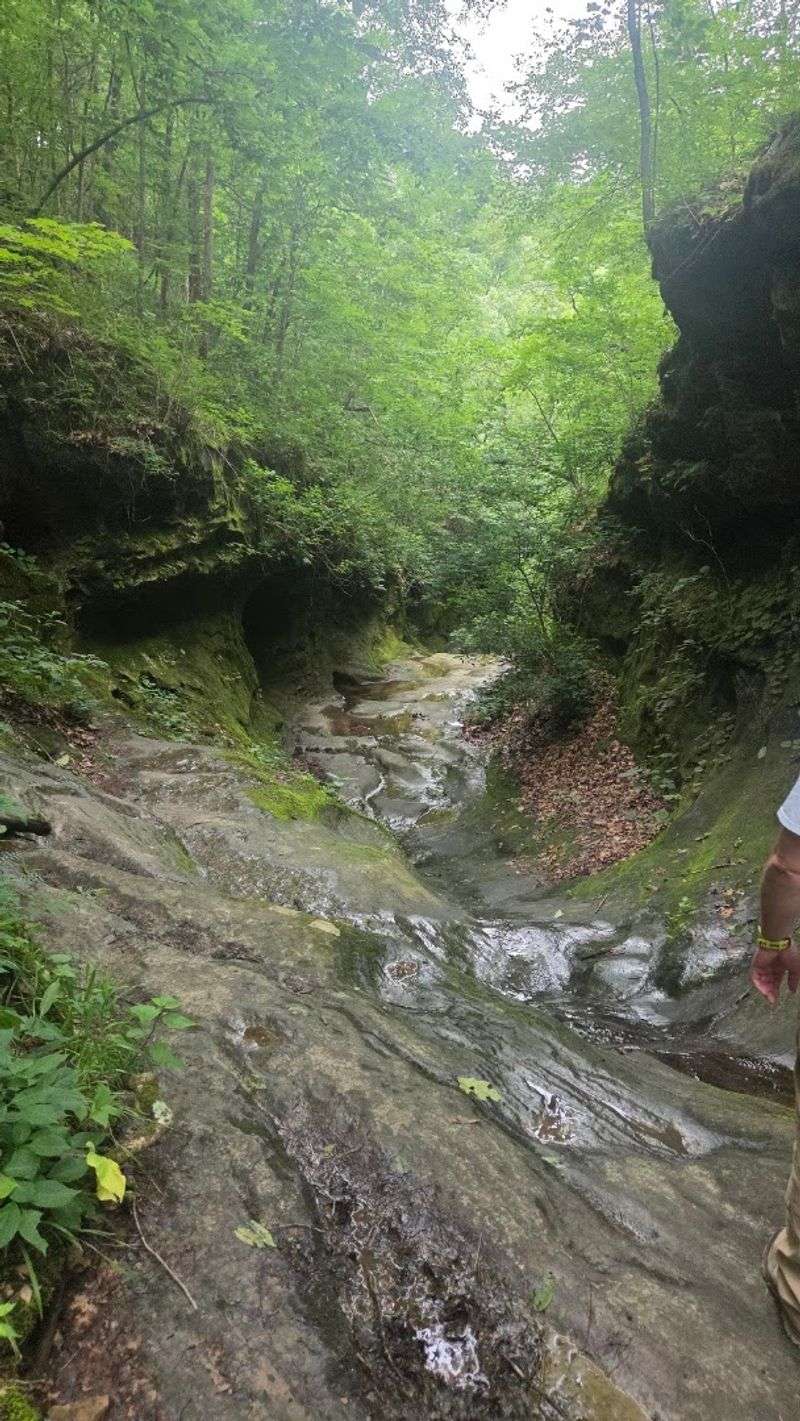
This trail sits somewhere between moderate and hard, and that range depends almost entirely on recent weather conditions. On a dry day, fit hikers with some trail experience will find it challenging but very manageable.
After rain, the difficulty level jumps considerably.
The loop involves a real mix of terrain. The top sections of the trail are relatively flat and wide, offering easy walking through forest cover.
Once the trail drops into the canyon, everything changes: narrow ledges, slippery boulder scrambles, steep descents, and creek crossings all come into play.
One particularly notable section involves climbing up or down a waterfall area, depending on which direction you choose to hike. This section requires using your hands, picking footholds carefully, and moving slowly.
It is the kind of terrain that turns a walk into an actual physical challenge.
Hikers in their late 50s have completed the full loop and called it very rewarding despite the difficulty. The key factors are dry conditions, proper footwear, and a willingness to take your time.
Rushing through the rocky sections is where people tend to slip, so patience genuinely pays off on this one.
Clockwise vs. Counterclockwise: Which Direction to Choose
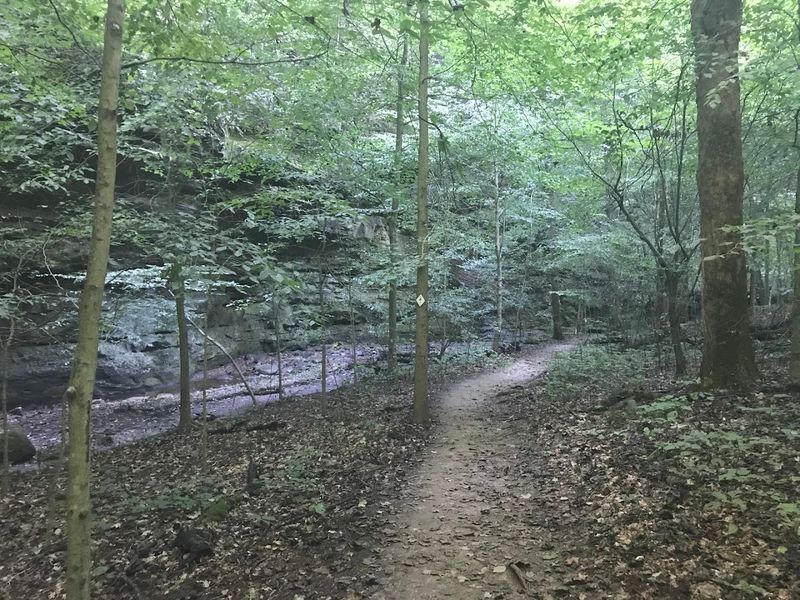
The direction you choose to hike the loop actually matters here, and experienced visitors have strong opinions about it. Going counterclockwise is the more popular recommendation because it means you tackle the steepest canyon section on the way down rather than saving it for a brutal uphill finish at the end of a long hike.
Clockwise hikers will face a hard uphill climb near the end of the trail when their legs are already tired. That said, some hikers prefer going clockwise specifically because they find steep uphill sections easier to navigate safely than steep downhill ones, especially on wet rock.
From the parking lot facing the trail entrance, taking the left entrance means you will reach the canyon section at the end and climb up. Taking the right entrance means starting with the canyon and descending first.
Both options cover the same ground, just in reverse order.
White markers on the trees keep you on the official route throughout the hike. Paying close attention to these markers is genuinely important because it is easy to follow other hikers off the marked path without realizing it, particularly in the busier sections near the canyon bottom.
Wildlife and Nature: What You Might Encounter
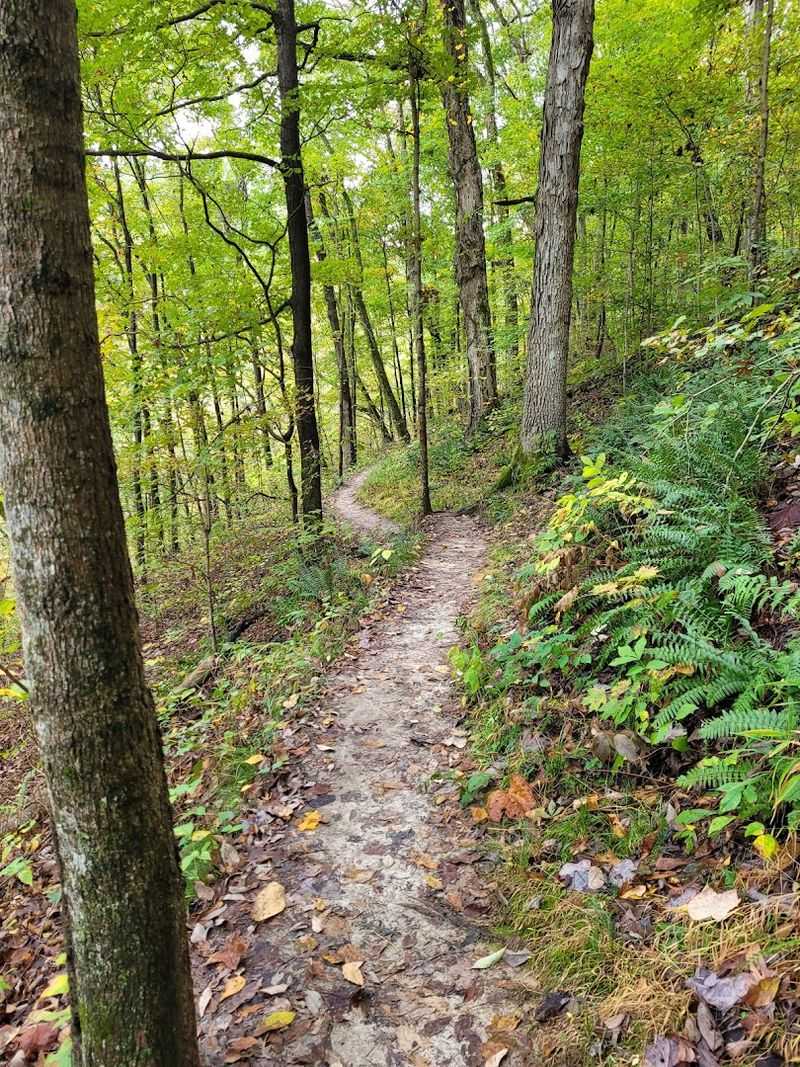
Southern Illinois has a surprisingly rich wildlife roster, and this trail runs right through the heart of it. The forest canopy stays thick through most of the route, creating ideal habitat for birds, deer, and a wide variety of smaller woodland creatures.
Armadillos have been spotted near the trail, which tends to surprise hikers who associate them more with Texas than Illinois. Their range has been expanding northward for years, and the Shawnee National Forest sits right at the edge of their territory.
Snakes are also present, and hikers should be mindful about where they place their hands and feet, especially when climbing over rocks or reaching into crevices. Most snake encounters are harmless if you give the animal space and move carefully.
Ticks are another genuine concern, particularly in warmer months. Wearing long socks, using insect repellent, and doing a thorough check after the hike are all smart habits here.
The lush, green environment that makes this trail so beautiful is also exactly the kind of habitat ticks love, so coming prepared makes the whole experience much more relaxed and enjoyable.
Bringing Dogs: The Honest Truth
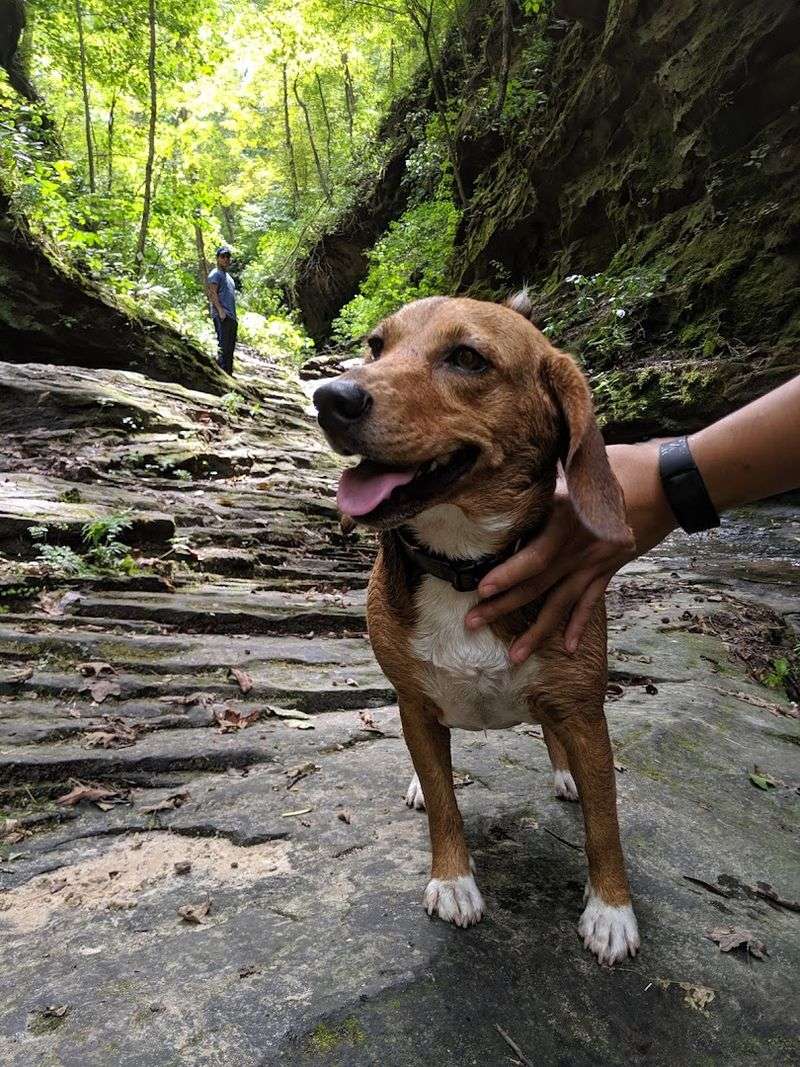
Many hikers bring their dogs to this trail, and some have great experiences, but the honest answer is that this hike is genuinely tough for most dogs. The boulder scramble sections involve drops and climbs that require four-paw coordination and confidence on slippery rock surfaces.
Medium-sized dogs around 50 pounds can sometimes navigate the trail with careful guidance from their owner, but there are specific spots, particularly the waterfall climb section, where many dogs struggle or refuse entirely. Some owners have had to carry their dogs through these sections, which is its own challenge on steep terrain.
The narrow ledge section is another area where dogs with less sure-footing can have real trouble. One hiker’s agile mixed-breed dog had to be carried down by a stranger after freezing up at a large step, which gives you a sense of how technical some sections actually get.
If your dog is older, not particularly athletic, or anxious on uneven terrain, leaving them home for this one is the kindest choice. The trail is more enjoyable for everyone, including your dog, when they are set up for success rather than placed in a stressful situation on a steep, rocky path.
Best Times to Visit: Seasons and Conditions
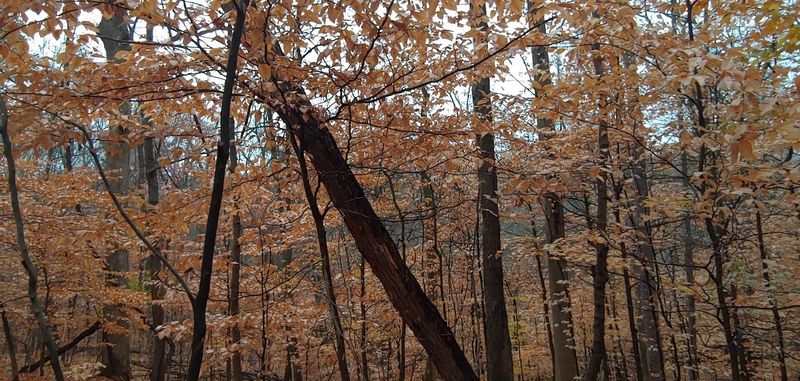
Spring and fall are the two seasons that consistently deliver the best experience on this trail. Spring brings flowing waterfalls and lush green growth that makes the canyon feel genuinely alive.
Fall coats the forest in warm oranges and reds that contrast beautifully with the sandstone walls.
Summer visits are possible but come with trade-offs. The heavy forest canopy provides shade, which helps on hot days, but humidity in southern Illinois can be intense, and ticks and other insects are most active during these months.
Bringing extra water is essential regardless of season, but especially so in summer.
Winter can actually offer interesting views because the bare trees open up sightlines into the canyon that are completely hidden when everything is leafy and green. One visitor noted that the heavy summer foliage made it hard to see deep into the canyon, which is a fair point worth considering when planning your trip.
Dry conditions are the single most important factor regardless of season. Two or three days after rain is often the sweet spot: conditions are stable enough to be safe, but the creek and any active waterfalls are still running with enough water to make the canyon scenery look its absolute best.
Essential Gear and Preparation Tips
Good footwear is the single most important piece of gear you can bring to this trail. Trail running shoes can work in dry conditions, but sturdy hiking boots with ankle support and grippy soles make a real difference when navigating wet rocks and steep descents.
Trekking poles are worth considering, especially for the boulder scramble sections and the creek crossings. They provide extra stability when your footing is uncertain and take some of the load off your knees on the long downhill stretches.
Water is non-negotiable. The hike takes most groups between two and three hours, and the physical demands of the terrain mean your body works harder than on a flat trail of the same distance.
Bringing more water than you think you need is always the right call.
Bug spray, a small first aid kit, and a fully charged phone round out the essential kit. Cell service in this part of the Shawnee National Forest can be unreliable, so downloading an offline map of the trail before you leave is a practical move.
Walking sticks are actually available at the trail entrance, which is a thoughtful touch that many visitors appreciate upon arrival.
The Views and the Payoff: Why Hikers Keep Coming Back
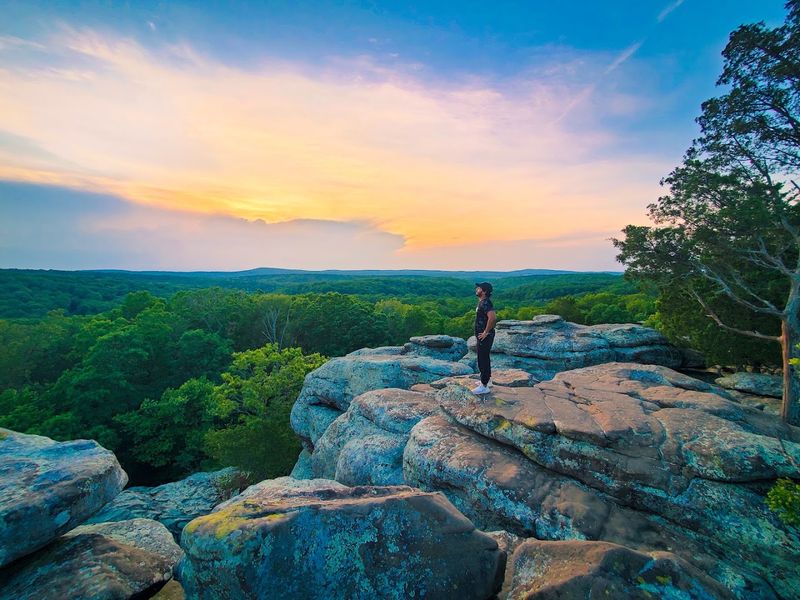
The lookout points on this trail are the kind of views that make you stop mid-sentence and just stand there for a moment. From the upper sections of the loop, you can see a winding stream far below in a lush valley, framed by the canyon walls and layers of treetops stretching toward the horizon.
The rock formations throughout the trail are genuinely one of a kind for Illinois. Hikers who have done trails across the state consistently rank this one as the best, pointing to the combination of canyon terrain, sandstone features, and moving water as something you simply cannot find anywhere else in the region.
The sense of scale inside the canyon is part of what makes it memorable. The walls rise on either side, the light filters down in shifting patterns, and the sound of water echoing off the rock gives the whole experience a quality that photographs only partially capture.
That combination of physical challenge, natural beauty, and genuine surprise is why this trail holds a 4.7-star rating and keeps drawing people back for repeat visits. The Shawnee National Forest has many good trails, but this one earns its reputation every single time.
Share this story