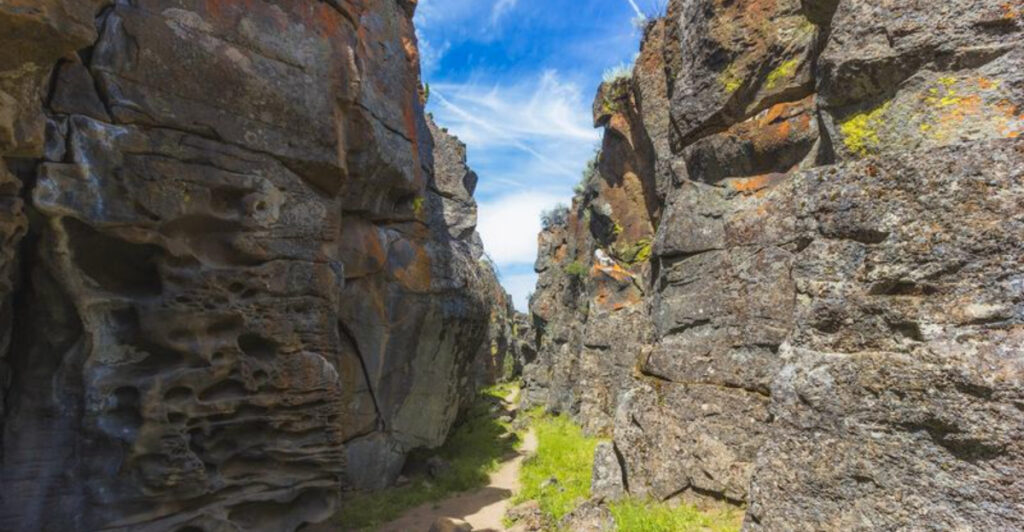
There is a place in the high desert of Oregon where the earth simply split open and never closed back up. No earthquake warning, no dramatic news coverage, just a long, silent gash in the volcanic rock that stretches nearly two miles across the landscape.
You can actually walk down inside it, squeeze through narrow passages, and feel the temperature drop by 30 degrees even on the hottest summer day. I visited this spot on a blazing July afternoon and came out the other side genuinely speechless.
This article walks you through everything you need to know before you go, from the geology behind the fissure to the road conditions, the best ways to explore it, and the small details that make the whole trip worth every bumpy mile.
Where Exactly You Will Find This Crack in the Earth
The address that gets you closest is along Oregon Route 97638, in Lake County, Oregon, managed by the Bureau of Land Management. The trailhead sits roughly 7 miles off Highway 31, which you reach by turning onto Crack in the Ground Road rather than the rougher Northstar Road that some GPS apps incorrectly suggest.
The coordinates are approximately 43.33 N, 120.67 W, which puts you deep in the Christmas Valley area of central Oregon. The nearest town with any services is Christmas Valley, a tiny community that feels like the edge of the known world in the best possible way.
The BLM manages the site, and their website at blm.gov has current conditions and any seasonal closures worth checking before you head out. There is no entrance fee, which makes the whole adventure feel even more rewarding.
Cell service disappears well before you reach the parking area, so download your maps offline and let someone know your plans before leaving the pavement behind.
The Geological Story Behind the Split
About 1,000 years ago, volcanic activity in the Christmas Valley area created a series of lava flows that left the region looking like the surface of another planet. As that molten rock cooled and contracted, enormous tension built up in the crust, and the ground simply cracked apart in a long, clean break.
The result is what geologists call a volcanic rift fissure, a type of feature more commonly seen in Iceland or Hawaii but rare in the continental United States. The fissure runs close to two miles in length and drops anywhere from 10 to 70 feet deep in various sections, with walls that press in close enough to touch on both sides at the same time in the narrowest spots.
What makes this geologically interesting is that the crack never filled back in with sediment or debris the way most fissures do over centuries. The dry, desert climate of eastern Oregon preserved it almost exactly as it formed.
Walking through it feels like reading a page from the planet’s own journal, written in stone a thousand years before anyone was there to witness it.
The Road to Get There and What Your Car Will Endure
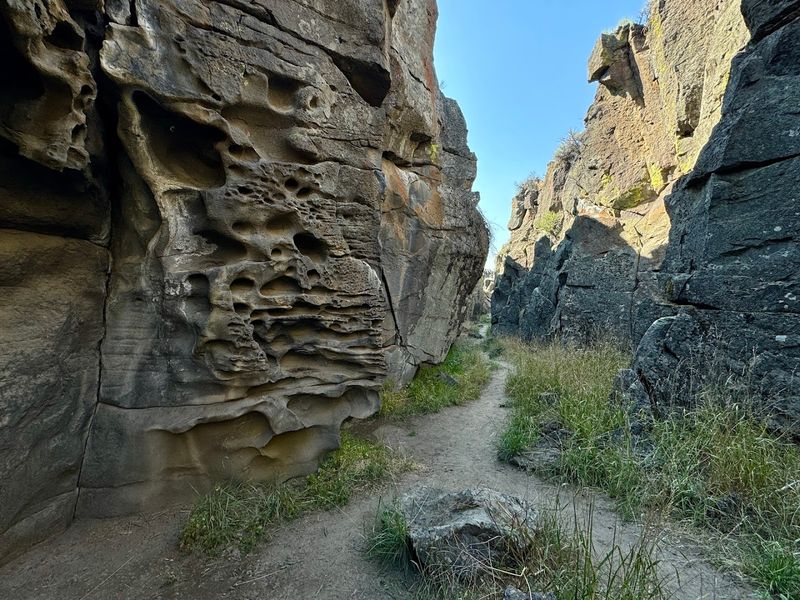
Getting to the trailhead is an adventure in itself, and not the kind that comes with a scenic overlook and a gift shop. The last 7 to 8 miles of road are unpaved, and the washboarding is severe enough that your teeth will remind you about it the next morning.
Most reviews agree that the Crack in the Ground Road approach off Highway 31 is far more manageable than the Northstar Road alternative, which reportedly feels like a carnival ride designed by someone who dislikes cars. High clearance helps, but it is not strictly required as long as conditions are dry.
After a rain, the dirt sections can turn muddy and unpredictable.
A few practical notes worth knowing: there is no water available at the trailhead, so bring more than you think you need. The parking area is secure and reasonably well-maintained despite the remote setting.
Counterintuitively, driving slightly faster over the washboard sections smooths out the vibration more than crawling along does, though either way, your suspension will be doing its best work of the year.
That First Moment You Peer Over the Edge
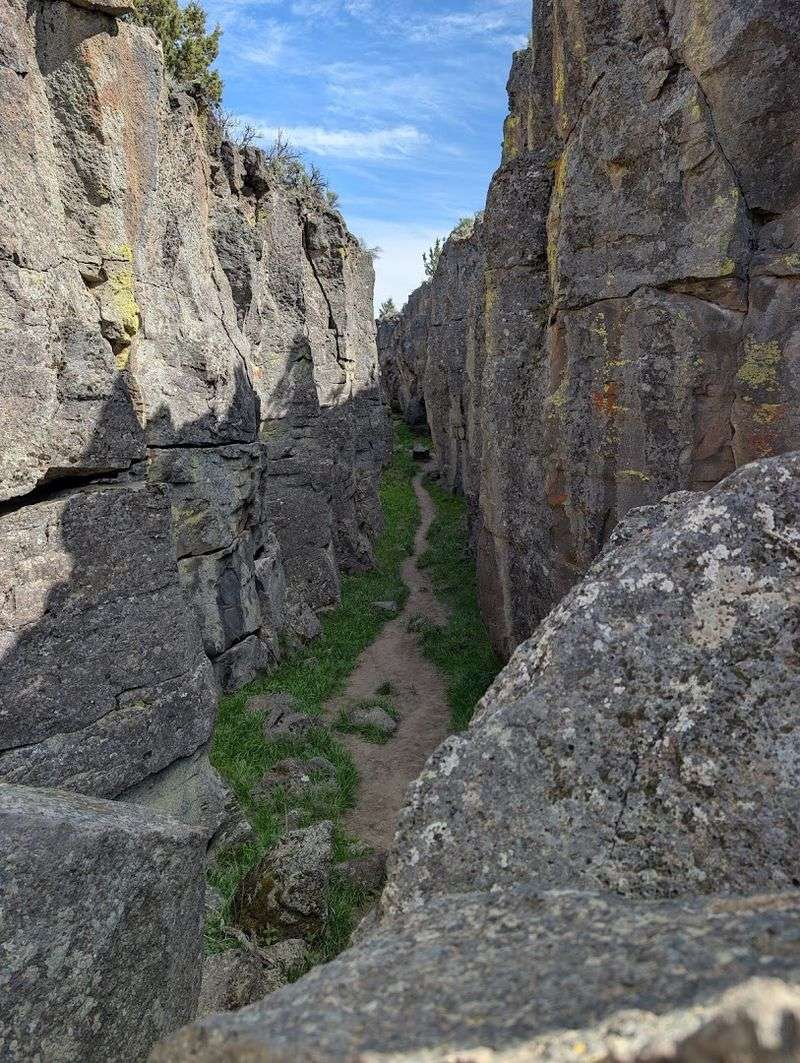
The short hike from the parking lot to the fissure takes about 10 minutes on a flat, easy trail with benches along the way and a shaded stretch that offers a welcome break on hot days. Then the ground just opens up in front of you, and the reaction is almost always the same: a quiet, wide-eyed pause.
From above, the crack looks like someone drew a long, dark line across the desert floor with a very confident hand. The contrast between the sun-baked sagebrush landscape and the shadowy, cool void below is striking in a way that photos never quite capture.
The walls drop sharply, and you can already see the temperature change just by holding your hand over the opening.
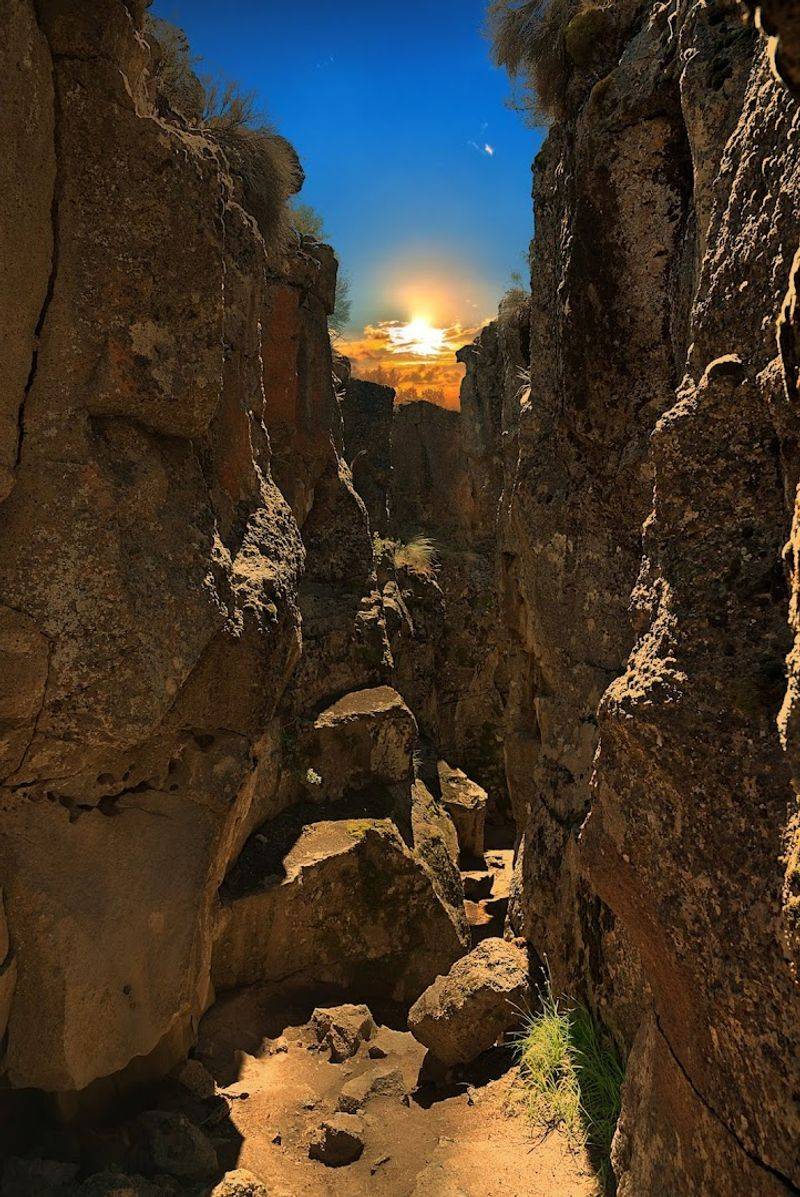
A guest book sits near the entrance, and signing it feels oddly meaningful, like leaving a small mark in a place that has been quietly existing for centuries without needing anyone’s approval. At the right time of day, light angles down through the narrow opening and catches the rough texture of the basalt walls in a way that stops you mid-step.
What It Actually Feels Like to Walk Inside the Fissure
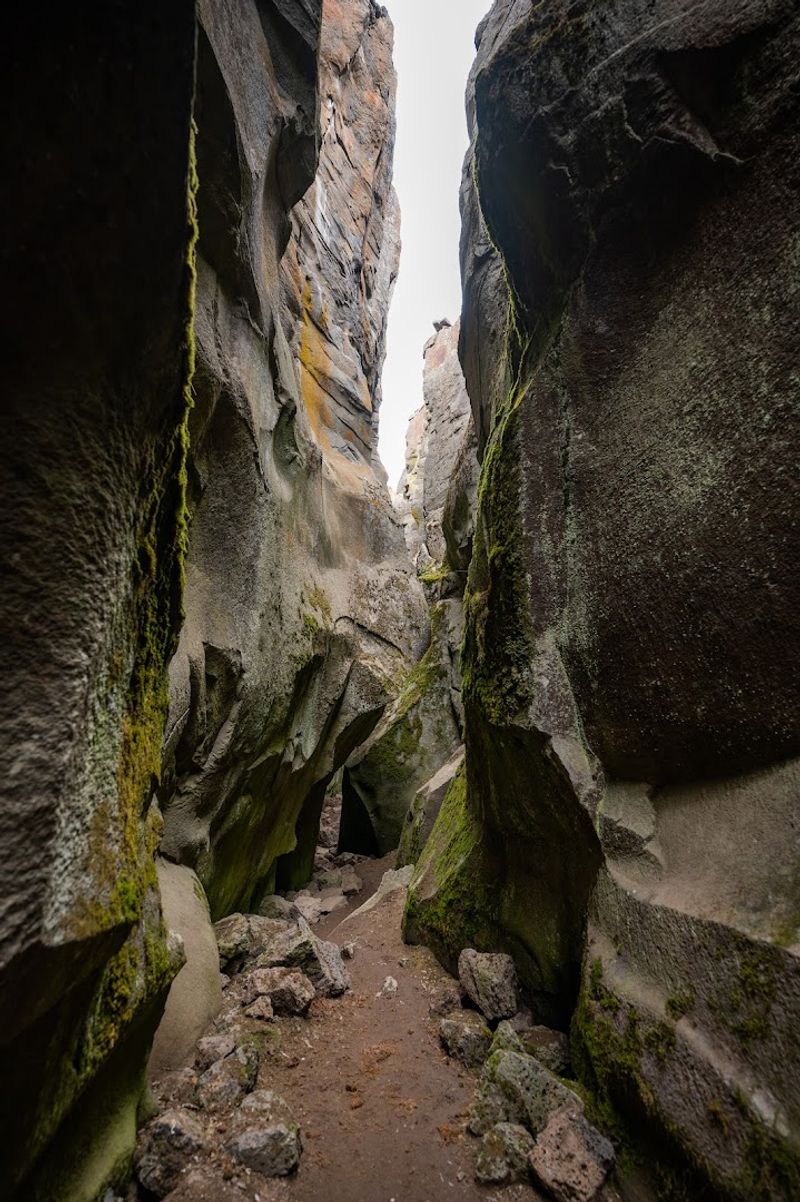
The temperature shift hits you almost immediately after climbing down into the fissure. On the July afternoon I visited, the air above ground hovered near 95 degrees, and within a few yards of descending, the chill was real enough to raise goosebumps on my arms.
The rock holds cold air trapped from winter months and releases it slowly through the summer.
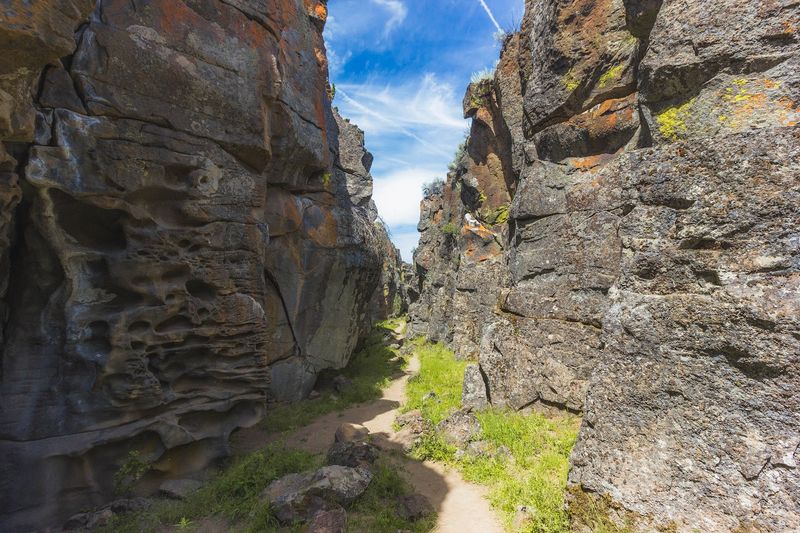
The interior is a series of twists, turns, and varying widths that keep the experience constantly surprising. Some sections are wide enough to walk comfortably side by side, while others narrow down to passages where you turn sideways and shuffle through with the walls brushing both shoulders.
The footing ranges from flat and straightforward to rocky scrambles that require using your hands.
The atmosphere inside has a quality that is hard to put into words without sounding overdramatic, so I will just say that the silence is deep and the scale of the walls above you is genuinely humbling. Looking up through the thin strip of sky from 50 feet below the surface gives you a perspective on the landscape that you simply cannot get any other way.
It earns every mile of that washboard road.
The Sections, the Scrambles, and How Far You Can Go
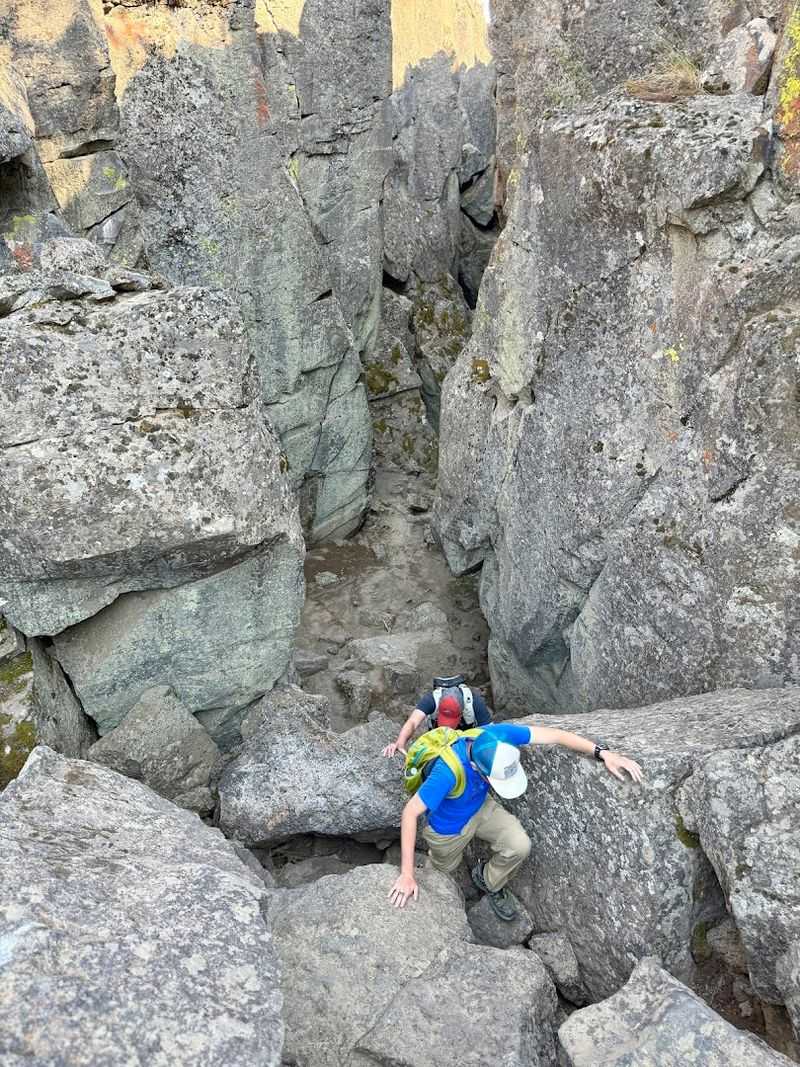
The fissure does not offer a single uniform experience from one end to the other. The first section after the entrance is the most accessible and draws the most visitors, with relatively smooth footing and impressive wall height.
Past that, the terrain gets progressively more technical as boulders wedge themselves between the walls and require real climbing to get over or around.
Most people explore the first half mile to a mile and then turn around, which still gives you a thorough sense of the place. Those who push further into the second section encounter narrower passages, more scrambling, and a greater sense of genuine wilderness solitude.
There are reportedly multiple distinct crack systems branching off the main fissure, each with its own character.
One thing worth knowing before you go: the rocks can be slippery even when dry, and after any rain, the interior surfaces become genuinely tricky. Sturdy footwear with real ankle support is not optional here.
The BLM does not maintain the interior as a groomed trail, which is honestly part of what makes it feel so authentic and worth the effort of getting there in the first place.
Wildlife, Plants, and the Desert Ecosystem Around the Site
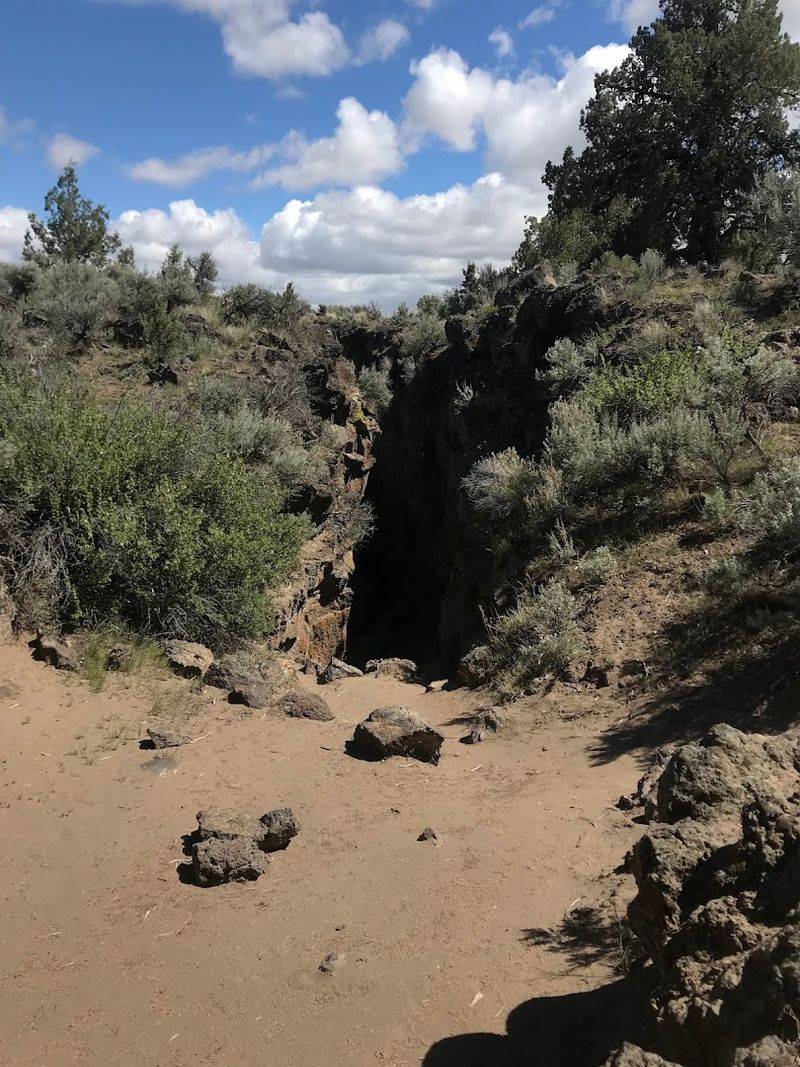
The landscape surrounding the fissure belongs to the Great Basin Desert, a high-elevation cold desert that covers much of eastern Oregon and extends well beyond state lines. The terrain is dominated by big sagebrush, rabbitbrush, and scattered western juniper, all of which have adapted to the harsh combination of summer heat and winter cold that defines this region.
Jackrabbits are a common sight on the drive in, and at least one reviewer noted that the bunnies along the road seem determined to test your reflexes. Raptors frequently patrol the open desert looking for prey, and the fissure itself provides habitat for species that prefer cool, shaded microenvironments that simply do not exist elsewhere on the flat desert floor.
The plant life inside the crack is noticeably different from what grows above, with moisture-loving species clinging to the shaded walls where sunlight rarely reaches. This kind of ecological contrast within such a short vertical distance is one of the things that makes the site scientifically interesting beyond its visual drama.
The Christmas Valley area of Oregon is genuinely one of the more overlooked natural laboratories in the Pacific Northwest.
Best Times to Visit and What the Seasons Do to the Experience
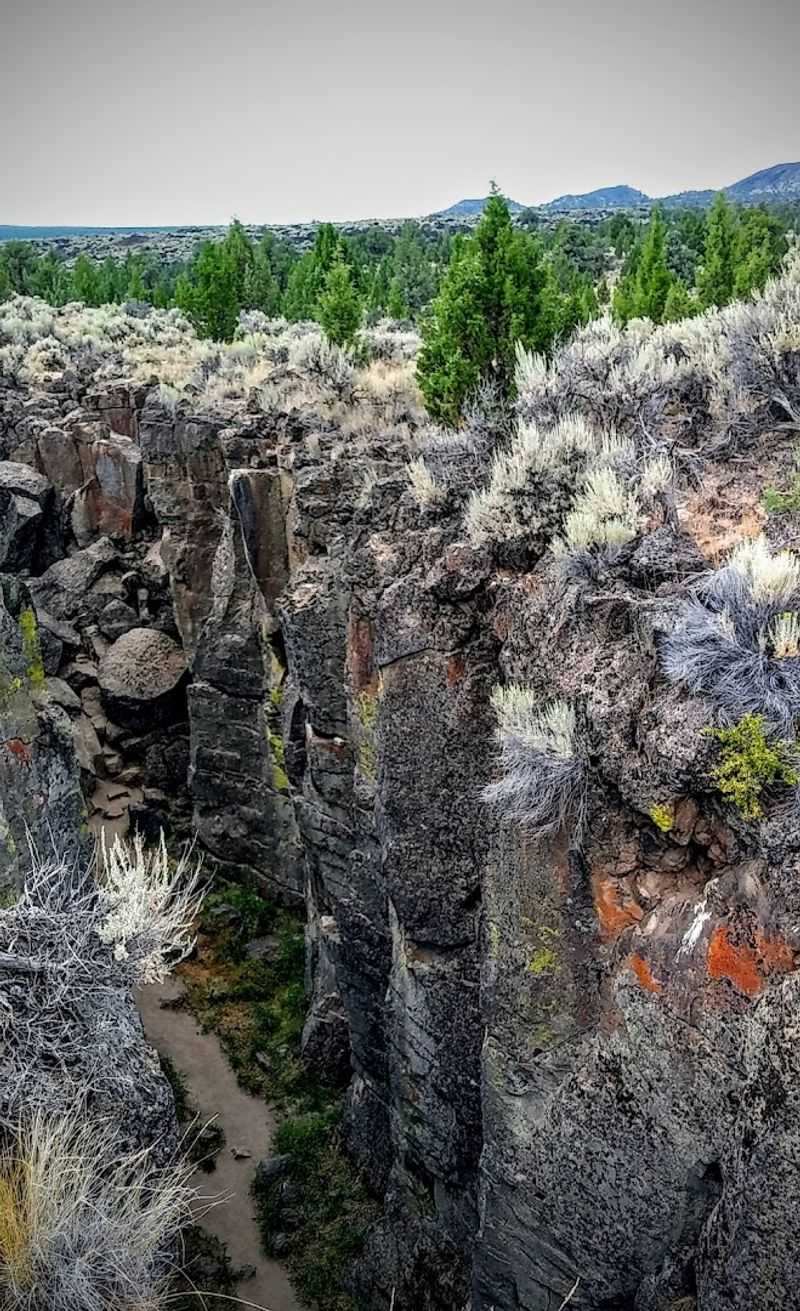
Summer is the most popular season for visiting, and the temperature contrast between the scorching desert surface and the cool fissure interior is at its most dramatic from June through August. Temperatures above ground regularly push into the 90s, which makes descending into the crack feel like stepping into a natural refrigerator, sometimes 30 degrees cooler within just a few feet of the rim.
Spring and fall offer milder surface temperatures and fewer visitors, which means you may have the entire fissure to yourself on a weekday. The light in those shoulder seasons also tends to be softer and more photogenic, casting long shadows into the crack that highlight the texture of the basalt walls beautifully.
Winter visits are possible but come with real considerations. The dirt road can become impassable after snow or sustained rain, and the interior of the fissure may hold ice and standing water in colder months.
The BLM website is the best place to check current road conditions before committing to the drive. Whatever season you choose, mornings tend to offer cooler temperatures and better light than midday, and the site feels quieter before the afternoon heat drives people back to their cars.
Practical Tips That Will Make Your Visit Much Better
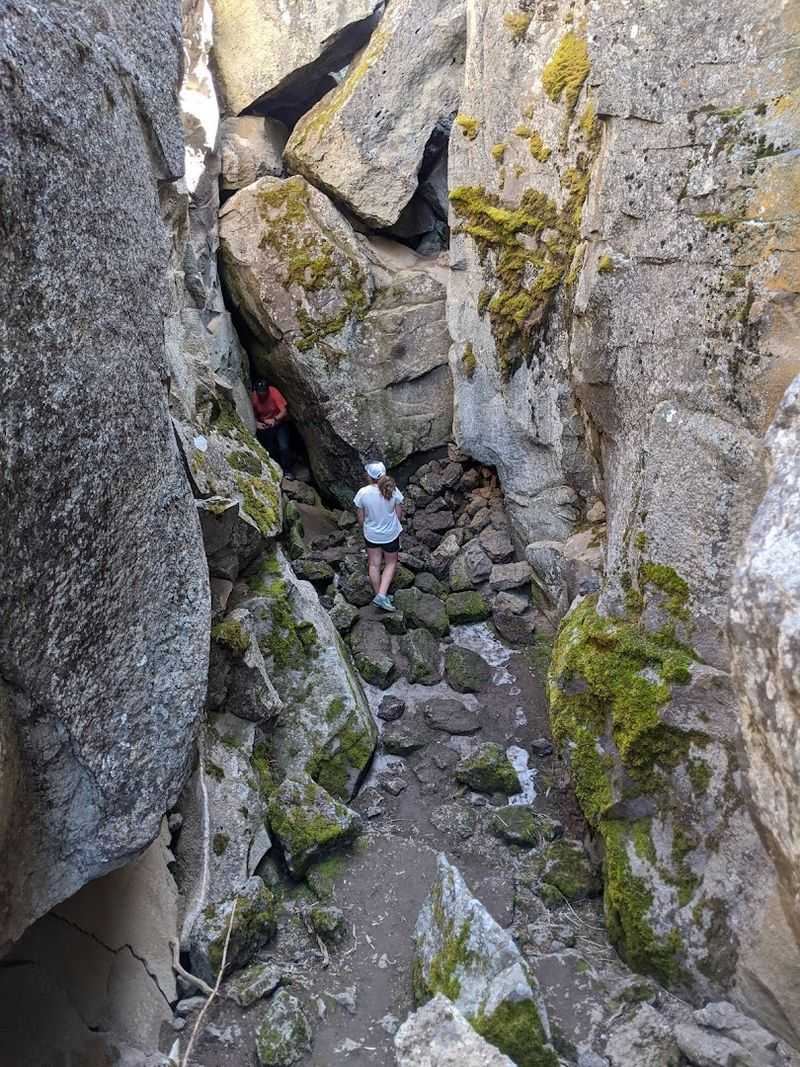
Water is the single most important thing to bring, and the standard advice of carrying more than you think you need is especially true here. The nearest place to refill is miles away in Christmas Valley, and the combination of desert heat and physical exertion inside the fissure adds up faster than expected.
A headlamp or flashlight is worth throwing in your pack even if you plan to visit during daylight. The deeper sections of the fissure block direct sunlight entirely, and navigating rocky scrambles in dim light without a beam of your own is not a situation you want to find yourself in.
Gloves are also handy for the boulder sections where you need to use your hands on rough basalt.
The vault restrooms at the trailhead are functional and kept reasonably clean, which is a genuine luxury for a site this remote. Leave no trace principles are clearly taken seriously by the visitors who come here, as the grounds were spotless on my visit without a single piece of trash in sight.
That standard is worth maintaining, and packing out everything you bring in keeps this rare place exactly as remarkable as it deserves to remain.
Why This Place Deserves a Spot on Your Oregon Road Trip
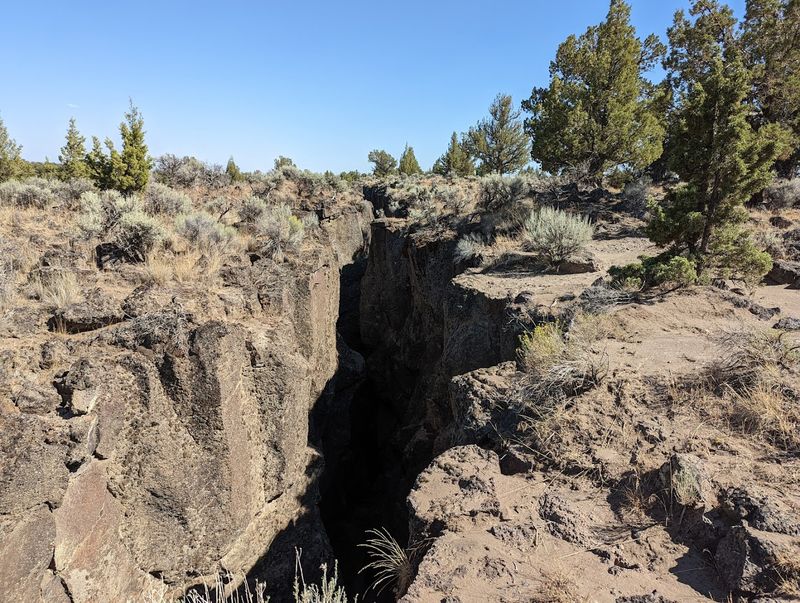
Oregon gets a lot of attention for its coast, its waterfalls, and its dense green forests, but the eastern high desert holds some of the most unusual and undervisited terrain in the entire state. This fissure is a perfect example of something that exists nowhere else quite like it in the continental United States, yet it draws only a fraction of the crowds that other Oregon landmarks attract.
The drive from Bend takes roughly two hours, and from Redmond it is comparable. Road trippers passing through central Oregon on Highway 31 are already close enough that skipping it would be a genuine missed opportunity.
The site pairs well with a visit to Fort Rock State Natural Area, which sits nearby and offers its own dramatic volcanic history.
There is something quietly powerful about a place that has no admission fee, no visitor center, no food vendors, and no curated experience waiting for you. The fissure does not perform for anyone.
It just sits there in the Oregon desert, two miles long and a thousand years old, doing exactly what it has always done. That kind of honest, unmediated encounter with the natural world is rarer than it should be, and this crack in the ground delivers it completely.
Share this story