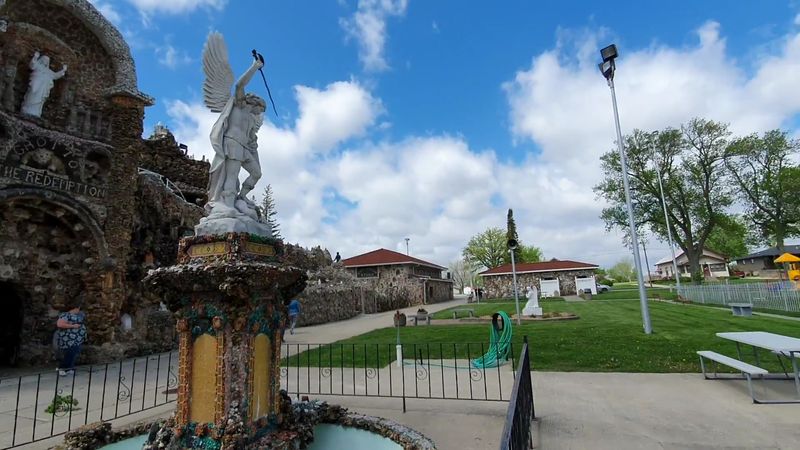
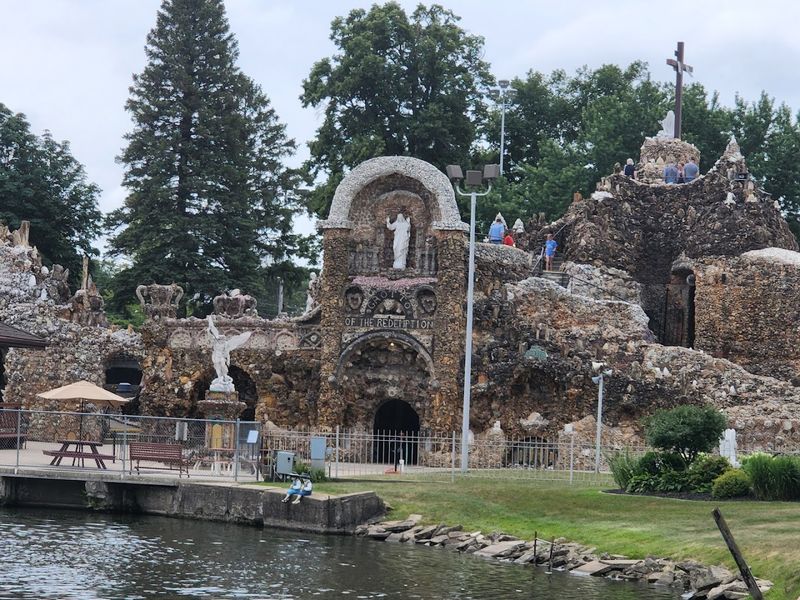
There is a place in rural Iowa where every wall, arch, and passageway is covered in precious stones, petrified wood, seashells, coral, and fossils collected from across the globe. One Catholic priest spent over four decades building it by hand, and the result is something that stops visitors cold the moment they first lay eyes on it.
The Shrine of the Grotto of the Redemption in West Bend is widely recognized as the world’s largest man-made grotto, and it holds the largest collection of precious and semi-precious stones concentrated in one place anywhere on earth. Whether you are a geology enthusiast, a history lover, or simply someone who appreciates extraordinary human effort, this Iowa landmark will genuinely surprise you.
Keep reading to find out exactly what makes this place so remarkable and why thousands of people make the trip to tiny West Bend every single year.
The Priest Who Started It All
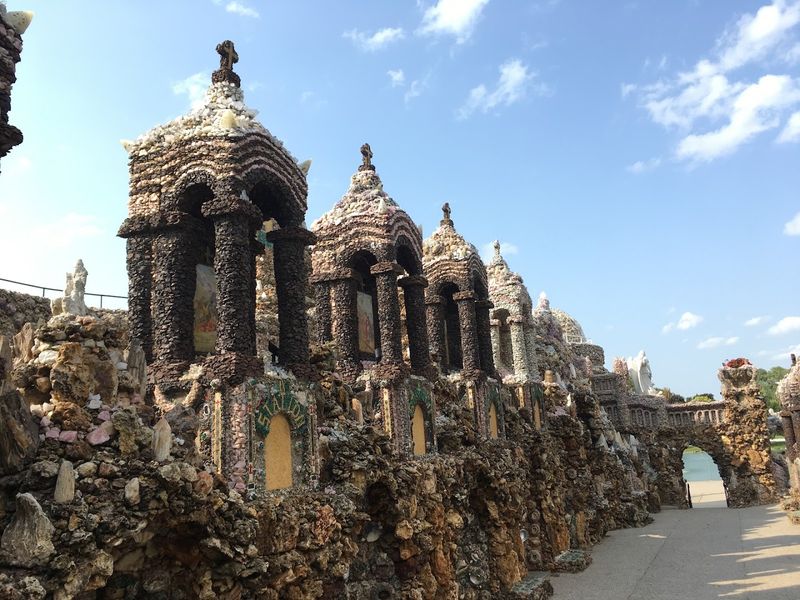
Father Paul Dobberstein is the name behind one of America’s most astonishing construction projects. Born in Germany in 1872, he came to the United States and was assigned to a small parish in West Bend, Iowa, a town of just a few hundred people.
After surviving a serious illness, he made a vow to the Virgin Mary that he would build a shrine in her honor if he recovered. He kept that promise in the most extraordinary way imaginable.
Starting in 1912, Father Dobberstein spent 42 years hauling, sorting, and hand-placing millions of stones, gems, and minerals into nine interconnected grottos. He worked with quiet persistence, rarely seeking attention, and never stopped adding to his creation until he passed in 1954.
His dedication turned a small Iowa town into a destination that draws visitors from every corner of the country.
Where Exactly You Can Find This Wonder
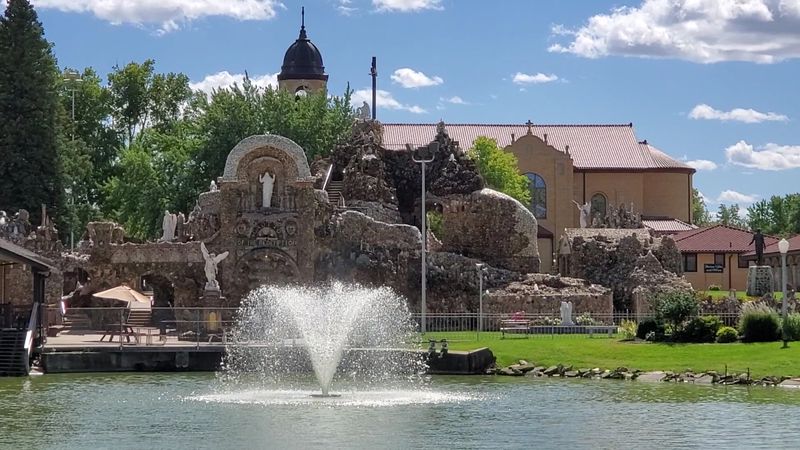
The Shrine of the Grotto of the Redemption sits at 208 1st Ave NW, West Bend, Iowa 50597, right in the heart of a small agricultural community in Kossuth County in north-central Iowa.
West Bend is a quiet town, and that contrast between its modest surroundings and the sheer scale of the grotto makes the first sighting genuinely jaw-dropping. You round a corner on a flat Iowa road, and suddenly there it is, a massive structure of sparkling stone rising above the prairie landscape.
The site is open 24 hours a day, seven days a week, and admission is free, though free-will donations are warmly welcomed. It sits roughly two hours from Mason City and about two and a half hours from Des Moines, making it a very achievable road trip destination from several major Iowa cities.
Nine Grottos, One Incredible Vision
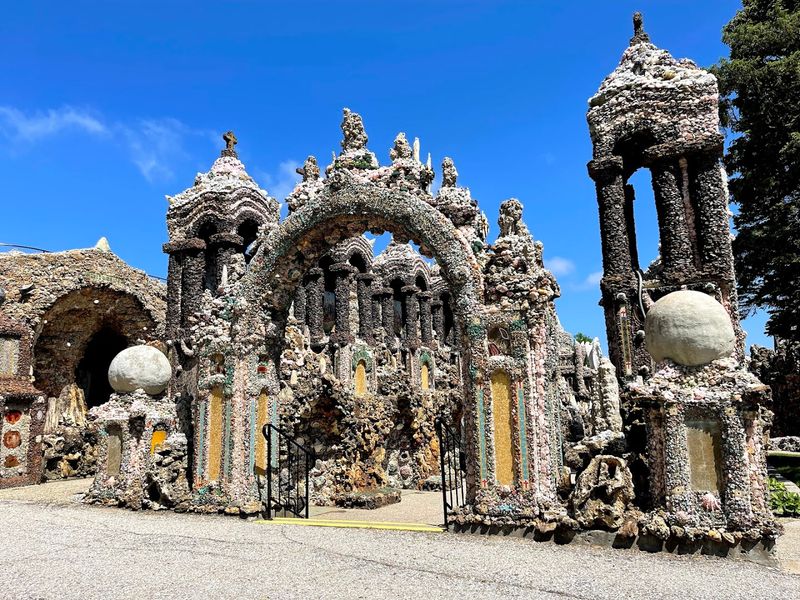
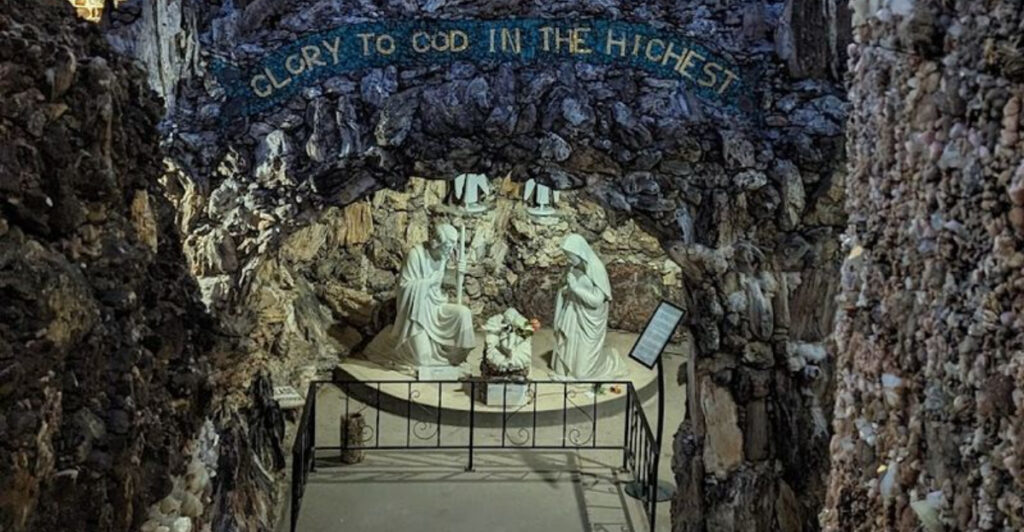
The grotto is not just one structure. It is actually a collection of nine separate grottos, each one telling a different chapter of the story of Christ’s redemption, from the birth of Jesus all the way through the resurrection.
Each grotto has its own distinct character, built with different combinations of stones, minerals, and fossils sourced from locations around the world. You can spend a long time moving from one to the next, noticing how the textures, colors, and embedded objects shift dramatically between them.
The Stations of the Cross are among the most visually striking elements, with detailed mosaic work that rewards slow, careful looking. Every surface has something new to discover, a glittering crystal here, a chunk of polished agate there, a piece of petrified wood tucked into an archway.
The sheer variety keeps your eyes moving constantly from one detail to the next.
The Staggering Collection of Stones and Minerals
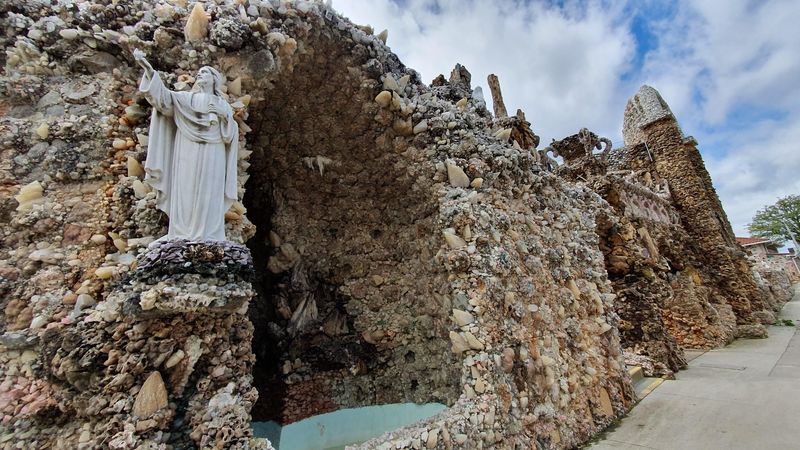
The geological collection embedded into the walls of the grotto is genuinely mind-bending in its scope. Estimates suggest the site contains over $2.5 million worth of precious and semi-precious stones, making it the largest such concentration found anywhere in one place on earth.
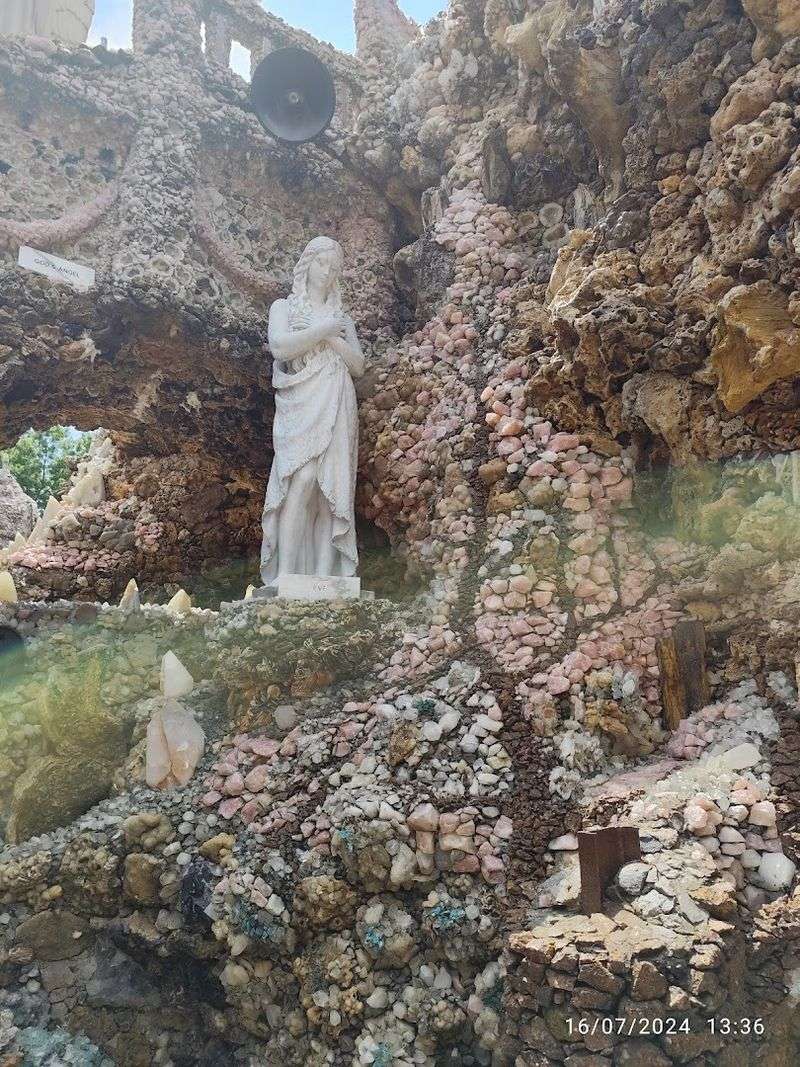
Amethyst, malachite, azurite, quartz crystals, petrified wood, Brazilian agate, Alaskan gold ore, and fossils from multiple continents are all part of the mix. Father Dobberstein spent decades collecting these materials, receiving donations from quarries, museums, and individuals who heard about his project.
The visitor center displays an organized exhibit of all the rock and mineral types used throughout the grotto, which is a great place to start before you walk the grounds. Seeing the labeled specimens first helps you recognize them when you spot them embedded in the walls, turning the whole tour into an impromptu geology lesson you will not forget anytime soon.
The Nativity Scene Inside the Church
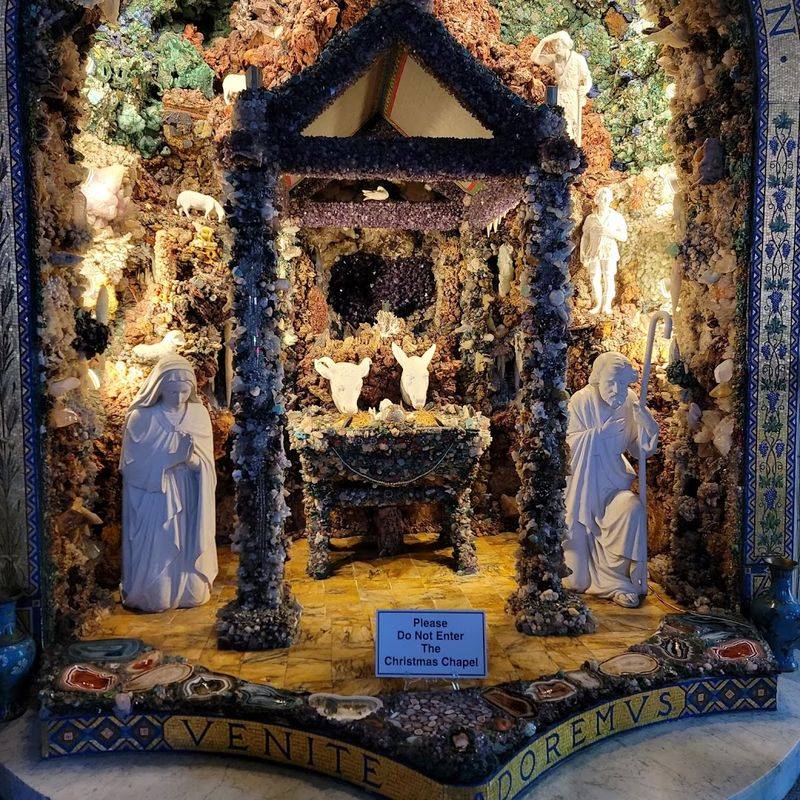
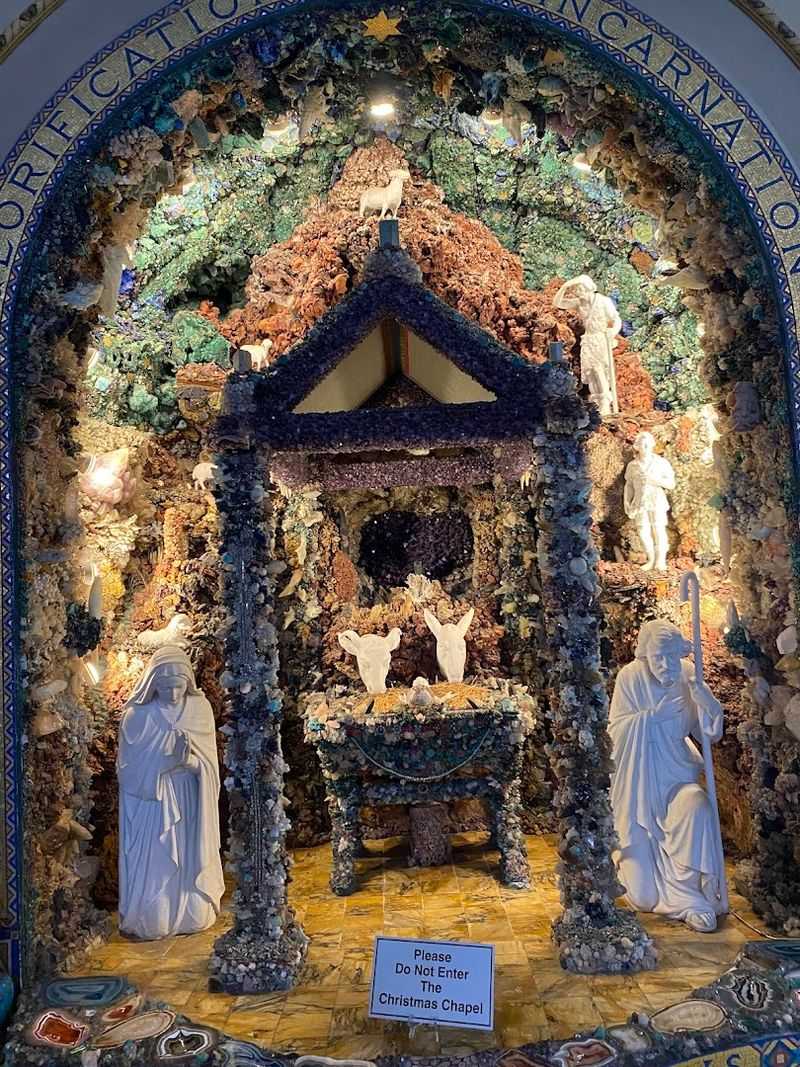
Most visitors focus on the outdoor grottos, and understandably so. But walking into the adjacent church and discovering the nativity scene built right into its interior wall is one of those moments that genuinely catches you off guard.
The nativity is constructed from the same precious stones and minerals used throughout the rest of the grotto complex, giving it a richness and texture that sets it apart from anything you might expect inside a small-town Iowa church. The stained glass windows send colored light streaming across the stone surfaces on sunny days, creating an effect that shifts as the light changes throughout the day.
The church itself is a beautiful example of traditional Catholic architecture, with ornate details that complement the grotto work beautifully. Many visitors say the church alone would be worth the drive, even without the outdoor grottos surrounding it.
Plan to spend time inside rather than just passing through.
The Annual Rocking the Grotto Event
Every June, West Bend hosts an event called Rocking the Grotto that draws crowds from across the region. It is a community celebration built around the grotto’s legacy, and it has become a beloved annual tradition for many Iowa families.
The event features live auctions, silent auctions, and homemade food prepared by local volunteers. Pie is a particular highlight, with homemade slices served in generous portions that come with ice cream, all at a price that feels more like a gift than a purchase.
The Knights of Columbus cook on-site, and the food has earned a loyal following among repeat visitors who plan their summer calendar around it. Beyond the food, the event is a great way to experience the grotto alongside the community that has maintained and celebrated it for over a century.
It transforms an already special place into something even more warm and alive.
Grotto Gary and the Living History of the Site
One of the most unexpected and moving parts of a visit here is the chance to meet the man locals call Grotto Gary. He has been connected to this place since childhood, beginning work on the grotto when he was just six years old.
Gary continues to maintain and repair the structure to this day, preserving the work of Father Dobberstein and his successor, Father Louis Greving, who carried on the project after 1954. Talking with Gary is like getting a direct line to the grotto’s living history, and he shares stories and details that no guidebook could replicate.
He has even taught the resident swans a few tricks, which adds a delightfully unexpected layer to the visit. Some lucky visitors get to place a stone into the grotto wall themselves, a small but genuinely touching way to become part of the ongoing story of this remarkable place.
What the Guided Tours Cover
Free guided tours run on weekends at 1 p.m., and they last approximately 45 minutes. The guides are knowledgeable locals who bring the grotto’s history and construction to life in ways that casual self-guided exploration simply cannot match.
The tours cover the meaning behind each of the nine grottos, the types of stones and minerals used in specific sections, and the personal story of Father Dobberstein’s decades-long commitment to the project. You also get context about Father Greving, who continued the work after Dobberstein’s passing and added significant sections of his own.
Arriving early without realizing there is a guided tour available is a common visitor experience, and many people say they wish they had stayed for the full walkthrough. If your schedule allows, timing your arrival around the 1 p.m. tour on a Saturday or Sunday will give you a much richer understanding of everything you are looking at.
The Grotto at Night and in Winter
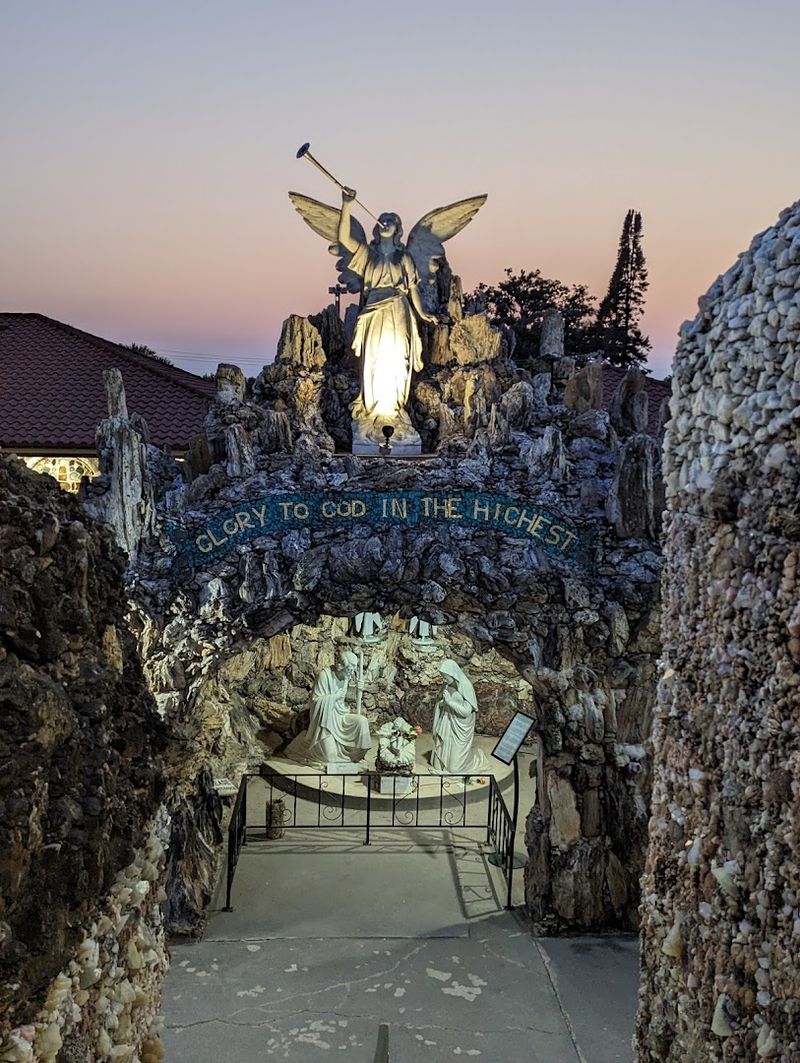
Most people visit during daylight hours in the warmer months, but the grotto transforms completely after dark and in winter conditions. The site is open around the clock, which means a nighttime visit is entirely possible and genuinely rewarding.
When the grotto is lit up at night, the embedded gems and minerals catch the light in ways that daytime visits simply cannot replicate. Crystals that seem muted in afternoon sun suddenly glitter and flash under artificial lighting, giving the entire complex a different kind of magic.
A winter visit with fresh snow covering the grounds adds yet another dimension, with the white landscape setting off the colorful stones and the quiet of a cold Iowa evening making the atmosphere feel almost otherworldly. Several visitors who have come in both seasons say the winter nighttime version of the grotto is actually their favorite, and it is easy to understand why once you have seen it.
The Museum and Visitor Center
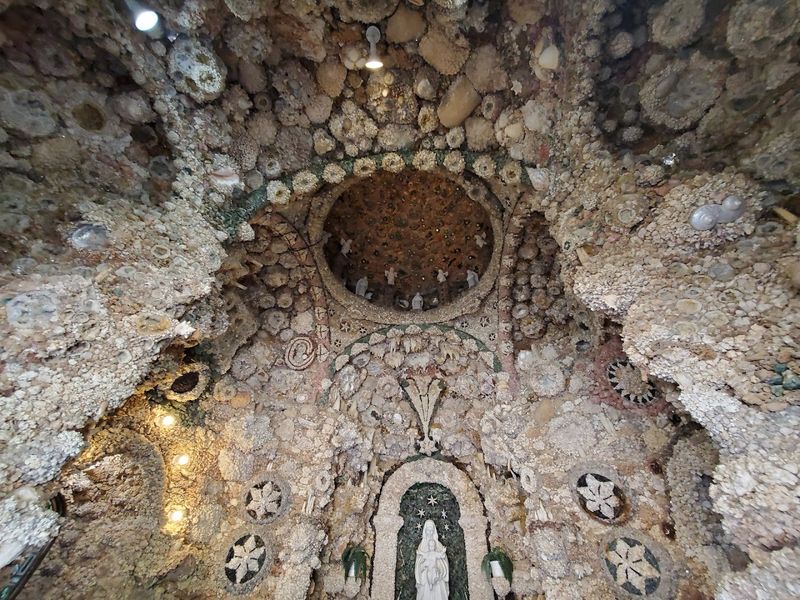
Right alongside the grottos, the visitor center houses a museum that puts the entire project in geological and historical context. Display cases hold organized specimens of every rock, mineral, and fossil type used throughout the construction, each one labeled and explained.
For anyone who loves rocks and minerals, this room alone is worth a long visit. You can study the difference between Brazilian agate and Montana sapphire, learn where specific materials were sourced from, and start building a mental map of what to look for when you head back outside to walk the grottos again.
The museum also tells the story of Father Dobberstein and Father Greving through photographs, documents, and artifacts that help visitors understand the scale of the human effort involved. It is a thoughtful, well-organized space that does not feel like an afterthought but rather like an essential part of understanding the full scope of what was built here.
The Gift Shop and Souvenirs
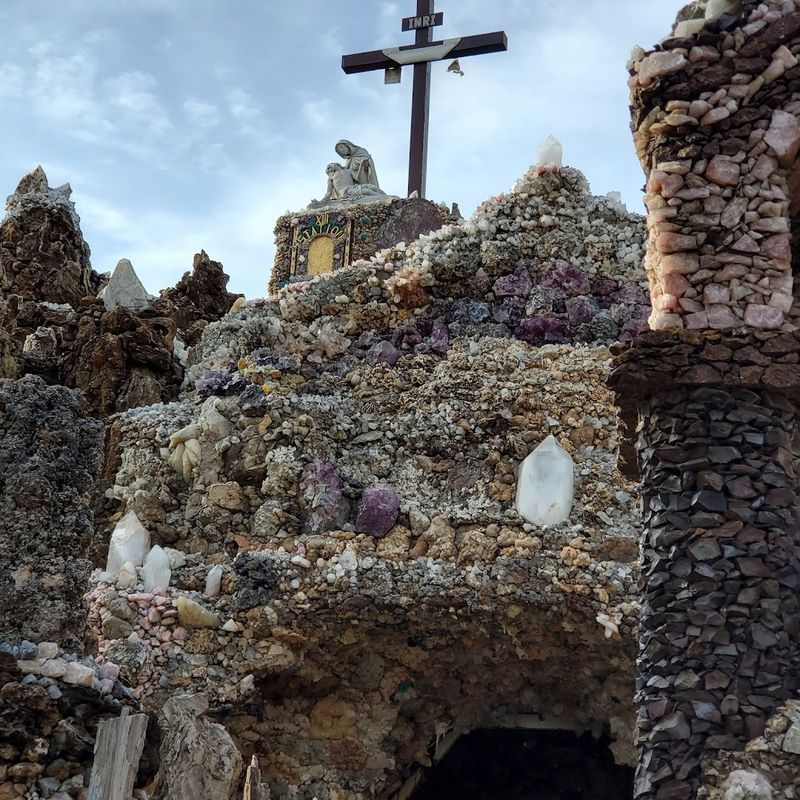
The gift shop at the grotto is small but genuinely well-stocked with items that feel meaningful rather than generic. Polished rocks and minerals are the standout category, and they are priced accessibly enough that picking up a few pieces feels like a natural part of the visit.
Religious items, postcards, books about the grotto’s history, and small keepsakes round out the selection. The quality of the merchandise reflects the care that goes into the entire site, and nothing feels like cheap tourist trinkets thrown together to make a quick sale.
One particularly touching detail: Grotto Gary has been known to give small stones to visitors as personal souvenirs, a gesture that connects the commercial gift shop experience to the much more personal, human story behind the grotto itself. Whatever you pick up here, it comes with a story worth telling when you get home.
Kid-Friendly and Family-Approved
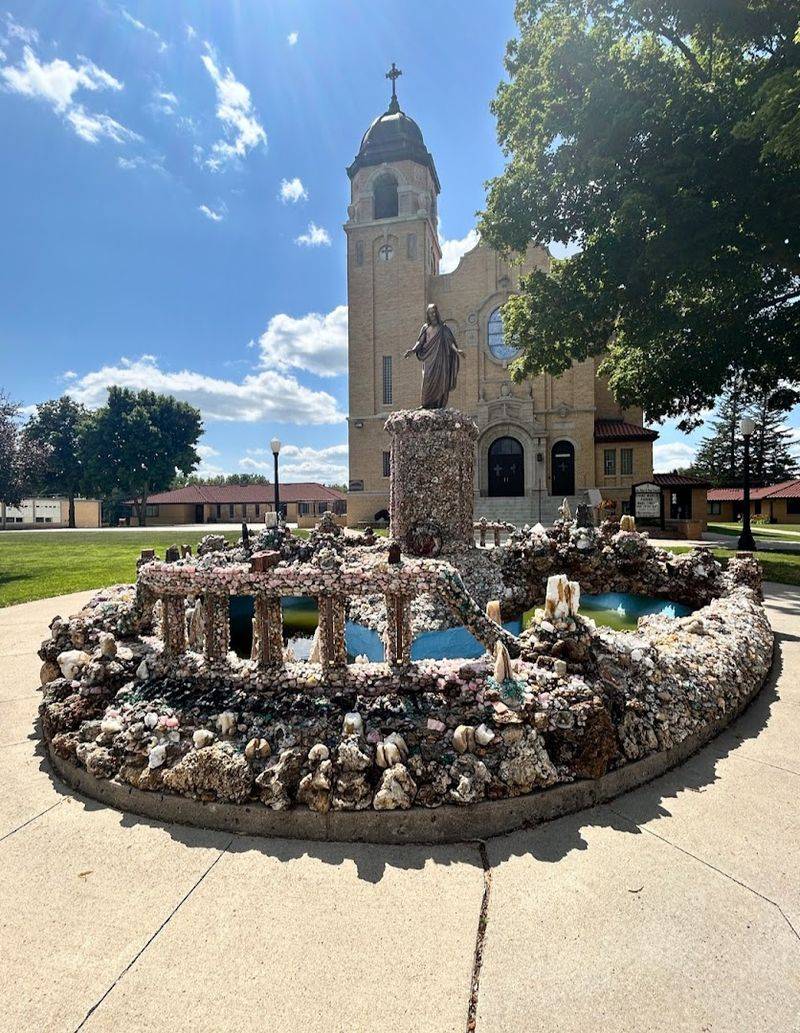
Bringing kids to the grotto turns out to be a surprisingly great call. The combination of sparkling stones, dramatic sculptures, and outdoor pathways gives children plenty to look at, touch, and ask questions about, which is not something every historical or religious site can claim.
The free admission policy removes one of the usual barriers to family travel, and the open-air layout means kids can move around freely rather than sitting still in a formal setting. Young geology enthusiasts in particular tend to go wide-eyed at the sheer variety of rocks and minerals embedded throughout the walls.
The swans that live on the grounds add an extra layer of excitement for younger visitors, and the peaceful atmosphere of the site makes it easy for families to linger longer than they originally planned. More than a few parents have reported that their kids asked to come back before they even reached the parking lot on the way out.
The Campground on the Grounds
Not many landmarks of this kind come with a campground attached, but the Grotto of the Redemption does. Tent and RV sites are available right on the property, each equipped with a grill, making it possible to turn a day trip into an overnight stay.
Camping here gives you access to the grotto at times when most day visitors have already gone home. An early morning walk through the grottos before the crowds arrive, or a late evening visit when the lights come on, are experiences that only overnight guests get to enjoy fully.
The campground is simple and clean, without elaborate amenities, but that simplicity fits the character of the place perfectly. West Bend itself is a quiet community with a small-town feel, and staying on the grounds lets you slow down and absorb the atmosphere rather than rushing back to a distant hotel after a long day of exploring.
The Petrified Wood and Fossil Details
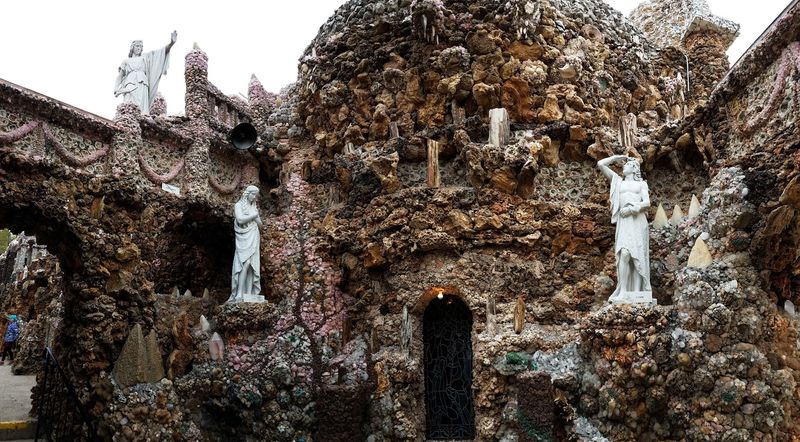
Among the millions of objects worked into the grotto’s surfaces, the petrified wood and fossil specimens stand out as some of the most visually striking. Large sections of ancient wood, transformed over millions of years into stone, are embedded throughout the structure in ways that highlight their natural grain patterns and coloring.
Father Dobberstein had a particular appreciation for natural geological specimens, and the fossils embedded throughout the grottos reflect that sensibility. Coral formations, shell impressions, and other ancient organic materials appear alongside the more glamorous gems and crystals, giving the overall composition a layered richness that rewards close inspection.
Running your eyes slowly across a single section of wall can take several minutes as you pick out one remarkable specimen after another. The petrified wood sections in particular have a warm, amber-toned beauty that contrasts beautifully with the cooler blues and purples of the amethyst and agate found nearby.
Planning Your Visit and What to Expect
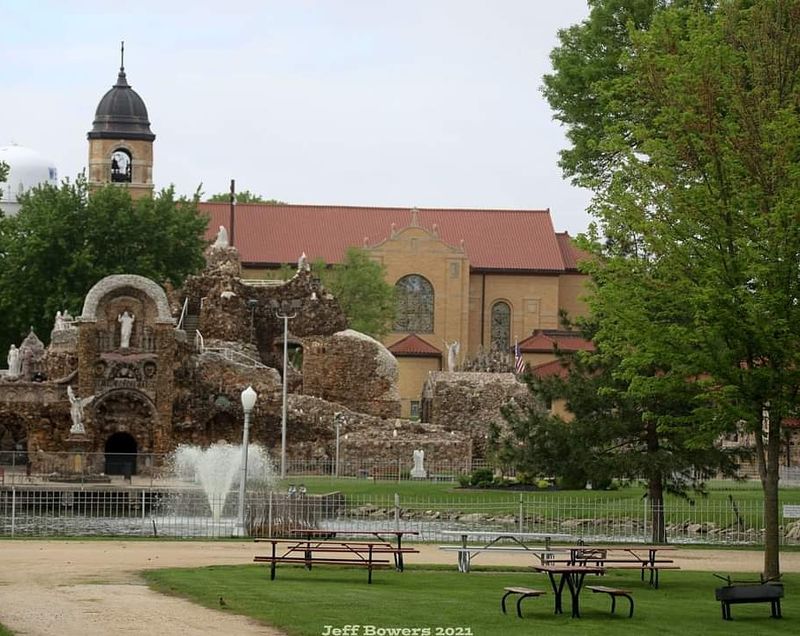
A visit to the grotto typically takes between one and two hours, though people who love rocks and minerals or religious art often find themselves staying considerably longer. Wear comfortable walking shoes, since the pathways wind through outdoor areas with varied surfaces.
The site is free to enter, operating on a free-will donation basis, which makes it accessible to visitors of all budgets. There is no need to book tickets or reserve a time slot, and the 24-hour access means you can show up whenever it suits your schedule.
Weekend visitors who arrive by 1 p.m. can join the free guided tour, which is strongly recommended for a first visit. The gift shop and museum keep regular daytime hours, so plan to arrive during the day if you want access to those.
Cameras are welcome throughout, and the site offers countless angles and details that will fill up a memory card faster than you might expect.
Share this story