 Unearth The Voyage
There is a small, historic building on a quiet street in Haddonfield, New Jersey, that most people drive right past without a second thought. That is a mistake.
This colonial tavern, built around 1730, was not just a place where travelers stopped to rest and eat. It was a room where New Jersey’s future was decided, where the Declaration of Independence was read aloud before it was even signed, and where the state’s Great Seal was officially adopted.
For a building that looks modest from the outside, its list of historical credentials is genuinely hard to believe. The tours are free, the guides are passionate, and the stories packed inside those old walls are the kind that make you stop and think about how much history can fit into such a compact space.
Keep reading, because this place is far more fascinating than it looks.
Where History Lives on Kings Highway
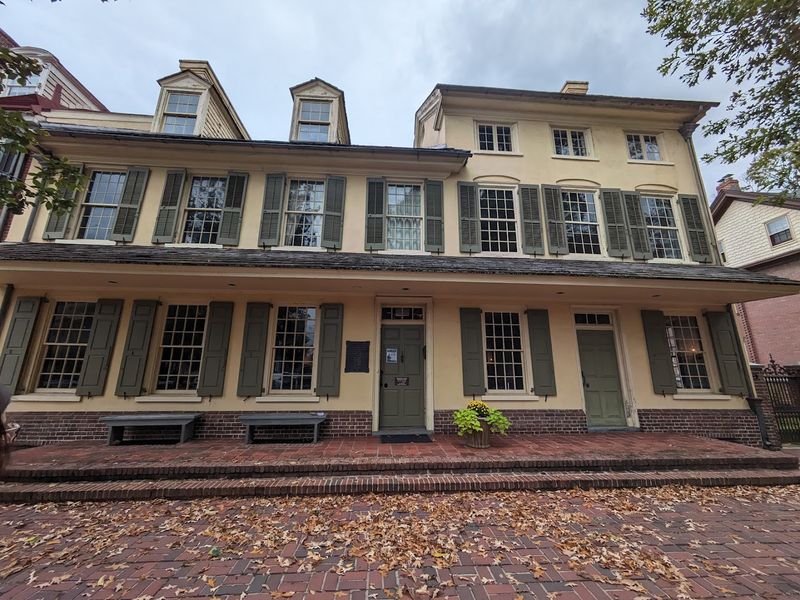
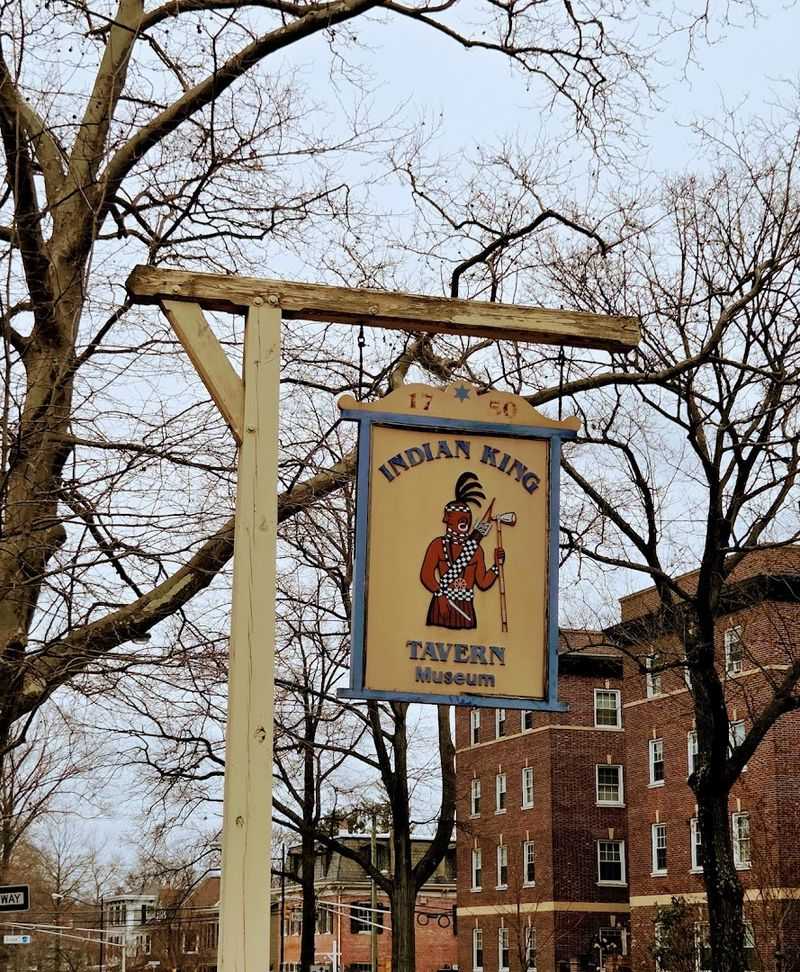
The Indian King Tavern Museum sits at 233 Kings Hwy E, Haddonfield, NJ 08033, right in the heart of downtown Haddonfield. The building dates back to around 1730, making it one of the oldest structures still standing in all of New Jersey.
Haddonfield itself is a borough in Camden County, and the town takes its history seriously. Kings Highway was once one of the most important colonial roads in the entire region, connecting travelers between major cities along the East Coast.
The tavern was originally built to serve those travelers, offering food, rest, and a place to gather. Today, it operates as a free museum open to the public during specific hours throughout the week.
The address is easy to find, street parking is available nearby, and a municipal lot sits just across the street for visitors who need more options. History this significant rarely comes with such a convenient location.
A Building That Dates Back Before the Revolution
The oldest section of the Indian King Tavern was constructed around 1730, which means the building was already decades old by the time the American Revolution began. That timeline alone puts things in perspective.
The structure was built in two main sections. One side originally functioned as a brewery and tavern, while the other served as a dining area for guests.
Upstairs, the innkeeper and his family lived in private quarters, and several guest rooms were available for overnight travelers passing through on Kings Highway.
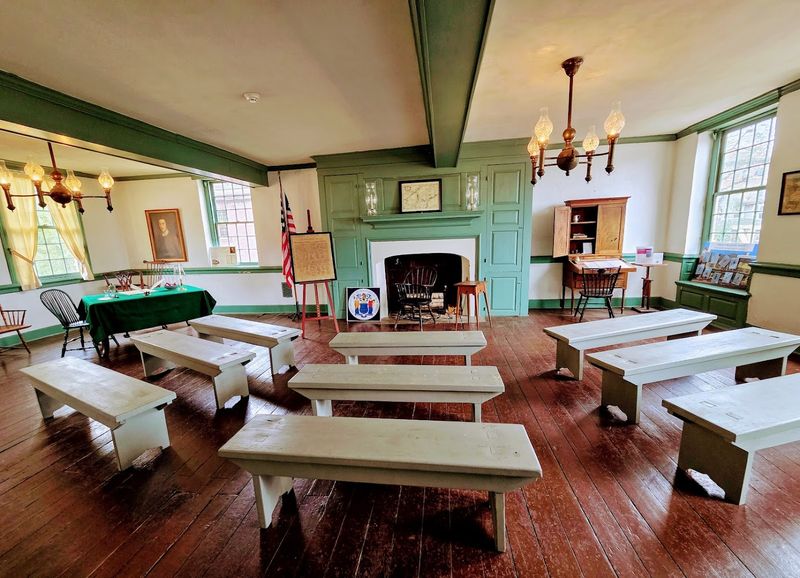
Much of the furniture and accessories on display today are period-accurate replicas, carefully chosen to reflect life in the late 1700s. A few original period pieces are also included throughout the rooms.
The overall effect is a space that feels genuinely connected to its era without being overdone or theatrical. This building did not just witness history.
In many ways, it helped shape it.
The Night New Jersey Became a State
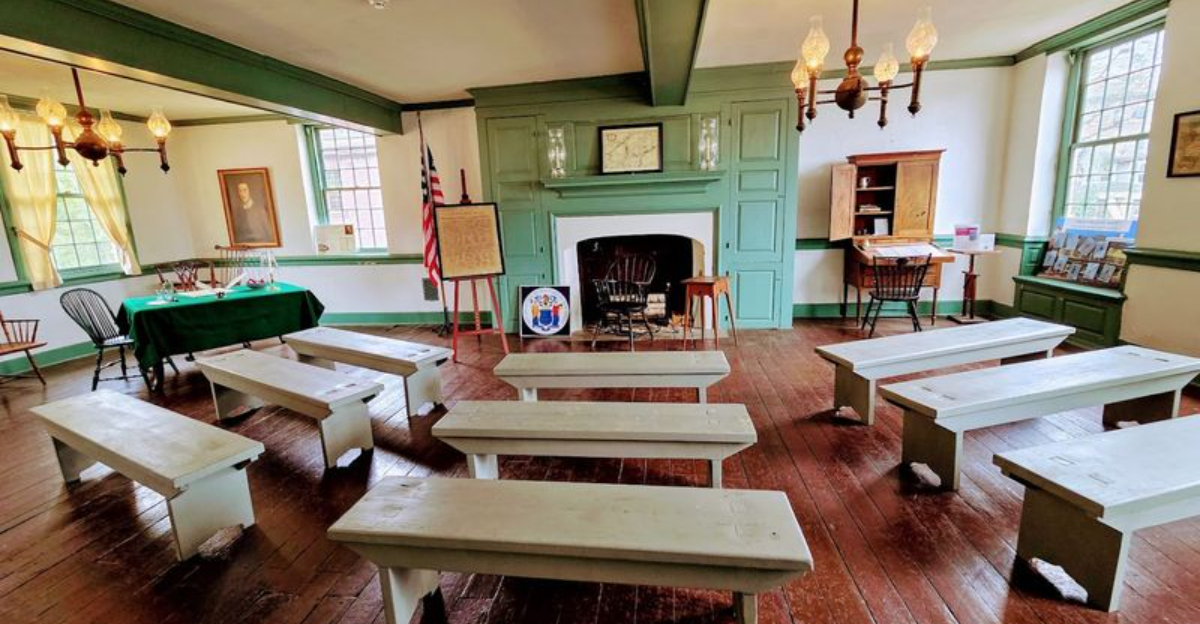
Here is the detail that tends to stop visitors mid-sentence: in 1777, the New Jersey Legislature met inside this very building and officially adopted what became the state’s Great Seal. That act was a foundational moment in New Jersey’s identity as a formal state within the new nation.
The large upstairs room, described as an all-purpose gathering space, was the setting for that meeting. It had previously been used for various community events, social gatherings, and official business, which made it a natural choice for legislative sessions during the Revolutionary War period.
At the time, the British had taken control of major cities like Trenton and Burlington, which forced the New Jersey government to move its operations to safer locations. Haddonfield and the Indian King Tavern provided exactly that kind of secure, functional space.
The fact that a tavern room became a seat of government during wartime says a lot about how colonial life actually worked.
The Declaration of Independence Connection
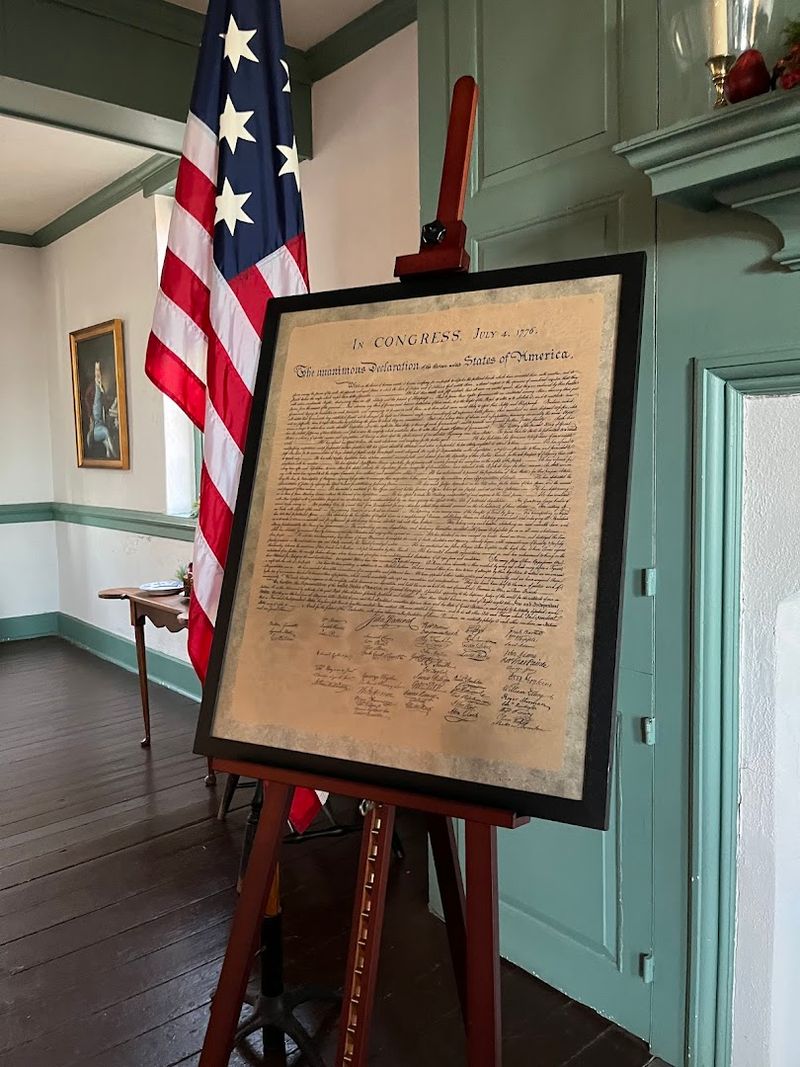
One of the most remarkable stories connected to this building involves the Declaration of Independence. According to the museum’s history, a copy of the Declaration was read aloud to people gathered at this tavern before it was officially signed.
That kind of moment is easy to gloss over, but it is worth pausing on. The words that would define a new nation were spoken out loud in this very space, to real people who had no idea yet what the coming years would bring.
It was not a ceremony. It was news, delivered in a public gathering place where people already trusted the information they received.
Taverns in colonial America functioned as community hubs in a way that is hard to fully appreciate today. They were where people learned about the world, debated politics, and organized responses to major events.
The Indian King Tavern was squarely in the middle of all of that.
The Road to the Battle of Monmouth
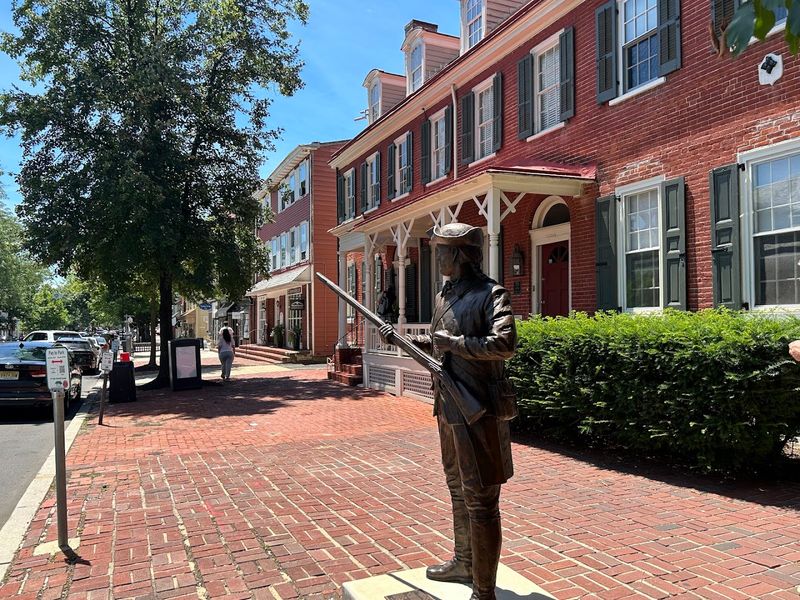
The Indian King Tavern’s role in the American Revolution extended beyond legislative meetings. Troops making their way toward the Battle of Monmouth passed through this area, and Kings Highway was a key route for military movement during that period.
The Battle of Monmouth, fought in June 1778, was one of the largest battles of the entire Revolutionary War. The fact that soldiers traveled through Haddonfield and along the same road where this tavern stood adds another layer to the building’s historical significance.
Taverns along major routes like Kings Highway served a practical military function during the war. They provided information, supplies, and rest stops for both civilian and military travelers.
The Indian King Tavern was well-positioned to play that role, sitting directly on one of the region’s most heavily traveled roads. Every section of this building seems to connect back to a larger story about how a new country came together under pressure.
Free to Visit, Priceless in Value
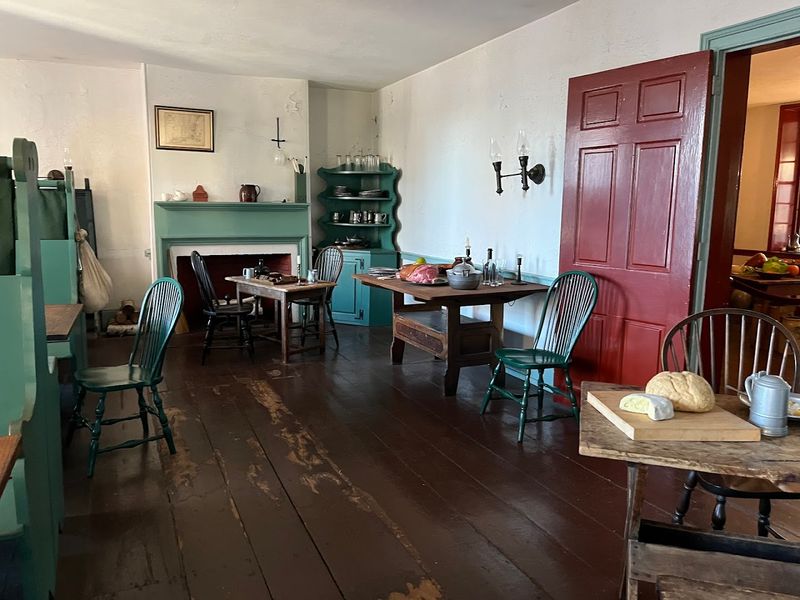
One of the most refreshing things about the Indian King Tavern Museum is that it costs nothing to visit. The museum operates on a donation-based model, with a donation box inside for those who want to contribute.
Tours are offered by knowledgeable guides and volunteer docents throughout the hours of operation. Visitors can choose to explore independently or join a guided tour, which typically runs about 40 to 60 minutes depending on how many questions the group has.
The guides are consistently described as enthusiastic, well-informed, and genuinely happy to talk about the colonial period in depth.
For families, history students, or anyone who enjoys local heritage without a steep entry fee, this museum delivers real value. The combination of a free admission policy, engaged staff, and a building with authentic historical significance is genuinely rare.
Not every landmark this important is this accessible, and that accessibility is a big part of what makes the place worth the trip.
The Layout of the Tavern Itself
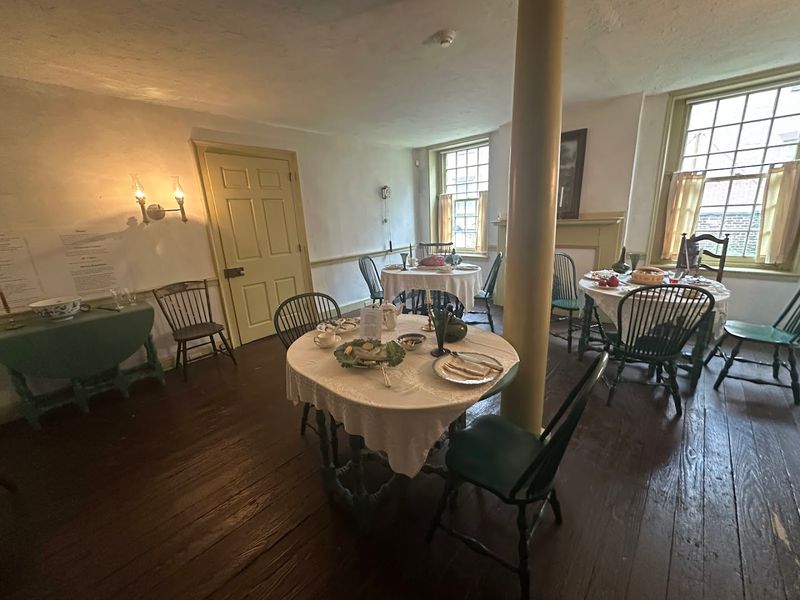
The physical layout of the Indian King Tavern tells its own story. The ground floor was divided into distinct functional spaces, with the tavern and brewery on one side and a dining area on the other.
This separation reflected the practical realities of running a busy roadside inn in the 1700s.
Upstairs, the space opens into the innkeeper’s private living quarters, several guest rooms for overnight travelers, and the large multi-purpose room where legislative sessions and community gatherings took place. That upstairs room is particularly striking because of its size relative to the rest of the building.
Two floors are fully open to visitors during tours. The rooms are furnished in the style of the late 1700s, with period-appropriate pieces that help visitors understand how people actually lived and worked in this space.
The building is currently not wheelchair accessible, with three steps at the entrance and a staircase to the second floor, so visitors with mobility needs should plan accordingly.
The Guides Who Bring It All to Life
A historic building is only as compelling as the people explaining it, and the Indian King Tavern has consistently strong guides. The docents and staff volunteers are knowledgeable about both the tavern’s specific history and the broader context of colonial life and the American Revolution.
Tours cover everything from the architectural history of the building to the political events that unfolded inside it. Guides are comfortable going off-script to answer specific questions, and many visitors have noted that the conversations during tours felt more like engaging discussions than scripted presentations.
The guides also cover topics beyond just the tavern itself, including the role of Haddonfield in the Revolution, the significance of Kings Highway as a colonial route, and the broader political landscape of New Jersey during the 1770s. That wider context makes the tour feel educational in the best possible way.
Visitors who arrive curious tend to leave with a much fuller picture of what this corner of New Jersey actually contributed to American history.
Ongoing Restoration and Preservation Efforts
The Indian King Tavern has been undergoing significant restoration work in recent years. Scaffolding has been visible around the exterior as crews work to replace the roof with historically appropriate materials and prepare for interior renovations.
That kind of careful, preservation-focused approach is exactly what a building this important deserves. The goal is not to modernize the space but to stabilize and protect it while maintaining its historical character.
The Friends of Indian King Tavern organization oversees much of this work and actively supports the museum’s ongoing operations.
One area that has been noted as a future priority is improving accessibility. Currently, the building has no accessible entrance, which limits the experience for visitors with mobility challenges.
The hope is that upcoming renovations will address at least the first floor in a way that meets accessibility standards without compromising the building’s historic integrity. It is encouraging to see this level of long-term commitment to a site that has contributed so much to New Jersey’s story.
Monthly Events and Special Programs
Beyond the standard tours, the Indian King Tavern Museum offers a rotating schedule of special programming. Monthly talks and lectures cover topics related to colonial life, the Revolutionary War, and the specific history of Haddonfield and the surrounding region.
These events attract a mix of local history enthusiasts, students, and visitors from farther afield who are specifically interested in the colonial period. The format tends to be informal and conversational, which fits the overall character of the museum well.
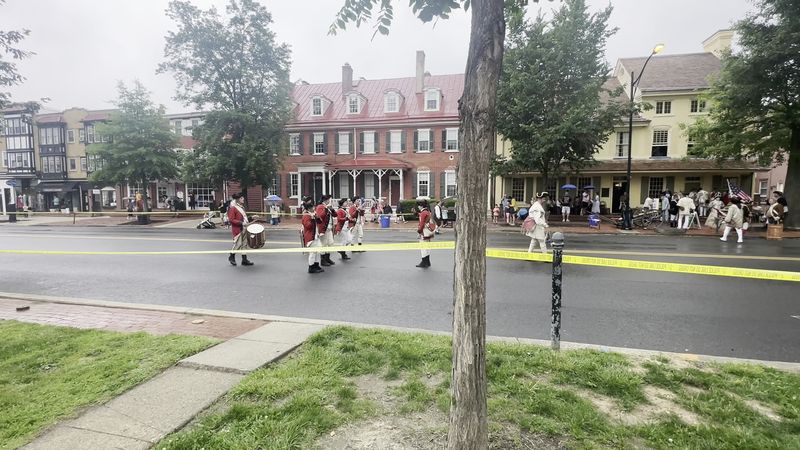
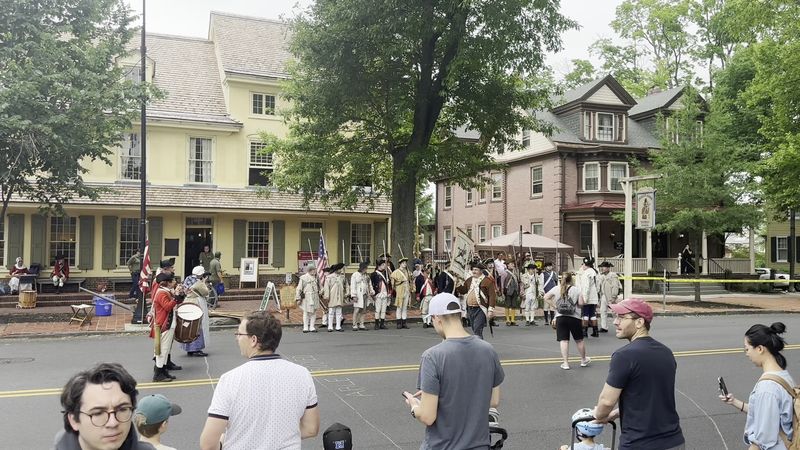
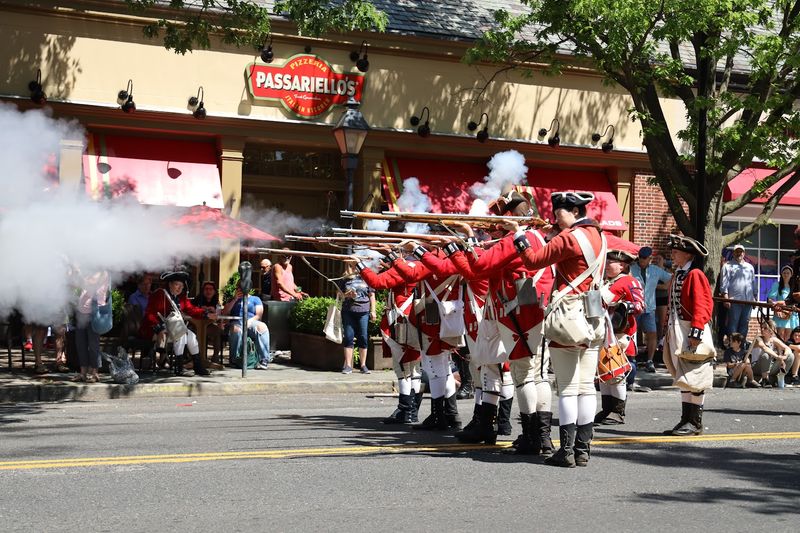
Reenactment events are also part of the programming calendar, and those can be particularly engaging for families with kids. During reenactments, costumed participants bring the colonial period to life along Kings Highway, giving visitors a chance to see the museum and its surroundings in a more theatrical context.
Checking the museum’s website ahead of time is the best way to find out what is scheduled during any given month and to plan a visit around a program that matches your interests.
Why Haddonfield Itself Is Worth the Day Trip
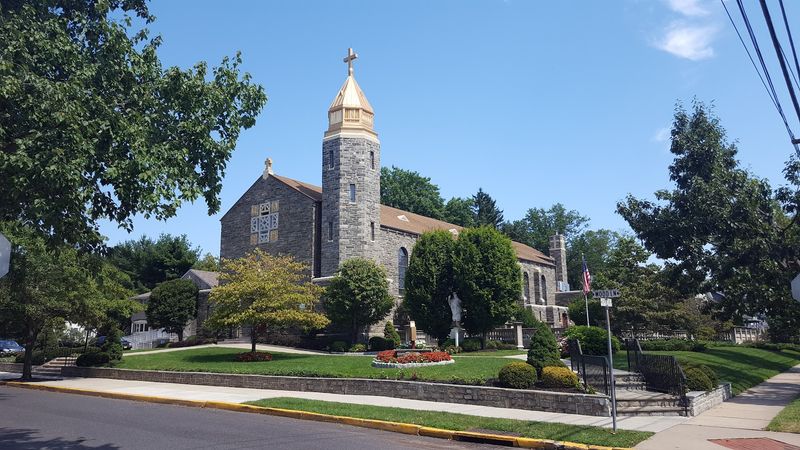
The Indian King Tavern is a strong reason to visit Haddonfield, but the town itself adds plenty more to the itinerary. Downtown Haddonfield is a compact, walkable area filled with historic buildings, many of which are recognized as official landmarks.
The borough has a long and well-documented history that stretches back to the colonial era, and that history is visible in the architecture and layout of the town center. Kings Highway, the road the tavern sits on, remains one of the most historically significant streets in all of New Jersey.
After a tour of the Indian King Tavern, the surrounding blocks offer a natural extension of the day. Local shops, cafes, and the general character of the town make for an enjoyable few hours of exploration.
One couple drove over 100 miles specifically to visit the tavern and the town, and they left planning a return trip. That kind of enthusiasm is a reliable indicator of a destination worth your time.



