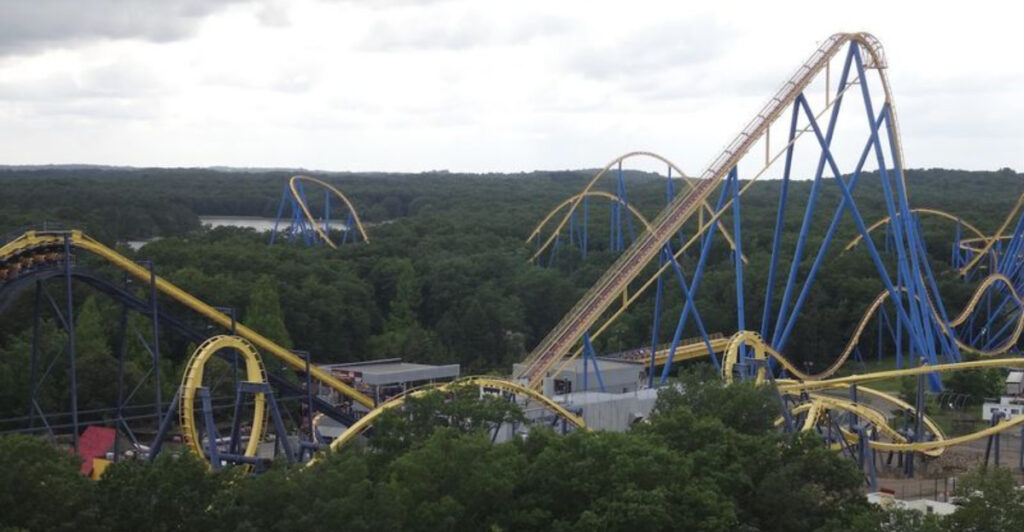
There is a steel giant hiding in the woods of Jackson Township, New Jersey, and it has been making hearts race since 2001. At 230 feet tall with a 215-foot drop and a top speed of 80 miles per hour, this hypercoaster is not the kind of ride you forget after one trip.
Nitro, the crown jewel of Six Flags Great Adventure, has built a loyal following that keeps coming back season after season, sometimes riding it dozens of times in a single day. What makes a two-decade-old coaster this addictive?
The answer lives somewhere between those sweeping camelback hills, the double upward helix, and the bunny hills that catch even experienced riders off guard. This article breaks down everything that makes Nitro one of the most respected hypercoasters on the East Coast, and why fans are still obsessed with every single inch of its track.
Where Nitro Lives and How to Find It
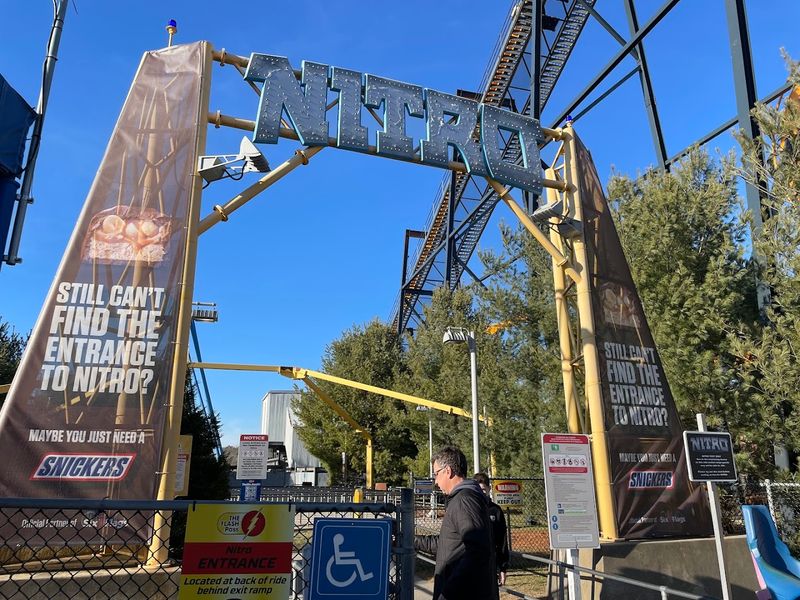
Nitro calls Six Flags Great Adventure home, located at 1 Six Flags Blvd, Jackson Township, NJ 08527. The park sits in Ocean County, surrounded by the flat pine forests of central New Jersey, which gives the coaster a surprisingly wild backdrop once the track heads out into the tree line.
Getting there is straightforward whether you are driving from New York City, Philadelphia, or anywhere in between. The park sits conveniently off Route 537, and the Nitro entrance is not far from the main coaster cluster once you are inside the gates.
Operating hours vary by day, with the park opening as early as 10:30 AM on weekends and 11 AM on select weekdays. Checking the Six Flags website before heading out is always a smart move, since seasonal schedules and special events can shift things around.
Plan early, and the wait times tend to be much more forgiving.
The Steel Stats That Make Jaws Drop
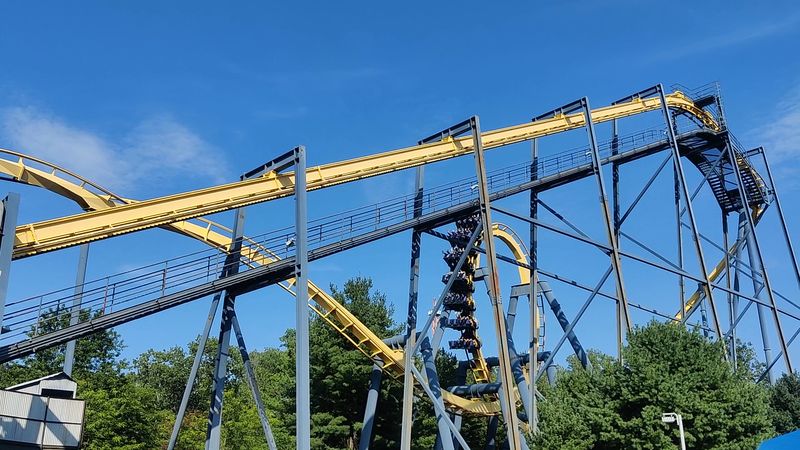
Numbers do not lie, and Nitro’s specs have been turning heads since the coaster opened in 2001. The ride stands 230 feet tall, delivers a first drop of 215 feet at a 66-degree angle, and reaches a top speed of 80 miles per hour.
Those are not casual numbers for a coaster that uses no inversions.
Built by the legendary Swiss manufacturer Bolliger and Mabillard, commonly known as B&M, Nitro stretches across a track length of 5,394 feet. That is more than a mile of steel engineered to deliver consistent speed, smooth transitions, and airtime that keeps riders floating above their seats.
The ride duration clocks in at around three minutes and thirty seconds, which feels both too short and just right at the same time. For a hypercoaster, that runtime is generous.
Every second of it is packed with elements designed to keep the energy high from the first click of the lift hill to the final brake run.
What Makes a Hypercoaster Different
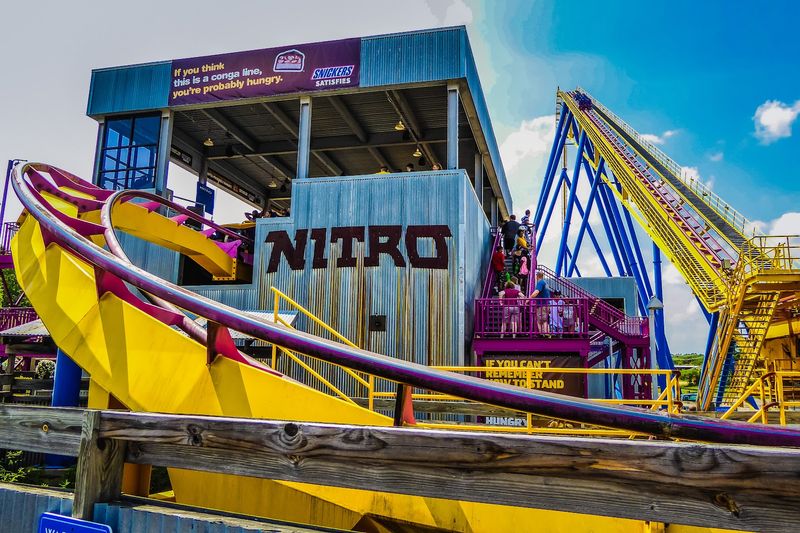
Not every tall roller coaster earns the hypercoaster label. To qualify, a coaster needs to stand at least 200 feet tall, and the design philosophy centers on speed, airtime, and flowing layouts rather than loops or inversions.
Nitro fits that definition perfectly and then some.
The hypercoaster format was pioneered by B&M in the 1990s, and Nitro represents one of the company’s most refined examples of the style. The ride relies on large parabolic hills called camelbacks to generate weightlessness, combined with sweeping turns and a powerful helix that pushes riders into their seats with strong positive forces.
What separates a great hypercoaster from an average one is pacing. Nitro maintains its energy through the entire layout without a single dead spot.
The bunny hills near the end of the course are a perfect example of this, delivering sharp pops of airtime that catch riders off guard even after multiple rides. That consistency is rare and deeply appreciated by coaster fans.
The First Drop That Changes Everything
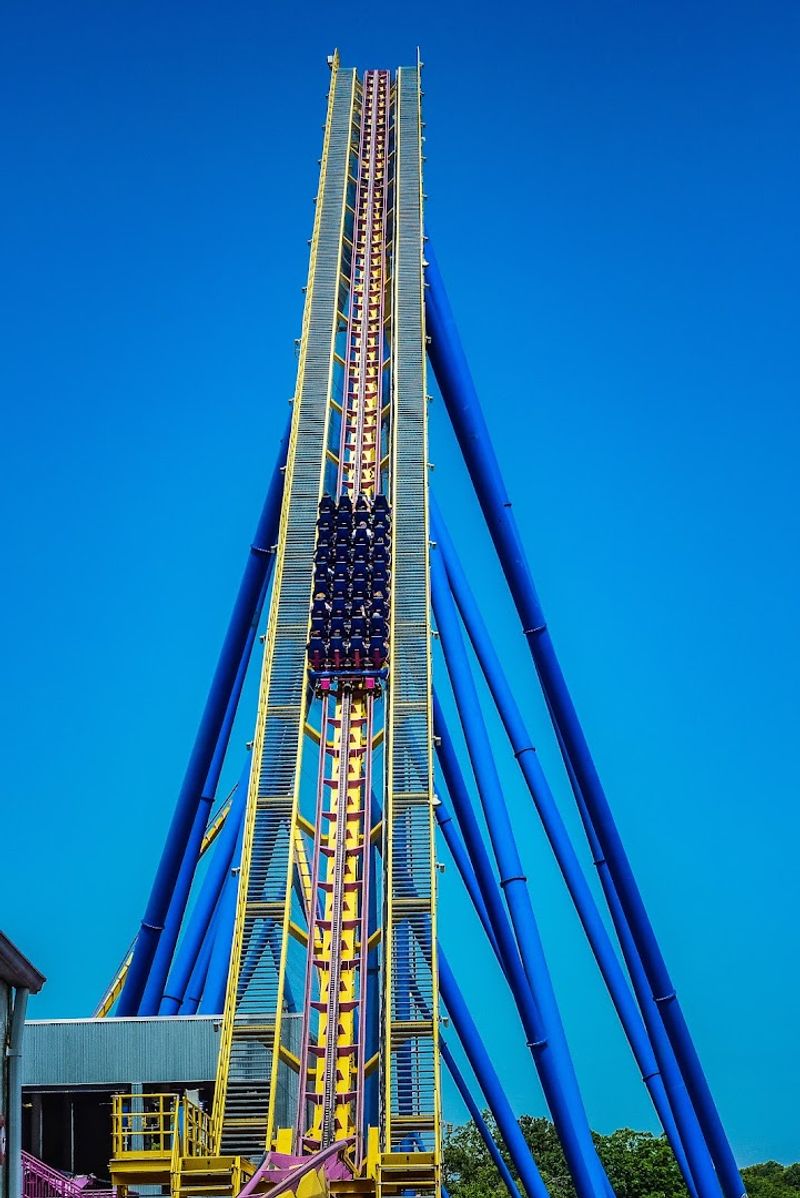
The first drop on Nitro is the moment that separates the curious from the converted. At 215 feet and angled at 66 degrees, it is steep enough to feel nearly vertical from the front row.
The lift hill builds anticipation slowly, and then the track tilts forward and the ground rushes up at 80 miles per hour.
What makes this drop work so well is the combination of height, angle, and the minimal restraint system. Nitro uses a simple lap bar rather than an over-the-shoulder harness, which means nothing is blocking the upper body during that plunge.
That open feeling amplifies everything about the drop in a way that fully restrained coasters simply cannot match.
Riders in the back row experience the drop differently from those in the front. The back row gets pulled over the crest quickly and aggressively, while the front row hangs for a split second before the fall begins.
Both experiences are worth trying on separate rides, and most fans end up with a strong preference for one over the other.
Airtime Hills and the Art of Floating
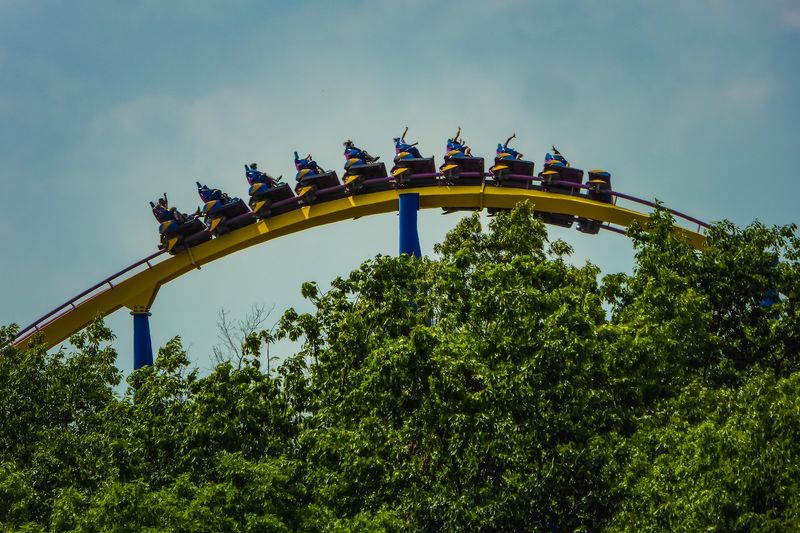
Airtime is the defining feature of any great hypercoaster, and Nitro delivers it in two distinct flavors. Floater airtime is the longer, sustained weightlessness that riders experience on the large camelback hills, where the body lifts gently and hovers for a full second or two.
Ejector airtime is sharper and more aggressive, arriving quickly and pushing riders out of their seats with real force.
Nitro balances both types across its layout. The two main camelbacks provide generous floater airtime that even first-time riders can appreciate.
The bunny hills near the end of the course switch gears and deliver those sudden ejector moments that keep the ride feeling fresh and unpredictable even after dozens of laps.
The lap bar restraint system plays a huge role in how this airtime registers. A looser lap bar allows for more movement and a more intense floating sensation, while a tighter bar reduces the effect.
Experienced riders know to position themselves carefully before the safety check, because that small detail can completely change the quality of the ride.
Night Rides and Why They Hit Differently
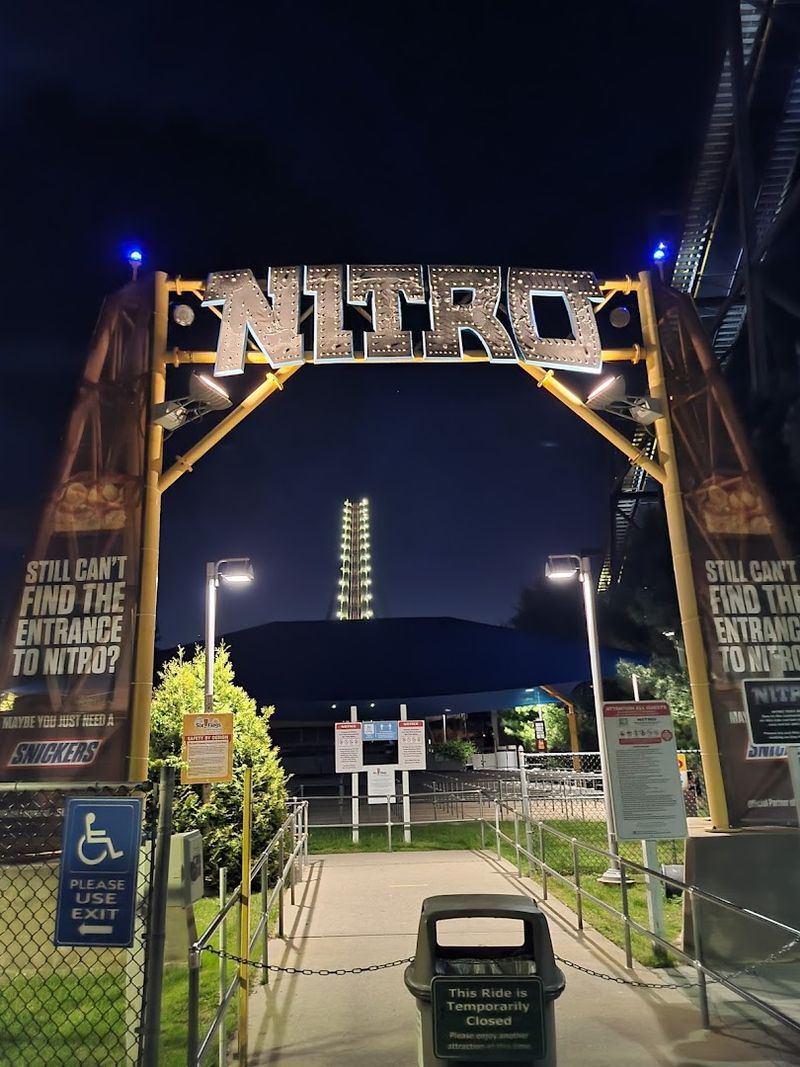
Riding Nitro during the day is one experience. Riding it after dark is something else entirely.
The coaster’s layout extends well beyond the main park area and heads out into a section of trees that becomes nearly pitch black once the sun goes down. That darkness removes visual cues and makes the drops and turns feel more sudden and disorienting in the best possible way.
Night operations at Six Flags Great Adventure typically run during summer evenings and special events like Fright Fest in the fall. Those late-night windows are when Nitro’s reputation really solidifies for first-time riders who assumed the daytime version was the full story.
The front row at night is widely considered one of the best seats in the entire park. With nothing blocking the view and the track disappearing into darkness ahead, every element arrives without warning.
Lines for the front row tend to grow later in the evening as word spreads through the crowd, so timing matters if that specific experience is the goal.
How Nitro Compares to Other B&M Hypercoasters
The B&M hypercoaster family is large and well-respected, with examples spread across the United States and beyond. Nitro frequently comes up in fan discussions about the best of the bunch, and its placement in those rankings says a lot about how well it has aged since opening in 2001.
Candymonium at Hershey Park in Pennsylvania is often the closest comparison point since both are B&M hypers on the East Coast. Opinions differ on which is better, with some preferring Candymonium’s newer feel and others standing firmly in Nitro’s corner for its more aggressive pacing and the character of its helix.
Both rides are worth experiencing, and the debate between fans is genuinely fun.
What gives Nitro an edge in many conversations is the consistency of its operations. The coaster runs reliably, handles multiple trains efficiently, and rarely shows its age in terms of ride quality.
For a coaster approaching its mid-20s, that smoothness and dependability are not something every park can claim about its older steel attractions.
The Layout From Start to Finish
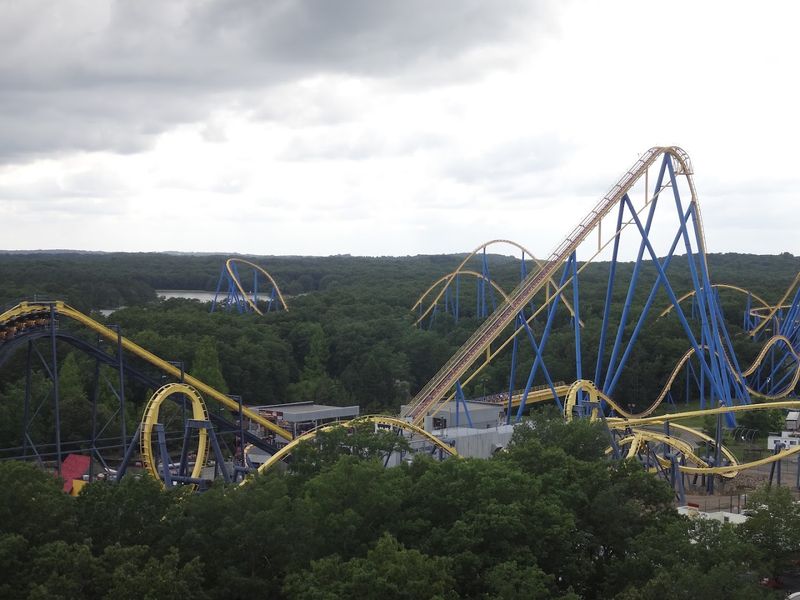
Nitro’s layout reads like a well-written story with a clear beginning, middle, and end. After the 230-foot lift hill and the 215-foot first drop, the train roars into the first large camelback, which provides the ride’s most sustained moment of weightlessness.
From there, the track flows into a sweeping turn that keeps the speed high before hitting the second camelback.
The mid-section introduces the hammerhead turn, a forceful direction change that pushes riders outward before the layout transitions toward the helix. That double upward helix is the climax of the ride’s force profile, generating the strongest G-forces in the entire sequence and leaving riders pressed firmly into their seats.
After the helix, the bunny hills take over. These smaller, sharper hills deliver quick pops of ejector airtime that serve as a final exclamation point before the brake run.
The pacing never lets up, and there are no sections that feel like filler. Every element earns its place on the track.
Restraints, Trains, and the Ride Experience Up Close
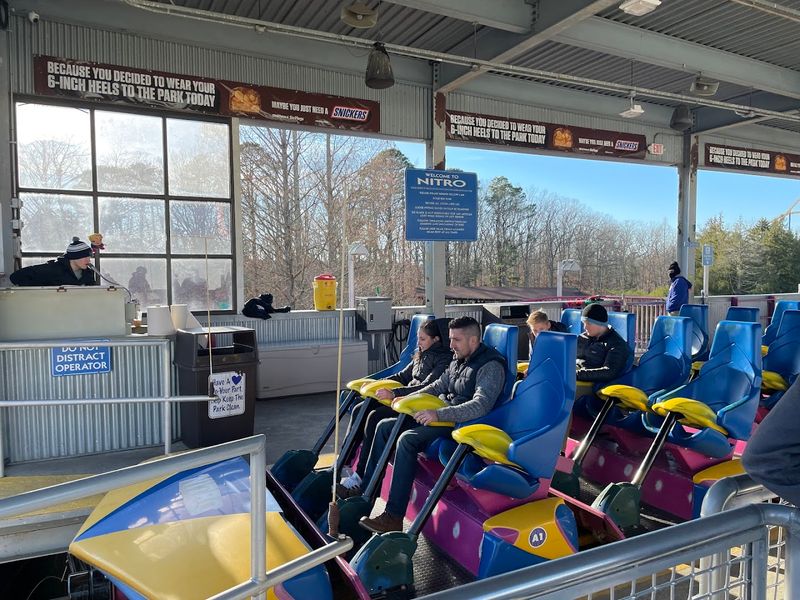
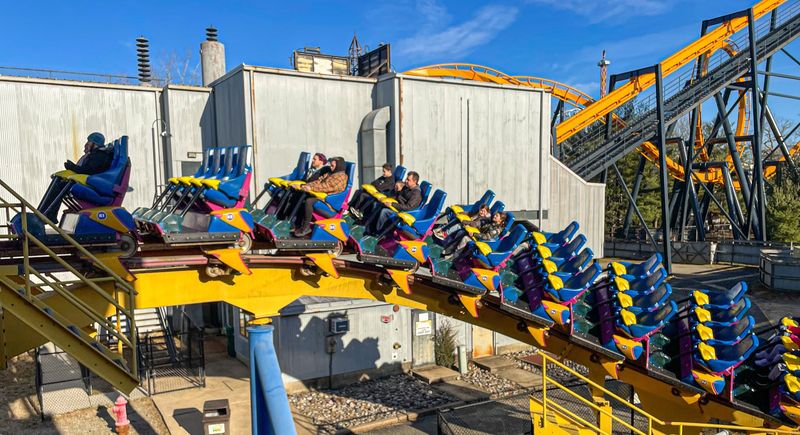
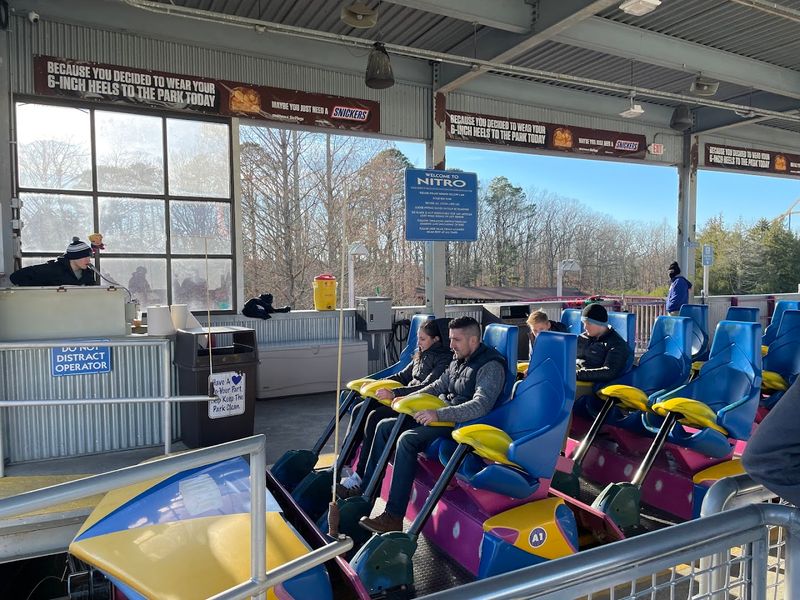
Nitro runs on B&M’s classic hypercoaster trains, which are wide, open vehicles with two seats per row and a total of eight rows per train. The restraint system is a clamshell lap bar that locks over the thighs, leaving the upper body completely free.
That open design is central to why the airtime on this ride registers so strongly.
The seats themselves are roomy, which is one of the reasons Nitro has such broad appeal among riders of different builds. The generous space combined with the lack of shoulder harnesses makes the ride accessible and comfortable in a way that some older coasters with bulkier restraints simply are not.
Three trains run on busy days, and the operations team at Six Flags Great Adventure is known for keeping the dispatch intervals tight. That efficiency is part of why wait times on Nitro tend to move faster than the queue length suggests.
Arriving during a weekday or early in the morning on weekends is still the best strategy for minimal waiting.
Tips for Getting the Most Out of Every Ride
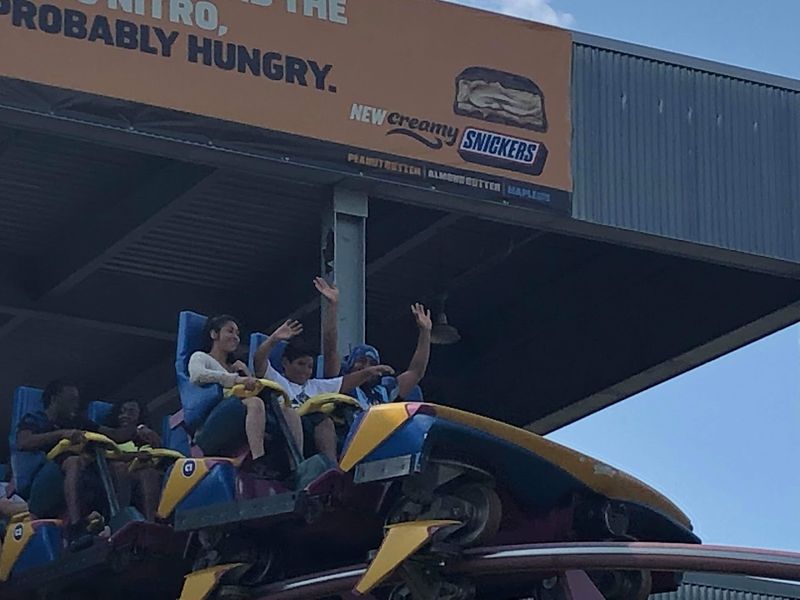
Getting the best possible experience on Nitro comes down to a few smart choices. Seat selection matters more than most casual riders realize.
The front row offers the most open view and that suspended-in-air feeling at the top of each hill, while the back row provides a faster, more aggressive pull over every crest. Middle rows offer a blend of both and are worth trying for comparison.
Timing the visit strategically makes a real difference in how much of the day gets spent on the ride versus in line. Weekday visits during the school year are consistently quieter, and arriving when the park opens gives a window to ride multiple times before the queues build up.
The Flash Pass option is available for those who want more flexibility on busier days.
Riding multiple times in the same session is common among fans, and the operations team generally keeps things moving well enough to make that realistic. Each ride tends to feel slightly different depending on seating position and time of day, which is part of what keeps people coming back.
Why Nitro Still Earns Its Obsessive Following After Two Decades
Twenty-plus years is a long time for any attraction to stay at the top of a park’s lineup, but Nitro has managed it through a combination of smart design, reliable operations, and genuine reridability. The coaster does not rely on gimmicks or novelty.
It delivers a pure, high-quality ride experience that holds up against newer attractions built with more modern technology.
The fan community around Nitro is notably passionate. Riders who count their laps in the dozens on a single visit, debates about front row versus back row, and the ritual of the night ride have all become part of the coaster’s identity over the years.
That kind of culture does not form around mediocre rides.
For anyone visiting Six Flags Great Adventure in Jackson Township, Nitro is not just one item on a checklist. It is the kind of ride that resets the standard for what a day at a theme park should feel like, and it has been doing exactly that since the day it opened.
Share this story