 Unearth The Voyage
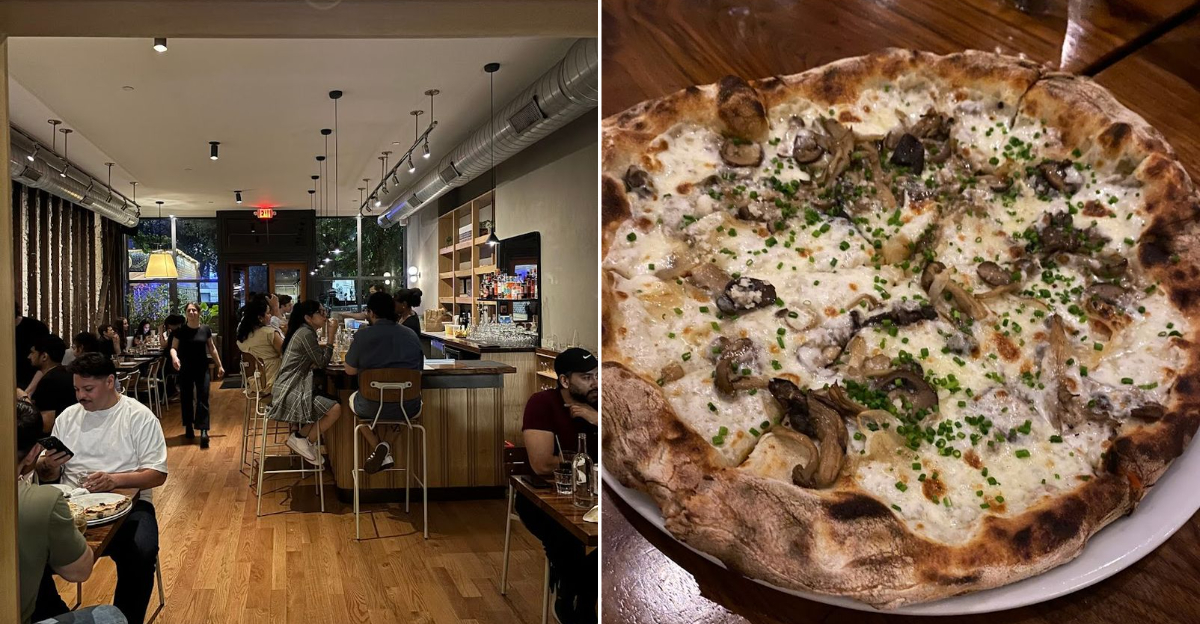
New Jersey has no shortage of pizza opinions, and everyone in the Garden State seems to have a definitive answer about who makes the best pie. But there is one spot in Jersey City that keeps coming up in conversations, food publications, and even the New York Times, and it is not hard to understand why.
This wood-fired pizzeria on Grove Street has quietly built a reputation that stretches far beyond its modest dining room. The menu is small, the reservations are hard to get, and the pizza is the kind that makes people plan their entire evening around it.
If you have ever wondered what all the fuss is about, keep reading, because this place is worth every word.
Where to Find Razza in Jersey City
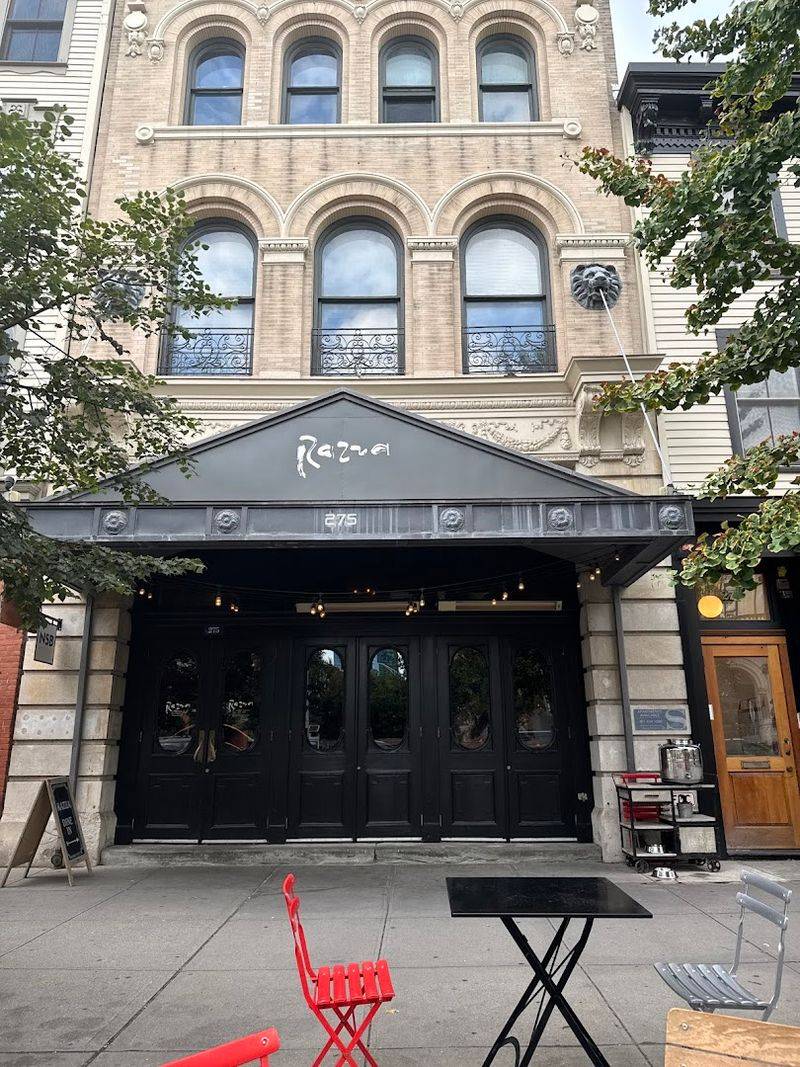
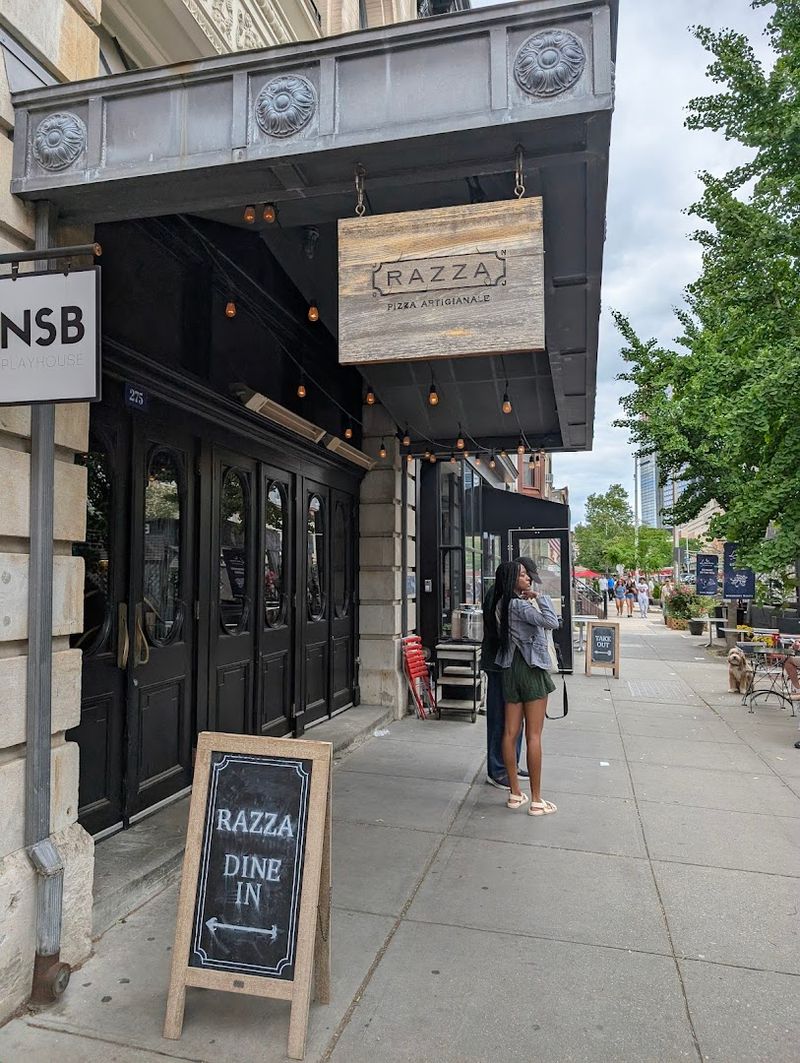
You’ll find Razza at 275 Grove St, Jersey City, NJ 07302. But do not let the no-fuss location fool you.
This stretch of Grove Street in downtown Jersey City is a lively corridor, and Razza fits right into the neighborhood with a low-key exterior that gives little away about what is happening inside.
Jersey City sits just across the Hudson River from Manhattan, making it accessible by PATH train, ferry, or car. For those coming from New York City, the trip is short, and more than a few people have made the cross-river journey specifically for this restaurant.
The surrounding area has a walkable, urban energy, with other restaurants and shops nearby. Razza opens at 5 PM Monday through Thursday, at 3 PM on Fridays and Saturdays, and at 3 PM on Sundays, closing at 9 PM.
Planning ahead is the single most important thing a first-time guest can do.
The Story Behind the Pizza
Razza was founded by Dan Richer, a chef who spent years obsessing over the science and craft of dough before opening his pizzeria on Grove Street. His approach is not about recreating a classic New York slice or a traditional Neapolitan pie.
Instead, Richer developed his own style, one rooted in fermentation, local sourcing, and a deep respect for ingredients.
The restaurant earned a three-star review from the New York Times, a distinction that almost no pizzeria in the country has ever received. It has also been ranked among the top pizzerias globally, sitting at number 22 on a well-known international list.
That kind of recognition does not happen by accident. It comes from years of refining every detail, from the flour in the dough to the wood used in the oven.
Dan Richer is frequently seen on the restaurant floor, making the whole operation feel personal rather than corporate.
What Makes the Crust So Different
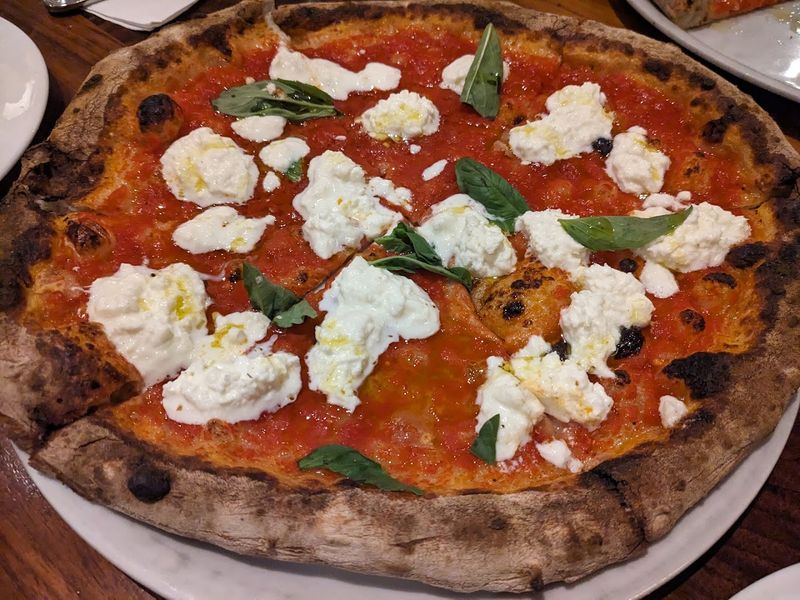
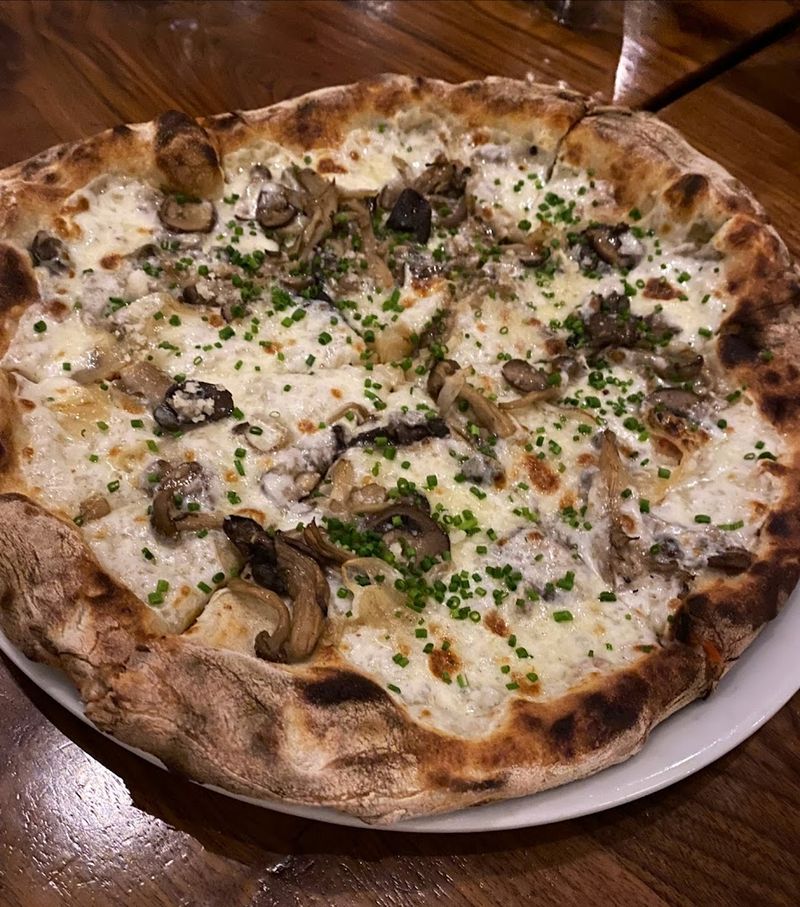
The crust at Razza is the thing people talk about most, and for good reason. It is thin without being fragile, holding its structure even when loaded with toppings.
There is no flop, no sogginess, and no chewiness that wears out your jaw. The dough is made through a slow fermentation process that builds both flavor and structure over time.
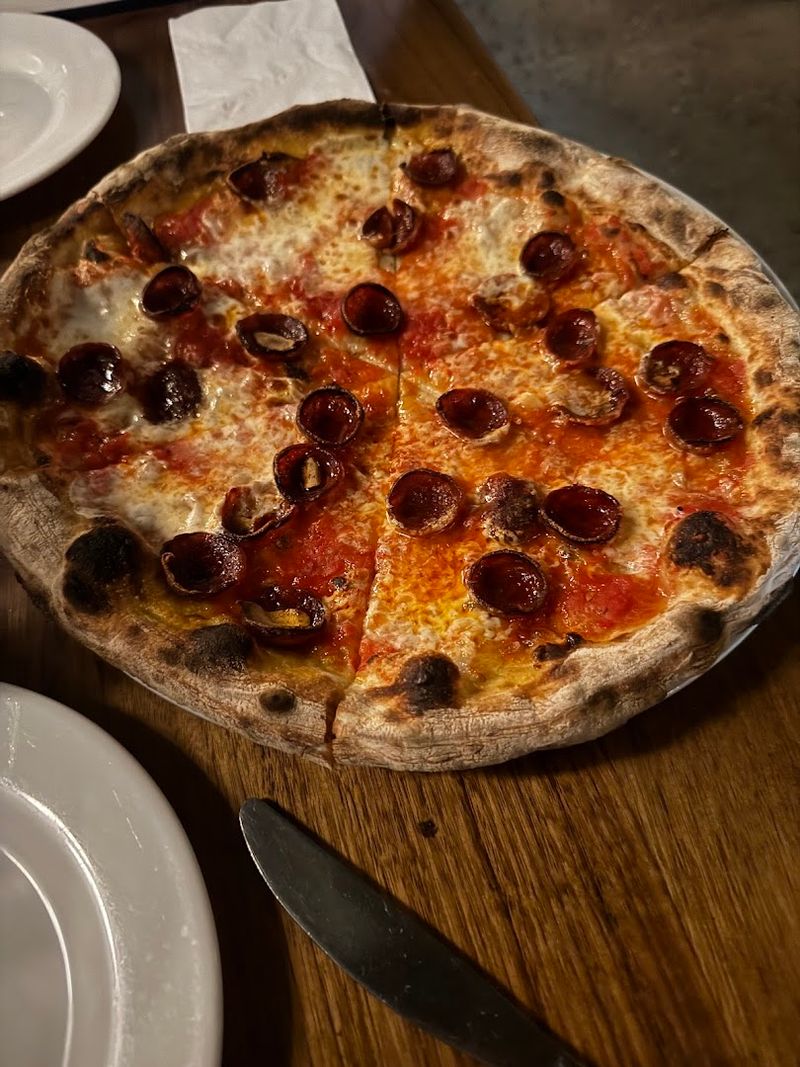
The wood-fired oven gives the crust its characteristic char, those dark spots that appear at the edges and underneath each pie. That char is not a mistake or an oversight.
It is part of the process, adding a slight bitterness that balances the richness of the toppings.
The airiness of the crust is something that genuinely stands out. Each bite has a lightness that is hard to achieve, and it comes from the careful attention given to the dough at every stage of preparation.
This is bread-making treated as a serious craft.
The Pizza Menu: Small but Mighty
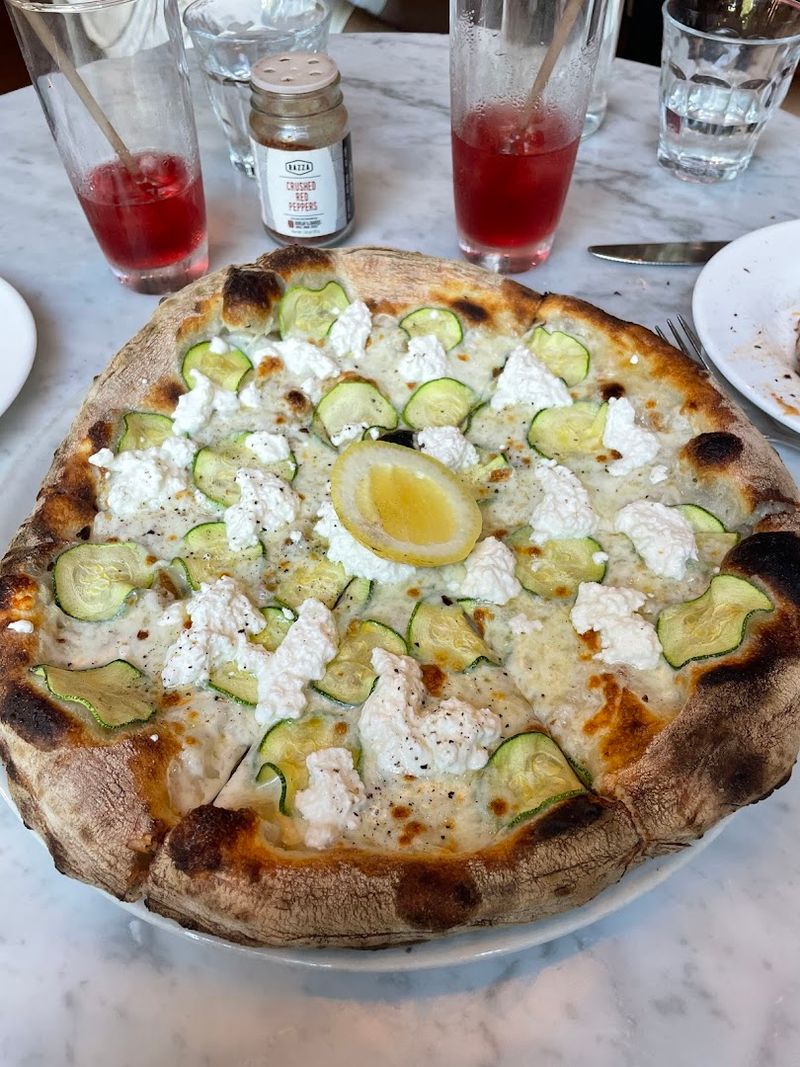
The menu at Razza is deliberately compact, which is actually a sign of confidence. Every pizza on the list has been tested, refined, and earned its place.
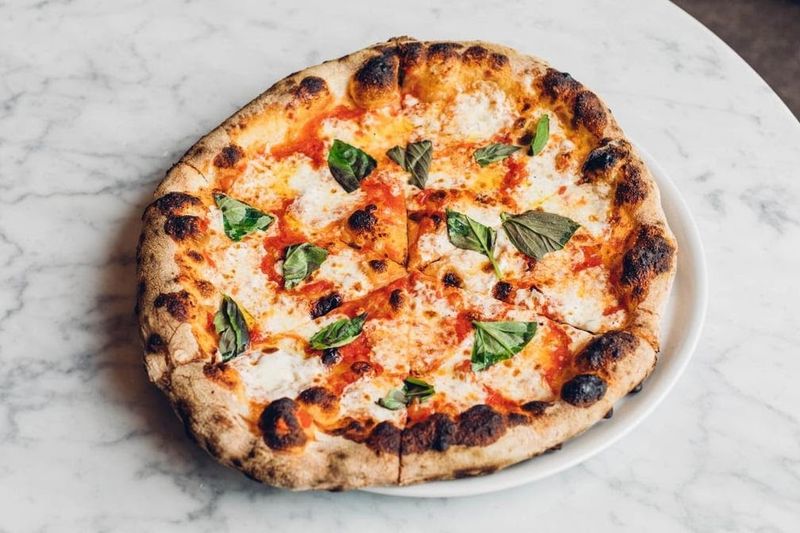
Some of the most frequently ordered pies include the Margherita, the Calabrese, the Santo, the Di Natale, the Guancia, and seasonal specials that rotate based on what ingredients are at their best.
The Calabrese is a white pie made with fresh mozzarella, shaved onions, calabrese pepper, ricotta, oregano, and parmigiano. It has a gentle heat that builds gradually.
The Di Natale is a red pie featuring tomato sauce, fresh mozzarella, pine nuts, olives, golden raisins, garlic, basil, and chili oil, a combination that sounds unexpected but works remarkably well.
Seasonal specials, like the potato pie, have developed their own loyal following. Pizzas are priced roughly between $25 and $30 each, and depending on appetite, two people may want more than one pie between them.
Bread, Butter, and the Art of Starting a Meal
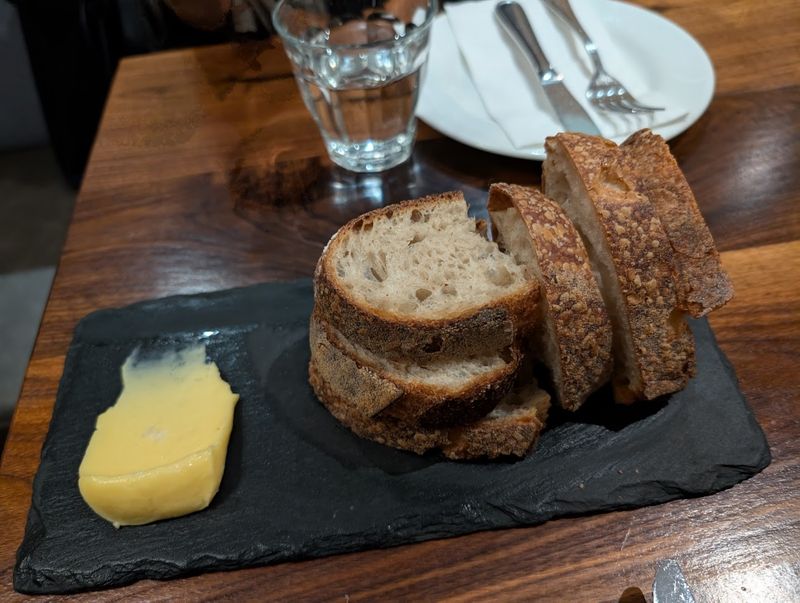
Before the pizza arrives, many tables start with the bread and butter flight, and it has become one of the most talked-about openers on the menu. The flight features several cultured butters, each with a distinct character.
The first two tend to be crowd favorites, while the third is a bit more polarizing, with a funkier profile that some find adventurous and others find too bold.
The sourdough and baguette served alongside are made in-house, and both are available for purchase to take home. The bread has a satisfying chew, and the sourdough loaf in particular has developed its own fan base among regulars who pick one up on the way out.
Starting a meal this way sets a clear tone: this is a place that takes every component seriously, not just the main event. The butter flight is a small detail that says a lot about how Razza approaches hospitality and food craft overall.
Starters Worth Ordering
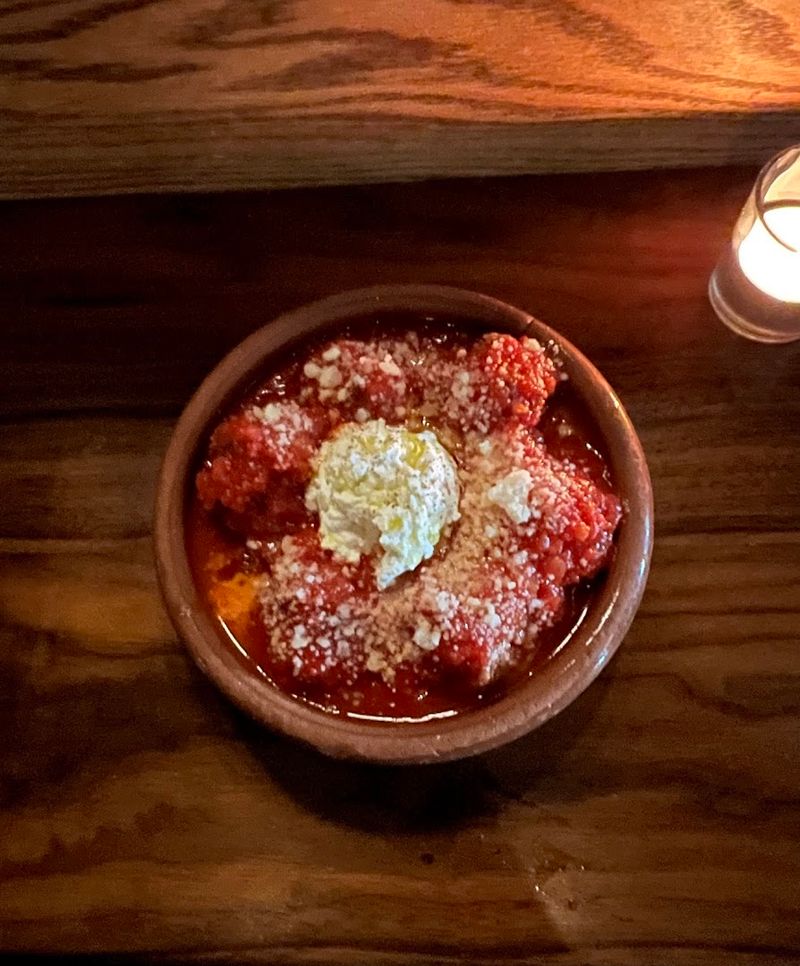
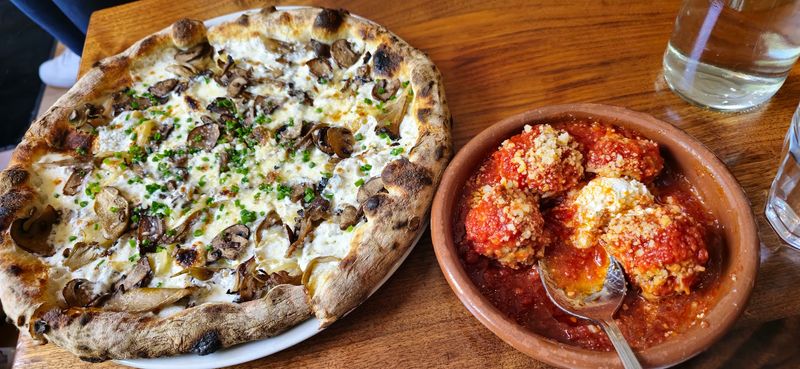
Beyond the bread and butter, the starters at Razza have their own dedicated following. The meatballs are a standout, arriving in a pool of tomato sauce that is bright and well-seasoned.
They are fluffy rather than dense, which sets them apart from the average version found at most Italian-American restaurants. Nearly every table seems to order them.
The kale Caesar salad is another regular on the menu, made with sourdough croutons and a dressing that is balanced rather than overpowering. It is a solid, well-executed salad that works as a counterpoint to the richness of the pizza.
The beet and heirloom tomato salads have also appeared on the menu as seasonal options, both generous enough to share. At Razza, the starters are not an afterthought.
They are thoughtfully constructed dishes that hold their own, even when the pizza is the reason everyone came through the door in the first place.
Desserts That Earn a Second Visit
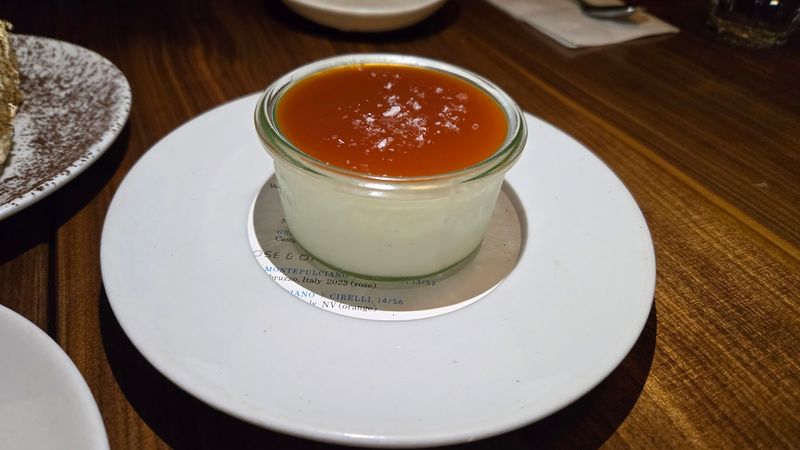
Skipping dessert at Razza would be a mistake, and regulars know it. The panna cotta has become something of a signature ending to the meal.
It is creamy and well-set, with a clean finish that does not feel heavy after a full dinner. Long-time guests often say they never leave without ordering it, no matter how full they are.
The tiramisu is another strong contender, described as light and not overly sweet, which makes it more approachable than the dense, boozy versions found elsewhere. The olive oil cake, often served with seasonal accompaniments like fresh peaches and lemon curd, has also earned consistent praise as a refined and satisfying finish.
Dessert at Razza reflects the same philosophy as everything else on the menu: restraint, quality ingredients, and careful execution. Nothing is overdone, and nothing is there just to fill space.
Each dessert feels like it belongs to the same thoughtful kitchen that produced the rest of the meal.
The Atmosphere Inside
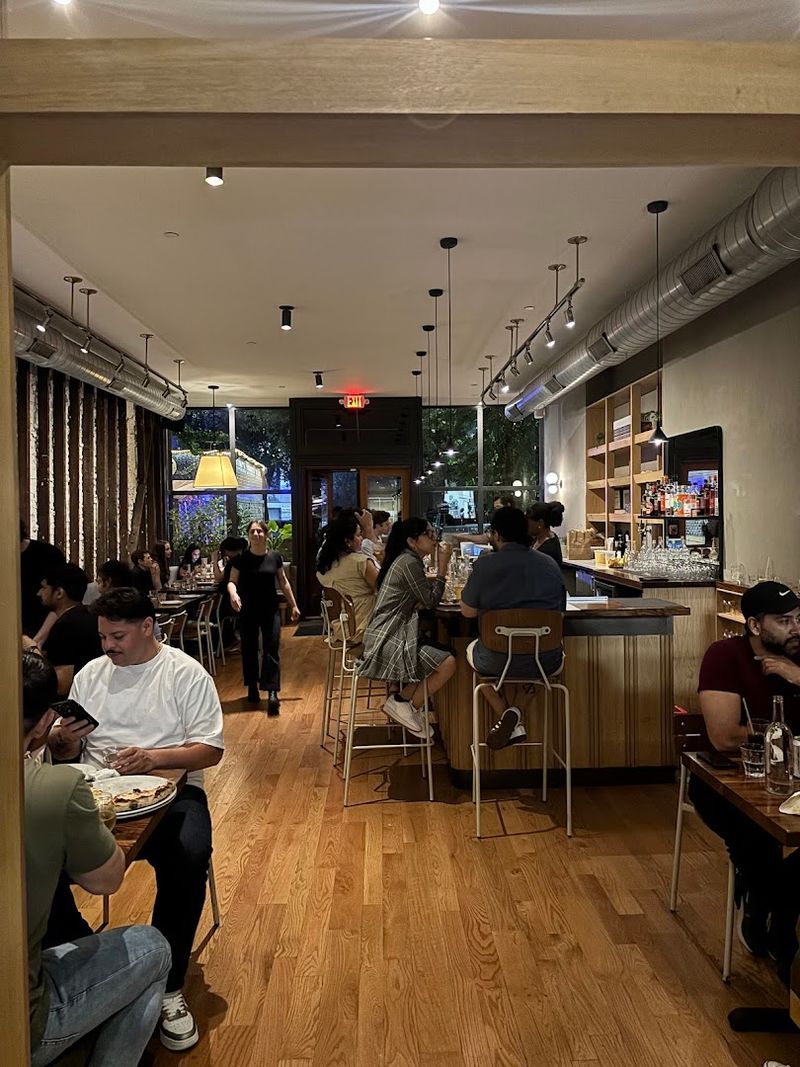
Razza is not a large restaurant. The space is intimate, with a rustic warmth that comes from natural materials and a layout that encourages conversation.
There is a bar area where solo diners and couples often sit, and the main dining room fills up fast on any given evening. By 5:30 PM on a Wednesday, every seat can be taken.
The overall feel is casual but not careless. The lighting is warm, the tables are well-spaced enough to feel comfortable, and the general energy of the room is lively without being loud.
It works well for a date night, a small group celebration, or even a solo dinner at the bar.
There is an honesty to the space that matches the food. Nothing about Razza is trying to impress through decoration or theatrics.
The focus is clearly on what comes out of the kitchen, and the room is designed to support that rather than compete with it.
Service That Goes the Extra Mile
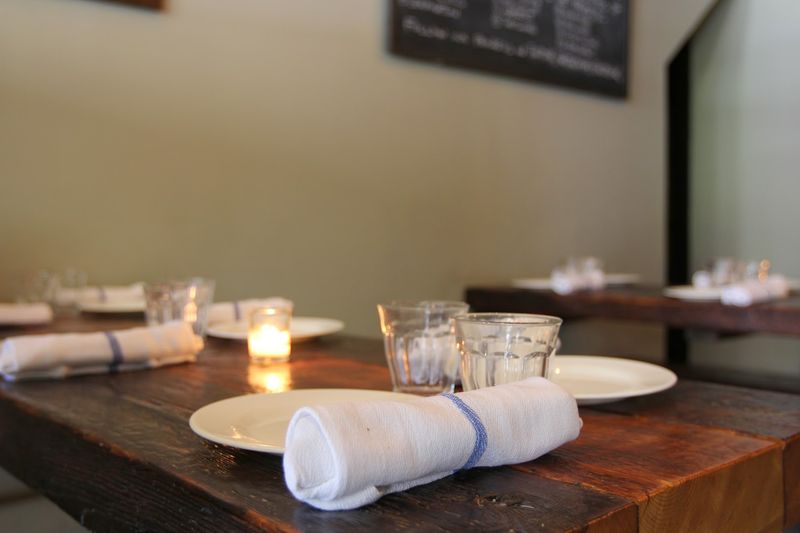
The service at Razza consistently gets mentioned as a highlight, which is not always the case at a restaurant where the food is the obvious star. The staff are described as attentive and knowledgeable, able to walk guests through the menu with genuine enthusiasm rather than a rehearsed script.
Small details stand out: plates are replaced between courses, crumbs are cleared from the table, and if guests have leftover food, it is stored in the back with a token given so it can be retrieved on the way out. That level of care is uncommon at a pizzeria.
The team, which includes both floor staff and management, creates an environment where guests feel looked after without feeling rushed. Dan Richer himself is often present during service, moving through the dining room and checking in with tables.
That kind of hands-on ownership makes every visit feel personal and considered, not just transactional.
Reservations: Plan Way Ahead
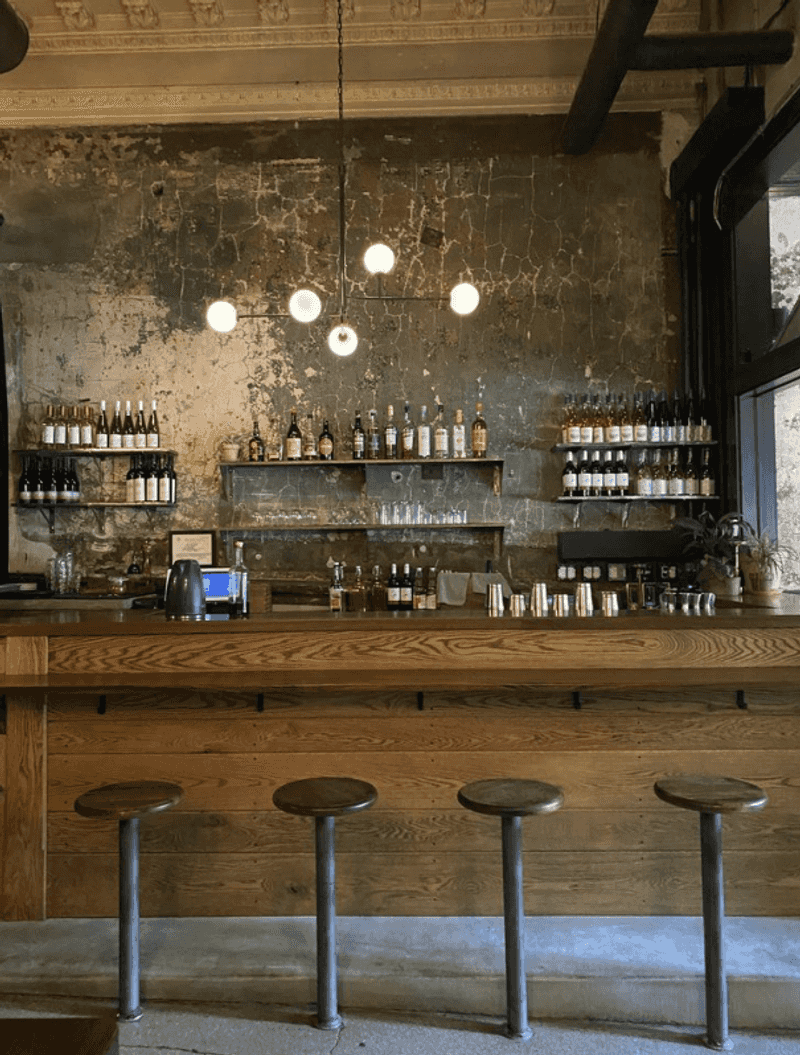
Getting a table at Razza requires planning. The restaurant fills up quickly, often before the first hour of service is over on any given night.
Reservations made weeks in advance are the norm, not the exception, especially on weekends when the doors open at 3 PM.
Walk-ins are possible but risky. The safest approach is to book through the restaurant’s reservation system as far ahead as possible.
For groups of three or more, this becomes even more critical, since larger tables turn over less frequently and are harder to snag at the last minute.
The difficulty of getting a reservation has not discouraged people. If anything, it has added to the restaurant’s reputation as a place worth the effort.
Guests who have been multiple times often describe the reservation process as just another step in the ritual of going to Razza, something to plan around rather than complain about. The payoff, they consistently say, is worth it.
Pricing: What to Expect
Razza sits in the moderate-to-splurge range for a pizzeria. Pizzas are priced between roughly $25 and $30 each, and a full meal for two with starters and dessert can easily reach $117 to over $150 before tip.
That is a real investment for what is, at its core, a pizza dinner.
Whether the price feels justified depends entirely on what a guest is expecting. For those who treat pizza as fast food, the bill will come as a shock.
For those who approach it as a craft dining experience, the pricing makes more sense when weighed against the quality of ingredients, the skill involved, and the overall experience.
The general consensus among those who have dined there is that it is a splurge worth making, particularly for a special occasion. It is not an everyday restaurant for most people, but it is the kind of place that sticks in the memory long after the meal is over, which is its own kind of value.
A Spot That Earns Its National Recognition
Razza holds a distinction that very few pizzerias in the United States can claim. The New York Times awarded it a three-star review, making it one of the only pizza restaurants in the country to receive that level of recognition from the paper.
It has also been ranked 22nd among the best pizzerias in the world.
That kind of praise is not handed out casually. The Times review brought national attention to a restaurant that had already built a strong local following, and it confirmed what Jersey City regulars had known for years: this is not just a good neighborhood spot, it is a genuinely exceptional restaurant by any standard.
Being located in New Jersey rather than Manhattan has not limited its reach or reputation. In fact, for many food-focused travelers, the trip across the river to Grove Street has become a destination in itself, a short journey that feels entirely worth the effort once the food arrives at the table.
Tips for First-Time Guests
A few practical notes can make the difference between a smooth evening and a frustrating one. Book a reservation as early as possible, ideally weeks in advance.
Arriving right at opening time is a good strategy for those who prefer to avoid the busiest part of service, though the restaurant fills up fast regardless.
Order more than one pizza if the table has two or more people. The pies are personal-sized, and the menu is designed for sharing and exploring.
Starting with the bread and butter flight and the meatballs gives the kitchen time to fire the pies and gives guests a fuller picture of what Razza does well.
Save room for dessert. The panna cotta and tiramisu are not optional in spirit, even if they are on paper.
Sourdough loaves are available for purchase to take home, and picking one up on the way out has become a tradition for many regulars. It is a small bonus that extends the experience beyond the meal itself.
Why Razza Keeps People Coming Back
Regular guests at Razza do not just return for the pizza, though that is certainly part of it. They come back because the experience feels consistent and personal in a way that is hard to manufacture.
The staff remember faces, the menu evolves with the seasons, and the quality holds up visit after visit without slipping into complacency.
The seasonal specials keep things fresh for those who visit frequently. Items like the potato pie and rotating small plates give long-time guests something new to look forward to, even when the classic pies remain the anchor of each visit.
There is also something to be said for a restaurant where the owner is genuinely present and invested. Dan Richer’s hands-on approach creates an atmosphere where the food and the hospitality feel connected rather than separate.
Razza has become a fixture in Jersey City not just because it makes great pizza, but because it has built something that feels worth returning to, again and again.



